
Can Dogs Eat Spaghetti? Safe Types, Risks & Portions
Yes, dogs can generally eat plain, fully cooked spaghetti in small amounts. Plain pasta is not considered toxic to dogs, but it does not provide all the nutrients they need for a balanced diet. Spaghetti is best treated as an occasional extra rather than a regular meal.
The ingredients served with spaghetti are much more important than the pasta itself. Traditional spaghetti dishes often contain tomato sauce, garlic, onion, salt, cheese, butter, or rich meats. Some of these ingredients can be harmful to dogs, so plain, fully cooked spaghetti is the safer option.
Can Dogs Eat Spaghetti?
Dogs can generally eat a small amount of plain, cooked spaghetti. Pasta made from wheat and water is usually easy for many dogs to tolerate when served in moderation. However, spaghetti is primarily a source of carbohydrates and calories rather than a nutritionally complete dog food.
If you want to share spaghetti, set aside a small portion before adding sauce or seasonings. Make sure the pasta has cooled and cut long strands into manageable pieces for dogs that tend to swallow food quickly.
Can Dogs Eat Cooked Spaghetti?
Yes, fully cooked spaghetti can generally be given to dogs in small portions. Cooking softens the pasta and makes it easier to chew and digest compared with uncooked pasta.
Serve it plain without garlic, onion, spicy seasonings, heavy salt, butter, or rich sauces. A small amount mixed with your dog’s normal food can be an occasional treat, but it should not replace a complete and balanced diet.
Can Dogs Eat Raw Spaghetti?
Raw spaghetti is not a good food to give dogs. Uncooked pasta is hard and may be difficult to chew, while large or sharp pieces can potentially cause choking or digestive discomfort.
If your dog accidentally eats a small piece of dry spaghetti, it will often pass without serious problems, but monitor your dog for vomiting, abdominal discomfort, or difficulty swallowing. Cooked spaghetti is a safer and easier option.
Can Dogs Eat Spaghetti Noodles?
Plain cooked spaghetti noodles can generally be eaten by dogs in moderation. The noodles themselves are usually not the main concern as long as they are fully cooked and free from unsafe seasonings.
Long strands can be awkward for some dogs to eat, so cut them into shorter pieces before serving. Avoid noodles covered in sauces containing garlic, onion, excessive salt, or spicy ingredients.
Can Dogs Eat Spaghetti Sauce?
Dogs should generally not be given traditional spaghetti sauce unless you have checked every ingredient and confirmed it is suitable. Many commercial and homemade sauces contain garlic and onion, both of which can be toxic to dogs.
Spaghetti sauces may also contain high levels of salt, sugar, spices, and oil. If you want to give your dog pasta, plain cooked spaghetti without sauce is a much safer choice.
Can Dogs Eat Spaghetti With Tomato Sauce?
Plain ripe tomatoes are generally safe for dogs in small amounts, but tomato-based spaghetti sauce can contain ingredients that are not safe. Garlic, onion, excessive sodium, spices, and added oils are common in prepared sauces.
Check the ingredient list carefully before sharing any tomato sauce. If you are unsure about the ingredients, skip the sauce and give your dog a small amount of plain spaghetti instead.
Can Dogs Eat Spaghetti With Garlic?
No. Dogs should not intentionally eat spaghetti containing garlic. Garlic belongs to the Allium family and can damage red blood cells when enough is consumed, potentially leading to anemia.
This includes fresh garlic, garlic powder, garlic salt, and concentrated garlic ingredients used in sauces and seasoning blends. Keep garlic-containing spaghetti away from your dog and choose plain pasta instead.
Can Dogs Eat Spaghetti With Onion?
Dogs should not eat spaghetti prepared with onion. Onions can damage red blood cells and may cause anemia. The risk applies to raw, cooked, dried, and powdered onion.
Onion can be hidden in spaghetti sauce, meatballs, seasoning blends, and prepared pasta dishes. Always check the ingredients before sharing human spaghetti with your dog.
Can Dogs Eat Spaghetti With Meatballs?
Spaghetti and meatballs can contain several ingredients that are unsuitable for dogs. Meatballs are often seasoned with onion, garlic, salt, breadcrumbs, cheese, or spices, while the sauce may contain additional unsafe ingredients.
If you want to share meat with your dog, use plain, thoroughly cooked lean meat without onion, garlic, heavy seasoning, or sauces. A small amount of plain pasta can be offered separately.
Can Dogs Eat Spaghetti With Cheese?
A small amount of plain cheese may be tolerated by some dogs, but cheese is not necessary and can be high in fat and calories. Some dogs also have difficulty digesting dairy products.
Cheesy spaghetti can contain additional butter, cream, salt, or rich sauces, making it much heavier than plain pasta. If you offer spaghetti, keeping it plain is the simplest choice.
Can Dogs Eat Spaghetti With Butter?
It is better to avoid giving dogs spaghetti covered in butter. Butter is high in fat and calories and can cause digestive upset when consumed in large amounts.
Fatty foods can be particularly problematic for dogs that have sensitive stomachs or a history of pancreatitis. Plain cooked spaghetti without butter is a safer occasional treat.
Can Dogs Eat Spaghetti With Olive Oil?
A tiny amount of plain olive oil is not generally considered toxic to dogs, but adding oil to spaghetti increases its fat and calorie content. Large amounts of added fat can cause digestive problems.
There is no need to add olive oil to your dog’s pasta. If you are sharing spaghetti, plain cooked noodles are usually the better option.
See Also: Can Dogs Eat Chia Seeds? Benefits, Risks & Safe Amounts
Can Dogs Eat Spaghetti Every Day?
Dogs should not eat spaghetti every day as a significant part of their diet. Pasta is primarily a carbohydrate source and does not provide all the nutrients a dog requires for long-term health.
A complete and balanced dog food should remain the foundation of your dog’s meals. Plain spaghetti can occasionally be offered as a small treat or topper if your dog tolerates wheat and pasta well.
How Much Spaghetti Can Dogs Eat?
The appropriate amount depends on your dog’s size, calorie requirements, activity level, and overall diet. When introducing spaghetti, start with a small amount and monitor your dog for digestive upset.
As a general rule, spaghetti should make up only a small portion of your dog’s overall food intake. Smaller dogs need much smaller portions than large dogs.
| Dog Size | Suggested Starting Portion |
|---|---|
| Small Dogs | 1–2 tablespoons of cooked plain spaghetti |
| Medium Dogs | A few tablespoons |
| Large Dogs | A small handful of cooked spaghetti |
| Puppies | A tiny amount when appropriate |
Is Spaghetti Good for Dogs?
Plain spaghetti is not toxic to dogs, but it is not especially nutritious compared with a complete and balanced canine diet. Pasta mainly provides carbohydrates and calories, with limited nutritional value for dogs compared with appropriately formulated dog food.
There is no nutritional requirement for spaghetti in a dog’s diet. If your dog enjoys a small amount occasionally and has no digestive problems after eating it, it can be used as an occasional treat.
Can Puppies Eat Spaghetti?
Puppies can generally tolerate a tiny amount of plain, fully cooked spaghetti once they are eating solid food. However, puppies need carefully balanced nutrition to support growth, so pasta should never replace their regular puppy food.
If you offer spaghetti to a puppy, keep the portion very small and avoid sauce, garlic, onion, salt, butter, and spicy seasonings. Monitor the puppy for diarrhea, vomiting, gas, or other digestive changes.
What Happens If a Dog Eats Too Much Spaghetti?
Eating too much spaghetti may cause digestive upset because of its carbohydrate content and the overall volume of food. Some dogs may develop gas, diarrhea, vomiting, bloating, or abdominal discomfort.
If the spaghetti contained sauce, garlic, onion, excessive salt, or other potentially harmful ingredients, there may be additional concerns. Contact your veterinarian if your dog consumed a large quantity or develops persistent or severe symptoms.
Can Dogs Eat Spaghetti With Chicken?
Plain cooked chicken and plain cooked spaghetti can generally be eaten together in small amounts by many healthy dogs. Chicken provides protein while spaghetti mainly supplies carbohydrates.
However, chicken spaghetti prepared for humans may contain garlic, onion, heavy seasoning, cream, cheese, or rich sauces. If sharing this combination, use plain, thoroughly cooked chicken without bones or seasoning and a small amount of plain spaghetti.
How to Safely Give Spaghetti to Your Dog
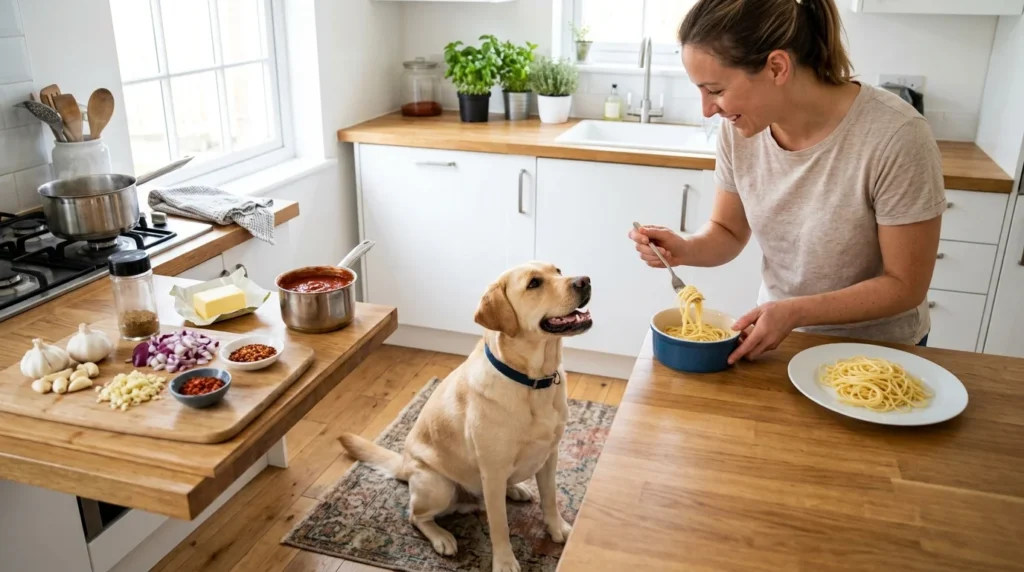
Choose plain spaghetti made with simple ingredients and cook it thoroughly until soft. Let it cool before serving, and cut long strands into smaller pieces if your dog tends to swallow food quickly.
Set aside your dog’s portion before adding sauce, garlic, onion, salt, butter, chili, or other seasonings. Start with a small amount, particularly if your dog has never eaten pasta before, and monitor for digestive upset.
Can Dogs Eat Spaghetti With Beef?
Plain cooked beef and plain spaghetti can generally be given together in small amounts. Beef can provide protein, while spaghetti mainly contributes carbohydrates and calories.
Avoid typical spaghetti-and-beef dishes containing onion, garlic, excessive salt, spicy seasonings, or rich sauces. Use lean, thoroughly cooked beef without bones or seasoning if you want to combine it with pasta.
Can Dogs Eat Spaghetti With Turkey?
Plain cooked turkey and plain spaghetti can generally be eaten by dogs in moderation. Turkey should be thoroughly cooked and free from bones, skin, excessive fat, salt, garlic, onion, and seasoning.
Turkey spaghetti prepared for humans may contain creamy sauces, cheese, garlic, onion, or high levels of sodium. A small portion of plain pasta with plain cooked turkey is a safer alternative.
Can Dogs Eat Spaghetti With Tuna?
Plain cooked spaghetti can be combined with a small amount of plain tuna occasionally, but tuna should not become a regular part of a dog’s diet. Tuna can contain higher levels of mercury than some other fish.
If you offer tuna, choose plain tuna without spicy sauces, onion, garlic, or excessive salt. Avoid tuna packed in heavily seasoned sauces and keep the portion small.
Can Dogs Eat Spaghetti With Shrimp?
Plain, fully cooked shrimp can generally be eaten by dogs in small amounts. If combined with spaghetti, the shrimp should be peeled, deveined, thoroughly cooked, and free from seasoning.
Avoid garlic butter shrimp, spicy shrimp sauces, onion, excessive salt, and rich cream sauces. Plain shrimp with a small amount of cooked spaghetti is a much simpler option.
Can Dogs Eat Spaghetti With Eggs?
Plain cooked egg and plain spaghetti can generally be eaten together in small amounts. Eggs provide protein, while pasta supplies carbohydrates.
Keep the egg fully cooked and avoid preparing it with large amounts of butter, salt, garlic, onion, or seasoning. A small portion is enough for an occasional treat.
Can Dogs Eat Spaghetti With Pesto?
Pesto is generally not recommended for dogs. Traditional pesto often contains garlic, salt, cheese, oil, and other ingredients that can be unsuitable for pets.
Even if the spaghetti itself is plain, adding pesto can introduce unnecessary risks. If you want to share pasta, give your dog plain cooked spaghetti instead.
Can Dogs Eat Spaghetti With Alfredo Sauce?
Alfredo sauce is not a good choice for dogs. It is typically high in fat and may contain butter, cream, cheese, garlic, salt, and other rich ingredients.
High-fat foods can cause digestive upset and may increase the risk of pancreatitis in susceptible dogs. Plain spaghetti without Alfredo sauce is a safer option.
Can Dogs Eat Spaghetti With Marinara Sauce?
Marinara sauce may contain tomatoes, but many recipes also include garlic, onion, salt, herbs, and other seasonings. Because recipes vary, it should not automatically be considered safe for dogs.
If you want to share pasta, use plain spaghetti rather than pasta covered in marinara. If a sauce is specifically formulated for dogs and contains only safe ingredients, follow the product’s serving guidance.
Can Dogs Eat Spaghetti With Parmesan Cheese?
A tiny amount of plain Parmesan cheese is unlikely to be toxic to most dogs, but Parmesan is relatively high in sodium and should not be given in large quantities.
Dogs do not need Parmesan on their pasta. If you choose to use a little, keep the amount very small and avoid combining it with garlic, onion, butter, or rich sauces.
Can Dogs Eat Spaghetti With Salt?
It is best to avoid adding salt to your dog’s spaghetti. Dogs require some sodium as part of a balanced diet, but extra salt is unnecessary and excessive amounts can be dangerous.
Prepared pasta dishes can already contain considerable sodium through sauces, cheese, seasoning mixes, and processed meats. Plain pasta without added salt is the better choice.
See Also: Can Dogs Eat Blueberries? Benefits, Safety & Feeding Guide 2026
Can Dogs Eat Spaghetti With Hot Sauce?
No. Hot sauce is not suitable for dogs because it can contain chili peppers, concentrated spices, salt, garlic, onion, or other ingredients that may irritate the digestive system.
Spicy foods can cause drooling, stomach discomfort, vomiting, or diarrhea. Keep your dog’s spaghetti plain instead of adding hot sauce or chili-based seasoning.
Can Dogs Eat Spaghetti With Pepper?
A tiny accidental amount of black pepper is unlikely to cause serious toxicity in most dogs, but adding pepper to your dog’s spaghetti is unnecessary. Larger amounts may irritate the mouth and digestive tract.
When preparing pasta specifically for your dog, leave out pepper and other strong seasonings. Plain spaghetti is easier for dogs to tolerate and easier for owners to portion.
Can Dogs Eat Spaghetti With Sausage?
Sausage is generally not a good food to combine with spaghetti for dogs. Processed sausages can be high in fat and sodium and may contain garlic, onion, spices, preservatives, or other ingredients.
If you want to add meat to your dog’s pasta, plain cooked lean beef, turkey, or chicken without seasoning is a better choice than sausage.
What Are the Risks of Spaghetti for Dogs?
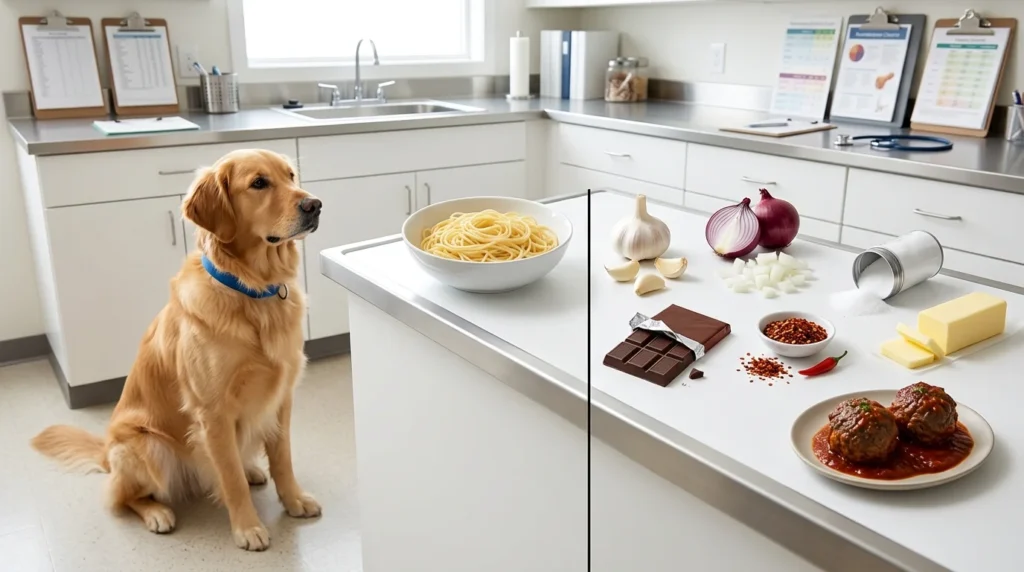
Plain cooked spaghetti is generally low risk when served in small portions, but too much pasta can contribute unnecessary calories and digestive upset. Dogs with wheat sensitivities may also experience digestive or skin-related symptoms after eating wheat-based foods.
The bigger concern is usually the sauce or toppings. Garlic, onion, excessive salt, spicy ingredients, rich dairy sauces, fatty meats, and other human-food ingredients can make a spaghetti meal unsafe for dogs.
What Should You Do If Your Dog Eats Spaghetti Sauce?
Check the ingredient list if possible, paying particular attention to garlic, onion, large amounts of salt, spicy ingredients, and other potentially harmful foods. A small amount of plain tomato sauce may be less concerning than a heavily seasoned sauce.
If your dog ate a large amount of sauce or a sauce containing garlic or onion, contact your veterinarian for guidance. Monitor for vomiting, diarrhea, weakness, excessive thirst, or other unusual symptoms.
What Should You Do If Your Dog Eats a Large Amount of Spaghetti?
If your dog eats a large quantity of plain cooked spaghetti, monitor for bloating, vomiting, diarrhea, gas, abdominal discomfort, or changes in appetite. Make sure fresh water is available and avoid giving additional treats.
If the pasta contained harmful ingredients or your dog develops severe or persistent symptoms, contact your veterinarian. The amount eaten and your dog’s size will help determine how concerning the situation may be.
Frequently Asked Questions
Can dogs eat spaghetti?
Yes. Dogs can generally eat small amounts of plain, fully cooked spaghetti. It should be an occasional treat rather than a replacement for balanced dog food.
Can dogs eat spaghetti sauce?
Many spaghetti sauces are unsuitable because they can contain garlic, onion, excessive salt, and other ingredients that are harmful or irritating to dogs.
Can dogs eat spaghetti noodles?
Yes. Plain cooked spaghetti noodles can generally be given in moderation. Cut long noodles into manageable pieces for dogs that swallow quickly.
Can puppies eat spaghetti?
Puppies can generally tolerate a tiny amount of plain cooked spaghetti, but their main food should be a complete and balanced puppy diet formulated for growth.
Can dogs eat spaghetti with meatballs?
Typical meatballs may contain garlic, onion, salt, spices, and other ingredients that dogs should avoid. Plain cooked meat without unsafe seasonings is a better option.
Conclusion
Dogs can generally eat small amounts of plain, fully cooked spaghetti. The pasta itself is usually not toxic, but it offers limited nutritional value for dogs and should remain an occasional treat.
Always pay close attention to the ingredients served with spaghetti. Avoid sauces and toppings containing garlic, onion, excessive salt, spicy seasonings, rich fats, or unsafe ingredients. A small portion of plain cooked pasta is the simplest and safest way to share spaghetti with your dog.
See Also: Can Dogs Eat Oranges? Peel, Juice, Seeds & Every Form Covered


