

Can Dogs Eat Nuts? Safe Nuts, Toxic Nuts & Risks
Nuts are a popular human snack because they contain healthy fats, protein, vitamins, and minerals. However, when it comes to dogs, not all nuts are safe. Some nuts can cause digestive problems, choking hazards, weight gain, or even serious poisoning depending on the type and condition of the nut.
Many dog owners wonder if sharing a small amount of nuts with their pets is harmless. While some nuts may be safe in very limited amounts, others should be completely avoided. Understanding which nuts dogs can eat, which nuts are dangerous, and how to serve them properly can help protect your dog’s health.
Can Dogs Eat Nuts?
Some dogs can eat certain types of nuts in very small amounts, but nuts are generally not recommended as regular treats. Many nuts are high in fat and calories, which can contribute to obesity, stomach upset, and pancreatitis in dogs.
Some nuts are also dangerous because they contain toxins, salt, seasonings, or mold. Before giving any nut to your dog, it is important to know whether that specific type is safe and whether it has been prepared properly.
How Many Nuts Can Dogs Eat? Can Your Dog Eat?
The safest amount of nuts for dogs depends on the type of nut, your dog’s size, and their overall health. Even safe nuts should only be offered occasionally because they are calorie-dense and contain high amounts of fat.
Small dogs are at greater risk because even a few nuts can represent a large portion of their daily calorie intake. Dogs with sensitive stomachs, obesity problems, or a history of pancreatitis should avoid nuts completely unless advised by a veterinarian.
| Dog Size | Recommended Nut Amount | Frequency |
|---|---|---|
| Small Dogs | Very small amount | Rarely |
| Medium Dogs | 1–2 suitable nuts | Occasionally |
| Large Dogs | Small portion | Occasionally |
| Puppies | Avoid nuts | Not recommended |
Can Dogs Eat Peanuts?
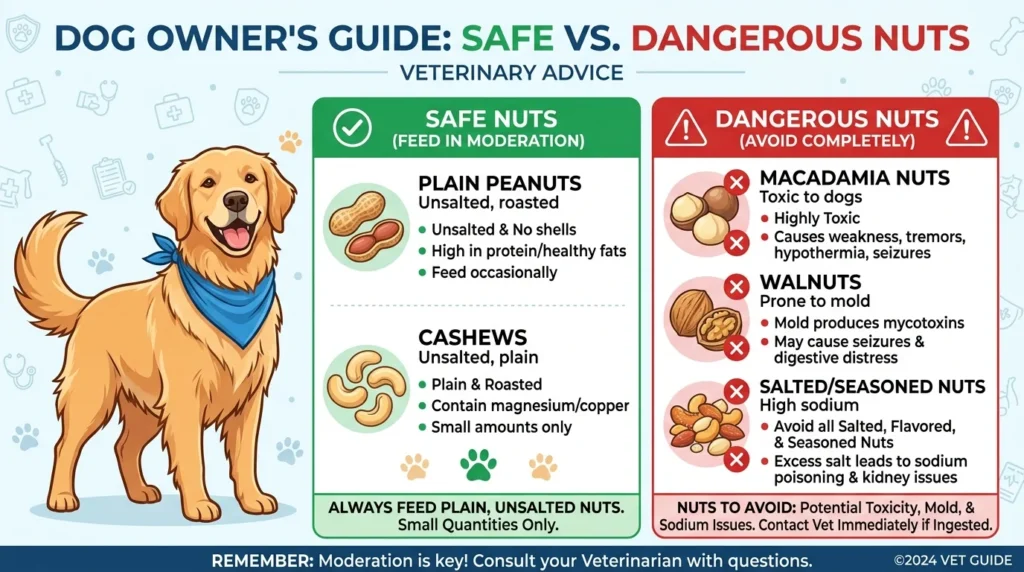
Yes, dogs can eat plain unsalted peanuts in moderation. Peanuts are not technically nuts but legumes, and they contain protein and healthy fats. Many dogs enjoy peanut butter as a treat, but it must be free from xylitol, an artificial sweetener that is extremely toxic to dogs.
Only offer plain peanuts without salt, chocolate, coatings, or flavorings. Because peanuts are high in fat and calories, they should only be given occasionally and in small amounts.
Can Dogs Eat Almonds?
No, dogs should generally avoid almonds. Although almonds are not considered highly toxic, they are difficult for dogs to digest and can cause stomach upset, vomiting, diarrhea, or abdominal discomfort.
Almonds are also a choking risk, especially for small dogs. Flavored almonds containing salt, garlic, spices, or chocolate are even more dangerous and should never be given to dogs.
Can Dogs Eat Walnuts?
No, dogs should not eat walnuts. Walnuts are high in fat and may cause digestive problems or increase the risk of pancreatitis. Another major concern is mold contamination, which can produce toxins that affect a dog’s nervous system.
Black walnuts are especially dangerous because they can contain toxic compounds that may lead to tremors, seizures, and serious health problems. It is safest to keep walnuts away from dogs.
Can Dogs Eat Cashews?
Yes, dogs can eat plain unsalted cashews in very small amounts. Cashews are not toxic to dogs, but they are high in fat, which means too many can cause weight gain or digestive issues.
A few plain cashews occasionally may be acceptable for healthy dogs, but avoid salted, flavored, chocolate-covered, or seasoned cashews. Dogs with pancreatitis or sensitive stomachs should avoid them.
Can Dogs Eat Pistachios?
Dogs should avoid pistachios, especially salted or flavored varieties. Pistachios are high in fat and can cause digestive upset. Unshelled pistachios also create a choking risk and may cause intestinal problems if swallowed.
Moldy pistachios can contain harmful toxins called aflatoxins, which may damage a dog’s liver. Because pistachios provide little benefit compared to safer treats, avoiding them is the better choice.
Can Dogs Eat Macadamia Nuts?
No, dogs should never eat macadamia nuts. They are highly toxic to dogs and can cause symptoms such as weakness, vomiting, tremors, fever, and difficulty walking. Even small amounts may make some dogs sick.
If your dog eats macadamia nuts, contact your veterinarian immediately. These nuts should always be stored securely because they pose a serious risk to canine health.
Can Dogs Eat Pecans?
No, dogs should avoid pecans. Although pecans are not always immediately toxic, they are high in fat and can cause digestive issues, weight gain, and pancreatitis when eaten by dogs. Pecans can also become contaminated with mold that produces dangerous toxins.
Moldy pecans may contain tremorgenic mycotoxins, which can cause neurological symptoms such as shaking, seizures, and loss of coordination. Because pecans offer little benefit compared to safer treats, they are best kept away from dogs.
Can Dogs Eat Hazelnuts?
Plain hazelnuts are not considered toxic to dogs, but they are not recommended as a regular snack. Their high fat content can cause stomach upset and increase the risk of pancreatitis, especially in dogs that are sensitive to fatty foods.
Whole hazelnuts can also become a choking hazard, particularly for small dogs. If a dog accidentally eats one plain hazelnut, it is usually not an emergency, but regular feeding should be avoided.
Can Dogs Eat Brazil Nuts?
Dogs should avoid Brazil nuts because they are extremely high in fat and calories. Even a small amount may be difficult for some dogs to digest and can contribute to stomach problems or weight gain.
Brazil nuts are also large and hard, making them a potential choking risk. Since dogs do not need Brazil nuts for nutrition, safer dog-friendly treats are a better choice.
Can Dogs Eat Chestnuts?
Some plain cooked chestnuts may be safe for dogs in small amounts, but preparation is very important. Raw chestnuts, salted chestnuts, and chestnuts prepared with butter or seasonings should not be given to dogs.
If offering chestnuts, they should be plain, fully cooked, and cut into small pieces. Even then, they should only be an occasional treat because dogs receive better nutrition from balanced dog food.
Can Dogs Eat Mixed Nuts?
No, mixed nuts are generally unsafe for dogs. Mixed nut packages often contain dangerous varieties such as macadamia nuts, walnuts, or heavily salted and flavored nuts. These combinations increase the risk of toxicity and digestive problems.
See Also: Can Dogs Eat Peas? Benefits, Risks & Safe Feeding Tips
Many mixed nuts also contain seasonings, chocolate coatings, raisins, or artificial ingredients that can be harmful to dogs. It is safer to avoid giving dogs any mixed nut products.
Can Dogs Eat Salted Nuts?
No, dogs should not eat salted nuts. Excess salt can be harmful to dogs and may cause increased thirst, dehydration, vomiting, diarrhea, or salt poisoning in severe cases.
Salted nuts also often contain additional flavors such as garlic, onion powder, spices, or artificial ingredients that may be toxic to dogs. Always choose dog-safe treats instead of human snack foods.
Can Dogs Eat Nuts Every Day?
No, dogs should not eat nuts every day. Even safer nuts contain high amounts of fat and calories, which can lead to obesity, digestive issues, and pancreatitis when consumed regularly.
Dogs have different nutritional needs than humans and do not require nuts to maintain good health. A balanced dog food diet already provides the nutrients they need without the extra risks associated with frequent nut consumption.
Is Nuts Good for Dogs to Eat?
Most nuts are not considered a good food choice for dogs. Although nuts contain healthy fats, protein, vitamins, and minerals, the risks often outweigh the benefits. Dogs can receive these nutrients from safer foods designed specifically for them.
Some nuts, like plain peanuts or cashews, may be acceptable in very small amounts for healthy dogs. However, nuts should never replace balanced meals or become a regular part of a dog’s diet.
How to Safely Share Nuts With Your Dog
If you choose to give your dog a safe nut occasionally, always select plain, unsalted, and unflavored options. Avoid nuts covered in chocolate, sugar, spices, salt, or artificial sweeteners because these ingredients can be harmful.
Remove shells, cut larger nuts into smaller pieces, and offer only a tiny amount. Always monitor your dog after introducing any new food and stop immediately if you notice vomiting, diarrhea, or unusual behavior.
Does Nuts Have Benefits For Dogs?
Some nuts contain nutrients such as protein, healthy fats, vitamin E, magnesium, and antioxidants. These nutrients may support energy levels and overall health in humans, but dogs do not need nuts to meet their nutritional requirements.
Safe alternatives such as dog-friendly fruits, vegetables, and specially formulated treats can provide similar benefits without the risks associated with high-fat nuts and potential toxins.
Does Nuts Have Any Risks For Dogs?

Yes, nuts can create several risks for dogs. High fat content may cause digestive upset and pancreatitis, while large nuts can become choking hazards. Some nuts contain toxins or may develop mold that is dangerous for dogs.
See Also: What Can Dogs Not Eat? Dangerous Foods to Avoid Guide
Seasoned, salted, chocolate-covered, and flavored nuts create additional risks because they may contain harmful ingredients. For most dogs, avoiding nuts is the safest option.
Frequently Asked Questions
Can dogs eat any nuts safely?
Some plain nuts like peanuts and cashews may be safe in tiny amounts, but most nuts are not recommended because of their risks.
Which nuts are toxic to dogs?
Macadamia nuts are highly toxic to dogs. Moldy walnuts and some contaminated nuts can also cause serious health problems.
Can dogs eat peanut butter?
Yes, dogs can eat plain peanut butter if it does not contain xylitol, added sugar, salt, or harmful ingredients.
What happens if a dog eats nuts?
A dog may experience vomiting, diarrhea, stomach pain, or more serious symptoms depending on the type and amount of nuts eaten.
Should dogs eat nuts regularly?
No, nuts should not be a regular part of a dog’s diet. Balanced dog food and safer treats are better choices.
Conclusion
Dogs can eat some nuts in very limited amounts, but many nuts are unsafe or unnecessary for their diet. Macadamia nuts, walnuts, pecans, and salted or flavored nuts can create serious health risks, while even safer nuts can cause problems when eaten too often because of their high fat content.
The best approach is to avoid feeding nuts regularly and choose healthier dog-friendly treats instead. If your dog accidentally eats a dangerous nut or shows symptoms such as vomiting, weakness, tremors, or seizures, contact your veterinarian immediately.
See Also: Can Dogs Eat Raw Eggs? Benefits, Risks & Safety Guide


