
Can Dogs Eat Fries? Safety, Risks & Healthy Alternatives
Dogs can eat a small amount of plain fries accidentally without necessarily becoming seriously ill, but fries are not a healthy or recommended treat for dogs. French fries are usually high in fat, calories, carbohydrates, and salt, while providing little nutritional value for your pet. Regularly feeding fries can contribute to weight gain and digestive problems.
The ingredients and preparation method also matter. Fries cooked with excessive oil, salt, seasonings, sauces, or spicy toppings can create additional risks. Some toppings may contain ingredients that are unsafe for dogs. If you want to share a potato with your dog, plain, fully cooked potato without added salt, butter, oil, or seasoning is generally a better option.
Can Dogs Eat Fries?
Dogs can technically eat a small number of plain fries, but fries are not considered a healthy food for them. A few fries that fall from your plate are unlikely to cause problems in most healthy dogs, but intentionally making fries a regular treat is not recommended.
French fries are commonly deep-fried and contain significant amounts of fat and calories. They may also be heavily salted or seasoned. Dogs have different nutritional requirements from humans, so foods that are enjoyable for people are not necessarily appropriate everyday treats for pets.
Are Fries Safe for Dogs?
Plain fries are not usually considered poisonous to dogs, but their high fat and salt content makes them a poor choice. The risk depends on how many fries your dog eats, how they were prepared, and what ingredients were added.
A healthy adult dog that eats one or two plain fries will usually only need monitoring for digestive upset. However, puppies, small dogs, dogs with sensitive stomachs, and dogs with certain dietary conditions may be more affected by fatty or salty foods.
Are French Fries Bad for Dogs?
French fries are not an ideal food for dogs because they are calorie-dense and generally contain more fat and salt than dogs need. They also do not provide the balanced nutrition found in complete dog food.
Eating fries occasionally is different from eating them frequently. A small accidental serving may not cause harm, but repeated feeding can contribute to excessive calorie intake, weight gain, and unhealthy eating habits.
Can Dogs Eat Homemade Fries?
Homemade fries can be somewhat easier to control because you can choose the ingredients and cooking method. However, traditional homemade fries prepared with a lot of oil, salt, butter, or seasoning are still not a good regular treat for dogs.
If you prepare potato specifically for your dog, keep it plain and fully cooked. Avoid adding salt, garlic, onion, spicy seasonings, butter, or heavy oils. A small piece of plain cooked potato is a better choice than conventional seasoned fries.
Also Read: Can Dogs Eat Apricots? Benefits, Risks & Safe Serving Tips
Can Dogs Eat McDonald’s Fries?
McDonald’s fries are not a recommended food for dogs. They are prepared with added salt and oil and are designed as a human fast-food product rather than a nutritionally appropriate canine treat.
If your dog steals a single fry, there is usually no reason to panic in an otherwise healthy dog. However, avoid intentionally feeding fast-food fries, especially in large quantities. Keep the restaurant meal away from your dog and offer a dog-appropriate treat instead.
Can Dogs Eat Fast Food Fries?
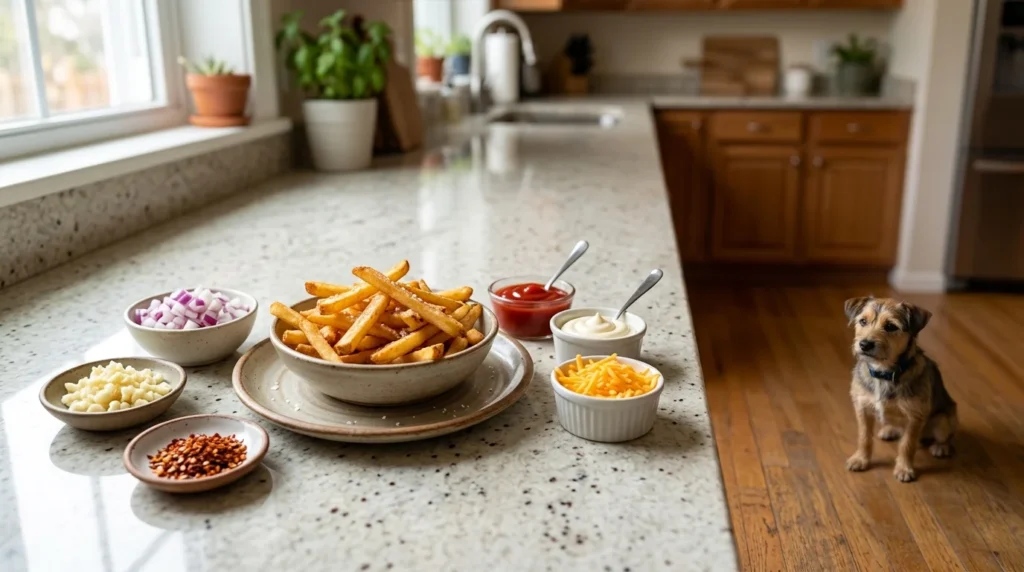
Fast-food fries are generally high in fat, sodium, and calories. They may also contain additional ingredients used during preparation that dogs do not need. Because of this, fast-food fries should not become part of a dog’s normal diet.
If your dog eats one or two fries accidentally, monitor them for stomach upset. A large amount can be more concerning, particularly for small dogs or dogs that are sensitive to fatty foods.
Can Dogs Eat Fried Potatoes?
Fried potatoes are not a healthy choice for dogs. The potato itself can be suitable when properly cooked and served plain, but frying adds a substantial amount of fat and calories.
Fried potatoes may also be seasoned with salt, garlic, onion, pepper, or other ingredients. For a dog-friendly potato treat, choose plain, thoroughly cooked potato instead and serve only a small amount.
Can Dogs Eat Potato Fries?
Potato fries are essentially French fries when potatoes are cut into strips and cooked in oil. Dogs can tolerate a small accidental piece of plain potato fry, but this does not make fries a suitable regular treat.
High fat, salt, and calorie content are the main concerns. If you want to give your dog potato, plain boiled or baked potato without seasoning is generally a better option than fried potato strips.
Also Read: Can Dogs Eat Rib Bones? Risks, Dangers & Safe Alternatives
Can Dogs Eat Sweet Potato Fries?
Dogs can eat plain cooked sweet potato in appropriate portions, but sweet potato fries are a different matter. Commercial or homemade sweet potato fries are often cooked in oil and may contain salt, sugar, spices, or other seasonings.
If you want to give your dog sweet potato, offer plain cooked sweet potato without added ingredients. Remove the skin if it is tough, allow the food to cool, and serve a small portion appropriate for your dog’s size.
Can Dogs Eat Sweet Potato Fries From Restaurants?
Restaurant sweet potato fries are generally not recommended for dogs. They are commonly fried in oil and may contain salt, seasoning blends, sauces, or other ingredients that can cause digestive problems.
A small accidental piece is unlikely to cause serious illness in most healthy dogs, but a large serving is best avoided. Plain cooked sweet potato is a much safer way to share this vegetable with your pet.
Can Dogs Eat Frozen Fries?
Frozen fries should not be given to dogs directly from the freezer. Besides being hard and difficult to chew, frozen fries are usually manufactured for human consumption and can contain added oils, salt, or seasonings.
If frozen fries are cooked according to their instructions, they still remain a high-fat, high-calorie human food. Instead, give your dog a small amount of plain cooked potato if potato is appropriate for their diet.
Can Dogs Eat Oven-Baked Fries?
Oven-baked fries may contain less oil than deep-fried fries, but they are still often prepared with salt and other seasonings. They are therefore not a particularly healthy choice for dogs.
If making potato for your dog, you can bake plain potato without oil, salt, butter, garlic, onion, or seasoning. Cut it into an appropriate portion and allow it to cool before serving.
Can Dogs Eat Air-Fried Fries?
Air-fried fries may contain less oil than traditional deep-fried fries, but they are still not an ideal dog treat. Many air-fryer fries are coated with oil, salt, or seasonings before cooking.
If you use an air fryer to prepare potato for your dog, keep the potato completely plain and thoroughly cooked. Avoid seasoning and serve only a small amount as an occasional treat.
Can Dogs Eat Fries With Salt?
Salt is one of the main reasons fries are a poor choice for dogs. Dogs need sodium as part of a balanced diet, but they generally do not need the extra salt added to human foods such as French fries.
Eating a few salty fries is unlikely to cause serious toxicity in most healthy dogs, but larger quantities can result in excessive sodium intake. Signs of excessive salt consumption can include increased thirst, vomiting, diarrhea, weakness, and other concerning symptoms.
Also Read: Can Dogs Eat Vanilla Ice Cream? Safety, Risks & Tips
Can Dogs Eat Fries Without Salt?
Unsalted fries are preferable to heavily salted fries, but they are still usually cooked with oil and contain more calories than plain boiled or baked potato. Removing salt does not eliminate the concerns associated with frying.
If you want to share potato with your dog, plain cooked potato is a better option. Keep the serving small and avoid adding butter, sauces, garlic, onion, spices, or other ingredients.
Can Dogs Eat Fries With Ketchup?
Fries with ketchup are not recommended for dogs. Ketchup can contain significant amounts of sugar and sodium, and some varieties may include onion or garlic ingredients that are unsuitable for dogs.
If your dog accidentally licks or eats a tiny amount of ketchup, it is usually not an emergency. However, do not intentionally feed fries with ketchup. Plain dog-safe food is a much better choice.
Can Dogs Eat Fries With Mayonnaise?
Fries with mayonnaise are especially high in fat and calories. Large amounts of fatty food can cause digestive upset and may increase the risk of pancreatitis in susceptible dogs.
Mayonnaise also provides little nutritional benefit for dogs. Avoid giving your dog fries topped with mayonnaise and choose a plain, dog-appropriate treat instead.
Can Dogs Eat Fries With Cheese?

Cheese fries are not a suitable regular food for dogs. The combination of fried potato, oil, salt, and cheese can provide a large amount of fat and calories in a small serving.
Some dogs also have difficulty digesting dairy products and may develop gas, diarrhea, or stomach discomfort. If you give your dog cheese as an occasional treat, use a small amount of plain cheese rather than cheese-covered fries.
Can Dogs Eat Fries With Gravy?
Fries covered in gravy should not be given to dogs. Gravy can be high in fat and salt and may contain onion, garlic, or other seasonings that are unsafe for dogs.
If your dog accidentally eats a small amount, monitor them for digestive upset. A large amount of fatty or seasoned food warrants a call to your veterinarian, especially if your dog begins vomiting or appears uncomfortable.
Also Read: Can Dogs Eat Sausage? Risks, Safer Alternatives & Guide
Can Dogs Eat Fries With Garlic?
No. Fries seasoned with garlic should be avoided. Garlic belongs to the Allium family and can be harmful to dogs, particularly when consumed in larger amounts or repeatedly.
Do not give dogs garlic-seasoned fries, garlic fries, or foods covered in garlic powder. If your dog consumes a significant amount of garlic-seasoned food, contact your veterinarian for advice about the amount eaten and your dog’s size.
Can Dogs Eat Fries With Onion?
Dogs should not eat fries seasoned with onion. Onion is toxic to dogs and can damage red blood cells when enough is consumed. Onion powder can also be concentrated and is commonly found in seasoning blends.
If your dog eats fries containing a small amount of onion, contact your veterinarian for individualized advice, especially if the amount is unknown or your dog is small. Do not intentionally share onion-seasoned foods.
Can Dogs Eat Spicy Fries?
Spicy fries are not appropriate for dogs. Chili, hot spices, seasoning blends, and sauces can irritate a dog’s digestive system and may cause vomiting, diarrhea, or abdominal discomfort.
Spicy fries can also contain garlic, onion, excessive salt, or other ingredients that create additional risks. Keep spicy human foods away from dogs and offer plain, dog-safe treats instead.
Can Dogs Eat Cajun Fries?
Cajun fries should not be given to dogs. Cajun seasoning can contain significant amounts of salt and may include garlic, onion, chili, pepper, or other spices that are unsuitable for dogs.
If your dog accidentally eats one seasoned fry, monitor them closely. Larger amounts of heavily seasoned food may cause digestive upset or expose your dog to potentially harmful ingredients.
Can Dogs Eat Curly Fries?
Curly fries are not recommended for dogs for the same reasons as ordinary French fries. They are usually fried in oil and may contain salt, seasoning, and other ingredients.
The unusual shape does not provide any nutritional benefit for dogs. If your dog steals a small piece, monitor them, but avoid offering curly fries as a treat.
Can Dogs Eat Waffle Fries?
Waffle fries can be eaten accidentally by dogs, but they are not a healthy or recommended treat. They are generally fried and may contain salt and seasonings.
The larger surface area can also mean that a serving contains considerable oil and salt. If you want to give your dog potato, choose plain cooked potato instead of waffle fries.
Can Dogs Eat Crinkle-Cut Fries?
Crinkle-cut fries are not toxic simply because of their shape, but they are still generally high in fat and sodium. These nutritional concerns make them unsuitable as a regular food for dogs.
A small accidental piece is unlikely to cause a serious problem in a healthy dog. However, repeated or large servings can contribute to excess calories and digestive problems.
Can Dogs Eat Seasoned Fries?
Seasoned fries should generally be avoided because the seasoning may contain ingredients that are harmful to dogs. Common seasonings can include garlic powder, onion powder, excessive salt, chili, or other spices.
If you do not know what seasoning was used, it is safer not to share the fries. Plain cooked potato without added ingredients is a much more suitable option.
Can Dogs Eat Fries Every Day?
No. Fries should not be part of a dog’s everyday diet. Daily fries can add excessive calories, fat, and sodium without providing the balanced nutrition a dog needs.
Regularly feeding human fast food can also encourage unhealthy eating habits and contribute to weight gain. Use appropriately formulated dog treats or small pieces of suitable fresh foods instead.
Can Puppies Eat Fries?
Puppies should not be given fries as a regular treat. Growing puppies need carefully balanced nutrition, and fries provide calories without the correct balance of nutrients required for healthy development.
Fried and salty foods may also upset a puppy’s digestive system. If you want to introduce potato, ask your veterinarian about suitable portions of plain cooked potato within your puppy’s overall diet.
Can Small Dogs Eat Fries?
Small dogs require particularly small portions of treats, so even a few fries can represent a relatively large amount of calories and salt. Fries are therefore best avoided as a deliberate snack.
If a small dog accidentally eats one plain fry, monitor them for digestive upset. Contact your veterinarian if they consume a large amount or show vomiting, diarrhea, weakness, unusual thirst, or other concerning symptoms.
Can Large Dogs Eat Fries?
A large dog may tolerate a small amount of plain fries better than a small dog simply because of its larger body size, but fries are still not a healthy food choice. Their high fat, salt, and calorie content remains a concern.
Do not use a dog’s size as a reason to offer large servings. Keep human fast food occasional or, preferably, avoid sharing it altogether.
Can Dogs Eat Fries If They Have Sensitive Stomachs?
Dogs with sensitive stomachs may be more likely to experience digestive upset after eating greasy foods. The oil and fat in fries can cause loose stool, gas, vomiting, or abdominal discomfort in some dogs.
If your dog has a history of digestive problems, it is best to avoid fries and other greasy human foods. Follow the diet recommended by your veterinarian and introduce new treats cautiously.
Can Dogs Eat Fries If They Are Overweight?
Fries are particularly unsuitable for overweight dogs because they provide many calories without offering the balanced nutrition needed for a healthy diet. Even small servings can contribute to the daily calorie total.
For dogs on a weight-management plan, treats should be carefully controlled. Your veterinarian can recommend appropriate low-calorie options and determine how treats fit into your dog’s daily calorie allowance.
How Many Fries Can a Dog Eat?
| Dog Size | Suggested Approach |
|---|---|
| Small dogs | Avoid intentionally feeding fries; a tiny accidental piece can usually be monitored. |
| Medium dogs | Avoid making fries a treat; monitor after a small accidental amount. |
| Large dogs | A small accidental amount is generally less concerning, but regular servings are not recommended. |
| Puppies | Avoid fries and prioritize complete, balanced puppy food. |
There is no recommended daily serving of French fries for dogs because fries are not a nutritionally necessary food. If your dog accidentally eats a small amount, the appropriate response depends on the ingredients, quantity, and your dog’s size and health.
Can Dogs Eat Fries With Salt?
Dogs should not regularly eat salty fries. Dogs need some sodium in a balanced diet, but the extra salt commonly added to French fries provides no real benefit and can increase their overall sodium intake. A few fries accidentally eaten by a healthy dog are usually not a serious concern, but larger amounts are more problematic.
Excessive salt consumption can cause increased thirst, vomiting, diarrhea, weakness, and, in severe cases, more serious health problems. If your dog eats a large amount of heavily salted fries, contact your veterinarian for advice.
Can Dogs Eat Fries Without Salt?
Unsalted fries are a better option than heavily salted fries, but they are still not a healthy regular treat. Most fries are cooked in oil, which makes them high in fat and calories. Removing salt does not remove the concerns associated with frying.
If you want to give your dog potato, plain boiled or baked potato without oil, butter, salt, or seasoning is generally a better choice. Keep the portion small and treat it as an occasional addition rather than a meal.
Can Dogs Eat Fries With Ketchup?
Fries with ketchup are not recommended for dogs. Ketchup can contain added sugar and significant amounts of sodium, and some varieties may contain onion or garlic ingredients. These additions provide little nutritional value for dogs and may create unnecessary risks.
If your dog accidentally eats a tiny amount of ketchup with a fry, monitor them. However, avoid intentionally feeding ketchup-covered fries. Plain, dog-safe foods are a much better choice.
Can Dogs Eat Fries With Mayonnaise?
Dogs should not be given fries covered in mayonnaise. Mayonnaise is high in fat and calories, while fries are already a fatty food. Eating a large amount of this combination can cause digestive upset and may increase the risk of pancreatitis in susceptible dogs.
There is also little nutritional benefit for dogs. If your dog accidentally eats a small amount, monitor for vomiting, diarrhea, or abdominal discomfort. Avoid making mayonnaise and fries part of your dog’s treat routine.
Can Dogs Eat Fries With Cheese?
Cheese fries are not a healthy treat for dogs. The combination of fried potato, oil, salt, and cheese can provide a considerable amount of fat and calories in a relatively small serving. Some dogs also have difficulty digesting dairy.
A small accidental bite is unlikely to cause serious problems in most healthy dogs, but larger servings may cause stomach upset. If you want to share cheese with your dog, a small amount of plain cheese is preferable to cheese-covered fries.
Can Dogs Eat Fries With Gravy?
Fries covered in gravy should be avoided. Gravy is often high in fat and sodium and may contain onion, garlic, seasoning blends, or other ingredients that are unsuitable for dogs.
If your dog accidentally eats a small amount, monitor them for digestive symptoms. A large amount of rich or fatty food can be more concerning, especially for dogs with a history of digestive problems or pancreatitis.
Can Dogs Eat Garlic Fries?
No, garlic fries should not be given to dogs. Garlic is part of the Allium family and can be harmful to dogs when enough is consumed. Garlic powder can also be concentrated and may be present in seasoning mixtures.
If your dog has eaten garlic-seasoned fries, contact your veterinarian for advice, especially if a significant amount was consumed. Do not intentionally share garlic fries with your pet.
Can Dogs Eat Onion Fries?
Dogs should not eat fries seasoned with onion or onion powder. Onions can damage a dog’s red blood cells and may cause illness when sufficient quantities are consumed. Onion powder can be particularly concentrated.
If your dog accidentally eats onion-seasoned fries, contact your veterinarian and explain what was eaten and approximately how much. Do not wait for symptoms if a substantial amount of onion-containing food was consumed.
Can Dogs Eat Spicy Fries?
Spicy fries are not appropriate for dogs. Chili, hot spices, seasoning blends, and spicy sauces can irritate the digestive system and may cause vomiting, diarrhea, or abdominal discomfort.
Spicy fries may also contain garlic, onion, or excessive salt, creating additional concerns. Keep spicy human foods away from dogs and choose plain dog-safe treats instead.
See Also: Can Dogs Eat Cooked Eggs? Benefits & Safety Guide 2026
Can Dogs Eat Cajun Fries?
Cajun fries are best kept away from dogs because Cajun seasoning can contain salt, garlic, onion, chili, pepper, and other spices. The potato itself is not the main issue; the added seasoning and oil are the bigger concerns.
If your dog eats a single Cajun fry accidentally, monitor them. Larger amounts of heavily seasoned fries should be discussed with a veterinarian, particularly if your dog develops vomiting, diarrhea, weakness, or unusual thirst.
Can Dogs Eat Curly Fries?
Curly fries are not recommended for dogs. Their shape does not make them toxic, but they are generally fried in oil and may contain salt, seasoning, or other ingredients that dogs do not need.
A small accidental piece is unlikely to cause serious harm in most healthy dogs. However, regularly feeding curly fries can contribute to excess calories and unhealthy weight gain.
Can Dogs Eat Waffle Fries?
Waffle fries can be eaten accidentally by dogs, but they are not a healthy choice. They are typically fried and may be coated with salt or seasoning. Their larger surface area can also hold considerable amounts of oil and seasoning.
If your dog eats a small piece, simply monitor them for stomach upset. For an intentional potato treat, plain cooked potato is a better option than waffle fries.
Can Dogs Eat Crinkle-Cut Fries?
Crinkle-cut fries are not inherently toxic because of their shape, but they have the same nutritional concerns as other French fries. They are usually high in fat, calories, and sodium.
One small accidental piece is generally less concerning than a large serving. Still, dogs should not regularly receive crinkle-cut fries as treats because they provide little nutritional value.
Can Dogs Eat Seasoned Fries?
Seasoned fries should generally be avoided. The seasoning mixture may contain excessive salt, garlic powder, onion powder, chili, or other ingredients that can be harmful or irritating to dogs.
If you cannot determine what was used to season the fries, do not share them with your dog. Plain, thoroughly cooked potato without seasoning is a safer alternative.
Can Dogs Eat Fries Every Day?
No. Fries should not be part of a dog’s everyday diet. Daily servings can add unnecessary fat, calories, carbohydrates, and sodium while providing very little of the balanced nutrition dogs need.
Regularly feeding fries may also contribute to weight gain and digestive problems. Use appropriately formulated dog treats or small portions of suitable fresh foods instead.
Can Puppies Eat Fries?
Puppies should not be given fries as a regular treat. During growth, puppies require carefully balanced nutrition, and fried potatoes do not provide the appropriate nutrient profile for healthy development.
Salty and greasy foods may also upset a puppy’s digestive system. If you want to give your puppy potato, ask your veterinarian about suitable portions of plain cooked potato.
Can Small Dogs Eat Fries?
Small dogs can be affected by relatively small portions of fatty or salty food because those foods can represent a larger proportion of their daily calorie intake. Fries are therefore best avoided as an intentional treat.
If a small dog accidentally eats one plain fry, monitor them for digestive upset. Contact your veterinarian if they consume a large quantity or develop vomiting, diarrhea, weakness, unusual thirst, or other concerning symptoms.
Can Large Dogs Eat Fries?
A large dog may tolerate a small accidental amount of fries better than a small dog, but fries are still not a healthy food choice. Their high fat, sodium, and calorie content remains a concern regardless of breed or size.
Do not use your dog’s size as a reason to offer large portions. Human fast food should not replace balanced dog food or appropriate canine treats.
Can Dogs Eat Fries If They Have a Sensitive Stomach?
Dogs with sensitive stomachs may be particularly likely to react to greasy foods. The oil and fat in fries can lead to gas, loose stool, vomiting, or abdominal discomfort in some dogs.
If your dog frequently experiences digestive problems, avoid fries and other greasy human foods. Follow the diet recommended by your veterinarian and introduce new treats carefully.
Can Dogs Eat Fries If They Are Overweight?
Fries are a poor choice for overweight dogs because they can add a significant number of calories without providing balanced nutrition. Even a small serving can contribute to excess daily calorie intake.
If your dog is following a weight-management plan, treats should be carefully controlled. Your veterinarian can recommend lower-calorie alternatives that fit your dog’s nutritional needs.
Can Dogs Eat Fries If They Have Pancreatitis?
Fries are generally inappropriate for dogs with pancreatitis or a history of pancreatitis because they are often high in fat. Fatty foods can worsen digestive problems and may increase the risk of another pancreatitis episode in susceptible dogs.
Do not give fries to a dog with pancreatitis unless your veterinarian specifically approves them. Follow the prescribed diet and avoid greasy table scraps.
See Also: Can Dogs Eat Lobster? Benefits, Risks & Safety Guide 2026
What Happens If a Dog Eats Fries?
If a healthy dog eats a small amount of plain fries, they may have no noticeable reaction. Some dogs may develop mild gas, loose stool, or temporary stomach discomfort because of the fat and unfamiliar ingredients.
The risk increases when a dog eats a large amount or consumes fries containing garlic, onion, heavy seasoning, sauces, or other unsafe ingredients. Monitor your dog and contact a veterinarian if concerning symptoms appear.
What Should You Do If Your Dog Eats Too Many Fries?
First, determine approximately how many fries your dog ate and whether they contained salt, seasonings, sauces, onion, garlic, or other ingredients. Remove any remaining food and make sure fresh water is available.
Do not induce vomiting unless your veterinarian specifically instructs you to do so. Contact your veterinarian if your dog ate a large amount, particularly if the fries were heavily seasoned or very fatty, or if your dog develops repeated vomiting, diarrhea, abdominal pain, weakness, or unusual behavior.
What Are the Signs of Too Much Salt in Dogs?
Excessive salt consumption can cause increased thirst and urination, vomiting, diarrhea, weakness, or other neurological symptoms in more serious cases. The severity depends on the amount consumed and the dog’s size and health.
If your dog has eaten a large quantity of heavily salted fries or another salty food, contact a veterinarian promptly rather than waiting for symptoms to become severe.
What Are the Signs of Fatty Food Problems in Dogs?
After eating a large amount of fatty food, some dogs may develop vomiting, diarrhea, abdominal discomfort, reduced appetite, or lethargy. In susceptible dogs, high-fat foods can contribute to pancreatitis, which can require veterinary treatment.
If your dog becomes painful, repeatedly vomits, refuses food, appears unusually weak, or develops persistent digestive symptoms after eating fries, contact your veterinarian promptly.
How to Give Dogs Potato Safely
If your dog tolerates potato and your veterinarian has no dietary concerns, plain cooked potato can be offered in a small amount. Boil or bake the potato without salt, butter, oil, garlic, onion, sauces, or spices.
Allow it to cool and cut it into small pieces before serving. Potato should remain an occasional treat and should never replace your dog’s complete and balanced food.
Healthier Alternatives to Fries for Dogs
Instead of fries, you can consider small portions of plain cooked vegetables or dog-specific treats. Plain cooked sweet potato, carrots, green beans, or other veterinarian-approved vegetables may provide more nutritional value than fried potatoes.
Whatever treat you choose, introduce it gradually and keep portions appropriate for your dog’s size and daily calorie needs. Avoid foods containing onion, garlic, excessive salt, or unsafe sweeteners.
Frequently Asked Questions
Can dogs eat fries?
Dogs can accidentally eat a small amount of plain fries, but fries are not a healthy or recommended regular treat. Their high fat, calorie, and sodium content makes plain cooked potato a better option.
Can dogs eat fries without salt?
Unsalted fries are better than salty fries, but they are still usually cooked in oil and are high in calories and fat. Plain boiled or baked potato is a healthier choice.
Can dogs eat sweet potato fries?
Plain cooked sweet potato can be suitable for many dogs, but sweet potato fries are often cooked with oil, salt, or seasonings. Give plain cooked sweet potato instead.
What happens if a dog eats too many fries?
Eating too many fries can cause vomiting, diarrhea, abdominal discomfort, or excessive thirst. Large amounts of fatty food may also increase the risk of pancreatitis in susceptible dogs.
Are fries toxic to dogs?
Plain fries are not generally considered toxic, but some fries contain dangerous ingredients such as onion or garlic. The fat, salt, calories, and seasonings also make fries an unsuitable regular food for dogs.
Conclusion
So, can dogs eat fries? A small amount of plain fries is unlikely to cause serious problems in most healthy dogs, but fries are not a healthy food to intentionally feed your pet. They are typically high in fat, calories, and sodium and provide little nutritional value.
The biggest concerns come from large portions and added ingredients. Garlic, onion, excessive salt, spicy seasonings, rich sauces, cheese, and other toppings can make fries even less suitable for dogs. Puppies, overweight dogs, and dogs with sensitive digestion or pancreatitis may need to avoid them completely.
If you want to share potato with your dog, plain boiled or baked potato without salt, oil, butter, garlic, onion, or seasoning is a better alternative. Keep portions small and continue to make complete, balanced dog food the foundation of your dog’s diet.
See Also: Can Dogs Eat Raw Bacon? Risks, Symptoms & Safety Guide 2026