
Can Dogs Eat Pasta? Benefits, Risks & Safe Feeding Guide
Pasta is a popular comfort food enjoyed by people around the world. From spaghetti and macaroni to noodles and baked pasta dishes, many households keep pasta as a regular meal option. Since dogs often show interest in human food, many pet owners wonder whether sharing a small amount of pasta with their furry friend is safe.
The good news is that plain cooked pasta is generally safe for dogs in moderation. However, pasta itself does not provide many essential nutrients for dogs, and some pasta dishes contain ingredients like garlic, onions, sauces, and spices that can be harmful to pets.
Can Dogs Eat Pasta?
Yes, dogs can eat plain cooked pasta occasionally. Simple pasta made from ingredients like wheat flour, eggs, and water is not toxic to dogs and can be given as a small treat.
However, pasta is high in carbohydrates and calories, so it should not become a regular part of your dog’s diet. Dogs need balanced nutrition from protein, healthy fats, vitamins, and minerals rather than large amounts of carbohydrates.
How Much Pasta Can Dogs Eat?
The amount of pasta your dog can eat depends on their size, weight, activity level, and overall health. Too much pasta may contribute to weight gain or digestive problems.
When introducing pasta for the first time, start with a small portion and watch for signs of stomach upset such as gas, diarrhea, or vomiting.
| Dog Size | Recommended Amount | Frequency |
|---|---|---|
| Small Dogs | 1–2 tablespoons cooked pasta | Occasionally |
| Medium Dogs | 2–4 tablespoons cooked pasta | Occasionally |
| Large Dogs | 1/2 cup cooked pasta | Occasionally |
| Puppies | Small bite-sized amount | Rarely |
Can Dogs Eat Cooked Pasta?
Yes, dogs can eat plain cooked pasta. Cooked pasta is softer, easier to chew, and safer than uncooked pasta. It should always be served plain without sauces, seasonings, or added ingredients.
Boiled pasta without salt, butter, oil, garlic, or spices is the best option if you want to share a small amount with your dog.
Can Dogs Eat Raw Pasta?
No, dogs should not eat raw pasta. Uncooked pasta is hard and difficult to digest, which may cause stomach discomfort or create a choking risk.
If your dog accidentally eats a small piece of dry pasta, it may not cause serious problems, but regularly feeding raw pasta is not recommended.
Can Dogs Eat Spaghetti?
Dogs can eat plain cooked spaghetti in small amounts. Plain spaghetti noodles are safe, but traditional spaghetti dishes often contain sauces and seasonings that may be unhealthy for dogs.
Tomato sauces frequently contain garlic, onions, salt, and spices, which should never be fed to dogs.
See Also: Can Dogs Eat Pancakes? Benefits, Risks & Safe Feeding Guide
Can Dogs Eat Pasta Sauce?
No, dogs should avoid most pasta sauces. Many sauces contain ingredients like garlic and onions that are toxic to dogs and can cause serious health problems.
If you want to serve pasta to your dog, offer only plain noodles without sauce or toppings.
Can Puppies Eat Pasta?
Puppies can eat a tiny amount of plain cooked pasta occasionally, but it is not necessary for their growth and development.
Puppies require nutrient-rich food specifically designed for their growing bodies, so puppy food should always remain their main source of nutrition.
Can Dogs Eat Pasta Every Day?
No, dogs should not eat pasta every day. Regularly feeding pasta may add too many calories and carbohydrates while reducing the balance of nutrients your dog needs.
Pasta should only be an occasional treat and should never replace a complete and balanced dog diet.
Can Dogs Eat Whole Wheat Pasta?
Yes, dogs can eat plain whole wheat pasta in moderation. Whole wheat pasta contains more fiber and nutrients compared to regular white pasta, which may support healthier digestion.
However, it is still a carbohydrate-rich food and should only be offered as an occasional treat. Dogs with sensitive stomachs may need smaller portions when trying whole wheat pasta for the first time.
Can Dogs Eat Macaroni?
Yes, plain cooked macaroni is safe for most dogs when given in small amounts. Macaroni made from simple ingredients like wheat and water does not contain anything harmful to dogs.
Avoid macaroni and cheese or flavored macaroni dishes because they often contain dairy, salt, butter, spices, and other ingredients that may upset your dog’s stomach.
See Also: Can Dogs Eat Mandarins? Benefits, Risks & Safe Feeding Guide
Can Dogs Eat Gluten-Free Pasta?
Yes, dogs can eat plain gluten-free pasta made from dog-safe ingredients such as rice or corn flour. It may be an option for dogs that have specific dietary sensitivities.
Always check the ingredient list and avoid gluten-free pasta containing garlic, onion powder, artificial seasonings, or unsafe additives.
Is Pasta Good for Dogs to Eat?
Pasta is not harmful to dogs when served plain and in moderation, but it does not provide many important nutrients that dogs need. It mainly provides carbohydrates and calories.
While a small amount can be a safe occasional snack, dogs benefit more from foods rich in protein, healthy fats, vitamins, and minerals.
How to Safely Share Pasta With Your Dog
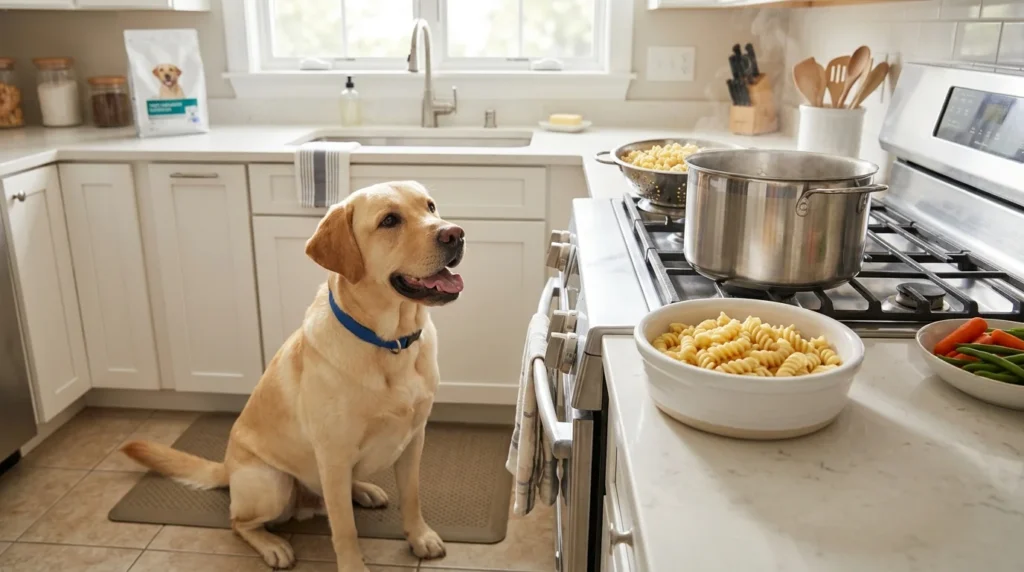
Cook the pasta until soft and serve it plain without sauces, seasonings, salt, butter, cheese, garlic, or onions. Cut large pasta pieces into smaller portions for small dogs.
Introduce pasta slowly and only offer a small amount alongside your dog’s normal balanced diet. Always monitor your dog for any signs of digestive discomfort.
Does Pasta Have Benefits For Dogs?
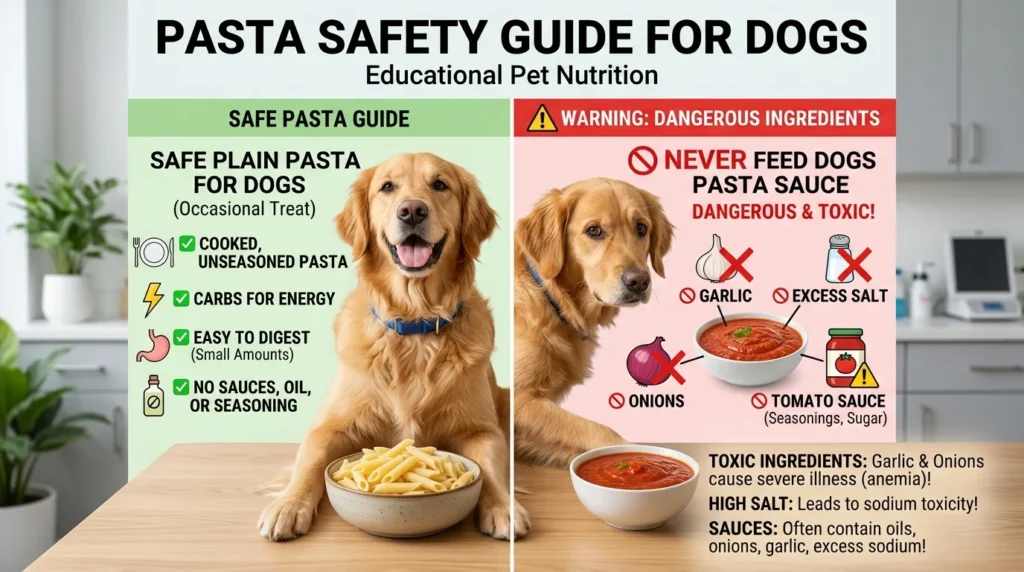
Yes, plain pasta can provide quick energy through carbohydrates. Some types of pasta, especially whole wheat varieties, also contain small amounts of fiber and nutrients.
However, the benefits are limited, and pasta should not be considered a necessary food for dogs. A complete dog diet provides much better nutrition.
Does Pasta Have Any Risks For Dogs?
Yes, pasta can have risks when fed too often or prepared with unsafe ingredients. Too much pasta may contribute to weight gain, digestive issues, and an unbalanced diet.
Pasta dishes containing garlic, onions, creamy sauces, excessive salt, or spices can be harmful and should never be shared with dogs.
Frequently Asked Questions
Can dogs eat plain pasta?
Yes. Plain cooked pasta without sauces or seasonings is safe for dogs in small amounts.
Can dogs eat pasta sauce?
No. Most pasta sauces contain garlic, onions, salt, and spices that can be harmful to dogs.
Can dogs eat spaghetti?
Yes. Plain cooked spaghetti noodles are safe, but avoid spaghetti with sauces or harmful ingredients.
Can puppies eat pasta?
Yes. Puppies can have a tiny amount occasionally, but their puppy food should remain their main nutrition source.
How often can dogs eat pasta?
Dogs should only eat pasta occasionally as a treat, not as a regular part of their daily diet.
Conclusion
Dogs can safely eat plain cooked pasta in moderation. Simple pasta without sauces, seasonings, or harmful ingredients can be an occasional treat for most healthy dogs.
For the best results, keep portions small, choose plain cooked pasta, and avoid pasta dishes containing garlic, onions, salt, or rich sauces. A balanced dog diet should always remain your pet’s main source of nutrition.
See Also: Can Dogs Eat Cilantro? Benefits, Risks & Safe Feeding Guide


