

Can Dogs Eat Guava? Benefits, Risks & Safe Feeding Guide 2026
Yes, dogs can generally eat small amounts of ripe, plain guava as an occasional treat. Guava contains fiber, vitamins, and water, but it is also naturally sweet, so it should not become a large part of a dog’s diet. The safest way to offer guava is to wash it well, remove the stem and hard parts, cut it into small pieces, and serve a modest portion.
Guava is not toxic to dogs when served appropriately, but preparation matters. Large pieces can create a choking risk, and eating too much fruit may cause stomach upset because of its fiber and natural sugar content. Dogs with specific dietary needs may also need to avoid or limit fruit, so moderation is important.
Can Dogs Eat Guava?
Dogs can generally eat guava in small amounts. Ripe guava flesh can be offered as an occasional treat to a healthy dog when it is washed properly and cut into manageable pieces. Guava should complement, not replace, a complete and balanced dog food.
When introducing guava for the first time, start with a small piece and observe your dog. Some dogs tolerate fruit well, while others may experience loose stool, gas, or stomach discomfort after eating unfamiliar foods.
Is Guava Safe for Dogs?
Plain, ripe guava is generally safe for most healthy dogs when offered in moderation. The flesh provides fiber and several vitamins, while its high water content can make it a refreshing occasional snack.
However, safe does not mean unlimited. Guava contains natural sugar and fiber, and excessive amounts can upset a dog’s digestive system. Always remove spoiled portions and avoid guava prepared with sugar, syrup, spices, or other ingredients.
Is Guava Good for Dogs?
Guava can provide some nutritional value for dogs because it contains dietary fiber, vitamin C, vitamin A-related nutrients, and other plant compounds. It can also add variety to an occasional treat routine when served in a simple, dog-friendly form.
Dogs do not need guava to stay healthy, however. A nutritionally complete dog food should provide the essential nutrients your dog requires. Think of guava as an occasional snack rather than a necessary health food or supplement.
Can Dogs Eat Fresh Guava?
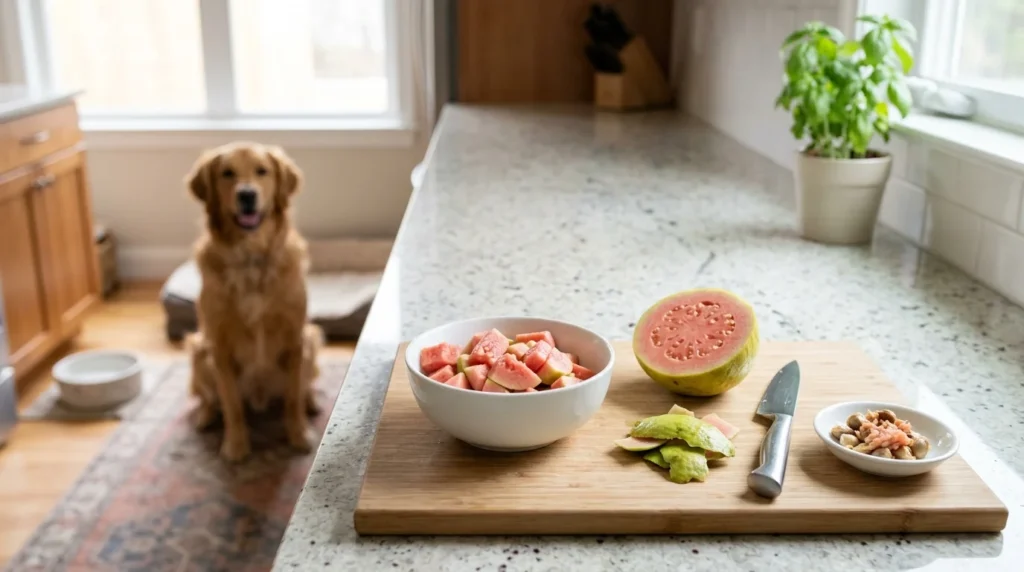
Yes, fresh ripe guava can generally be given to dogs in small pieces. Wash the fruit thoroughly before cutting it and remove the stem and any hard or damaged sections. Fresh guava should be plain and free from added sugar or seasoning.
Cut the flesh into pieces appropriate for your dog’s size. Smaller dogs and dogs that tend to swallow food quickly may need particularly small pieces to reduce the risk of choking.
Can Dogs Eat Ripe Guava?
Ripe guava is generally the better choice for dogs because it is softer and easier to chew than unripe fruit. A small amount of ripe guava flesh can be offered as an occasional treat to a healthy dog.
Check the fruit carefully before serving it. Do not give your dog guava that is moldy, fermented, spoiled, or covered in anything potentially harmful. Introduce only a small portion if your dog has never eaten guava before.
Can Dogs Eat Unripe Guava?
It is better to avoid giving dogs unripe guava. Unripe fruit can be firmer, more difficult to chew, and potentially harder on the digestive system. It may also be less appealing to dogs because of its texture and taste.
Choose soft, ripe guava instead and serve only a small amount. If your dog accidentally eats a small piece of unripe guava, monitor them for digestive upset and contact your veterinarian if concerning symptoms develop.
Also Read: Can Dogs Eat Tuna Safely? What Every Dog Owner Should Know
Can Dogs Eat Guava Skin?
Guava skin is not generally considered toxic to dogs, but it can be tough and may be difficult for some dogs to digest. The safest approach is to wash the fruit thoroughly and remove the skin, particularly when giving guava to a small dog or a dog with a sensitive stomach.
If a dog eats a small amount of clean guava skin accidentally, it is usually not a reason for immediate concern. Monitor for vomiting, diarrhea, or other digestive changes, especially if your dog consumed a large amount.
Can Dogs Eat Guava Seeds?
Guava contains small seeds, and dogs may swallow some of them when eating the fruit. They are not generally regarded as a major toxicity concern in the tiny quantities present in ordinary guava flesh, but removing as many seeds as practical is a sensible precaution.
Seeds and larger pieces can also contribute to digestive discomfort or choking concerns, particularly in small dogs. Preparing guava by removing the harder parts and cutting the flesh into small pieces makes it easier to serve safely.
Can Dogs Eat Guava Peel?
Dogs can potentially tolerate the peel of guava, but it is usually better to remove it before serving. The peel may be tougher than the flesh and can be harder for some dogs to digest.
Removing the peel also makes it easier to inspect the fruit and eliminate any damaged or contaminated areas. Give your dog only clean, ripe, plain guava flesh in an appropriate portion.
Can Dogs Eat Guava Leaves?
Guava leaves are different from the ripe fruit, and they should not be routinely fed to dogs. There is little nutritional reason to give dogs guava leaves, and the safety of consuming larger amounts of leaves has not been established in the same way as ordinary food use of the fruit.
If your dog chews on a guava plant and consumes leaves, monitor them closely. Contact your veterinarian if they eat a substantial amount or develop vomiting, diarrhea, weakness, or other unusual symptoms.
Also Read: What Human Food Can Dogs Eat? Safe Foods Guide 2026
Can Dogs Eat Guava Juice?
Guava juice is not the best way to give guava to a dog. Commercial juices can contain added sugar, sweeteners, preservatives, or other ingredients that dogs do not need. Even unsweetened juice concentrates the fruit’s natural sugars without providing the same whole-fruit texture and fiber.
Plain fresh water should remain your dog’s main drink. If you want to share guava, small pieces of fresh fruit are generally a better option than juice.
Can Dogs Eat Guava Smoothies?
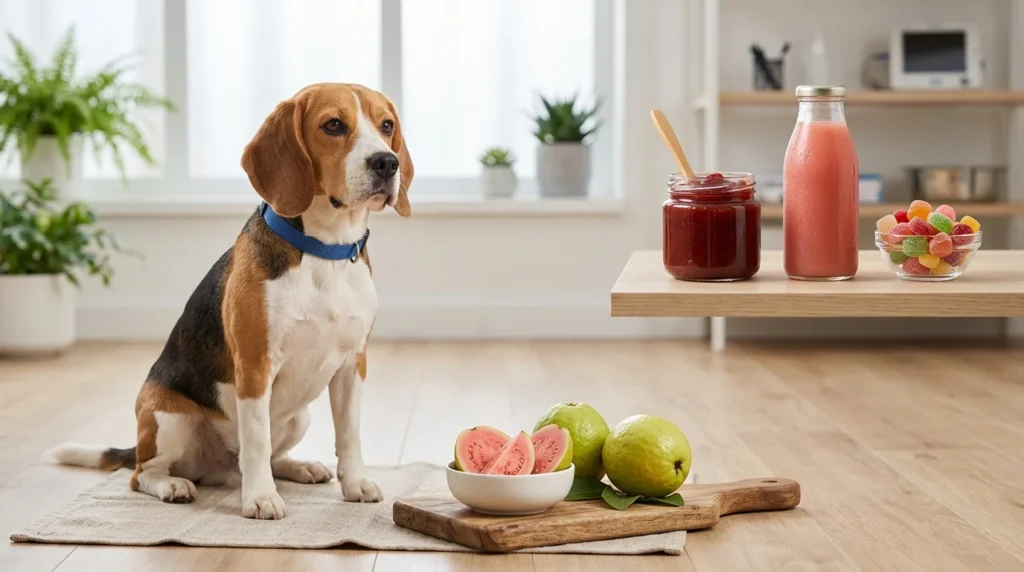
Guava smoothies made for humans may contain milk, yogurt, sugar, sweeteners, chocolate, or other ingredients that are not appropriate for dogs. Some products may also contain artificial sweeteners such as xylitol, which can be extremely dangerous to dogs.
If you make a dog-friendly smoothie, keep the ingredients simple and use only foods known to be safe for your dog. In most cases, there is no need to blend guava at all; a few small pieces of plain ripe fruit are sufficient.
Can Dogs Eat Guava With Yogurt?
Small amounts of plain guava can generally be combined with plain, unsweetened yogurt if your dog tolerates dairy. Choose yogurt without added sugar, artificial sweeteners, fruit syrups, chocolate, or other potentially harmful ingredients.
Some dogs have difficulty digesting lactose and may develop gas or diarrhea after eating dairy. If your dog has never had yogurt before, introduce it separately and in a very small amount before combining it with guava.
Can Dogs Eat Guava With Honey?
There is generally no need to add honey to guava for dogs. Guava already contains natural sugar, and adding honey increases the overall sugar and calorie content of the treat.
A small accidental amount of honey is unlikely to cause serious problems in most healthy adult dogs, but it should not become a regular addition to fruit treats. Plain guava is the simpler and better option.
Can Dogs Eat Guava With Salt?
Dogs should not be given guava sprinkled with salt. Dogs require sodium in appropriate amounts as part of a balanced diet, but adding salty seasonings to treats is unnecessary and can contribute to excessive sodium intake.
Serve guava plain instead. Avoid fruit snacks prepared with salt, chili, seasoning mixes, sauces, or other human flavorings because the additional ingredients may create more risk than the fruit itself.
Can Dogs Eat Guava With Sugar?
It is better to give dogs plain guava rather than fruit covered with added sugar. Guava naturally contains carbohydrates and sugar, so additional sugar provides little nutritional benefit and adds unnecessary calories.
Sweetened guava desserts can also contain ingredients that are unsuitable for dogs. Keep the fruit simple, fresh, and plain whenever you share it with your pet.
Also Read: Can Dogs Eat Peaches? Benefits, Pit Danger & Feeding Guide 2026
Can Puppies Eat Guava?
Puppies can potentially eat a tiny amount of ripe, plain guava, but fruit should be introduced carefully. Puppies need a complete and balanced puppy diet formulated to support their rapid growth, so guava should remain an occasional treat.
Cut the fruit into very small pieces and remove hard or tough parts. Introduce only one new food at a time so you can identify the cause if your puppy develops diarrhea, vomiting, or other digestive symptoms.
Can Small Dogs Eat Guava?
Small dogs can generally have a little ripe guava, but portion size matters. A piece that seems tiny to a person can represent a significant treat for a small dog, and large pieces can create choking concerns.
Cut guava into small, manageable pieces and start with a very small portion. Remove any uneaten fruit rather than allowing your dog to consume a large amount at once.
Can Large Dogs Eat Guava?
Large dogs can generally eat small portions of ripe guava as an occasional treat. Their larger body size may allow a somewhat larger serving than a small dog, but moderation is still important because guava contains natural sugar and fiber.
Do not let your dog eat an entire guava or large quantities of fruit at once. Introduce new foods gradually and consider your dog’s normal calorie intake when adding treats.
Can Dogs Eat Guava Every Day?
Dogs can potentially eat a small amount of guava regularly, but there is no nutritional need to give it every day. Treats, including fruit, should remain a limited part of a dog’s overall diet.
Giving different treats in moderation can provide variety without allowing one fruit to contribute excessive sugar or calories. If your dog has weight-management or dietary concerns, ask your veterinarian about an appropriate treat allowance.
Can Dogs Eat Guava Raw?
Yes, ripe raw guava can generally be given to dogs as long as it is properly washed and prepared. Raw guava should be plain and served in small pieces rather than as a whole fruit.
Remove the stem and tough portions, and consider removing the skin and seeds for easier digestion. Avoid raw guava that is unripe, spoiled, moldy, or contaminated.
Can Dogs Eat Cooked Guava?
Dogs do not need cooked guava, and plain fresh ripe guava is usually the simpler option. Cooking itself is not necessarily the concern, but cooked guava recipes often contain sugar, syrup, spices, butter, or other ingredients dogs should not consume.
If guava is cooked specifically for your dog, keep it completely plain and allow it to cool before serving. In most cases, fresh ripe guava is easier and more practical.
Can Dogs Eat Frozen Guava?
Frozen guava can be offered in small amounts if it is plain and prepared appropriately, but frozen chunks can be hard and may create a choking risk. Allowing the fruit to soften somewhat before serving can make it easier to chew.
Do not give dogs commercially frozen guava products containing added sugar or artificial sweeteners. Check the ingredients carefully and keep portions small.
Can Dogs Eat Dried Guava?
Dried guava is not the best choice for dogs because drying removes much of the fruit’s water and makes the natural sugars more concentrated. Commercial dried fruit may also contain added sugar, preservatives, or other ingredients.
If you want to give your dog guava, fresh ripe fruit is generally a better option. Always check labels carefully before offering any packaged dried fruit to a dog.
Can Dogs Eat Canned Guava?
Canned guava should generally be avoided unless you have confirmed that it contains only plain fruit with no syrup or unsafe additives. Many canned fruits are packed in sweetened syrup, which adds unnecessary sugar.
Fresh ripe guava is a simpler choice. If canned guava is the only available option, check the ingredients and choose fruit without added sweeteners or potentially harmful preservatives.
Can Dogs Eat Guava Paste?
Guava paste is generally not a good treat for dogs. It is usually highly concentrated and contains significant amounts of added sugar. It may also contain preservatives or other ingredients that dogs do not need.
A small accidental taste is unlikely to cause serious problems in most healthy dogs, but large amounts can contribute to digestive upset and excessive sugar intake. Plain fresh guava is a much better choice.
Can Dogs Eat Guava Jam?
Guava jam should not be a regular food for dogs. Jam commonly contains large amounts of added sugar and may contain preservatives or other ingredients that are unsuitable for pets.
If you want your dog to enjoy guava, offer a few small pieces of plain ripe fruit instead. Never give a product containing xylitol or another artificial sweetener that can be dangerous to dogs.
Can Dogs Eat Guava Cake?
Guava cake is not an appropriate treat for dogs. Cakes often contain large amounts of sugar and fat and may include chocolate, raisins, macadamia nuts, artificial sweeteners, or other ingredients that can be harmful to dogs.
The small amount of guava in a cake does not make the dessert dog-safe. Keep cakes and other rich desserts away from dogs and offer plain fruit if you want to share a guava-based treat.
Can Dogs Eat Guava Candy?
Guava candy should not be given to dogs. Candy can contain excessive sugar, artificial sweeteners, flavorings, and other ingredients that are not suitable for canine diets.
The biggest concern is the ingredient list rather than guava itself. Products containing xylitol are particularly dangerous for dogs. Keep candy securely stored away from pets and choose plain dog-safe treats instead.
How Much Guava Can Dogs Eat?
There is no single serving size that works for every dog because appropriate treat portions depend on body size, age, health, activity level, and overall diet. As a general approach, begin with one or two small pieces of ripe guava and see how your dog responds.
Fruit should remain an occasional treat rather than a major calorie source. If your dog tolerates guava well, you can offer small portions occasionally while keeping treats within an appropriate share of their daily food intake.
Does Guava Have Benefits for Dogs?
Guava provides several nutrients that can be useful as part of an overall balanced diet. It contains dietary fiber and vitamin C along with other plant compounds. Its water content can also contribute a little moisture when served as fresh fruit.
However, these benefits do not make guava necessary for dogs. Complete and balanced dog food already provides the nutrients a dog needs. Guava should therefore be viewed as an occasional treat rather than a nutritional supplement or treatment for a health condition.
Does Guava Help Dogs With Digestion?
Guava contains dietary fiber, which can support normal digestive function when consumed in an appropriate amount. A small serving of ripe fruit may provide some fiber as part of an otherwise balanced diet.
Too much guava can have the opposite effect. The combination of fiber and natural sugars may cause gas, loose stool, diarrhea, or stomach discomfort in some dogs. Introduce it gradually and stop giving it if your dog develops digestive problems.
Does Guava Have Vitamin C for Dogs?
Guava is naturally rich in vitamin C, which is one reason it is considered a nutritious fruit for people. Dogs, however, can generally produce vitamin C in their bodies, so healthy dogs do not normally require fruit or vitamin C supplements to meet a dietary requirement.
A small amount of guava can still provide vitamin C along with other nutrients, but it should not be used as a treatment or supplement without veterinary advice. A balanced canine diet should remain the foundation of nutrition.
Can Guava Help Dogs Stay Hydrated?
Fresh guava contains a significant amount of water, so eating a small portion can contribute some moisture to a dog’s diet. This can make ripe fruit a refreshing occasional snack, particularly on a warm day.
Guava should never replace drinking water, however. Dogs should always have access to clean, fresh water. If your dog suddenly drinks much more or much less water than usual, speak with your veterinarian rather than trying to manage hydration through fruit.
Can Guava Help Dogs With Weight Management?
Fresh guava may be a better occasional snack than many processed human desserts because it provides water and fiber without needing added sugar. Even so, guava still contains calories and natural sugars, so portion control remains important.
Dogs that need to lose weight should receive treats according to a veterinarian-approved calorie plan. Replacing high-calorie treats with small pieces of suitable fruit may help some dogs, but the total daily calorie intake matters more than any individual fruit.
Can Diabetic Dogs Eat Guava?
Dogs with diabetes may need careful control of their carbohydrate and calorie intake. Although guava is a whole fruit rather than a sugary dessert, it still contains natural sugars and carbohydrates that may affect a diabetic dog’s diet.
Do not add guava to a diabetic dog’s diet without discussing it with your veterinarian. Your dog’s medication, glucose control, body weight, and overall nutritional plan should determine whether fruit is appropriate.
See Also: Can Dogs Eat White Chocolate? Risks & Safety Guide 2026
Can Dogs With Sensitive Stomachs Eat Guava?
Dogs with sensitive stomachs may tolerate a tiny amount of ripe guava, but new foods can also trigger digestive upset. Guava’s fiber and natural sugars may cause gas or loose stool in dogs that are sensitive to dietary changes.
If your dog has a history of digestive problems, introduce new treats only with veterinary guidance. When trying guava, use a very small amount and monitor your dog rather than offering a full serving immediately.
Can Dogs With Allergies Eat Guava?
Food allergies to guava are not commonly discussed in dogs, but any new food can potentially cause an individual reaction. Signs of a food-related reaction may include itching, skin changes, vomiting, diarrhea, or other unusual symptoms.
If your dog has a known food allergy or is following an elimination diet, do not introduce guava without veterinary approval. A new fruit can interfere with a carefully controlled diet and make it harder to identify dietary triggers.
Can Dogs Eat Guava Seeds and What Are the Risks?
Guava seeds are small, and dogs may swallow some while eating the fruit. They are not generally considered a major poisoning concern in the small quantities found in ordinary guava, but removing as many seeds as practical can make the fruit easier to prepare and digest.
The more important concern is the size and amount consumed. Large quantities of fruit, seeds, or tough pieces can contribute to digestive discomfort or obstruction concerns. Serve small pieces and avoid giving your dog an entire guava at once.
What Are the Risks of Feeding Guava to Dogs?
The main risks of guava for dogs are usually related to quantity and preparation rather than the plain fruit itself. Eating too much can cause digestive upset because of the fruit’s fiber and natural sugar content. Large pieces may also create choking concerns.
Processed guava products can be more problematic because they may contain added sugar, syrups, artificial sweeteners, spices, or other ingredients. Plain ripe guava in a small portion is generally the safer way to offer this fruit.
Can Too Much Guava Make Dogs Sick?
Yes. Eating a large quantity of guava can cause digestive upset, including gas, diarrhea, vomiting, or abdominal discomfort. Dogs that are not accustomed to high-fiber foods may be particularly sensitive to a sudden large serving.
If your dog eats too much guava, remove the remaining fruit and monitor them closely. Provide access to fresh water and contact your veterinarian if vomiting is persistent, diarrhea is severe, your dog appears painful or weak, or other concerning symptoms develop.
Can Guava Cause Diarrhea in Dogs?
Guava can contribute to diarrhea if a dog eats too much. Its fiber and natural sugars can change the digestive contents and may be difficult for some dogs to tolerate, especially when introduced suddenly.
If your dog develops mild loose stool after eating a small amount, avoid giving more guava and monitor their condition. Persistent or severe diarrhea, blood in the stool, repeated vomiting, weakness, or dehydration requires prompt veterinary attention.
Can Guava Cause Vomiting in Dogs?
Vomiting is not expected from a small serving of plain ripe guava, but some dogs may react poorly to unfamiliar foods or may vomit after eating too much. Spoiled fruit or guava products containing unsuitable ingredients can create additional concerns.
If your dog vomits after eating guava, do not give more fruit. Monitor them and contact your veterinarian if vomiting repeats, your dog cannot keep water down, appears painful or lethargic, or consumed a large quantity.
Can Guava Cause Choking in Dogs?
Any firm piece of fruit can become a choking hazard if it is too large for the dog or swallowed quickly. This is especially relevant for small dogs, puppies, and dogs that tend to gulp treats without chewing.
Wash and cut guava into small pieces appropriate for your dog’s size. Supervise your dog while eating and never give a whole guava to a dog that may attempt to swallow it quickly.
Can Dogs Eat Spoiled Guava?
No. Dogs should not be intentionally given moldy, fermented, rotten, or otherwise spoiled guava. Spoiled food can contain microorganisms or toxins that may cause illness.
Inspect the fruit before serving it and discard any questionable portions. If your dog eats moldy or significantly spoiled fruit and develops vomiting, diarrhea, tremors, weakness, or unusual behavior, contact a veterinarian promptly.
Can Dogs Eat Guava From a Fruit Salad?
It depends on what else is in the fruit salad. Plain guava itself can generally be offered in small amounts, but fruit salads may contain grapes, raisins, sweeteners, alcohol-containing dressings, or other ingredients that are unsafe for dogs.
It is safer to give your dog a small piece of guava separately rather than sharing a mixed fruit salad. This lets you control the ingredients and portion size.
Can Dogs Eat Guava Dessert?
Most guava desserts are not suitable for dogs because they often contain added sugar, butter, cream, chocolate, artificial sweeteners, or other rich ingredients. The presence of guava does not make a dessert safe for pets.
If you want your dog to enjoy guava, choose plain fresh fruit instead. Keep human desserts away from dogs, particularly products containing chocolate, raisins, or xylitol.
Can Dogs Eat Guava With Cinnamon?
Plain ripe guava is generally a better choice than guava covered with seasonings. A tiny amount of ordinary culinary cinnamon is not generally considered highly toxic to dogs, but there is no nutritional reason to add it to your dog’s fruit.
Avoid spice-heavy human recipes because they may contain other ingredients that are harmful to dogs. Keep guava plain whenever possible and use only foods known to be appropriate for your pet.
Can Dogs Eat Guava With Coconut?
Small amounts of plain coconut and ripe guava may be tolerated by many dogs, but combining foods increases the number of ingredients you need to monitor. Coconut is also relatively high in fat, and large amounts can cause digestive upset.
If you want to introduce both foods, offer them separately first. This makes it easier to determine which ingredient your dog tolerates if digestive problems occur.
See Also: Can Dogs Eat Rosemary? Benefits, Risks & Safety Guide 2026
Can Dogs Eat Guava With Peanut Butter?
A small amount of plain guava can potentially be combined with peanut butter if the peanut butter is dog-safe. It should contain no xylitol and should not be heavily sweetened or salted.
Peanut butter is calorie-dense and high in fat, so only a small amount should be used. In most cases, plain guava by itself is a simpler treat with fewer ingredients to worry about.
How to Safely Prepare Guava for Dogs
Choose fresh, ripe guava and wash it thoroughly under clean running water. Remove the stem and any damaged areas, then cut the fruit into small pieces. Removing the peel and as many seeds as practical can make it easier for some dogs to eat and digest.
Serve the fruit plain without sugar, syrup, salt, spices, sauces, or sweeteners. Start with a very small amount, especially if your dog has never eaten guava before, and monitor their response before offering it again.
How Often Can Dogs Eat Guava?
Guava is best treated as an occasional snack rather than an everyday dietary staple. A few small pieces can provide variety without contributing a large amount of fruit sugar or calories to the diet.
The appropriate frequency depends on your dog’s size, health, activity level, and overall diet. If your dog has diabetes, obesity, digestive disease, or another dietary concern, ask your veterinarian before making guava a regular treat.
Frequently Asked Questions
Can dogs eat guava?
Yes, most healthy dogs can eat a small amount of ripe, plain guava. Wash it well, remove tough parts, cut it into small pieces, and serve it as an occasional treat.
Can dogs eat guava seeds?
Dogs may swallow some small guava seeds, but removing as many as practical is a sensible precaution. Avoid allowing your dog to consume large quantities of guava or seeds at once.
Can dogs eat guava skin?
Guava skin is not generally considered toxic, but it can be tough and difficult to digest. Removing the skin is often the simplest option, particularly for small dogs or dogs with sensitive stomachs.
Can puppies eat guava?
Puppies can potentially have a tiny amount of ripe, plain guava, but their main diet should be complete and balanced puppy food. Introduce new foods gradually and monitor for digestive upset.
Can dogs eat dried guava?
Fresh guava is generally a better choice. Dried guava has more concentrated natural sugar and packaged versions may contain added sugar or other ingredients that dogs do not need.
Conclusion
So, can dogs eat guava? Yes, most healthy dogs can enjoy a small amount of ripe, plain guava as an occasional treat. The fruit provides fiber, water, vitamin C, and other plant nutrients, but dogs do not need guava as part of a complete diet.
Preparation and portion size are important. Wash the fruit, remove tough parts, cut it into small pieces, and avoid sweetened guava products such as jam, candy, paste, juice, and desserts. Removing the peel and as many seeds as practical can also make the fruit easier to serve.
Too much guava can cause digestive upset, while large pieces can create choking concerns. If your dog has diabetes, weight problems, food allergies, or a sensitive digestive system, check with your veterinarian before adding guava to their diet.
See Also: Can Dogs Eat Bones? Safety Risks & What to Know in 2026


