

Can Dogs Eat Bones? Safety Risks & What to Know in 2026
Dogs can chew on some specially prepared dog-safe bones, but that does not mean all bones are safe to eat. The type of bone, whether it is raw or cooked, its size, and how easily it can break all affect the risk. Some bones can cause choking, broken teeth, intestinal blockage, or injuries to the mouth and digestive tract.
Cooked bones are particularly dangerous because cooking can make them brittle and more likely to splinter. Raw bones may also carry bacteria and can still cause choking, dental injuries, or digestive problems. For these reasons, dog owners should choose chewing products carefully and supervise dogs whenever they are given a bone or bone-like treat.
Can Dogs Eat Bones?
Dogs should not be allowed to eat just any bone. Some veterinary professionals may consider certain raw, appropriately sized recreational bones under controlled circumstances, but there is no completely risk-free bone. Bones can break teeth, become lodged in the throat, or cause gastrointestinal injuries and blockages.
Whether a particular bone is appropriate depends on the dog and the bone itself. Puppies, senior dogs, aggressive chewers, and dogs with dental or digestive problems may face additional risks. Safer commercial dental chews or veterinarian-approved alternatives can be a better choice.
Are Bones Safe for Dogs?
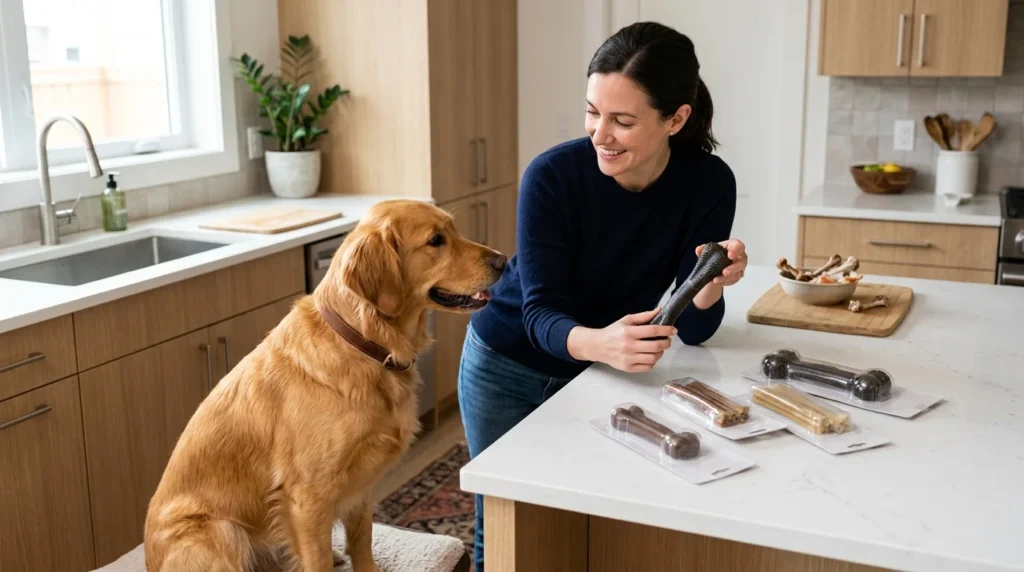
Bones are not automatically safe simply because dogs naturally chew them. A bone that appears strong can fracture into pieces, become stuck in the mouth or throat, or cause damage farther along the digestive tract.
If you decide to offer a bone, supervision is important. Remove it when it becomes small enough to swallow or develops sharp edges. Never assume that a dog will safely handle every type of bone simply because they have eaten bones before without an obvious problem.
Can Dogs Eat Cooked Bones?
No, cooked bones are generally considered unsafe for dogs. Cooking can change the structure of a bone and make it more brittle, increasing the chance that it will splinter when chewed. Sharp fragments can injure the mouth, throat, stomach, or intestines.
Cooked bones can also become choking hazards or cause intestinal blockages. This includes bones left over from cooked meat, poultry, fish, and other meals. Instead of giving your dog leftovers with bones, remove the bones completely before sharing any suitable plain meat.
Also Read: Can Dogs Eat Sardines? Benefits, Risks & Safe Feeding Guide
Can Dogs Eat Raw Bones?
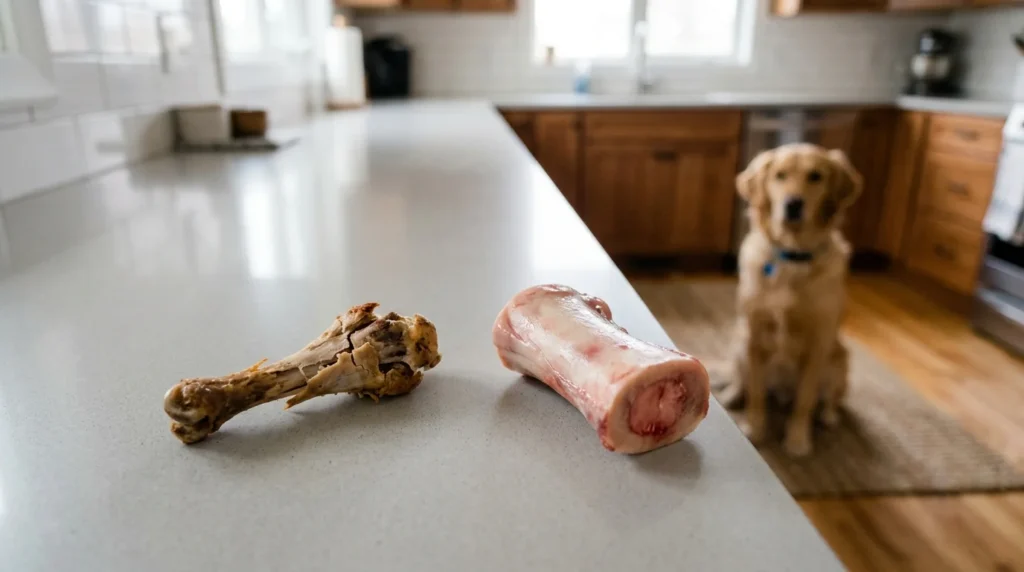
Raw bones may be less brittle than cooked bones, but they are not risk-free. Raw bones can still cause choking, broken teeth, mouth injuries, intestinal obstruction, or constipation. Raw meat and bone products may also carry harmful bacteria.
If a veterinarian believes a particular raw bone is appropriate for your dog, they can help you choose a suitable size and type. Dogs should always be supervised while chewing, and raw animal products should be handled hygienically to reduce contamination risks.
Can Dogs Eat Chicken Bones?
Chicken bones can be dangerous for dogs, particularly when cooked. Cooked chicken bones can become brittle and splinter into sharp fragments that may cause choking or injuries to the digestive tract.
Raw chicken bones can also present risks and may carry bacteria such as Salmonella or other pathogens. If you want to give your dog chicken, remove all bones and serve plain, thoroughly cooked chicken meat in an appropriate portion.
Can Dogs Eat Cooked Chicken Bones?
No. Cooked chicken bones should not be given to dogs. They can break into sharp pieces when chewed and may become lodged in the throat or cause injuries and blockages in the digestive tract.
This applies to bones from roasted, fried, baked, boiled, or grilled chicken. If your dog accidentally eats a cooked chicken bone, do not induce vomiting unless instructed by a veterinarian. Contact your veterinarian for advice, particularly if a large bone or several bones were consumed.
Can Dogs Eat Raw Chicken Bones?
Raw chicken bones are softer than cooked chicken bones, but they are still not completely safe. Dogs can choke on them, swallow pieces that cause obstruction, or injure their mouths and digestive systems.
Raw chicken also presents a bacterial contamination risk. If raw chicken bones are accidentally consumed, monitor your dog and contact your veterinarian if you notice choking, vomiting, abdominal pain, lethargy, difficulty passing stool, or other concerning symptoms.
Also Read: Can Dogs Eat Chicken Bones? Risks, Safety & What to Do
Can Dogs Eat Beef Bones?
Beef bones can be extremely hard, especially large weight-bearing bones. Chewing very hard bones can fracture or wear down a dog’s teeth, while smaller pieces can become choking or obstruction hazards.
Some raw beef bones may be used as recreational chews under veterinary guidance, but they should not be treated as universally safe. Avoid cooked beef bones and discard any bone that becomes cracked, sharp, or small enough to swallow.
Can Dogs Eat Cooked Beef Bones?
Cooked beef bones should not be given to dogs. Heat can make bones brittle, increasing the chance that pieces break away when a dog chews them. Those fragments can potentially cause choking, mouth injuries, or gastrointestinal damage.
This includes bones left from steak, roast beef, ribs, and other cooked beef dishes. Remove bones before allowing your dog to access leftovers, and use a dog-specific chew if you want to provide something for them to gnaw on.
Can Dogs Eat Raw Beef Bones?
Some dogs may chew appropriately selected raw beef bones, but raw beef bones are not risk-free. Very hard bones can damage or fracture teeth, while smaller bones or broken fragments can become lodged or swallowed.
If you are considering raw beef bones, ask your veterinarian whether they are appropriate for your individual dog. The bone should be large enough that it cannot easily be swallowed, and your dog should be supervised throughout chewing.
Can Dogs Eat Steak Bones?
Steak bones should generally be avoided, especially when they have been cooked. Cooked steak bones can become brittle and splinter, creating risks of choking, digestive tract injury, and intestinal obstruction.
Even raw steak bones can be hard enough to damage teeth and may carry bacteria. If you are sharing steak with your dog, remove the bone and offer only a small portion of plain, fully cooked meat without heavy seasoning or excess fat.
Can Dogs Eat Pork Bones?
Pork bones are not a safe choice to give dogs casually. Cooked pork bones can splinter, while raw pork bones can still cause choking, dental damage, digestive obstruction, or bacterial exposure.
Pork dishes can also contain fatty meat, salt, garlic, onion, sauces, or other ingredients that are unsuitable for dogs. If your dog eats pork, plain, thoroughly cooked, boneless lean pork is a more appropriate option.
Also Read: Can Dogs Eat Okra? Benefits, Risks & Safe Feeding Guide
Can Dogs Eat Cooked Pork Bones?
No. Cooked pork bones can become brittle and break into sharp fragments. These fragments may injure the mouth, throat, stomach, or intestines or become lodged and cause an obstruction.
Do not give dogs bones from cooked pork chops, ribs, roasts, or other pork dishes. If a dog accidentally swallows a cooked pork bone, monitor them carefully and contact your veterinarian for advice.
Can Dogs Eat Raw Pork Bones?
Raw pork bones can still be hazardous for dogs even though they have not been exposed to cooking. They can cause choking, broken teeth, intestinal obstruction, constipation, or injuries if pieces are swallowed.
Raw pork products can also carry foodborne pathogens. If your dog has eaten a raw pork bone, consider the size of the bone and your dog’s condition and contact a veterinarian if you are unsure about the risk.
Can Dogs Eat Rib Bones?
Rib bones can pose significant risks to dogs. Cooked rib bones are especially concerning because they may splinter into sharp fragments. Raw rib bones can also break or become lodged in the digestive tract.
Ribs are often served with sauces, salt, spices, garlic, onion, or fatty meat, creating additional dietary concerns. It is safer to remove the bones and offer a small amount of plain, boneless meat instead.
Can Dogs Eat Cooked Rib Bones?
No. Cooked rib bones should not be given to dogs. They can fracture into sharp pieces that may cause choking or damage to the digestive tract.
If your dog gets hold of a cooked rib bone, take away any remaining bones safely and determine how much may have been swallowed. Contact your veterinarian for guidance, especially if the dog swallowed a large piece or multiple bones.
Can Dogs Eat Raw Rib Bones?
Raw rib bones may be less brittle than cooked ones, but they still present risks. A dog can swallow pieces too quickly, choke, damage a tooth, or develop an intestinal blockage.
Raw bones may also carry bacteria. If raw bones are ever considered for your dog, veterinary guidance and close supervision are important. Never assume that raw automatically means safe.
Can Dogs Eat Lamb Bones?
Lamb bones can cause choking, dental injuries, digestive obstruction, and other problems. Cooked lamb bones are particularly dangerous because they can become brittle and splinter.
Lamb dishes may also contain garlic, onion, salt, sauces, or other seasonings that dogs should avoid. If you want to share lamb, remove all bones and serve a small amount of plain, thoroughly cooked meat.
Can Dogs Eat Cooked Lamb Bones?
No. Cooked lamb bones should not be fed to dogs. The cooking process can make the bones brittle and more likely to break into sharp fragments.
These fragments can cause choking or potentially injure the digestive tract. Remove cooked lamb bones before giving your dog any meat, and never allow dogs to chew discarded bones from the dinner table or trash.
Can Dogs Eat Raw Lamb Bones?
Raw lamb bones can still cause problems even though they are not cooked. Depending on their size and structure, they may become choking hazards, damage teeth, or cause an obstruction if pieces are swallowed.
Raw animal products can also contain harmful bacteria. If you are considering raw lamb bones as a chew, consult your veterinarian first and always supervise your dog closely.
Can Dogs Eat Turkey Bones?
Turkey bones should not be casually given to dogs, especially after cooking. Cooked turkey bones can splinter and create choking or gastrointestinal injury risks.
Holiday turkey can also be heavily seasoned or served with gravy, stuffing, onion, garlic, and other ingredients that are unsuitable for dogs. Boneless, plain, thoroughly cooked turkey is a safer way to share this meat.
Can Dogs Eat Cooked Turkey Bones?
No. Cooked turkey bones are dangerous because they can become brittle and splinter when chewed. Small fragments may lodge in the throat or cause injuries or blockages farther along the digestive tract.
If your dog accidentally eats a cooked turkey bone, do not induce vomiting unless your veterinarian tells you to. Contact your veterinarian for guidance, especially if the bone was large or your dog shows unusual symptoms.
Can Dogs Eat Raw Turkey Bones?
Raw turkey bones can also cause choking, dental damage, obstruction, or digestive injury. Raw poultry products may additionally carry bacteria that can make dogs or people sick.
Because turkey bones can vary considerably in size and structure, do not assume that a raw turkey bone is safe simply because it has not been cooked. Ask your veterinarian before offering any raw bone.
Can Dogs Eat Fish Bones?
Dogs should generally not be given fish bones. Fish bones can be small, sharp, and difficult to detect, creating a risk of choking or injury to the mouth, throat, stomach, or intestines.
Cooked fish bones can become especially fragile, while raw fish can carry bacteria and parasites depending on the species and preparation. Serve dogs properly cooked, boneless fish instead.
Can Dogs Eat Cooked Fish Bones?
No. Cooked fish bones are particularly unsuitable for dogs because they can be sharp and brittle. A swallowed bone may become lodged or potentially injure the digestive tract.
Carefully remove all bones before giving cooked fish to your dog. Even small fish bones should not be assumed to dissolve safely after swallowing.
Can Dogs Eat Raw Fish Bones?
Raw fish bones can still be sharp and may cause choking or digestive injuries. Raw fish can also carry microorganisms or parasites, depending on the fish and handling.
If fish is part of your dog’s diet, it should be prepared appropriately and served without bones. Ask your veterinarian about suitable fish and preparation methods for your dog.
Can Dogs Eat Bones From Leftovers?
Dogs should not be given leftover bones from human meals. Most leftover bones have been cooked and may be brittle, while the surrounding food may contain salt, sauces, garlic, onion, or other ingredients that dogs should avoid.
Do not give dogs bones from the dinner table simply because they seem too large to swallow. A dog can break a bone into smaller pieces while chewing, creating additional hazards.
Can Dogs Eat Bones From the Trash?
No. Bones discarded in the trash can be especially dangerous because dogs may consume them without supervision. Cooked bones can splinter, while packaging, sauces, spoiled food, and other trash can introduce additional risks.
Use a secure trash can that your dog cannot open. If your dog gets into the garbage and may have swallowed bones, contact your veterinarian for advice and provide details about what was consumed.
Can Dogs Eat Bones With Meat on Them?
A bone with meat attached may seem natural for a dog, but the bone itself can still present choking, dental, and digestive risks. If the meat has been cooked, the associated bone may be especially dangerous because it can splinter.
The safest approach is to remove the bone and offer an appropriate portion of plain, thoroughly cooked meat. Avoid meat covered in rich sauces, salt, garlic, onion, or spicy seasonings.
Can Dogs Eat Bones With Fat on Them?
Fatty bones and meat scraps can cause additional problems for dogs. Large amounts of dietary fat may lead to vomiting or diarrhea and can increase the risk of pancreatitis in susceptible dogs.
Even if a bone itself might be considered as a recreational chew under veterinary guidance, heavily fatty scraps are not a good addition to a dog’s diet. Trim excess fat and avoid feeding greasy leftovers.
Can Dogs Eat Bone Marrow?
Bone marrow is rich in fat and calories. Although dogs may find marrow highly appealing, consuming large amounts can cause digestive upset and may contribute to pancreatitis in susceptible dogs.
Marrow bones can also be very hard and may damage teeth. If your veterinarian recommends a marrow bone for your dog, follow their guidance regarding size, preparation, supervision, and how long it should be available.
Can Dogs Eat Bone Broth?
Plain, dog-appropriate bone broth can be different from giving a dog an actual bone. A properly prepared broth can be used as a small addition to food, but it should be free from onion, garlic, excessive salt, and unsafe seasonings.
Do not allow dogs to drink broth containing cooked bone fragments. Strain broth carefully and make sure no sharp pieces remain. Fresh water should remain your dog’s primary source of hydration.
Can Dogs Eat Bones for Calcium?
Bones contain calcium and other minerals, but giving dogs random bones is not a safe or reliable way to meet their nutritional needs. Dogs that eat a complete and balanced commercial diet generally receive the calcium and phosphorus they need from their food.
Adding bones or bone meal without veterinary guidance can also disrupt the balance of nutrients in a dog’s diet. Puppies have particularly specific calcium and phosphorus requirements during growth. Ask your veterinarian before adding mineral supplements or bones to your dog’s meals.
Can Dogs Eat Bones for Dental Health?
Chewing can provide some mechanical cleaning of teeth, but bones are not a risk-free dental-care solution. Very hard bones can fracture teeth, while broken pieces can cause choking or digestive injuries.
Veterinary-approved dental chews and regular tooth brushing are generally safer ways to support oral health. If your dog has bad breath, bleeding gums, loose teeth, or visible dental buildup, a veterinary dental examination is more appropriate than giving harder bones.
Can Dogs Eat Bones as a Treat?
A bone should not be treated like an ordinary dog treat because the potential hazards are different from those of typical edible treats. A bone can cause choking, dental fractures, gastrointestinal obstruction, or injury even when a dog has previously chewed bones without problems.
If you want to give your dog something to chew, choose a product designed specifically for dogs and appropriate for their size and chewing habits. Supervise your dog and replace chews that become small, damaged, or sharp.
Can Dogs Eat Bones Every Day?
Dogs should not routinely eat bones every day. Frequent bone chewing can increase exposure to dental fractures, gastrointestinal problems, and potential bacterial contamination when raw animal products are involved.
A complete and balanced diet should provide the majority of your dog’s nutrition. If you want to provide a daily chewing activity, ask your veterinarian about safer chew options that are suitable for your dog’s size, age, and chewing style.
Can Puppies Eat Bones?
Puppies should not be given random bones to chew or eat. Their teeth and jaws are developing, and hard bones can cause painful dental injuries. Puppies can also swallow pieces that create choking or intestinal obstruction risks.
Growing puppies also have precise nutritional requirements, so bones should not be used as an unplanned source of calcium. Use puppy-specific chews and follow a complete, balanced puppy diet recommended for their growth stage.
Can Senior Dogs Eat Bones?
Senior dogs may face additional dental and digestive considerations, making random bones an especially questionable choice. Hard bones can damage teeth, while swallowed pieces may be difficult for an older dog to handle.
If your senior dog enjoys chewing, ask your veterinarian about an appropriate chew based on their dental health and overall diet. Dogs with worn or weakened teeth may need softer alternatives.
Can Small Dogs Eat Bones?
Small dogs can choke on bones that may appear appropriately sized to a larger dog. A bone that can be swallowed whole or broken into small pieces can become particularly dangerous.
Never assume that a bone is safe just because it is small enough to fit in your dog’s mouth. If a chew is used, choose one designed for the dog’s weight and chewing behavior and supervise closely.
Can Large Dogs Eat Bones?
Large dogs are not automatically protected from bone-related injuries. Strong chewers may be able to break large, hard bones into pieces, and aggressive chewing can also result in fractured teeth.
A large dog can also swallow pieces of a bone or develop an obstruction. The dog’s size should therefore be considered alongside the type, hardness, and size of the bone rather than used as the only safety factor.
Can Aggressive Chewers Eat Bones?
Dogs that chew aggressively may have a higher risk of breaking bones into pieces or damaging their teeth. They can also swallow fragments quickly instead of chewing them carefully.
If your dog destroys chews rapidly, avoid giving them bones simply because they seem durable. A veterinarian can help you choose a safer chewing option that matches your dog’s chewing style.
Can Dogs Eat Marrow Bones?
Marrow bones can be problematic because the bone itself may be extremely hard while the marrow inside is rich in fat. Hard bones can fracture teeth, and consuming too much fatty marrow can cause digestive upset.
Large marrow bones should not be assumed to be safe simply because dogs cannot easily swallow them whole. If your veterinarian approves a recreational marrow bone, follow their recommendations closely and supervise your dog throughout use.
Can Dogs Eat Knuckle Bones?
Knuckle bones are very hard and can cause dental fractures or other injuries. They may also break into pieces that create choking or digestive obstruction risks.
Because hardness is a major concern with these bones, they are not suitable for every dog. If a veterinarian recommends a particular bone, ask about its size and hardness and remove it immediately if it becomes damaged or develops sharp edges.
Can Dogs Eat Femur Bones?
Femur bones can be extremely dense and hard. Their hardness can make them attractive to strong chewers, but it also creates a significant risk of tooth fractures.
Large bone fragments can also create choking or gastrointestinal hazards if they break away. Avoid assuming that a large bone is safe simply because it cannot be swallowed whole.
Can Dogs Eat Neck Bones?
Neck bones can vary greatly in size and structure. Raw neck bones may be less brittle than cooked bones, but they can still cause choking, dental injury, obstruction, or bacterial exposure.
Cooked neck bones should be avoided because cooking can make bones more brittle and prone to splintering. If your dog accidentally consumes one, contact your veterinarian for guidance.
Can Dogs Eat Pork Rib Bones?
Pork rib bones should generally be avoided, especially when cooked. Cooked ribs can splinter into sharp fragments that may become lodged or injure the digestive tract.
Raw pork rib bones are not risk-free either. They can still cause choking, dental damage, or obstruction and may carry bacteria. Plain, boneless, thoroughly cooked pork is a safer option.
Can Dogs Eat Beef Rib Bones?
Beef rib bones can be very hard and may damage a dog’s teeth. Cooked beef ribs are especially concerning because the bones can become brittle and splinter.
If your dog is allowed a recreational bone under veterinary guidance, the specific bone should be selected carefully for size and hardness. Remove it if cracks, sharp edges, or small detachable pieces appear.
Can Dogs Eat Ham Bones?
Ham bones are particularly unsuitable because they are usually cooked and can splinter. Ham itself is also typically high in salt and fat, adding further concerns if your dog consumes meat and bone scraps together.
Do not give dogs leftover holiday ham bones. If your dog steals a ham bone, remove access to the remaining food and contact your veterinarian for guidance about the amount consumed and possible risks.
Can Dogs Eat Lamb Chop Bones?
Lamb chop bones should not be given to dogs, particularly after cooking. Their size can make them easy to chew into smaller pieces, while cooked bones may splinter and create sharp fragments.
Lamb chops can also contain significant amounts of fat and seasoning. If you want to share lamb, remove the bone and offer a small amount of plain, thoroughly cooked meat instead.
Can Dogs Eat Bones From Grilled Meat?
No. Bones from grilled meat should not be given to dogs. Grilling can make bones brittle, and high heat may increase the chance that they crack or splinter during chewing.
Grilled meat is also commonly seasoned with salt, garlic, onion, sauces, or spices. Remove bones and offer only a small amount of plain meat if it is appropriate for your dog’s diet.
Can Dogs Eat Bones From Barbecue?
Barbecue bones are especially risky because they are generally cooked and may be covered in sauces or seasonings. Cooked bones can splinter, while barbecue sauces may contain excessive salt, onion, garlic, sugar, or other ingredients dogs should avoid.
Keep barbecue leftovers and bones securely away from pets. If your dog gets into barbecue scraps and may have swallowed a bone, contact your veterinarian for advice.
See Also: Can Dogs Eat Garlic? Vet Safety Guide For Owners Should Know
Can Dogs Eat Bones From Fried Chicken?
No. Fried chicken bones should never be given to dogs. The bones have been cooked and can splinter when chewed, while the fried coating and seasoning can add excessive fat and salt.
Fried chicken may also contain garlic, onion, spicy seasonings, or other ingredients. If your dog accidentally eats fried chicken bones, contact your veterinarian and monitor for signs of choking or digestive problems.
Can Dogs Eat Bones From Rotisserie Chicken?
Rotisserie chicken bones are cooked and therefore should not be given to dogs. They can become brittle and break into sharp pieces when chewed.
Rotisserie chicken may also be seasoned heavily and can contain fatty skin. If you want to share rotisserie chicken, remove the skin and bones and give only a small amount of plain meat if the seasoning is appropriate.
Can Dogs Eat Bones From Turkey Dinner?
Turkey dinner bones should be kept away from dogs. Cooked turkey bones can splinter, and holiday meals often contain gravy, stuffing, salt, onion, garlic, and other ingredients that can be unsafe for pets.
Remove bones before giving your dog any turkey meat. Plain, boneless, thoroughly cooked turkey is a much safer choice than leftover turkey carcasses or bones.
Can Dogs Eat Bones From Fish Dinner?
Fish bones should generally not be given to dogs. They can be tiny, sharp, and difficult to detect, increasing the possibility of choking or injury.
Carefully check cooked fish for bones before serving it to your dog. If your dog swallows fish bones, particularly several bones or a sharp piece, contact your veterinarian for guidance.
Can Dogs Eat Bones If They Are Frozen?
Freezing does not make a bone safe for dogs. A frozen bone can still be hard enough to damage teeth and can still break into pieces that cause choking or obstruction.
Freezing raw bones may also preserve bacteria rather than eliminate them. Do not use freezing as a method for making potentially dangerous bones safe.
See Also: Can Dogs Eat Zucchini? Safe Feeding Guide for Dog Owners
Can Dogs Eat Soft Bones?
Some bones are softer than others, but softness alone does not guarantee safety. A bone that seems easy to chew can still become a choking hazard or cause gastrointestinal problems if pieces are swallowed.
Raw poultry bones are sometimes described as soft, but they still carry risks from bacteria and swallowing fragments. Ask your veterinarian before intentionally offering any animal bone.
What Are the Signs of a Bone Blockage in Dogs?
A gastrointestinal blockage can cause symptoms such as repeated vomiting, loss of appetite, abdominal discomfort, lethargy, difficulty passing stool, or changes in bowel movements. The symptoms can vary depending on where the obstruction occurs.
If you suspect your dog has swallowed a bone and develops these signs, seek veterinary care promptly. An obstruction can become serious and may require diagnostic imaging or treatment.
What Are the Signs of a Bone Injury in Dogs?
After swallowing or chewing a bone, watch for choking, coughing, gagging, excessive drooling, difficulty swallowing, mouth bleeding, vomiting, abdominal pain, or unusual behavior. A dog may also stop eating if chewing or swallowing is painful.
Any difficulty breathing or severe choking is an emergency. For other concerning symptoms after bone ingestion, contact a veterinarian promptly and explain what type of bone your dog consumed.
What Should You Do If Your Dog Swallows a Bone?
If your dog swallows a bone, stay calm and determine what type of bone it was, whether it was cooked or raw, and approximately how much was consumed. Do not induce vomiting unless your veterinarian specifically tells you to do so, because bringing a sharp fragment back up can potentially cause additional injury.
Monitor your dog closely for choking, vomiting, abdominal pain, lethargy, loss of appetite, difficulty passing stool, or other unusual symptoms. Contact your veterinarian for individualized advice, particularly when the bone was cooked, sharp, large, or broken into fragments.
When Is Eating a Bone an Emergency?
Seek emergency veterinary care if your dog is choking, struggling to breathe, has severe or persistent vomiting, appears to be in significant pain, collapses, becomes extremely weak, or shows other severe symptoms after swallowing a bone.
A swallowed bone can sometimes pass without complications, but it is impossible to determine the outcome from appearance alone. Prompt professional advice is especially important for puppies, small dogs, dogs with existing medical problems, and dogs that swallowed large or sharp pieces.
How to Choose a Safer Chew for Your Dog
Look for chew products specifically designed for dogs and select an option appropriate for your dog’s size, age, and chewing behavior. Avoid products that are extremely hard or that can break into sharp pieces.
Supervise your dog while chewing and follow the manufacturer’s feeding instructions. Replace chews when they become small enough to swallow or develop damaged, sharp, or broken sections. Your veterinarian can also recommend appropriate dental or recreational chews.
Frequently Asked Questions
Can dogs eat bones?
Dogs should not be given random bones to eat. Some veterinarian-approved recreational bones may be used in specific circumstances, but all bones carry potential risks including choking, dental fractures, obstruction, and digestive injuries.
Can dogs eat cooked bones?
No. Cooked bones can become brittle and splinter into sharp fragments. These fragments can cause choking, mouth injuries, intestinal damage, or blockages.
Can dogs eat raw bones?
Raw bones may be less brittle than cooked bones, but they are still not risk-free. They can cause choking, dental damage, obstruction, and bacterial exposure. Ask your veterinarian before intentionally giving your dog a raw bone.
What should I do if my dog eats a bone?
Determine the type and amount of bone consumed and contact your veterinarian for guidance. Do not induce vomiting unless specifically instructed. Monitor closely for choking, vomiting, abdominal pain, lethargy, appetite loss, or difficulty passing stool.
Are bones good for dogs’ teeth?
Chewing can provide some mechanical cleaning, but bones can also fracture teeth and cause other injuries. Veterinary-approved dental chews and regular tooth brushing are safer approaches to maintaining canine dental health.
Conclusion
So, can dogs eat bones? The safest answer is that dogs should not be given random bones, especially cooked bones. Cooked chicken, turkey, pork, beef, lamb, and fish bones can splinter or break into pieces that may cause choking, dental injuries, digestive tract damage, or intestinal blockages.
Raw bones are not automatically safe either. They can still damage teeth, become lodged, cause obstruction, or expose dogs and people to harmful bacteria. If a veterinarian approves a particular recreational bone for your dog, choose the size and type carefully and supervise your dog while chewing.
If your dog accidentally swallows a bone, do not induce vomiting unless a veterinarian tells you to. Monitor for choking, vomiting, abdominal pain, weakness, loss of appetite, or difficulty passing stool, and seek veterinary advice when there is any significant concern.
See Also: Can Dogs Eat Sweet Potatoes? Benefits, Risks & Safe Feeding Guide


