Can Dogs Eat Eggs

Can Dogs Eat Raw Eggs or Fried Eggs? Full Safety Guide 2026

You crack an egg for breakfast and your dog immediately appears — ears perked, nose working, eyes tracking every movement. Eggs smell incredible to dogs, and most dogs would eat them in any form without hesitation. But should you share? Can dogs eat eggs? What about raw eggs? Scrambled eggs? The yolk versus the white? What if your dog already ate some before you could stop them?

Eggs are one of the most nutritionally complete foods available — a whole protein source with vitamins, minerals, and healthy fats all packed into one convenient shell. And for dogs, eggs offer real nutritional benefits when served correctly. This complete guide answers every question dog owners ask about eggs — every form, every preparation, every specific concern, and everything you need to make smart decisions about eggs and your dog.


Can Dogs Eat Eggs?

Yes — dogs can eat eggs, and cooked eggs are a genuinely excellent food for dogs. The American Kennel Club (AKC) confirms that eggs are safe for dogs and notes that they are a great source of nutrition. Eggs provide complete protein containing all essential amino acids, Vitamin B12, riboflavin, folate, selenium, Vitamin A, iron, and healthy fatty acids.

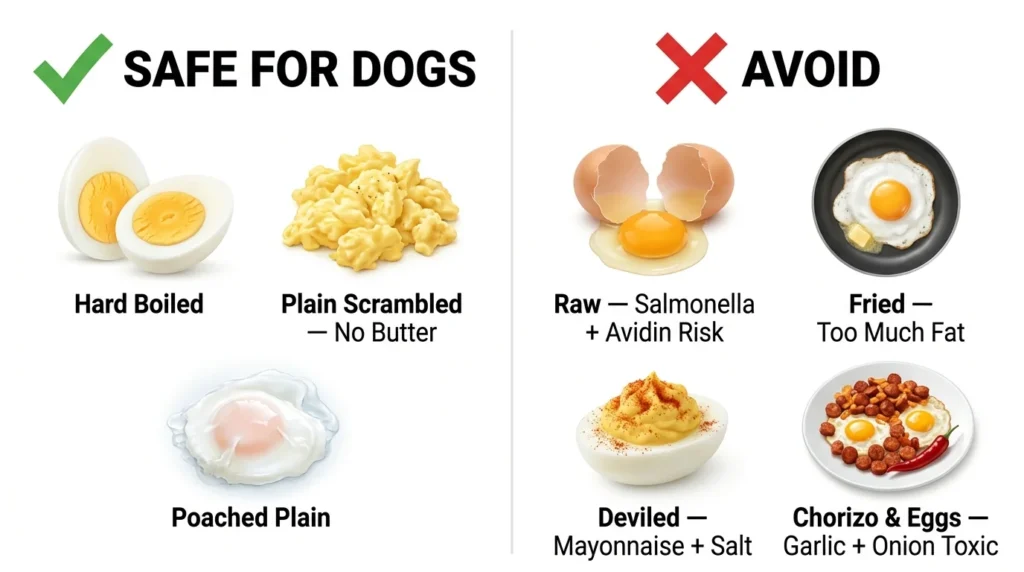
The critical rules: eggs should almost always be cooked before giving to dogs. Raw eggs carry risks of Salmonella contamination and contain avidin — a compound that interferes with biotin absorption. Plain cooked eggs (no butter, no oil, no salt, no seasoning) are the safe and nutritious form. Serve in appropriate amounts based on your dog’s size.


Can Dogs Have Eggs?

Yes — dogs can have eggs, and this is confirmed as safe by veterinary sources including the AKC and most pet nutrition authorities. Eggs are not only safe but are one of the most nutritionally complete foods you can share with your dog. They appear in many commercial dog foods as a primary protein source for exactly this reason.

What makes eggs particularly valuable for dogs is their status as a complete protein — they contain all nine essential amino acids that dogs cannot synthesize themselves and must obtain from diet. This complete amino acid profile supports muscle maintenance, tissue repair, immune function, and virtually every other protein-dependent process in the body.

The main practical consideration is preparation: cooked is always preferable to raw for dogs, and plain is always better than seasoned. Beyond these simple rules, eggs are one of the most straightforwardly beneficial human foods you can share with your pet.


Are Eggs Good for Dogs?

Yes — eggs are genuinely excellent for dogs. They sit at the top of the animal protein quality scale alongside lean meats and fish. The nutritional profile of a single egg is remarkably comprehensive for such a simple, accessible food.

One large egg contains approximately 6 grams of high-quality complete protein, 5 grams of fat (primarily healthy unsaturated fats), Vitamin B12, riboflavin (Vitamin B2), folate, selenium, Vitamin A, iron, phosphorus, and choline. At roughly 70 to 80 calories per large egg, eggs are a moderate-calorie, high-nutrition food that delivers exceptional value per calorie.

For dogs, the most important qualities are the complete protein (all essential amino acids), the bioavailable vitamins and minerals, and the healthy fatty acid content that supports skin and coat health. Eggs are one of the few single foods that genuinely deserve the “superfood” label when it comes to canine nutrition.


Are Eggs Bad for Dogs?

Plain cooked eggs are not bad for dogs. However, eggs can become problematic in specific situations that every dog owner needs to understand.

Raw eggs — bacterial and biotin risk: Raw eggs can harbor Salmonella and may contain other bacteria. They also contain avidin, which binds to biotin (Vitamin B7) and prevents its absorption — leading to biotin deficiency with long-term raw egg feeding.

Too many eggs: Eggs are high in fat and calories. Too many can contribute to weight gain and increase pancreatitis risk, particularly in predisposed dogs.

Seasoned or prepared eggs: Eggs cooked with butter, oil, salt, garlic, onion, chives, or other seasonings become problematic. Garlic and onion are toxic to dogs. High salt causes sodium-related issues. High fat from cooking oils and butter increases pancreatitis risk.

Eggs for dogs with pancreatitis: Dogs with a history of pancreatitis need careful management of fat intake — even eggs, which contain moderate fat, may need to be limited or avoided.

Eggs for dogs with egg allergies: Egg allergies in dogs do occur, though they are not the most common allergen. Dogs with confirmed egg allergies should not eat eggs in any form.

The bottom line: plain cooked eggs are not bad and are genuinely beneficial. Problematic eggs are raw, seasoned, or given in excessive amounts.


Health Benefits of Eggs for Dogs

Let’s break down the specific health benefits that eggs provide to dogs in meaningful detail.

Complete Protein — All Essential Amino Acids Eggs are one of the highest-quality protein sources available to dogs. The biological value (BV) of egg protein — a measure of how efficiently the protein is used by the body — is among the highest of any food source. Complete protein from eggs provides all nine essential amino acids: leucine, isoleucine, valine, lysine, methionine, phenylalanine, threonine, tryptophan, and histidine. These amino acids support muscle building and maintenance, tissue repair after injury or surgery, immune system protein production, enzyme synthesis, and dozens of other critical metabolic functions.

Vitamin B12 — Nerve and Blood Health Eggs are one of the richest food sources of Vitamin B12. This vitamin is essential for healthy nerve function, proper brain development, and the production of red blood cells. B12 deficiency causes neurological symptoms, anemia, fatigue, and digestive problems. For dogs eating primarily commercial dog food, additional B12 from eggs is a meaningful nutritional supplement. For dogs on home-prepared diets, eggs are a particularly important B12 source.

Selenium — Antioxidant and Thyroid Support One egg provides a significant portion of a dog’s daily selenium requirement. Selenium is a trace mineral with powerful antioxidant properties — it works alongside Vitamin E to protect cells from oxidative damage. It also plays a critical role in thyroid hormone metabolism, immune function, and reproductive health. Dogs deficient in selenium can develop muscle weakness, immune problems, and thyroid dysfunction.

Riboflavin (Vitamin B2) — Energy Metabolism Riboflavin is essential for converting food into usable energy — it plays a central role in the metabolism of carbohydrates, fats, and proteins. It also supports healthy growth, red blood cell production, and the maintenance of healthy skin and coat. Dogs with riboflavin deficiency develop a distinctive dry, flaky skin condition and may show weight loss and eye problems. Eggs are an excellent natural source.

Choline — Brain and Liver Health Eggs are one of the best dietary sources of choline — a nutrient that is classified separately from vitamins and minerals but is essential for health. Choline supports brain function and memory, cell membrane integrity, fat metabolism in the liver, and nerve signal transmission. Adequate choline is particularly important for puppies during brain development and for senior dogs whose cognitive function naturally declines. It also supports liver health and fat metabolism.

Folate — Cell Division and DNA Health Folate (Vitamin B9) from eggs supports DNA synthesis, cell division, and red blood cell formation. Particularly important for pregnant dogs and growing puppies, folate ensures healthy cell reproduction and proper genetic function throughout the body. Folate deficiency can cause anemia, poor growth, and developmental problems.

Healthy Fatty Acids — Skin and Coat The fat in eggs includes oleic acid, linoleic acid, and other fatty acids that support healthy skin and a shiny, well-conditioned coat. Linoleic acid is an essential omega-6 fatty acid that must come from diet — it plays a critical role in maintaining skin barrier function and coat quality. Dogs with dull, dry coats or flaky skin often benefit from additional healthy fat intake from sources like eggs.

Vitamin A — Vision, Immunity, Skin Egg yolks are an excellent source of Vitamin A, which supports healthy vision (particularly night vision), immune function, and skin and coat health. Vitamin A also plays a role in proper cell growth and reproduction. For dogs with skin issues or compromised immune function, the Vitamin A from egg yolk provides meaningful targeted support.


Risks of Feeding Eggs to Dogs

Risks of Feeding Eggs to Dogs

Understanding the specific risks allows you to feed eggs responsibly.

Salmonella — The Primary Raw Egg Risk Raw eggs can harbor Salmonella bacteria, which cause serious gastrointestinal illness in dogs. Symptoms include vomiting, diarrhea (sometimes bloody), fever, lethargy, and abdominal pain. In severe cases or immunocompromised dogs, Salmonella infection becomes systemic and life-threatening. Dogs can also transmit Salmonella to humans — a significant public health concern in households with young children, elderly individuals, or immunocompromised people. Cooking eggs thoroughly eliminates this risk entirely.

Avidin and Biotin Deficiency — Raw Egg White Risk Raw egg whites contain avidin — a glycoprotein that binds strongly to biotin (Vitamin B7) and prevents its absorption. Biotin is essential for healthy skin and coat, fat metabolism, and cellular function. A single raw egg white occasionally is unlikely to cause problems, but regular raw egg white feeding over time leads to biotin deficiency. Symptoms include hair loss, skin problems, and general malaise. Cooking destroys avidin, eliminating this risk in cooked eggs.

High Fat and Calories — Weight and Pancreatitis Concerns A large egg contains about 5 grams of fat and 70 to 80 calories. While these are healthy fats, the total fat and calorie content means eggs must be portion-controlled. For small dogs, even one egg per day is a significant caloric addition. For dogs predisposed to pancreatitis (Miniature Schnauzers, Cocker Spaniels, Yorkshire Terriers), the fat content of eggs requires extra caution.

Egg Allergy Egg allergies do occur in dogs, though eggs are not among the most common canine allergens. Signs include skin itching, hives, recurrent ear infections, digestive upset, and general inflammation. Introduce eggs slowly the first time and monitor for any reaction over 24 to 48 hours.

Cholesterol Consideration Eggs contain dietary cholesterol, primarily in the yolk. While dietary cholesterol affects dogs differently than humans, feeding very large amounts of eggs regularly is a consideration for dogs with certain cardiovascular conditions. Discuss with your vet if you have concerns about your dog’s cardiovascular health.


Can Dogs Eat Raw Eggs?

Not recommended — and this is a genuinely important safety recommendation, not just cautious overstatement. Raw eggs present two independent risks for dogs: bacterial contamination and avidin-mediated biotin deficiency.

The bacterial risk is real and documented. Salmonella, Listeria, and other pathogens can be present in raw eggs and cause serious illness. Raw egg feeding has been linked to Salmonella outbreaks in dogs and in the human households where those dogs live.

The avidin risk is cumulative. A single raw egg occasionally is not going to cause acute biotin deficiency, but regular raw egg feeding over weeks and months progressively depletes biotin stores, leading to the symptoms described in the risks section above.

Cooking eggs eliminates both risks entirely. Scrambled, boiled, poached, hard-boiled — any cooking method that thoroughly heats the egg removes bacterial risk and denatures avidin, making the egg fully safe. The nutritional difference between raw and cooked eggs is minimal — cooking does not significantly reduce protein quality or vitamin content. The safety difference is enormous. Always cook eggs before giving them to your dog.


Can Dogs Eat Scrambled Eggs?

Yes — plain scrambled eggs are safe for dogs and are one of the most popular ways to share eggs with dogs. The fluffy, soft texture of scrambled eggs is easy for dogs of all sizes to eat and digest. Most dogs love the taste and smell of scrambled eggs and find them highly appealing.

The critical rule: scrambled eggs must be cooked completely plain — no butter, no oil, no milk, no salt, no pepper, no cheese, no chives, no garlic, no onion. All of these additions make scrambled eggs problematic for dogs. Garlic and onion are toxic. Butter and oil add unnecessary fat. Salt adds excess sodium. Even cheese, while not toxic, adds fat and calories that are not necessary.

The simplest and safest approach: crack one or two eggs into a non-stick pan, scramble without adding anything, cook over medium heat until fully set, and allow to cool before serving. Remove from the pan without any butter or oil — you may need to use a small amount of cooking spray, but that is much lower in fat than butter.

A plain scrambled egg makes an excellent food topper for dogs with reduced appetite, a high-value treat for training, or a nutritious meal addition during illness recovery.


Can Dogs Eat Boiled Eggs?

Yes — boiled eggs are one of the best and safest ways to prepare eggs for dogs. Boiling requires no added oil, no butter, and no seasoning — the egg cooks in its own shell in plain water, making it the cleanest, most preparation-friendly method for dogs.

Both soft-boiled and hard-boiled eggs are safe for dogs. Hard-boiled eggs are easier to handle and store — they can be refrigerated in their shells for up to a week and pulled out as needed for training treats or meal toppers. Soft-boiled eggs have a slightly runny yolk, which is safe as long as the white is fully set.

For serving, peel the egg and cut into slices or quarters appropriate for your dog’s size. Small dogs can have smaller pieces. For training treats, cut a boiled egg into many small pieces to spread across a session. Boiled eggs can also be mashed and mixed into regular food as a nutritional topper.

See Also: Can Dogs Eat Cheese? The Complete Safe-Feeding Guide (2026)


Can Dogs Eat Hard Boiled Eggs?

Yes — hard boiled eggs are specifically one of the most practical egg forms for dogs. The fully cooked, firm texture of a hard-boiled egg is easy to slice, cube, or mash into any size needed. Hard-boiled eggs also store well in the refrigerator for up to a week, making them convenient for advance preparation.

Hard boiling ensures the egg is completely cooked throughout — both white and yolk are fully set. This completely eliminates any risk from undercooked white or yolk and ensures avidin is fully denatured, making the biotin from the egg fully available rather than blocked.

Peel the egg, cut into appropriately sized pieces for your dog, and serve plain. No salt, no mayonnaise (which would make it egg salad — see that section), no mustard, no paprika. Just plain hard-boiled egg flesh.


Can Dogs Eat Cooked Eggs?

Yes — any form of completely cooked egg (without seasoning, oil, or additives) is safe for dogs. Boiled, scrambled, poached, baked — as long as the cooking method uses no harmful additives, the resulting cooked egg is safe and nutritious.

“Cooked” is the key word that separates safe from unsafe in the egg category. Cooking accomplishes two important things: it kills any bacteria present in the raw egg, and it denatures avidin — converting it from a biotin-binding form to a form that no longer interferes with biotin absorption.

The best cooking methods for dogs are boiling (in plain water, no additions), scrambling in a non-stick pan with no butter or oil, or poaching in plain water. Avoid frying in oil or butter, which adds unnecessary fat and calories.


Can Dogs Eat Fried Eggs?

Not recommended, though the egg component itself is not toxic. The problem with fried eggs is the cooking method — frying requires oil or butter, which significantly increases the fat and calorie content of the egg beyond what is appropriate for a dog treat or food addition.

A single tablespoon of butter used to fry an egg adds approximately 100 calories and 11 grams of fat to what would otherwise be a 70-calorie, 5-gram fat food. This dramatically changes the nutritional profile and increases pancreatitis risk.

If you want to share egg with your dog, use the boiling or scrambling methods instead. If you are already frying an egg for yourself and want to share a piece, use the minimum amount of cooking spray rather than butter or oil, cook fully, and give only a small amount to your dog after allowing it to cool.


Can Dogs Eat Eggs Everyday?

This depends significantly on your dog’s size, overall diet, and individual health status. For most healthy dogs, one egg every day or every other day is generally considered safe. However, daily egg feeding is not universally appropriate — it requires careful consideration of the egg’s contribution to overall daily caloric and fat intake.

The frequency recommendation varies by dog size. Small dogs should not have a full egg every day — it represents too large a proportion of their daily caloric budget. Medium dogs can generally handle an egg every day or every other day as part of a balanced diet. Large and extra-large dogs can handle daily eggs more comfortably given their higher caloric needs.

The key principle is balance — eggs should complement, not dominate, a dog’s diet. They are an excellent supplement to a complete commercial dog food, not a replacement for it. See the daily portion table in the “How Many Eggs Can Dogs Eat a Day” section for specific guidance by dog size.


Can Dogs Eat Quail Eggs?

Yes — quail eggs are completely safe for dogs and are a popular alternative to chicken eggs among dog owners, particularly for small breeds. Quail eggs are tiny — roughly one-fifth the size of a standard chicken egg — making them naturally portion-friendly for small dogs.

The nutritional profile of quail eggs is very similar to chicken eggs, just in a smaller package. Quail eggs contain the same high-quality complete protein, B vitamins, selenium, and healthy fats as chicken eggs. Some sources suggest quail eggs have a slightly higher yolk-to-white ratio, which means slightly more fat-soluble vitamins per gram.

Quail eggs should be cooked before serving to dogs — the same raw egg risks (Salmonella, avidin) apply to quail eggs as to chicken eggs. A single small hard-boiled quail egg makes a perfect portion-controlled treat for a small dog. Two to three quail eggs are appropriate for medium dogs.


Can Dogs Eat Deviled Eggs?

No — deviled eggs are not appropriate for dogs. Deviled eggs are hard-boiled eggs with the yolk removed, mixed with mayonnaise, mustard, vinegar, and spices, then piped back into the white half. Every ingredient added to make deviled eggs is problematic for dogs.

Mayonnaise is very high in fat and oil — a significant pancreatitis risk. Mustard can be irritating to the digestive system. Vinegar in concentrated form is acidic and can cause stomach upset. Salt is present in high amounts. Paprika, garlic powder, and other spices used as toppings are either irritating or toxic (garlic is toxic to dogs). Even the pickled relish often mixed into deviled eggs contains vinegar, sugar, and salt.

The base ingredient — hard-boiled egg — is safe, but deviled eggs as a complete product are not appropriate for dogs. Share a plain boiled egg instead.


Can Dogs With Pancreatitis Eat Eggs?

This is a nuanced question that requires a careful, individualized answer rather than a simple yes or no. Eggs contain moderate amounts of fat, and fat management is critical in dogs with pancreatitis.

During an active pancreatitis episode: Dogs with active pancreatitis should not eat eggs. During flare-ups, the diet must be extremely low in fat to allow the pancreas to rest and recover. Eggs contain enough fat to potentially exacerbate an active episode.

During recovery from pancreatitis: A very gradual return to food is guided by your veterinarian. Plain egg white (no yolk) is sometimes introduced as a very low-fat protein source during early recovery. The egg yolk contains most of the fat, so egg white alone is significantly lower in fat. However, any dietary change during pancreatitis recovery must be under direct veterinary guidance.

For dogs with a history of pancreatitis (between episodes): Some dogs with pancreatitis history can tolerate modest amounts of egg — particularly egg white — as part of a carefully managed low-fat diet. Others remain sensitive and should avoid eggs entirely. Individual assessment by your veterinarian is essential.

The answer: discuss eggs specifically with your vet in the context of your dog’s individual pancreatitis history and current management plan. Never assume eggs are safe for a dog with pancreatitis without veterinary confirmation.


Can Dogs Eat Duck Eggs?

Yes — duck eggs are safe for dogs. Duck eggs are larger than chicken eggs (typically about 50% larger by weight) and have a richer flavor and higher yolk-to-white ratio. This means duck eggs provide more fat and more fat-soluble vitamins per egg than a chicken egg of equivalent size.

The nutritional profile of duck eggs is similar to but richer than chicken eggs — higher in Vitamin B12, choline, selenium, and healthy fats. Many dogs find the richer flavor of duck eggs particularly appealing.

Cook duck eggs before giving them to your dog — the same Salmonella and avidin considerations apply. Because duck eggs are larger and richer than chicken eggs, adjust portions downward compared to chicken egg guidelines. One duck egg is roughly equivalent to one and a half chicken eggs in terms of nutritional content and fat load.


Can Dogs Eat Raw Eggs and Shells?

This is a two-part question with different answers for each component.

Raw eggs: Not recommended for the reasons covered extensively in the raw egg section above — Salmonella risk and avidin-mediated biotin interference. Cook eggs before serving.

Eggshells: Eggshells are safe for dogs and are actually a meaningful source of calcium. Ground eggshell is sometimes used as a calcium supplement in home-prepared dog diets. The key is preparation — raw eggshell is fine (the shell itself does not carry the same Salmonella risk as the interior), and it can be dried and ground into a fine powder and sprinkled over food as a calcium supplement.

Whole or large pieces of eggshell are not recommended — they can be sharp and injure the mouth and throat. Only finely ground eggshell powder is appropriate as a dietary supplement.

If you want to give your dog eggshell, dry the shells in a low oven (250°F for about 30 minutes), cool completely, then grind in a coffee grinder or food processor until powdered. Store in an airtight container and add a pinch to food as a calcium supplement.


Can Dogs Eat Chicken Eggs?

Yes — chicken eggs are the standard egg that the entire “can dogs eat eggs” discussion is primarily about. Everything covered in this guide applies specifically to chicken eggs unless otherwise noted. Chicken eggs are safe for dogs when cooked plain.

Chicken eggs are the most accessible, affordable, and commonly available egg variety and are nutritionally excellent for dogs. Choose fresh eggs from the refrigerator section, cook thoroughly (boiled, scrambled without oil or butter, or poached), allow to cool, and serve in appropriate amounts based on dog size.

Free-range or organic eggs may have slightly different nutritional profiles (some studies suggest higher omega-3 content in eggs from chickens that forage for insects and plants), but conventional chicken eggs are perfectly nutritious for dogs. Choose what fits your budget and values.


Can Dogs Eat Sunny Side Up Eggs?

Not recommended. Sunny side up eggs are cooked with only the bottom heat from the pan — the white is set but the yolk remains completely raw and liquid. This creates a partially cooked egg where the yolk carries the same bacterial risks as a raw egg.

Salmonella and other bacteria are present throughout the egg, including in the yolk. A liquid, uncooked yolk means these bacteria have not been eliminated by heat. While the white may be cooked, the yolk is entirely raw and presents the same contamination risk as a fully raw egg.

Additionally, sunny side up eggs are almost always cooked in butter or oil — adding unnecessary fat for dogs. If you want to share egg with your dog, use a fully cooked method (hard-boiled, scrambled through, poached until fully set) rather than any preparation where the yolk remains liquid.


Can Dogs Eat Raw Chicken Eggs?

Not recommended — same guidance as the raw eggs section above. Raw chicken eggs carry Salmonella risk and contain avidin. This applies equally whether the eggs are commercially produced chicken eggs or backyard chicken eggs.

Some proponents of raw (BARF) diets argue that dogs evolved eating raw eggs and that the Salmonella risk is overstated for healthy dogs with strong immune systems. While healthy dogs are more resistant to Salmonella than immunocompromised individuals, they are not immune, and they can carry and shed Salmonella even without showing symptoms — creating risk for human household members.

Cook chicken eggs before giving them to your dog. The nutritional difference between raw and cooked is minimal; the safety difference is substantial.


Can Dogs Eat Egg Yolk?

Yes — cooked egg yolk is safe for dogs and is actually the most nutritionally dense part of the egg. The yolk contains the fat-soluble vitamins (A, D, E, K), the healthy fatty acids including linoleic acid and DHA, the choline, the iron, and most of the other micronutrients. The white provides primarily protein.

Cooked egg yolk is particularly beneficial for dogs with dull coats or dry skin — the fatty acids and Vitamin A in the yolk support skin barrier function and coat condition.

The consideration with yolk is its fat content — egg yolk contains about 4.5 grams of fat per large yolk. For dogs with pancreatitis history or obesity, the yolk’s fat content warrants caution. In these cases, egg white alone (higher in protein, much lower in fat) is a better choice.

Never give raw egg yolk — the same Salmonella contamination risk applies to the yolk as to the whole raw egg.


Can Dogs Eat Egg Whites?

Yes — cooked egg whites are safe for dogs and are an excellent high-protein, very low-fat food option. Egg white contains virtually all the protein of the egg with minimal fat — making it ideal for dogs that need protein supplementation but must manage fat intake (pancreatitis-prone dogs, overweight dogs).

Raw egg white, however, is specifically the problematic form due to avidin content. Avidin binds biotin so effectively that regular raw egg white consumption causes biotin deficiency. This risk is eliminated by cooking — heat denatures avidin, making biotin freely available.

For dogs with pancreatitis history or weight concerns, plain cooked egg white (scrambled or boiled white only, with yolk removed) is an excellent protein-rich, nearly fat-free treat or food supplement. It contains the complete protein with the fat-soluble vitamin and fat components removed.


Can Dogs Eat Egg Salad?

No — egg salad is not appropriate for dogs. Egg salad (chopped hard-boiled eggs mixed with mayonnaise, mustard, salt, and sometimes onion or celery) contains several ingredients that are not safe or appropriate for dogs.

Mayonnaise is very high in fat and oil — a significant pancreatitis concern. The high fat from mayo in combination with egg fat creates a very high-fat product. Salt is present at levels too high for dogs. Mustard can cause digestive irritation. Onion (sometimes added to egg salad) is toxic to dogs and can cause hemolytic anemia. Celery is safe but the other ingredients make the overall product inappropriate.

The plain hard-boiled eggs inside egg salad are safe — it is everything added to make it “salad” that creates the problem. Give your dog a plain hard-boiled egg instead of sharing egg salad.

See Also: Can Dogs Eat Corn? Cobs, Chips, Candy Corn & Every Form Covered


Can Dogs Eat Chorizo and Eggs?

No — chorizo and eggs is not appropriate for dogs, primarily because of the chorizo component. Chorizo is a highly seasoned, high-fat processed pork product that contains garlic, onion, paprika, chili powder, and large amounts of salt. Garlic and onion are both toxic to dogs. The high fat content of chorizo dramatically increases pancreatitis risk.

When chorizo is cooked with eggs, all those seasonings and fat transfer into the eggs as well — making the combination problematic even if you tried to separate the eggs out before serving.

Plain cooked eggs are safe and excellent for dogs. Chorizo with any eggs is not. If you want to share eggs from a chorizo and eggs breakfast, cook a few plain scrambled eggs separately for your dog before adding chorizo to your own portion.


How To Safely Feed Eggs to Dogs

Feeding eggs to your dog safely is straightforward once you know the guidelines.

Choose the preparation method wisely: Best options for dogs — hard boiled, plain scrambled (no butter, no oil, no seasoning), or poached in plain water. All of these cook the egg thoroughly with no additions. Avoid fried (high fat), sunny side up (raw yolk), or any preparation with seasonings.

Cook thoroughly: The entire egg — both white and yolk — should be fully cooked. No runny yolk, no translucent white sections. Fully cooked means fully safe.

Serve plain: No salt, no butter, no oil, no cheese, no herbs, no spices, no garlic, no onion. Just plain cooked egg. This is the single most important preparation rule.

Cool completely before serving: Hot food can burn a dog’s mouth. Allow cooked eggs to cool to room temperature before serving.

Cut into appropriate pieces: Slice or cube cooked eggs into pieces suitable for your dog’s size. Small dogs need smaller pieces to prevent choking.

Introduce slowly: If your dog has never had eggs, start with a small amount — a quarter of a scrambled egg or a few slices of boiled egg — and wait 24 hours to check for any allergic reaction or digestive upset.

Store properly: Cooked eggs should be refrigerated and used within two to three days. Hard-boiled eggs in their shell keep up to one week refrigerated.


How Many Eggs Can Dogs Eat a Day?

How Many Eggs Can Dogs Eat a Day?

This is one of the most important practical questions for dog owners wanting to incorporate eggs into their dog’s diet safely. The answer varies significantly by dog size, overall diet composition, and individual health status.


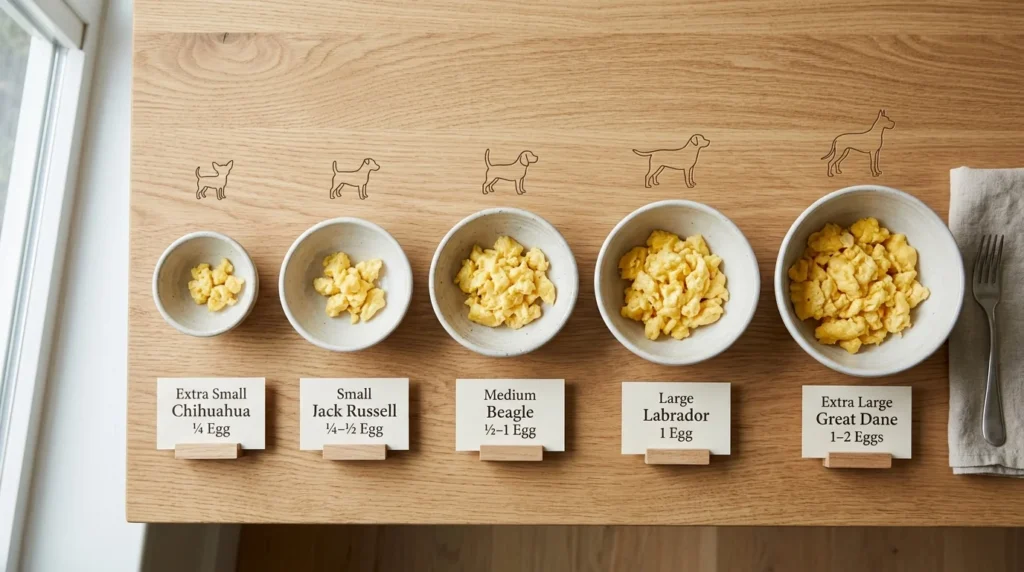
How Many Eggs Can Dogs Eat a Day? — Daily Egg Guide by Dog Size

Dog SizeWeight RangeEggs Per Day (Max)Recommended FrequencyBest Preparation
Extra SmallUnder 10 lbs¼ of one egg2–3 times per weekScrambled plain, small pieces
Small10–20 lbs¼ to ½ of one egg3–4 times per weekBoiled, sliced into small pieces
Medium20–50 lbs½ to 1 whole eggOnce daily or every other dayBoiled or scrambled plain
Large50–90 lbs1 whole eggOnce dailyBoiled or scrambled plain
Extra Large90 lbs +1–2 whole eggsOnce dailyBoiled, scrambled, or poached

Important notes on this table:

  • These are maximum amounts — less is always appropriate and may be better.
  • These figures assume eggs are given in addition to a complete, balanced commercial dog food. If your dog eats a home-prepared diet, work with a veterinary nutritionist to determine appropriate amounts.
  • Daily egg feeding is only appropriate for dogs without health conditions. Dogs with pancreatitis, obesity, kidney disease, egg allergies, or cholesterol concerns need individualized veterinary guidance.
  • For dogs with pancreatitis history, use egg white only and consult your vet before giving even that.
  • Quail eggs are approximately one-fifth the size of chicken eggs — multiply the chicken egg allowance by 5 to estimate equivalent quail egg amounts.
  • Duck eggs are approximately 1.5 times the size of chicken eggs — multiply the chicken egg allowance by 0.67 to estimate equivalent duck egg amounts.
  • These are for cooked eggs only. Raw eggs are not recommended in any amount.

See Also: Can Dogs Eat Oranges? Peel, Juice, Seeds & Every Form Covered


Can Puppies Eat Eggs?

Yes — puppies can eat cooked eggs, and eggs are an excellent food for puppies. The complete protein, choline, DHA, and vitamins in eggs support the rapid growth and brain development occurring in puppies’ first year of life. Choline in particular is important for brain development, and DHA supports cognitive function — both are found in egg yolk.

Eggs are also one of the most digestible protein sources available, which is beneficial for puppies whose digestive systems are still developing. The soft texture of scrambled egg is easy for young puppies with developing teeth to manage.

Puppy-specific guidelines: Start with very small amounts — a teaspoon of scrambled egg for a young puppy. Introduce slowly and watch for any reaction. Puppies’ primary nutrition must come entirely from complete, age-appropriate puppy food — eggs are supplemental. Avoid raw eggs entirely for puppies — their immune systems are still developing, making Salmonella risk higher. Cook eggs thoroughly and serve plain.


Can Eggs Make Dogs Sick?

Yes — in specific situations, eggs can make dogs sick. Understanding these scenarios helps you avoid them.

Raw eggs and Salmonella: Raw egg ingestion can cause Salmonella infection — vomiting, diarrhea (sometimes bloody), fever, lethargy, and in serious cases, systemic infection. This is the most serious acute health risk from eggs.

Raw egg whites and biotin deficiency: Regular raw egg white consumption leads to progressive biotin deficiency — hair loss, skin problems, and metabolic disruption. Symptoms appear gradually over weeks to months of regular raw white consumption.

Seasoned eggs: Eggs cooked with garlic or onion are genuinely toxic due to these additives. High-fat eggs (fried in butter) can trigger pancreatitis.

Egg allergy reaction: Dogs with egg allergies will show itching, skin inflammation, ear infections, and digestive symptoms when they eat eggs.

Overconsumption: Too many eggs at once can cause digestive upset from the high fat and protein content — vomiting, diarrhea, and stomach discomfort.


Can Dogs Be Allergic to Eggs?

Yes — egg allergies in dogs do occur. Eggs are not the most common canine food allergen (chicken, beef, and dairy are more frequent), but egg sensitivity and true egg allergies are documented in dogs.

Signs of egg allergy in dogs:

  • Chronic itchy skin, particularly around the face, paws, belly, and ears
  • Recurrent ear infections
  • Hot spots or skin lesions
  • Vomiting or diarrhea after eating eggs
  • Hives or skin swelling
  • Chronic licking or chewing at paws

Distinguishing allergy from intolerance: True food allergies involve an immune response to egg proteins (primarily ovalbumin in egg white and vitellogenin in yolk). Food intolerance involves digestive difficulty without immune involvement. Both can cause similar-appearing symptoms but require different management approaches.

If you suspect an egg allergy: Consult your veterinarian. An elimination diet (removing all potential allergens for 8 to 12 weeks, then reintroducing individually) is the gold standard for diagnosing food allergies in dogs. Do not rely on at-home allergy tests, which have poor sensitivity and specificity.

For confirmed egg-allergic dogs: All eggs and egg-containing products must be avoided, including many commercial dog foods that use egg as an ingredient. Read all pet food labels carefully.


Frequently Asked Questions

Can dogs eat eggs?

Yes. Cooked eggs are safe and highly nutritious for dogs. They provide complete protein, vitamins B12 and A, selenium, choline, and healthy fatty acids. Always cook thoroughly and serve plain without any seasonings, butter, or oil.

Can dogs have eggs?

Yes. Dogs can have cooked eggs as a treat, food topper, or training reward. Plain boiled, scrambled (no butter or oil), or poached eggs are all appropriate. Introduce slowly the first time and monitor for any reaction.

Are eggs good for dogs?

Absolutely. Eggs are one of the most nutritionally complete foods you can share with your dog. The complete protein, B12, selenium, choline, Vitamin A, and healthy fats make eggs genuinely excellent for canine health when given in appropriate amounts.

Can dogs eat raw eggs?

Not recommended. Raw eggs carry Salmonella risk and contain avidin, which blocks biotin absorption with regular feeding. Cooking eliminates both risks with minimal nutritional compromise. Always cook eggs before giving to your dog.

Can dogs eat scrambled eggs?

Yes — plain scrambled eggs cooked with no butter, no oil, no milk, no salt, and no seasoning are safe and popular with most dogs. The soft texture is easy to eat and digest.

Can dogs eat boiled eggs?

Yes. Boiled eggs are one of the best egg preparation methods for dogs — no added ingredients, fully cooked, and easy to store. Both soft-boiled and hard-boiled are safe.

Can dogs eat hard boiled eggs?

Yes. Hard-boiled eggs are particularly practical — fully cooked, easy to slice into training treats, and can be refrigerated for up to a week. Peel and serve plain.

Can dogs eat fried eggs?

Not recommended. Fried eggs require oil or butter, which significantly increases fat content and pancreatitis risk. Use boiling or plain scrambling instead.

Can dogs eat eggs every day?

Depends on dog size. Large dogs can handle one egg daily. Small dogs should not have a full egg every day — quarter to half an egg, several times per week is appropriate. See the portion table above for specific guidance.

Can dogs eat quail eggs?

Yes. Quail eggs are safe for dogs — nutritionally similar to chicken eggs but much smaller. One to three plain cooked quail eggs is appropriate for small to medium dogs.

Can dogs eat deviled eggs?

No. Deviled eggs contain mayonnaise (high fat), mustard, salt, vinegar, and spices — all problematic for dogs. The plain hard-boiled egg base is safe but the additives make deviled eggs inappropriate.

Can dogs with pancreatitis eat eggs?

With caution and veterinary guidance only. During active flare-ups: no eggs. During recovery: possibly plain egg white under vet supervision. Between episodes: discuss with your vet based on your dog’s specific condition and management plan.

Can dogs eat duck eggs?

Yes. Duck eggs are safe for dogs — richer and larger than chicken eggs, with a similar but more concentrated nutritional profile. Cook thoroughly and adjust portions downward (duck eggs are larger).

Can dogs eat egg yolk?

Yes — cooked egg yolk is safe and nutritionally valuable. It contains fat-soluble vitamins, healthy fatty acids, and choline. Dogs with pancreatitis should limit or avoid yolk due to fat content.

Can dogs eat egg whites?

Yes — cooked egg white is safe and an excellent high-protein, low-fat option. Raw egg white should be avoided due to avidin content. Good for dogs managing fat intake (pancreatitis, obesity).

Can dogs eat egg salad?

No. Egg salad contains mayonnaise (high fat), salt, mustard, and sometimes onion — all problematic for dogs. Give a plain hard-boiled egg instead.

Can dogs eat chorizo and eggs?

No. Chorizo contains garlic and onion (both toxic to dogs), high fat, and heavy seasoning. Cook separate plain eggs for your dog before adding chorizo to your own portion.

Can dogs eat sunny side up eggs?

Not recommended. Sunny side up eggs have a raw liquid yolk — the same Salmonella risk as a raw egg. Use fully cooked egg preparations for dogs.

Can dogs be allergic to eggs?

Yes. Signs include itchy skin, ear infections, hives, and digestive upset. An elimination diet under veterinary guidance is the proper way to diagnose egg allergy. Confirmed egg-allergic dogs should avoid all eggs and egg-containing products.

How many eggs can a dog eat a day?

See the portion table above. Extra small dogs: quarter of an egg, 2-3 times per week. Small dogs: quarter to half an egg, 3-4 times per week. Medium dogs: half to one egg daily. Large dogs: one egg daily. Extra large: 1-2 eggs daily. Adjust for health conditions.


Conclusion

Eggs are one of the most nutritionally complete, genuinely excellent foods you can share with your dog. The complete protein, Vitamin B12, selenium, choline, Vitamin A, riboflavin, folate, and healthy fatty acids in eggs make them a standout food that delivers real, meaningful nutritional value in every serving. Most dogs find eggs irresistibly appealing, and the versatility of eggs as a food — training treat, food topper, meal addition, medication hider — makes them a practical and valuable tool in any dog owner’s feeding toolkit.

Also Read: Can Dogs Eat Carrots? Benefits, Safety & Feeding Guide 2026

Similar Posts

Leave a Reply

Your email address will not be published. Required fields are marked *