

Can Dogs Eat Basil? Safety, Benefits, Risks & Feeding Tips
If you are wondering, can dogs eat basil, the answer is generally yes. Basil is considered non-toxic to dogs and can be given in small amounts as an occasional addition to their food. Fresh basil contains plant nutrients and antioxidants, but dogs do not need basil to maintain a balanced diet.
The safest way to give basil to your dog is plain and in moderation. Fresh basil leaves can be washed, finely chopped, and mixed with regular dog food. Avoid basil dishes or sauces containing ingredients such as garlic, onion, excessive salt, butter, or other seasonings that may be harmful or difficult for dogs to tolerate.
Can Dogs Eat Basil?
Yes, dogs can generally eat basil in small quantities. Fresh basil itself is not considered toxic to dogs, and a few plain leaves are unlikely to cause problems for most healthy dogs. Basil can be offered occasionally as a small food topper or treat rather than as a major part of the diet.
As with any new food, introduce basil gradually. Some dogs may have sensitive stomachs and could experience digestive upset after eating unfamiliar plants. Wash fresh basil thoroughly, remove any spoiled leaves, and serve it plain without sauces or seasonings.
Is Basil Safe for Dogs?
Plain basil is generally safe for dogs when consumed in modest amounts. Fresh basil leaves can be chopped into small pieces and added to a dog’s regular food. The herb is mainly useful as a flavoring or occasional food addition rather than a nutritional requirement.
The main safety issue is the way basil is prepared. Basil pesto, pasta sauces, seasoned dishes, and other human foods may contain garlic, onion, large amounts of salt, cheese, or oil. These additional ingredients can make an otherwise dog-safe herb unsuitable for dogs.
Can Dogs Eat Fresh Basil?
Fresh basil is generally the simplest form of basil to offer a dog. You can wash a few leaves, remove any stems that are large or tough, and finely chop the leaves before adding a small amount to your dog’s food. There is no need to cook fresh basil specifically for dogs.
Start with a tiny quantity because individual dogs can respond differently to herbs and new foods. If your dog develops vomiting, diarrhea, excessive gas, or another unusual reaction after eating basil, stop giving it and allow their digestive system to settle.
Can Dogs Eat Basil Leaves?
Dogs can generally eat plain basil leaves. The leaves can be washed and chopped into small pieces to make them easier to mix with food. A small amount is usually sufficient because basil is an herb rather than a staple food.
Do not encourage your dog to eat large quantities of basil directly from a plant. Eating excessive amounts of any unfamiliar plant material may cause stomach upset. Also make sure the basil plant has not been treated with pesticides, herbicides, or other garden chemicals that could be harmful if ingested.
Can Dogs Eat Basil Seeds?
Basil seeds are different from ordinary basil leaves and are not necessary as a food for dogs. Some basil seeds are sold as food ingredients or used in drinks, where they may swell after absorbing water. There is limited reason to intentionally give basil seeds to a dog.
If your dog accidentally consumes a small amount of basil seeds, monitor them for digestive changes. Avoid giving large quantities or dry seeds intentionally. If your dog consumes an unusual amount or develops choking, vomiting, abdominal discomfort, or other concerning symptoms, contact your veterinarian.
Can Dogs Eat Dried Basil?
Dried basil can generally be consumed by dogs in very small amounts when it is plain and contains no added ingredients. Because dried herbs are concentrated compared with fresh leaves, there is no need to use much. A light sprinkle mixed into regular dog food is more appropriate than a large serving.
Check the ingredient label when using packaged dried basil. Avoid herb blends containing garlic powder, onion powder, excessive salt, or other seasonings. Plain dried basil is preferable to mixed seasoning products because you can clearly identify what your dog is eating.
Can Dogs Eat Basil Every Day?
There is generally no need to give basil to dogs every day. While small amounts of plain basil are generally considered safe, basil does not provide a nutritional requirement that your dog needs to meet through daily feeding. Your dog’s complete and balanced food should remain the foundation of their diet.
If you occasionally use a small amount of basil as a food topper, keep the quantity modest and monitor your dog’s response. Dogs with sensitive digestive systems or special dietary requirements may need a different approach, so ask your veterinarian if you are unsure.
Can Puppies Eat Basil?
Puppies can potentially eat a very small amount of plain basil, but introducing herbs is not necessary for healthy development. Puppies need food formulated to provide the appropriate balance of nutrients for growth, including adequate protein, fats, vitamins, and minerals.
If you want to let your puppy taste basil, use only a tiny amount of washed, finely chopped plain leaves. Introduce one new food at a time so you can identify the cause if digestive upset occurs. Avoid pesto, sauces, and seasoned foods containing basil.
Can Small Dogs Eat Basil?
Small dogs can generally eat a small amount of plain basil. Because they have lower calorie and food requirements than larger dogs, even a modest quantity of a new food can be proportionally significant. A few finely chopped pieces mixed with their normal food are usually more than enough.
Always keep the basil plain and wash it thoroughly before serving. Avoid giving small dogs basil-containing foods such as pesto or pasta sauce unless every ingredient has been confirmed safe. If your dog has dietary restrictions, consult your veterinarian before adding new foods.
Can Large Dogs Eat Basil?
Large dogs can generally tolerate a small amount of plain basil, but a larger body size does not mean they need large quantities of herbs. Basil should still be treated as an occasional food addition and not as a replacement for their regular balanced diet.
Wash the basil thoroughly and chop it before mixing a small amount into food. Avoid basil dishes containing garlic, onion, excessive salt, or rich sauces. If your dog has never eaten basil before, begin with a small amount and watch for any digestive reaction.
Can Dogs Eat Basil Pesto?
Dogs should generally not be given ordinary basil pesto. Although basil itself is generally safe, pesto commonly contains garlic, Parmesan cheese, pine nuts, olive oil, and salt. Garlic is particularly concerning because it can be harmful to dogs.
If your dog accidentally eats a small amount of pesto, check the ingredient list to determine what was consumed. If garlic or onion is present, or your dog ate a substantial amount, contact your veterinarian for advice. Plain fresh basil is a much safer option.
Can Dogs Eat Basil With Garlic?
No. Basil itself can be suitable for dogs, but garlic should not be added to it. Garlic belongs to the Allium family and can damage red blood cells when dogs consume enough of it. This applies to fresh garlic as well as dried and powdered forms.
Avoid basil sauces, pesto, marinades, and seasonings containing garlic or garlic powder. If your dog accidentally consumes basil with garlic, especially a large quantity or concentrated garlic seasoning, contact your veterinarian promptly for guidance.
Can Dogs Eat Basil With Onion?
Dogs should not be given basil dishes containing onion. Onion can be harmful to dogs and may damage their red blood cells. It can appear in fresh, cooked, dried, or powdered forms, so prepared foods require careful ingredient checking.
Plain basil is a safer choice than seasoned basil dishes. If your dog eats food containing onion, the appropriate response depends on the amount consumed and your dog’s size, so contact your veterinarian if you are concerned about a potentially significant exposure.
Can Dogs Eat Basil With Olive Oil?
A tiny amount of plain olive oil is not generally considered toxic to dogs, but there is no need to add oil to basil specifically for your dog. Olive oil is calorie-dense, and larger quantities of added fat can cause digestive upset in some dogs.
If you are preparing basil as a small food topper, plain chopped basil is the simplest option. Avoid basil mixtures containing large amounts of oil, garlic, onion, cheese, salt, or other rich ingredients.
Can Dogs Eat Basil From the Garden?
Dogs can eat basil grown in a garden if the plant is correctly identified as basil and has not been exposed to pesticides, herbicides, fertilizers, or other potentially harmful chemicals. Fresh leaves should be washed before being offered to your dog.
Do not allow your dog to freely consume large amounts of garden plants. Dogs may also encounter other plants growing nearby that are toxic to them. Keep potentially dangerous garden products and unknown plants away from pets, and supervise your dog around garden areas.
How Much Basil Can Dogs Eat?
The amount of basil a dog can have depends on their size, diet, and individual tolerance. Since basil is an herb and only needs to be used in small quantities, a conservative starting portion is appropriate. For a dog trying basil for the first time, begin with just a little and observe their response.
| Dog Size | Starting Portion | Recommended Frequency |
|---|---|---|
| Toy / Very Small | A pinch or 1–2 finely chopped leaves | Occasionally |
| Small | 1–2 teaspoons chopped | Occasionally |
| Medium | 1–2 teaspoons chopped | Occasionally |
| Large | 1–2 tablespoons chopped | Occasionally |
| Very Large | Up to 2 tablespoons | Occasionally |
These are conservative serving suggestions rather than universal veterinary limits. Your dog’s normal diet, health, weight, age, and sensitivity to new foods should all be considered. Basil should remain a small addition rather than becoming a significant part of the daily diet.
Is Basil Good for Dogs?
Basil contains plant compounds and antioxidants, along with small amounts of vitamins and minerals. These properties make basil a nutritious herb for people, and small amounts can add flavor and variety to a dog’s food without being inherently harmful.
However, the nutritional contribution from a small serving of basil is limited. Dogs do not need basil to meet their nutritional requirements, and it should not be viewed as a supplement or treatment for a health condition. A complete and balanced diet remains much more important.
Does Basil Have Benefits for Dogs?
The potential benefits of basil for dogs mainly come from the plant’s naturally occurring nutrients and antioxidant compounds. Adding a small amount can also provide variety and flavor to a dog’s meal. Some dogs may enjoy the taste, while others may completely ignore it.
These potential benefits should be kept in perspective. There is no need to feed large amounts of basil to obtain them, and basil should not replace foods specifically formulated for canine nutrition. If you are considering herbs because of a particular health concern, speak with your veterinarian first.
Can Basil Cause Stomach Problems in Dogs?
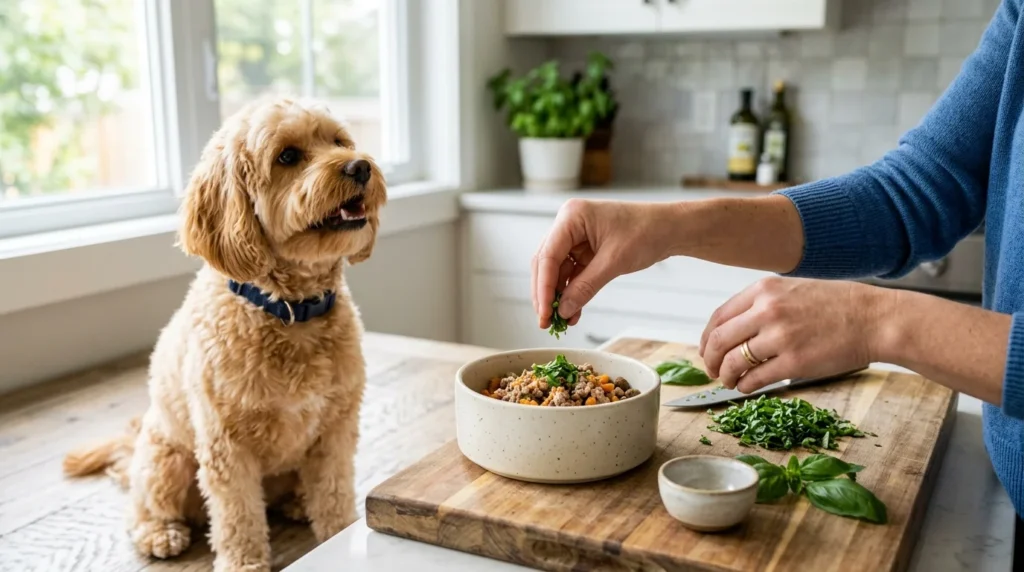
Although basil is generally considered safe, any new food can potentially cause digestive upset in an individual dog. Eating a large amount of plant material may lead to gas, loose stool, vomiting, or stomach discomfort, especially in dogs with sensitive digestive systems.
Start with a very small serving and introduce basil gradually. If your dog develops repeated vomiting, persistent diarrhea, significant abdominal discomfort, weakness, or another concerning symptom, stop offering basil and contact your veterinarian.
Can Dogs Eat Basil With Chicken?
Plain basil can be combined with plain cooked chicken for dogs in a small amount. Chicken provides protein, while basil can add a little flavor and variety. Make sure the chicken is fully cooked, boneless, and free from salt, garlic, onion, spicy seasoning, butter, or sauces before mixing it with basil.
Keep the basil and chicken combination as an occasional addition to your dog’s normal food. If your dog has never eaten basil or chicken before, introduce them separately and start with a small amount. This makes it easier to identify which food may have caused a reaction if digestive problems occur.
See Also: What Can Dogs Not Eat? Dangerous Foods to Avoid Guide
Can Dogs Eat Basil With Rice?
Dogs can generally eat a small amount of plain basil mixed with plain cooked rice. Rice is commonly used as an ingredient in dog foods, while basil can provide flavor without needing to be used in large quantities. Both ingredients should be prepared without garlic, onion, excessive salt, spices, or sauces.
This combination should not replace a complete and balanced dog food unless it has been specifically formulated to meet your dog’s nutritional needs. Use only a small amount as an occasional food addition and introduce it gradually if your dog has not eaten basil or rice before.
Can Dogs Eat Basil With Eggs?
Plain basil and fully cooked eggs can generally be combined in a small serving for many healthy dogs. Eggs provide protein and other nutrients, while a little basil can add flavor. The egg should be completely cooked and served without salt, butter, pepper, garlic, onion, or other seasonings.
A small amount of chopped basil mixed with plain cooked egg can be offered occasionally. Avoid feeding large quantities because eggs and other extras still contribute calories to the overall diet. If your dog has dietary restrictions or a known food allergy, check with your veterinarian first.
Can Dogs Eat Basil With Tomatoes?
Plain ripe tomato flesh and basil can be suitable for dogs in small amounts, but tomatoes require some care. Only ripe tomato fruit should be considered, while the green parts of the tomato plant, including stems and leaves, should be kept away from dogs. These plant parts contain compounds that can be harmful when consumed in sufficient quantities.
If you offer tomato and basil together, remove the stem and leaves and give only a small amount of ripe tomato. Avoid tomato sauces or pasta sauces containing garlic, onion, salt, or heavy seasoning. Plain ingredients are always easier to evaluate for canine safety.
Can Dogs Eat Basil Pasta?
Dogs should not routinely eat human basil pasta dishes because the pasta is often combined with sauces and seasonings that may not be appropriate for them. Basil pasta or pesto pasta can contain garlic, onion, cheese, butter, oil, salt, and other ingredients that can turn a simple dish into a risky food.
A tiny accidental bite of plain pasta containing basil is unlikely to cause problems for most healthy dogs, but check the ingredients if your dog eats a prepared dish. If you intentionally want to share pasta, keep the portion small and choose plain cooked pasta with a little plain basil.
Can Dogs Eat Basil Pesto?
Ordinary basil pesto is not recommended for dogs. Although basil itself is generally safe, pesto commonly contains garlic, cheese, oil, salt, and nuts. Garlic is particularly concerning for dogs, and the high fat content of pesto can also cause digestive upset when consumed in larger amounts.
If your dog accidentally eats pesto, check the recipe or product label to determine what ingredients were included. A small accidental amount may only require monitoring, but significant consumption or exposure to garlic or onion should be discussed with a veterinarian.
Can Dogs Eat Basil Oil?
Basil-infused oil is different from plain basil leaves and should not be treated as a necessary food for dogs. Concentrated oils can contain much higher amounts of plant compounds than the fresh herb, and the added fat also increases calorie intake. There is little reason to intentionally give dogs basil oil.
If you want to add basil flavor to your dog’s food, plain chopped basil is a simpler option. Avoid essential oils altogether unless a veterinarian has specifically instructed you to use a particular product. Concentrated essential oils can be inappropriate or harmful for pets.
Can Dogs Eat Basil Essential Oil?
Dogs should not be given basil essential oil orally unless a veterinarian specifically recommends a veterinary-directed use. Essential oils are highly concentrated compared with fresh herbs, so a small quantity can represent a much greater exposure than a few basil leaves.
Keep bottles of essential oils safely away from dogs to prevent accidental ingestion. If your dog accidentally swallows basil essential oil, do not induce vomiting unless instructed by a veterinary professional. Contact your veterinarian or an appropriate pet poison service promptly for guidance.
Can Dogs Eat Thai Basil?
Thai basil is an aromatic variety of basil and is not the same herb as every other basil variety. A small amount of plain Thai basil may be tolerated by many dogs, but there is no nutritional requirement for dogs to consume it. As with other herbs, wash it thoroughly and offer only a small amount.
Be especially careful with Thai basil dishes prepared for people. Thai food commonly contains garlic, onion, chili, sauces, and substantial amounts of salt. The basil itself may not be the problem, but the complete dish can contain ingredients that are unsuitable for dogs.
Can Dogs Eat Basil Leaves From a Plant?
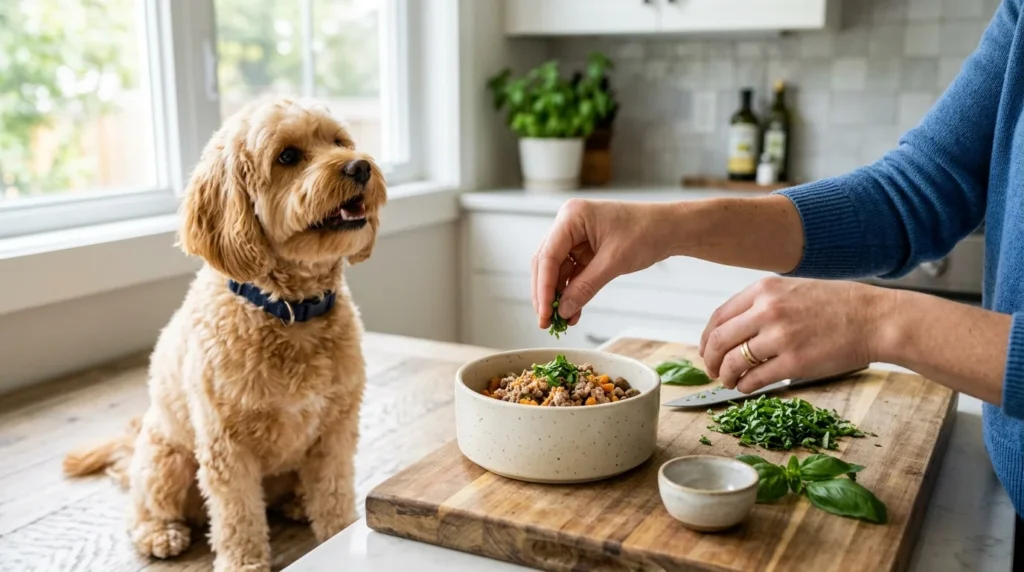
Dogs can generally chew a small number of plain basil leaves, but it is better to supervise them around herb plants. Make sure the plant is correctly identified and has not been treated with pesticides, herbicides, fertilizers, or other garden chemicals that could be harmful if ingested.
Do not allow your dog to consume large quantities of leaves from any plant. Dogs may also encounter other plants growing nearby that are toxic. If you grow basil at home, keep garden chemicals away from pets and prevent your dog from eating unknown plants.
Can Basil Help a Dog’s Digestion?
Basil contains naturally occurring plant compounds and a small amount of fiber, but there is not enough evidence to consider ordinary basil a treatment for digestive problems in dogs. A small amount may be tolerated well, but some dogs can experience gas, loose stool, or stomach discomfort after eating unfamiliar plant material.
If your dog has ongoing digestive problems, do not rely on basil as a remedy. Repeated vomiting, diarrhea, bloating, constipation, loss of appetite, or abdominal pain can have many causes and should be discussed with a veterinarian rather than treated with herbs at home.
See Also: Can Dogs Eat Lettuce? Benefits, Risks & Safe Feeding Guide
Can Basil Cause Diarrhea in Dogs?
Basil itself is generally safe for dogs, but eating too much can potentially contribute to digestive upset. Some dogs are also more sensitive to new foods than others. A sudden introduction of a large amount of basil or a basil-containing dish can result in loose stool, gas, or vomiting.
If your dog develops mild diarrhea after eating basil, stop giving the herb and monitor their condition. Make sure fresh water is available. If diarrhea continues, becomes severe, contains blood, or occurs alongside vomiting, weakness, pain, or dehydration, seek veterinary advice.
Can Basil Cause Allergies in Dogs?
Food and plant allergies can occur in dogs, although a reaction to basil is not something most dogs experience. Any new food can potentially cause an individual sensitivity. Signs of an allergic reaction may include itching, skin irritation, swelling, vomiting, or diarrhea.
Introduce basil in a very small quantity rather than giving a large serving the first time. If your dog develops facial swelling, difficulty breathing, severe vomiting, collapse, or another serious reaction after eating something new, seek emergency veterinary care immediately.
Can Dogs Eat Basil Seasoning?
Plain dried basil seasoning can generally be used in a very small amount, but mixed seasoning blends require caution. Products marketed as Italian seasoning or herb blends may contain garlic powder, onion powder, salt, or other ingredients that are not suitable for dogs.
Always read the ingredient list before sprinkling a seasoning onto your dog’s food. If you want basil specifically, choose plain basil rather than a mixed seasoning. A tiny amount is enough to provide flavor, and there is no benefit to using large quantities.
Our cilantro guide also covers mixing herbs safely, like cilantro with basil.
How to Safely Prepare Basil for Dogs
Wash fresh basil thoroughly under clean running water before serving it. Remove damaged leaves and chop the basil into small pieces. You can mix a small amount with your dog’s regular food or another plain, dog-safe ingredient such as cooked chicken or rice.
Do not add garlic, onion, excessive salt, spicy seasonings, butter, sauces, or large amounts of oil. If using dried basil, choose a plain product with no additional seasoning. Start with a tiny serving and monitor your dog for any digestive or allergic reaction.
How Much Basil Can Dogs Eat?
Basil should be used in small amounts because it is an herb rather than a necessary component of a dog’s diet. The exact amount can vary according to your dog’s size, health, normal diet, and individual tolerance. A conservative approach is to begin with a small quantity and increase only if your dog tolerates it well.
| Dog Size | Starting Amount | Feeding Advice |
|---|---|---|
| Toy / Very Small | 1–2 finely chopped leaves | Occasionally |
| Small | 1 teaspoon chopped | Occasionally |
| Medium | 1–2 teaspoons chopped | Occasionally |
| Large | 1–2 tablespoons chopped | Occasionally |
| Very Large | Up to 2 tablespoons | Occasionally |
These are conservative serving suggestions rather than strict veterinary limits. Treats and human-food additions should remain a small part of your dog’s overall calorie intake. If your dog has a medical condition, food allergy, or specialized diet, consult your veterinarian before adding basil or other new foods.
What to Do If Your Dog Eats Too Much Basil
If your dog eats a large amount of fresh basil, monitor them for digestive upset such as vomiting, diarrhea, gas, loss of appetite, or abdominal discomfort. In many cases, the main concern after eating a large amount of an unfamiliar herb is digestive irritation rather than basil toxicity.
However, the situation can be different if your dog ate basil as part of pesto, pasta sauce, seasoning, or another prepared food. Check the ingredients for garlic, onion, excessive salt, or other potentially harmful substances. If a large amount was consumed or your dog develops significant symptoms, contact your veterinarian.
Frequently Asked Questions
Can dogs eat basil?
Yes, dogs can generally eat small amounts of plain basil. Fresh or dried basil can be offered occasionally, provided it contains no harmful additives.
Can dogs eat basil leaves?
Yes. Plain, washed basil leaves are generally safe for dogs in small quantities. Chop them into small pieces and avoid letting your dog consume large amounts.
Can dogs eat basil pesto?
Ordinary pesto is best avoided because it commonly contains garlic, cheese, oil, salt, and other ingredients that may not be suitable for dogs.
Can puppies eat basil?
Puppies can potentially have a tiny amount of plain basil, but they do not need it. Their main diet should be complete and balanced puppy food designed for healthy growth.
Can dogs eat dried basil?
Yes, plain dried basil can generally be given in a very small amount. Avoid seasoning blends containing garlic powder, onion powder, salt, or other added ingredients.
Conclusion
So, can dogs eat basil? Yes, plain basil is generally safe for dogs when given in small amounts. Fresh basil leaves can be washed, chopped, and added occasionally to your dog’s regular food. Dried basil can also be used sparingly when it contains no additional seasonings.
The biggest concern is not usually the basil itself but the ingredients found in basil-based human foods. Pesto, pasta sauces, marinades, and seasoned dishes may contain garlic, onion, excessive salt, oil, cheese, or other ingredients that can be harmful or difficult for dogs to tolerate.
Keep basil as an occasional food addition rather than a daily necessity. Start with a small amount, watch your dog’s response, and contact your veterinarian if your dog consumes a large quantity or develops concerning symptoms.
See Also: Can Dogs Eat Grapes? The Dangerous Truth Every Owner Must Know


