

What Veggies Can Dogs Eat? Safe Vegetables for Dogs
Many vegetables can be safe and nutritious for dogs when they are properly prepared and served in moderation. Vegetables such as carrots, green beans, cucumbers, peas, pumpkin, sweet potatoes, and broccoli can provide fiber, vitamins, minerals, and extra variety alongside a complete and balanced dog food.
However, not every vegetable is safe for dogs. Some vegetables can be toxic, while others may cause digestive problems when eaten in large amounts or prepared with salt, butter, garlic, onion, or spicy seasonings. The safest approach is to offer plain, properly prepared vegetables in small portions.
What Veggies Can Dogs Eat?
Dogs can eat several vegetables, including carrots, green beans, cucumber, peas, pumpkin, sweet potatoes, zucchini, broccoli, and cooked spinach in appropriate amounts. These vegetables can be offered as occasional treats or small additions to a balanced diet.
Preparation matters just as much as the vegetable itself. Wash vegetables thoroughly, remove unsafe parts, cut them into manageable pieces, and avoid ingredients such as onion, garlic, excessive salt, butter, and spicy sauces.
Are Vegetables Good for Dogs?

Vegetables can provide useful nutrients and dietary fiber while often being lower in calories than many processed treats. They can add variety to a dog’s diet and may be especially useful as occasional snacks for dogs that enjoy crunchy or soft plant foods.
Vegetables should not replace a nutritionally complete dog food. Dogs have specific nutritional requirements, and simply adding large amounts of vegetables can dilute the nutrients in their regular diet.
What Vegetables Are Safe for Dogs?
Some commonly dog-friendly vegetables include carrots, green beans, cucumber, peas, pumpkin, zucchini, sweet potatoes, broccoli, and small amounts of cooked spinach. Plain, properly prepared versions are generally preferable.
Start with one vegetable at a time if your dog is trying something new. This makes it easier to identify which food may be responsible if your dog develops gas, diarrhea, vomiting, or another digestive reaction.
Can Dogs Eat Carrots?
Yes, dogs can generally eat carrots. Raw carrots can provide a crunchy, low-calorie snack, while cooked carrots may be easier for some dogs to digest. Carrots contain fiber and beta-carotene, which the body can convert into vitamin A.
Wash carrots thoroughly and cut them into pieces appropriate for your dog’s size. Large, hard pieces can present a choking risk, particularly for small dogs or dogs that tend to swallow food quickly.
Can Dogs Eat Green Beans?
Yes, plain green beans are generally safe for dogs. They provide fiber and several nutrients while being relatively low in calories. They can be served raw, steamed, or cooked without added seasonings.
Avoid canned green beans containing large amounts of sodium and avoid green beans prepared with butter, garlic, onion, or rich sauces. Cut them into manageable pieces before serving.
Can Dogs Eat Cucumbers?
Yes, plain cucumber can generally be given to dogs in moderation. Cucumbers contain a high amount of water and can make a refreshing low-calorie snack, particularly during warm weather.
Wash the cucumber and cut it into small pieces. Avoid pickled cucumbers because pickles can contain excessive salt, vinegar, garlic, onion, and other seasonings that are not appropriate for dogs.
Can Dogs Eat Peas?
Plain peas can generally be eaten by dogs in moderation. Green peas, snow peas, and sugar snap peas can provide fiber and other nutrients, although preparation and portion size are important.
Avoid peas prepared with butter, salt, garlic, onion, or creamy sauces. If using canned peas, choose a low-sodium option or rinse them thoroughly to reduce excess sodium.
Can Dogs Eat Pumpkin?
Plain pumpkin can generally be a good addition to a dog’s diet in small amounts. Pumpkin provides fiber and is commonly used as an occasional dietary ingredient for dogs.
Use plain cooked pumpkin or plain canned pumpkin without added sugar or spices. Do not confuse plain pumpkin with pumpkin pie filling, which can contain sugar, spices, and other ingredients unsuitable for dogs.
Can Dogs Eat Sweet Potatoes?
Dogs can generally eat cooked sweet potatoes in moderation. Sweet potatoes provide carbohydrates, fiber, and several vitamins and minerals. They should be thoroughly cooked before being offered to a dog.
Remove the skin if it is tough and cut the sweet potato into manageable pieces. Avoid sweet potatoes prepared with butter, brown sugar, marshmallows, excessive salt, or spicy seasonings.
Can Dogs Eat Broccoli?
Dogs can generally eat broccoli in small amounts. Broccoli contains fiber and several vitamins and minerals, but large quantities may cause gas or digestive discomfort.
Both raw and cooked broccoli can be offered in suitable portions, although steaming can make it easier to chew. Cut large pieces into smaller portions and avoid butter, garlic, onion, cheese sauce, and heavy seasoning.
Can Dogs Eat Zucchini?
Plain zucchini is generally safe for dogs and can be served raw or cooked. It is relatively low in calories and contains water, fiber, and various nutrients.
Wash zucchini thoroughly and cut it into appropriate pieces. Avoid zucchini prepared with garlic, onion, excessive oil, salt, or spicy seasonings.
Can Dogs Eat Spinach?
Dogs can eat small amounts of cooked spinach, but it is not a vegetable that should be given in large quantities. Spinach contains oxalates, and excessive intake may be problematic, particularly for dogs with certain health conditions.
If you offer spinach, keep the amount small and serve it plain. Dogs with kidney problems or other relevant medical conditions should only receive spinach if their veterinarian considers it appropriate.
Can Dogs Eat Celery?
Yes, plain celery can generally be given to dogs in moderation. Celery contains water and fiber and is relatively low in calories, making it a possible occasional snack.
Wash celery thoroughly and cut it into small pieces. Remove tough strings when appropriate, especially for smaller dogs, and never serve celery with salty dips, garlic, onion, or rich sauces.
Can Dogs Eat Bell Peppers?
Dogs can generally eat plain bell peppers in moderation. Red, yellow, orange, and green bell peppers are not considered toxic to dogs and can provide vitamins and antioxidants.
Remove the stem and seeds and cut the pepper into manageable pieces. Sweet bell peppers are preferable to hot peppers because spicy peppers can cause mouth and digestive irritation.
Can Dogs Eat Lettuce?
Plain lettuce can generally be eaten by dogs in small amounts. It contains water and fiber and is relatively low in calories, although it does not provide a significant amount of nutrition compared with a complete dog food.
Wash lettuce thoroughly and tear it into small pieces. Avoid salads containing onion, garlic, high-fat dressings, excessive salt, or other unsafe ingredients.
Can Dogs Eat Cabbage?
Dogs can generally eat small amounts of plain cabbage. Cabbage provides fiber and various nutrients, but eating too much can cause gas or digestive discomfort.
Cooked cabbage may be easier for some dogs to digest. Whether raw or cooked, serve it plain and avoid preparations containing butter, garlic, onion, excessive salt, or rich sauces.
Can Dogs Eat Cauliflower?
Plain cauliflower can generally be given to dogs in moderation. It provides fiber and nutrients and can be served raw or cooked in small portions.
Too much cauliflower may cause gas, so introduce it gradually. Cut large pieces into manageable sizes and avoid seasoning, butter, garlic, onion, and creamy sauces.
Can Dogs Eat Brussels Sprouts?
Dogs can generally eat cooked Brussels sprouts in small amounts. They contain fiber and nutrients, but like other cruciferous vegetables, they may cause gas if a dog eats too much.
Steam or cook them without salt, butter, garlic, onion, or seasoning. Cut them into small pieces before serving, particularly for small dogs.
Can Dogs Eat Corn?
Plain corn kernels can generally be eaten by dogs in moderation. Corn provides carbohydrates, fiber, and some nutrients and is found in many commercially prepared dog foods.
The corn should be removed from the cob before feeding it to your dog. Corn cobs can be dangerous because dogs may swallow pieces that can cause an intestinal blockage.
Can Dogs Eat Corn on the Cob?
No, dogs should not be given corn cobs to chew or eat. While the kernels themselves can be safe, the cob can become a serious choking or intestinal obstruction hazard if swallowed.
If you want to give your dog corn, remove the kernels from the cob and offer a small amount plain. Never allow your dog to chew on a whole corn cob unsupervised.
Can Dogs Eat Potatoes?
Plain, fully cooked potatoes can generally be eaten by dogs in moderation. Potatoes should be cooked thoroughly and served without butter, salt, garlic, onion, or rich toppings.
Raw potatoes and green potatoes should be avoided. Green portions can contain higher levels of solanine, a compound that can be harmful to dogs in sufficient amounts.
Can Dogs Eat Raw Vegetables?
Some vegetables can be safely eaten raw, including carrots, cucumber, and certain types of bell peppers. However, raw vegetables can be harder to chew and digest than cooked vegetables for some dogs.
Always wash raw vegetables and cut them into appropriate pieces. Dogs that gulp food may be safer with finely chopped or lightly cooked vegetables.
Can Dogs Eat Cooked Vegetables?
Many dog-safe vegetables can be cooked before serving. Steaming or lightly cooking vegetables without seasoning can soften them and make them easier for some dogs to chew and digest.
Avoid cooking vegetables with garlic, onion, heavy salt, butter, spicy sauces, or excessive oil. Plain preparation is generally the safest approach.
See ALso: Can Dogs Eat Peaches? Benefits, Pit Danger & Feeding Guide 2026
How Many Vegetables Can Dogs Eat?
Vegetables should generally be offered as a small part of a dog’s overall diet rather than as a replacement for balanced dog food. The appropriate amount depends on your dog’s size, calorie requirements, activity level, and health.
| Dog Size | Suggested Starting Amount |
|---|---|
| Small Dogs | 1–2 teaspoons of chopped vegetables |
| Medium Dogs | 1–2 tablespoons |
| Large Dogs | 2–4 tablespoons |
| Puppies | A very small amount appropriate for their size |
Start with small portions when introducing a new vegetable and monitor your dog for digestive upset. Treats and extras should remain limited so they do not unbalance the main diet.
What Vegetables Can Dogs Not Eat?
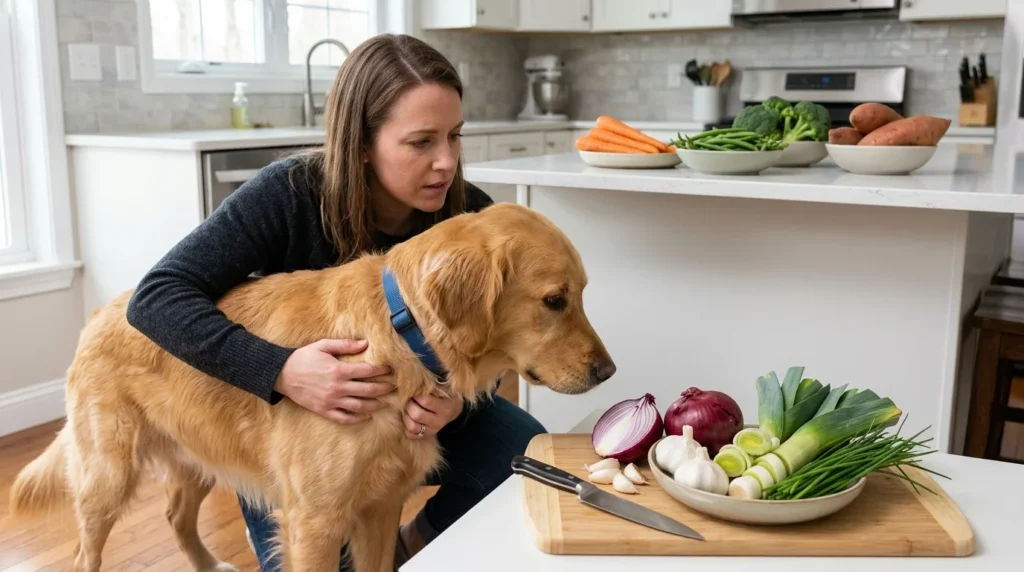
Not every vegetable is safe for dogs. Onions, garlic, leeks, and chives should be avoided because they belong to the Allium family and can damage red blood cells. Large amounts of certain other plant foods can also cause digestive or other health problems.
Preparation also matters. A vegetable that is normally safe can become unsuitable when cooked with garlic, onion, excessive salt, butter, spicy seasonings, or rich sauces. When introducing vegetables, keep them plain and serve appropriate portions.
Can Dogs Eat Onions?
No. Dogs should not eat onions. Raw, cooked, dried, and powdered onions can all be harmful because they contain compounds that can damage red blood cells and potentially cause anemia.
Onion can be hidden in soups, sauces, gravies, vegetable mixes, and seasoning powders. If your dog consumes a significant amount of onion or onion-containing food, contact your veterinarian for advice.
Can Dogs Eat Garlic?
No. Garlic should not be intentionally fed to dogs. Garlic belongs to the same plant family as onions and can damage red blood cells when enough is consumed.
Garlic can be especially easy to overlook because it is often used as a seasoning. Garlic powder and concentrated garlic products can also be concerning. Keep garlic-seasoned vegetables away from your dog.
Can Dogs Eat Leeks?
No. Leeks are part of the Allium family and should not be fed to dogs. They contain compounds that can damage red blood cells and may cause gastrointestinal problems or anemia.
Leeks can be present in soups, vegetable dishes, and prepared foods. If your dog eats a potentially significant amount, contact a veterinarian rather than waiting for symptoms.
Can Dogs Eat Chives?
No. Chives should not be given to dogs. Like onions, garlic, and leeks, chives belong to the Allium family and can be harmful when consumed in sufficient amounts.
Keep chives away from your dog’s food and be careful with prepared dishes that use them as a garnish or seasoning. Contact your veterinarian if your dog consumes chives.
Can Dogs Eat Mushrooms?
Store-bought mushrooms such as plain white button mushrooms are generally considered safe for dogs when properly prepared, but wild mushrooms can be extremely dangerous. Identifying wild mushrooms accurately can be difficult.
Never allow your dog to eat unknown mushrooms growing outdoors. If you suspect your dog has eaten a wild mushroom, contact a veterinarian or emergency veterinary service immediately.
Can Dogs Eat Raw Green Beans?
Yes, plain raw green beans can generally be eaten by dogs. They provide fiber and are relatively low in calories, making them a convenient occasional vegetable treat.
Wash them thoroughly and remove tough ends if needed. Cut longer beans into smaller pieces, especially for small dogs or dogs that swallow food quickly.
Can Dogs Eat Frozen Vegetables?
Some plain frozen vegetables can be given to dogs, including carrots, green beans, and peas. Frozen vegetables should be plain and free from sauces, seasonings, onion, garlic, or excessive salt.
Very hard frozen pieces can be difficult for some dogs to chew. Consider allowing them to thaw slightly and cut larger pieces into manageable sizes before serving.
Can Dogs Eat Canned Vegetables?
Some canned vegetables can be given to dogs, but many canned products contain significant amounts of sodium. Excess salt is unnecessary for dogs and can become a concern when consumed in large quantities.
If using canned vegetables, choose low-sodium varieties when possible and rinse them thoroughly before serving. Plain fresh or frozen vegetables are often simpler choices.
Can Dogs Eat Frozen Peas?
Plain frozen peas can generally be eaten by dogs in small amounts. Peas provide fiber and other nutrients and can be used as an occasional treat.
Allow very hard frozen peas to soften slightly if your dog has difficulty chewing them. Avoid seasoned frozen vegetable mixes containing onion, garlic, sauces, or excessive salt.
Can Dogs Eat Green Peppers?
Yes. Green bell peppers can generally be eaten by dogs in moderation. They are not the same as hot chili peppers and can provide vitamins and antioxidants.
Remove the stem and seeds and cut the pepper into manageable pieces. Serve it plain and avoid adding salt, oil, garlic, onion, or spicy seasonings.
Can Dogs Eat Red Peppers?
Yes, plain red bell peppers can generally be eaten by dogs in moderation. Red bell peppers are naturally sweet and provide nutrients such as vitamin C and antioxidants.
Make sure you are offering a sweet bell pepper rather than a hot chili pepper. Remove the stem and seeds and cut the pepper into small pieces before serving.
Can Dogs Eat Jalapeños?
Jalapeños are not a good food for dogs. They are spicy and can irritate the mouth, stomach, and digestive system. Dogs do not need spicy foods in their diet.
Eating jalapeños may cause drooling, stomach discomfort, vomiting, or diarrhea. Keep spicy peppers and foods containing them away from your dog.
Can Dogs Eat Tomatoes?
Ripe red tomato flesh can generally be eaten by dogs in small amounts. However, green, unripe parts of the tomato plant contain higher levels of compounds that can be harmful if enough is consumed.
Remove the stem and leaves and offer only a small amount of ripe tomato. Avoid tomato sauces containing garlic, onion, excessive salt, or other unsafe ingredients.
Can Dogs Eat Raw Broccoli?
Plain raw broccoli can generally be eaten in small amounts. It contains fiber and several nutrients, but large quantities may cause gas and digestive discomfort.
Cut broccoli into small pieces appropriate for your dog’s size. If raw broccoli is difficult for your dog to digest, lightly steaming it may make it easier to tolerate.
Can Dogs Eat Raw Cauliflower?
Dogs can generally eat small amounts of plain raw cauliflower. Like broccoli, cauliflower can provide fiber but may cause gas if eaten in large quantities.
Wash it thoroughly and break it into small florets. Avoid cauliflower prepared with cheese sauce, butter, garlic, onion, or excessive seasoning.
Can Dogs Eat Raw Spinach?
It is generally better to give dogs spinach in small amounts and preferably cooked rather than in large quantities raw. Spinach contains oxalates, which can be problematic in excessive amounts and may be a particular concern for dogs with certain health conditions.
If your dog has kidney problems or follows a special diet, ask your veterinarian before offering spinach. For a simple vegetable snack, carrots or green beans may be easier choices.
Can Dogs Eat Butternut Squash?
Yes, plain cooked butternut squash can generally be eaten by dogs in moderation. It provides fiber and several nutrients and can be soft and easy to eat when cooked properly.
Remove the seeds and tough outer skin and serve the cooked flesh plain. Avoid butter, sugar, salt, spices, or other rich toppings.
Can Dogs Eat Pumpkin Seeds?
Plain pumpkin seeds can generally be eaten by dogs in small amounts when prepared appropriately. However, they should be unsalted and free from seasonings, and whole seeds may be difficult for some dogs to chew.
Do not give dogs pumpkin seeds covered in salt, garlic, spices, or other flavorings. If you are uncertain about the preparation, plain cooked pumpkin is a simpler option.
Can Dogs Eat Edamame?
Plain cooked edamame can generally be offered to dogs in small amounts. The beans contain protein and fiber, but they are not necessary for a dog’s diet.
Remove the pods before serving because the pods can be difficult to digest and may create a choking concern. Avoid salted or seasoned edamame and keep portions small.
Can Dogs Eat Asparagus?
Asparagus is generally not considered toxic to dogs, but raw asparagus can be tough and difficult to chew. Cooked, plain asparagus in small amounts may be easier for dogs to manage.
Cut asparagus into small pieces and avoid butter, garlic, onion, salt, and sauces. Because asparagus can be fibrous, too much may cause digestive upset.
Can Dogs Eat Artichokes?
Plain cooked artichoke flesh can generally be eaten by dogs in small amounts, but the vegetable can be difficult to prepare safely. Tough leaves and fibrous portions may be hard to chew and digest.
Only offer properly prepared pieces and avoid artichokes preserved or cooked with garlic, onion, excessive salt, oil, or rich sauces.
See Also: Can Dogs Eat Mushrooms? Safe Types, Wild Dangers & Full Guide
Can Dogs Eat Turnips?
Plain turnips can generally be eaten by dogs in moderation. They can be served cooked and cut into small pieces. Like many vegetables, they provide fiber and nutrients but are not required in a dog’s diet.
Cook turnips without butter, salt, garlic, onion, or heavy seasoning. Introduce them gradually because sudden increases in vegetables can cause digestive upset.
Can Dogs Eat Parsnips?
Plain cooked parsnips can generally be given to dogs in small amounts. They provide fiber and carbohydrates and can be a suitable occasional vegetable when properly prepared.
Cut them into manageable pieces and serve them plain. Avoid parsnips cooked with butter, sugar, salt, garlic, onion, or rich sauces.
Can Dogs Eat Radishes?
Plain radishes are generally not considered toxic to dogs, but their strong flavor and crunchy texture may cause digestive upset in some dogs. If offered, use a small amount.
Wash radishes thoroughly and cut them into small pieces. Avoid pickled radishes and seasoned preparations because they can contain excessive salt, vinegar, garlic, onion, or spices.
Can Dogs Eat Vegetables Every Day?
Some dogs can tolerate small amounts of safe vegetables every day, but there is no requirement to add vegetables to every meal. Too many vegetables can increase fiber and calories and may cause digestive upset.
If vegetables are offered daily, keep portions modest and make sure the dog’s primary diet remains complete and balanced. Dogs with medical conditions may need individualized dietary recommendations.
How to Prepare Vegetables for Dogs
Wash fresh vegetables thoroughly and remove stems, leaves, seeds, pits, tough skins, or other parts that may be difficult to digest or unsafe. Cut vegetables into pieces suitable for your dog’s size and chewing habits.
Steaming or lightly cooking can soften vegetables and make some of them easier to digest. Avoid salt, garlic, onion, butter, spicy seasonings, sauces, and excessive oil. Plain preparation is usually the safest.
What Vegetables Are Best for Dogs?
Carrots, green beans, cucumber, pumpkin, zucchini, peas, and plain bell peppers are among the simpler vegetable choices for many healthy dogs. They can provide variety without adding large amounts of calories when served in appropriate portions.
The best vegetable depends on your individual dog’s health, preferences, and diet. Introduce new vegetables one at a time and discontinue any food that causes digestive upset or other unusual symptoms.
Frequently Asked Questions
What veggies can dogs eat?
Dogs can generally eat carrots, green beans, cucumber, peas, pumpkin, sweet potatoes, zucchini, broccoli, cauliflower, and plain bell peppers in moderation.
What vegetables can dogs not eat?
Dogs should avoid onions, garlic, leeks, and chives. Wild mushrooms should also be treated as dangerous because some species are highly toxic.
Can dogs eat raw vegetables?
Some vegetables, such as carrots, cucumber, and bell peppers, can generally be eaten raw. Wash them and cut them into appropriately sized pieces.
Can dogs eat cooked vegetables?
Yes. Many safe vegetables can be lightly cooked or steamed. Avoid preparing them with garlic, onion, excessive salt, butter, or spicy seasonings.
How much vegetables can dogs eat?
Vegetables should remain a small part of the overall diet. Start with small portions and adjust based on your dog’s size, diet, tolerance, and veterinary guidance.
Conclusion
Many vegetables can be healthy occasional treats for dogs when they are plain, properly prepared, and served in moderation. Carrots, green beans, cucumber, pumpkin, peas, zucchini, sweet potatoes, and bell peppers are among the common options.
At the same time, dogs should avoid vegetables such as onions, garlic, leeks, and chives. Always check preparation methods as well, because a safe vegetable can become unsuitable when covered in garlic, onion, excessive salt, butter, or spicy sauces. Keep your dog’s regular complete and balanced food as the foundation of the diet.
See ALso: Can Dogs Eat Raspberries? Antioxidants, Portions & Safety Tips 2026


