

Can Dogs Eat Refried Beans? Safety & Risks
Dogs can eat some types of beans, but refried beans are generally not a good choice for dogs. Traditional refried beans are often cooked with salt, onions, garlic, spices, chili, lard, or other ingredients that can be unsafe or unhealthy for dogs. Even when the beans themselves are not toxic, the added ingredients can make refried beans unsuitable as a dog treat.
If your dog accidentally eats a small amount of plain refried beans, it may not develop any serious problems, but the exact risk depends on the ingredients and amount eaten. Refried beans made with onion or garlic are more concerning because these ingredients can be harmful to dogs. Fatty or heavily seasoned versions may also cause stomach upset, vomiting, diarrhea, or excessive thirst.
Are Refried Beans Safe for Dogs?
Refried beans are not usually recommended for dogs because they are prepared differently from plain cooked beans. A simple cooked bean can sometimes be offered to a dog in a small amount, while refried beans commonly contain added fat, salt, and seasonings. These ingredients can make a food that might otherwise be acceptable much less suitable for pets.
The safest approach is to avoid sharing restaurant-style or canned refried beans with your dog. If you want to give your dog beans, choose plain, fully cooked beans without onion, garlic, chili, excessive salt, or added sauces. Serve only a small amount and introduce new foods gradually.
Can Dogs Eat Canned Refried Beans?
Canned refried beans are usually not an ideal food for dogs. Many canned products contain significant amounts of sodium and may also include onion powder, garlic powder, spices, preservatives, or added fats. Because dogs have different nutritional needs from humans, a food that is convenient for people may not be appropriate as a regular dog treat.
Always check the ingredient label before giving any canned refried beans to a dog. If the product contains onion, garlic, or strong spices, it is better not to share it. Even if the ingredient list looks relatively simple, the beans should still be considered an occasional food rather than part of a dog’s regular diet.
Can Dogs Eat Refried Beans With Onion?
Dogs should not eat refried beans containing onion. Onion is one of the ingredients that can be harmful to dogs, and it can appear in refried beans as fresh onion, onion powder, dehydrated onion, or seasoning. The risk depends on factors such as the amount consumed and the dog’s size, so an accidental ingestion should not automatically be assumed to be harmless.
If your dog has eaten refried beans containing onion, pay attention to how much was consumed and check the product’s ingredient list. For a significant amount, repeated exposure, or any concerning symptoms, contact your veterinarian for advice rather than trying to manage the situation yourself.
Can Dogs Eat Refried Beans With Garlic?
Refried beans containing garlic should also be avoided. Garlic can be present as fresh garlic, garlic powder, or part of a seasoning blend. Because powdered forms can be concentrated, it is important not to assume that a small-looking amount of seasoning is automatically insignificant.
If your dog accidentally eats a small bite of refried beans containing garlic, do not panic, but keep track of the amount and ingredients. If the dog ate a large serving or you are unsure how much garlic was present, contacting a veterinarian is the safest way to determine whether further action is needed.
Can Puppies Eat Refried Beans?
Puppies should generally not be given refried beans. Young dogs have developing digestive systems and should receive most of their nutrition from a complete and balanced puppy diet. Rich, salty, fatty, or heavily seasoned human foods can cause digestive problems and may take up space that should be reserved for nutritionally appropriate puppy food.
If you want to introduce beans to a puppy, plain, fully cooked beans without seasonings are a better option than refried beans. Start with a very small amount and watch for signs of digestive intolerance such as loose stool, vomiting, gas, or abdominal discomfort. For very young puppies or puppies with sensitive digestion, ask your veterinarian before introducing new human foods.
See Also: Foods Dogs Can Eat: Safe and Healthy Choices
Can Small Dogs Eat Refried Beans?
Small dogs require particular care with human foods because a serving that seems tiny to a person can represent a much larger amount relative to the dog’s body size. A few bites of salty or fatty refried beans may cause digestive upset, especially if the dog is not accustomed to them.
Small dogs should not be given seasoned refried beans as a regular treat. If accidental ingestion occurs, consider the dog’s size, the amount eaten, and the ingredients in the beans. Refried beans containing onion, garlic, or large amounts of seasoning deserve extra attention.
Can Large Dogs Eat Refried Beans?
A large dog may tolerate a small accidental amount of plain refried beans better than a small dog, but that does not make refried beans a healthy choice. Size can affect how much of a particular ingredient a dog consumes relative to its body weight, but harmful ingredients such as onion and garlic should still be taken seriously.
If you are looking for a bean-based treat for a large dog, plain cooked beans without added salt, onion, garlic, or spicy seasoning are a more appropriate option. Even then, beans should remain a small addition to an otherwise balanced diet.
Can Dogs Eat Plain Refried Beans?
Plain refried beans are less concerning than heavily seasoned versions, but they still are not the best choice for dogs. Even a simple recipe may contain oil, lard, salt, or other ingredients that can make the beans richer than necessary for a dog.
If the beans are truly plain and contain only a small number of dog-safe ingredients, a small accidental amount is generally less concerning than beans loaded with onion, garlic, chili, or excessive salt. However, plain cooked beans prepared specifically for dogs are a better option when you want to share beans.
Can Dogs Eat Refried Black Beans?
Black beans themselves can be suitable for dogs when they are thoroughly cooked and served plain. The problem is that refried black beans are often prepared with added salt, oils, spices, onion, garlic, or other ingredients. The word “refried” describes the preparation, not simply the type of bean.
If you want to share black beans with your dog, use plain, fully cooked black beans instead of a seasoned refried version. Mash or cut them into an appropriate size if needed, and offer only a small portion alongside the dog’s normal food.
Can Dogs Eat Refried Pinto Beans?
Plain cooked pinto beans can sometimes be given to dogs in small amounts, but refried pinto beans are a different matter. Traditional recipes may contain lard, oil, salt, onion, garlic, chili, or other seasonings. These additions can make the dish unsuitable for dogs.
For a safer bean treat, choose plain cooked pinto beans without added seasoning. Introduce them slowly and stop offering them if your dog develops digestive symptoms. Refried pinto beans should not replace a complete and balanced dog food.
Can Dogs Eat Refried Beans Every Day?
Refried beans should not be a daily food for dogs. Even versions without obviously dangerous ingredients can contain more salt, fat, or calories than a dog needs. Feeding them frequently can also encourage a diet that is not properly balanced for canine nutritional requirements.
Dogs should get most of their daily calories from a complete and balanced food appropriate for their life stage. Human foods and treats should generally remain a small part of the overall diet. If you want to include beans occasionally, plain cooked beans are a better choice than refried beans.
How Much Refried Beans Can Dogs Eat?
There is no recommended regular serving of refried beans for dogs because the dish often contains ingredients that are not suitable for pets. If your dog accidentally eats a small amount of plain refried beans, monitor them rather than offering more. For dogs that have eaten seasoned beans, especially beans containing onion or garlic, the appropriate response depends on the ingredients, amount, and size of the dog.
If you want to share beans intentionally, plain fully cooked beans are a better option. Keep treats and human foods small compared with your dog’s normal balanced diet. A veterinarian can also help you determine appropriate portions if your dog has a sensitive stomach, a medical condition, or special dietary needs.
Can Refried Beans Cause Diarrhea in Dogs?
Yes, refried beans can cause diarrhea in some dogs, particularly when they contain a lot of fat, salt, spices, or unfamiliar ingredients. Beans themselves can also contribute to gas or digestive upset because of their fiber and carbohydrate content. A dog that suddenly eats a large portion may be more likely to experience loose stool.
If your dog develops mild diarrhea after eating refried beans, provide access to fresh water and avoid giving additional rich or seasoned foods. Persistent diarrhea, repeated vomiting, weakness, blood in the stool, or other concerning symptoms warrant veterinary attention.
Can Refried Beans Cause Gas in Dogs?
Refried beans may cause gas because beans contain fermentable carbohydrates and fiber. Some dogs tolerate small portions of plain beans well, while others may become bloated or uncomfortable after eating them. Added fat and seasonings can make digestive upset more likely.
If your dog is not accustomed to beans, introducing a large serving is more likely to cause problems. Plain cooked beans in a very small amount are easier to assess than heavily seasoned refried beans. If your dog develops severe abdominal swelling, repeated vomiting, or obvious pain, seek veterinary care promptly.
Are Refried Beans High in Salt for Dogs?
Many prepared refried beans contain added salt, and some canned or restaurant versions can be particularly salty. Dogs do need sodium as part of a balanced diet, but excessive salt is not appropriate as a treat. Eating salty foods can also make a dog unusually thirsty.
For this reason, refried beans should not be used as a regular snack. If your dog has consumed a large amount of a salty product, make sure fresh water is available and contact your veterinarian if you are concerned about the amount eaten or if symptoms develop.
Can Dogs Eat Refried Beans With Cheese?
Refried beans served with cheese are not a good choice for dogs. Cheese adds extra fat and calories, and some dogs have difficulty digesting dairy products. Restaurant-style bean and cheese dishes may also contain salt, onion, garlic, chili, or other seasonings.
A small accidental bite is different from feeding a large serving, but it is still better to keep this type of human food away from your dog. If you want to offer a small treat, choose a plain dog-safe food rather than a rich bean-and-cheese dish.
Can Dogs Eat Spicy Refried Beans?
Dogs should not be given spicy refried beans. Chili peppers and spicy seasonings can irritate a dog’s digestive system and may lead to drooling, stomach discomfort, vomiting, diarrhea, or excessive thirst. Spicy recipes may also contain onion and garlic, which add another concern.
If your dog eats a small amount of spicy refried beans, monitor them closely and prevent further access. If a large amount was eaten or the ingredients include onion, garlic, or other potentially harmful foods, contact your veterinarian for specific advice.
Can Dogs Eat Refried Beans With Bacon or Lard?
Refried beans made with bacon, bacon grease, lard, or large amounts of oil are especially rich for dogs. High-fat foods can cause digestive upset and are not appropriate as routine treats. Some dogs can also have serious problems after eating unusually fatty meals.
Because recipes vary, check the ingredient list whenever possible. Plain cooked beans are a much simpler option than beans prepared with animal fats, salt, and seasonings. Dogs do not need these additions to benefit from the nutrients found in beans.
What Happens If a Dog Eats Refried Beans?
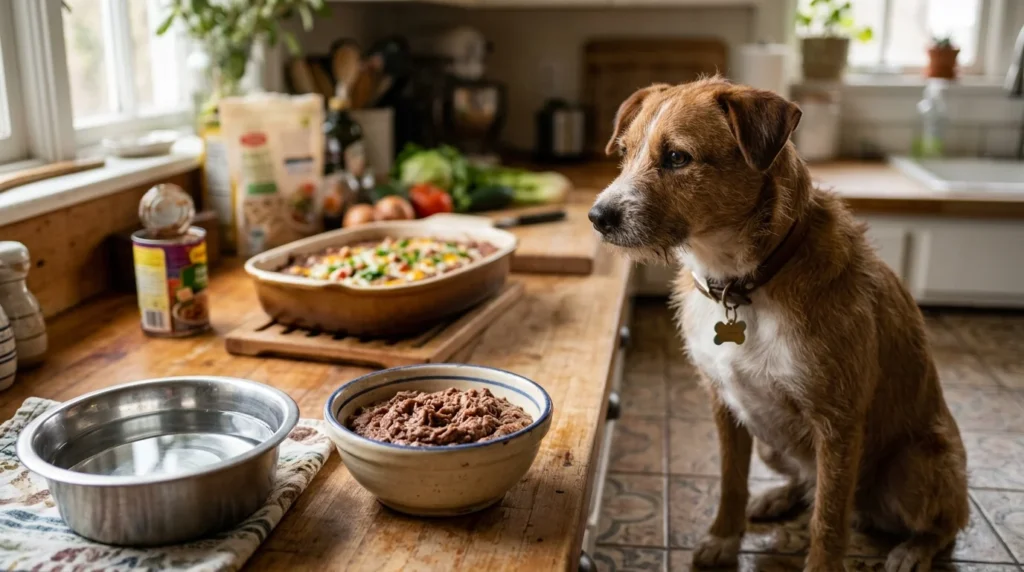
The effects depend on what was in the beans and how much your dog ate. A small amount of plain refried beans may cause no noticeable reaction, while a larger portion may lead to gas, loose stool, vomiting, increased thirst, or stomach discomfort. Beans containing onion or garlic require greater caution.
After accidental ingestion, find the product packaging or recipe and check the ingredients. Estimate how much your dog consumed and consider the dog’s approximate size. If the beans contained onion, garlic, a large amount of salt or fat, or if your dog ate a substantial quantity, contact a veterinarian for guidance.
See Also: Can Dogs Eat Sour Cream? Safety & Feeding Guide
What Should You Do If Your Dog Eats Refried Beans?
First, prevent your dog from eating any more of the beans. Check the ingredients and keep the package or recipe available in case you need to speak with a veterinarian. Make sure your dog has access to fresh water, especially if the food was salty.
Do not give your dog additional human food to try to “balance out” what they ate, and do not induce vomiting unless a veterinarian specifically tells you to do so. Monitor your dog for vomiting, diarrhea, unusual weakness, excessive thirst, abdominal discomfort, or other changes. If symptoms are severe or the beans contained potentially harmful ingredients, seek veterinary advice promptly.
Refried Beans vs. Plain Cooked Beans for Dogs
| Food | Suitable for Dogs? | Main Concern |
|---|---|---|
| Plain cooked beans | Generally safer in small amounts | Too much may cause gas or digestive upset |
| Plain refried beans | Not recommended as a regular treat | May contain added fat and salt |
| Onion refried beans | Avoid | Contains onion |
| Garlic refried beans | Avoid | Contains garlic |
| Spicy refried beans | Avoid | Spices and possible digestive irritation |
| Bean and cheese dip | Not recommended | Extra fat, salt, dairy, and seasonings |
Safer Alternatives to Refried Beans for Dogs
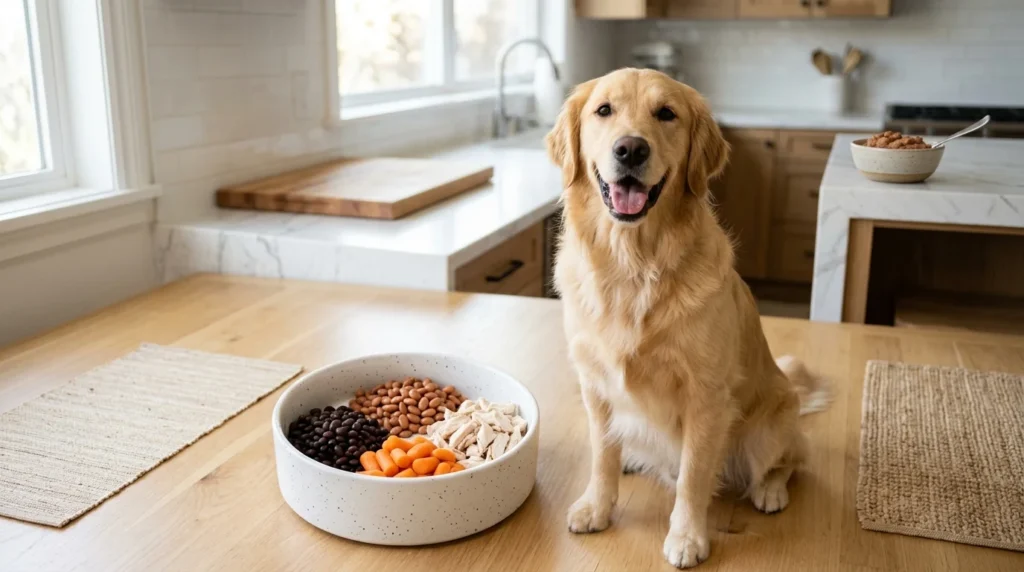
If your dog enjoys beans, there are simpler ways to offer them. Plain, fully cooked black beans, pinto beans, kidney beans, or other dog-safe beans can be offered in small amounts when prepared without salt, onion, garlic, spicy seasoning, sauces, or excessive fat. Always make sure beans are thoroughly cooked rather than serving raw or undercooked beans.
You can also choose simple dog-friendly treats such as plain cooked chicken, carrots, green beans, cucumber, or other foods your dog already tolerates. The important point is that treats should complement, rather than replace, a complete and balanced canine diet.
When Should You Avoid Giving Your Dog Refried Beans?
It is best to avoid refried beans if the recipe contains onion, garlic, chili, excessive salt, large amounts of fat, or ingredients your dog has previously reacted to. Dogs with dietary restrictions or health conditions may also need a more carefully controlled diet.
If you are unsure about a particular commercial product, check the full ingredient label before sharing it. When there is any uncertainty about potentially harmful ingredients or a large accidental ingestion, your veterinarian can provide advice based on your dog’s size, health, and the amount consumed.
Frequently Asked Questions
Can dogs eat a small amount of refried beans?
A small amount of plain refried beans may not cause problems in some dogs, but refried beans are not recommended as a regular treat. Check the ingredients carefully, especially for onion, garlic, high salt, and added fat.
What if my dog ate refried beans with onion?
Check how much your dog ate and keep the product label or recipe available. Because onion can be harmful to dogs, contact your veterinarian for advice, particularly if your dog ate a substantial amount or develops any unusual symptoms.
Can dogs eat plain pinto beans instead of refried beans?
Plain, fully cooked pinto beans can generally be offered to dogs in small amounts when they contain no added salt, onion, garlic, or spicy seasonings. Introduce them gradually to reduce the chance of digestive upset.
Are canned refried beans safe for dogs?
Canned refried beans are generally not a good choice because they may contain significant amounts of sodium, added fats, onion, garlic, and seasonings. Plain cooked beans are a simpler alternative.
Can refried beans make dogs sick?
They can cause digestive problems such as gas, diarrhea, vomiting, or stomach discomfort, especially when eaten in large amounts or when heavily seasoned. Refried beans containing onion or garlic are more concerning and should be avoided.
Conclusion
So, can dogs eat refried beans? It is best to avoid giving dogs traditional refried beans. While plain cooked beans can sometimes be included in a dog’s diet in small portions, refried beans often contain salt, fat, onion, garlic, chili, or other ingredients that are not appropriate for dogs. A small accidental bite of plain beans may not cause a problem, but the ingredients and quantity matter.
If you want to share beans with your dog, choose fully cooked, plain beans without harmful seasonings and offer only a small amount. Always check labels on canned products, and contact your veterinarian if your dog eats a large quantity, consumes beans containing onion or garlic, or develops concerning symptoms.


