

Can Dogs Eat Raw Shrimp or Shrimp Shells? Full Safety Guide
You’re peeling shrimp for dinner, the kitchen smells incredible, and your dog is right there — nose going a mile a minute, eyes tracking every move you make. It is one of the most classic dog-owner moments. Shrimp smells amazing to dogs, and most of them would eat it straight off your hand without hesitation.
But should you share? Can dogs eat shrimp safely? What about raw shrimp? The shells? Shrimp tails? Fried shrimp? Shrimp cocktail?
These are exactly the right questions. Shrimp is a bit more nuanced than simpler foods like blueberries or plain chicken — there are forms that are safe, forms that are genuinely not recommended, and preparation details that matter a lot. This complete guide covers every single question dog owners ask about shrimp, from basic safety to specific forms to what to watch out for.
Can Dogs Eat Shrimp?
Yes — dogs can eat shrimp, and plain cooked shrimp is safe for most healthy dogs in moderate amounts. The American Kennel Club (AKC) recognizes shrimp as a dog-friendly seafood option. Cooked shrimp provides high-quality protein, phosphorus, Vitamin B12, niacin, and antioxidants — a genuinely useful nutritional package.
The critical rules: shrimp must be cooked — never raw. Shells, tails, and heads must be removed before serving. Serve plain — no butter, no garlic, no seasoning of any kind. Keep portions moderate — shrimp is relatively high in cholesterol, which is a consideration for regular feeding.
Done correctly, shrimp is a safe, low-calorie, high-protein treat that most dogs absolutely love.
Are Shrimp Good for Dogs?
Yes — plain cooked shrimp offers genuine nutritional value for dogs. It is not just a safe treat; it provides a meaningful set of nutrients that support canine health.
Shrimp is an excellent source of lean protein — critical for muscle maintenance, tissue repair, and overall cellular function in dogs. It is also very low in fat and calories compared to many other protein sources, making it a particularly smart treat choice for dogs managing their weight. A single medium cooked shrimp contains roughly 7 calories and less than 0.1 grams of fat.
Shrimp is rich in Vitamin B12, which supports healthy nerve function and the production of red blood cells. It contains niacin (Vitamin B3), which supports energy metabolism and skin health. It provides phosphorus, which is essential for healthy bones and teeth. And it contains antioxidants — particularly astaxanthin, the compound that gives shrimp their pink color — which have anti-inflammatory and cellular protective properties.
For dogs that tolerate seafood well, plain cooked shrimp is one of the better protein-based treat options available.
The Benefits of Seafood for Dogs
Seafood in general — and shrimp specifically — offers a range of health benefits that make it worth including in a dog’s treat rotation when prepared safely.
High-Quality Lean Protein Shrimp delivers complete protein — all essential amino acids that dogs need for muscle maintenance, immune function, enzyme production, and tissue repair. The protein in shrimp is highly digestible, meaning dogs can efficiently absorb and use more of the protein per gram compared to some other protein sources.
Vitamin B12 — Nerve and Blood Health Shrimp is one of the richest food sources of Vitamin B12 available. B12 is essential for healthy nerve function, proper brain development, and the production of red blood cells. Deficiency in B12 can cause neurological problems, anemia, and general fatigue. Shrimp delivers a significant B12 contribution in a small, low-calorie serving.
Niacin (Vitamin B3) — Energy and Skin Health Niacin supports the conversion of food into usable energy, contributes to healthy skin and coat, and supports proper enzyme function throughout the body. Dogs with niacin deficiency develop a condition called black tongue disease — niacin-rich foods like shrimp help prevent this.
Phosphorus — Bone and Dental Health Phosphorus works alongside calcium to build and maintain strong bones and teeth. It also plays a role in kidney function and the body’s energy system (ATP production). Shrimp provides a useful dietary contribution of phosphorus in an easily digestible form.
Astaxanthin — Powerful Antioxidant Astaxanthin is a carotenoid antioxidant that gives shrimp (and other crustaceans like lobster and crab) their characteristic pink-red color when cooked. Research links astaxanthin to reduced inflammation, cardiovascular protection, improved immune function, and potential anti-cancer properties. It is one of the most potent natural antioxidants identified in seafood.
Low in Calories and Fat Shrimp is one of the lowest-calorie protein sources available. A medium cooked shrimp contains approximately 7 calories and virtually no fat. This makes shrimp an excellent treat choice for overweight dogs, dogs on calorie-controlled diets, or any dog where you want to offer a high-value protein reward without the caloric cost of higher-fat treats.
Iodine and Selenium — Thyroid and Immune Support Shrimp provides meaningful amounts of iodine (supporting healthy thyroid function) and selenium (a trace mineral with antioxidant properties that supports immune function and thyroid health). Both are essential micronutrients that seafood provides in bioavailable forms.
Risks of Feeding Shrimp to Dogs
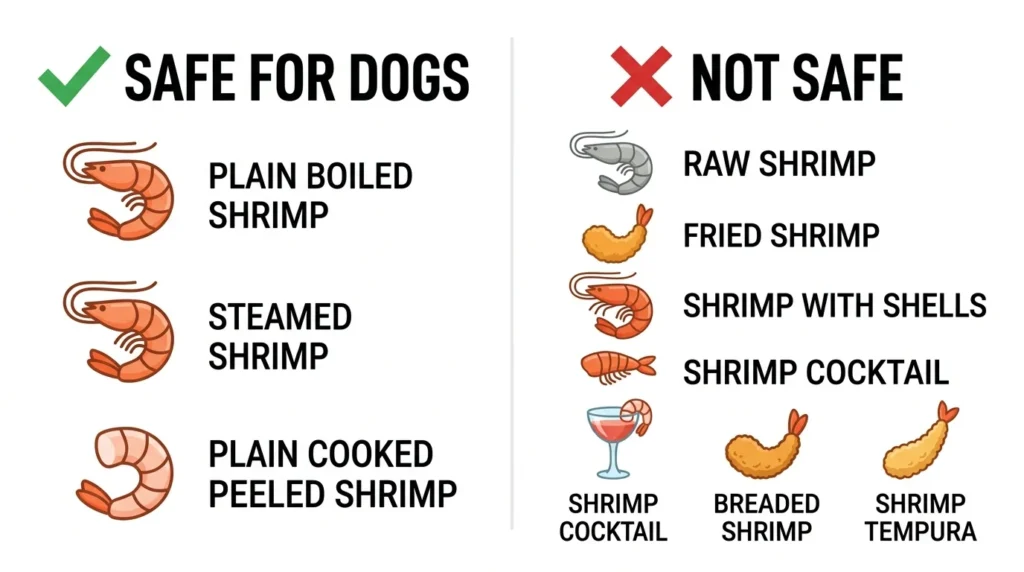
Understanding the risks helps you feed shrimp responsibly and avoid the situations that turn a healthy treat into a problem.
Raw Shrimp — Bacterial and Parasite Risk The most serious risk associated with shrimp and dogs is feeding it raw. Raw shrimp can harbor dangerous bacteria including Salmonella, Vibrio, and Listeria, as well as parasites. These pathogens can cause serious illness in dogs — and can also be transmitted to humans handling the dog or cleaning up after them. Always cook shrimp before giving it to your dog — more on this in the raw shrimp section below.
Shells, Tails, and Heads — Choking and Injury Shrimp shells, tails, and heads are hard, sharp, and indigestible. Swallowed pieces can injure the mouth, throat, or digestive tract, and can cause choking or gastrointestinal blockage. Always remove shells, tails, and heads completely before serving.
High Cholesterol Content Shrimp is relatively high in dietary cholesterol compared to other protein sources. While dietary cholesterol affects dogs differently than it affects humans, regular large amounts of shrimp could contribute to cardiovascular concerns over time. This is a reason to keep shrimp as an occasional treat rather than a daily food item.
Seasoning and Additives Shrimp prepared for human consumption is almost always cooked with butter, garlic, onion, salt, lemon, cocktail sauce, or other seasonings. Garlic and onion are toxic to dogs. High salt causes sodium-related issues. High butter content triggers digestive upset and pancreatitis risk. Always serve only plain, unseasoned shrimp to your dog.
Allergic Reactions Shellfish allergies are possible in dogs just as in humans. Signs include itching, hives, swelling around the face or throat, vomiting, diarrhea, or difficulty breathing. Introduce shrimp slowly the first time — just one small piece — and wait 24 hours before giving more.
Iodine Sensitivity Some dogs are sensitive to high-iodine foods. Shrimp is relatively high in iodine, and dogs with thyroid conditions or iodine sensitivities may react negatively. Consult your vet before giving shrimp to dogs with thyroid conditions.
Can Dogs Eat Cooked Shrimp?
Yes — plain cooked shrimp is the safest and best form to give your dog. Cooking eliminates the bacteria and parasites present in raw shrimp, making it safe for canine consumption. The nutritional value of cooked shrimp remains excellent — the protein, B12, niacin, phosphorus, and astaxanthin content are all well-preserved through cooking.
The most important rules for cooked shrimp:
- Cook thoroughly — shrimp should be fully opaque and pink, not translucent
- Use no seasonings of any kind — no salt, no butter, no garlic, no lemon, no sauce
- Remove shells, tails, and heads completely before serving
- Let cool to room temperature before giving to your dog
- Cut into small pieces appropriate for your dog’s size
The safest cooking methods for dogs are steaming, boiling in plain water, or baking without any oils or seasonings. These methods cook the shrimp thoroughly without adding any problematic ingredients.
Can Dogs Eat Raw Shrimp?
No — dogs should not eat raw shrimp. This is one of the clearest safety rules when it comes to shrimp and dogs. Raw shrimp presents significant food safety risks that cooked shrimp does not.
Raw shrimp can harbor dangerous bacteria including Salmonella, Listeria, and Vibrio parahaemolyticus. These bacteria can cause serious gastrointestinal illness in dogs — symptoms include vomiting, diarrhea (sometimes bloody), fever, lethargy, and abdominal pain. In severe cases or immunocompromised dogs, Salmonella and Listeria infections can become systemic and life-threatening.
Raw shrimp can also carry parasites including roundworms and other nematodes that infect the digestive tract.
Beyond the food safety concern, raw shrimp still has shells, legs, and sometimes the tail attached — all of which are sharp and potentially injurious to the mouth, throat, and digestive tract.
Some raw diet advocates suggest that dogs can eat raw seafood safely, but mainstream veterinary guidance — including from the American Veterinary Medical Association (AVMA) — advises against raw animal proteins due to the infection risk to both dogs and the humans who live with them. Always cook shrimp before giving it to your dog.
Can Dogs Eat Shrimp Tails?
No — shrimp tails should not be given to dogs and should always be removed before serving. Shrimp tails are hard, sharp, and indigestible — the hard chitin material that makes up the tail shell is not broken down in the digestive system.
Shrimp tails are a choking hazard, particularly for small dogs. Even when swallowed without choking, the sharp edges of shrimp tail pieces can scratch and irritate the lining of the esophagus, stomach, and intestines. In some cases, accumulated pieces of tail and shell in the digestive tract can contribute to a partial blockage.
Some dogs attempt to chew shrimp tails and seem to enjoy the crunch, but this does not mean it is safe. The sharp chitin fragments created by chewing are still potentially injurious. Always remove tails before serving — this takes seconds and eliminates an unnecessary risk.
Can Dogs Eat Shrimp Shells?
No — shrimp shells should never be given to dogs. Shrimp shells are made of chitin — the same tough, indigestible material as shrimp tails. Chitin is not broken down by the canine digestive system, meaning shells pass through without being digested.
Beyond being indigestible, shrimp shells have sharp edges when broken or chewed that can physically injure the mouth, throat, and gastrointestinal tract. Pieces of shell can scratch the delicate mucosal lining of the esophagus and stomach, causing irritation, discomfort, and in more serious cases, internal injury.
For small dogs especially, swallowed shrimp shells can accumulate and contribute to digestive blockage. Always peel shrimp completely and discard all shells before giving any to your dog. This applies to all types of shrimp — whole shrimp, tail-on shrimp, shell-on shrimp — the shells and tails must always be removed.
See Also: Can Dogs Eat Avocado? The Truth Every Dog Owner Must Know
Can Dogs Eat Shrimp Heads?
No — shrimp heads should not be given to dogs. Shrimp heads contain the hard exoskeleton, antenna, eyes, and internal glandular structures of the shrimp. The hard chitinous exoskeleton presents the same choking, injury, and indigestibility concerns as shells and tails.
The glandular structures in shrimp heads (particularly the hepatopancreas — sometimes called the “tomally” in larger crustaceans) can also accumulate environmental toxins including heavy metals, making them less desirable from a food safety standpoint even when cooked.
When preparing shrimp for your dog, use only the body of the shrimp — no head, no shell, no tail. The clean, peeled shrimp body is the only part that is safe and appropriate for dogs to eat.
Can Dogs Eat Boiled Shrimp?
Yes — boiled shrimp is one of the best preparation methods for dogs. Boiling shrimp in plain water with no seasonings, no salt, no butter, and no garlic cooks the shrimp thoroughly while adding nothing harmful. It is one of the simplest and safest ways to prepare shrimp specifically for your dog.
Plain boiled shrimp retains excellent nutritional value. The protein, B12, niacin, and phosphorus content are well-preserved. The shrimp becomes fully cooked (no bacterial or parasite risk) and soft (easier to chew and digest than some other cooking methods that create a tighter, firmer texture).
After boiling, drain and cool completely before serving. Remove all shells, tails, and heads before or after boiling — before is often easier. Cut the cooked shrimp body into small pieces appropriate for your dog’s size.
Can Dogs Eat Fried Shrimp?
No — fried shrimp is not appropriate for dogs. Fried shrimp has been cooked in oil at high temperature, typically coated with batter or breadcrumbs, and is dramatically higher in fat than plain cooked shrimp.
The high fat content of fried shrimp can trigger digestive upset and, with regular exposure or in dogs predisposed to it, pancreatitis — a painful and potentially life-threatening inflammation of the pancreas. Fried foods in general are among the most common dietary triggers of pancreatitis in dogs.
The batter and coating on fried shrimp also typically contain salt, flour, spices, and sometimes garlic powder — all of which are problematic for dogs. Restaurant fried shrimp is frequently cooked in oils that have been reused and contain high levels of breakdown products from repeated heating.
Even if the health concerns were removed, fried shrimp provides no nutritional advantage over plain boiled or steamed shrimp for dogs — and carries significantly more risk. Always choose plain cooked over fried.
Can Dogs Eat Popcorn Shrimp?
No — popcorn shrimp is a form of fried shrimp and carries all the same concerns as regular fried shrimp, amplified by its small size. Popcorn shrimp is bite-sized pieces of shrimp coated in seasoned batter and deep fried. The batter typically contains salt, spices, flour, and sometimes garlic or onion powder.
The small size of popcorn shrimp might seem like it would be a convenient dog treat size, but the high fat, high salt, and seasoned coating make it completely inappropriate for dogs. The frying process alone dramatically increases the fat and calorie content beyond what is appropriate for a dog treat.
Never give popcorn shrimp to your dog — the appeal of the small size does not overcome the concerning ingredients and preparation method.
Can Dogs Eat Shrimp Cocktail?
No — shrimp cocktail is not appropriate for dogs, even though the shrimp component is cooked. The issue is the cocktail sauce that accompanies it and the preparation of the shrimp itself.
Commercial shrimp cocktail is typically made with chilled cooked shrimp served alongside cocktail sauce — a condiment made from ketchup, horseradish, lemon juice, Worcestershire sauce, and hot sauce. Horseradish is spicy and irritating to dogs’ digestive systems. Worcestershire sauce contains onion and garlic extract — both toxic to dogs. Hot sauce contains capsaicin, which causes significant digestive discomfort in dogs. The high salt content of cocktail sauce is also problematic.
Even the shrimp in shrimp cocktail preparations is often treated with salt during preparation. If you want to give your dog some of the shrimp from a shrimp cocktail setup, use shrimp that has been cooked plain without any seasoning — not the cocktail shrimp that has been prepared for human serving.
Can Dogs Eat Coconut Shrimp?
No — coconut shrimp is not appropriate for dogs. Coconut shrimp is a preparation where shrimp is coated in shredded coconut and typically a spiced batter, then deep fried. This combines the concerns of fried food (high fat, oil) with added sugar (coconut and sweet dipping sauces contain sugar) and often salt and spices.
While plain unsweetened coconut itself is not toxic to dogs in small amounts, the coconut shrimp preparation adds high fat from frying, coating ingredients, and typically a sweet dipping sauce with even more sugar and sometimes artificial flavoring.
There is no version of restaurant or commercially prepared coconut shrimp that is appropriate for dogs. The combination of fried coating, coconut sugar, dipping sauces, and seasoning makes it a multi-problem food.
Can Dogs Eat Breaded Shrimp?
No — breaded shrimp (shrimp coated in breadcrumbs and either fried or baked) is not appropriate for dogs. The breading adds refined carbohydrates, salt, spices, and often garlic and onion powder to what would otherwise be a safe protein. When fried, the breading absorbs significant amounts of oil, dramatically increasing the fat content.
Even baked breaded shrimp — which is lower in fat than fried — still contains seasoned breading with salt and spices that are not dog-appropriate. The breading also contributes no nutritional value for dogs, adding only unnecessary carbohydrates and sodium to what should be a simple, clean protein treat.
Strip away the breading, cook the plain shrimp simply, and you have a safe treat. With the breading, you have a problematic product. Always opt for plain preparation.
Can Dogs Eat Shrimp Chips?
No — shrimp chips (also called prawn crackers) are not appropriate for dogs. Despite the name, shrimp chips contain very little actual shrimp — they are primarily made from tapioca starch or wheat flour, shrimp flavoring (artificial or from a small amount of dried shrimp powder), and large amounts of salt and oil.
The high sodium content of shrimp chips is particularly concerning — a single serving intended for human consumption can contain hundreds of milligrams of sodium, far exceeding what is appropriate for a dog. High sodium intake causes excessive thirst, urination, and in larger amounts, sodium toxicity in dogs.
The frying process (most shrimp chips are puffed by deep frying or microwaving in oil) adds significant fat. And the artificial shrimp flavoring in many products contains additives and flavor enhancers that are not appropriate for dogs.
See Also: Can Dogs Eat Broccoli? Raw, Cooked, Stems & Every Form Covered
Can Dogs Eat Shrimp Safely?
Yes — dogs can eat shrimp safely when the correct preparation is followed every single time.
Complete safety checklist for shrimp:
- Use only fresh or properly thawed shrimp — no shrimp that has been sitting out
- Cook thoroughly — steamed, boiled in plain water, or baked with no oil or seasoning
- Remove shells, tails, and heads completely before or after cooking
- Serve plain — no butter, no garlic, no onion, no salt, no sauces, no seasoning
- Cool to room temperature before serving
- Cut into small pieces appropriate for your dog’s size
- Keep portions moderate — a few shrimp for a medium dog, fewer for small dogs
- Introduce slowly the first time — just one small piece
- Wait 24 hours before giving more after the first introduction
- Never give raw shrimp, fried shrimp, or shrimp in any seasoned preparation
- Dogs with thyroid conditions, shellfish sensitivities, or high cholesterol concerns need vet guidance
Follow these steps every time and shrimp is as safe as any protein treat you can give your dog.
Can Dogs Eat Seafood Shrimp?
“Seafood shrimp” typically refers to shrimp in a seafood restaurant or seafood dish context — and the answer depends entirely on how that shrimp was prepared. The shrimp itself (cooked, plain, shell and tail removed) is safe. The preparation and context it comes from is where the concern lies.
Restaurant seafood shrimp is almost always prepared with butter, garlic, white wine, lemon, salt, and various herbs and spices. All of these additions make restaurant-prepared shrimp inappropriate for dogs — even if the underlying shrimp is high-quality and well-cooked.
If “seafood shrimp” means plain, commercially available cooked shrimp from a grocery store seafood counter — this can be appropriate if it contains no added seasonings or preservatives. Always check the label on any packaged cooked shrimp before giving it to your dog.
Can Dogs Eat Shrimp Fried Rice?
No — shrimp fried rice is not appropriate for dogs. Fried rice is made with rice stir-fried in oil at high heat, typically with soy sauce, sesame oil, garlic, onion, eggs, vegetables, and sometimes additional seasonings. The shrimp in shrimp fried rice has been cooked in this oil and seasoning mixture.
Soy sauce is extremely high in sodium — a single tablespoon contains around 900mg of sodium, far exceeding what is safe for a dog. Sesame oil adds high fat. Garlic and onion are both toxic to dogs. The combination of these ingredients in fried rice makes it completely inappropriate for dogs regardless of the shrimp component.
Even if you picked out only the shrimp pieces from fried rice, they would have absorbed the soy sauce, garlic, and oil during cooking — making them unsafe to give your dog. Prepare dedicated plain shrimp for your dog before adding any seasonings or starting the fried rice preparation.
Can Dogs Eat Shrimp Tempura?
No — shrimp tempura is a form of battered and deep-fried shrimp and carries all the same concerns as other fried shrimp preparations — high fat from frying, batter containing flour and salt, and typically served with dipping sauces that contain high sodium and sometimes sweeteners.
Tempura batter is typically made from flour, egg, and water — not inherently toxic ingredients, but the frying process makes them high in fat. Tempura dipping sauce (tentsuyu) contains dashi (fish stock), mirin (sweet rice wine), and soy sauce — all containing significant sodium and potentially other dog-inappropriate compounds.
Like all fried preparations, shrimp tempura is far from the plain, simple cooked shrimp that is appropriate for dogs. The contrast between “safe treat” and “problematic food” is entirely in the preparation.
Can Dogs Eat Shrimp Skin?
“Shrimp skin” typically refers to the thin outer shell of the shrimp, which is the same as the shrimp shell addressed earlier. The answer is no — shrimp shells and the equivalent of “shrimp skin” should not be given to dogs.
The shrimp’s exoskeleton — the shell that covers its body — is made of chitin, which is indigestible and has sharp edges when broken. It can injure the mouth and digestive tract and does not provide any nutritional value to dogs.
Some dog owners wonder if the very thin membrane just inside the shell, or the thin outer coating of cooked shrimp flesh, is what is meant by “shrimp skin.” The flesh of the shrimp itself is completely safe — only the actual hard shell exterior needs to be removed.
Can Dogs Have Shrimp Shells?
This is the same question as shrimp shells above — and the answer remains a firm no. Shrimp shells are hard, sharp, and indigestible regardless of how they are prepared or cooked. Cooking softens the shell slightly but does not make it safe to eat or digestible.
Some people note that certain animals in the wild eat whole shrimp including shells. Dogs are not adapted to process hard crustacean exoskeletons in the same way — their digestive systems are not equipped to handle chitin safely, and the injury risk to the mouth and digestive tract is real.
Always peel shrimp completely and discard all shells before serving any shrimp to your dog.
How Much Shrimp Can Dogs Eat?
Portion control matters with shrimp due to its cholesterol content and because, as with any protein treat, too much at once can cause digestive upset. The standard treat guideline applies — treats should not exceed 10% of your dog’s daily caloric intake.
Given that shrimp is very low in calories (roughly 7 calories per medium shrimp), you can give a reasonable number of pieces while staying well within the 10% guideline for most dogs. However, cholesterol content is a practical reason to keep shrimp as an occasional treat rather than a daily food.
Practical guide by dog size:
Extra small dogs (under 10 lbs): 1 small shrimp, a few times per week.
Small dogs (10 to 20 lbs): 1 to 2 small shrimp per serving, a few times per week.
Medium dogs (20 to 50 lbs): 2 to 4 medium shrimp per serving, a few times per week.
Large dogs (50 lbs and above): 4 to 6 medium shrimp per serving, a few times per week.
All shrimp must be cooked, plain, shelled, and tailed before counting toward these portions. These are maximum amounts — less is always fine. Factor shrimp into the total treat budget for the day alongside any other treats given.
See Also: Can Dogs Eat Mango? Benefits, Risks & Safe Serving Guide 2026
How to Prepare Shrimp for Dogs

Here is the complete step-by-step guide to preparing shrimp safely for your dog every time.
Step 1 — Choose the right shrimp: Select fresh shrimp with a clean ocean smell, or properly thawed frozen shrimp. Avoid shrimp that smells strongly fishy or ammonia-like (sign of spoilage). Choose plain raw shrimp — not pre-seasoned, pre-marinated, or pre-cooked in seasoned preparations.
Step 2 — Thaw properly (if frozen): Thaw frozen shrimp in the refrigerator overnight or under cold running water. Never thaw at room temperature — this promotes bacterial growth.
Step 3 — Peel and clean: Remove the shell completely from each shrimp. Twist off and discard the head. Remove the tail. Devein the shrimp — make a shallow cut along the back and remove the dark digestive tract (the “vein”). This removes waste material that can carry bacteria.
Step 4 — Cook thoroughly: Boil in plain unsalted water until the shrimp is fully opaque and pink — typically 2 to 3 minutes for medium shrimp. Alternatively, steam for 3 to 4 minutes. Or bake at 400°F for 6 to 8 minutes. No oil, no butter, no seasoning of any kind.
Step 5 — Cool completely: Allow shrimp to cool to room temperature before giving to your dog. Hot food can burn a dog’s mouth and throat.
Step 6 — Cut into appropriate pieces: For small dogs, cut each shrimp into several small pieces. For medium dogs, halves or thirds. For large dogs, whole or halved shrimp are fine.
Step 7 — Serve and store: Serve immediately or refrigerate for up to two days in an airtight container. Never leave cooked shrimp at room temperature for more than two hours.
Can Puppies Eat Shrimp?
Yes — puppies can eat very small amounts of plain cooked shrimp, but with extra care and more conservative portions than adult dogs. Puppies have developing digestive systems that are more sensitive to new proteins and foods than fully developed adult dogs.
The preparation rules are the same but even more strictly applied for puppies: only thoroughly cooked plain shrimp, shells and tails completely removed, cut into very tiny pieces, given in a single small amount the first time.
Start with literally half of one small shrimp for the first introduction, and wait 48 hours before giving more. Watch carefully for any signs of allergic reaction or digestive upset — puppies can be more reactive to shellfish proteins than adult dogs.
Shrimp should never displace any portion of a puppy’s complete puppy food. Puppies have specific nutritional requirements for healthy growth that only a complete, age-appropriate puppy food can meet. Shrimp is supplemental only — a tiny occasional treat, not a dietary component.
Dogs with shellfish sensitivities tend to show signs early — if your puppy reacts to shrimp at all, discontinue immediately and consult your vet before trying again.
Can Dogs Eat Raw Meat?
This broader question often comes up in the context of shrimp specifically because of the raw diet movement in dog nutrition. The mainstream veterinary position on raw meat for dogs — whether shrimp, chicken, beef, or other protein sources — is that raw meat carries significant food safety risks that outweigh the benefits claimed by raw diet advocates.
Raw animal proteins can harbor Salmonella, E. coli, Campylobacter, Listeria, and various parasites. These pathogens cause illness in dogs and can be transmitted to humans through contact with infected dogs or contaminated surfaces. The FDA, AVMA, and most veterinary organizations advise against feeding raw meat to dogs.
Proponents of raw diets argue that dogs evolved eating raw meat and have digestive systems adapted to handle it. While it is true that dogs can sometimes process contaminated food without showing obvious symptoms, they can still harbor and shed pathogens — creating public health concerns in households with young children, elderly individuals, or immunocompromised people.
For shrimp specifically, the advice is clear: cook it. The minimal difference in nutrient content between raw and cooked shrimp does not justify the bacterial and parasite risk.
Frequently Asked Questions
Can dogs eat cooked shrimp?
Yes. Plain cooked shrimp with shells, tails, and heads removed is safe for most healthy dogs. Boiled or steamed with no seasoning is the best preparation. Keep portions appropriate for your dog’s size.
Can dogs eat raw shrimp?
No. Raw shrimp can carry harmful bacteria (Salmonella, Listeria, Vibrio) and parasites. Always cook shrimp thoroughly before giving it to your dog.
Can dogs eat shrimp tails?
No. Shrimp tails are hard, sharp, and indigestible. They can injure the mouth and digestive tract and present a choking hazard. Always remove tails before serving.
Can dogs eat shrimp shells?
No. Shrimp shells are made of chitin — indigestible and with sharp edges that can injure the digestive tract. Always peel shrimp completely before giving to your dog.
Can dogs eat fried shrimp?
No. Fried shrimp is very high in fat from the frying oil and typically contains seasoned batter with salt, spices, and sometimes garlic. High fat triggers digestive upset and pancreatitis risk.
Can dogs eat shrimp cocktail?
No. Cocktail sauce contains horseradish, Worcestershire sauce (which contains garlic and onion), hot sauce, and high sodium — all problematic for dogs. The shrimp itself may also be pre-seasoned.
Can dogs eat boiled shrimp?
Yes — boiled in plain water with no salt or seasoning, shells and tails removed. This is one of the safest preparation methods for dogs.
Can dogs eat breaded shrimp?
No. Breaded shrimp contains seasoned breadcrumbs with salt, spices, and often garlic powder. Strip away the breading and cook plain shrimp instead.
Can dogs eat popcorn shrimp?
No. Popcorn shrimp is small fried shrimp with seasoned batter — high fat, high salt, and seasoned with dog-inappropriate ingredients.
Can dogs eat shrimp fried rice?
No. Shrimp fried rice contains soy sauce (very high sodium), garlic, onion, sesame oil, and other seasonings toxic or harmful to dogs.
Can dogs eat shrimp tempura?
No. Tempura is battered and fried — high fat, and served with high-sodium dipping sauces. Not appropriate for dogs.
Can dogs eat coconut shrimp?
No. Coconut shrimp is fried with sweetened coatings and typically served with sweet dipping sauces — high fat, high sugar, and deep fried.
Can dogs eat shrimp chips or prawn crackers?
No. Shrimp chips are very high in sodium and fat, contain very little actual shrimp, and include artificial flavoring and additives not appropriate for dogs.
Can puppies eat shrimp?
Yes, in very small amounts of thoroughly cooked plain shrimp with all shells and tails removed. Start with half of one small shrimp and wait 48 hours. Primary nutrition must come from complete puppy food.
How much shrimp can a dog eat?
Small dogs: 1-2 shrimp. Medium dogs: 2-4 shrimp. Large dogs: 4-6 shrimp per serving, a few times per week. All cooked, plain, shelled, and tailed. Treats stay within 10% of daily caloric intake.
What happens if my dog eats shrimp shells or tails?
Watch for signs of choking, gastrointestinal irritation, or obstruction — vomiting, loss of appetite, abdominal pain, or straining without producing stool. Contact your vet if any of these symptoms appear.
Conclusion
Shrimp is one of the best protein-based treats you can share with your dog — when it is prepared correctly. Plain cooked shrimp delivers high-quality lean protein, Vitamin B12, niacin, phosphorus, astaxanthin, and other beneficial nutrients in a remarkably low-calorie, low-fat package. Most dogs absolutely love the taste, making it a high-value treat that is particularly useful in training contexts.
The rules for safe shrimp sharing are straightforward and non-negotiable:
- Always cook shrimp thoroughly — never raw
- Boiling or steaming in plain water is the best method
- Remove all shells, tails, and heads before serving — always
- Serve completely plain — no butter, no garlic, no onion, no salt, no seasoning, no sauces
- Cool to room temperature before giving to your dog
- Keep portions appropriate for your dog’s size — a few shrimp goes a long way
- Never give fried shrimp, breaded shrimp, popcorn shrimp, shrimp cocktail, shrimp tempura, coconut shrimp, shrimp chips, or shrimp fried rice
- Introduce slowly the first time and watch for any allergic reaction
- Dogs with thyroid conditions, shellfish sensitivities, or high cholesterol need vet guidance first
- Puppies can have tiny amounts of plain cooked shrimp — prepare carefully and start even smaller
The difference between “safe shrimp treat” and “problematic shrimp food” is almost entirely in the preparation. Plain, cooked, peeled, tailed, unseasoned shrimp is genuinely safe and nutritious. Shrimp cooked with any human recipe ingredients becomes a treat that ranges from inadvisable to actively harmful.
For more complete guides on what dogs can and cannot eat — from seafood and proteins to fruits, vegetables, dairy products, and everyday human foods — visit Dogs Bread. It is one of the most comprehensive and trustworthy pet nutrition resources available for dog owners who want honest, practical, research-backed answers about their dog’s diet. Whether you are checking a specific food before sharing or building a complete understanding of your dog’s nutritional needs, Dogs Bread has the clear, simple information every dog owner deserves.
Also Read: Can Dogs Eat Tomatoes? What’s Safe and What’s Toxic Explained


