

Can Dogs Eat Pomegranate? Benefits, Risks & Safe Feeding Guide
Pomegranate is a colorful fruit known for its sweet-tart flavor and impressive nutritional value. It is packed with antioxidants, vitamins, and fiber, making it a healthy choice for people. Many dog owners wonder whether this superfruit is also safe for their pets. The answer is more complicated than a simple yes or no.
While pomegranate is not considered highly toxic to dogs, eating the fruit can cause digestive upset in many dogs. The seeds, peel, and large amounts of the fruit may lead to vomiting, diarrhea, or stomach discomfort. Understanding how pomegranate affects dogs can help you decide whether it belongs in your pet’s diet.
Can Dogs Eat Pomegranate?
Dogs can eat a very small amount of fresh pomegranate flesh, but it is generally not recommended. Many dogs have difficulty digesting the fruit because of its high tannin content and natural compounds that may irritate the stomach.
If your dog accidentally eats a few pomegranate seeds, they will usually recover without serious problems. However, eating large amounts may cause digestive upset.
How Much Pomegranate Can Dogs Eat? Can Your Dog Eat?
If you choose to offer pomegranate, only a tiny amount of the fresh fruit should be given. Because many dogs develop stomach upset after eating pomegranate, there are safer fruit options available.
Always introduce new foods gradually and stop feeding pomegranate if your dog shows vomiting, diarrhea, or loss of appetite.
| Dog Size | Recommended Amount | Frequency |
|---|---|---|
| Small Dogs | 1–2 seeds maximum | Rarely |
| Medium Dogs | Several seeds | Rarely |
| Large Dogs | Small spoonful | Rarely |
| Puppies | Not recommended | Avoid |
Can Dogs Eat Pomegranate Seeds?
Pomegranate seeds are not toxic, but they can be difficult for some dogs to digest. Eating too many seeds may cause stomach irritation, vomiting, diarrhea, or abdominal discomfort.
Small accidental amounts usually do not cause serious harm, but intentionally feeding the seeds is not recommended.
Can Dogs Eat Pomegranate Peel?
No, dogs should not eat pomegranate peel. The peel is tough, difficult to digest, and contains higher concentrations of tannins that may irritate the digestive tract.
Large pieces of peel may also create a choking hazard or increase the risk of intestinal blockage, especially in small dogs.
Can Dogs Drink Pomegranate Juice?
Pomegranate juice is not recommended for dogs. Many commercial juices contain added sugar, preservatives, or artificial ingredients that provide no health benefits for pets.
Even pure pomegranate juice may still upset a dog’s stomach, making fresh drinking water the healthier choice.
Can Puppies Eat Pomegranate?
No, puppies should generally avoid pomegranate. Their digestive systems are more sensitive than those of adult dogs, making stomach upset more likely.
Complete puppy food already provides the nutrients needed for healthy growth, so pomegranate is unnecessary.
Can Dogs Eat Pomegranate Every Day?
No, dogs should not eat pomegranate every day. Frequent feeding increases the chance of digestive problems and provides little benefit compared with safer fruits.
Instead, offer dog-friendly fruits such as blueberries, strawberries, bananas, or apples without seeds as healthier treats.
See Also: Can Dogs Eat Raw Shrimp or Shrimp Shells? Full Safety Guide
Can Dogs Eat Pomegranate Extract?
Pomegranate extract is sometimes included in commercial dog foods and supplements because it contains concentrated antioxidants. When formulated specifically for dogs, these products are generally considered safe when used according to the manufacturer’s directions.
However, you should not give your dog human pomegranate extract supplements unless your veterinarian recommends them, as the dosage and ingredients may not be appropriate for pets.
What Happens If a Dog Eats Pomegranate?
If a dog eats a small amount of pomegranate, they may not experience any serious problems. However, some dogs develop vomiting, diarrhea, stomach pain, or reduced appetite because the fruit can be difficult to digest.
If your dog eats a large quantity or develops persistent vomiting, diarrhea, lethargy, or abdominal discomfort, contact your veterinarian for advice.
Is Pomegranate Good for Dogs to Eat?
Although pomegranate contains antioxidants, vitamin C, fiber, and other nutrients, it is generally not considered one of the best fruits for dogs. The digestive risks often outweigh the potential nutritional benefits.
Healthier alternatives such as blueberries, apples without seeds, bananas, and strawberries provide similar nutrients with a lower risk of stomach upset.
How to Safely Share Fruit With Your Dog

If you want to share fruit with your dog, choose options that are widely considered safe, including blueberries, bananas, watermelon without seeds, strawberries, and apple slices without seeds or the core.
Introduce new fruits gradually, serve small portions, and always remove pits, seeds, or peels whenever they may present a choking hazard or contain harmful compounds.
See Also: Can Dogs Eat Cucumbers? Benefits, Safety & Feeding Guide 2026
Does Pomegranate Have Benefits For Dogs?
Pomegranate contains antioxidants known as polyphenols, along with vitamin C, potassium, and fiber. These nutrients may support immune health and help protect cells from oxidative stress.
However, because many dogs cannot digest pomegranate well, these benefits are usually better obtained through commercial dog foods or safer fruits.
Does Pomegranate Have Any Risks For Dogs?
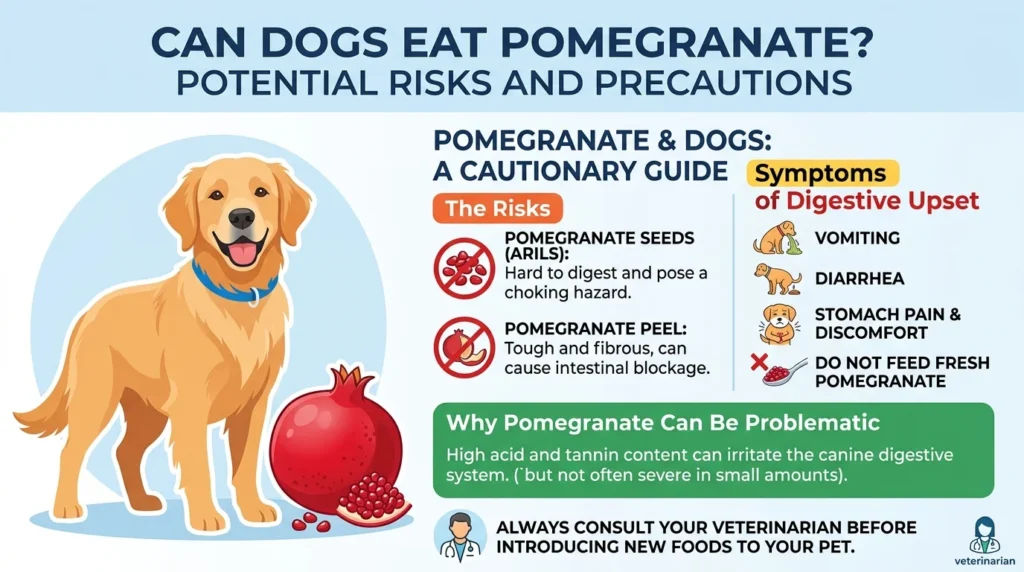
Yes, pomegranate can cause digestive upset in many dogs. Vomiting, diarrhea, stomach pain, and nausea are the most common problems after eating the fruit.
The peel is especially difficult to digest and may increase the risk of choking or intestinal blockage if consumed in large pieces.
Frequently Asked Questions
Can dogs eat pomegranate seeds?
Dogs can accidentally eat a few seeds without major problems, but feeding them intentionally is not recommended because they may cause digestive upset.
Is pomegranate poisonous to dogs?
No, pomegranate is not considered highly toxic, but it commonly causes stomach irritation and digestive problems.
Can dogs drink pomegranate juice?
No. Pomegranate juice is not recommended because it may upset the stomach and many commercial products contain added sugar.
Can puppies eat pomegranate?
No. Puppies should avoid pomegranate because their digestive systems are more sensitive than those of adult dogs.
What fruits are better than pomegranate for dogs?
Blueberries, bananas, strawberries, watermelon without seeds, and apples without seeds are generally safer and easier for dogs to digest.
Conclusion
Dogs should generally avoid eating pomegranate because it often causes digestive upset, even though it contains healthy nutrients for humans. While a few accidental seeds are unlikely to cause serious harm, large amounts can lead to vomiting, diarrhea, and stomach discomfort.
If you want to give your dog fruit treats, choose safer options such as blueberries, bananas, strawberries, or apples without seeds. These fruits provide excellent nutrition with a much lower risk of digestive problems.
See Also: What Vegetables Can Dogs Eat? Safe & Toxic Vegetables Guide


