

Can Dogs Eat Seaweed? Benefits, Risks & Safe Feeding Guide
Seaweed is a nutrient-rich marine plant that is commonly used in salads, soups, sushi, and dietary supplements. Because it contains vitamins, minerals, antioxidants, and iodine, many dog owners wonder whether seaweed is also safe for dogs. The answer depends on the type of seaweed and how it is prepared.
Plain edible seaweed can be safe for most dogs when served in small amounts. However, wild seaweed found on beaches, seasoned seaweed snacks, and seaweed containing excessive salt or spices can be dangerous. Understanding the difference is essential before sharing seaweed with your dog.
Can Dogs Eat Seaweed?
Yes, dogs can eat plain edible seaweed in moderation. Seaweed contains vitamins A, C, E, K, B vitamins, iodine, iron, magnesium, calcium, and antioxidants that may support overall health.
Seaweed should only be offered occasionally as a supplement or healthy treat. It should never replace a complete and balanced dog food diet.
How Much Seaweed Can Dogs Eat? Can Your Dog Eat?
The amount of seaweed your dog can safely eat depends on their size, age, and overall health. Too much seaweed may provide excessive iodine, which could affect thyroid function in some dogs.
Start with a very small amount and monitor your dog for any digestive upset before offering it again.
| Dog Size | Recommended Amount | Frequency |
|---|---|---|
| Small Dogs | 1/4 teaspoon chopped | Occasionally |
| Medium Dogs | 1/2 teaspoon chopped | Occasionally |
| Large Dogs | 1 teaspoon chopped | Occasionally |
| Puppies | Very small amount | Only with veterinary approval |
Can Dogs Eat Dried Seaweed?
Yes, dogs can eat small amounts of plain dried edible seaweed. It should contain no added salt, spices, garlic, onions, or artificial flavorings.
Because dried seaweed is concentrated, feed only tiny portions to avoid excessive iodine or sodium intake.
Can Dogs Eat Seaweed Snacks?
No, most packaged seaweed snacks are not suitable for dogs. Many contain added salt, oils, seasonings, garlic, onion powder, or spicy flavorings that can be harmful.
If you want to feed seaweed, choose plain edible seaweed made without any added ingredients.
Can Dogs Eat Nori Seaweed?
Yes, plain nori seaweed is generally safe for dogs in small amounts. Nori is commonly used for sushi and is one of the safest edible seaweed varieties when served without seasonings.
Be sure the nori does not contain added salt, wasabi, sauces, or other ingredients before sharing it with your dog.
Can Dogs Eat Wild Seaweed?
No, dogs should never eat wild seaweed found on beaches or shorelines. Wild seaweed can expand inside the stomach after absorbing water, potentially causing a dangerous blockage.
See Also: Can Dogs Eat Bacon? Risks, Pancreatitis & Safe Feeding Guide
It may also contain bacteria, pollutants, toxins, or harmful microorganisms that can make dogs seriously ill.
Can Puppies Eat Seaweed?
Puppies should only eat very small amounts of plain edible seaweed if recommended by a veterinarian. Because puppies have sensitive digestive systems, introducing new foods should always be done carefully.
Complete puppy food already provides the nutrients needed for healthy growth, so seaweed is usually unnecessary.
Can Dogs Eat Seaweed Every Day?
No, dogs should not eat seaweed every day. While it contains beneficial nutrients, feeding it too often may result in excessive iodine intake and digestive upset.
Offering plain edible seaweed occasionally is a safer approach for most healthy dogs.
Can Dogs Eat Seaweed in Sushi?
Dogs can eat a small amount of plain nori seaweed used in sushi, but sushi itself is usually not recommended. Sushi may contain raw fish, rice seasoned with vinegar, soy sauce, wasabi, onions, garlic, or other ingredients that are not suitable for dogs.
If you want to offer seaweed, serve plain unseasoned nori by itself rather than giving your dog sushi rolls.
Can Dogs Eat Kelp?
Yes, kelp is an edible type of seaweed that is sometimes included in high-quality dog foods and supplements. It contains iodine, vitamins, minerals, and antioxidants that may support healthy skin, coat, and thyroid function.
However, too much kelp can provide excessive iodine. Always feed kelp in moderation and follow your veterinarian’s recommendations if using kelp supplements.
Is Seaweed Good for Dogs to Eat?
Yes, plain edible seaweed can be beneficial for many dogs when served occasionally. It provides vitamins A, C, E, and K, B vitamins, iodine, calcium, magnesium, iron, and antioxidants that support overall health.
Despite its nutritional value, seaweed should remain an occasional supplement rather than a regular part of your dog’s diet.
How to Safely Share Seaweed With Your Dog

Choose plain edible seaweed such as nori or kelp that contains no added salt, oils, garlic, onions, spices, or artificial flavorings. Cut it into small pieces and serve only tiny amounts.
Never allow your dog to eat wild seaweed found on beaches because it may contain toxins or expand inside the digestive tract, causing dangerous blockages.
Does Seaweed Have Benefits For Dogs?
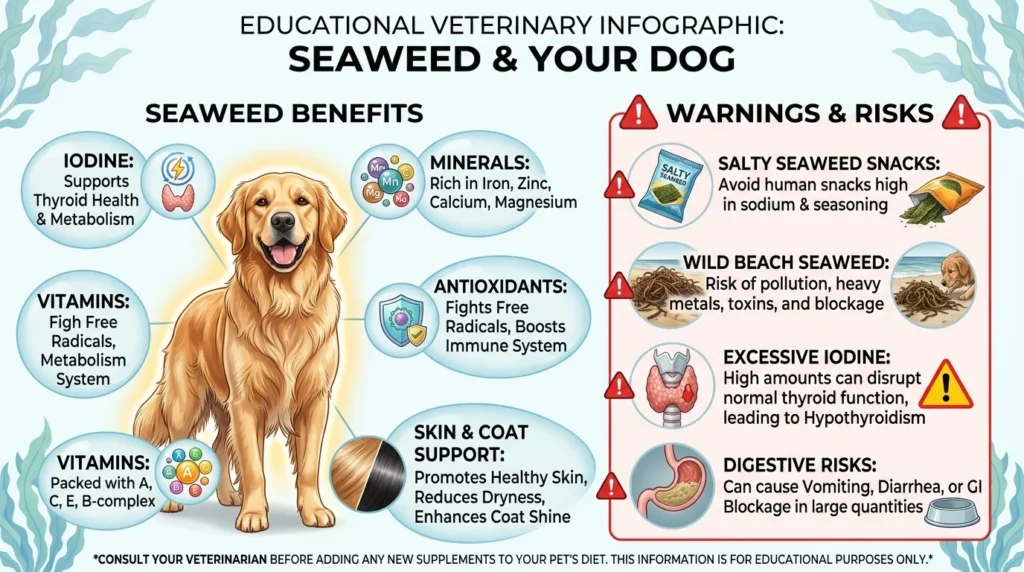
Yes, seaweed contains antioxidants, vitamins, minerals, and trace elements that may support immune health, healthy skin, coat condition, and normal body functions. Its natural fiber may also contribute to healthy digestion.
Some commercial dog foods include seaweed as a source of beneficial nutrients, although only small amounts are typically used.
Does Seaweed Have Any Risks For Dogs?
Yes, seaweed has several potential risks. Excessive iodine intake may affect thyroid health, while salty seaweed snacks can contribute to dehydration and excessive sodium intake.
Wild seaweed is especially dangerous because it may contain toxins, harmful bacteria, or expand inside the stomach, potentially causing life-threatening intestinal blockages.
See Also: Can Dogs Eat Marshmallows? Risks, Xylitol & Safety Guide
Frequently Asked Questions
Can dogs eat dried seaweed?
Yes. Plain dried edible seaweed without salt or seasonings can be fed occasionally in very small amounts.
Can dogs eat seaweed snacks?
No. Most seaweed snacks contain added salt, oils, and seasonings that are not suitable for dogs.
Can dogs eat nori seaweed?
Yes. Plain nori is generally safe when served in moderation without added ingredients.
Is wild seaweed dangerous for dogs?
Yes. Wild seaweed found on beaches can expand in the stomach and may contain harmful bacteria or toxins.
Can puppies eat seaweed?
Puppies should only eat very small amounts of plain edible seaweed if recommended by a veterinarian.
Conclusion
Dogs can safely eat small amounts of plain edible seaweed such as nori or kelp. These varieties provide vitamins, minerals, antioxidants, and iodine that may support overall health when fed occasionally.
Avoid seasoned seaweed snacks, salty products, and wild seaweed from beaches. By choosing plain edible seaweed and serving it in moderation, you can safely add nutritional variety to your dog’s diet.
See Also: Can Dogs Eat Oatmeal? Benefits, Risks & Safe Feeding Guide


