

Can Dogs Eat Chocolate? Poisoning Signs & Safety Guide
Chocolate is one of the most dangerous human foods for dogs. While many people enjoy chocolate as a sweet treat, it contains compounds that can be harmful and even toxic to dogs. The main concern is theobromine and caffeine, which dogs cannot break down as efficiently as humans.
Even a small amount of chocolate can cause health problems depending on the type of chocolate, the amount eaten, and the size of the dog. Understanding why chocolate is dangerous, what symptoms to watch for, and what steps to take can help protect your dog from serious health risks.
Can Dogs Eat Chocolate?
No, dogs should not eat chocolate. Chocolate contains theobromine and caffeine, two stimulants that belong to a group of chemicals called methylxanthines. Dogs process these compounds much more slowly than humans, allowing toxic levels to build up in their bodies.
Eating chocolate can cause symptoms ranging from mild stomach upset to severe poisoning, including seizures, heart problems, and even death in serious cases. The safest choice is to keep all types of chocolate away from your dog.
How Much Chocolate Can Dogs Eat? Can Your Dog Eat?
The safe amount of chocolate for dogs is zero. Unlike some foods that can be given in moderation, chocolate is not considered a safe treat for any dog. The level of danger depends on the type of chocolate, the quantity consumed, and the dog’s weight.
Dark chocolate and baking chocolate are especially dangerous because they contain higher amounts of theobromine. Small dogs are at greater risk because even a small piece may deliver a toxic dose compared to their body size.
| Chocolate Type | Risk Level | Safety |
|---|---|---|
| White Chocolate | Lower risk but unhealthy | Avoid |
| Milk Chocolate | Moderate risk | Unsafe |
| Dark Chocolate | High risk | Very dangerous |
| Baking Chocolate | Extremely high risk | Never feed |
Can Dogs Eat Dark Chocolate?
No, dogs should never eat dark chocolate. Dark chocolate contains much higher levels of theobromine compared to milk chocolate, making it one of the most dangerous types of chocolate for dogs. Even a small amount can cause poisoning, especially in small breeds.
If your dog eats dark chocolate, contact a veterinarian immediately. Do not wait for symptoms to appear because treatment is often more effective when started early after ingestion.
Can Dogs Eat Milk Chocolate?
No, milk chocolate is also unsafe for dogs. Although it contains less theobromine than dark chocolate, it can still cause toxicity if a dog eats enough of it. Milk chocolate also contains sugar, dairy, and fat, which may cause digestive issues.
A small accidental lick may not always result in severe poisoning, but the risk depends on your dog’s size and the amount consumed. It is always better to contact your veterinarian for guidance after chocolate ingestion.
Can Dogs Eat White Chocolate?
White chocolate contains very little theobromine compared to dark or milk chocolate, but it is still not recommended for dogs. It contains high amounts of sugar and fat, which can contribute to stomach upset, obesity, and pancreatitis.
Although white chocolate poisoning is less common, it should not be used as a dog treat. Safer alternatives made specifically for dogs are a much better choice.
Can Dogs Eat Chocolate Ice Cream?
No, dogs should not eat chocolate ice cream. It contains chocolate ingredients that may be toxic, along with high levels of sugar, fat, and dairy. Many dogs also have difficulty digesting lactose, which can lead to diarrhea or stomach discomfort.
Even small amounts are not worth the risk. If your dog wants a cold treat, choose dog-safe frozen treats made with ingredients suitable for canine digestion.
Can Dogs Eat Chocolate Cake?
No, dogs should not eat chocolate cake. Chocolate cake often contains cocoa powder or chocolate, which can be toxic to dogs. It also contains sugar, butter, oils, and other ingredients that may upset your dog’s digestive system.
Some cakes may contain additional harmful ingredients such as raisins, nuts, or artificial sweeteners like xylitol. Always keep chocolate desserts away from dogs and store them securely.
Can Dogs Eat Chocolate Cookies?
No, chocolate cookies are unsafe for dogs. They usually contain chocolate chips, cocoa powder, sugar, butter, and other ingredients that can create health risks. The chocolate content alone makes them unsuitable for pets.
If your dog accidentally eats a chocolate cookie, check how many were consumed and what type of chocolate was used. Contact your veterinarian if you notice symptoms or if your dog ate a large amount.
What Happens If a Dog Eats Chocolate?
If a dog eats chocolate, the effects depend on the type and amount of chocolate consumed, along with the dog’s size and overall health. Some dogs may experience mild symptoms, while others can develop serious chocolate poisoning. The toxic compounds in chocolate, especially theobromine and caffeine, affect the nervous system, heart, and digestive system.
Common signs include vomiting, diarrhea, increased thirst, restlessness, fast breathing, and excessive urination. In severe cases, dogs may experience muscle tremors, seizures, abnormal heart rhythms, collapse, or life-threatening complications. Immediate veterinary advice is recommended after chocolate ingestion.
What Are the Symptoms of Chocolate Poisoning in Dogs?
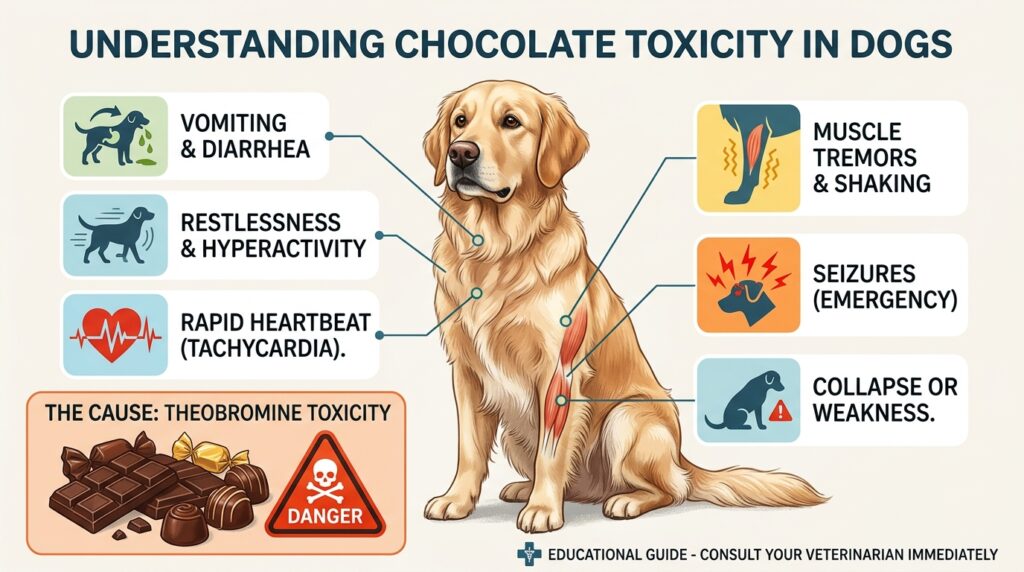
Chocolate poisoning symptoms can appear within a few hours after a dog eats chocolate. Early signs may include vomiting, diarrhea, increased energy, panting, and restlessness. As the toxins continue affecting the body, symptoms may become more severe.
See Also: Can Dogs Eat Raw Chicken? Benefits, Risks & Safety Guide
Serious symptoms include rapid heartbeat, high body temperature, muscle tremors, seizures, weakness, and collapse. If you suspect chocolate poisoning, do not wait for symptoms to worsen. Contact your veterinarian as soon as possible for guidance.
Can Dogs Eat Chocolate With Milk?
No, dogs should not eat chocolate mixed with milk. Milk chocolate already contains theobromine and caffeine, while milk adds extra fat and sugar that can increase digestive problems. Some dogs may also have difficulty digesting dairy products.
Chocolate milk, milkshakes, and chocolate-flavored dairy products should also be avoided. Even if the chocolate amount seems small, repeated exposure can increase health risks for dogs.
Can Dogs Eat Chocolate Powder or Cocoa Powder?
No, dogs should never eat cocoa powder or chocolate powder. Cocoa powder contains a very high concentration of theobromine, making it one of the most dangerous chocolate products for dogs.
Even a small amount of cocoa powder can potentially cause serious poisoning, especially in smaller dogs. Keep cocoa powder stored securely because dogs may be attracted to its smell.
Can Dogs Eat Chocolate Chip Cookies?
No, chocolate chip cookies are unsafe for dogs. They contain chocolate chips along with sugar, butter, flour, and other ingredients that are not suitable for canine diets. The chocolate content can cause toxicity depending on the amount eaten.
If your dog steals one small cookie, they may not always develop severe symptoms, but it is important to monitor them. Eating multiple cookies or cookies made with dark chocolate requires immediate veterinary advice.
Can Dogs Eat Chocolate Candy?
No, chocolate candy should never be given to dogs. Many candies contain concentrated chocolate, sugar, artificial flavors, and sometimes other harmful ingredients. The combination can create serious health risks for pets.
Some candies may also contain xylitol, an artificial sweetener that is extremely toxic to dogs and can cause dangerous drops in blood sugar. Always keep candy bowls out of your dog’s reach.
Is Chocolate Good for Dogs to Eat?
No, chocolate is not good for dogs to eat. While chocolate contains antioxidants and nutrients that may benefit humans, dogs cannot safely process the compounds found in chocolate. The potential risks are much greater than any possible nutritional value.
Dogs do not need chocolate in their diet. They can get necessary nutrients from balanced dog food and safe treats designed specifically for their nutritional needs.
How to Keep Chocolate Safe Around Your Dog

The best way to protect your dog is to store chocolate in closed containers and keep it in places your dog cannot access. Avoid leaving chocolate desserts, baking ingredients, or candy on countertops where curious dogs can reach them.
See Also: Can Dogs Eat Yogurt? Benefits, Risks & Safe Feeding Guide
Teach family members and guests not to share chocolate with your dog. During holidays and celebrations, be extra careful because chocolate products are often left within easy reach of pets.
Does Chocolate Have Benefits For Dogs?
Chocolate does not provide any safe health benefits for dogs. Although cocoa contains antioxidants and minerals that humans may benefit from, dogs face serious risks from theobromine and caffeine found in chocolate.
Dogs can receive antioxidants and nutrients from much safer foods, including dog-safe fruits and vegetables. There is no nutritional reason to include chocolate in a dog’s diet.
Does Chocolate Have Any Risks For Dogs?
Yes, chocolate has significant risks for dogs. Theobromine and caffeine can affect the nervous system, heart, and muscles, causing symptoms ranging from stomach problems to severe poisoning. The risk increases with darker chocolate varieties.
Small dogs, puppies, and dogs with existing health conditions are especially vulnerable. Because there is no safe amount of chocolate for dogs, prevention is the best approach.
Frequently Asked Questions
Can dogs eat any type of chocolate?
No, dogs should not eat any type of chocolate. Dark chocolate, baking chocolate, and cocoa powder are especially dangerous, but all chocolate should be avoided.
What should I do if my dog eats chocolate?
Contact your veterinarian immediately and provide details about the chocolate type, amount eaten, and your dog’s weight.
How long does chocolate poisoning take in dogs?
Symptoms may appear within a few hours after eating chocolate, but timing depends on the amount consumed and the dog’s metabolism.
Can one piece of chocolate hurt a dog?
It depends on the dog’s size and the type of chocolate. A small piece may not always cause poisoning, but it is safest to contact a veterinarian for advice.
What treats can dogs eat instead of chocolate?
Dogs can enjoy safer treats such as carrots, blueberries, apples without seeds, pumpkin, or specially made dog treats.
Conclusion
Dogs should never eat chocolate because it contains theobromine and caffeine, which can be toxic and potentially life-threatening. Different types of chocolate carry different levels of risk, but dark chocolate, baking chocolate, and cocoa powder are especially dangerous.
If your dog accidentally eats chocolate, contact your veterinarian quickly and monitor for symptoms such as vomiting, restlessness, tremors, or seizures. Keeping chocolate safely stored and choosing dog-friendly treats is the best way to protect your pet’s health.
See Also: Can Dogs Eat Turkey? Benefits, Risks & Safe Feeding Guide


