
Can Dogs Eat Parmesan Cheese? Safety & Feeding Guide
Dogs can eat a small amount of Parmesan cheese, but it should only be given occasionally. Parmesan is not considered toxic to dogs, but it is a hard, aged cheese that is relatively high in fat and sodium. Eating too much can cause digestive upset, excessive thirst, or unnecessary calorie intake.
A tiny sprinkle of plain Parmesan over food is generally less concerning than feeding a large piece or a bowlful. The safest approach is to use Parmesan as an occasional topping rather than treating it as a regular part of your dog’s diet.
Is Parmesan Cheese Safe for Dogs?
Plain Parmesan cheese can be tolerated by many healthy dogs when given in a very small amount. Unlike foods that are directly toxic to dogs, Parmesan itself is not usually considered poisonous. However, its high salt and fat content means that portion size matters.
Some dogs also have difficulty digesting dairy products. A dog that is sensitive to lactose or rich foods may develop gas, loose stools, diarrhea, or vomiting after eating Parmesan. If your dog has never tried it before, start with a very small amount and watch for any unusual reaction.
Can Dogs Eat Grated Parmesan Cheese?
Dogs can have a small amount of plain grated Parmesan cheese, provided it does not contain unsafe added ingredients. Because grated Parmesan is concentrated and flavorful, you only need a tiny sprinkle to add taste. Giving a large amount is unnecessary and can add significant salt and calories.
Always check the ingredient label when using packaged grated Parmesan. Some products may contain additional ingredients or seasoning blends. Plain Parmesan with a simple ingredient list is the better option if you decide to share some with your dog.
Can Dogs Eat Parmesan Cheese Every Day?
Parmesan cheese is not a good everyday food for dogs. Even small daily servings can gradually add extra sodium, fat, and calories to your dog’s diet. Dogs should get most of their nutrition from a complete and balanced food designed for their nutritional needs.
If your dog enjoys Parmesan, use it only occasionally and in a very small amount. A tiny sprinkle may be enough as a flavoring, but there is no nutritional need to add Parmesan to your dog’s meals every day.
Can Puppies Eat Parmesan Cheese?
Puppies can be more sensitive to rich human foods, so Parmesan should not be a regular puppy treat. A tiny accidental taste of plain Parmesan is generally not a major concern for a healthy puppy, but intentionally feeding larger portions is unnecessary.
Puppies need a complete diet that supports growth and development. If you want to use treats during training, puppy-appropriate treats or small pieces of plain cooked meat are usually more suitable choices than salty aged cheese.
Can Dogs Eat Parmesan Cheese on Pasta?
A small amount of plain Parmesan sprinkled over plain cooked pasta may be tolerated by many dogs. However, the pasta dish itself matters. Sauces can contain onion, garlic, excessive salt, butter, cream, or other ingredients that are unsuitable for dogs.
If you want to share pasta with your dog, set aside a small portion of plain, fully cooked pasta before adding sauce and seasonings. A tiny sprinkle of Parmesan can then be added if your dog tolerates dairy and salty foods well.
Can Dogs Eat Parmesan Cheese on Chicken?
Dogs can potentially eat a small amount of Parmesan on plain cooked chicken, but the cheese is not necessary. Plain, fully cooked, boneless chicken is already a useful protein-rich treat for many dogs. Adding Parmesan mainly increases the flavor, fat, and sodium content.
If you use Parmesan as a topping, keep the amount very small and make sure the chicken contains no garlic, onion, spicy seasoning, or heavy sauce. Avoid turning a simple dog-safe food into a rich human-style meal.
Can Dogs Eat Parmesan Cheese on Pizza?
It is better not to give dogs pizza topped with Parmesan. Pizza commonly contains several ingredients that can be problematic for dogs, including high-fat cheese, salty meats, garlic, onion, sauces, and heavily seasoned toppings. The combination can be much richer than a tiny amount of plain Parmesan.
If your dog accidentally eats a small piece of pizza, check the ingredients and monitor for digestive upset. For an occasional cheese treat, plain Parmesan in a tiny amount is a simpler choice than sharing a slice of pizza.
Can Dogs Eat Parmesan Cheese with Garlic?
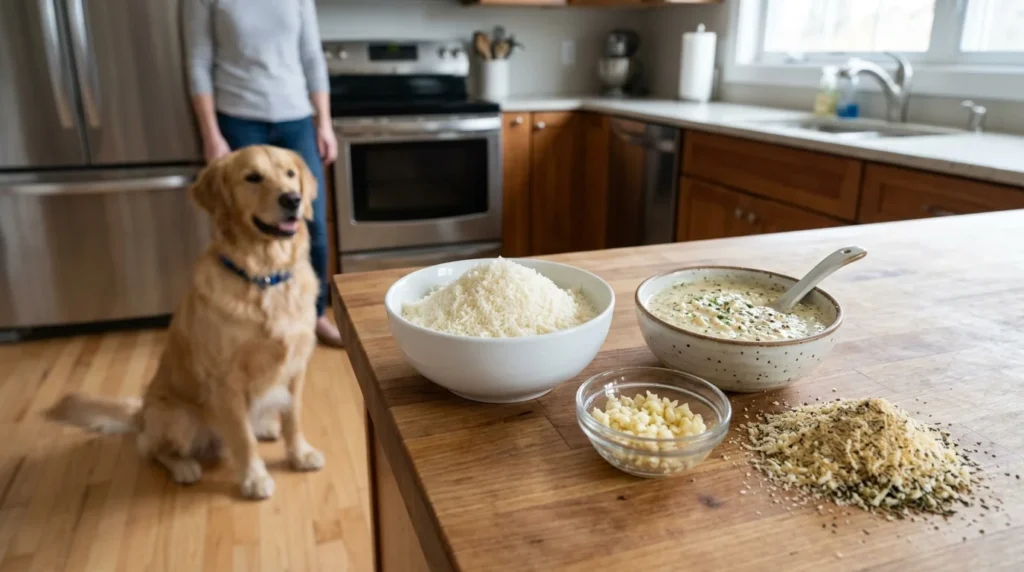
Parmesan mixed with garlic should be avoided. Garlic is unsafe for dogs, and concentrated forms such as garlic powder can be especially easy to consume in seasoned foods. The concern in this situation comes from the garlic rather than the Parmesan itself.
Keep Parmesan plain if you decide to give your dog a taste. Avoid garlic Parmesan sauces, garlic cheese spreads, seasoned Parmesan toppings, and other products where garlic is included as an ingredient.
Can Dogs Eat Parmesan Cheese with Herbs?
Parmesan with certain dog-safe herbs may be less concerning than Parmesan mixed with garlic or onion, but you should still check the full ingredient list. Some commercial seasoning blends contain garlic powder, onion powder, excessive salt, or other ingredients that are not appropriate for dogs.
Plain Parmesan is easier to evaluate because it contains fewer ingredients. If your dog has a sensitive stomach, it is better to avoid heavily seasoned cheese products and keep any cheese serving very small.
Can Dogs Eat Parmesan Cheese Rinds?
It is better not to give dogs hard Parmesan rinds. The rind is tough and can be difficult for a dog to chew or digest. A dog that swallows a large piece could potentially experience choking or digestive problems.
If you use Parmesan at home, keep the rind away from your dog. A tiny amount of finely grated or shaved cheese is easier to control and is a more appropriate way to offer an occasional taste.
How Much Parmesan Cheese Can Dogs Eat?
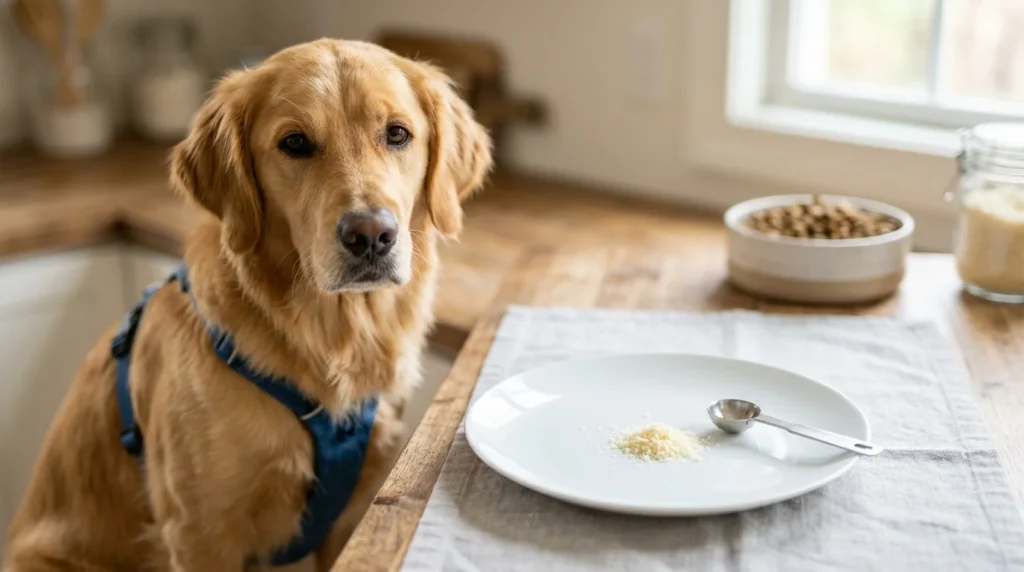
The amount of Parmesan a dog can have depends on its size, health, diet, and tolerance for dairy. Because Parmesan is an aged and salty cheese, only a very small amount is appropriate. For most dogs, a light sprinkle is enough rather than a chunk or several spoonfuls.
| Dog Size | Occasional Amount |
|---|---|
| Small dogs | A pinch to 1/2 teaspoon |
| Medium dogs | 1/2 to 1 teaspoon |
| Large dogs | 1–2 teaspoons |
These are general occasional portions, not recommended daily servings. Dogs with weight problems, sensitive stomachs, kidney-related dietary restrictions, or other health conditions may need to avoid salty or high-fat foods altogether. Ask your veterinarian if your dog has specific dietary restrictions.
Is Parmesan Cheese High in Salt?
Yes, Parmesan is a salty cheese because it is aged and typically contains a relatively high amount of sodium. Dogs need some sodium in their diet, but excessive amounts are unnecessary and can contribute to excessive thirst and other problems, particularly when large quantities of salty foods are eaten.
This is one reason Parmesan should only be used as a tiny occasional topping. Avoid combining Parmesan with other salty foods such as processed meats, salty sauces, chips, or heavily seasoned meals.
See Also: Can Dogs Eat Cornbread? Safety & Feeding Guide
Is Parmesan Cheese High in Fat?
Parmesan contains fat, and although a tiny sprinkle provides only a small amount, larger servings can add considerable calories. Rich foods may also cause digestive upset in some dogs. Dogs that are prone to problems after eating fatty foods should not be given Parmesan without veterinary guidance.
For dogs that tolerate dairy, a tiny amount of Parmesan is generally more reasonable than a large serving. Keeping portions small helps limit unnecessary fat and calories while allowing your dog an occasional taste.
Can Parmesan Cheese Cause Diarrhea in Dogs?
Parmesan can cause diarrhea in some dogs, especially those that are sensitive to dairy or rich foods. Eating more cheese than the dog is accustomed to can also upset the digestive system. Signs may include loose stools, gas, stomach discomfort, or vomiting.
If your dog develops mild diarrhea after eating Parmesan, stop offering the cheese and avoid additional rich treats. Make sure fresh water is available and monitor your dog. Severe or persistent diarrhea, blood in the stool, repeated vomiting, or weakness should be discussed with a veterinarian.
Can Parmesan Cheese Cause Vomiting in Dogs?
Some dogs may vomit after eating Parmesan, particularly if they consume a large amount or are sensitive to dairy and fatty foods. A small amount is less likely to cause a problem than eating a large quantity of cheese.
If your dog vomits once after eating a small amount and otherwise seems normal, monitor them closely. Repeated vomiting, inability to keep water down, abdominal pain, weakness, or unusual behavior requires veterinary attention.
Can Dogs Eat Parmesan Cheese with Eggs?
Plain fully cooked eggs can be suitable for many dogs, and a very small amount of Parmesan can sometimes be used as a topping. However, adding large amounts of cheese, butter, salt, or oil can turn a simple egg into a rich meal.
If you share eggs with your dog, serve them plain and fully cooked. If you add Parmesan, use only a light sprinkle and avoid garlic, onion, spicy seasonings, or other unsafe ingredients.
Can Dogs Eat Parmesan Cheese with Vegetables?
A small amount of plain Parmesan can be sprinkled over dog-safe vegetables such as carrots, green beans, zucchini, or broccoli. However, the cheese should remain a tiny topping rather than the main part of the meal.
Keep the vegetables plain and avoid sauces, garlic, onion, excessive butter, and salt. This allows your dog to enjoy the vegetables without turning them into a high-fat or heavily seasoned human dish.
Can Dogs Eat Parmesan Cheese Crackers?
Parmesan crackers are not the same as plain Parmesan cheese. Crackers can contain significant amounts of salt, fat, oils, seasonings, and other ingredients. Some flavored varieties may also contain onion or garlic powder.
A small accidental bite of a plain cracker is usually less concerning than a large amount, but crackers should not become a regular dog treat. Plain dog-safe foods are generally a better option for frequent rewards.
Can Dogs Eat Parmesan Cheese Sauce?
Parmesan cheese sauce is best avoided because it often contains several rich ingredients in addition to cheese. Cream, butter, milk, salt, garlic, onion, and seasonings may all be included. The combination can be much harder for a dog to tolerate than a tiny amount of plain Parmesan.
If your dog accidentally eats some cheese sauce, check the ingredients and estimate how much was consumed. If the sauce contains garlic or onion or your dog ate a large amount, contact your veterinarian for advice.
What Should You Do If Your Dog Eats Too Much Parmesan?
If your dog eats more Parmesan than intended, first check how much was consumed and whether the product contained additional ingredients. A small amount of plain Parmesan usually calls for monitoring rather than panic, but a large quantity may cause digestive upset because of its fat and sodium content.
Remove the remaining cheese and make fresh water available. Watch for vomiting, diarrhea, excessive thirst, abdominal discomfort, weakness, or other unusual symptoms. If your dog ate a very large amount or has an existing health condition affected by salt or fat, contact your veterinarian.
See Also: Can Dogs Eat Sour Cream? Safety & Feeding Guide
Healthier Cheese Alternatives for Dogs
If your dog enjoys cheese, there are some options that may be easier to portion than Parmesan. Small amounts of plain, lower-salt cheese may be tolerated by some dogs, but all dairy treats should still be given sparingly. Dogs that do not tolerate dairy should not be given cheese simply because another dog can eat it.
For regular rewards, consider dog-specific treats or simple foods such as plain cooked chicken, turkey, carrots, green beans, cucumber, or blueberries. These options can provide variety without relying heavily on salty aged cheese.
Frequently Asked Questions
Can dogs eat Parmesan cheese safely?
Healthy dogs can usually tolerate a very small amount of plain Parmesan occasionally. However, Parmesan is high in salt and contains fat, so large or frequent servings are not recommended.
Can dogs eat grated Parmesan cheese?
Yes, a small amount of plain grated Parmesan can be given occasionally. A light sprinkle is enough, and you should check packaged products for added garlic, onion, seasonings, or other ingredients.
Can puppies eat Parmesan cheese?
Puppies do not need Parmesan as part of their diet. A tiny accidental taste is generally less concerning than regular feeding, but puppies should primarily eat a complete food formulated for growth.
Can dogs eat Parmesan cheese every day?
It is better not to give Parmesan every day. Regular servings can add unnecessary salt, fat, and calories to your dog’s diet. Occasional tiny amounts are more appropriate.
What if my dog eats a large amount of Parmesan cheese?
A large amount may cause digestive upset, excessive thirst, vomiting, or diarrhea. Check the ingredients and contact your veterinarian if your dog ate a significant quantity or develops concerning symptoms.
Conclusion
Dogs can eat a small amount of plain Parmesan cheese occasionally, but it should not be a regular part of their diet. Parmesan is an aged cheese that contains considerable salt and fat, so even though it is not generally toxic to dogs, portion control is important.
If you give your dog Parmesan, use only a tiny amount of plain cheese and avoid products containing garlic, onion, spicy seasonings, or other unsafe ingredients. Keep Parmesan rinds and large pieces away from your dog, and contact your veterinarian if your dog eats a large amount or develops significant digestive symptoms.


