

Can Dogs Eat Bananas? Everything You Need to Know Before Feeding
You’re peeling a banana and your dog is already sitting right next to you, tail wagging, eyes locked on that yellow fruit. Sound familiar? If you’ve ever wondered whether it’s actually okay to share a piece — you’re asking the right question. Bananas are one of the most popular fruits in the world, and dog owners ask about them constantly.
The short answer is yes — dogs can eat bananas. But like every human food, there’s a right way and a wrong way to do it. Some forms are completely fine. Others — like banana peels or banana chips loaded with sugar — are a different story. And how much you give matters a lot more than most people realize.
In this complete guide, we’ve covered every single angle of this topic. Every related question you might have is answered here — from banana peels to banana yogurt, from puppies to allergic dogs, from daily feeding to what happens when your dog eats too much. Let’s get into it.
Can Dogs Eat Bananas?
Yes — dogs can eat bananas, and they are safe for most healthy dogs. Bananas are non-toxic to dogs and are recognized by the American Kennel Club (AKC) as a dog-friendly fruit. They contain several genuinely useful nutrients including potassium, Vitamin B6, Vitamin C, magnesium, and dietary fiber.
However, bananas are also high in natural sugar compared to many other fruits. A single medium banana contains about 14 grams of sugar and around 105 calories — which is quite a lot in the context of a dog’s diet. This is why moderation is absolutely essential. Bananas should be treated as an occasional treat, not a daily food staple.
Serve bananas fresh, in small pieces, without the peel, and in amounts appropriate for your dog’s size. Do that and bananas are a genuinely healthy, tasty treat your dog will love.
Are Bananas Good for Dogs?
Yes — bananas are genuinely good for dogs when given in the right amount. They are not empty calories. Bananas are packed with real nutrition that supports a dog’s overall health in several important ways.
Potassium is the standout nutrient in bananas. It supports healthy heart function, proper muscle contraction, and fluid balance throughout the body. Dogs need potassium just like humans do, and bananas are one of the richest natural sources of it.
Bananas also contain Vitamin B6, which plays a critical role in protein metabolism, red blood cell production, and nervous system function. Magnesium supports bone health and helps the body absorb other vitamins and minerals more efficiently. Vitamin C acts as a natural antioxidant, protecting cells from damage.
The dietary fiber in bananas supports healthy digestion and helps maintain a steady pace of food movement through the gut. For dogs with occasional constipation or irregular stools, a small amount of banana can actually be helpful.
In short, yes — bananas are a good fruit choice for dogs. Just remember that “good” always means “in moderation” when it comes to fruit treats.
Is Banana Healthy for Dogs?
Absolutely — banana is a healthy snack option for dogs, and it ranks among the better fruit choices you can make for your pet. When you compare a slice of banana to a commercial dog treat, the banana wins on almost every nutritional measure. It has no artificial preservatives, no artificial flavors, no mystery ingredients — just whole food nutrition straight from nature.
The fiber content supports gut health and digestion. The potassium supports cardiovascular and muscular health. The natural sugars provide a quick energy source that is especially useful for active or working dogs. The Vitamin B6 and magnesium support cellular function, metabolism, and bone strength.
One thing to keep in mind is that healthy does not mean unlimited. Bananas are higher in sugar and calories than many other dog-safe fruits and vegetables. A whole banana every day would add too much sugar to a dog’s diet over time. But a few slices a couple of times per week? That is genuinely healthy and beneficial.
If you want to explore more healthy food options for your dog beyond bananas, Dogs Bread is an excellent resource with detailed guides on dozens of dog-safe fruits, vegetables, and everyday human foods — all written with real pet nutrition in mind.
Benefits of Banana for Dogs
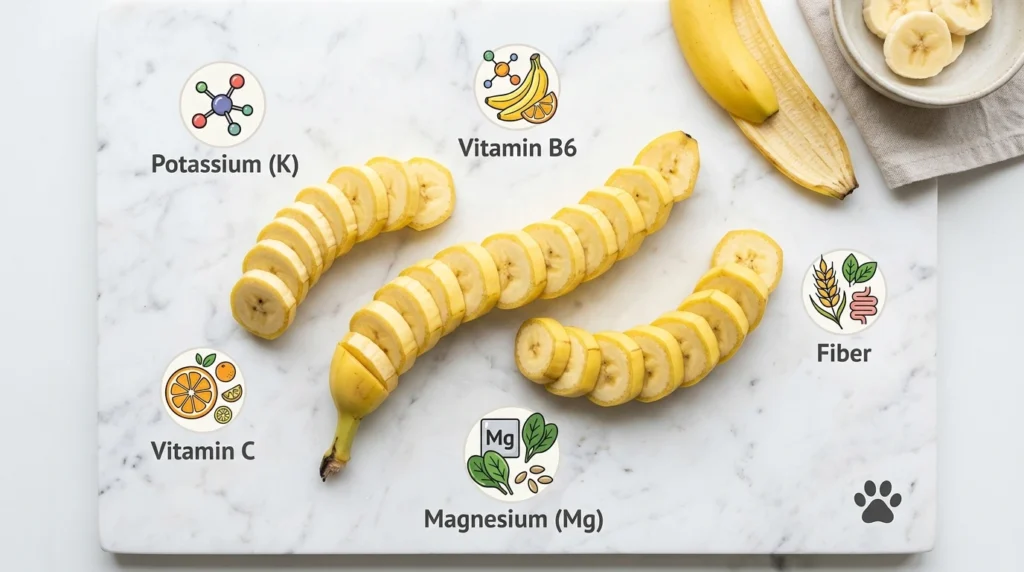
Let’s go through the specific health benefits of bananas for dogs in detail, because this is where it gets really interesting for owners who want to make nutrition-smart choices for their pets.
Potassium for Heart and Muscle Health: Potassium is an electrolyte that regulates heartbeat, supports proper muscle contraction, and maintains healthy fluid balance in the body. Dogs with potassium deficiencies can experience muscle weakness, fatigue, and heart irregularities. Bananas are one of the best natural sources of potassium available.
Vitamin B6 for Brain and Body: Vitamin B6 (pyridoxine) is essential for protein metabolism, neurotransmitter production, red blood cell synthesis, and healthy immune function. It also plays a role in regulating blood sugar levels. Dogs need B6 for many metabolic processes, and bananas deliver a meaningful amount.
Magnesium for Bones and Nutrient Absorption: Magnesium supports bone density and skeletal health. It also helps the body absorb other essential vitamins and minerals — including Vitamin C and calcium — more effectively. For growing puppies and senior dogs especially, magnesium is an important mineral.
Dietary Fiber for Digestion: The fiber in bananas supports healthy digestion in two ways. Soluble fiber slows digestion, which helps stabilize blood sugar. Insoluble fiber adds bulk and helps move food through the intestines at a healthy pace, supporting regular bowel movements. For dogs with mild digestive issues, a small amount of ripe banana can actually help settle the stomach.
Vitamin C as an Antioxidant: Though dogs produce their own Vitamin C, additional dietary Vitamin C still helps — especially in older dogs, stressed dogs, or dogs recovering from illness. Vitamin C neutralizes free radicals that cause cellular aging and disease.
Low Fat, No Cholesterol: Bananas contain virtually no fat and zero cholesterol. This makes them a safe and heart-healthy treat option for most dogs, including those being managed for weight issues — as long as portion sizes are kept appropriate given the sugar content.
Natural Energy Boost: The natural carbohydrates in bananas — primarily fructose, glucose, and sucrose — provide a quick and readily available energy source. This makes bananas a popular treat among owners of working dogs, sporting dogs, and dogs that participate in agility training or other athletic activities.
Can Dogs Eat Bananas Safely?
Yes — dogs can eat bananas safely, and for the vast majority of healthy dogs, bananas present no safety concern when served correctly. The key word is “correctly.” Following a few simple preparation and portion guidelines makes all the difference between a healthy treat and a potential problem.
Safe serving rules:
- Always peel the banana completely before giving it to your dog. The peel is not digestible.
- Cut or break into small pieces appropriate for your dog’s size. Never give a whole banana at once.
- Serve plain — no added sugar, no salt, no peanut butter with xylitol, no chocolate.
- Give in moderation — bananas are high in natural sugar and should be a treat, not a meal replacement.
- Introduce slowly the first time. Start with just one small piece and watch for any digestive reaction over 24 hours.
Dogs with diabetes, obesity, kidney problems, or other chronic health conditions should only eat banana with explicit veterinary approval, as the sugar and potassium content can interfere with disease management. For healthy dogs without existing conditions, bananas are a perfectly safe and enjoyable treat.
Can Dogs Eat Banana Peels?
No — dogs should not eat banana peels. While banana peels are technically not toxic to dogs, they are not safe to eat either, and this is an important distinction. The peel of a banana is extremely tough, fibrous, and very difficult for a dog’s digestive system to break down. Unlike the soft, easily digestible flesh of the banana, the peel resists digestion and can cause a range of problems.
The most serious risk is intestinal blockage. If a dog swallows a large piece of banana peel — or especially a whole peel — it can become lodged in the esophagus, stomach, or intestines. This is a medical emergency that may require veterinary intervention or even surgery to resolve. Signs of a blockage include vomiting, loss of appetite, lethargy, straining to defecate, and abdominal pain.
Even if a small piece of peel passes without causing a blockage, it is likely to cause digestive upset — vomiting, diarrhea, or stomach discomfort — because the fiber content is simply too tough and dense for most dogs to process properly.
Additionally, banana peels from conventionally grown bananas may carry pesticide residue on their outer surface, adding another reason to keep them away from your dog entirely.
The rule is simple: always remove the peel completely before giving banana to your dog. If your dog accidentally grabbed a whole banana and ate the peel before you could stop them, watch for signs of digestive distress and contact your vet if symptoms appear.
Can Dogs Eat Bananas Everyday?
Technically possible for very small amounts — but not recommended as a daily practice for most dogs. The main concern with daily banana feeding is the cumulative sugar and calorie intake over time.
A medium banana contains approximately 14 grams of natural sugar and around 105 calories. For a small dog that needs perhaps 200 to 400 calories per day, even half a banana represents a significant portion of their daily caloric and sugar budget. Consumed daily, this level of sugar intake adds up fast, potentially contributing to weight gain, blood sugar instability, and dental decay over time.
For medium and large dogs with higher calorie needs, a small daily portion — say, two or three thin slices — is less likely to cause problems. But veterinary nutritionists generally recommend rotating fruit treats and not feeding the same fruit every single day. Variety ensures a broader range of micronutrients and keeps your dog from developing an unhealthy fixation on one specific food.
A much better approach is to give banana two to four times per week as a treat, rather than every day. This gives your dog the nutritional benefits and the enjoyment without the cumulative sugar concern. Think of bananas as a special treat rather than a daily supplement.
Can Dogs Eat Dried Bananas?
Dried bananas — also called banana chips or dehydrated bananas — require careful consideration before giving to dogs. There are two types of dried banana products, and they are very different from each other in terms of safety.
Plain dehydrated or freeze-dried bananas (no added ingredients): These are safer than commercially processed chips, but still significantly more concentrated in sugar than fresh banana. When water is removed from fruit through drying or dehydration, everything else — including the natural sugars — becomes concentrated. A small handful of dried banana has the sugar equivalent of several fresh bananas. Use only in tiny amounts if you choose to give them.
Commercial banana chips (fried or sweetened): These are a serious concern. Most commercial banana chip products found in grocery stores are fried in oil and coated with added sugar, salt, and sometimes artificial flavors or preservatives. These products are not appropriate for dogs at all — the fat content, sugar content, and added salt make them harmful rather than helpful. Some flavored varieties may also contain spices like cinnamon or nutmeg that can be irritating or toxic to dogs.
The safest approach: stick to fresh banana. If you want to use dried banana as an occasional training treat, look for a product with one ingredient only — banana — with nothing added. Use just a pinch at a time given the concentrated sugar content.
Can Dogs Eat Frozen Bananas?
Yes — frozen bananas are completely safe for dogs and are actually one of the most popular dog treat ideas among pet owners, especially during summer. The cold, firm texture is enjoyable for most dogs, almost like a natural popsicle. Frozen banana also takes longer to eat than fresh, which keeps dogs engaged and entertained for longer — great for mental stimulation.
The preparation is simple. Peel a ripe banana, slice it into rounds or break it into small pieces appropriate for your dog’s size, place the pieces on a parchment-lined baking tray, and freeze for two to three hours until solid. Transfer the frozen pieces to a sealed bag and store in the freezer for up to three months.
You can also blend frozen banana with plain yogurt or a splash of coconut milk and freeze in silicone molds to make homemade “pupsicles” — a frozen treat that dogs absolutely love. Just make sure any added ingredients are dog-safe (plain yogurt is fine; flavored or sweetened yogurt is not).
One small note for small dogs or dogs with sensitive teeth: very hard frozen banana pieces might be uncomfortable to bite into. Let them thaw for a minute or two first, or freeze smaller pieces that are easier to manage.
See Also: Can Dogs Eat Strawberries? Here’s Everything You Need to Know
Can Dogs Eat Ripe Bananas?
Yes — ripe bananas are actually the best type of banana to give to your dog. A fully ripe banana with yellow skin and a few brown spots is easier to digest than an unripe or green banana. As bananas ripen, the starches inside convert into simpler sugars that are more easily processed by the digestive system.
Ripe bananas are also softer, which makes them easier to cut into small pieces and safer for dogs who might otherwise try to gulp down a large chunk. The soft texture also makes ripe banana easy to mash and mix into food or use in homemade dog treat recipes.
Overripe bananas — very soft with dark brown skin — are still safe for dogs. They are very sweet due to the high level of sugar conversion, so keep portions even smaller for overripe bananas. Some owners use overripe banana as a natural sweetener in homemade dog treat baking — mashed into oat flour and egg treats, for example. This is a perfectly fine use.
Green, unripe bananas are technically not toxic but are harder to digest because the starch has not yet converted to sugar. They may cause constipation or digestive discomfort if eaten in any significant amount. Stick to ripe or near-ripe bananas for the best digestive experience.
Can Dogs Eat Bananas and Is It Safe?
Yes, dogs can eat bananas, and they are generally considered a safe and healthy treat when served in moderation. Bananas contain essential nutrients such as potassium, vitamin C, vitamin B6, and dietary fiber. These nutrients can support your dog’s overall health while providing a naturally sweet snack. However, bananas also contain natural sugars, so they should only be offered occasionally. Too much banana may cause digestive upset or contribute to excess calorie intake, especially in smaller dogs.
Can Dogs Have Frozen Bananas?
Frozen bananas can be a refreshing and nutritious treat for dogs, especially during hot weather. Many pet owners freeze banana slices and offer them as a cool snack. Frozen bananas retain most of their nutrients and can help soothe teething puppies or provide a longer-lasting treat. However, large frozen chunks may be difficult for some dogs to chew, so it is best to cut bananas into small, bite-sized pieces before freezing them. Always supervise your dog when introducing frozen treats.
Can Puppies Eat Frozen Bananas?
Yes, puppies can eat frozen bananas in small amounts. Frozen banana slices can be particularly helpful for teething puppies because the cold texture may provide relief for sore gums. Bananas also contain vitamins and minerals that can support healthy growth and development. However, puppies have sensitive digestive systems, so new foods should be introduced gradually. Start with a small piece and monitor for any signs of stomach upset before offering frozen bananas regularly.
Also Read: Can Dogs Eat Pickles? Safety, Risks, Benefits & Feeding Guide
Can Yorkies Have Banana?
Many Yorkshire Terrier owners ask whether bananas are safe for their small dogs. The good news is that Yorkies can enjoy bananas as an occasional treat. Bananas provide fiber, potassium, and vitamins that may benefit your dog’s health. Because Yorkshire Terriers are a toy breed, portion control is especially important. A few small slices are usually enough to satisfy their appetite without adding excessive calories or sugar to their diet.
Can Yorkshire Terriers Eat Bananas?
Yes, Yorkshire Terriers can eat bananas safely when given in moderation. These small dogs often enjoy the soft texture and sweet taste of bananas. Since Yorkies have relatively small stomachs, treats should make up only a small portion of their daily diet. Feeding too much banana could lead to digestive issues or unnecessary weight gain. For the best results, serve fresh banana slices as a reward or mix small amounts into your Yorkie’s regular meals.
Can Dogs Eat Bananas and Peanut Butter?
Yes — banana and peanut butter is one of the most beloved dog treat combinations, and for good reason. Most dogs go absolutely wild for the combination of sweet banana and rich, savory peanut butter. Together they make a highly palatable, protein-rich, energy-dense treat.
However, there is one extremely important safety rule when it comes to peanut butter: always check the label for xylitol. Xylitol is an artificial sweetener that is added to many “natural,” “light,” “reduced sugar,” and “no sugar added” peanut butter brands. It is completely harmless to humans but catastrophically toxic to dogs — even a small amount can cause hypoglycemia (dangerously low blood sugar) and acute liver failure. Always read the ingredients list before giving any peanut butter to your dog, every single time, including on brands you’ve used before since formulas can change.
Once you have confirmed the peanut butter is xylitol-free, the combination is safe and enjoyable. Use plain peanut butter (just peanuts, no added sugar or salt ideally). Spread a small amount on a slice of banana, stuff into a Kong toy with banana pieces, or blend together and freeze in molds for a high-value treat. Keep overall portions moderate given that this combination is higher in calories and fat than banana alone.
Can Dogs Eat Banana Chips?
This depends entirely on the type of banana chips. As mentioned in the dried banana section, there are significant differences between products, and most commercially available banana chips are not appropriate for dogs.
Standard store-bought banana chips are typically deep-fried in coconut oil or vegetable oil and then coated with sugar and sometimes salt or other flavoring. The frying process makes them high in fat, and the sugar coating dramatically increases the caloric and sugar content compared to fresh banana. High-fat treats can trigger pancreatitis in dogs — a serious and painful inflammatory condition of the pancreas — especially in dogs that are already predisposed to digestive problems.
The salt content in flavored banana chips is also a concern. Dogs have a much lower sodium tolerance than humans, and high-sodium snacks can cause excessive thirst, urination, and in more serious cases, sodium poisoning.
Avoid most commercial banana chips entirely. If you want something with a similar “chip” texture as a dog treat, look for dehydrated banana slices with no added oil, sugar, or salt — literally just banana that has been dehydrated. These are far safer but still higher in concentrated sugar than fresh banana, so use in very small amounts.
Can Dogs Eat Banana Skin?
No — banana skin (which is the same as banana peel) should not be given to dogs. Banana skin is not toxic, but it is not safe or beneficial either. The skin is extremely tough and fibrous, making it very difficult for a dog’s digestive system to break down and process properly.
Eating banana skin can lead to gastrointestinal obstruction — a blockage in the digestive tract that prevents food from moving through normally. This is particularly dangerous for smaller dogs whose digestive tracts are narrower. A full peel or even a large piece of peel can get stuck in the esophagus, stomach, or small intestine and may require urgent veterinary care.
Even when a peel passes without causing a blockage, it commonly causes vomiting and diarrhea due to its indigestible fiber content irritating the gut lining. There is also the pesticide residue concern — the outer skin of conventionally grown bananas often carries more surface chemicals than the inner flesh.
Always peel the banana completely and remove all traces of the skin before giving banana to your dog. If your dog is persistent about trying to grab banana peels from the trash or compost, make sure those are inaccessible to prevent accidental ingestion.
Can Dogs Eat Banana Yogurt?
The answer depends entirely on which type of yogurt. Plain, unsweetened yogurt with fresh banana pieces added by you — yes, this is safe and actually quite nutritious for most dogs. Store-bought banana-flavored yogurt — no, this is not appropriate for dogs in most cases.
Commercial banana yogurt products contain significant amounts of added sugar, artificial banana flavoring, thickeners, and often artificial sweeteners in “light” or “low fat” versions. As with any sweetened product, the risk of xylitol is present, and even sugar-sweetened banana yogurt is far too high in refined sugar to be an appropriate treat for dogs.
Plain yogurt, on the other hand, contains beneficial probiotics (live bacterial cultures) that support gut health and digestion. It also provides protein and calcium. Combined with fresh banana pieces, it makes a nutrient-rich, probiotic treat that most dogs enjoy tremendously.
To make the safe version: take one to two tablespoons of plain, unsweetened yogurt (full-fat or low-fat, Greek or regular — all fine as long as plain). Add small pieces of fresh ripe banana. Serve as is, or blend and freeze in silicone molds for a frozen treat.
Note: if your dog is lactose intolerant — showing signs like gas, bloating, or diarrhea after eating dairy — skip the yogurt and just serve fresh banana pieces on their own.
When Are Bananas Bad for Dogs?
Bananas become bad for dogs in specific situations, and understanding these situations helps you avoid the pitfalls that turn a healthy treat into a health problem.
Too large a quantity: The most common way bananas become bad for dogs is overfeeding. Too much banana at once means too much sugar, too many calories, and too much fiber hitting the digestive system at the same time. This causes digestive upset — loose stools, diarrhea, stomach cramps, and gas. Stick to portion guidelines for your dog’s size.
Daily or very frequent feeding: Giving banana every day adds up to a consistent excess of sugar in the diet. Over time this contributes to weight gain, dental decay, and blood sugar instability. Rotate treats and keep banana to a few times per week at most.
Giving it to the wrong dog: Dogs with diabetes, obesity, kidney disease, or pancreatitis should not eat banana without explicit veterinary approval. The sugar content (diabetes, obesity), potassium content (kidney disease), and fat-related sensitivities (pancreatitis — even though banana is low fat, dietary changes require vet guidance) make banana inappropriate for these dogs without professional guidance.
Giving banana peels or skin: As discussed at length, the peel is indigestible, potentially causes blockages, and should never be given intentionally.
Banana products with harmful additives: Banana chips fried in oil, banana-flavored candy, banana bread made with raisins (raisins are highly toxic to dogs), or any banana product containing xylitol — all of these are bad for dogs. The banana flavor doesn’t make these products safe.
Unripe green bananas: Hard to digest, may cause constipation. Stick to ripe yellow bananas.
See Also: Can Dogs Eat Apples? Benefits, Risks & Safe Serving Guide 2026
How to Feed Your Dog Banana?
Feeding banana to your dog is easy and requires very little preparation. Here is a simple step-by-step guide to do it safely every time.
Step 1 — Choose the right banana: Pick a ripe banana — yellow with a few brown spots is ideal. Avoid green unripe bananas (hard to digest) and avoid overly overripe bananas for regular use (very high sugar).
Step 2 — Peel completely: Remove the entire peel and all stringy bits (the little fibrous strands between peel and flesh — these are not harmful but worth removing for cleanliness).
Step 3 — Cut into appropriate pieces:
- Small dogs: thin rounds cut into halves or quarters
- Medium dogs: thin rounds or small chunks
- Large dogs: small chunks or thin rounds
Step 4 — Serve plain or in combination:
- Fresh and plain — best and simplest option
- Mashed and mixed into their regular food — good for picky eaters
- Frozen slices — excellent summer treat
- Blended with plain yogurt and frozen in molds — homemade pupsicle
- Spread on a lick mat or stuffed in a Kong with peanut butter (xylitol-free)
Step 5 — Monitor the first time: If this is your dog’s first time eating banana, give just one or two small pieces and wait 24 hours to check for any digestive upset or allergic reaction before giving more.
How to Serve Bananas for Dogs?
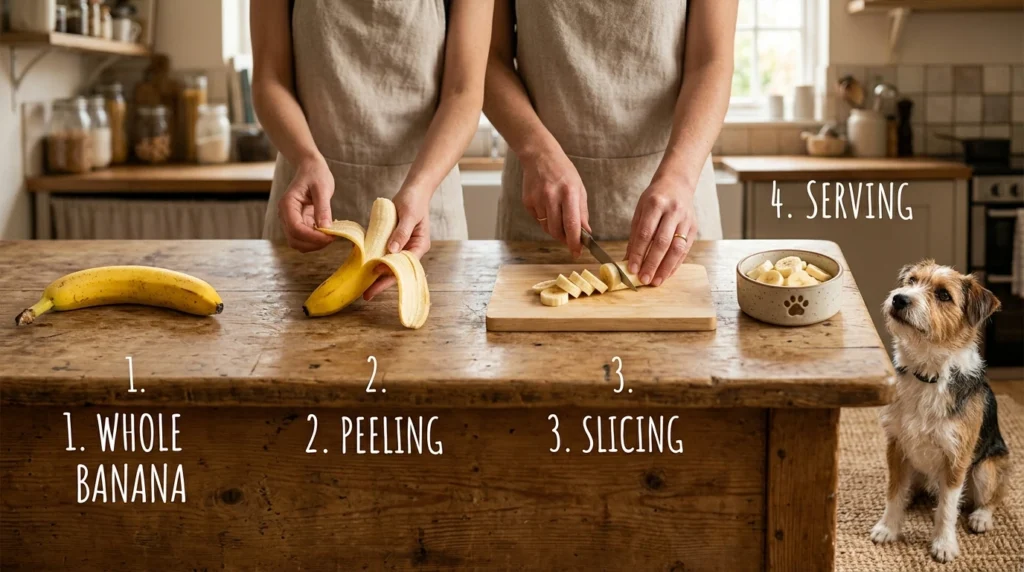
There are several creative and enjoyable ways to serve banana to your dog beyond just handing over a plain piece. Here are the best ideas, all of which are safe and most dogs love.
Plain fresh slices: The simplest and best option. Peel, slice, serve. No prep needed beyond that.
Frozen banana rounds: Peel and slice into rounds, freeze on a tray, store in a bag. Serve one or two pieces as a refreshing cold treat.
Banana and peanut butter Kong: Stuff a Kong toy with banana pieces and a small amount of xylitol-free peanut butter. Freeze overnight for a long-lasting, mentally stimulating treat.
Banana pupsicle: Blend half a banana with two tablespoons of plain yogurt and a splash of water. Pour into silicone molds or an ice cube tray. Freeze until solid and serve as a frozen treat.
Banana mashed into food: Mash a few thin slices of banana and mix into your dog’s regular meal for a natural flavor boost. Great for picky eaters or dogs recovering from illness who need appetite stimulation.
Homemade banana dog treats: Mash half a ripe banana with one egg and half a cup of oat flour. Roll into small balls and bake at 350°F (175°C) for 12 to 15 minutes. Let cool completely before serving. These store well in the fridge for up to five days.
Banana lick mat: Mash banana onto a lick mat for a slow-feeding, mentally engaging activity that also helps with anxiety and stress.
How Much Banana to Serve to Your Dog?
Portion size is one of the most important parts of feeding banana to your dog safely. Because bananas are high in natural sugar compared to many other fruits and vegetables, portions need to be kept appropriately small.
The general guideline in pet nutrition is that treats — including fruit — should make up no more than 10% of your dog’s total daily caloric intake. Here is a practical breakdown by dog size:
Extra small dogs (under 10 lbs / 4.5 kg): 1 to 2 thin slices, 2 to 3 times per week. That is roughly one-eighth of a small banana per session at most.
Small dogs (10 to 20 lbs / 4.5 to 9 kg): 2 to 3 thin slices, 2 to 3 times per week.
Medium dogs (20 to 50 lbs / 9 to 23 kg): 3 to 6 slices, a few times per week. No more than half a banana per session.
Large dogs (50 lbs / 23 kg and above): Half a banana to a maximum of one small whole banana, a few times per week.
These are upper limits — not daily targets. Less is always fine. Factor banana into the total treat budget for the day alongside any other treats your dog receives. If they’ve had other treats earlier in the day, reduce the banana amount accordingly to stay within the 10% guideline.
My Dog Ate Too Much Banana — What Do I Do?
First — don’t panic. Eating too much banana is unlikely to be a life-threatening emergency for most dogs. Bananas are not toxic, so a large quantity is not the same kind of emergency as eating something poisonous. But it can cause real discomfort and digestive problems that you need to monitor carefully.
What to expect: If your dog ate a significant amount of banana, you should expect digestive upset within the next few hours. This typically includes soft stools or diarrhea, gas and bloating, mild stomach discomfort, and possibly vomiting. These symptoms are caused by the high sugar and fiber load hitting the digestive system all at once. They are unpleasant for your dog but usually resolve on their own within 12 to 24 hours.
What to do:
- Remove access to any more banana immediately.
- Make sure your dog has access to fresh water — diarrhea causes dehydration.
- Skip their next meal or offer a small amount of plain boiled rice and chicken to let the stomach settle.
- Monitor closely for the next 24 hours.
When to call the vet:
- Symptoms are severe or not improving after 24 hours
- Your dog is showing signs of lethargy, weakness, or extreme discomfort
- Your dog also ate the banana peel (blockage risk)
- Your dog is very small or has existing health conditions
- Vomiting is persistent and your dog cannot keep water down
If the banana was part of a product containing xylitol — call your vet immediately, do not wait for symptoms.
Can Puppies Eat Bananas?
Yes — puppies can eat small amounts of banana, and it is generally safe for them. However, puppies need a bit more care and caution than adult dogs when it comes to introducing any new food, including fruit.
Puppies have smaller, more sensitive digestive systems that are still developing. Their gut microbiome — the community of beneficial bacteria that helps digest food and supports immunity — is not yet as established as in adult dogs. This means that new foods, including banana, can cause more pronounced digestive reactions in puppies than in adult dogs.
The key rules for feeding banana to puppies:
Start very small — just a tiny piece, roughly the size of your pinky fingernail, as a first introduction. Wait 24 to 48 hours and watch for any reaction — loose stools, vomiting, skin reaction, or unusual behavior.
Keep amounts much smaller than adult dog portions. A puppy that weighs 5 pounds needs far less banana than an adult dog of the same weight, because puppies’ entire caloric needs are structured around growth and development through their complete puppy food.
Never let banana or any fruit treat replace puppy food. Puppies have very specific nutritional requirements for healthy growth — the right balance of protein, fat, calcium, and phosphorus — that only a complete, AAFCO-approved puppy food can provide. Fruit is supplemental only.
Ask your vet at your puppy’s next wellness visit whether fruit treats are appropriate for your specific puppy’s age, size, and development stage.
Can Dogs Be Allergic to Bananas?
Yes — dogs can be allergic to bananas, though true banana allergies in dogs are relatively uncommon. Food allergies in dogs are less frequent than environmental allergies (like pollen or dust mites), but they do happen, and banana is among the fruits that some dogs react to.
Signs of a banana allergy or food sensitivity in dogs include:
- Itchy skin — excessive scratching, licking paws, rubbing face
- Hives or raised red bumps on the skin
- Swelling — particularly around the face, muzzle, or throat (this is more serious and requires immediate vet attention)
- Vomiting or diarrhea shortly after eating
- Runny eyes or nose
- Ear infections that recur frequently (a sign of underlying food sensitivity)
These symptoms typically appear within a few minutes to a few hours of eating the allergenic food. If you notice any of these signs after giving your dog banana for the first time, stop immediately and do not give banana again. Contact your veterinarian to discuss the reaction and whether allergy testing might be appropriate.
This is exactly why the “introduce slowly” rule matters so much. Always give just a small piece the first time any new food is introduced, and wait at least 24 hours before giving more. This way, if a reaction does occur, you know exactly what caused it and the exposure was limited.
What Types of Bananas Are Best for Your Dog?
When most people think of bananas, they think of the common Cavendish banana — the standard yellow variety found in virtually every grocery store worldwide. But there are actually many varieties of banana, and it’s worth knowing which types are appropriate for dogs.
Regular Cavendish banana (yellow banana): The most common type and the most appropriate for dogs. Ripe, yellow, with a few brown spots — this is the ideal banana to give your dog. Easy to find, affordable, familiar, and perfectly nutritious.
Mini bananas (baby bananas): These smaller varieties — sometimes sold as “baby bananas” or “finger bananas” — are perfectly safe for dogs and are actually a nice option for small breeds because their size is naturally more appropriate. They tend to be slightly sweeter than standard bananas.
Red bananas: Red-skinned banana varieties are safe for dogs. They are slightly sweeter and creamier than yellow bananas and have a similar nutritional profile. Perfectly fine to share with your dog.
Plantains: Plantains are closely related to bananas but are starchier and less sweet, typically eaten cooked in human cuisine. Raw plantain is technically not toxic to dogs, but it is much harder to digest than ripe banana and can cause significant digestive upset. Cooked plantain without added oil, salt, or spices is safer. However, given that there are easier and better options, it’s simplest to just stick to regular banana.
Banana bread or banana products: Not appropriate — these almost always contain added sugar, butter, and often raisins (which are extremely toxic to dogs). Never give your dog banana bread or baked banana goods made for human consumption.
The bottom line: standard ripe yellow Cavendish banana is the best and most practical choice for your dog.
Frequently Asked Questions
Can dogs eat bananas every day?
Not recommended for most dogs. Daily banana feeding adds up to excess sugar and calories over time. Two to four times per week is a healthier frequency. For very active large dogs, a small daily portion (just a couple of thin slices) is less of a concern, but variety in treats is always better practice.
Can dogs eat banana peels?
No. Banana peels are not toxic but are indigestible and can cause intestinal blockage — a potentially serious medical emergency. Always remove the peel completely before serving banana to your dog.
Are bananas safe for all dogs?
Safe for most healthy adult dogs. Not appropriate (without vet approval) for dogs with diabetes, obesity, kidney disease, or pancreatitis due to the sugar and potassium content.
Can small dogs eat bananas?
Yes, but in very small amounts. Extra small and small dogs should get just one to two thin slices per serving, a couple of times per week. The sugar and calorie density of banana makes portion control especially important for smaller breeds.
Can puppies eat bananas?
Yes, in very small amounts. Introduce slowly, start with a tiny piece, and watch for any reaction. Their primary nutrition must still come from a complete, age-appropriate puppy food.
What happens if my dog eats a whole banana?
Likely digestive upset — diarrhea, gas, soft stools — within a few hours. Not a toxic emergency, but uncomfortable. Ensure access to fresh water, skip or reduce their next meal, and monitor for 24 hours. Call the vet if symptoms are severe.
Can dogs eat banana chips?
ost commercial banana chips are fried in oil and coated with sugar and salt — not appropriate for dogs. Plain dehydrated banana slices (one ingredient only) are safer but still high in concentrated sugar. Use only tiny amounts.
Can dogs eat frozen bananas?
Yes. Plain frozen banana slices with no added ingredients are a safe and enjoyable treat, especially in summer. Freeze your own at home for the safest option.
Is peanut butter and banana safe for dogs?
Yes — as long as the peanut butter is xylitol-free. Always check the label. Xylitol in peanut butter is extremely toxic to dogs. Once confirmed safe, the combination is a much-loved and healthy treat.
Can dogs eat banana yogurt?
Only plain, unsweetened yogurt with fresh banana pieces added yourself. Store-bought banana-flavored yogurt contains too much added sugar and possibly xylitol. Use plain yogurt only.
How do I know if my dog is allergic to banana?
Signs include itchy skin, hives, swelling, vomiting, or diarrhea after eating. Always introduce new foods slowly — just one small piece the first time — and wait 24 hours before giving more.
Are dried bananas safe for dogs?
Plain dehydrated banana slices (no added sugar, oil, or salt) are safer than commercial chips but are more concentrated in sugar than fresh banana. Use only tiny amounts. Avoid commercial sweetened banana chips entirely.
Conclusion
Bananas are one of the most dog-friendly fruits you can share with your pet. They are safe, nutritious, naturally sweet, and most dogs absolutely love them. With the right approach — fresh and ripe, peeled completely, sliced into appropriate pieces, and given in the right amounts — bananas make a genuinely excellent treat option.


