

Can Dogs Eat Potato Skins? Safety Risks & Guide
If you are wondering, can dogs eat potato skins, the safest answer depends on how the potato skin was prepared and how much your dog ate. Plain, fully cooked potato skin in a small amount is generally less concerning than raw, green, or heavily seasoned potato skin. However, potato skins can contain more of the naturally occurring glycoalkaloids found in potatoes, especially when the potato is green, sprouted, or damaged.
Because of these risks, potato skins should not be a regular treat for dogs. If you want to share potato with your dog, plain, thoroughly cooked potato with the skin removed is a simpler and safer choice. Prepared potato skins can be especially problematic when they contain butter, cheese, salt, garlic, onion, or other toppings.
Can Dogs Eat Potato Skins?
Dogs should not routinely eat potato skins. A small amount of plain, fully cooked skin from a healthy, non-green potato is unlikely to cause poisoning in most healthy dogs, but the skin is not necessary for a dog’s diet. Potatoes themselves should also be served cooked and plain rather than raw.
The biggest concern is the condition of the potato. Green or sprouted potatoes and their skins can contain higher levels of glycoalkaloids, including solanine, which can be toxic when enough is consumed. For this reason, it is best to remove the skin before giving potato to your dog.
Are Potato Skins Safe for Dogs?
Plain cooked potato skins are not automatically toxic, but they are not considered an ideal food for dogs either. The amount eaten, the potato’s condition, and the way the skin was prepared all affect the level of risk. A tiny piece is very different from eating several whole potato skins.
Potato skins covered with toppings can create additional problems. Butter, cheese, bacon, salt, sour cream, garlic, onion, and rich sauces may cause digestive upset or expose dogs to ingredients that are unsafe for them. Plain food is always the better option.
Can Dogs Eat Raw Potato Skins?
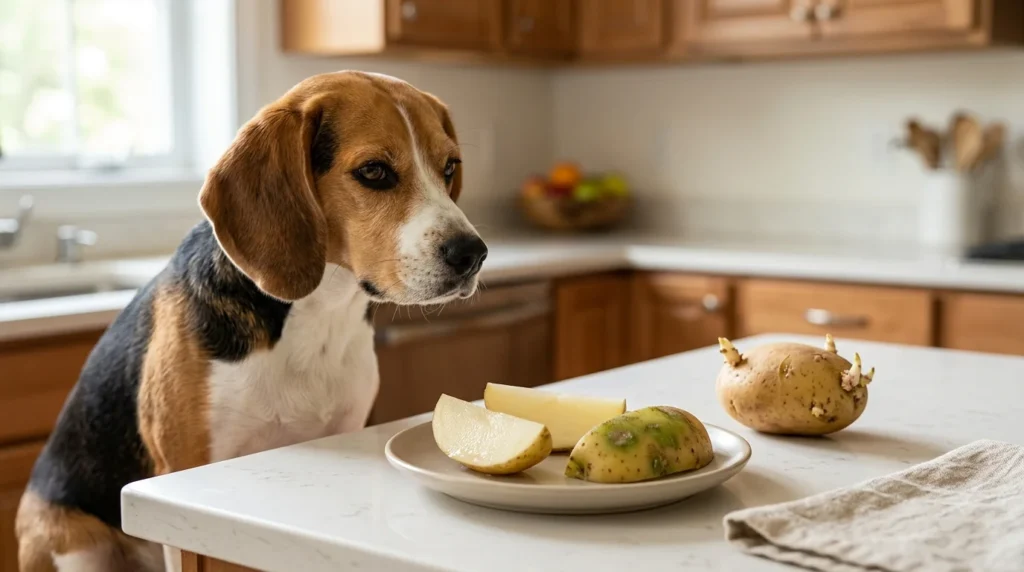
Raw potato skins should be avoided. Raw potatoes can be difficult for dogs to digest, and potato skin may contain higher concentrations of naturally occurring glycoalkaloids. The risk can be greater when the potato is green, sprouted, bitter, or damaged.
If your dog accidentally chews a small piece of raw potato skin, monitor them and remove the remaining potato. Eating a large quantity of raw or green potato skin is more concerning and should be discussed with a veterinarian, particularly if your dog develops vomiting, diarrhea, weakness, or other unusual symptoms.
Can Dogs Eat Cooked Potato Skins?

A small amount of plain, thoroughly cooked potato skin from a normal, non-green potato is generally less concerning than raw skin. Cooking can make potatoes easier to digest, but it does not make every potato skin preparation safe. Green or heavily damaged potatoes should still be avoided.
If you intentionally feed potato to your dog, removing the skin is the simpler choice. Serve the potato fully cooked and plain, without butter, salt, cheese, garlic, onion, or other toppings. Keep the serving small and treat it as an occasional addition rather than a staple.
Can Dogs Eat Baked Potato Skins?
Plain baked potato skin may be tolerated by a healthy dog in a small amount if it comes from a fresh, non-green potato. However, baked potato skins are often served with toppings that are much less suitable for dogs. A restaurant or loaded baked potato skin should not be treated as a dog-friendly snack.
If the baked potato skin contains butter, cheese, bacon, sour cream, garlic, onion, or excessive salt, avoid giving it to your dog. If your dog steals a small plain piece, serious problems are unlikely in most cases, but larger amounts or heavily topped skins deserve more attention.
Can Dogs Eat Boiled Potato Skins?
Boiled potato skin from a healthy, non-green potato is generally less risky than raw skin, but it is still not necessary for dogs. The potato should be completely cooked and served without salt, butter, spices, garlic, onion, or other ingredients.
If you are preparing potatoes specifically for your dog, peeling them before boiling is the safer and simpler approach. This also makes it easier to avoid green or damaged portions of the potato. Introduce any new food gradually and keep portions appropriate for your dog’s size and normal diet.
Can Dogs Eat Mashed Potato Skins?
Dogs can potentially tolerate a small amount of plain mashed potato containing a little cooked skin, but mashed potatoes prepared for people are often high in fat and salt. Recipes may include butter, milk, cream, cheese, garlic, onion, or seasoning, making them unsuitable for dogs.
If you want to give your dog mashed potato, prepare it separately with plain cooked potato and no harmful seasonings. Removing the skin is preferable. A small spoonful may be enough as an occasional treat, while a large serving can contribute unnecessary calories and digestive upset.
Can Dogs Eat Fried Potato Skins?
Fried potato skins are not a good choice for dogs. Frying adds substantial fat, and restaurant or packaged potato skins may also contain high levels of salt and other seasonings. Eating fatty foods can cause digestive problems in some dogs and may contribute to more serious concerns when large quantities are consumed.
Do not intentionally share fried potato skins, potato peel chips, or heavily seasoned potato snacks with your dog. If your dog accidentally eats a small piece, monitor them for digestive upset and check whether it contained additional ingredients such as garlic or onion.
Can Dogs Eat Potato Peelings?
Potato peelings are essentially the outer skin of the potato, so the same safety concerns apply. Small amounts of plain cooked peel from a healthy potato are generally less concerning than raw, green, or sprouted peel, but potato peelings are not an essential part of a dog’s diet.
Never assume that discarded potato peels are safe just because they are leftovers. Raw peels can be eaten quickly by dogs that find them in kitchen waste. Keep potato peelings in a securely closed trash container and prevent your dog from accessing them.
Can Dogs Eat Potato Skins With Butter?
Potato skins with butter are best avoided. Butter is high in fat and can contribute to stomach upset when consumed in significant amounts. A small accidental bite is unlikely to cause a serious problem for most healthy dogs, but intentionally feeding butter-covered potato skins is not recommended.
If your dog has eaten a large amount of butter along with potato skins, watch for vomiting, diarrhea, abdominal discomfort, or loss of appetite. Dogs that have previously had pancreatitis or problems with fatty foods may need particular caution, so contact your veterinarian if you are concerned.
Can Dogs Eat Potato Skins With Cheese?
Cheese-covered potato skins are not an ideal dog treat. Cheese can be high in fat and salt, while some dogs have difficulty digesting dairy products. When combined with potato skins, butter, bacon, or other toppings, the overall food can become particularly rich.
If your dog eats a small accidental piece, monitor them for digestive upset. For an intentional potato treat, choose plain, cooked potato with the skin removed instead of loaded potato skins. Your dog’s regular complete and balanced food should remain the main source of nutrition.
Can Dogs Eat Potato Skins With Sour Cream?
Potato skins topped with sour cream should generally not be given to dogs. Sour cream is a dairy product that can cause digestive upset in dogs that are sensitive to lactose or rich foods. It also adds fat and calories to an already unnecessary human-food treat.
If a small accidental amount was eaten, monitor your dog for gas, diarrhea, vomiting, or stomach discomfort. Avoid intentionally serving loaded potato skins to dogs. Plain cooked potato without toppings is a much simpler option when you want to share a small amount.
Can Dogs Eat Potato Skins With Garlic?
Dogs should not eat potato skins prepared with garlic. Garlic is unsafe for dogs in sufficient amounts and may be found in fresh form, powdered seasoning, garlic butter, sauces, or spice blends. Garlic powder can be particularly concentrated compared with fresh garlic.
If your dog has eaten a garlic-seasoned potato skin, check the ingredients and estimate how much was consumed. Contact your veterinarian if a significant amount was eaten or if you notice concerning symptoms. Do not intentionally feed garlic-flavored potato skins.
Can Dogs Eat Potato Skins With Onion?
Potato skins containing onion should not be fed to dogs. Onions can damage red blood cells and are unsafe for dogs in several forms, including fresh, cooked, dried, and powdered forms. Onion powder can be hidden in seasoning mixes and prepared potato products.
If your dog accidentally eats a small amount of onion-containing potato skin, determine what ingredients were present and how much was consumed. For potentially significant exposure, contact your veterinarian for advice rather than waiting for symptoms to appear.
See Also: Can Dogs Eat Cooked Onions? Risks, Symptoms & Safety
Can Dogs Eat Green Potato Skins?
No. Green potato skins should be avoided because green coloration can be associated with increased glycoalkaloid levels, including solanine. These compounds can cause poisoning when enough is consumed. The green color itself is a warning sign that the potato should not be offered to your dog.
Do not simply peel away a heavily green or spoiled potato and use the remaining parts for your dog. The safest approach is to discard green, bitter, heavily sprouted, or damaged potatoes and keep them away from pets.
Can Dogs Eat Sprouted Potato Skins?
Sprouted potatoes should not be given to dogs. Sprouting can be associated with increased levels of glycoalkaloids, particularly around the sprouts and damaged areas. Eating enough of these compounds can lead to signs of toxicity.
Keep sprouted potatoes and their peelings out of your dog’s reach. If your dog consumes a substantial amount of sprouted potato or develops vomiting, diarrhea, weakness, confusion, or other unusual signs after eating potato, contact a veterinarian promptly.
Can Potato Skins Make Dogs Sick?
Yes, potato skins can contribute to illness depending on how much was consumed and what type of potato skin your dog ate. Plain cooked skin from a normal potato is less concerning, while raw, green, or sprouted skins carry greater concerns. Large amounts may also cause digestive upset simply because they are unfamiliar or difficult to digest.
Prepared potato skins can cause additional problems because of fat, salt, dairy, garlic, onion, and other toppings. If your dog develops vomiting, diarrhea, excessive drooling, weakness, abdominal discomfort, or unusual behavior after eating potato skins, contact your veterinarian.
What Should You Do If Your Dog Eats Potato Skins?
If your dog eats a small piece of plain potato skin from a normal, fully cooked potato, monitor them and remove any remaining potato skins. Make sure fresh water is available and avoid giving additional rich foods while you observe them.
If your dog eats a large amount, consumes green or sprouted potato skins, or eats potato skins containing garlic or onion, contact your veterinarian for guidance. Seek urgent veterinary care if your dog shows severe vomiting, weakness, difficulty breathing, collapse, seizures, or other serious symptom
How Many Potato Skins Can Dogs Eat?
There is no universal safe serving size for potato skins because the risk depends on the dog’s size, health, the condition of the potato, and whether the skin was raw or cooked. If you choose to give a healthy dog potato, a small amount of plain, fully cooked potato with the skin removed is the safer option.
| Dog Size | Safer Potato Portion | Potato Skin |
|---|---|---|
| Small | 1–2 small bites | Best avoided |
| Medium | A few small bites | Best avoided |
| Large | A few tablespoons | Best avoided |
These portions are general guidance rather than a veterinary prescription. Potato should only be an occasional addition to a balanced diet, and dogs with medical or dietary restrictions may need different recommendations.
What Are the Signs of Potato Toxicity in Dogs?
Eating a large amount of raw, green, or sprouted potato can expose a dog to higher levels of glycoalkaloids such as solanine. Possible signs of toxicity can include vomiting, diarrhea, excessive drooling, weakness, lethargy, confusion, or changes in coordination.
The severity depends on the amount consumed and the concentration of the compounds in the potato. If your dog has eaten green or sprouted potato skins, particularly in a large quantity, contact a veterinarian promptly rather than waiting for symptoms to develop.
What Happens If a Dog Eats Green Potato Skin?
Green potato skin can be more concerning than ordinary potato skin because green potatoes may contain higher levels of glycoalkaloids. These naturally occurring compounds can become toxic when consumed in sufficient quantities. A dog that eats a tiny accidental piece may not develop any problems, but larger exposures require greater caution.
Watch for vomiting, diarrhea, drooling, weakness, unusual behavior, or problems with coordination. If a significant amount was eaten, especially by a small dog or puppy, contact your veterinarian and provide information about the potato and approximate amount consumed.
What Happens If a Dog Eats Raw Potato Skin?
A small piece of raw potato skin may pass without causing a serious problem, but raw potato skin is not a food that should be intentionally offered to dogs. Raw potatoes can be harder to digest, and certain potatoes may contain higher levels of glycoalkaloids.
If your dog eats raw potato skin, remove the remaining potato and monitor them. Eating a large amount, particularly from green or sprouted potatoes, is more concerning. Contact your veterinarian if your dog develops vomiting, diarrhea, excessive drooling, weakness, or other unusual symptoms.
Can Dogs Eat Sweet Potato Skins?
Sweet potato skins are different from regular potato skins. Plain, thoroughly cooked sweet potato can be suitable for many dogs, and the skin may be tolerated when properly prepared. However, the skin should be washed thoroughly, cooked until soft, and given in a small amount.
Avoid sweet potato skins covered with butter, sugar, salt, spices, garlic, onion, or other toppings. Raw sweet potato can also be difficult for some dogs to digest. If you want to share sweet potato, plain cooked flesh with the skin removed is the simplest option.
Can Dogs Eat Potato Skin Chips?
Potato skin chips are not a good treat for dogs. They are commonly fried or baked with oil and may contain substantial amounts of salt and seasoning. The high fat and sodium content can cause digestive upset and add unnecessary calories.
Flavored potato chips or homemade potato peel chips may also contain garlic, onion, chili, or other seasonings. If your dog accidentally eats one small plain piece, monitor them, but avoid intentionally feeding potato skin chips as a snack.
Can Dogs Eat Potato Skins From Restaurant Food?
Restaurant potato skins are best kept away from dogs. They are often loaded with ingredients such as cheese, bacon, butter, sour cream, salt, sauces, garlic, and onion. These toppings can create more risks than plain cooked potato skin.
Restaurant portions can also be much richer than what a dog needs. If your dog steals a small bite, check what ingredients were included. If the food contained onion, garlic, or a large amount of fatty toppings, contact your veterinarian for advice.
Can Dogs Eat Potato Skins From French Fries?
Dogs should not be intentionally fed potato skins from French fries. Fries are usually cooked in oil and contain salt, making them much higher in fat and sodium than plain cooked potato. Eating several fries or a large amount of fried potato skin may cause digestive upset.
If your dog accidentally eats one small fry, serious problems are unlikely in most healthy dogs. However, fries should not become a regular treat. Plain cooked potato without skin, oil, salt, or seasoning is a better occasional option.
Can Dogs Eat Potato Skins With Bacon?
Potato skins topped with bacon should be avoided. Bacon is high in fat and salt, while the potato skin itself may add additional digestive concerns. Eating a rich combination can cause vomiting, diarrhea, or abdominal discomfort in some dogs.
Dogs that are sensitive to fatty foods may have a greater risk of developing more serious digestive problems. Keep bacon-loaded potato skins away from your dog and choose plain, dog-appropriate treats instead.
Can Dogs Eat Potato Skins With Butter?
Potato skins with butter are not recommended for dogs. Butter is a high-fat food, and a large amount can upset a dog’s digestive system. It also adds unnecessary calories to an already calorie-dense human snack.
If your dog accidentally eats a small bite, monitor them for vomiting, diarrhea, gas, or abdominal discomfort. If they consume a large quantity of butter or develop significant symptoms, contact your veterinarian for guidance.
Can Dogs Eat Potato Skins With Salt?
Dogs need sodium in their diet, but heavily salted potato skins are not appropriate treats. Excessive salt can be harmful, particularly when a dog consumes a large quantity. Salted potato snacks also tend to contain other ingredients that are not ideal for pets.
Keep fresh water available and avoid intentionally feeding salty potato skins. If your dog consumes a substantial amount of very salty food and develops excessive thirst, vomiting, weakness, tremors, or other concerning signs, seek veterinary care.
Can Dogs Eat Potato Skins With Cheese?
Cheese-covered potato skins are best avoided. Cheese can be high in fat and sodium, and some dogs may experience digestive problems after eating dairy. Combining cheese with potato skins, butter, bacon, or other rich toppings can make the food particularly heavy.
A tiny accidental bite is unlikely to cause serious problems for most healthy dogs, but regular servings are not recommended. If you want to share potato, choose plain, cooked potato and remove the skin and toppings.
Can Dogs Eat Potato Skins With Sour Cream?
Potato skins covered with sour cream are not an ideal food for dogs. Sour cream can be difficult for some dogs to digest and may contain significant amounts of fat. When combined with other toppings, the meal can become unnecessarily rich.
If your dog eats a small amount, monitor them for gas, loose stool, vomiting, or stomach discomfort. Avoid intentionally feeding loaded potato skins and choose simple, plain foods instead.
See Also: Can Dogs Eat Celery Raw? Benefits, Risks & Safe Serving
Can Dogs Eat Potato Skins With Garlic?
No, potato skins containing garlic should not be fed to dogs. Garlic can be harmful to dogs, and it may be present as fresh garlic, garlic powder, garlic butter, or seasoning blends. The amount and form of garlic affect the level of risk.
If your dog eats garlic-seasoned potato skin, check the ingredients and estimate how much was consumed. Contact your veterinarian if a significant amount was eaten or if your dog develops unusual symptoms.
Can Dogs Eat Potato Skins With Onion?
Potato skins containing onion should be avoided. Onion can damage red blood cells in dogs and is unsafe in fresh, cooked, dried, and powdered forms. Onion powder may be hidden in seasoning mixes used on prepared potato dishes.
If your dog eats onion-containing potato skins, determine approximately how much they consumed and check the ingredients. Contact your veterinarian if the exposure may have been significant or if your dog develops symptoms.
Are Potato Skins Good for Dogs?
Potato skins are not necessary for a dog’s health. Although potato skin contains some nutrients and fiber, dogs can obtain their required nutrition from a complete and balanced diet. There is therefore no nutritional reason to take the added risks associated with feeding potato skins.
If your dog enjoys potato, plain cooked potato without the skin is a simpler choice. Keep portions small and avoid adding butter, salt, cheese, sauces, garlic, onion, or other seasonings.
When Should You Call a Veterinarian?
Contact your veterinarian if your dog eats a large amount of potato skin, particularly if the potato was green, sprouted, raw, or heavily seasoned. Puppies, small dogs, and dogs with existing health problems may require additional caution.
Seek urgent veterinary care if your dog experiences severe vomiting, difficulty breathing, collapse, seizures, marked weakness, severe abdominal pain, or other serious symptoms after eating potato skins. Do not induce vomiting unless a veterinary professional specifically instructs you to do so.
Frequently Asked Questions
Can dogs eat potato skins?
Dogs should not routinely eat potato skins. A tiny amount of plain cooked skin from a normal, non-green potato is less concerning, but peeled, fully cooked potato is the safer option.
Can dogs eat raw potato skins?
Raw potato skins should be avoided because they can be harder to digest and may contain higher levels of naturally occurring glycoalkaloids.
Can dogs eat green potato skins?
No. Green potato skins should be avoided because green potatoes can contain increased levels of glycoalkaloids, including solanine.
Can dogs eat sweet potato skins?
Plain, thoroughly cooked sweet potato skin can be tolerated by many dogs in small amounts, but it should be washed well and served without harmful toppings or seasonings.
What should I do if my dog eats potato skins?
Remove the remaining potato, determine whether the skin was raw, cooked, green, or sprouted, and monitor your dog. Contact your veterinarian if a large amount was consumed or if concerning symptoms appear.
Conclusion
So, can dogs eat potato skins? It is best not to make them a regular part of your dog’s diet. A tiny amount of plain, fully cooked skin from a normal potato is generally less concerning, but there is little reason to choose potato skin when plain cooked potato without the skin is available.
Raw, green, and sprouted potato skins deserve extra caution because they may contain higher levels of naturally occurring glycoalkaloids. Potato skins covered with butter, cheese, bacon, salt, garlic, onion, or rich sauces can also create additional risks.
If your dog accidentally eats a small amount of plain potato skin, monitor them. If they consume a large quantity, eat green or sprouted potato, or develop vomiting, weakness, breathing problems, seizures, or other serious symptoms, contact a veterinarian promptly.
See Also: Can Dogs Eat Peas? Benefits, Risks & Safe Feeding Tips


