

Can Dogs Eat Broccoli? Raw, Cooked, Stems & Every Form Covered
You’re chopping broccoli for dinner and your dog appears, nose twitching, curious about the green florets on the cutting board. It happens every time you cook vegetables — that hopeful look that makes you wonder if you should share. Can dogs eat broccoli? Is it actually safe? What about raw broccoli, the stems, the leaves, or broccoli soup?
Broccoli is one of the most nutritionally dense vegetables available, and the good news is that dogs can eat it — with some important conditions. This complete guide answers every question dog owners ask about broccoli, covering every form, every part of the vegetable, preparation methods, portion sizes, and what to watch out for.
Whether you are meal prepping, cooking dinner, or your dog just grabbed a piece off the floor — everything you need to know is right here.
For the full vegetable safety lists, see our what vegetables can dogs eat hub.
Can Dogs Eat Broccoli?
Yes — dogs can eat broccoli, and it is safe for most healthy dogs in appropriate amounts. Broccoli is listed as a dog-safe vegetable by the American Kennel Club (AKC) and is recognized by veterinary nutritionists as a nutritious occasional treat option for dogs.
Broccoli is packed with Vitamin C, Vitamin K, Vitamin A, fiber, folate, potassium, and calcium — a genuinely impressive nutritional lineup for a low-calorie vegetable.
The critical rules: broccoli should never exceed 10% of your dog’s daily caloric intake, and the individual florets should be kept below 10% due to their content of isothiocyanates — compounds that can cause gastrointestinal irritation in large amounts. Serve in small, appropriately sized pieces, either raw or lightly cooked with no added seasonings.
Is Broccoli Good for Dogs?
Yes — broccoli is genuinely good for dogs. It is not just safe; it is one of the most nutritionally rich vegetables you can share with your pet. Broccoli contains a broad spectrum of vitamins, minerals, fiber, and beneficial plant compounds that support multiple aspects of canine health.
What makes broccoli stand out nutritionally is its density — it packs a lot of nutrition into very few calories. A cup of raw broccoli contains only about 31 calories, making it one of the most calorie-efficient nutrient sources available. For dogs that need to manage their weight while still enjoying treats, broccoli is an excellent choice.
The fiber content supports healthy digestion. The Vitamin C and Vitamin K content supports immune function and blood health respectively. The antioxidant compounds — particularly sulforaphane — provide cellular protection and anti-inflammatory benefits. Broccoli is genuinely one of the top vegetable treat choices for dogs when served correctly.
Benefits Dogs Receive from Eating Broccoli
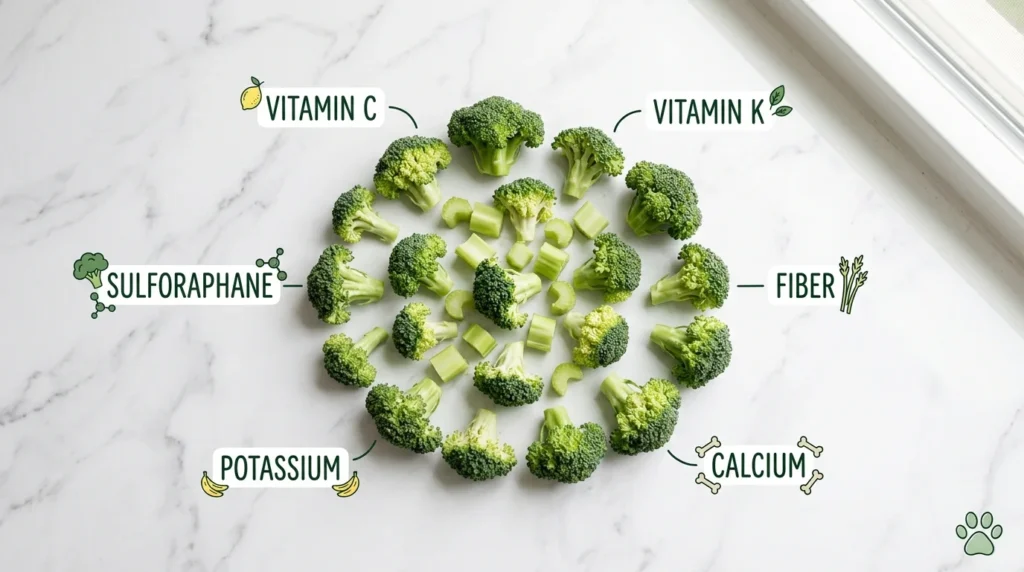
Let’s break down the specific health benefits broccoli provides to dogs in detail.
Vitamin C — Immune Support and Antioxidant Protection Broccoli is exceptionally rich in Vitamin C. This powerful antioxidant neutralizes free radicals that cause cellular aging and damage, supports immune system function, and helps the body fight off infection and inflammation. While dogs produce their own Vitamin C, additional dietary C is beneficial — especially for older dogs, dogs under physical stress, or those recovering from illness or surgery.
Vitamin K — Blood and Bone Health Broccoli is one of the richest food sources of Vitamin K available. Vitamin K plays an essential role in proper blood clotting — without adequate Vitamin K, wounds do not heal properly. It also supports bone metabolism and helps maintain healthy bone density. For senior dogs and large breeds more prone to bone health issues, Vitamin K from dietary sources like broccoli is genuinely valuable.
Sulforaphane — Cancer-Fighting Antioxidant Sulforaphane is a sulfur-containing compound found in broccoli and other cruciferous vegetables. It is one of the most studied natural anticancer compounds in nutritional science. Research suggests sulforaphane activates detoxification pathways in cells, reduces inflammation, and may inhibit the growth of cancer cells. For dogs — who have significant cancer rates, particularly in certain breeds — including sulforaphane-rich foods in the diet provides meaningful cellular protection.
Fiber — Digestive Health The dietary fiber in broccoli supports healthy digestion in multiple ways. Soluble fiber slows digestion, helping stabilize blood sugar levels. Insoluble fiber adds bulk to stools and keeps the digestive tract moving at a healthy pace. Fiber also feeds beneficial gut bacteria, supporting the gut microbiome that underpins immune function, mood regulation, and overall health.
Potassium — Heart and Muscle Function Potassium is an essential electrolyte that regulates heart rhythm, supports proper muscle contraction, and maintains fluid balance throughout the body. Broccoli provides a meaningful amount of potassium, contributing to cardiovascular and muscular health — particularly relevant for active and working dogs.
Folate — Cell Growth and DNA Synthesis Folate (Vitamin B9) supports DNA synthesis, cell division, and red blood cell production. It is especially important for pregnant dogs and growing puppies, but plays an ongoing role in healthy cell function throughout every life stage.
Calcium — Bone and Dental Health Broccoli contains bioavailable calcium that contributes to strong bones and healthy teeth. While dogs get most of their calcium needs met through their complete dog food, additional dietary calcium from natural sources like broccoli provides a small supplemental boost — particularly relevant for growing puppies and senior dogs.
Low in Calories, Low in Fat At around 31 calories per cup and virtually zero fat, broccoli is one of the most guilt-free treat options you can give a dog. It is filling, satisfying to chew, and provides real nutrition without adding unnecessary calories to the daily diet.
Can Broccoli Be Dangerous for Dogs?
Yes — broccoli can be dangerous to dogs in specific circumstances, and understanding these situations is essential for feeding it responsibly.
Isothiocyanates — The Primary Concern The most important safety consideration with broccoli and dogs is the isothiocyanate content of the florets. Isothiocyanates are naturally occurring compounds found in all cruciferous vegetables (broccoli, cauliflower, Brussels sprouts, kale). In small amounts they are beneficial — they are the precursors to sulforaphane and other beneficial plant compounds. In large amounts they can cause significant gastrointestinal irritation in dogs, including vomiting, diarrhea, bloating, and gastric discomfort.
The threshold at which isothiocyanates become problematic is when broccoli exceeds about 10% of a dog’s daily diet. At or below this threshold, the benefits outweigh the risks. Above this threshold, GI distress becomes increasingly likely.
Choking Hazard Broccoli florets and stalks can be choking hazards if served in pieces that are too large for your dog to chew properly. Always cut broccoli into appropriately sized pieces — the right size depends on your dog’s breed and body size.
Seasonings and Additives Broccoli prepared for humans almost always contains butter, olive oil, garlic, onion, salt, cheese sauce, or other seasonings. Garlic and onion are toxic to dogs. High-fat additions like butter and cheese can trigger digestive upset or pancreatitis. Salt in excess causes sodium-related issues. Always serve only plain broccoli to your dog.
Thyroid Consideration Raw cruciferous vegetables including broccoli contain goitrogens — compounds that can interfere with thyroid function when consumed in very large amounts regularly. This is primarily a concern for dogs with pre-existing thyroid conditions. Light cooking reduces goitrogenic compounds significantly. For dogs with hypothyroidism, discuss broccoli feeding with your vet.
Also Read: Can Dogs Eat Carrots? Benefits, Safety & Feeding Guide 2026
Are There Any Risks to Feeding Broccoli to Dogs?
Beyond the primary concerns above, here is a complete overview of risks to be aware of.
Digestive Upset from Too Much The most common risk is simply overfeeding. Even in dogs without any specific health conditions, too much broccoli at once — because of the fiber and isothiocyanate content — causes gas, bloating, stomach discomfort, and loose stools. This is not toxic; it is simply the digestive system reacting to an excess of cruciferous plant compounds and fiber.
Allergic Reactions While rare, some dogs can be allergic or sensitive to broccoli. Signs include itching, hives, swelling, vomiting, or diarrhea after eating. Always introduce new foods slowly and watch for any reaction the first time.
Thyroid Function in Susceptible Dogs As mentioned, goitrogens in raw broccoli can affect thyroid function. While normal treat-sized amounts are unlikely to cause issues in healthy dogs, dogs with thyroid conditions should have this discussed with a vet before broccoli is added to their diet.
Pesticide Residue Commercially grown broccoli can carry pesticide residue on its surface, particularly on the florets where surface area is high and washing is more difficult. Always wash broccoli thoroughly before serving. Organic broccoli reduces this concern for dogs that eat it regularly.
The 10% Rule Must Be Respected This bears repeating because it is the most important practical guideline: broccoli should never exceed 10% of your dog’s daily caloric intake. At or below this threshold, it is safe. Above this threshold, the isothiocyanate content becomes problematic. Keep track of how much broccoli your dog is getting across the day if it is given multiple times.
See Also: Can Dogs Eat Grapes? The Dangerous Truth Every Owner Must Know
Can Broccoli Make Dogs Sick?
Yes — in specific situations, broccoli can make dogs sick. Understanding the situations helps you avoid them.
Too much broccoli: The most common cause of broccoli-related illness in dogs is simply eating too large an amount. Excess broccoli causes GI upset — vomiting, diarrhea, gas, and abdominal discomfort — due to the fiber and isothiocyanate content overwhelming the digestive system.
Broccoli with seasonings: Broccoli prepared with garlic, onion, butter, cheese sauce, or heavy salt can cause more serious illness. Garlic and onion can cause hemolytic anemia with regular exposure. High fat triggers digestive upset or pancreatitis. Always serve plain broccoli only.
Raw broccoli in large pieces: Large, unchewed pieces of raw broccoli can cause choking or gastrointestinal obstruction, particularly in small dogs. Cut into small, manageable pieces before serving.
Broccoli in dogs with pre-existing conditions: Dogs with thyroid disease, kidney problems, or inflammatory bowel disease may react more severely to broccoli than healthy dogs. Consult your vet before giving broccoli to dogs with these conditions.
If your dog ate a large amount of broccoli and is showing symptoms, monitor closely and contact your vet if symptoms are severe or prolonged.
Can Dogs Eat Raw Broccoli?
Yes — raw broccoli is safe for dogs and is actually a nutritious choice. Raw broccoli retains all of its natural vitamins and enzymes in their most bioavailable form. Vitamin C in particular is heat-sensitive and is better preserved in raw versus cooked broccoli.
The crunch of raw broccoli is also satisfying for many dogs and provides a mild mechanical dental cleaning benefit as they chew through the florets.
The main considerations with raw broccoli are preparation and portion. Wash thoroughly to remove pesticide residue. Cut into small, appropriately sized pieces — raw broccoli florets and stems are firmer than cooked and present a higher choking risk if given in large pieces. Start with a small amount the first time your dog tries raw broccoli, as the raw form retains more goitrogenic compounds than lightly cooked broccoli.
For most healthy dogs, raw broccoli in small pieces is a perfectly safe and nutritious treat choice.
Can Dogs Eat Broccoli Stems?
Yes — broccoli stems are safe for dogs to eat, and they are actually quite nutritious. The stems contain many of the same vitamins and fiber as the florets, and some dogs prefer the firmer, crunchier texture of the stem over the more delicate florets.
Broccoli stems contain slightly fewer isothiocyanates than the florets, which means they may be slightly gentler on sensitive stomachs when given in larger relative amounts. The stems also have a satisfying chew texture that many dogs enjoy.
The primary preparation concern with stems is size. Raw broccoli stems are very firm and can be a significant choking hazard if given in large chunks. Always cut stems into thin rounds or small dice appropriate for your dog’s size. Peel the outer layer of the stem if it is particularly tough or fibrous for easier digestion.
Can Dogs Eat Cooked Broccoli?
Yes — cooked broccoli is safe for dogs and is often actually easier on their digestive system than raw. Light cooking — steaming, boiling briefly, or roasting — softens the fiber in broccoli and reduces the goitrogenic compounds that can potentially affect thyroid function in dogs with sensitivities.
Cooking also makes broccoli easier to chew and digest for dogs with dental issues, older dogs with weaker teeth, or puppies who find the raw texture challenging.
The one critical rule with cooked broccoli: it must be plain. Broccoli cooked for human consumption is almost always prepared with butter, olive oil, garlic, onion, salt, or cheese — all of which range from unhealthy to toxic for dogs. Set aside a portion of plain cooked broccoli (no seasonings, no oil, no additives) before adding your own flavoring. Serve plain and let it cool to room temperature before giving to your dog.
Can Dogs Eat Steamed Broccoli?
Yes — steamed broccoli is one of the best ways to prepare broccoli for dogs. Steaming is a gentle cooking method that softens the vegetable without destroying as many heat-sensitive nutrients as boiling does. Vitamin C is better preserved in steaming than in boiling, and the fiber and other nutrients remain largely intact.
Steamed broccoli is soft enough to be easy for most dogs to eat and digest, while still maintaining enough texture to be satisfying. It is particularly good for dogs with sensitive stomachs or those being introduced to broccoli for the first time, as it is gentler on the digestive system than raw.
Steam plain broccoli with no added seasonings, oils, or butter. Allow it to cool completely before serving — hot food can burn a dog’s mouth and throat. Cut steamed broccoli into small pieces appropriate for your dog’s size before serving.
Also Read: Can Dogs Eat Cheese? The Complete Safe-Feeding Guide (2026)
Can Dogs Eat Frozen Broccoli?
Yes — frozen broccoli is safe for dogs. Commercially frozen broccoli is typically flash-frozen shortly after harvest, which preserves the nutritional content well. The freezing process does not add any harmful compounds and does not significantly reduce the vitamin and mineral content.
However, frozen broccoli sold in grocery stores is typically unseasoned and plain — just frozen broccoli. Always check the ingredient label before using frozen broccoli for your dog, as some frozen vegetable products include added salt, seasoning blends, or butter sauces. Only plain, unseasoned frozen broccoli is appropriate.
Serve frozen broccoli either cooked from frozen (steamed or briefly boiled plain) or thawed and served cold as a refreshing chilled treat. Some dogs enjoy the cold, crunchy texture of partially thawed frozen broccoli pieces on a hot day. Cut into small pieces before serving.
Can Dogs Eat Broccoli and Cauliflower?
Yes — both broccoli and cauliflower are safe for dogs, and they can be given together as a combined vegetable treat. Cauliflower is another cruciferous vegetable with a similar nutritional profile and safety status to broccoli. It is low in calories, high in fiber, Vitamin C, Vitamin K, and folate.
When combining these two vegetables, be mindful that both are cruciferous and both contain isothiocyanates. Giving significant amounts of both at the same time increases the total isothiocyanate load on the digestive system. The 10% total treat guideline still applies — the combined amount of broccoli and cauliflower should stay within that limit.
Both vegetables should be served plain, washed, cut into small pieces, and given in moderation. For a mixed veggie treat, a few small pieces of each is plenty for most dogs.
Can Dogs Eat Broccoli Sprouts?
Yes — broccoli sprouts are safe for dogs and are actually even more nutritionally concentrated than mature broccoli. Broccoli sprouts (young broccoli seedlings harvested 3-5 days after germination) contain up to 100 times more sulforaphane than mature broccoli florets, making them one of the most potent natural sources of this beneficial compound available.
This very high sulforaphane concentration is a double-edged consideration for dogs. On one hand, the potential health benefits — antioxidant, anti-inflammatory, anticancer — are more concentrated. On the other hand, the higher concentration of related compounds means portion sizes should be even more conservative than with mature broccoli.
Serve broccoli sprouts in very small amounts — a teaspoon or two for small dogs, a tablespoon for medium dogs — as a nutritional supplement to regular food. Wash thoroughly before serving. Raw broccoli sprouts are fine and retain more sulforaphane than cooked ones.
See Also: Can Dogs Eat Pineapple Core, Skin or Leaves? Full Safety Guide
Can Dogs Eat Broccoli Stalks?
Yes — broccoli stalks are the main stem of the broccoli plant (distinct from the individual smaller “stems” within the floret cluster). The thick main stalk is safe for dogs to eat and actually contains good amounts of fiber, Vitamin C, and other nutrients.
The texture of a thick broccoli stalk is quite firm and dense — more so than the florets or smaller stems. For dogs that enjoy a satisfying chew, the stalk can be a good option. For smaller dogs or dogs that tend to try to swallow large pieces without chewing, the stalk should be cut into very thin rounds or small pieces to prevent choking.
Peel the tough outer skin of thick broccoli stalks before giving them to your dog — the outer skin is tougher and more fibrous than the inner flesh and can be harder to digest. The inner flesh of the stalk is softer and more digestible.
Can Dogs Eat Carrots and Broccoli?
Yes — both carrots and broccoli are safe for dogs and make an excellent combined vegetable treat. They complement each other nutritionally: carrots are rich in beta-carotene (which converts to Vitamin A), fiber, and natural sweetness; broccoli adds Vitamin K, sulforaphane, Vitamin C, and folate. Together they provide a broader vitamin and mineral profile than either vegetable alone.
Carrots are also lower in isothiocyanates than broccoli, meaning combining the two effectively dilutes the broccoli’s isothiocyanate concentration per serving — a slight practical advantage when giving broccoli to dogs with sensitive stomachs.
Both vegetables can be served raw or cooked (plain, no seasonings). Raw carrots are firmer and make great crunchy treats, while raw broccoli adds a different texture and flavor. Cut both into appropriately sized pieces and combine in a small veggie snack bowl.
Can Dogs Eat Broccoli Rabe?
Broccoli rabe (also called rapini) is a different plant from standard broccoli — it is more closely related to turnips than to standard broccoli (Brassica oleracea). It has a distinctly bitter flavor and a different nutritional and compound profile than standard broccoli.
Broccoli rabe is not well-documented in terms of canine safety. While it belongs to the Brassica family and shares some general characteristics with broccoli, its higher bitterness and different compound profile mean it should be approached with more caution. The bitter compounds in broccoli rabe can be more irritating to the digestive system than standard broccoli.
If you want to share broccoli rabe with your dog, very small amounts of plain cooked broccoli rabe are unlikely to cause serious harm in a healthy dog. However, it is not the recommended choice — standard broccoli has a much better-established safety profile for dogs. Stick to regular broccoli when possible.
Can Dogs Eat Uncooked Broccoli?
Yes — uncooked (raw) broccoli is safe for dogs, which is the same answer as for raw broccoli covered earlier. “Uncooked” and “raw” refer to the same thing in this context.
Raw broccoli retains the full complement of heat-sensitive nutrients including Vitamin C and certain enzymes. The crunch is satisfying for many dogs and provides mild dental benefit. The main practical concern is ensuring it is cut into small enough pieces to prevent choking, as raw broccoli is significantly firmer than cooked.
One additional note: raw broccoli retains more goitrogenic compounds than lightly cooked broccoli. For dogs with thyroid conditions, lightly steamed broccoli is preferable to raw. For healthy dogs without thyroid concerns, raw broccoli is perfectly fine in appropriate amounts.
How Much Broccoli Can Dogs Eat?
This is one of the most important practical questions for dog owners wanting to share broccoli safely. The answer involves both a percentage guideline and a practical size guide.
The 10% Rule: Broccoli — specifically the florets — should not exceed 10% of your dog’s total daily caloric intake. For most dogs eating a complete commercial dog food, this means broccoli is a supplemental treat only, making up a small fraction of what they eat in a day.
Veterinary sources also specifically caution that the florets should stay below 10% because of isothiocyanate content. Some sources suggest keeping broccoli to 5% or less for dogs with sensitive stomachs.
Practical Serving Guide by Dog Size:
Extra small dogs (under 10 lbs): 1 to 2 small floret pieces (thumbnail-sized), a few times per week.
Small dogs (10 to 20 lbs): 2 to 4 small pieces, a few times per week.
Medium dogs (20 to 50 lbs): A small handful of pieces — roughly 2 to 4 tablespoons of chopped broccoli — a few times per week.
Large dogs (50 lbs and above): Up to half a cup of chopped broccoli pieces per serving, a few times per week.
These are upper limits, not daily targets. Factor broccoli into the total treat budget. If your dog has had other treats, reduce the broccoli amount accordingly.
Can Dogs Eat Fresh Broccoli?
Yes — fresh broccoli is the best form to give your dog. Fresh broccoli purchased from a grocery store or farmers market retains its full nutritional content — vitamins, minerals, fiber, sulforaphane precursors, and all beneficial plant compounds at their maximum potency.
When selecting fresh broccoli for your dog, choose heads that are firm, tightly packed, and deep green with no yellowing. Yellow broccoli has begun to age and has reduced nutritional content. Avoid broccoli with soft or mushy spots, mold, or strong odor.
Wash fresh broccoli thoroughly under cold running water before serving — this removes pesticide residue, dirt, and any surface contaminants. The florets particularly need thorough washing due to their surface complexity. Pat dry before cutting and serving.
Fresh broccoli can be served raw or lightly cooked (plain). Both are appropriate for dogs, with the choice between raw and cooked based on your dog’s preference and any specific digestive sensitivities.
Can Dogs Eat Chinese Broccoli?
Chinese broccoli (gai lan or kai-lan, Brassica oleracea var. alboglabra) is a different variety of the same species as standard broccoli. It has longer stems, smaller florets, and a slightly more bitter flavor than regular broccoli. From a safety standpoint, it shares the same general profile as standard broccoli — it is safe for dogs in appropriate amounts when prepared plain.
The same preparation and portion rules apply: wash thoroughly, remove any tough outer stem skin, cut into small appropriate pieces, serve plain without any seasonings. The slightly more bitter flavor of Chinese broccoli means some dogs may be less enthusiastic about it than regular broccoli, but it is safe for those who enjoy it.
Chinese broccoli is often prepared with garlic and oyster sauce in Asian cooking — never give your dog Chinese broccoli prepared this way. Always serve plain only.
Can Dogs Eat Broccoli Safely?
Yes — dogs can eat broccoli safely when the following simple guidelines are followed every time.
Complete safety checklist for broccoli:
- Wash all broccoli thoroughly under cold running water before serving
- Cut into small, appropriately sized pieces for your dog (prevent choking)
- Serve plain — no butter, no oil, no garlic, no onion, no salt, no cheese sauce
- Keep total amount within 10% of daily caloric intake
- Use the florets sparingly — they have the highest isothiocyanate content
- The stems and stalks are slightly gentler than the florets
- Raw or lightly steamed are both appropriate; heavily boiled or over-cooked is less ideal
- Introduce slowly the first time — just one or two small pieces
- Wait 24 hours before giving more after the first introduction
- For dogs with thyroid conditions, lightly steam rather than serve raw
- For dogs with sensitive stomachs, start with very small amounts and build slowly
Following these guidelines every time makes broccoli a safe and genuinely nutritious addition to your dog’s treat routine.
See Also: Can Dogs Eat Tomatoes? What’s Safe and What’s Toxic Explained
Can Dogs Eat Raw Broccoli Stems?
Yes — raw broccoli stems are safe for dogs and many dogs enjoy their satisfying crunch. The stems contain the same beneficial nutrients as the florets with slightly fewer isothiocyanates, and some dogs prefer the denser, more chewable texture.
The important preparation step for raw broccoli stems is cutting them into appropriately small pieces. Raw stems are quite firm and can be a significant choking hazard in large pieces. Cut into thin rounds, small cubes, or thin strips depending on your dog’s size.
For very small dogs, raw broccoli stems may be harder to manage than florets — consider lightly steaming the stems to soften them before serving to tiny breeds or dogs with dental issues.
Can Dogs Eat Broccoli Leaves?
Yes — broccoli leaves are safe for dogs and are actually quite nutritious, though they are often overlooked because most people discard them. The large flat leaves of the broccoli plant are edible and contain many of the same beneficial compounds as the florets and stems — Vitamin K, Vitamin C, calcium, and antioxidants.
Broccoli leaves have a slightly different flavor than the florets — somewhat milder and more leafy-green — which some dogs enjoy. They are softer than the stems and easier for most dogs to chew and digest.
Wash broccoli leaves thoroughly and cut into manageable pieces before serving. The flexible texture means they are less of a choking hazard than firm stem pieces, but very large leaves should still be torn or cut into smaller portions for small dogs.
Can Dogs Eat Broccoli Everyday?
Feeding broccoli to your dog every day is not recommended, even though small daily amounts are unlikely to cause acute problems in healthy dogs. The reasons for recommending against daily feeding are several.
First, daily feeding of any one vegetable reduces dietary variety. Rotating different dog-safe vegetables and fruits exposes your dog to a broader range of micronutrients and beneficial plant compounds. This variety is important for the gut microbiome and overall nutritional balance.
Second, daily broccoli accumulates a consistent daily dose of isothiocyanates and goitrogenic compounds. For dogs with thyroid sensitivities, this could become problematic over time even in amounts that seem small. For healthy dogs, the cumulative effect is less of a concern but still a reason for moderation.
Third, a dog accustomed to receiving the same treat daily may become resistant to eating other foods or develop a strong preference that makes dietary variety harder to maintain.
A better approach is to include broccoli two to four times per week as part of a varied vegetable treat rotation. This provides the nutritional benefits without the downsides of daily single-food supplementation.
Can Dogs Eat Broccoli Soup?
No — commercial or homemade broccoli soup is not appropriate for dogs. Broccoli soup, regardless of its broccoli base, contains a range of ingredients that are harmful to dogs.
Standard broccoli soup recipes include onion, garlic, butter or cream, salt, chicken or vegetable stock (typically containing onion and garlic), and often cheese. Cream of broccoli soup adds heavy cream and more butter. Commercial broccoli soups contain high sodium levels, onion and garlic in various forms, preservatives, and artificial flavoring.
Onion and garlic are toxic to dogs in all forms. High sodium is harmful. High fat content risks digestive upset and pancreatitis. There is no commercially available or standard homemade broccoli soup recipe that is safe for dogs.
If you want to give your dog broccoli in a soft, easy-to-eat form, puree plain steamed broccoli with a little water or plain unsalted broth and serve as a very small food topper. That is the safe alternative to broccoli soup for dogs.
Can Dogs Eat Broccoli Sprouts Raw?
Yes — raw broccoli sprouts are safe for dogs. Because broccoli sprouts are young seedlings harvested early, they are soft and easy to eat without any cooking. Their tender texture means choking risk is low compared to raw mature broccoli.
Raw broccoli sprouts retain maximum sulforaphane content — cooking reduces this beneficial compound significantly. From a purely nutritional standpoint, raw broccoli sprouts delivered the greatest potential benefit of any broccoli form.
The practical caution is portion size — because raw broccoli sprouts contain up to 100 times more sulforaphane (and related isothiocyanates) than mature broccoli per gram, the serving should be proportionally much smaller than mature broccoli. A teaspoon of sprouts for a small dog, a tablespoon for a medium dog, is appropriate. Wash thoroughly before serving.
How to Offer Broccoli to Dogs?
There are several safe and enjoyable ways to incorporate broccoli into your dog’s treat routine. Here is a practical guide to different serving methods.
Plain raw florets: Wash, cut into small pieces, serve. The simplest method. Good for dogs who enjoy crunchy textures.
Steamed plain florets: Steam with no seasonings, cool to room temperature, cut into small pieces. Good for dogs with sensitive stomachs or those new to broccoli.
Frozen broccoli pieces: Cook plain frozen broccoli or thaw and serve cold pieces as a refreshing treat. Check the label for no added salt or seasonings.
Broccoli in a Kong or puzzle toy: Stuff small broccoli pieces into a Kong toy, perhaps with a thin spread of xylitol-free peanut butter, and freeze. Provides mental stimulation and slow eating.
Mixed vegetable bowl: Combine small pieces of broccoli with other dog-safe vegetables — carrots, cucumber, green beans, sweet potato — for a colorful, nutritious veggie snack mix. All plain and unseasoned.
As a food topper: Finely chop or puree plain steamed broccoli and mix a small spoonful into your dog’s regular meal for an added nutritional boost.
How to Feed Broccoli to Dogs
A complete step-by-step guide to feeding broccoli to your dog safely every time.
Step 1 — Choose fresh broccoli: Select firm, deep green broccoli with tightly packed florets and no yellowing, soft spots, or mold.
Step 2 — Wash thoroughly: Rinse under cold running water, gently separating the florets to wash inside the crevices. The florets’ complex surface area traps dirt and pesticide residue — wash well.
Step 3 — Decide raw or cooked: Raw preserves more Vitamin C but retains more goitrogenic compounds. Steamed is gentler on digestion and reduces goitrogens. Both are fine for healthy dogs.
Step 4 — Cut into appropriate pieces: For small dogs: pieces no larger than your thumbnail. For medium dogs: roughly marble-sized pieces. For large dogs: pieces about one inch. Never give large florets or whole stem pieces.
Step 5 — Serve plain: No butter, no oil, no salt, no garlic, no onion, no cheese, no seasoning of any kind. Plain broccoli only.
Step 6 — Appropriate amount: Stay within the 10% daily calorie treat guideline. For most dogs, a small handful of pieces is the maximum appropriate serving.
Step 7 — First introduction: The very first time your dog tries broccoli, give just one or two small pieces. Wait 24 hours and watch for any digestive reaction before giving more.
How to Prepare Broccoli for Your Dog

Preparation is the key to making broccoli safe and enjoyable for your dog. Here are the specific preparation details for each part of the broccoli plant.
For florets: Wash thoroughly, break or cut into individual small florets, remove any thick stem attached to the floret base, cut large florets into smaller pieces. Serve raw or steamed plain.
For stems: Wash, peel the tough outer layer with a vegetable peeler or knife (the outer skin can be tough and fibrous), cut the inner flesh into thin rounds or small dice. Raw stems are firm — cut small for all dogs. Steamed stems are softer and easier to manage.
For stalks: Same as stems — peel the tough outer layer, cut the inner flesh into small manageable pieces. Thick stalks should be cut into thin rounds rather than large chunks.
For leaves: Wash thoroughly, tear or cut into manageable pieces, serve raw. Leaves are the most tender part and require the least preparation beyond washing.
For sprouts: Rinse in a fine mesh strainer under cold water, shake dry, serve a very small amount directly. No cutting needed given their small tender size.
See Also: Can Dogs Eat Watermelon Rind or Seeds? Full Safety Guide
What to Do If You Feed Too Much Broccoli?
If your dog ate more broccoli than intended, here is what to expect and what to do.
What to expect: The most likely outcome from too much broccoli is gastrointestinal upset — gas, bloating, loose stools, or diarrhea within a few hours. This is caused by the high fiber content and isothiocyanates overwhelming the digestive system. It is uncomfortable but typically not dangerous for healthy adult dogs.
What to do: Remove access to any more broccoli immediately. Ensure fresh water is available — diarrhea causes dehydration. Skip or reduce the next meal, or offer a small amount of plain boiled rice and chicken if your dog seems hungry. Monitor closely for 24 hours.
When to contact your vet:
- Symptoms are severe or not improving after 24 hours
- Your dog is very small, very young, or has existing health conditions
- Persistent vomiting and inability to keep water down
- Signs of extreme lethargy, abdominal distension, or pain
- Your dog also ate broccoli with seasonings containing garlic or onion — contact vet immediately in this case, as garlic and onion toxicity requires different treatment
Frequently Asked Questions
Is broccoli safe for dogs?
Yes. Broccoli is safe for dogs when served plain, without seasonings, in appropriate amounts (under 10% of daily caloric intake). Both raw and lightly cooked plain broccoli are appropriate.
Can dogs eat raw broccoli?
Yes. Raw broccoli is safe and retains full Vitamin C content. Cut into small pieces to prevent choking. Start with a small amount the first time.
Can dogs eat cooked broccoli?
Yes — as long as it is cooked plain without seasonings, oil, butter, garlic, onion, or any additives. Lightly steamed is the best cooking method.
Can dogs eat broccoli stems?
Yes. Broccoli stems are safe and nutritious. Cut into small, thin pieces as raw stems are very firm. Steaming softens them for easier eating.
Can dogs eat steamed broccoli?
Yes. Steamed plain broccoli is one of the best preparation methods for dogs. It softens the texture, reduces goitrogens, and is easy to digest. Cool completely before serving.
How much broccoli can dogs eat?
Broccoli should not exceed 10% of daily caloric intake. Practically: small dogs 1-4 small pieces, medium dogs 2-4 tablespoons, large dogs up to half a cup — a few times per week.
Can dogs eat broccoli every day?
Not recommended. Two to four times per week is healthier than daily. Daily feeding reduces variety and accumulates isothiocyanate exposure. Rotate with other dog-safe vegetables.
Can dogs eat broccoli and cauliflower together?
Yes. Both are safe. Keep total combined amount within the 10% guideline since both are cruciferous vegetables containing isothiocyanates.
Can dogs eat broccoli sprouts?
Yes. Broccoli sprouts are safe and very high in sulforaphane. Use much smaller amounts than mature broccoli — a teaspoon for small dogs, a tablespoon for medium dogs.
Can dogs eat frozen broccoli?
Yes — plain frozen broccoli with no added seasonings. Cook from frozen plain, or thaw and serve cold. Always check the label for no added salt or sauce.
Can dogs eat broccoli soup?
No. Broccoli soup contains garlic, onion, salt, cream, and other ingredients harmful to dogs. Never give broccoli soup to your dog.
Can dogs eat broccoli leaves?
Yes. Broccoli leaves are safe, nutritious, and soft — easy for most dogs to eat. Wash and tear into manageable pieces before serving.
What happens if a dog eats too much broccoli?
Gas, bloating, diarrhea, or vomiting from the fiber and isothiocyanate content. Usually resolves within 24 hours. Ensure water access and monitor. Contact vet if symptoms are severe.
Can puppies eat broccoli?
Yes, in very small amounts of plain cooked (steamed) broccoli. Puppies have sensitive digestive systems — start with just one tiny piece. Primary nutrition must come from complete puppy food.
Conclusion
Broccoli is one of the most nutritionally valuable vegetables you can share with your dog — and when served correctly, it is a safe, low-calorie, health-supporting treat that most dogs genuinely enjoy. The vitamins, minerals, fiber, and powerful antioxidants like sulforaphane make broccoli stand out from simpler treat options.
The rules for feeding broccoli safely are straightforward and easy to follow:
- Serve plain — no butter, no oil, no garlic, no onion, no salt, no seasoning whatsoever
- Wash thoroughly every time to remove pesticide residue
- Cut into small, appropriately sized pieces to prevent choking
- Keep total amount within 10% of daily caloric intake — the florets especially
- Raw or lightly steamed are both appropriate serving forms
- Stems, stalks, leaves, and sprouts are all safe with appropriate preparation
- Avoid broccoli soup — it contains harmful seasonings and ingredients
- Do not feed daily — two to four times per week is ideal
- Introduce slowly the first time and watch for any digestive reaction
- Dogs with thyroid conditions, kidney disease, or sensitive stomachs need vet guidance first
Whether you steam a few florets alongside your own dinner, offer raw stem pieces as a crunchy snack, or freeze small pieces for a cool summer treat, broccoli is a versatile and genuinely excellent addition to your dog’s treat rotation. It is wholesome, natural, and your dog’s body can actually use the nutrients it provides.
For more complete, honest guides on what dogs can and cannot eat — covering dozens of vegetables, fruits, proteins, dairy products, and everyday human foods — visit Dogs Bread. It is one of the most comprehensive and trustworthy pet nutrition resources available for dog owners who want clear, practical, research-backed answers they can use every single day. From quick food safety checks to complete nutritional breakdowns and breed-specific feeding guidance, Dogs Bread has everything you need to make confid
Also Read: Can Dogs Eat Bananas? Everything You Need to Know Before Feeding
Cabbage is another cruciferous vegetable dogs can eat — read our guide on can dogs eat cabbage for portions and the gas fix.


