

Can Dogs Eat Tomatoes? What’s Safe and What’s Toxic Explained
Tomatoes are everywhere — in salads, sauces, soups, sandwiches, and on the kitchen counter waiting to be sliced. If you have a dog, there is a good chance they have sniffed a tomato at least once and you have wondered: is this actually safe? Can dogs eat tomatoes? What about cherry tomatoes, green tomatoes, tomato sauce, or tomato soup?
Tomatoes are one of the most nuanced foods when it comes to dog safety. The answer is not simply yes or no — it depends on the ripeness of the tomato, which part of the plant it comes from, and how it has been prepared. Get it right and ripe tomatoes are a safe, nutritious occasional treat. Get it wrong and certain parts of the tomato plant can cause real harm.
This complete guide answers every question dog owners have about tomatoes — from raw and cooked to canned and sun-dried, from cherry tomatoes to tomato soup, and everything in between.
Can Dogs Eat Tomatoes?
Yes and no — and understanding the difference is critical. Ripe, red tomato flesh in small amounts is generally safe for most healthy dogs. Unripe green tomatoes, tomato stems, tomato leaves, and the tomato plant itself are toxic and should never be given to dogs.
The reason lies in two naturally occurring compounds found in the tomato plant — solanine and tomatine. These are alkaloids that are concentrated primarily in the green parts of the plant (leaves, stems, unripe fruit). As a tomato ripens and turns red, these compound levels drop significantly in the flesh, making ripe red tomato flesh safe in moderate amounts.
The rule: ripe red flesh only, no green parts, no plant material, and always in moderation. Tomato-based products like sauces, soups, and canned tomatoes require additional evaluation.
Are Tomatoes Good for Dogs?
Ripe red tomatoes offer some genuine nutritional benefits for dogs, making them more than just a “safe” food — they can actually contribute positively to your dog’s health when given correctly.
Tomatoes are rich in lycopene — a carotenoid antioxidant that gives tomatoes their red color. Lycopene is one of the most powerful antioxidants in the plant kingdom and is associated with reduced risk of cancer, cardiovascular protection, and anti-inflammatory effects. Interestingly, cooked tomatoes actually have higher bioavailable lycopene than raw ones.
Tomatoes also contain Vitamin C, Vitamin A, Vitamin K, potassium, folate, and fiber. These nutrients support immune health, vision, blood clotting, heart function, and healthy digestion respectively.
For healthy dogs, a few pieces of ripe red tomato a couple of times per week is a nutritious addition to their treat rotation — as long as all green parts are removed and it’s served plain without salt, sugar, or added seasonings.
Are Tomatoes Poisonous for Dogs?
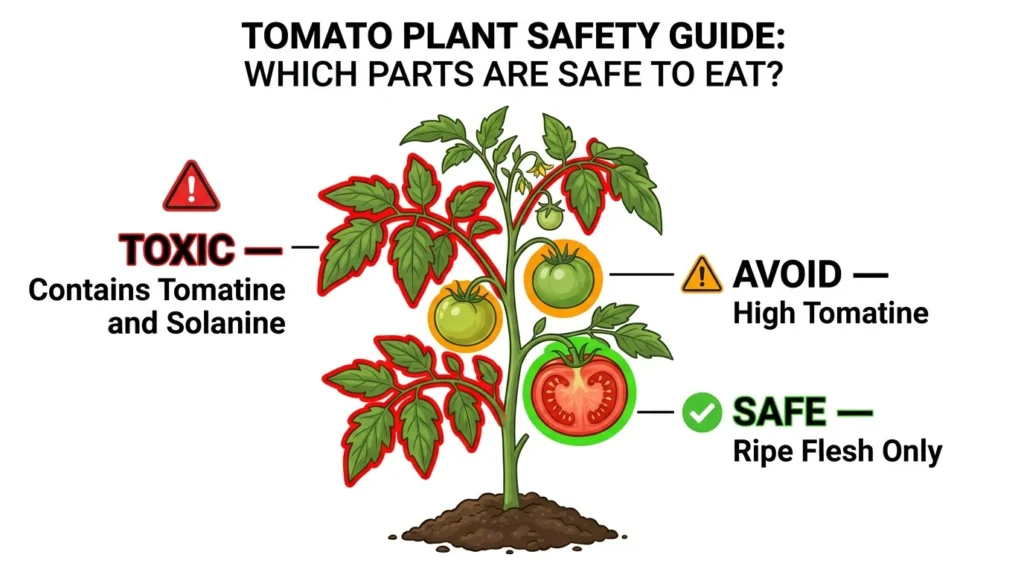
This is one of the most common and most important questions to address clearly. The answer: parts of the tomato plant are toxic to dogs, but ripe tomato flesh is generally not poisonous in normal amounts.
The toxic compounds are solanine and tomatine — naturally occurring alkaloids found in the tomato plant. These compounds are present in high concentrations in the green parts of the plant (leaves, stems, vines) and in unripe green tomatoes. They are present in much lower levels in fully ripe red tomato flesh.
Solanine and tomatine poisoning in dogs can cause gastrointestinal symptoms (vomiting, diarrhea, stomach pain), neurological symptoms (tremors, seizures, muscle weakness), heart abnormalities (irregular heartbeat), and general weakness and lethargy.
Importantly, the amount of tomatine in ripe tomato flesh is very low — typically too low to cause toxicity when eaten in small to moderate amounts. A dog would need to eat a very large quantity of ripe tomatoes to reach problematic levels. The green plant parts are far more dangerous and should be considered toxic.
When Are Tomatoes Bad for Dogs?
Understanding when tomatoes become bad for dogs is essential for responsible feeding.
Unripe green tomatoes: High in solanine and tomatine. Never give green tomatoes to your dog — they are the most dangerous part of the tomato for dogs aside from the leaves and stems.
Tomato leaves and stems: Contain very high concentrations of tomatine and solanine. Extremely toxic to dogs. If your dog has access to a tomato garden, ensure they cannot reach the plants.
Tomato vine and plant: The entire green part of the tomato plant is toxic. Never give any part of the tomato vine, plant, or leaves to your dog.
Too much ripe tomato at once: Even ripe tomatoes cause digestive upset in large quantities due to their acidity. Too much can cause vomiting, diarrhea, and stomach discomfort.
Tomatoes with added ingredients: Tomato sauce, tomato soup, and canned tomatoes often contain garlic, onion, salt, sugar, and other seasonings that are harmful or toxic to dogs. Even if the tomato base is safe, the additives make the product dangerous.
Dogs with sensitive stomachs or acid reflux: The acidity of tomatoes can aggravate existing digestive conditions. Dogs prone to acid reflux, gastroesophageal issues, or gastritis should avoid tomatoes entirely.
Also Read: Can Dogs Eat Blackberries? Top Antioxidant Berry — Full Guide 2026
Can Dogs Eat Tomatoes Raw?
Yes — ripe raw tomatoes are safe for most dogs in small amounts. Raw ripe tomatoes provide the full spectrum of nutrients including Vitamin C, Vitamin A, Vitamin K, potassium, and fiber. The tomatine content in ripe red tomato flesh is low enough that normal treat-sized portions are safe for healthy adult dogs.
When serving raw tomatoes, preparation matters. Remove all green parts — stem, leaves, any green patches on the flesh — and serve only the fully red, ripe flesh. Wash the tomato thoroughly to remove surface pesticide residue. Cut into small pieces appropriate for your dog’s size.
Serve plain — no salt, no vinegar, no oil, no seasoning of any kind. Just plain ripe tomato flesh. Start with just one or two small pieces the first time and watch for any digestive reaction before giving more.
Can Dogs Eat Green Tomatoes?
No — dogs should not eat green tomatoes. This is a firm no, and one of the clearest safety rules when it comes to tomatoes and dogs. Green tomatoes are unripe and contain significantly higher concentrations of tomatine and solanine than fully ripe red tomatoes.
These alkaloids in green tomatoes can cause real toxicity symptoms in dogs including vomiting, diarrhea, stomach cramping, weakness, confusion, slowed heart rate, and in more serious cases, tremors or seizures. Small dogs are at higher risk because the same amount of tomatine represents a larger relative dose for a smaller body.
Never intentionally give green tomatoes to your dog. If your dog has access to a garden where green tomatoes are growing, make sure the garden is fenced off or inaccessible. Eating green tomatoes directly from the vine is particularly dangerous because the stem and leaves — the most toxic parts — are attached.
Can Dogs Eat Cooked Tomatoes?
Cooked plain tomatoes — tomatoes that have been heated with no added ingredients — are generally safe for dogs in small amounts. The cooking process does not make tomatoes more toxic; it actually reduces tomatine levels slightly. It also increases the bioavailability of lycopene, meaning cooked tomatoes may deliver more of this powerful antioxidant than raw ones.
However, cooked tomatoes are almost never prepared plain in human cuisine. They are cooked with olive oil, garlic, onion, salt, herbs, and spices — all of which range from unhealthy to genuinely toxic for dogs. Garlic and onion in particular are toxic to dogs and cause hemolytic anemia with regular exposure.
If you want to give your dog cooked tomato, set aside a portion of plain tomato before adding any seasonings or other ingredients. Plain cooked tomato flesh with nothing added is safe in small amounts. Everything cooked with seasonings is not.
Can Dogs Eat Tomatoes Safely?
Yes — dogs can eat ripe tomatoes safely when strict preparation guidelines are followed every time.
Safe tomato serving checklist:
- Use only fully ripe, red tomatoes — no green, no partially ripe
- Remove all stems, leaves, and any green patches completely
- Wash thoroughly under cold running water to remove pesticide residue
- Cut into small, appropriately sized pieces for your dog
- Serve plain — no salt, no oil, no seasoning, no additives
- Keep portions small — tomatoes are an occasional treat, not a dietary staple
- Introduce slowly the first time — just one small piece
- Wait 24 hours before giving more after the first introduction
For dogs with diabetes, sensitive stomachs, acid reflux, or kidney conditions, get veterinary guidance before adding tomatoes to the diet. The acidity of tomatoes can be problematic for these dogs even when the tomato itself is safely ripe and prepared.
Can Dogs Eat Cherry Tomatoes?
Yes — ripe cherry tomatoes are safe for dogs in small amounts, following the same rules as regular tomatoes. Cherry tomatoes are simply small varieties of the same fruit and carry the same safety profile — ripe red flesh is fine, green parts are not.
The small size of cherry tomatoes is actually convenient for serving to dogs — they are already close to a bite-sized treat without much cutting needed. For medium and large dogs, a whole ripe cherry tomato (with stem and any green calyx removed) is a manageable serving. For small dogs, cut each cherry tomato in half or quarters.
Remove the green stem cap (calyx) from each cherry tomato before serving — this small green piece contains tomatine and should not be eaten. Check that each cherry tomato is fully red and ripe before giving it to your dog.
See Also: Can Dogs Eat Pineapple Core, Skin or Leaves? Full Safety Guide
Can Dogs Eat Grape Tomatoes?
Yes — ripe grape tomatoes are safe for dogs with the same rules as all other tomato varieties. Grape tomatoes are small, elongated, and typically very sweet when fully ripe. Their small size and natural sweetness make them a popular snack, and they can be shared with dogs just as safely as cherry or regular tomatoes.
Grape tomatoes get their name from their grape-like shape, not from any connection to actual grapes — which are highly toxic to dogs. Ripe grape tomatoes themselves are not toxic and are safe for dogs.
Always remove the small green stem from each grape tomato before serving. Ensure each tomato is fully red and ripe. Cut in half for small dogs. Serve plain with no added seasonings, dressings, or dips.
Can Dogs Eat Baby Tomatoes?
Yes — baby tomatoes, which typically refers to any very small tomato variety (cherry, grape, or other mini varieties), are safe for dogs when ripe and properly prepared. The small size makes them naturally portion-friendly, though the green stem and calyx must still be removed before serving.
Baby tomatoes sold in grocery stores are typically fully ripe and red — a good starting point for preparation. Always double-check that each small tomato is completely red with no green coloring before giving to your dog. Remove all stems and any green parts.
For very small dogs or toy breeds, cut baby tomatoes in half even if they seem small, because dogs tend to swallow without chewing and even a small round tomato could be a choking risk for tiny breeds.
Can Dogs Eat Roma Tomatoes?
Yes — Roma tomatoes are safe for dogs when fully ripe. Roma tomatoes (also called plum tomatoes) are a meaty, lower-moisture variety popular in Italian cooking. They tend to be less acidic and less watery than round beefsteak tomatoes, which can actually make them slightly gentler on dogs’ digestive systems.
Their firm, meaty flesh is easy to cut into small cubes and serves well as a treat. The lower water content means they are slightly more calorie-dense per gram than watery varieties, but the difference is minimal for the small amounts appropriate for dogs.
Prepare Roma tomatoes the same way as any other variety — remove all stems, leaves, and any green patches completely, wash thoroughly, cut into small pieces, and serve plain with no additives.
Also Read: Can Dogs Eat Popcorn? Buttered, Kettle Corn & Every Type Covered
Can Dogs Eat Fresh Tomatoes?
Yes — fresh ripe tomatoes are actually the best form of tomato to give your dog. Fresh tomatoes retain their full nutritional content — Vitamin C, Vitamin A, lycopene, potassium, folate, and fiber — in their most bioavailable, unprocessed form. No added ingredients, no processing, no heat degradation of heat-sensitive vitamins.
Fresh tomatoes from the grocery store, farmers market, or your own garden (when fully ripe and red) are all appropriate sources. If growing your own, ensure your dog cannot access the tomato plants themselves — the leaves and vines are toxic even when the fruit is safe.
The preparation is straightforward: wash well, remove all green parts, cut into appropriate pieces, and serve plain. Fresh is always the best choice over canned, cooked, or processed tomato products for giving to dogs.
Can Dogs Eat Red Tomatoes?
Yes — red tomatoes are specifically the safe variety to give dogs. The red color indicates full ripeness, and full ripeness is the key safety marker with tomatoes. The red pigment itself comes from lycopene, the same compound that makes ripe tomatoes nutritionally valuable.
As a tomato ripens from green to red, the levels of tomatine and solanine drop dramatically in the flesh. By the time a tomato is fully red and ripe, the tomatine content in the flesh is low enough to be safe in normal amounts.
Always use fully red tomatoes — not partially red or pink, which still contain more tomatine than fully ripe ones. Deep red, fully ripe, firm (not mushy) tomatoes are the safest choice. Discard any tomato that has green patches remaining on the flesh.
Can Dogs Eat Sun-Dried Tomatoes?
Not recommended. Sun-dried tomatoes present several concerns that make them a poor choice for dogs, even though the base ingredient — tomato — is safe in its ripe fresh form.
The drying process concentrates everything in the tomato — including the natural sugars, acidity, and residual tomatine. While the tomatine level in ripe tomatoes is generally safe when fresh, concentration through drying may increase the effective dose per unit eaten.
More practically, virtually all commercially available sun-dried tomatoes are prepared with added ingredients — olive oil, salt, garlic, herbs (oregano, basil), and sometimes chili flakes or other seasonings. Garlic in particular is toxic to dogs. The high sodium content of most sun-dried tomato products is also concerning — high salt intake can cause excessive thirst, urination, and in larger amounts, sodium toxicity in dogs.
Avoid sun-dried tomatoes for your dog entirely. Plain fresh ripe tomato is the safer and more nutritious alternative.
Can Dogs Eat Canned Tomatoes?
This depends on the type and ingredients. Plain canned tomatoes with no added ingredients — just tomatoes and perhaps citric acid — are generally safe for dogs in very small amounts. However, most canned tomato products are not that simple.
The majority of canned tomatoes contain added salt at levels that are too high for dogs. Many contain garlic and onion (both toxic to dogs), citric acid preservatives, calcium chloride, and various seasonings. Always read the ingredient label before giving any canned tomato product to your dog.
Even plain canned tomatoes in their own juice are more acidic than fresh ripe tomatoes and have had the nutritional content affected by the canning heat process. Lycopene remains relatively stable through canning, but Vitamin C and other heat-sensitive nutrients are reduced.
If you only have canned tomatoes and want to give your dog a small amount, choose a product with only tomatoes listed in the ingredients (no salt, no garlic, no onion), and give a very small portion rinsed under water.
Can Dogs Eat Tomato Sauce?
No — dogs should not eat tomato sauce. This is one of the clearest “avoid” answers in this entire guide. Commercial and homemade tomato sauces are made with a combination of ingredients that are harmful to dogs, regardless of how safe the tomato base itself might be.
Standard tomato sauce contains garlic and onion — both of which are toxic to dogs and can cause hemolytic anemia with regular exposure, destroying red blood cells. Tomato sauce also contains salt at high levels, added sugar in many commercial versions, olive oil, herbs, and various spices. Some commercial varieties contain preservatives and artificial flavoring.
Even a small amount of tomato sauce that contains garlic or onion can be harmful over time. Never give your dog tomato sauce, pasta sauce, pizza sauce, or any other seasoned tomato product. If your dog licked a small amount from your plate, a single very small exposure is unlikely to cause serious harm — but watch for any reaction and contact your vet if concerned.
Can Dogs Eat Tomato Soup?
No — tomato soup is generally not appropriate for dogs. Most tomato soup recipes and commercial products contain ingredients that are harmful to dogs.
Homemade tomato soup typically includes onion, garlic, butter or cream, salt, and various herbs — all problematic for dogs. Commercial tomato soups are high in sodium (often 700-900mg per serving — far too much for a dog), frequently contain onion and garlic in some form, and often have added sugar, cream, and artificial flavoring.
The soup format also concentrates the tomato’s natural acidity, which can irritate a sensitive stomach more than solid tomato flesh would.
Even “simple” tomato soups intended as health foods for humans typically contain onion and garlic as base flavoring. There is no commercially available tomato soup that is safe for regular canine consumption. Skip entirely and give a few pieces of fresh plain ripe tomato instead.
Can Dogs Eat Tomato Soup with Milk?
No — tomato soup with milk is not appropriate for dogs, and adding milk to tomato soup creates additional concerns beyond those of tomato soup alone.
Many adult dogs are lactose intolerant — they produce insufficient amounts of the enzyme lactase needed to properly digest the lactose in dairy products. Cow’s milk and cream can cause digestive upset including gas, bloating, and diarrhea in lactose-intolerant dogs.
Tomato soup with milk also retains all the concerning ingredients of plain tomato soup — high sodium, garlic, onion, and concentrated acidity — while adding the dairy component. The combination creates a product that is problematic from multiple angles simultaneously.
If your dog accidentally lapped a little from your bowl, a very small accidental exposure is unlikely to be an emergency. But tomato soup with milk should never be given intentionally and is not part of any responsible dog feeding plan.
See Also: Can Dogs Eat Watermelon Rind or Seeds? Full Safety Guide
Can Dogs Eat Lettuce and Tomatoes?
This is a common question from dog owners who want to share salad ingredients. Ripe tomato pieces — yes, safe in small amounts when green parts are removed. Plain lettuce — yes, also safe for dogs.
However, salad as typically served is not appropriate for dogs. Salads are dressed with vinaigrettes, oils, salt, lemon juice, garlic, onion, croutons, cheese, and various other toppings and dressings — none of which are appropriate for dogs. Even “simple” salads usually contain seasonings that are problematic.
If you want to give your dog some lettuce and tomato, set aside a small portion of each ingredient before dressing the salad. Plain ripe tomato pieces and plain lettuce leaves (romaine, green leaf, or butterhead) are safe treats on their own. Just keep them plain — no dressing, no seasoning, no extras.
Can Dogs Eat Tomatoes and Onions?
Absolutely not — never give dogs tomatoes and onions together. Onions are one of the most toxic common foods for dogs. They contain thiosulphate compounds that damage and destroy red blood cells, leading to hemolytic anemia. This applies to raw onions, cooked onions, onion powder, and onion juice — all forms are toxic.
Even a small amount of onion can cause problems with regular exposure. Onion powder (found in many processed foods and sauces) is more concentrated and therefore more dangerous per gram than fresh onion.
If a dish contains both tomato and onion — salsa, tomato sauce, pizza, many stews and soups — the onion component makes the entire dish off-limits for dogs regardless of how safe the tomato portion might otherwise be. Never assume that picking out the visible onion pieces is sufficient — the toxic compounds leach into the surrounding food during cooking.
Can Dogs Eat Tomatoes Soup? (Detailed)
We covered this above, but dog owners ask this question so frequently that a clear, detailed answer is warranted. The short version: no, tomato soup is not safe for dogs.
The primary reasons: virtually all tomato soup recipes and commercial products contain onion and garlic (both toxic to dogs), high levels of sodium, cream or butter (problematic dairy fat for many dogs), and various seasonings not appropriate for canine consumption.
The secondary reason: even if you could find a truly plain tomato soup with no harmful additives, the concentrated acidity and liquid format makes it easier for dogs to consume a large amount quickly — more than you would intentionally give as a solid food treat.
If you genuinely want to give your dog a tomato treat, two to three pieces of plain fresh ripe tomato flesh is the right answer. Skip the soup entirely.
Can Dogs Eat Lettuce and Tomatoes Raw?
Yes — plain raw lettuce and plain raw ripe tomato pieces are individually safe for dogs and can be given together as plain vegetable treats. Lettuce is very low in calories and provides some fiber and water content. Ripe tomato flesh provides lycopene, Vitamin C, and Vitamin A.
The key word is plain. Raw lettuce and tomato become problematic the moment dressing, seasoning, salt, or any other condiment is added. Always set aside plain unseasoned portions of both before adding any dressing to a salad.
For dogs, cut the tomato into small pieces and remove all green parts. Tear the lettuce into small pieces. Give as a combined veggie treat in small amounts. Neither food should make up a significant portion of the diet — these are treats and supplements, not meal replacements.
How Can I Feed Tomatoes to My Dog?
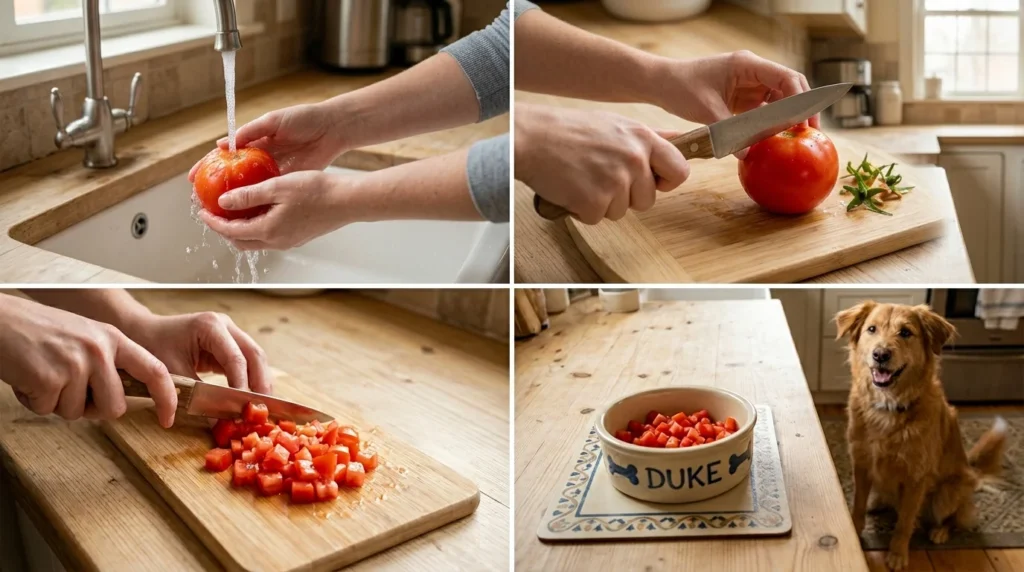
Feeding tomatoes to your dog safely involves a clear preparation process and some thoughtful serving ideas. Here is exactly how to do it right.
Step 1 — Choose the right tomato: Select a fully ripe, deep red tomato with no green patches, no mold, and no soft mushy spots. Any fully ripe variety — cherry, grape, Roma, beefsteak, or any other eating tomato — is appropriate.
Step 2 — Wash thoroughly: Rinse under cold running water and gently scrub the surface to remove pesticide residue and surface contaminants. This step is important given that tomatoes are among the fruits and vegetables with pesticide residue.
Step 3 — Remove all green parts completely: Remove the stem, leaves, and any green calyx. Also remove any green or pale patches on the flesh. Cut generously — only fully red ripe flesh should remain.
Step 4 — Cut into small pieces: Cut into pieces appropriate for your dog’s size. Cherry and grape tomatoes can be halved or quartered. Larger tomatoes should be cut into small cubes — about half an inch for small dogs, up to an inch for large dogs.
Step 5 — Serve plain: No salt. No oil. No seasoning. No dip. Just plain tomato pieces. If combining with other safe vegetables, ensure everything is equally plain.
Step 6 — Keep portions small: Two to three pieces for small dogs, up to five or six for medium dogs, up to eight to ten pieces for large dogs — a few times per week at most.
How Many Tomatoes Can a Dog Eat?
Portion control is important with tomatoes due to their acidity and the residual tomatine content even in ripe flesh. Use the standard treat guideline — treats should not exceed 10% of daily caloric intake — but err on the conservative side with tomatoes.
Extra small dogs (under 10 lbs): 1 to 2 small pieces of ripe tomato flesh, a few times per week.
Small dogs (10 to 20 lbs): 2 to 4 small pieces, a few times per week.
Medium dogs (20 to 50 lbs): 4 to 6 small pieces or 2 to 3 cherry tomatoes, a few times per week.
Large dogs (50 lbs and above): Up to 6 to 8 small pieces or 4 to 5 cherry tomatoes, a few times per week.
These are maximum amounts. Dogs with sensitive stomachs, acid reflux, or digestive issues should receive smaller amounts or avoid tomatoes altogether. For diabetic dogs or those with kidney conditions, consult your veterinarian before giving tomatoes.
How to Safely Share Tomatoes with Dogs
There are several practical ways to incorporate safe tomato treats into your dog’s routine beyond just handing over a piece.
Plain ripe tomato pieces: The simplest and always best approach. Wash, destem, cut, serve. Small cubes of fully ripe tomato flesh served at room temperature.
Cold refrigerated tomato pieces: Store prepared tomato pieces in an airtight container in the refrigerator for up to two days. Many dogs enjoy the cool, refreshing temperature.
Mixed with other safe vegetables: Combine plain ripe tomato pieces with other dog-safe vegetables like cucumber pieces, plain carrot slices, or plain green beans for a colorful veggie snack mix.
As a food topper in tiny amounts: A small amount of very finely diced ripe tomato mixed into your dog’s regular food can add flavor interest and a small nutritional boost — particularly the lycopene content.
Training treats: Small pieces of cherry tomato (halved, with green removed) can work as training treats for dogs that enjoy the flavor — they are low in calories and naturally bite-sized.
How to Prevent Dogs from Ingesting Too Many Tomatoes
For dog owners with tomato plants in the garden, preventing accidental ingestion of green tomatoes, leaves, and vines is crucial.
Fence off the garden: The most effective prevention. A physical barrier that your dog cannot jump over or dig under keeps them away from tomato plants entirely.
Use raised garden beds: Elevated planting beds make it much harder for dogs to access plants, especially for smaller breeds.
Supervise garden time: Never leave your dog unsupervised in a garden where tomato plants are growing. Even well-trained dogs may investigate interesting smells.
Train a “leave it” command: A solid “leave it” command is invaluable for preventing dogs from eating things they shouldn’t in the garden or anywhere else.
Clean up fallen fruit: Remove any fallen green tomatoes from the ground promptly — these are accessible and contain high tomatine levels.
Store tomatoes safely indoors: Keep tomatoes (especially unripe ones) on counters or in locations your dog cannot reach. Dogs that counter-surf can easily grab whole tomatoes.
Can Puppies Eat Tomatoes?
Yes — puppies can eat very small amounts of ripe tomato flesh, but extra caution is warranted. Puppies have more sensitive and still-developing digestive systems than adult dogs, and they are more reactive to new foods, acidic foods, and any residual compounds like tomatine.
The preparation rules are even more critical for puppies: only fully ripe red flesh, every trace of green removed, thoroughly washed, cut into very tiny pieces. The portion should be much smaller than for an adult dog — just one or two very small pieces as a first introduction.
Wait 48 hours after the first introduction (rather than 24 as for adult dogs) to monitor for any reaction. Watch carefully for vomiting, diarrhea, unusual lethargy, or any skin reaction.
Most importantly, tomatoes should never displace any of a puppy’s complete puppy food. Puppies have critical specific nutritional requirements for healthy growth that only a complete, age-appropriate puppy food can provide. Tomatoes are supplemental only — an occasional tiny treat, not a dietary component.
Also Read: Can Dogs Eat Bananas? Everything You Need to Know Before Feeding
My Dog Ate Too Much Tomato — What Do I Do?
First, assess what exactly your dog ate. The situation is very different depending on whether they ate ripe tomato flesh, green tomatoes, or part of the tomato plant.
If your dog ate too much ripe tomato flesh: Expect temporary digestive upset — diarrhea, vomiting, or gas — within a few hours from the acidity and fiber content. This is uncomfortable but typically not dangerous for healthy adult dogs.
What to do: Ensure fresh water access to prevent dehydration. Skip or reduce the next meal. Offer plain boiled rice and chicken if they seem hungry but unsettled. Monitor for 24 hours.
If your dog ate green tomatoes or tomato plant material: This is a more serious situation requiring prompt action. Tomatine toxicity symptoms include vomiting, diarrhea, lethargy, weakness, confusion, loss of coordination, dilated pupils, slow heart rate, and in severe cases tremors or seizures.
Contact your veterinarian immediately — do not wait for symptoms to develop fully. If your vet is unavailable, call the ASPCA Animal Poison Control Center. Be ready to describe exactly what your dog ate, how much, and when.
When to call your vet for ripe tomato overconsumption:
- Symptoms are severe or not improving after 24 hours
- Your dog is very small, very young, or has existing health conditions
- Persistent vomiting and inability to keep water down
- Signs of extreme lethargy, confusion, or weakness
Frequently Asked Questions
Can dogs eat ripe tomatoes?
Yes. Fully ripe red tomato flesh is safe for dogs in moderate amounts. Remove all green parts (stems, leaves, calyx) before serving. Wash well and serve plain with no seasonings.
Can dogs eat green tomatoes?
No. Green (unripe) tomatoes contain high levels of tomatine and solanine — toxic alkaloids that can cause vomiting, weakness, heart abnormalities, and neurological symptoms in dogs.
Can dogs eat cherry tomatoes?
Yes — ripe cherry tomatoes are safe. Remove the green stem cap from each tomato before serving. For small dogs, cut each cherry tomato in half. Serve plain.
Can dogs eat tomato sauce?
No. Tomato sauce contains garlic, onion, salt, and other seasonings that are toxic or harmful to dogs. Never give tomato sauce to your dog.
Can dogs eat tomato soup?
No. Tomato soup contains high sodium, garlic, onion, cream, and other ingredients harmful to dogs. There is no commercially available tomato soup appropriate for regular dog consumption.
Are tomato leaves and stems toxic to dogs?
Yes — very toxic. Tomato leaves and stems contain very high concentrations of tomatine and solanine. If your dog eats tomato plant material, contact your vet immediately.
Can dogs eat sun-dried tomatoes?
Not recommended. Sun-dried tomatoes are usually prepared with garlic, salt, and oil — all problematic for dogs. The drying process also concentrates natural compounds. Skip them entirely.
Can dogs eat canned tomatoes?
Only plain canned tomatoes with no added salt, garlic, or onion — and only in very small amounts. Most canned tomatoes contain added sodium and seasonings that are not dog-safe. Fresh is always better.
Can dogs eat cooked tomatoes?
Plain cooked tomatoes with no added ingredients are safe in small amounts. However, tomatoes are almost never cooked without garlic, onion, salt, or oil in human cuisine — so in practice, cooked tomatoes are usually not appropriate.
Can puppies eat tomatoes?
Yes, in very small amounts with extra caution. Only fully ripe red flesh, all green removed, cut into tiny pieces, just one or two pieces the first time. Wait 48 hours before giving more.
What are the signs of tomatine poisoning in dogs?
Vomiting, diarrhea, lethargy, muscle weakness, loss of coordination, dilated pupils, slow or irregular heart rate, tremors, and confusion. Contact your vet immediately if you suspect tomatine poisoning.
How many tomatoes can a dog eat?
Small dogs: 1-4 small pieces a few times per week. Medium dogs: 4-6 pieces. Large dogs: 6-10 pieces. All must be fully ripe red flesh with no green parts and no added seasonings.
Can dogs eat tomatoes and lettuce together?
Yes — plain ripe tomato and plain lettuce are both safe for dogs. Never serve with salad dressing, seasoning, or other salad toppings. Set aside plain portions before dressing any salad.
Conclusion
Tomatoes are one of the more nuanced foods in the dog-safe food conversation — not a simple yes or no, but a clear “yes, when done right.” Fully ripe red tomato flesh is safe, nutritious, and can provide real health benefits for most healthy dogs. The lycopene, Vitamin C, Vitamin A, potassium, and folate in ripe tomatoes make them a worthwhile occasional treat when prepared correctly.
The absolute rules — non-negotiable every single time:
- Only fully ripe, deep red tomato flesh — never green, never partially ripe
- Remove every trace of stem, leaves, and green calyx before serving
- Never give tomato plant material — leaves and vines are toxic
- Serve plain only — no salt, no oil, no seasoning, no sauce
- Never give tomato sauce, tomato soup, or canned tomatoes with added ingredients
- Never give sun-dried tomatoes or tomato-based processed products
- Onions and garlic with tomatoes make the entire dish toxic — avoid completely
- Keep portions small and appropriate for your dog’s size
- Introduce slowly the first time and monitor for any reaction
- If your dog eats green tomatoes or plant material, contact your vet immediately
- Dogs with acid reflux, sensitive stomachs, diabetes, or kidney disease need vet guidance first
Tomatoes done right — a few pieces of plain ripe fresh tomato a couple of times a week — are a perfectly safe and genuinely nutritious addition to your dog’s treat rotation. The lycopene content alone makes ripe tomatoes worth including for dogs who enjoy the flavor and tolerate them well.
For more complete, honest guides on what dogs can and cannot eat — from fruits and vegetables to proteins, dairy, grains, and everyday human foods — visit Dogs Bread. It is one of the most trusted pet nutrition resources for dog owners who want clear, research-backed, practical answers. Whether you are doing a quick food safety check or building a comprehensive understanding of your dog’s nutritional needs, Dogs Bread covers it all in straightforward language every dog owner can use.
Your dog depends on your good judgment every single day. With the right information, you can always be confident you are making the best choices for them.


