

Can Dogs Eat Raisins? Toxicity, Symptoms & Emergency Guide
Raisins may be a healthy snack for humans, but they are one of the most dangerous foods a dog can eat. Even a small number of raisins can cause severe poisoning in some dogs, leading to sudden kidney failure and other life-threatening complications. Because every dog reacts differently, there is no known safe amount of raisins.
If your dog accidentally eats raisins, treat it as a medical emergency. Immediate veterinary care greatly improves the chances of recovery. Understanding the dangers of raisins can help you protect your pet and respond quickly if an accident happens.
Can Dogs Eat Raisins?
No, dogs should never eat raisins. Raisins are highly toxic to dogs, although the exact substance responsible for the poisoning is still not fully understood. Even a single raisin may cause serious illness in some dogs.
Because it is impossible to predict which dogs will react, veterinarians recommend avoiding raisins completely. Never intentionally offer raisins as a treat, regardless of your dog’s size or breed.
How Many Raisins Can Dogs Eat?
The safest number of raisins for dogs is zero. There is no guaranteed safe amount because some dogs become seriously ill after eating only a few raisins, while others may show no immediate symptoms.
If your dog eats any raisins, contact your veterinarian or an emergency animal hospital immediately. Do not wait for symptoms to appear before seeking professional advice.
| Dog Size | Safe Amount | Recommendation |
|---|---|---|
| Small Dogs | 0 raisins | Seek veterinary advice immediately |
| Medium Dogs | 0 raisins | Emergency evaluation recommended |
| Large Dogs | 0 raisins | Contact veterinarian immediately |
| Puppies | 0 raisins | Emergency veterinary care |
Why Are Raisins Toxic to Dogs?
The exact reason raisins are toxic remains unknown, but researchers know they can damage a dog’s kidneys and lead to acute kidney failure. Some dogs are extremely sensitive, while others may tolerate larger amounts without obvious symptoms.
Since there is no reliable way to predict a dog’s reaction, all raisin exposure should be treated seriously, regardless of the quantity eaten.
Can Dogs Eat Grapes and Raisins?
No, dogs should never eat grapes or raisins. Both fresh grapes and dried raisins are toxic and can cause similar health problems, including vomiting, lethargy, and kidney failure.
The size, color, or variety of grape does not make it safer. Green grapes, red grapes, black grapes, seedless grapes, and raisins should all be kept away from dogs.
Can Dogs Eat Raisin Bread?
No, raisin bread is not safe for dogs. Even if the bread contains only a few raisins, those raisins can still be toxic. Bread itself may also contain sugar, butter, or other ingredients that are not healthy for dogs.
See Also: Can Dogs Eat Kiwi? Benefits, Risks, Serving Size & Safety Guide
If your dog eats raisin bread, count it as raisin exposure and contact your veterinarian immediately for advice.
Can Dogs Eat Raisin Cookies?
No, raisin cookies are extremely dangerous for dogs. In addition to raisins, cookies often contain sugar, butter, chocolate, nuts, or artificial sweeteners that can create additional health risks.
Store cookies and baked goods safely out of your dog’s reach to prevent accidental poisoning.
Can Puppies Eat Raisins?
No, puppies should never eat raisins. Young dogs are just as vulnerable to raisin poisoning as adult dogs and may become seriously ill after eating even a small amount.
If a puppy eats raisins, seek emergency veterinary care immediately without waiting for symptoms to develop.
Can Dogs Eat Raisins Every Day?
No. Dogs should never eat raisins under any circumstances. Daily exposure greatly increases the risk of severe poisoning and kidney failure.
Instead of raisins, choose safe fruits such as blueberries, apples without seeds, bananas, or strawberries when offering healthy treats.
What Happens If a Dog Eats Raisins?
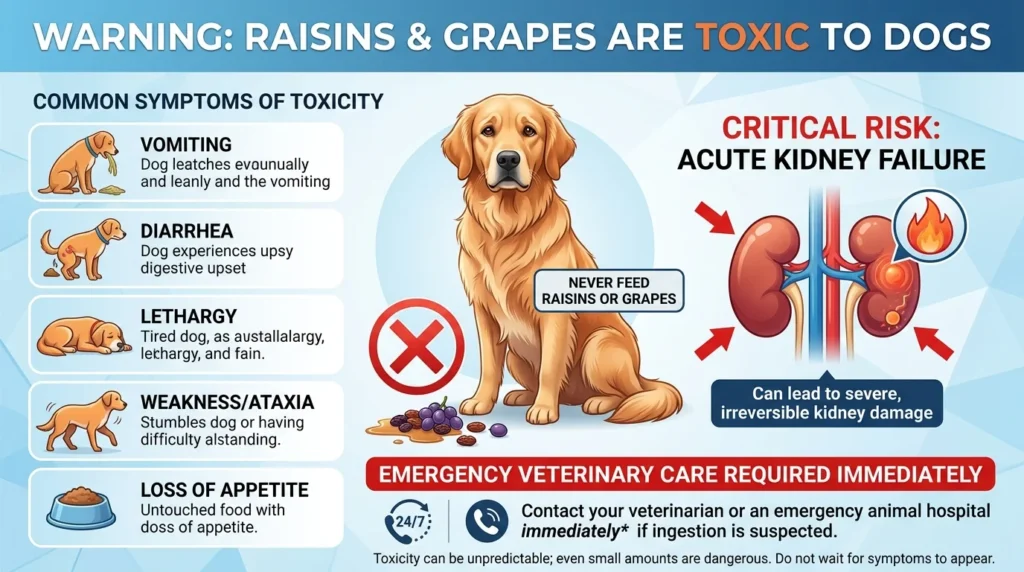
If a dog eats raisins, symptoms may begin within a few hours, although some dogs may become sick later. Early signs often include vomiting, diarrhea, loss of appetite, tiredness, weakness, and stomach pain.
Without prompt treatment, raisin poisoning may progress to dehydration, reduced urination, or complete kidney failure. Immediate veterinary care is essential because early treatment greatly improves the chance of recovery.
Symptoms of Raisin Poisoning in Dogs
Dogs affected by raisin poisoning may experience vomiting, diarrhea, excessive thirst, weakness, lethargy, abdominal pain, bad breath, and loss of appetite. As kidney damage develops, urination may decrease or stop completely.
If you notice any of these symptoms after your dog has eaten raisins or grapes, contact your veterinarian or an emergency animal hospital immediately.
What Should You Do If Your Dog Eats Raisins?
Do not wait for symptoms to appear. Contact your veterinarian or a pet poison emergency service as soon as you discover your dog has eaten raisins.
Your veterinarian may recommend bringing your dog in immediately for treatment. Early medical care can help reduce the risk of severe kidney damage and improve your dog’s outcome.
Are Cooked Raisins Safe for Dogs?

No, cooked raisins are not safe for dogs. Baking or cooking does not remove the toxic substance responsible for raisin poisoning.
Foods such as raisin muffins, fruitcakes, oatmeal raisin cookies, raisin bread, and other baked goods remain dangerous even after cooking.
Is Raisin Good for Dogs to Eat?
No, raisins are never good for dogs. Although raisins contain nutrients that benefit humans, the serious risk of poisoning far outweighs any potential nutritional value.
There are many safer fruits that provide vitamins and antioxidants without putting your dog’s health at risk.
How to Keep Raisins Away From Your Dog
Store raisins, grapes, trail mix, baked goods, and other raisin-containing foods in sealed containers where your dog cannot reach them. Teach family members and visitors not to share these foods with pets.
Always check ingredient labels on snacks and desserts because raisins are commonly included in cereals, cookies, breads, and snack mixes.
Do Raisins Have Benefits For Dogs?
No, raisins do not provide any safe health benefits for dogs. Even though they contain fiber, vitamins, and antioxidants for humans, they are considered toxic to dogs.
Healthy alternatives such as blueberries, apples without seeds, bananas, and strawberries provide similar nutrients without the danger of poisoning.
See Also: Can Dogs Eat Sweet Potatoes? Benefits, Risks & Safe Feeding Guide
Do Raisins Have Any Risks For Dogs?
Yes, raisins present severe health risks. They can trigger sudden kidney failure, dehydration, vomiting, diarrhea, weakness, and potentially life-threatening complications.
Since there is no known safe amount, every case of raisin ingestion should be treated as a medical emergency requiring immediate veterinary attention.
Frequently Asked Questions
Can one raisin hurt a dog?
Yes. Even a single raisin may be enough to cause serious poisoning in some dogs.
How long after eating raisins do symptoms appear?
Symptoms often begin within a few hours but may take longer in some cases. Immediate veterinary care should not be delayed.
Are grapes as dangerous as raisins?
Yes. Both grapes and raisins are toxic to dogs and should always be avoided.
Can dogs recover from raisin poisoning?
Many dogs recover when treatment begins quickly, but delayed treatment increases the risk of permanent kidney damage or death.
What fruits are safe instead of raisins?
Blueberries, strawberries, bananas, watermelon without seeds, and apples without seeds are generally safer fruit choices for dogs.
Conclusion
Dogs should never eat raisins because they are highly toxic and can cause sudden kidney failure. There is no known safe amount, and even one raisin may become a medical emergency for some dogs.
If your dog accidentally eats raisins, seek veterinary care immediately rather than waiting for symptoms to appear. Choosing safe fruits instead of raisins is the best way to protect your dog’s health and well-being.
See Also: Can Dogs Eat Garlic? Vet Safety Guide For Owners Should Know


