
Can Dogs Eat Bacon? Risks, Pancreatitis & Safe Feeding Guide
Last updated: 17 October 2026
Can dogs eat bacon? A small bite of plain cooked bacon is unlikely to poison a healthy dog, but bacon is not a safe food to hand out on purpose. That split answer is the whole story, and it explains why this question never seems to get a straight answer online. Bacon is not toxic the way chocolate or grapes are, yet its fat, salt, and preservatives make it one of the riskiest everyday human foods a dog can eat. One sneaked strip is an incident you manage. A strip every week is a habit your dog’s pancreas may eventually bill you for.
Why Every Website Says Something Different About Bacon
Some guides call bacon flat-out unsafe for dogs. Others say a little is fine in moderation. Both are telling the truth, because they are answering two different questions. The strict guides are answering “should bacon be part of your dog’s diet?” and the answer is no. The lenient ones are answering “will one stolen bite kill my dog?” and the answer is almost certainly not. Where the disagreement gets dangerous is in the middle, because “moderation” means nothing without numbers, and nobody agrees on what it means in strips per week.
The physiology settles it. A healthy dog’s gut can usually clear a single small fat load, but dogs do not build tolerance to repeated fatty, salty meals. Each serving asks the pancreas to pump out enzymes and the kidneys to handle a salt spike. One-off, the system copes. Repeated, the damage compounds into weight gain, chronic gut irritation, and eventually the pancreatic inflammation vets dread. The table below shows where each scenario really lands.
| Scenario | What is happening in the body | Where it lands |
|---|---|---|
| A sneaked bite, once | One small fat and salt load the gut usually clears | Incident: monitor, usually fine |
| A strip every week as a treat | Repeated fat loads and salt spikes with no nutritional payoff | Risky habit: the pattern every vet guide warns against |
| Several strips at once | Acute fat and salt overload; possible toxic seasonings | Vet territory: watch closely, call for advice |
| Raw bacon or bacon grease | Bacteria and parasites, or concentrated liquid fat | High risk: separate and more serious problems |
What Bacon Actually Does to a Dog’s Body
Three separate mechanisms make bacon risky for dogs, and they stack. The fat can inflame the pancreas. The salt can dehydrate the dog and, in extreme cases, trigger bloat. And the flavourings on many bacons can be outright toxic. A strip of bacon delivers all three at once, which is why it earns more caution than a piece of plain cooked meat.
Fat and pancreatitis
Pancreatitis is inflammation of the pancreas, and a rich fatty meal is the classic trigger. The Pet Poison Helpline lists fatty foods such as bacon, gravy, and meat drippings as pancreatitis risks for dogs, and notes that miniature Schnauzers are especially prone. The nasty part is the delay: vomiting, abdominal pain, diarrhoea (sometimes bloody), reduced appetite, and lethargy can show up one to four days after the fatty meal, long after you stopped worrying. Caught early, the prognosis is good, but treatment usually means a vet visit, fluids, and anti-nausea medication. Chewy’s guide flags the same chain: bacon’s fat can cause digestive trouble and raise the risk of pancreatitis.
Salt, thirst, and bloat
Bacon is cured in salt, and the salt load in even a few strips is far beyond what a dog’s diet normally contains. Petco explains the knock-on effect: the dog gets thirsty, drinks far more water than usual to compensate, and that sudden stomach fill can lead to bloat, where the stomach distends with gas or fluid. Bloat can turn deadly fast, which is why Petco treats excess salt as more than a thirst issue. Dogs with existing heart disease handle salt spikes even worse. A dog that eats a lot of bacon and then drains the water bowl deserves watching, not just a refill.
Garlic, onion, and spice rubs
Plain bacon is one thing; flavoured bacon is another. Many commercial bacons are rubbed with garlic, onion, black pepper, maple, or brown sugar, and garlic and onion are toxic to dogs. Petco specifically warns to check the label for garlic or onion if your dog sneaks a piece, and to call your vet if either is present. Sweetened or heavily spiced bacon adds sugar and extra salt on top of the fat. If the bacon came from a butcher counter or a fancy brand, assume it is seasoned until the label proves otherwise.
The Part Nobody Talks About: Nitrates, Nitrites, and the Cure
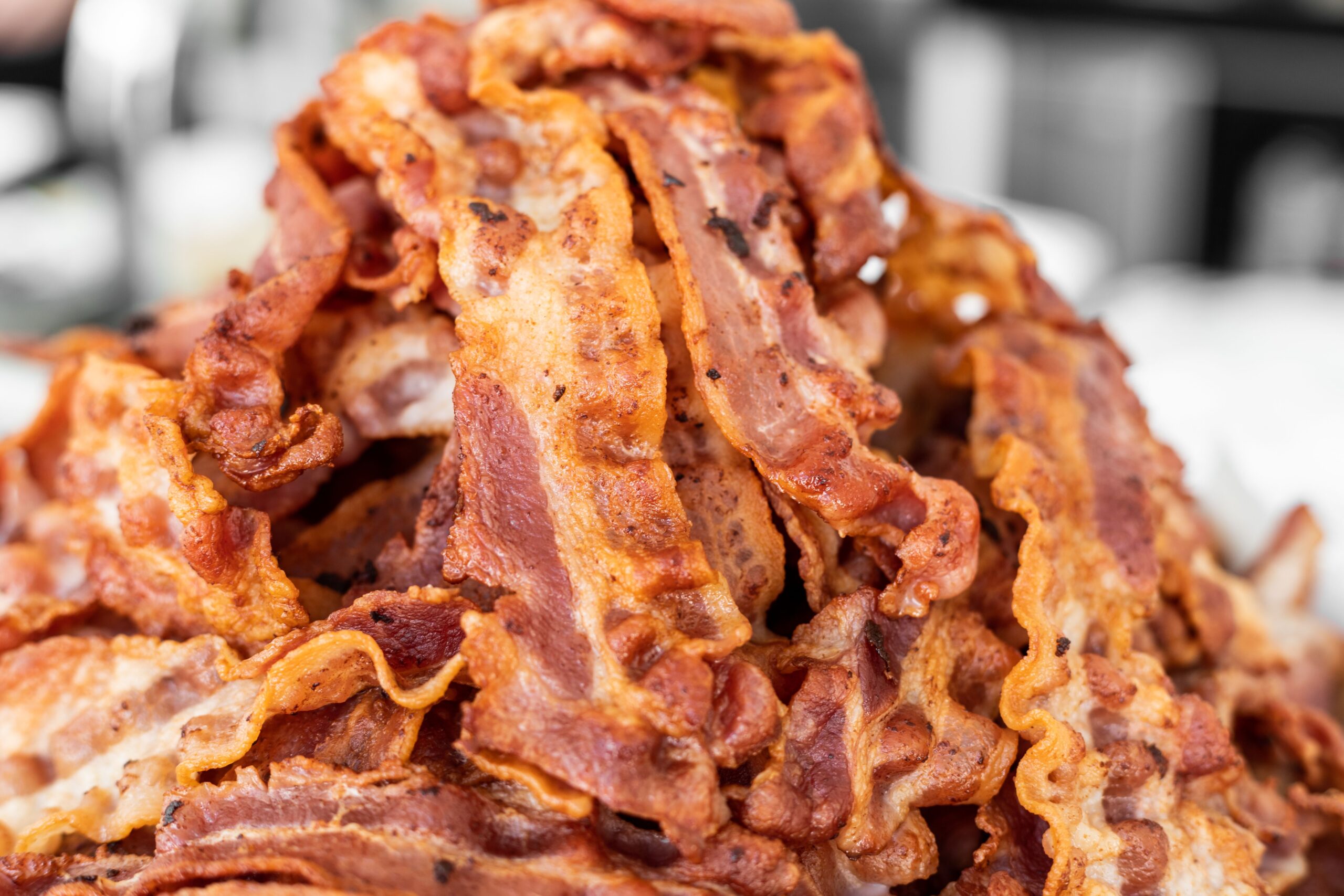
Bacon is not fresh pork; it is pork that has been cured, smoked, and dosed with preservatives so it survives the shelf and tastes like bacon. That cure is the part most “can dogs eat it” guides skip. Chewy points to sodium nitrites as the preservative of particular concern in commercial bacon: in large quantities they can be toxic to dogs, causing anything from an upset stomach to a blood disorder called methemoglobinemia. You do not need to memorise the chemistry to act on it. The takeaway is that bacon carries a preservative load that plain cooked pork does not, which is one more reason the two are not interchangeable in a dog’s bowl. If you want to share pork with your dog, share plain cooked pork, not the cured version.
For the same cure question in another cured meat, see our guide to whether dogs can eat sausage. Beef jerky carries the same salt and seasoning traps as cured meats; see our guide to beef jerky for dogs before sharing any.
Bacon Grease Is Worse Than the Bacon
If the strips are bad, the pan drippings are worse. Bacon grease is the fat of the bacon with the meat removed: concentrated, liquid, and easy for a dog to lap up in seconds. The Pet Poison Helpline names meat drippings and grease explicitly among the fatty foods that can trigger pancreatitis, and Chewy agrees the high fat content makes it a poor idea. Pouring drippings over kibble as a “treat topper” is one of the fastest ways to deliver a pancreatitis-sized fat dose. House rules that work: never pour drippings on dog food, wipe the pan before the dog reaches it, and keep dogs out of the kitchen while bacon fat cools within tongue range.
How Much Bacon Is Too Much?
Here is the honest answer the SERP never gives: there is no established safe amount of bacon for dogs. Petco states it plainly, saying there is no recommended serving size because the risks outweigh any benefit at any regular quantity. So the table below is not a feeding guide. It is a way to think about dose if bacon has already been eaten, because a crumb means something very different to a Chihuahua than to a Labrador.
| Dog size | What “a little” means here | How to read it |
|---|---|---|
| Toy (under 12 lb) | A pea-sized crumb | A large relative salt and fat dose; watch closely |
| Small (12 to 25 lb) | A fingertip-sized piece | Still a meaningful dose for this body weight |
| Medium (25 to 60 lb) | A bite-sized corner of a strip | Likely tolerated once, not a habit |
| Large (60 lb and up) | Half a strip at most | Even big dogs gain nothing from more |
| Puppies of any size | None on purpose | Developing digestive systems handle rich food worse |
Notice what is missing: there is no column for “safe per week,” because regular bacon feeding is the thing every source agrees to avoid. If bacon keeps finding its way into your dog’s mouth, the fix is not a smaller piece, it is a different treat.
Turkey Bacon and Uncured Bacon: Are They Any Better?
Turkey bacon looks like an upgrade and partly is: Chewy notes it is leaner than pork bacon. But it is still a processed, salted, preserved meat, and Chewy adds that it can carry high levels of salt and additives. As a very occasional treat, Chewy allows a few small pieces of low-sodium, uncured, cooked turkey bacon with no seasonings, and that is about as generous as any reputable source gets. Petco is cooler still, calling low-sodium turkey bacon “not a genuinely wholesome option” and warning that many turkey bacon products are seasoned with garlic or onion, which are harmful to dogs. Uncured bacon skips the synthetic nitrites but keeps the salt, the fat, and the processing, so it does not solve the two biggest problems. The label check matters more than the marketing: if it lists garlic, onion, or a long line of additives, it is not a dog treat.
The label check matters as much here as it does for hot dogs; see our hot dogs for dogs guide for which franks carry garlic or onion powder.
Your Dog Just Ate Bacon: What to Do Right Now
First, do not panic. Bacon is not acutely toxic the way xylitol or grapes are, and Chewy notes a small stolen piece is likely no cause for worry. What you do next depends on how much went missing and what kind of bacon it was.
- Secure the rest. Get the bacon, the packet, and the pan out of reach before anything else. Dogs that steal once will steal twice.
- Estimate the amount. One bite versus half a packet changes everything. Note roughly how many strips are missing and your dog’s weight.
- Read the packet. Check for garlic, onion, heavy spice rubs, or sweeteners. Seasoned bacon is a different and more urgent problem than plain.
- Do not induce vomiting. Unless your vet specifically tells you to, do not try to make your dog throw up. Fatty food coming back up can cause its own problems.
- For one small bite in a healthy dog: monitor for the next day or two and feed lightly for a day, which Chewy suggests after a bacon incident, to avoid further gut upset.
- Call your vet if: your dog ate multiple strips, ate raw bacon, ate seasoned bacon, or shows vomiting, diarrhoea, lethargy, loss of appetite, or belly pain. Remember the Pet Poison Helpline’s warning that pancreatitis signs can be delayed one to four days, so keep watching even if day one looks fine.
- Use the poison line when in doubt. Petco recommends the ASPCA Animal Poison Control Center at (888) 426-4435 if your dog got into a large quantity, raw bacon, or bacon with toxic ingredients.
If your dog is a miniature Schnauzer or another breed prone to pancreatic trouble, or has any history of gut sensitivity, call sooner rather than later. Individual dogs vary enormously: two dogs can eat the same amount of fat and only one gets sick.
Raw Bacon Is a Separate Problem
Everything above is about cooked bacon. Raw bacon adds bacteria and parasites to the fat and salt problems: Chewy notes raw bacon can carry salmonella and cause food poisoning, and Petco warns raw pork can harbour bacteria and parasites that sicken both dogs and people. The cure, the storage, and the handling all differ enough that raw bacon gets its own full guide. If that is what your dog ate, read our guide to raw bacon for dogs instead, it covers the pathogens, the salt cure, and exactly what to watch for.
Bacon Bits, Crumbles, and Bacon Flavouring
Commercial bacon bits are not bacon with the guilt removed. Most are artificial flavourings, preservatives, and salt with little or no real meat, and the “real bacon” versions are still very salty and fatty. Bacon-flavoured crisps and similar human snacks fall in the same bucket: the flavouring is not the main hazard, the salt and fat delivery vehicle is.
The Bacon Taste Without the Bacon Risk
Dogs do not crave bacon specifically; they crave rich, meaty flavour, and you can deliver that without the fat and salt. Both Chewy and Petco point to the same fix: bacon-flavoured dog treats, formulated for dogs with controlled fat and sodium and none of the risky seasonings.
For real-food rewards, lean plain cooked meats win every comparison. Small pieces of unseasoned cooked chicken or turkey give your dog the protein it actually wants without the cure, the salt, or the grease. Plain cooked pork is fine in small amounts too, which is worth knowing because bacon starts as pork and the two get confused. For the full picture on each, see our guides to pork for dogs, ham for dogs, and sausage for dogs, or browse the master list of human foods dogs can and cannot eat.
Bacon and Dogs: Frequently Asked Questions
Can dogs eat one slice of bacon?
One slice of plain cooked bacon is unlikely to seriously harm a healthy adult dog, but it should never become a regular treat. Watch for vomiting or diarrhoea over the next day or two, keep water available, and skip rich food for a day. If the slice was seasoned with garlic or onion, call your vet.
My dog ate a whole packet of cooked bacon. What should I do at home?
Remove any remaining bacon, note how much is missing, and check the packet for garlic or onion. Do not induce vomiting unless your vet says so. Expect stomach upset and watch for vomiting, diarrhoea, lethargy, loss of appetite, or belly pain over the next one to four days, since pancreatitis signs can be delayed. Call your vet or the ASPCA Animal Poison Control Center at (888) 426-4435 for guidance, especially for small dogs or Schnauzers.
Can dogs eat bacon grease or pan drippings?
No. Grease is the concentrated fat of bacon without the meat, and the Pet Poison Helpline lists meat drippings as a pancreatitis trigger. Never pour drippings over dog food and do not let dogs lick greasy pans. A small lick is not an emergency, but it is never a good idea.
Is turkey bacon safe for dogs?
Turkey bacon is leaner than pork bacon but still a processed, salty meat, so it is not a genuinely wholesome option. Chewy allows only a few small pieces of low-sodium, uncured, unseasoned cooked turkey bacon as a very occasional treat. Always check the label for garlic or onion first.
Can dogs eat raw bacon?
No. Raw bacon can carry salmonella and other bacteria or parasites on top of the fat and salt problems. We cover the full raw-bacon picture, including the salt cure and what to watch for, in our separate raw bacon guide.
What three meats should dogs avoid?
The three categories to keep away from dogs are fatty processed meats (bacon, ham, sausage), any meat seasoned with garlic or onion, and raw or undercooked pork and poultry. Plain, fully cooked, unseasoned lean meat is a different story and makes a fine occasional treat.
Are bacon-flavoured dog treats safe?
Yes, when they are real dog treats from reputable brands. Both Chewy and Petco recommend bacon-flavoured dog treats as the safe way to satisfy the craving, since they are formulated with dog-appropriate fat and sodium levels and no toxic seasonings. Follow the feeding directions on the packet.
Can dogs eat bacon and eggs?
Plain cooked eggs are fine for most dogs, but adding bacon does not make the plate dog-safe. Serve the egg plain, skip the bacon, and keep portions modest. The fat and salt in bacon are the problem, not the egg.
Sources
Chewy’s guide to bacon and dogs sets the baseline used here: bacon is not safe for dogs because of fat, salt, and additives, and sodium nitrites are the preservative of particular concern. Petco’s bacon guide adds the salt-to-bloat chain, the garlic and onion label warning, the “no recommended serving size” position, and the ASPCA poison control number. The Pet Poison Helpline’s table-food safety page documents fatty foods as pancreatitis triggers, the one-to-four-day delayed onset of signs, and the elevated risk in miniature Schnauzers. All three pages were opened and read in full while writing this guide.
This guide is for information only and is not a substitute for veterinary advice. If your dog is showing symptoms after eating bacon, contact your veterinarian promptly.


3 Comments