

Can Dogs Eat Plums? Benefits, Risks & Safe Feeding Guide
Plums are sweet, juicy fruits packed with vitamins, antioxidants, and fiber, making them a healthy snack for many people. However, dog owners often wonder whether plums are safe to share with their pets. The answer is not as simple as yes or no because different parts of a plum have different safety concerns.
While the flesh of a ripe plum is generally not toxic to dogs, the pit, stem, and leaves can be dangerous. Plum pits also present a choking hazard and may block the digestive tract if swallowed. Understanding the benefits and risks of plums can help you keep your dog safe.
Can Dogs Eat Plums?
Yes, dogs can eat small amounts of ripe plum flesh in moderation. The soft fruit contains vitamins A and C, antioxidants, fiber, and water that may support overall health when offered as an occasional treat.
Before feeding a plum to your dog, remove the pit, stem, and leaves completely. These parts contain compounds that can be harmful and should never be eaten by dogs.
How Many Plums Can Dogs Eat? Can Your Dog Eat?
The amount of plum your dog can safely eat depends on their size, age, and overall health. Since plums contain natural sugar and fiber, feeding too much may lead to digestive upset or diarrhea.
Start with a very small amount of ripe plum flesh and monitor your dog for any signs of stomach discomfort. Fruit should only be an occasional treat and not a regular part of your dog’s diet.
| Dog Size | Recommended Plum Amount | Frequency |
|---|---|---|
| Small Dogs | 1–2 small pieces | Occasionally |
| Medium Dogs | 2–4 small pieces | Occasionally |
| Large Dogs | A few bite-sized pieces | Occasionally |
| Puppies | Very small amount | Introduce slowly |
Can Dogs Eat Plum Flesh?
Yes, ripe plum flesh is generally safe for dogs when served in small amounts. The fruit contains antioxidants, vitamins, and fiber that may contribute to overall health.
Because plums contain natural sugar, they should only be given as an occasional treat. Too much fruit may upset your dog’s stomach or contribute to unnecessary calorie intake.
Can Dogs Eat Plum Skin?
Dogs can eat small amounts of plum skin, but some dogs may find it difficult to digest. The skin contains fiber that may cause stomach upset in sensitive dogs if eaten in large quantities.
If your dog has a sensitive stomach, peeling the plum before serving may reduce the chance of digestive discomfort.
Can Dogs Eat Plum Pit?
No, dogs should never eat a plum pit. Plum pits contain cyanogenic compounds that can release cyanide when damaged or digested. Although poisoning is uncommon from a single pit, the risk should never be ignored.
The pit is also a serious choking hazard and may become lodged in the stomach or intestines, causing a potentially life-threatening blockage that requires veterinary treatment.
Can Dogs Eat Dried Plums?
No, dogs should not eat dried plums, also known as prunes. Prunes contain concentrated natural sugars and fiber that may cause digestive problems such as diarrhea or stomach upset.
Some dried fruit products also contain preservatives or added ingredients that are not suitable for dogs. Fresh ripe plum flesh is a much safer option if you choose to offer this fruit.
Can Puppies Eat Plums?
Puppies can eat a very small amount of ripe plum flesh, but it should be introduced carefully. Their digestive systems are still developing, making them more likely to experience stomach upset from new foods.
Always remove the pit, stem, and leaves completely. Puppies should continue receiving most of their nutrition from complete puppy food formulated for healthy growth.
Can Dogs Eat Plums Every Day?
No, dogs should not eat plums every day. Although plum flesh contains beneficial nutrients, it also contains natural sugar, and too much fruit may contribute to digestive problems or excess calorie intake.
Plums should remain an occasional treat alongside a complete and balanced dog diet rather than becoming a daily snack.
What Happens If a Dog Eats a Plum Pit?
If a dog swallows a plum pit, it can become a medical emergency. The pit is large enough to cause choking or become lodged in the stomach or intestines, leading to a blockage that may require surgery. Plum pits also contain cyanogenic compounds that can release cyanide if chewed or damaged.
Contact your veterinarian immediately if your dog swallows a plum pit. Watch for symptoms such as choking, vomiting, difficulty breathing, loss of appetite, abdominal pain, weakness, or difficulty passing stool.
Can Dogs Eat Cooked Plums?
Dogs can eat small amounts of plain cooked plum flesh if the pit has been completely removed. Cooking does not make the pit safe, so it must always be discarded before serving.
Avoid cooked plums prepared with sugar, syrup, spices, alcohol, or desserts because these ingredients are unhealthy and may be harmful to dogs.
See Also: Can Dogs Eat Tomatoes? What’s Safe and What’s Toxic Explained
Can Dogs Eat Plum Jam?
No, dogs should not eat plum jam. Most jams contain large amounts of added sugar and may include artificial sweeteners, preservatives, or other ingredients that are not suitable for dogs.
If a jam contains xylitol, it becomes extremely dangerous because xylitol is highly toxic to dogs. Fresh ripe plum flesh is a much safer choice.
Can Dogs Eat Canned Plums?
Dogs should avoid canned plums because they are often packed in sugary syrup or contain preservatives. These added ingredients provide unnecessary calories and may upset your dog’s digestive system.
If you want to share plum with your dog, always choose fresh ripe plum flesh without any added ingredients.
Is Plum Good for Dogs to Eat?
Yes, ripe plum flesh can be a healthy occasional treat for dogs. It provides vitamins A and C, antioxidants, fiber, and water that may support immune function and overall health.
However, plums are not essential for a dog’s diet. Their nutritional needs are already met through complete and balanced dog food, so fruit should only be offered in moderation.
How to Safely Share Plums With Your Dog

Wash the plum thoroughly before serving. Remove the pit, stem, and leaves completely, then cut the fruit into small bite-sized pieces based on your dog’s size.
Offer only a few pieces at a time and observe your dog for any signs of digestive upset. Never feed spoiled, fermented, or moldy plums because they can make dogs sick.
Does Plum Have Benefits For Dogs?
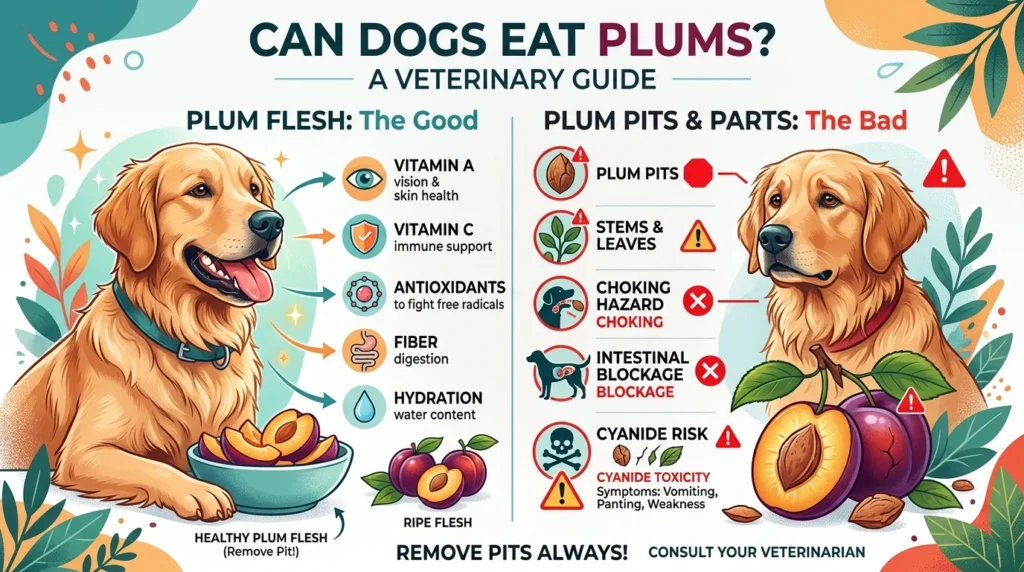
Ripe plum flesh contains antioxidants that help protect cells from damage, along with vitamins A and C that support immune health. It also provides fiber that may contribute to healthy digestion when eaten in moderation.
The fruit’s high water content may also help with hydration, making fresh plum an occasional refreshing treat during warmer months.
See Also: Can Dogs Eat Pineapple Core, Skin or Leaves? Full Safety Guide
Does Plum Have Any Risks For Dogs?
Yes, plums have several risks if they are not prepared correctly. The pit can cause choking or intestinal blockage, while the stem and leaves contain cyanogenic compounds that are harmful to dogs.
Eating too much plum flesh may also cause diarrhea or stomach upset because of its fiber and natural sugar content. Proper preparation and portion control are important.
Frequently Asked Questions
Can dogs eat plum flesh safely?
Yes, ripe plum flesh is generally safe in small amounts after removing the pit, stem, and leaves.
Are plum pits poisonous to dogs?
Yes, plum pits contain cyanogenic compounds and can also cause choking or intestinal blockages.
Can dogs eat prunes?
No, prunes are not recommended because they contain concentrated sugar and fiber that may upset a dog’s stomach.
Can puppies eat plums?
Yes, puppies can eat a tiny amount of ripe plum flesh, but it should be introduced slowly and only after removing all unsafe parts.
What should I do if my dog eats a plum pit?
Contact your veterinarian immediately because the pit may cause choking, intestinal blockage, or poisoning.
Conclusion
Dogs can eat small amounts of ripe plum flesh as an occasional treat, but only after the pit, stem, and leaves have been completely removed. The fruit contains vitamins, antioxidants, and fiber that may support overall health.
However, plum pits present serious choking and poisoning risks, making proper preparation essential. By serving only plain ripe plum flesh in moderation, you can safely let your dog enjoy this fruit while avoiding unnecessary health dangers.
See Also: Can Dogs Eat Grapes? The Dangerous Truth Every Owner Must Know


