

Can Dogs Eat Honey? Benefits, Risks & Safe Amounts For 2026
Yes, dogs can eat honey, but only in small amounts. Honey is not toxic to most healthy adult dogs, and many dogs enjoy its sweet taste. It can be given as an occasional treat or mixed into homemade dog-safe snacks. However, honey is high in natural sugar, so it should never become a daily part of your dog’s diet.
Too much honey can cause weight gain, stomach upset, and dental problems. Puppies, diabetic dogs, overweight dogs, and dogs with weak immune systems should avoid honey unless a vet says it is safe. If your dog is trying honey for the first time, start with a very tiny amount and watch for vomiting, diarrhea, itching, or unusual behavior.
Benefits Of Honey For Dogs
Honey may offer some small benefits for dogs when used carefully. It contains natural sugars, antioxidants, and tiny amounts of vitamins and minerals. Some dog owners use a small amount of honey to add flavor to homemade treats or to encourage a picky dog to eat something safe and healthy.
Honey may also help soothe a mildly irritated throat because of its thick texture. However, it is important to understand that honey is not a medicine. It should not be used to replace proper vet care. If your dog has coughing, allergies, wounds, skin problems, or stomach issues, speak with your vet before using honey.
Can Dogs Eat Honey Nut Cheerios?
Dogs can eat a few Honey Nut Cheerios, but they are not a healthy treat choice. Honey Nut Cheerios are made for humans and contain added sugar, processed grains, and flavoring. A few pieces are unlikely to harm a healthy adult dog, but they should not be fed regularly.
If your dog eats a small amount by accident, there is usually no need to panic. Just watch for stomach upset, especially if your dog has a sensitive stomach. For training or snacking, plain dog treats, small apple slices, carrot pieces, or vet-approved snacks are much better options than sugary cereal.
Can Dogs Eat Raw Honey?
Healthy adult dogs can eat a small amount of raw honey, but raw honey is not safe for every dog. Raw honey is less processed, which means it may contain more natural compounds, but it can also contain spores or bacteria that may be risky for puppies or dogs with weak immune systems.
Do not give raw honey to puppies under one year old, diabetic dogs, obese dogs, or dogs with immune-related health problems. If your dog is healthy and adult, you can offer a very small amount occasionally. Start slowly and stop feeding it if your dog shows vomiting, diarrhea, gas, or any allergic reaction.
Can Dogs Eat Honey Everyday?
Dogs should not eat honey every day. Even though honey is natural, it is still very high in sugar. Daily honey can increase your dog’s calorie intake and may lead to weight gain, tooth problems, or blood sugar concerns over time. Dogs do not need honey as part of a balanced diet.
Honey is better used as a rare treat, not a daily supplement. If your dog already gets treats, fruit, peanut butter, or table scraps, adding honey every day can quickly become too much sugar. For daily rewards, choose low-calorie dog-safe snacks instead of sweet foods.
See Also: Can Dogs Eat Bananas? Everything You Need to Know Before Feeding
Can Dogs Eat Honey Roasted Peanuts?
Honey roasted peanuts are not recommended for dogs. Plain unsalted peanuts can sometimes be safe in very small amounts, but honey roasted peanuts usually contain sugar, salt, oil, and extra flavoring. These ingredients can be hard on your dog’s stomach and are not suitable for regular feeding.
The added salt can make dogs thirsty and may be risky if eaten in large amounts. The sugar and fat can also contribute to weight gain and digestive upset. If your dog eats one or two by accident, monitor them. But as a treat, honey roasted peanuts should be avoided.
Can Dogs Eat Honey Ham?
Dogs should not eat honey ham. Ham is processed, salty, and often high in fat. Honey-glazed ham also adds extra sugar, making it an unhealthy choice for dogs. Even a small amount can cause stomach upset in sensitive dogs, especially if the ham contains spices or seasoning.
Feeding ham regularly can increase the risk of obesity and digestive problems. Fatty meats may also trigger pancreatitis in some dogs, which can be serious. If your dog eats a tiny piece accidentally, watch for vomiting, diarrhea, or discomfort. It is best to keep honey ham away from dogs.
Can Dogs Eat Honey Buns?
No, honey buns are not a good food for dogs. Honey buns contain sugar, refined flour, fat, oils, and sometimes artificial ingredients. They are made for humans, not pets. A small bite may not poison your dog, but it can still upset their stomach or add unhealthy calories.
Sweet bakery items can also encourage bad eating habits. Dogs that regularly eat sugary foods may gain weight and develop dental problems. If your dog steals part of a honey bun, monitor them for vomiting, diarrhea, or tiredness. Do not offer honey buns as a treat.
Can Dogs Eat Manuka Honey?
Healthy adult dogs can have a very small amount of Manuka honey, but it should still be used carefully. Manuka honey is often known for its special properties, but when dogs eat it, it is still mainly sugar. That means portion control is very important.
Some vets use medical-grade honey for wound care, but that is different from feeding store-bought Manuka honey. Do not put regular honey on wounds without vet advice. If you want to give Manuka honey by mouth, only give a tiny amount and avoid it for puppies, diabetic dogs, and overweight dogs.
Can Dogs Eat Honey Wheat Bread?
Dogs can eat a small piece of honey wheat bread if it does not contain toxic ingredients. However, bread is not very useful for dogs nutritionally. It mostly adds carbohydrates and calories without giving many health benefits. Honey wheat bread may also contain added sugar.
Before giving any bread, check the ingredients carefully. Avoid bread with raisins, chocolate, xylitol, garlic, onion, or heavy seeds. Dogs with wheat allergies, sensitive stomachs, or weight problems should avoid it. A small plain piece once in a while is usually fine, but it should not become a regular snack.
Can Dogs Eat Honeydew?
Yes, dogs can eat honeydew in moderation. Honeydew melon is not toxic to dogs and can be a refreshing fruit treat. It contains water, natural sugar, and some nutrients. Before feeding it, remove the rind and seeds, then cut the fruit into small bite-sized pieces.
Honeydew should only be offered occasionally because it still contains sugar. Too much can cause loose stool, gas, or stomach upset. It is also not ideal for diabetic or overweight dogs. If your dog enjoys fruit, honeydew can be a safe treat when served plain and in small amounts.
Can Dogs Eat Honey Graham Crackers?
Dogs can eat a very small piece of honey graham cracker, but it is not a healthy choice. Graham crackers usually contain sugar, flour, and processed ingredients. They are not toxic in tiny amounts, but they do not provide real nutrition for dogs.
If your dog eats one small piece, it will usually be okay. However, feeding graham crackers often can add extra sugar and calories to your dog’s diet. This may lead to weight gain or dental issues. For a crunchy snack, choose dog biscuits, carrot sticks, or vet-approved treats instead.
Can Dogs Eat Honey Cheerios?
Dogs can eat a few Honey Cheerios, but they should not be a regular snack. Honey-flavored cereals usually contain added sugar and processed grains. A few pieces may be safe for a healthy adult dog, but they are not the best treat option.
If you want to use cereal as a training reward, use only a tiny amount and avoid making it a habit. Dogs do better with treats made for their nutritional needs. Avoid giving cereal with milk, because many dogs do not digest dairy well and may get diarrhea or gas.
Can Dogs Eat Honey Mustard?
No, dogs should not eat honey mustard. Mustard can irritate a dog’s stomach, and honey mustard sauces often contain salt, vinegar, spices, preservatives, and other ingredients that are not suitable for dogs. The sweet honey flavor does not make it safe.
Honey mustard is often served with fried chicken, sandwiches, or processed meats, which are also not healthy for dogs. If your dog licks a tiny amount, monitor them for stomach upset. But as a rule, keep honey mustard and all flavored sauces away from your dog.
Can Dogs Eat Honey Crisp Apples?
Yes, dogs can eat Honeycrisp apples in small amounts. Apples are a crunchy, low-fat treat that many dogs enjoy. They contain fiber and natural sweetness. Before feeding, always remove the core, seeds, and stem because apple seeds are not safe for dogs in larger amounts.
Cut the apple into thin slices or small cubes to prevent choking. Do not add honey, caramel, sugar, or peanut butter unless you know the ingredients are dog-safe. Honeycrisp apples can be a better treat than sugary snacks, but they should still be given in moderation.
Can Dogs Eat Honey Safely?
Dogs can eat honey safely when it is given in small amounts and only to healthy adult dogs. The safest way is to offer a tiny lick first and wait to see how your dog reacts. If there is no vomiting, diarrhea, itching, or discomfort, honey may be okay occasionally.
Honey is not safe for all dogs. Puppies, diabetic dogs, overweight dogs, and dogs with weak immune systems should not have honey unless your vet approves it. Always use plain honey only. Avoid honey mixed with sauces, baked goods, processed meats, or sweet human snacks.
Can Dogs Eat Honey Sausages?
No, honey sausages are not a good food for dogs. Sausages are usually high in salt, fat, spices, and preservatives. Some may also contain onion or garlic powder, which can be harmful to dogs. The honey flavor adds more sugar and does not make sausages safe.
Processed meats can upset your dog’s stomach and may lead to vomiting, diarrhea, or pancreatitis in sensitive dogs. If your dog eats a small piece by accident, watch them carefully. For safety, avoid giving dogs honey sausages, breakfast sausages, hot dogs, or flavored meats.
See Also: Can Dogs Eat Onions? Toxicity, Symptoms & Safety Guide 2026
Can Dogs Eat Honey Soy?
No, dogs should avoid honey soy foods and sauces. Honey soy sauce or marinades usually contain a lot of sodium, sugar, garlic, onion, spices, or other flavorings. These ingredients can be harmful or irritating to dogs, especially in larger amounts.
Honey soy chicken, wings, noodles, or stir-fry should not be shared with dogs. Even if the meat itself looks plain, the sauce can be the problem. If your dog eats honey soy food, watch for vomiting, diarrhea, extreme thirst, weakness, or unusual behavior, and contact your vet if needed.
Can Dogs Eat Honeydew Fruit?
Yes, dogs can eat honeydew fruit in small amounts. Honeydew is soft, juicy, and naturally sweet. It can be a nice summer treat for dogs when served correctly. Always remove the hard rind and seeds before giving it to your dog.
Cut honeydew into small pieces to reduce choking risk. Do not add sugar, syrup, cream, or honey on top. Because honeydew contains natural sugar, it should be limited for overweight dogs and avoided for diabetic dogs unless a vet approves it. Feed it as an occasional treat only.
Can Dogs Have Honey?
Yes, dogs can have honey, but it should be given carefully. A small amount of plain honey is usually safe for healthy adult dogs. It can be used as a rare treat or added to homemade dog-safe recipes in tiny portions.
Honey should never replace a balanced dog diet. It is also not suitable for every dog. Puppies, diabetic dogs, overweight dogs, and immune-compromised dogs should avoid it. If your dog has any health condition, ask your vet before feeding honey. Always keep portions small and occasional.
Is Honey Good for Dogs?
Honey can be good for dogs only in very limited ways. It may offer small amounts of antioxidants and natural energy. Some owners use honey to make dog-safe treats more appealing or to soothe a mild throat irritation.
However, honey is not necessary for your dog’s health. A complete dog food already gives your pet the nutrition they need. Honey should be seen as a sweet extra, not a health supplement. Too much can cause more harm than good because of its sugar content.
Is Honey Bad for Dogs?
Honey can be bad for dogs if they eat too much or if they have certain health conditions. Since honey is high in sugar, it can lead to weight gain, dental problems, and blood sugar concerns. It may also cause diarrhea or vomiting in some dogs.
Honey is especially risky for puppies, diabetic dogs, obese dogs, and dogs with weak immune systems. These dogs should not eat honey unless a vet clearly says it is safe. For healthy adult dogs, small occasional amounts are usually the safest approach.
How Much Honey Can Dogs Safely Eat?
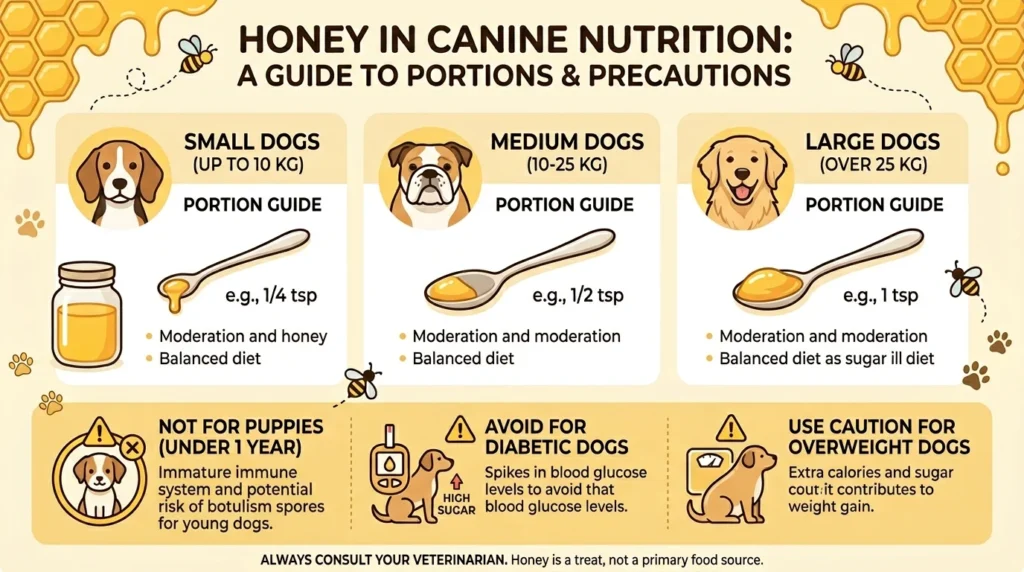
| Dog Size | Safe Honey Amount | Feeding Frequency |
|---|---|---|
| Extra-small dogs | A few drops | Occasionally |
| Small dogs | ¼ teaspoon | Occasionally |
| Medium dogs | ½ teaspoon | Occasionally |
| Large dogs | 1 teaspoon | Occasionally |
| Extra-large dogs | Up to 1 tablespoon | Rarely |
These amounts are only general guidance for healthy adult dogs. If your dog has diabetes, obesity, stomach problems, allergies, or any medical issue, ask your vet before feeding honey.
Honey should not be given every day. Start with less than the suggested amount and see how your dog reacts. If your dog gets diarrhea, vomiting, gas, or itching, stop feeding honey.
See Also: Can Dogs Eat Cinnamon? Safety, Risks & Feeding Guide 2026
How To Safely Feed Honey to Dogs
The safest way to feed honey is to start small. Give your dog a tiny lick of plain honey and wait to see if there is any reaction. If your dog handles it well, you can offer a small amount occasionally as a treat.
Do not mix honey with unsafe foods like chocolate, xylitol peanut butter, honey mustard, ham, sausages, or baked sweets. You can mix a tiny amount into homemade dog biscuits or plain dog-safe treats. Always keep honey portions small because it is high in sugar.
Can Honey Be Used to Treat Wounds?
Honey may be used in veterinary wound care, but only under proper guidance. Vets sometimes use medical-grade honey because it is specially prepared and sterilized. This is different from regular kitchen honey or raw honey bought from a store.
Do not put normal honey on your dog’s wound without asking a vet. Your dog may lick it off, spread bacteria, or make the wound worse. Deep wounds, burns, infected areas, and surgical cuts need professional treatment. Honey should not replace proper wound care.
Can Honey Be Used to Treat Allergies?
Some people believe honey may help with allergies, but there is not strong proof that it works for dogs. Dog allergies can come from many causes, including pollen, dust, food, fleas, mold, or skin infections. Honey will not fix most of these problems.
If your dog is scratching, sneezing, licking paws, or getting red skin, it is better to find the real cause. A vet can help identify whether your dog has food allergies, environmental allergies, or another skin issue. Honey should not be used as the main allergy treatment.
Can Honey Be Used to Treat Kennel Cough?
Honey may help soothe a mild irritated throat, but it does not cure kennel cough. Kennel cough is a contagious respiratory condition, and some dogs may need vet care depending on their symptoms. Honey can only provide temporary comfort in some cases.
If your dog has a cough that lasts more than a few days, sounds harsh, or comes with fever, tiredness, breathing trouble, or loss of appetite, contact your vet. Do not depend on honey alone. Sick puppies, senior dogs, and weak dogs need extra care.
Can Honey Help With Gastrointestinal Issues?
Honey is sometimes used as a gentle natural food, but it is not a proper treatment for digestive problems. In fact, too much honey can make stomach issues worse because it is high in sugar. Some dogs may get diarrhea, gas, or vomiting after eating honey.
If your dog has mild stomach sensitivity, it is better to feed a vet-approved bland diet instead of sweet foods. If your dog has repeated vomiting, diarrhea, blood in stool, bloating, or severe pain, contact a vet. Honey should not be used to cover serious symptoms.
Can Honey Help With Skin Problems?
Eating honey will not usually fix dog skin problems. Skin issues in dogs are often caused by allergies, fleas, yeast, bacteria, dry skin, or food sensitivities. Honey may have some use in medical wound care, but that is different from feeding honey.
If your dog is scratching, licking paws, losing fur, or has red patches, you should look for the real cause. A vet may recommend flea control, allergy testing, medicated shampoo, diet changes, or medicine. Honey should not be used as the main solution for skin problems.
Can Honey Help For Weight Control?
No, honey does not help dogs with weight control. Honey is high in sugar and calories, so it can make weight gain worse. If your dog is overweight, honey should be avoided or given only with vet approval.
For weight control, focus on measured meals, healthy low-calorie treats, regular exercise, and a balanced diet. Carrot pieces, green beans, or vet-approved weight-control treats are usually better than sweet foods. Honey should never be used as a weight-loss aid for dogs.
Frequently Asked Questions
Can puppies eat honey?
No, puppies should not eat honey. Their immune systems are still developing, and raw or unpasteurized honey may contain spores that can be risky for them.
Can diabetic dogs eat honey?
No, diabetic dogs should avoid honey unless a vet specifically approves it. Honey can affect blood sugar because it is high in natural sugar.
What happens if my dog eats too much honey?
Too much honey may cause vomiting, diarrhea, gas, stomach pain, hyperactivity, or weight gain over time. Monitor your dog and call your vet if symptoms appear.
Can dogs eat honey with peanut butter?
Dogs can eat honey with peanut butter only if the peanut butter is xylitol-free, unsalted, and given in a tiny amount. Avoid giving this often.
Is raw honey better than regular honey for dogs?
Raw honey may contain more natural compounds, but it also has more risk for puppies and immune-sensitive dogs. For safety, ask your vet first.
Conclusion
Dogs can eat honey, but only in small amounts. It is safest for healthy adult dogs and should be used as an occasional treat, not a daily food. Honey is high in sugar, so too much can cause stomach upset, weight gain, and dental problems.
Avoid honey for puppies, diabetic dogs, overweight dogs, and dogs with weak immune systems unless your vet approves it. For more helpful dog food safety guides, visit Dogs Bread and learn which human foods are safe before sharing them with your dog.
See Also: Can Dogs Eat Bread? Safe Types, Risks & Feeding Guide For 2026


