Can Dogs Eat Peanuts and Peanut Butter? Full Safety Guide 2026
You crack open a peanut shell, the familiar nutty smell fills the room, and your dog looks up with that universal hopeful expression. Peanuts are one of America’s most beloved snacks, and dogs seem just as interested in them as their owners. But can dogs eat peanuts? Are they safe? What about salted peanuts, honey roasted peanuts, or peanuts in the shell?
Peanuts occupy an interesting position in dog nutrition — not as simple as “always safe” and not as alarming as “always dangerous,” but a food that requires understanding of several important nuances. This complete guide covers every question dog owners ask about peanuts and dogs — every form, every preparation, every variety, and everything you need to know to make safe decisions.
Can Dogs Eat Peanuts?
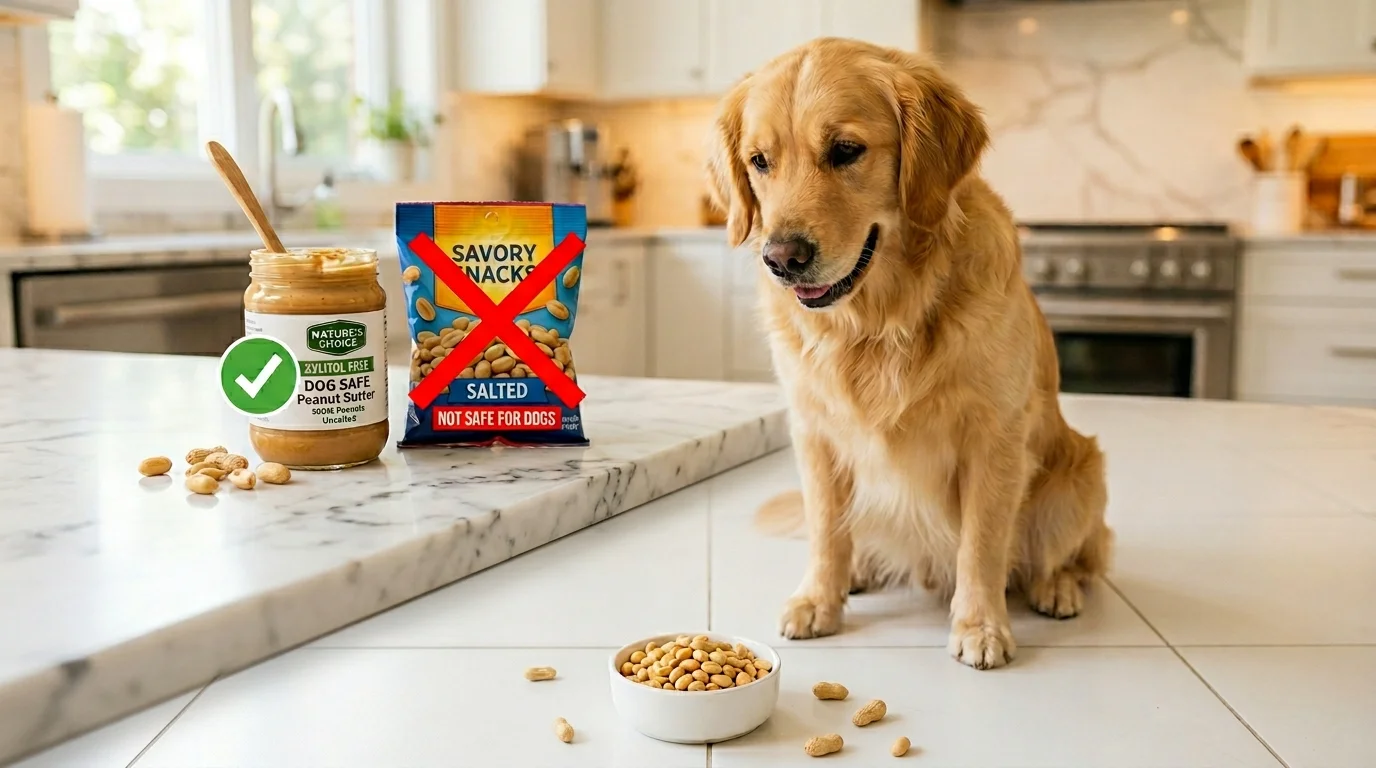
Yes — plain, unsalted peanuts are safe for most healthy dogs in small amounts. Peanuts provide protein, healthy fats, Vitamin B6, niacin, and Vitamin E — all genuinely beneficial nutrients for dogs.
However, peanuts come with important conditions. They are high in fat, which creates pancreatitis risk with regular large-amount feeding. Many peanut products contain salt, artificial flavoring, xylitol, or other additives that make them unsafe. And some individual dogs are allergic to peanuts — just as some humans are.
The safest form: plain, dry roasted or raw, unsalted peanuts with shells removed — in small amounts as an occasional treat. Peanut butter (xylitol-free) is similarly safe in small amounts.
Are Peanuts Good For Dogs?
Yes — plain peanuts offer genuine nutritional value for dogs. They are not empty calories. Peanuts are an excellent source of protein, containing all essential amino acids in meaningful amounts. They provide Vitamin B6 for brain and metabolic health, niacin for energy metabolism and skin health, Vitamin E as a fat-soluble antioxidant, and folate for cellular health.
Peanuts also contain monounsaturated fats — the same heart-healthy fats found in olive oil — and resveratrol, a polyphenol antioxidant studied for cardiovascular and anti-aging benefits. The protein and fat combination in peanuts makes them satisfying and slow-digesting, which can help dogs feel full longer.
The challenge is moderation — peanuts’ high fat content means they deliver significant calories in a small volume, requiring careful portion control to prevent weight gain and pancreatitis risk.
Are Peanuts Bad for Dogs?
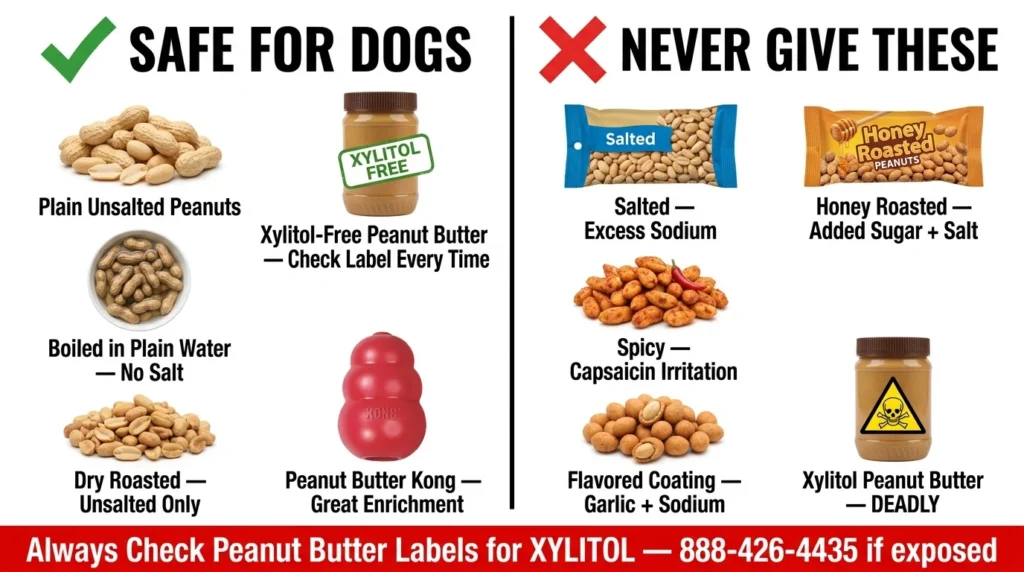
Plain unsalted peanuts are not bad for dogs in appropriate small amounts. However, peanuts become problematic in several specific and common situations.
High fat content: Peanuts are approximately 49% fat — one of the highest fat concentrations of any common snack food. Regular feeding of large amounts creates real pancreatitis risk, particularly in dogs predisposed to this painful condition.
Salt: Salted peanuts add excess sodium not appropriate for dogs. High sodium causes thirst, increased urination, and in significant amounts, sodium toxicity.
Xylitol: Some peanut products — particularly certain peanut butters — contain xylitol, an artificial sweetener that is acutely toxic to dogs. Always check peanut butter labels.
Artificial flavoring: Honey roasted, spicy, flavored, and seasoned peanut varieties contain additives not appropriate for dogs.
Shells: Peanut shells are a choking hazard and difficult to digest. Always remove before giving peanuts to dogs.
Obesity risk: The high caloric density of peanuts makes them particularly problematic for overweight dogs.
Are Peanuts Safe for Dogs?
Yes — plain, unsalted peanuts with shells removed are safe for most healthy dogs when given in appropriate amounts. The AKC confirms that peanuts are not toxic to dogs (unlike macadamia nuts, which are seriously toxic).
Safety depends entirely on preparation and amount. The safety checklist: shells removed, no salt, no honey roasting, no flavoring, no xylitol, no spicy coating, small portions, and not daily feeding. Following these rules makes peanuts a safe occasional treat.
For dogs with existing pancreatitis, obesity, kidney disease, or peanut allergies — peanuts are not safe without explicit veterinary guidance.
Can Dogs Eat Boiled Peanuts?
Yes — plain boiled peanuts (boiled only in water with no salt) are safe for dogs. Boiling actually makes peanuts slightly softer and easier to digest than raw or roasted versions. The cooking process also changes the antioxidant profile — boiling increases some antioxidant compounds while reducing others.
The critical preparation rule: boiled peanuts must be made with no added salt. Commercially available boiled peanuts — particularly in the American South where they are popular — are typically heavily salted, often containing 500mg or more of sodium per serving. These are not appropriate for dogs.
If you want to give your dog boiled peanuts, cook plain peanuts in plain water with no salt, cool completely, remove shells, and give in small amounts.
Can Dogs Eat Peanut Butter?
Yes — xylitol-free peanut butter in small amounts is safe for dogs and is one of the most popular dog treats available. Peanut butter’s thick, sticky texture makes it excellent for hiding medication, stuffing Kong toys, spreading on lick mats, and as a high-value training reward that dogs absolutely love.
The xylitol check is absolutely non-negotiable. Many peanut butter brands — particularly “natural,” “light,” “reduced sugar,” and “no sugar added” varieties — contain xylitol as a sweetener. Xylitol is acutely toxic to dogs and causes rapid hypoglycemia and liver failure even in small amounts. Always read the full ingredient list every time you buy peanut butter, even brands you have used before since formulations change.
Look for peanut butter with minimal ingredients: peanuts and optionally salt. Avoid added sugar, corn syrup, palm oil, or artificial sweeteners. Low-sodium or no-salt-added peanut butter is always preferable for dogs.
Can Dogs Eat Honey Roasted Peanuts?
No — honey roasted peanuts are not appropriate for dogs. Honey roasting adds sugar coating, salt, and sometimes other flavorings to peanuts that make them unsuitable for canine consumption.
The sugar coating in honey roasted peanuts contributes unnecessary refined sugar to a dog’s diet — causing blood sugar spikes and contributing to dental decay and weight gain over time. The added salt increases sodium load beyond what is appropriate for dogs as a regular treat. And some honey roasted peanut products contain additional artificial flavoring compounds.
If your dog grabbed a single honey roasted peanut from the floor, this is unlikely to cause a serious emergency. But honey roasted peanuts should never be intentionally given to dogs. Plain unsalted peanuts are always the right choice.
See Also: Can Dogs Eat Raspberries? Antioxidants, Portions & Safety Tips 2026
Can Dogs Eat Peanuts in the Shell?
No — peanuts in the shell (whole, unshelled peanuts) should not be given to dogs. Peanut shells present two independent concerns.
First, shells are a choking hazard. Dogs tend to eat enthusiastically without careful consideration of texture, and a peanut shell can become lodged in the throat. Second, shells are tough, fibrous, and indigestible. Swallowed shell pieces can cause gastrointestinal irritation and, in sufficient quantity, contribute to digestive blockage.
The shell’s rough, fibrous texture also provides no nutritional value and no benefit for dogs. Always shell peanuts completely before giving them to your dog. The extra effort of shelling takes seconds and eliminates unnecessary risk.
Can Dogs Eat Salted Peanuts?
No — salted peanuts are not appropriate for dogs. Salt (sodium chloride) is necessary for health in trace amounts, but the sodium levels in commercially salted peanuts are far too high for dogs as a regular treat.
A single serving of salted peanuts (about one ounce or 28 grams) can contain 150 to 250mg of sodium. For a small dog that needs perhaps only 100mg of sodium per day total, a serving of salted peanuts delivers well over their entire daily sodium budget in one snack. Regular excess sodium causes cardiovascular and kidney stress, increased thirst, and urination — and in large amounts, sodium toxicity.
Always choose unsalted peanuts for any sharing with your dog, and check labels on all peanut products to confirm sodium content.
Can Dogs Eat Unsalted Peanuts?
Yes — unsalted peanuts are the correct form of peanut for dogs. With the salt removed from the equation, plain unsalted peanuts address the main sodium concern while retaining all the protein, healthy fats, vitamins, and minerals that make peanuts nutritionally valuable.
Look for peanuts labeled “unsalted” or “no salt added.” These are the safest commercial peanut product for dogs. Dry roasted unsalted and raw unsalted are both appropriate choices.
Portion control remains important even with unsalted peanuts because the high fat content creates caloric and pancreatitis concerns regardless of sodium level. Unsalted is the right type, but “unsalted” does not mean “unlimited.”
Can Dogs Eat Raw Peanuts?
Yes — plain, unsalted raw peanuts are safe for dogs. Raw peanuts (unroasted, unprocessed peanuts) are actually slightly different in nutritional profile from roasted peanuts — they tend to retain more of certain heat-sensitive compounds including some antioxidants.
Raw peanuts are firmer and denser than roasted, which means they may be harder for some dogs to chew, particularly small dogs or older dogs with dental concerns. For these dogs, dry roasted (which is slightly softer) or peanut butter may be easier options.
One practical consideration with raw peanuts: ensure they are fully dried and fresh-smelling. Damp or improperly stored raw peanuts can develop aflatoxin mold — a toxic compound produced by Aspergillus molds. Choose properly stored, commercially packaged raw peanuts.
Can Dogs Eat Dry Roasted Peanuts?
Yes — plain, unsalted dry roasted peanuts are one of the best peanut forms for dogs. Dry roasting uses heat without oil, making dry roasted peanuts lower in fat than oil-roasted varieties. The roasting process also creates a slightly softer, more digestible texture than raw peanuts.
The key requirement: unsalted. Most commercially available dry roasted peanuts are salted. Look specifically for “dry roasted, unsalted” on the label. Some major brands sell unsalted dry roasted varieties — these are the ideal commercial peanut for dogs.
Dry roasted peanuts may have slightly reduced Vitamin E content compared to raw due to heat exposure, but the protein, niacin, and healthy fat content remain essentially unchanged.
Can Dogs Eat Japanese Peanuts?
No — Japanese peanuts (also known as Japanese-style peanuts or maní japonés) are not appropriate for dogs. Japanese peanuts are peanuts coated in a wheat flour-based crust and seasoned with soy sauce and various flavorings, then fried or baked until crispy.
The coating adds significant sodium (soy sauce is very high in sodium), wheat flour (not inherently harmful but adds unnecessary carbohydrates), and various flavorings that may include garlic or onion powder — both toxic to dogs. The frying or baking process also adds fat or creates a very hard, dense texture that is difficult for dogs to chew.
The only peanut forms appropriate for dogs are plain, unsalted — nothing coated, seasoned, or processed beyond simple roasting.
Can Dogs Eat Whole Peanuts?
Yes — “whole peanuts” in the context of shelled peanuts (peanuts without shells, left intact rather than chopped) are safe for dogs. Whole shelled peanuts give dogs something satisfying to chew and can be given as individual pieces for training or occasional treats.
For small dogs or dogs that eat quickly without chewing, chopping or halving whole peanuts reduces choking risk. For large dogs that chew carefully, whole shelled unsalted peanuts are fine.
“Whole peanuts in the shell” — meaning with the shell still on — are not recommended as covered in the peanuts in the shell section above.
See Also: Can Dogs Eat Mushrooms? Safe Types, Wild Dangers & Full Guide
Can Dogs Eat Shelled Peanuts?
Yes — shelled peanuts (peanuts with the shell already removed, leaving just the nut) are the correct preparation for dogs. This is the standard form most people mean when they talk about eating peanuts themselves — the nut kernels without their fibrous outer shells.
Shelled, unsalted peanuts are the safest and most practical form for sharing with dogs. They are easy to portion, no shell prep needed, and available in unsalted varieties from most grocery stores.
Can Dogs Eat Peanuts Safely?
Yes — plain, unsalted, shelled peanuts can be fed to dogs safely with the right approach.
Safe peanut feeding checklist:
- Remove shells completely — always
- Use only unsalted, unflavored varieties
- No honey roasting, no spicy coating, no flavoring
- Small amounts — high fat requires strict portion control
- Check any peanut butter for xylitol — never use xylitol-containing products
- Introduce slowly the first time — one or two peanuts
- Not daily — high fat makes frequency control important
- Dogs with pancreatitis, obesity, kidney disease, or peanut allergies — vet guidance first
- Choose dry roasted unsalted or raw unsalted for the best everyday option
Can Dogs Eat Peanuts Skin?
The thin reddish-brown papery skin on peanuts (the inner skin between the shell and the nut, also called the testa) is generally safe for dogs. This skin is soft, thin, and digestible — not the same concern as the outer hard shell.
Peanut skin actually contains beneficial compounds including resveratrol and various polyphenols with antioxidant properties. Leaving the skin on when giving peanuts to dogs is perfectly acceptable and may add minor nutritional value.
Some dogs may be sensitive to peanut skin specifically — if you notice any unusual reaction when giving skin-on peanuts, try removing it before the next serving.
Can Dogs Eat Peanuts Spicy?
No — spicy peanuts (peanuts coated in chili, jalapeño, Sriracha, cayenne, or other spicy seasonings) are not appropriate for dogs. Capsaicin — the compound that makes peppers spicy — causes significant discomfort in dogs’ mouths, throats, and digestive systems.
Dogs do not have the pleasure receptors that make spicy food enjoyable for humans. For dogs, spicy food causes only discomfort — excessive drooling, pawing at the mouth, vomiting, and digestive irritation. Spicy seasonings may also contain garlic powder or onion powder as base flavoring — both toxic to dogs.
Never give spicy, chili-flavored, Sriracha, jalapeño, or any heat-seasoned peanut variety to your dog.
Can Dogs Eat Peanuts Everyday?
Not recommended. Daily peanut feeding raises two primary concerns: fat accumulation and caloric excess.
Peanuts are approximately 49% fat. Daily feeding — even in small amounts — consistently adds a high-fat component to the diet that increases pancreatitis risk over time and contributes meaningfully to daily caloric intake. For dogs already on calorie-managed diets, daily peanuts can easily undermine weight management goals.
Peanuts a few times per week as an occasional treat is a much better approach than daily feeding. This provides the nutritional benefits and the treat enjoyment without the cumulative fat and calorie concerns. Rotating peanuts with lower-fat, lower-calorie treats (carrots, cucumber, blueberries) creates a better overall treat balance.
Can Dogs Eat Peanut Butter and Jelly?
No — peanut butter and jelly (PB&J) is not appropriate for dogs, primarily because of the jelly component. Jelly is made with large amounts of refined sugar and sometimes with artificial sweeteners including xylitol in “light” or “sugar-free” versions.
The high sugar in jelly contributes to blood sugar spikes, dental decay, and weight gain. Many jelly products also contain grape jelly — grapes and raisins are highly toxic to dogs, making grape jelly particularly dangerous.
Plain xylitol-free peanut butter in small amounts is safe. Jelly of any kind is not. Keep PB&J sandwiches away from your dog and use only plain peanut butter for any dog treat use.
Can Dogs Be Allergic to Peanut Butter?
Yes — peanut allergies in dogs do occur. Dogs can develop allergic responses to peanut proteins, just as humans can. Signs of peanut allergy in dogs include:
- Itchy skin, particularly around the face, paws, and belly
- Hives or raised bumps on the skin
- Swelling — particularly around the face or mouth
- Excessive scratching or licking
- Vomiting or diarrhea after eating peanuts or peanut butter
- Recurrent ear infections (a sign of underlying food allergy)
In severe cases, anaphylaxis is possible — sudden severe allergic reaction with difficulty breathing requiring immediate emergency veterinary care.
If you give your dog peanuts or peanut butter for the first time, start with a tiny amount (one peanut, a small lick of peanut butter) and wait 24 to 48 hours before giving more. If any reaction occurs, stop immediately and contact your veterinarian.
What Types of Dogs Should Avoid Peanuts?
While many healthy dogs can enjoy peanuts safely, specific groups should avoid them or only eat them with veterinary guidance.
Dogs with pancreatitis history: The high fat content of peanuts is a direct pancreatitis trigger. Even a small amount can trigger a recurrence in susceptible dogs. Strictly avoid.
Overweight or obese dogs: Peanuts are calorie-dense and fat-rich — directly counterproductive to weight loss goals. Choose lower-calorie treats like cucumber, carrot, or blueberries.
Dogs with kidney disease: High phosphorus and moderate sodium in peanuts may be problematic for dogs on kidney-supporting diets. Consult your vet.
Dogs with confirmed peanut allergies: Avoid all peanut products completely.
Small toy breeds: Extra caution around fat content is warranted for small breeds, where even a few peanuts represent a proportionally larger fat load. Keep amounts very small.
Diabetic dogs: The fat and caloric content of peanuts can complicate blood sugar management. Discuss with your vet before adding peanuts to a diabetic dog’s diet.
See Also: Can Dogs Eat Cherries? Pits, Toxicity & Complete Safety Guide
What Happens If Your Dog Ate Too Many Peanuts?
The response depends on how many were eaten and what type.
Plain unsalted peanuts in excess: Expect digestive upset — vomiting, diarrhea, or loose stools from the high fat content. Fat overload can also trigger pancreatitis symptoms — watch for vomiting, diarrhea, hunched posture, lethargy, and abdominal pain. Contact your vet if any pancreatitis signs appear.
Salted peanuts in excess: Monitor for signs of excess sodium — extreme thirst, increased urination, lethargy. In large amounts, sodium toxicity can develop — contact your vet for guidance on amounts that warrant examination.
Honey roasted or flavored peanuts: Digestive upset from sugar and flavorings. Monitor for vomiting, diarrhea. Usually resolves without intervention in healthy adult dogs.
Any peanut product containing xylitol: Emergency — contact your vet or ASPCA Animal Poison Control (888-426-4435) immediately. Do not wait for symptoms. Xylitol toxicity acts rapidly and early treatment dramatically improves outcomes.
How to Give Your Dog Peanuts
Practical guide to safely sharing peanuts with your dog.
Plain peanut pieces: Shell completely, choose unsalted, break into small pieces, and give as an occasional treat. 2 to 5 pieces for small dogs, 5 to 10 for large dogs.
Peanut butter Kong: Fill a Kong toy with a small amount of xylitol-free peanut butter and freeze overnight. Hours of enrichment at very low cost.
Peanut butter lick mat: Spread a thin layer of xylitol-free peanut butter on a lick mat. Great for bath time, grooming sessions, or calming anxious dogs.
Peanut butter pill wrap: Roll a pill in a small ball of peanut butter for reliable medication administration.
Peanut training treats: Break unsalted peanuts into small pieces for use as training rewards — high value, long-lasting smell.
Homemade peanut butter dog treats: Combine 1 cup oat flour, 1 egg, and 2 tablespoons xylitol-free peanut butter. Roll small balls and bake at 350°F for 12 to 15 minutes. Cool completely before serving.
Nuts Dogs Can and Cannot Eat
Since peanuts fall under the broader “nuts” category (technically peanuts are legumes, but they are nutritionally and culinarily categorized with nuts), here is a quick guide to other nuts and their safety status for dogs.
Safe in small amounts (plain, unsalted):
- Peanuts — the topic of this guide — safe in moderation
- Cashews — safe in very small amounts, unsalted only, high fat
- Chestnuts — safe cooked and plain, lower fat than most nuts
Proceed with caution (high fat, keep very minimal):
- Almonds — not toxic but hard to digest, choking risk, keep very limited
- Pistachios — technically not toxic but very high fat, often salted; avoid regular giving
- Brazil nuts — very high fat and selenium content; occasional single nut might be fine
Never give (toxic or seriously harmful):
- Macadamia nuts — severely toxic to dogs, causes weakness, tremors, fever, vomiting
- Walnuts — black walnuts in particular are toxic; English walnuts carry mold risk
- Pecans — contain juglone (toxic compound) and high fat; avoid entirely
- Hickory nuts — contain toxins, high fat, choking risk
- Almonds — while not acutely toxic, they are a choking hazard and not appropriate
Can Dogs Eat Almond Butter?
Almond butter is not acutely toxic to dogs, but it is not recommended as a regular treat and should be given with caution. Almonds (and thus almond butter) are difficult for dogs to properly digest — they lack the specific digestive enzymes to efficiently process almonds. This can cause digestive upset even from small amounts.
Almond butter is also very high in fat — even higher than peanut butter in many formulations. The pancreatitis risk from regular almond butter consumption is real.
If your dog licks a small amount of plain almond butter, this is unlikely to cause a serious emergency. But as a regular treat or Kong stuffing, peanut butter (xylitol-free) is a significantly better choice. Never choose almond butter over peanut butter for your dog.
See Also: Can Dogs Eat Peaches? Benefits, Pit Danger & Feeding Guide 2026
How Many Peanuts Can My Dog Have?
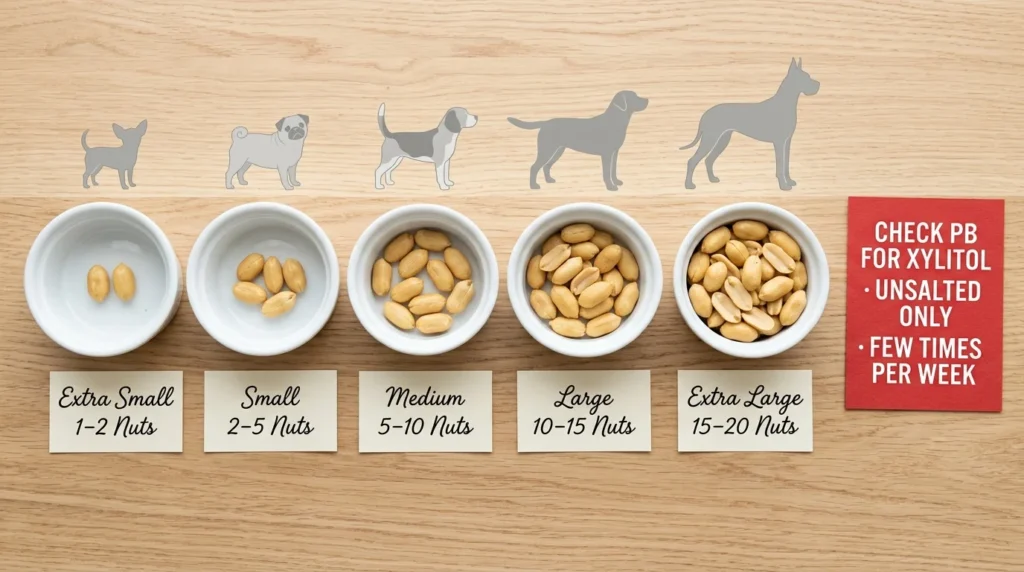
Given peanuts’ high fat and calorie content, strict portion control is essential. The 10% treat guideline applies, but peanuts specifically warrant extra conservatism given the fat-based pancreatitis risk.
How Many Peanuts Can My Dog Have? — Portion Guide by Dog Size
| Dog Size | Weight Range | Plain Unsalted Peanuts Per Day (Max) | Per Treat Session | Frequency |
|---|---|---|---|---|
| Extra Small | Under 10 lbs | 1–2 peanuts | 1–2 peanuts | 2–3 times per week |
| Small | 10–20 lbs | 2–5 peanuts | 2–3 peanuts | 2–3 times per week |
| Medium | 20–50 lbs | 5–10 peanuts | 4–6 peanuts | A few times per week |
| Large | 50–90 lbs | 10–15 peanuts | 8–10 peanuts | A few times per week |
| Extra Large | 90 lbs + | 15–20 peanuts | 10–15 peanuts | A few times per week |
Important notes on this table:
- These amounts apply ONLY to plain, unsalted, shelled peanuts or plain xylitol-free peanut butter.
- Salted, honey roasted, spicy, or flavored peanuts: zero — not appropriate.
- Peanut butter equivalents: one peanut ≈ one teaspoon of peanut butter for portion comparison.
- Dogs with pancreatitis, obesity, kidney disease, or peanut allergies: no peanuts without vet approval.
- Daily feeding is not recommended — a few times per week is better for managing fat accumulation.
- These are maximum amounts — less is always appropriate.
- Factor peanuts into the total daily treat budget alongside all other treats.
- For training sessions: use tiny pieces (quarter peanuts) to give many rewards while keeping total amount within the daily guideline.
Frequently Asked Questions
Can dogs eat peanuts?
Yes — plain, unsalted, shelled peanuts are safe for most healthy dogs in small amounts. They provide protein, healthy fats, Vitamin B6, niacin, and Vitamin E. Keep portions small due to high fat content and never give salted, flavored, or honey roasted varieties.
Are peanuts good for dogs?
Yes. Plain peanuts provide protein, healthy monounsaturated fats, Vitamin B6, niacin, Vitamin E, and folate — real nutritional benefits. High fat content means moderation is essential, but plain unsalted peanuts are a genuinely nutritious occasional treat.
Are peanuts bad for dogs?
Plain unsalted peanuts in small amounts are not bad. Salted, flavored, honey roasted, or spicy peanuts are inappropriate. Any peanut product with xylitol is dangerous. Large daily amounts create pancreatitis and weight gain risk.
Can dogs eat peanut butter?
Yes — xylitol-free peanut butter in small amounts is safe and popular as a dog treat. Always check ingredient labels for xylitol. Choose low-sodium or no-salt-added varieties. Use plain peanut butter only.
Can dogs eat peanut butter and jelly?
No. Jelly contains high refined sugar and potentially grape juice (grapes are toxic to dogs) or xylitol. Never give PB&J to dogs — use only plain xylitol-free peanut butter.
Can dogs eat salted peanuts?
No. Salted peanuts contain sodium at levels too high for dogs. Regular feeding causes cardiovascular and kidney stress. Always choose unsalted varieties for dogs.
Can dogs eat honey roasted peanuts?
No. Honey roasting adds sugar, salt, and artificial flavorings not appropriate for dogs. Use only plain unsalted peanuts.
Can dogs eat peanuts in the shell?
No. Peanut shells are a choking hazard and indigestible. Always remove shells completely before giving any peanut to your dog.
Can dogs eat raw peanuts?
Yes — plain, unsalted raw peanuts are safe for dogs. Ensure they are properly dried and stored to avoid aflatoxin mold risk. Firmer texture than roasted — suitable for dogs that chew carefully.
Can dogs eat dry roasted peanuts?
Yes — plain, unsalted dry roasted peanuts are one of the best peanut forms for dogs. Lower in fat than oil-roasted, softer texture than raw. Always confirm “unsalted” on the label.
Can dogs be allergic to peanut butter?
Yes. Signs include itching, hives, facial swelling, vomiting, diarrhea, or difficulty breathing. Introduce slowly and watch for 24 to 48 hours. Seek emergency care for breathing difficulty.
What types of dogs should avoid peanuts?
Dogs with pancreatitis history, obesity, kidney disease, confirmed peanut allergies, diabetes, or very small toy breeds should avoid peanuts or have them only with explicit veterinary guidance.
Can dogs eat almond butter?
Not recommended. Almonds are difficult for dogs to digest, almond butter is very high in fat, and peanut butter is always a better option. Not acutely toxic but not appropriate for regular use.
What nuts are toxic to dogs?
Macadamia nuts are seriously toxic. Black walnuts are toxic. Pecans contain toxins. Hickory nuts contain toxins. Never give these nuts to dogs. Plain unsalted peanuts and cashews are the only nuts considered relatively safe in small amounts.
What happens if my dog ate too many peanuts?
Expect digestive upset (vomiting, diarrhea) from high fat. Watch for pancreatitis signs. For any product containing xylitol — contact your vet immediately. For salted peanuts in large amounts — monitor for sodium-related symptoms and contact vet.
How many peanuts can a small dog eat?
See the portion table above. Small dogs (10–20 lbs): 2–5 peanuts maximum per day, given 2–3 times per week only. Plain and unsalted.
Conclusion
Peanuts are one of those human foods where the answer is satisfyingly straightforward once you understand the key rules. Plain, unsalted, shelled peanuts are safe for most healthy dogs and provide real nutritional value — protein, healthy fats, B vitamins, and Vitamin E. Peanut butter (xylitol-free) is one of the most beloved and practically useful dog treats available.
The complete summary of everything you need to know:
Safe for dogs:
- Plain, unsalted, shelled peanuts — raw or dry roasted
- Xylitol-free peanut butter in small amounts
- Boiled peanuts cooked in plain water with no salt
- Plain unsalted whole peanuts (shelled)
Never give:
- Salted peanuts — excess sodium
- Honey roasted peanuts — added sugar and salt
- Spicy or flavored peanuts — digestive irritation, possible toxic seasonings
- Peanuts in the shell — choking hazard
- Peanut butter with xylitol — acute toxicity, potentially fatal
- Peanut butter and jelly — high sugar, possible grape content
- Japanese peanuts — soy sauce coating, sodium, and flavorings
- Macadamia nuts — seriously toxic to dogs


