

Can Dogs Eat Spicy Food? Risks & Safety Guide
Dogs should not eat spicy food. Spicy foods can irritate a dog’s mouth, stomach, and digestive system, causing discomfort, vomiting, diarrhea, excessive thirst, or abdominal pain. Dogs also do not need spicy seasonings to make their food more enjoyable, so there is little nutritional benefit to taking this risk.
The problem is not always the spice itself. Human spicy meals often contain ingredients such as onions, garlic, excessive salt, fatty oils, sauces, and other seasonings that can be harmful to dogs. For this reason, it is best to keep spicy human foods away from your dog’s bowl and offer plain, dog-safe foods instead.
Is Spicy Food Safe for Dogs?
Spicy food is generally not considered safe or appropriate for dogs. Ingredients that create a hot or burning sensation, such as chili peppers and hot sauces, can cause significant gastrointestinal irritation even though dogs react differently to spicy foods than humans do.
A dog may show signs of discomfort after eating spicy food, including licking their lips, drinking more water, drooling, vomiting, diarrhea, or refusing food. The severity depends on the amount eaten, the ingredients involved, and the individual dog’s sensitivity.
Why Can’t Dogs Eat Spicy Food?
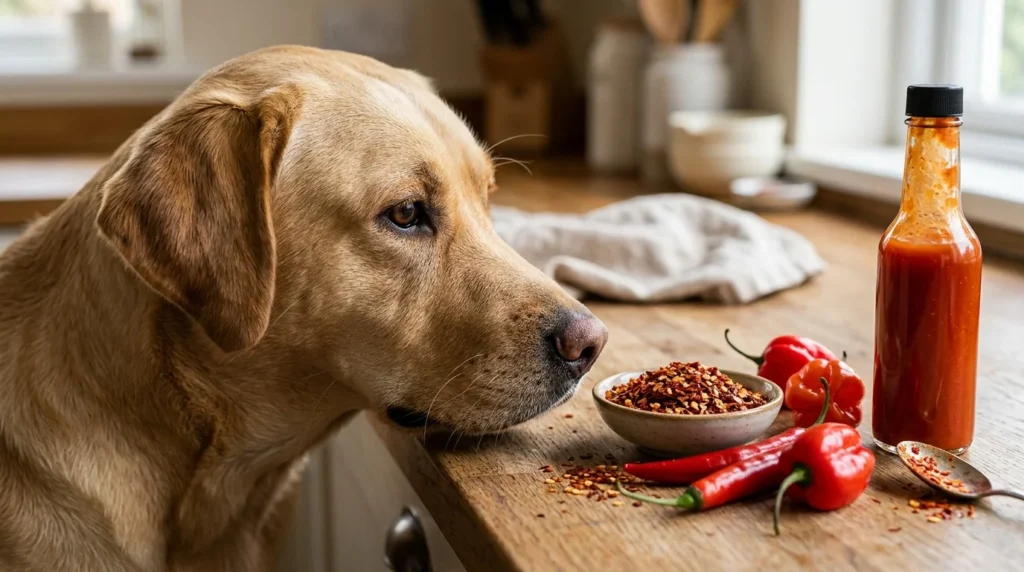
Dogs have no nutritional need for spicy food. Hot peppers contain compounds such as capsaicin that produce the burning sensation associated with spicy foods. Eating these foods can irritate a dog’s digestive tract and may lead to stomach discomfort or diarrhea.
Spicy meals can also contain several ingredients at once, making it difficult to know which ingredient caused a reaction. A dish that seems like a simple spicy meal to a person may contain onions, garlic, high levels of sodium, rich fats, or other ingredients that are unsuitable for dogs.
Can Dogs Eat Chili Peppers?
Dogs should not be intentionally fed chili peppers. Chili peppers contain capsaicin, which can irritate the mouth and digestive tract and may cause drooling, stomach discomfort, vomiting, or diarrhea.
If a dog accidentally eats a small piece of a mild chili pepper, they may experience temporary irritation or digestive upset. However, large amounts or very hot peppers can cause more significant discomfort, so spicy peppers should be kept out of reach.
Can Dogs Eat Jalapeños?
Jalapeños are not a suitable treat for dogs. They contain capsaicin and can cause a burning sensation and gastrointestinal irritation. Eating jalapeños may lead to excessive licking, drooling, vomiting, diarrhea, or abdominal discomfort.
Jalapeños are also frequently served with cheese, salt, oils, sauces, or other rich ingredients. These additions can create further digestive problems. It is safer to give your dog a plain vegetable that is known to be suitable for dogs rather than a spicy pepper.
Can Dogs Eat Hot Peppers?
Dogs should avoid hot peppers such as habaneros, serranos, cayenne peppers, and other very spicy varieties. The higher concentration of capsaicin can make these peppers particularly irritating to a dog’s mouth and digestive system.
If your dog eats a hot pepper, provide access to fresh water and monitor them closely. Do not deliberately give milk, oils, or other home remedies to counteract the spice unless your veterinarian recommends it.
Can Dogs Eat Hot Sauce?
Dogs should not eat hot sauce. Hot sauces can contain chili peppers, vinegar, salt, spices, and other ingredients that may irritate the digestive system. Some commercial sauces also contain onion or garlic.
Even a small amount can cause stomach upset in a sensitive dog. Keep hot sauce away from your dog’s food and avoid allowing them to lick plates, utensils, or containers that have been covered with spicy sauce.
Can Dogs Eat Chili Powder?
Chili powder should not be added to dog food. It can contain ground chili peppers along with other spices, and the combination may irritate a dog’s mouth and digestive tract.
Commercial chili powder blends can also contain salt, garlic powder, onion powder, or other seasonings. Instead of seasoning your dog’s food with human spices, use a complete and balanced dog food or veterinarian-approved food topper.
Can Dogs Eat Black Pepper?
Black pepper is not generally considered a toxic food for dogs in tiny amounts, but it is not something you should intentionally feed as a treat. Larger amounts can irritate the nose, mouth, and stomach and may cause digestive discomfort.
Black pepper is also commonly combined with salt and other seasonings in human meals. For dogs, plain food is usually the better choice. There is no nutritional reason to add black pepper to a dog’s regular meal.
Can Dogs Eat Red Pepper Flakes?
Red pepper flakes should not be given to dogs. They are concentrated pieces of hot pepper and can contain enough capsaicin to cause mouth and digestive irritation.
Accidental ingestion may result in drooling, excessive licking, vomiting, diarrhea, or discomfort. Keep spice containers away from dogs, especially curious pets that may knock containers off kitchen counters.
Can Dogs Eat Spicy Chicken?
Spicy chicken is not a good food for dogs. Human spicy chicken recipes often contain chili, pepper, salt, oils, sauces, onion, garlic, and other ingredients that can be unsuitable for dogs.
Plain, thoroughly cooked chicken without bones, seasoning, or rich sauces can be a safer occasional treat for many dogs. Remove the skin and visible excess fat when appropriate, and never give cooked chicken bones.
Can Dogs Eat Spicy Rice?
Spicy rice dishes should not be given to dogs. Rice itself can be suitable for many dogs when prepared plainly, but spicy rice recipes may contain chili, onion, garlic, excessive salt, oils, and other seasonings.
If you want to share rice with your dog, plain cooked rice is a much safer option. Keep the portion appropriate and make sure it is not replacing the complete and balanced food your dog normally eats.
Can Dogs Eat Spicy Sausage?
Spicy sausage is not recommended for dogs. Sausage can be high in fat and sodium, while spicy varieties may contain chili peppers, garlic, onion, and numerous seasonings.
High-fat human foods can also be difficult for some dogs to digest. Instead of giving spicy sausage, choose a small amount of plain, properly cooked lean meat without seasoning if your dog’s regular diet allows occasional treats.
Can Puppies Eat Spicy Food?
Puppies should not eat spicy food. Their diet should focus on complete and balanced puppy nutrition rather than seasoned human meals, and spicy foods can cause unnecessary digestive irritation.
Puppies can also be more sensitive to dietary changes. Avoid giving them chili, hot sauce, spicy meat, seasoned leftovers, or other spicy dishes. If your puppy accidentally eats spicy food, monitor them carefully and contact a veterinarian if concerning symptoms appear.
Can Dogs Eat Spicy Food Every Day?
No, dogs should not eat spicy food every day. In fact, there is no reason to include spicy food in a dog’s regular diet. Dogs can obtain the nutrients they need from properly formulated dog food without added chili or hot seasonings.
Regularly feeding spicy leftovers can contribute to repeated stomach upset and may expose your dog to other problematic ingredients found in human recipes. Keep your dog’s meals simple, balanced, and appropriate for their nutritional needs.
See Also: Can Dogs Eat Celery Raw? Benefits, Risks & Safe Serving
What Happens If a Dog Eats Spicy Food?
A dog that eats spicy food may develop mouth irritation, excessive drooling, lip licking, increased thirst, vomiting, diarrhea, gas, or abdominal discomfort. Some dogs may have only mild symptoms, while others can react more strongly.
The ingredients in the meal matter as much as the spice level. If the food contained onion, garlic, a large amount of salt, very fatty ingredients, or another potentially harmful substance, the situation may require more attention than simple spice irritation.
How Should You Feed Human Food to Dogs?
If you want to share human food with your dog, set aside their portion before adding chili, hot sauce, salt, garlic, onion, or other seasonings. Plain, appropriately cooked ingredients are generally easier to evaluate and portion.
Human food should remain an occasional addition rather than replacing a complete and balanced dog diet. When introducing any new food, start with a small amount and monitor your dog for digestive upset or other unusual reactions.
How Much Spicy Food Is Safe for Dogs?
There is no recommended serving of spicy food that dogs need to eat. The safest amount is none, especially when a dish contains hot peppers, chili powder, hot sauce, or several strong seasonings. Even a small amount may cause digestive upset in some dogs.
If you want to share part of your meal, remove a plain portion before adding spicy ingredients. This allows your dog to enjoy suitable foods without exposing them to unnecessary chili, salt, sauces, or other ingredients commonly found in spicy recipes.
Can Dogs Eat Spicy Beef?
Dogs should not be given spicy beef dishes. While plain, thoroughly cooked beef can be suitable for many dogs, spicy beef recipes often contain chili, pepper, garlic, onion, salt, sauces, and added fats.
If you want to offer beef as an occasional treat, choose plain cooked beef without spicy seasoning or rich sauces. Remove bones and excessive fat, and serve an amount that fits comfortably within your dog’s normal diet.
Can Dogs Eat Spicy Fish?
Spicy fish is not recommended for dogs. Fish itself can provide protein and other nutrients, but human fish recipes may contain chili, garlic, onion, excessive salt, butter, oils, and sauces.
Plain, thoroughly cooked, boneless fish is a safer alternative for many dogs. Always remove bones carefully and avoid seasoning the portion intended for your dog.
Can Dogs Eat Spicy Noodles?
Spicy noodles should not be fed to dogs. Instant noodles and other spicy noodle dishes can contain chili, large amounts of sodium, flavoring powders, oils, and seasonings such as onion or garlic.
Noodles also provide little nutritional benefit compared with a dog’s normal complete food. If your dog accidentally eats a small amount, monitor them for digestive upset and check the ingredients for anything potentially harmful.
Can Dogs Eat Spicy Chips?
Spicy chips are not a suitable dog treat. They are often high in salt and fat and may contain chili powder, artificial flavors, and other seasonings that can irritate a dog’s stomach.
A single small piece may not cause serious problems in every dog, but intentionally feeding spicy chips is best avoided. Keep snack bags away from dogs that like to grab food from tables or counters.
Can Dogs Eat Spicy Snacks?
Most spicy human snacks should be kept away from dogs. Crackers, chips, popcorn, nuts, and other snacks may contain chili, salt, garlic, onion, artificial flavorings, or excessive fat.
Instead of sharing spicy snacks, offer a dog-safe treat or a small portion of an appropriate plain food. This is especially important for dogs with sensitive stomachs or dietary restrictions.
Can Dogs Eat Spicy Foods With Garlic or Onion?
Spicy dishes containing garlic or onion are particularly unsuitable for dogs. Garlic and onions belong to the Allium family and can damage red blood cells in dogs when consumed in sufficient amounts.
These ingredients can appear in fresh, cooked, dried, powdered, or concentrated forms. If your dog eats a spicy meal containing a significant amount of onion or garlic, contact your veterinarian for advice rather than assuming the problem is only the spice.
Can Dogs Drink Water After Eating Spicy Food?

Yes, make sure your dog has access to fresh drinking water after accidentally eating spicy food. Drinking water may help with thirst and keep your dog hydrated, but it does not remove all of the irritation caused by spicy ingredients.
Do not force your dog to drink large amounts of water. Simply provide clean water and monitor them. If vomiting continues, your dog cannot keep water down, or they show other concerning symptoms, contact a veterinarian.
What Can I Give My Dog After Eating Spicy Food?
After a dog accidentally eats spicy food, provide access to fresh water and avoid giving additional spicy, fatty, or heavily seasoned foods. If your dog appears comfortable, continue following their normal feeding routine unless a veterinarian advises otherwise.
Do not use random home remedies to counteract the spice. If the meal contained potentially toxic ingredients such as significant amounts of onion, garlic, or xylitol, contact a veterinarian promptly and provide the ingredient information if available.
Can Spicy Food Cause Diarrhea in Dogs?
Yes, spicy food can cause diarrhea in dogs because hot peppers and other strong seasonings may irritate the digestive tract. The risk can be greater when the meal also contains high levels of fat, salt, or rich sauces.
Mild diarrhea may resolve after the irritating food passes, but persistent or severe diarrhea should not be ignored. Contact your veterinarian if diarrhea continues, contains blood, or occurs with vomiting, weakness, dehydration, or significant abdominal discomfort.
Can Spicy Food Make Dogs Vomit?
Spicy food can cause vomiting in some dogs. The irritation from hot peppers, combined with rich oils, sauces, or unfamiliar ingredients, can upset the stomach.
If your dog vomits once after eating a small amount of spicy food, monitor them closely and provide access to fresh water. Repeated vomiting, inability to keep water down, weakness, or other serious symptoms warrant veterinary attention.
Can Spicy Food Cause Stomach Pain in Dogs?
Spicy food can cause abdominal discomfort in dogs. A dog may show this through restlessness, a hunched posture, reluctance to eat, whining, excessive licking, or other changes in normal behavior.
If your dog appears to have significant or persistent abdominal pain after eating spicy food, contact your veterinarian. Severe pain can have causes beyond simple spice irritation and should be professionally evaluated.
See Also: Can Dogs Eat Grits? Safety, Benefits, Risks & Portions
What Are the Signs of a Bad Reaction to Spicy Food?
Common signs after eating spicy food may include excessive drooling, lip licking, drinking more water, vomiting, diarrhea, gas, reduced appetite, or general stomach discomfort. These signs can range from mild to more noticeable depending on the dog and the food consumed.
More serious signs, such as repeated vomiting, severe weakness, difficulty breathing, collapse, tremors, severe abdominal pain, or blood in vomit or stool, require prompt veterinary attention. The presence of toxic ingredients can also make an otherwise simple spicy-food incident more serious.
What If My Dog Eats a Large Amount of Spicy Food?
If your dog eats a large quantity of spicy food, find out exactly what was in the meal and approximately how much your dog consumed. Check for chili peppers, hot sauce, onion, garlic, xylitol, chocolate, excessive salt, and other potentially harmful ingredients.
Contact your veterinarian for guidance, especially if a large amount was consumed or your dog is showing symptoms. Do not induce vomiting or give medications unless a veterinary professional specifically tells you to do so.
When Should You Contact a Veterinarian?
Contact your veterinarian if your dog has eaten a large amount of spicy food, consumed a dish containing onion or garlic, or swallowed a product with an unknown ingredient list. Veterinary advice is also appropriate if your dog has an existing health condition that could make dietary upset more concerning.
Seek prompt veterinary care for repeated vomiting, severe diarrhea, weakness, collapse, breathing difficulty, tremors, severe abdominal pain, or other unusual symptoms. If you know the food’s ingredients, keep the package or recipe available to help the veterinarian assess the situation.
Frequently Asked Questions
Can dogs eat spicy food?
No, dogs should not intentionally eat spicy food. Hot peppers and strong seasonings can irritate the digestive system, while many spicy dishes also contain onion, garlic, excessive salt, or fatty ingredients.
What happens if a dog eats spicy food?
A dog may develop excessive thirst, drooling, lip licking, vomiting, diarrhea, gas, or stomach discomfort. The severity depends on the amount and the other ingredients in the food.
Can dogs eat chili peppers?
Dogs should not be intentionally fed chili peppers. Capsaicin can cause burning and digestive irritation, and very spicy peppers may cause more noticeable discomfort.
Can dogs eat hot sauce?
No, hot sauce is not recommended for dogs. It may contain chili, salt, vinegar, garlic, onion, and other ingredients that can cause irritation or other health problems.
What should I do if my dog eats spicy food?
Give your dog access to fresh water, monitor them, and check the ingredients of the food they consumed. Contact your veterinarian if the meal contained potentially harmful ingredients, a large amount was eaten, or concerning symptoms develop.
Conclusion
Dogs should not eat spicy food because hot peppers and strong seasonings can irritate their mouth and digestive system. Spicy human meals can also contain onion, garlic, excessive salt, fatty ingredients, sauces, and other substances that may be harmful to dogs.
If you want to share food with your dog, choose a plain, appropriately cooked portion without chili, hot sauce, garlic, onion, or heavy seasoning. If your dog accidentally eats spicy food, monitor them carefully and contact a veterinarian when a large amount was consumed, potentially harmful ingredients were involved, or serious symptoms appear.
See Also: Can Dogs Eat Egg Shells? Benefits, Risks & Safety Guide


