

Can Dogs Eat Parsley? Benefits, Risks & Safe Serving Tips
If you’re wondering, can dogs eat parsley, the answer is generally yes. Plain parsley can be safe for dogs when offered in small amounts and prepared properly. This fresh herb contains nutrients and can be used as an occasional addition to your dog’s regular diet rather than as a major source of nutrition.
However, not every type of parsley or parsley product should be treated the same way. The amount your dog eats, the variety of parsley, and other ingredients served with it all matter. Large quantities may cause digestive problems, while concentrated parsley products and heavily seasoned foods can present additional concerns.
Can Dogs Eat Parsley Safely?
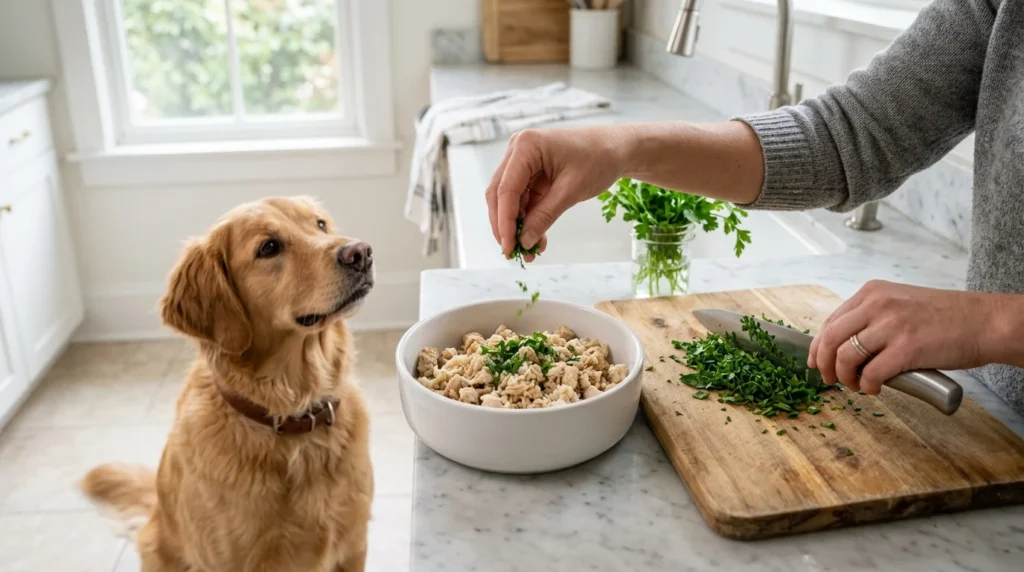
Most healthy dogs can eat a small amount of ordinary culinary parsley without problems. Fresh parsley leaves can be washed, finely chopped, and mixed into a dog’s normal food. Because herbs are not a necessary part of a canine diet, parsley should remain an occasional addition or garnish rather than something given in large quantities.
When introducing parsley for the first time, start with a very small amount and observe your dog afterward. Dogs can react differently to new foods, so watch for vomiting, diarrhea, excessive gas, itching, or other unusual signs. If your dog has an existing health condition or follows a special diet, ask your veterinarian before adding herbs regularly.
Can Dogs Eat Fresh Parsley?
Fresh parsley is generally the simplest form to offer your dog. Choose clean, food-grade parsley, rinse it thoroughly, remove damaged parts, and chop the leaves into small pieces. Finely chopped parsley is easier to mix with food and reduces the chance of a dog swallowing a large mouthful of leaves.
You do not need to cook parsley before giving it to your dog. A small sprinkle over plain cooked food can be enough. Avoid parsley that has been prepared with garlic, onion, excessive salt, butter, spicy seasonings, or sauces because these additional ingredients may be unsafe or unsuitable for dogs.
Can Dogs Eat Parsley Leaves?
Parsley leaves are the part most commonly used in cooking and can generally be given to dogs in small quantities. The leaves can be chopped finely and mixed into plain dog food, cooked chicken, rice, or another dog-safe meal. The key is moderation because parsley should complement the diet rather than replace nutritionally complete dog food.
Before serving, wash the leaves well to remove dirt and possible residues. If your dog has a sensitive stomach, introduce only a tiny amount at first. Although parsley is tolerated by many dogs, eating a large amount of any unfamiliar plant material can lead to digestive discomfort.
Can Dogs Eat Parsley Stems?
Small amounts of parsley stems are not usually a concern when they are part of ordinary culinary parsley, but the stems can be tougher and harder for some dogs to chew. For this reason, chopping parsley finely and using mostly tender leaves is a practical approach, particularly for puppies and small dogs.
Do not give your dog a large bunch of parsley stems to chew on. Besides being difficult to digest, large pieces of plant material can create a choking concern. Removing thick or tough stems and finely chopping the remaining parsley makes it easier to incorporate into your dog’s meal.
Can Dogs Eat Curly Parsley?
Curly parsley, often used as a culinary garnish, can generally be offered to dogs in small amounts. Its tightly curled leaves can be chopped finely and mixed into regular dog food. As with other fresh herbs, it should be treated as an occasional food addition rather than an essential dietary ingredient.
When using curly parsley, make sure it is fresh and thoroughly washed. Avoid serving it as part of restaurant dishes or prepared foods where you cannot control the other ingredients. Garlic, onion, rich sauces, excessive salt, and certain seasonings can make an otherwise simple parsley-containing dish unsuitable for dogs.
Can Dogs Eat Italian Parsley?
Italian parsley, also called flat-leaf parsley, is commonly used in cooking and can generally be given to dogs in small quantities. It has broader, flatter leaves and a stronger flavor than curly parsley. If you want to introduce it to your dog’s food, wash it well and chop it into small pieces before serving.
As with curly parsley, the main concern is not usually a tiny amount of plain culinary parsley but how much your dog consumes and what else is included with it. Plain parsley is very different from a seasoned human meal containing parsley along with garlic, onions, sauces, or large amounts of salt.
Can Dogs Eat Parsley Every Day?
Dogs do not need parsley every day to maintain a balanced diet. A small amount of plain parsley occasionally is generally more appropriate than making large servings part of a daily routine. Complete and balanced dog food should provide the majority of your dog’s nutrition.
If you regularly add herbs to your dog’s meals, variety and moderation are important. Giving too much parsley may increase the chance of digestive upset without providing a meaningful nutritional advantage. If you’re considering daily parsley because of a specific health concern, speak with your veterinarian instead of relying on parsley as a treatment.
See Also: Can Dogs Eat Yogurt? Benefits, Risks & Safe Feeding Guide
Can Puppies Eat Parsley?
Puppies can be more sensitive to dietary changes than adult dogs, so extra caution is appropriate when introducing parsley. A tiny amount of finely chopped plain parsley may be tolerated by some puppies, but it is not necessary for healthy puppy development. Their main diet should remain a nutritionally complete puppy food appropriate for their age and size.
If you decide to introduce parsley, use only a very small amount and monitor your puppy afterward. Avoid giving puppies parsley mixed with sauces, seasonings, garlic, onions, or salty foods. If a puppy develops repeated vomiting, diarrhea, weakness, or another concerning symptom after eating something unusual, contact a veterinarian promptly.
How Much Parsley Can Dogs Eat?
There is no single parsley portion that is appropriate for every dog. A dog’s size, age, diet, digestive sensitivity, and overall health can all affect how much is reasonable. As a practical approach, parsley should make up only a tiny part of the meal and should not displace balanced dog food.
| Dog Size | Conservative Starting Amount | Serving Tip |
|---|---|---|
| Small dogs | A pinch of finely chopped parsley | Mix into regular food |
| Medium dogs | A small pinch to about 1/2 teaspoon | Introduce gradually |
| Large dogs | About 1/2 to 1 teaspoon | Keep portions occasional |
These amounts are conservative starting points rather than veterinary prescriptions. If your dog has never eaten parsley before, starting below these amounts is sensible. Stop if your dog develops digestive or allergic symptoms, and ask your veterinarian if you’re unsure about an appropriate portion.
Also read: Constantine Yankoglu
Does Parsley Have Benefits for Dogs?
Plain parsley contains nutrients such as vitamins and plant compounds, so a small amount can contribute some nutritional variety. It also contains fiber and has a strong natural flavor that some dogs may enjoy. However, the amount of parsley normally given to a dog is small, so it should not be viewed as a replacement for a balanced diet or as a cure for a health problem.
It is better to think of parsley as an optional fresh herb rather than a supplement. Your dog’s primary nutrition should come from complete, balanced food designed for dogs. If your goal is to address bad breath, digestion, nutrient deficiencies, or another specific issue, a veterinarian can help identify a safer and more reliable approach.
Can Parsley Help With Dog Breath?
Parsley is sometimes used in homemade dog-food recipes because of its fresh aroma, and some owners believe it can help make a dog’s breath smell better. While adding a small amount of fresh parsley may make food smell fresher, it should not be considered a reliable solution for persistent bad breath.
Bad breath in dogs can have many causes, including dental plaque, tartar, gum problems, or other underlying conditions. If your dog’s breath suddenly becomes very strong or unpleasant, adding parsley may only mask the smell temporarily. Regular dental care and veterinary evaluation are more appropriate when bad breath continues.
Can Dogs Eat Dried Parsley?
Dried parsley can generally be given to dogs in small amounts. Because dried herbs are more concentrated by volume than fresh parsley, you only need a small sprinkle. Choose plain dried parsley without added garlic, onion, salt, artificial flavoring, or other seasonings. Check the ingredient list carefully before adding it to your dog’s food.
Dried parsley can be mixed into regular dog food, plain cooked chicken, rice, or another dog-safe meal. However, it should still be an occasional ingredient rather than a daily supplement. Giving too much dried parsley may cause digestive upset, especially in dogs that are sensitive to dietary changes.
Can Dogs Eat Parsley Seeds?
It is better not to intentionally feed parsley seeds to your dog. Parsley seeds are more concentrated than the small amounts of fresh leaves typically used as a food garnish, and there is little reason to add them to a dog’s diet. When offering parsley, the washed and finely chopped leaves are the more practical choice.
Keep containers of herb seeds away from dogs that like to explore cupboards or gardens. If your dog accidentally eats a small amount of parsley plant material, monitor them for digestive changes. If a large or unknown quantity of seeds was consumed, especially from a gardening product, contact your veterinarian for specific advice.
Can Dogs Eat Parsley With Chicken?
Plain cooked chicken with a small amount of parsley can be a simple combination for dogs. Chicken should be fully cooked, unseasoned, and free from cooked bones. Parsley can be washed and finely chopped before being mixed into the chicken or your dog’s normal food.
The important part is keeping the recipe simple. Human chicken dishes often contain garlic, onion, excessive salt, butter, spicy seasoning, or rich sauces. Those ingredients can create risks that have nothing to do with the parsley itself. For dogs, plain chicken and a small amount of parsley is a much safer approach.
Can Dogs Eat Parsley With Rice?
Plain cooked rice with a small amount of chopped parsley can generally be eaten by dogs. White or brown rice should be prepared without onion, garlic, excessive salt, butter, spicy seasonings, or sauces. Parsley can simply be mixed into the food in a small quantity.
Rice and parsley should not replace a complete and balanced dog diet on a long-term basis. If you are preparing homemade meals regularly, nutritional balance becomes especially important. A veterinarian or veterinary nutrition professional can help you create an appropriate diet rather than relying on individual ingredients such as rice and herbs.
Can Dogs Eat Parsley With Eggs?
Dogs can generally eat plain, fully cooked eggs, and a small amount of chopped parsley can be added if your dog tolerates the herb. Keep the egg plain and avoid ingredients commonly added to human scrambled eggs, such as onions, garlic, heavy seasoning, excessive salt, or large amounts of butter.
For a simple dog-friendly meal, a small amount of cooked egg can be mixed with regular dog food and a tiny sprinkle of parsley. Introduce one new ingredient at a time when possible. That makes it easier to identify the cause if your dog develops gas, loose stool, vomiting, itching, or another unusual reaction.
Can Dogs Eat Parsley With Yogurt?
A small amount of plain, unsweetened yogurt with a little fresh parsley may be tolerated by some dogs. If you use yogurt, choose a product without xylitol or other potentially harmful sweeteners, added chocolate, or excessive sugar. Parsley should only be used as a small addition.
Keep in mind that some dogs have difficulty digesting dairy products. Yogurt may cause gas, diarrhea, or stomach discomfort in sensitive dogs. If your dog has never had yogurt or parsley before, introducing them separately and in very small amounts is a safer way to determine how your dog responds.
Also read: Abella Danger Net Worth
Can Dogs Eat Parsley With Peanut Butter?
Parsley and peanut butter are not a necessary combination for dogs, but a small amount of plain parsley alongside dog-safe peanut butter is generally not a concern. If you use peanut butter as a treat, check the ingredients carefully and avoid products containing xylitol, chocolate, excessive salt, or other unsuitable additives.
Because peanut butter is calorie-dense, only a small amount should be used. Adding parsley does not make a high-calorie peanut butter treat healthier enough to justify large portions. For most dogs, a tiny amount of appropriate peanut butter and a small amount of parsley is plenty.
Can Dogs Eat Parsley In Pesto?
Dogs should not be given traditional pesto simply because it contains parsley. Many pesto recipes contain garlic, and garlic is unsafe for dogs. Pesto can also contain large amounts of oil, cheese, salt, and other ingredients that are not appropriate in significant quantities for dogs.
If you want to give your dog parsley, use plain fresh parsley instead of pesto. Avoid sharing pasta, pizza, sandwiches, or other human foods covered in pesto. The presence of a dog-safe herb does not make an entire prepared dish safe. Always consider every ingredient in the recipe before offering human food to your dog.
Can Dogs Eat Parsley With Garlic?
No. Parsley itself can generally be offered in small amounts, but garlic should not be intentionally fed to dogs. Garlic belongs to the allium family and can be harmful to dogs. This means parsley-seasoned foods containing garlic should not be treated as safe simply because parsley is present.
Avoid garlic butter, garlic bread, garlic-seasoned meat, garlic sauces, and other foods that combine parsley with garlic. If your dog accidentally eats a food containing garlic, the appropriate response depends on the amount eaten, the dog’s size, and the product involved. Contact your veterinarian or an animal poison service for guidance rather than trying to treat the situation at home.
Can Dogs Eat Parsley With Onion?
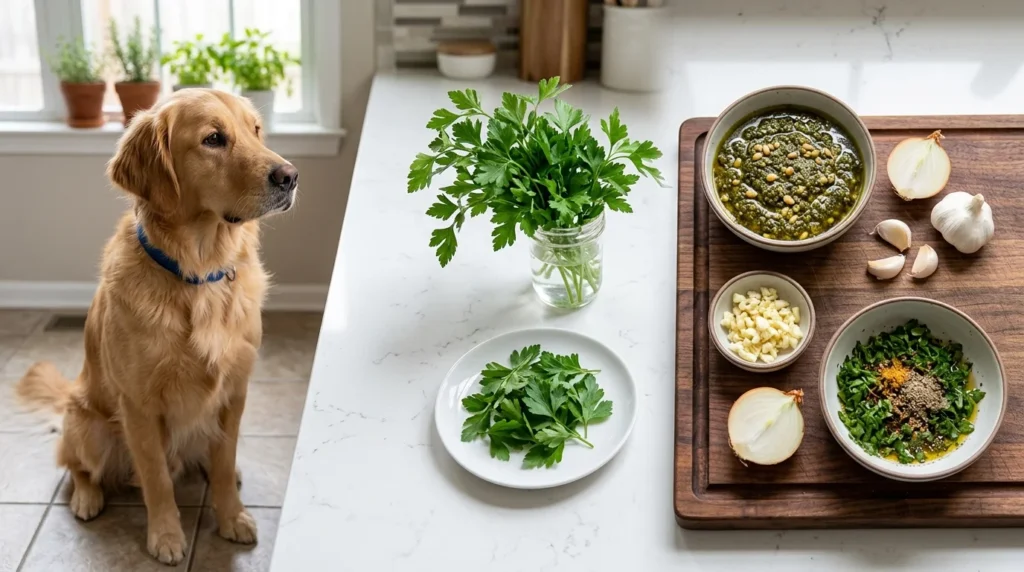
Plain parsley and onion are very different from a safety perspective. Dogs should not be intentionally fed onion in any form, including raw, cooked, dried, powdered, or as an ingredient in seasoned foods. Therefore, parsley-containing dishes with onion should be kept away from dogs.
Be particularly careful with soups, sauces, stuffing, gravies, cooked meats, and prepared meals because onion powder or small pieces of onion may not always be obvious. If your dog consumes onion-containing food, contact a veterinarian promptly and provide information about what was eaten and approximately how much.
Can Dogs Eat Parsley In Dog Treats?
Some commercial dog treats may contain parsley as a minor ingredient. If the product is specifically formulated for dogs and follows appropriate feeding guidelines, the presence of a small amount of parsley is generally not a reason for concern. Always read the complete ingredient list rather than judging a treat by one ingredient.
Dog treats should remain a limited part of the overall diet. If you’re making homemade treats, keep the recipe simple and avoid ingredients such as onion, garlic, chocolate, raisins, grapes, excessive salt, and unsuitable sweeteners. Parsley can be used as a small flavoring ingredient, but it does not need to be the main component.
What Are the Risks of Parsley for Dogs?
Small amounts of ordinary culinary parsley are generally tolerated by many dogs, but too much may cause digestive upset. Possible signs include gas, loose stool, vomiting, or stomach discomfort. Dogs can also have individual sensitivities to foods that are normally tolerated by other dogs.
Another concern is confusing culinary parsley with other plants or products. Concentrated parsley extracts, essential oils, supplements, or large quantities of unidentified plant material should not be treated like a small garnish of fresh parsley. If your dog eats an unusually large amount or develops concerning symptoms, contact a veterinarian.
What Should You Do If Your Dog Eats Too Much Parsley?
If your dog eats more parsley than intended, first determine what type of parsley was consumed and approximately how much. Check whether it was plain culinary parsley or part of a dish containing ingredients such as garlic, onion, sauces, or seasonings. A small accidental amount of plain parsley may only require observation.
Monitor your dog for vomiting, diarrhea, unusual lethargy, excessive drooling, or other abnormal behavior. Do not induce vomiting unless a veterinarian specifically tells you to do so. If a large amount was consumed, the product was concentrated, or other potentially harmful ingredients were involved, contact your veterinarian promptly.
See Also: Can Dogs Eat Peas? Benefits, Risks & Safe Feeding Tips
When Should Dogs Avoid Parsley?
Although plain culinary parsley can be suitable for many healthy dogs in small amounts, it may not be appropriate for every dog or every situation. Dogs with special dietary requirements should not have new ingredients added routinely without veterinary guidance. The same applies when parsley is being considered as a remedy for a specific health problem.
You should also avoid parsley-containing foods when they include potentially harmful ingredients such as garlic, onion, excessive salt, rich sauces, or unsuitable sweeteners. When in doubt, plain dog food is usually a safer choice than a seasoned human dish.
How to Safely Share Parsley With Your Dog
Start with fresh, food-grade culinary parsley. Wash it thoroughly under clean running water, remove damaged portions and tough stems, and finely chop the leaves. Add only a small amount to food your dog already tolerates. This keeps the herb as a minor part of the overall meal.
Do not use parsley essential oil, concentrated extracts, or human parsley supplements unless your veterinarian specifically recommends them. Avoid restaurant dishes and sauces because you may not know all of their ingredients. When introducing any new food, start small and monitor your dog for digestive or other unusual reactions.
Can Dogs Eat Parsley Every Day?
There is generally no nutritional need to give dogs parsley every day. A tiny amount occasionally is a more sensible approach than making a large serving part of your dog’s daily meals. Complete and balanced dog food should remain the foundation of the diet.
If you are considering daily parsley because of bad breath, digestion, or another concern, focus on the underlying issue instead. Persistent bad breath, repeated digestive problems, or other ongoing symptoms deserve veterinary attention rather than being managed with herbs alone.
Frequently Asked Questions
Can dogs eat parsley?
Yes, most healthy dogs can eat small amounts of plain culinary parsley. Wash it well, chop it finely, and use it only as an occasional addition to a balanced diet.
Can dogs eat dried parsley?
Yes, plain dried parsley can generally be given in a small amount. Because it is concentrated, use only a small sprinkle and avoid products containing garlic, onion, salt, or other seasonings.
Can puppies eat parsley?
Puppies may tolerate a tiny amount of plain parsley, but they do not need it. Their primary diet should be complete puppy food, and new ingredients should be introduced cautiously.
Can dogs eat parsley with garlic?
No. Garlic is unsafe for dogs, so parsley dishes containing garlic should not be given to them. Plain parsley is a safer option.
Can dogs eat parsley every day?
Dogs generally do not need parsley every day. Small occasional amounts are preferable, while complete and balanced dog food should provide the majority of their nutrition.
Conclusion
So, can dogs eat parsley? In most cases, yes. Small amounts of plain fresh or dried culinary parsley can be a reasonable occasional addition to a healthy dog’s diet. Wash fresh parsley thoroughly, chop it finely, and avoid giving large quantities.
The biggest issue is often what comes with the parsley. Garlic, onion, heavily seasoned sauces, pesto, excessive salt, and concentrated parsley products should be avoided. If your dog eats a large amount or develops concerning symptoms, contact your veterinarian for personalized advice.
See Also: Can Dogs Eat Cooked Onions? Risks, Symptoms & Safety


