
Can Dogs Eat Popcorn? Buttered, Kettle Corn & Every Type Covered
Movie night. You settle onto the couch with a big bowl of popcorn and your dog immediately climbs up next to you — nose working, eyes on the bowl, occasionally catching a piece you accidentally drop. It is one of the most relatable dog-owner scenarios imaginable. But can dogs eat popcorn? Is it safe? What about buttered popcorn, kettle corn, or caramel popcorn? What if your dog already ate some?
Popcorn is one of those foods that sits in a genuinely grey area for dogs. The answer is not simply yes or no — it depends entirely on how the popcorn was prepared, what was added to it, and how much your dog ate. This complete guide covers every question dog owners ask about popcorn and dogs, so you can make fully informed decisions every movie night.
Can Dogs Eat Popcorn?
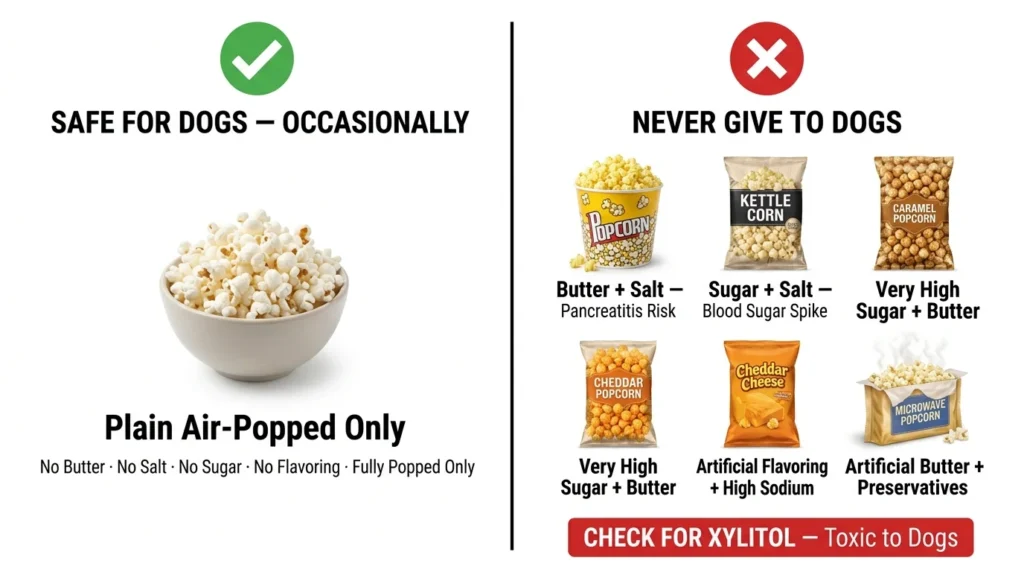
The answer is a conditional yes. Plain, air-popped popcorn with no butter, no salt, no sugar, and no flavoring additives is safe for dogs in small amounts. The AKC confirms that popcorn itself is not toxic to dogs and even notes that it contains riboflavin, thiamine, magnesium, and phosphorus — modest nutritional contributions.
However, virtually all popcorn consumed by humans — from microwave bags to movie theater buckets to flavored varieties — is not plain. Butter popcorn, kettle corn, caramel popcorn, cheese popcorn, ranch popcorn — all contain added ingredients that range from unhealthy to potentially dangerous for dogs.
The golden rule: plain, air-popped popcorn only — and even then, in very small amounts with fully popped kernels only.
Is Popcorn Safe for Dogs?
Plain, air-popped popcorn is safe for dogs in small amounts, provided two conditions are met consistently. First, the popcorn must be completely plain — no butter, no oil, no salt, no sugar, no flavoring of any kind. Second, only fully popped pieces should be given. Unpopped or partially popped kernels (the hard, dense pieces at the bottom of the bowl) are a significant choking hazard and can crack or chip teeth.
Beyond these two conditions, popcorn’s safety profile for dogs is reasonable. The fully popped, light airy structure of plain popcorn is easy for most dogs to eat and does not present major digestive concerns in small amounts.
The more realistic safety concern is that almost no household popcorn meets the “plain, air-popped” standard. Microwave popcorn bags contain butter flavoring and salt. Theater popcorn is drenched in butter and salt. Flavored varieties add sugar, artificial seasoning, and various additives. For the vast majority of real-world popcorn situations, the popcorn your dog is trying to eat is not the safe plain version.
Is Popcorn Bad for Dogs?
Plain air-popped popcorn is not bad for dogs in small amounts. But popcorn becomes genuinely bad for dogs in several common situations that most dog owners will recognize.
Butter and oil: High-fat additions dramatically increase pancreatitis risk — a serious, painful inflammatory condition. Dogs predisposed to pancreatitis should never have any popcorn with butter or oil.
Salt: High sodium causes excessive thirst, increased urination, and in significant amounts, sodium toxicity. A single cup of buttered, salted movie theater popcorn can contain 150 to 300mg of sodium — a concerning amount for a small dog.
Artificial butter flavoring: Microwave popcorn often contains diacetyl-based artificial butter flavoring, which has been linked to respiratory issues with prolonged exposure. This is a concern for dogs that regularly consume microwave popcorn.
Sugar (kettle corn, caramel corn): Refined sugar causes blood sugar spikes, contributes to weight gain and dental decay, and is inappropriate for diabetic dogs.
Unpopped kernels: Hard kernels are a genuine choking hazard and can fracture teeth — particularly a concern for small dogs.
Xylitol in flavored products: Some flavored popcorn products designed as “healthy” snacks contain xylitol — an artificial sweetener that is acutely toxic to dogs. Always check ingredient labels.
Health Benefits of Popcorn for Dogs
Plain air-popped popcorn does provide some modest nutritional contributions to dogs — not enough to make it a recommended treat over dedicated dog-safe vegetables and fruits, but real enough to mention.
Fiber for Digestive Health Plain popcorn contains dietary fiber from the pericarp (the hard outer hull). Fiber supports healthy digestion, regular bowel movements, and feeds beneficial gut bacteria. For dogs that enjoy popcorn and tolerate it well, the fiber contribution from a few pieces is a small but real digestive benefit.
Riboflavin (Vitamin B2) for Energy and Growth Riboflavin is essential for converting food into usable energy, supporting healthy skin and coat, and promoting proper growth and red blood cell production. The AKC specifically mentions riboflavin as a nutrient in popcorn that benefits dogs. While the amount in a few pieces of popcorn is small, it contributes to overall B vitamin intake.
Thiamine (Vitamin B1) for Energy Metabolism Thiamine supports carbohydrate metabolism and healthy nervous system function. Like riboflavin, the amount in a small serving of popcorn is modest — but represents a real nutritional contribution in the context of a varied diet.
Magnesium for Bone and Enzyme Health Magnesium supports bone formation, hundreds of enzymatic reactions in the body, protein synthesis, and muscle and nerve function. Popcorn provides a small but real dietary contribution of magnesium.
Phosphorus for Bone and Cell Health Phosphorus works alongside calcium to support bone and dental health. It also plays a role in the body’s energy systems (ATP production) and cellular membrane integrity.
Low Calorie (Plain Form) Plain air-popped popcorn contains approximately 30 to 35 calories per cup — making it one of the lower-calorie whole food snack options. For dogs that love popcorn, plain air-popped offers a way to share a small treat without adding significant calories to the daily count.
Risks of Feeding Popcorn to Dogs
The risks associated with popcorn for dogs are primarily related to how popcorn is prepared rather than the corn itself.
Unpopped and Partially Popped Kernels — Choking and Dental Risk This is the most immediate physical risk. Hard, dense unpopped kernels can lodge in the throat and cause choking, particularly in dogs that eat enthusiastically without careful chewing. They can also crack or chip teeth — dental fractures are painful and expensive to treat. Always check that every piece given to your dog is fully popped, and remove all unpopped kernels from any batch you share.
Butter and Fats — Pancreatitis The biggest ongoing health risk is the fat content from butter, coconut oil, or other oils used in popcorn preparation. High-fat meals and snacks are one of the most common dietary triggers of pancreatitis in dogs. Even a single high-fat snack can trigger a pancreatitis episode in susceptible dogs. Breeds particularly prone to pancreatitis include Miniature Schnauzers, Cocker Spaniels, and Yorkshire Terriers.
Sodium — Cardiovascular and Kidney Stress Salted popcorn delivers significant sodium. Dogs have much lower sodium tolerance than humans — what seems like a lightly salted snack to you can represent an inappropriately large sodium load for your dog. Signs of excess sodium intake include excessive thirst, increased urination, and in serious cases, tremors and seizures.
Artificial Flavoring — Digestive Irritation Artificial cheese flavoring, artificial butter flavoring (diacetyl compounds), ranch seasoning, and other artificial flavorings can cause digestive irritation in dogs. Some dogs are more sensitive than others, but regular exposure to artificial flavoring compounds is not beneficial.
Xylitol — Acute Toxicity This is the most serious acute risk. Some “healthy” or “light” popcorn products, particularly those marketed as low-sugar or sugar-free, may contain xylitol — an artificial sweetener that is acutely toxic to dogs. Even a small amount of xylitol causes rapid hypoglycemia (dangerous blood sugar drop) and can cause acute liver failure. Always read ingredient labels before giving any flavored popcorn product to your dog, and contact your vet immediately if xylitol exposure is suspected.
Hulls (Popcorn Husks) — Dental and GI Concern The thin papery hulls of popcorn can get stuck between teeth and under the gumline, causing irritation and potentially contributing to gum disease with regular feeding. They can also be difficult to digest, causing mild gastrointestinal irritation in some dogs.
Can Dogs Eat Buttered Popcorn?
No — buttered popcorn is not appropriate for dogs. Butter is one of the highest-fat common foods — a single tablespoon contains about 100 calories and 11 grams of fat. Movie theater popcorn is typically coated in large amounts of butter or butter-flavored oil, turning a low-calorie snack into a very high-fat, high-calorie food.
The high fat from butter significantly increases the risk of pancreatitis — a painful condition requiring veterinary treatment and sometimes hospitalization. For dogs already predisposed to digestive issues, even a small amount of buttered popcorn can trigger a painful episode.
Buttered popcorn is also almost always salted, compounding the sodium concern. The combination of high fat, high sodium, and sometimes artificial butter flavoring makes buttered popcorn inappropriate for dogs in any amount beyond the most accidental and tiny exposure.
If your dog grabbed a single piece of buttered popcorn that fell on the floor, this is unlikely to cause a serious emergency. But buttered popcorn should never be given intentionally as a dog treat.
Can Dogs Eat Kettle Corn?
No — kettle corn is not appropriate for dogs. Kettle corn is popcorn made with sugar and salt, creating the characteristic sweet-salty combination that makes it so popular as a snack for humans. For dogs, this combination creates multiple concerns.
The sugar in kettle corn — even in small amounts — contributes unnecessary refined sugar to a dog’s diet. Refined sugar causes blood sugar spikes, contributes to dental decay, adds empty calories, and is particularly problematic for diabetic dogs. The salt content adds excess sodium that is not appropriate for dogs.
The combination of sugar and salt coating also tends to stick to teeth and get into the crevices of popcorn hulls, creating a particularly unfavorable situation for dental health compared to plain popcorn. Regular kettle corn would contribute to the dental decay risk significantly more than plain popcorn.
See Also: Can Dogs Eat Potatoes? Safe Types, Risks & Feeding Guide 2026
Can Dogs Eat Caramel Popcorn?
No — caramel popcorn is one of the most clearly inappropriate popcorn varieties for dogs. Caramel popcorn is made by coating popcorn in a mixture of butter, sugar (often brown sugar), corn syrup, and sometimes salt — all cooked to a hard, sticky caramel. This creates a high-fat, high-sugar, high-calorie product that is the opposite of what a dog’s diet should include as a treat.
The caramel coating contains large amounts of refined sugar, butter fat, and corn syrup — contributing to blood sugar spikes, weight gain, dental decay, and pancreatitis risk simultaneously. The hard caramel shell can also crack teeth and stick to dental surfaces, creating additional dental health concerns.
Some commercial caramel popcorn products also contain chocolate drizzle or pieces — chocolate is seriously toxic to dogs. Never give caramel popcorn — or any chocolate-containing popcorn product — to your dog.
Can Dogs Eat Cheese Popcorn?
No — cheese-flavored popcorn is not appropriate for dogs. Cheese popcorn (cheese puffs, cheddar popcorn, and similar products) is coated in artificial cheese powder made with artificial flavoring, artificial coloring (often yellow dyes), high amounts of sodium, and dairy-derived flavoring compounds.
The sodium content of cheese-flavored popcorn is typically very high — comparable to or exceeding regular salted popcorn. The artificial cheese flavoring contains compounds that can cause digestive irritation in dogs. And the artificial food coloring adds no nutritional value while potentially causing reactions in sensitive dogs.
Real cheese in small amounts is a legitimate dog treat for many dogs, but the artificial cheese flavoring in cheese popcorn is very different from real cheese — it is primarily sodium, artificial flavoring compounds, and coloring with minimal actual dairy content.
Can Dogs Eat Microwave Popcorn?
No — microwave popcorn is not appropriate for dogs, even if it appears to be lightly seasoned or “natural.” Microwave popcorn bags are designed for human consumption with seasonings, oils, and flavoring compounds that are not appropriate for dogs.
Most microwave popcorn contains: butter or butter flavoring (high fat), salt (excess sodium), artificial butter flavoring compounds (including diacetyl-related compounds), preservatives, and sometimes artificial coloring. “Light” or “natural” microwave popcorn versions still typically contain significant sodium and butter flavoring.
The microwave popcorn bag lining also historically contained perfluorooctanoic acid (PFOA) compounds, though many manufacturers have reformulated. Regardless, the contents themselves — not the bag — are the primary concern for dogs.
If you want to share popcorn with your dog, pop plain kernels in a hot-air popper with absolutely nothing added. This is the only form of popcorn appropriate for dogs.
Can Dogs Eat Popcorn with Salt?
No — salted popcorn is not appropriate for dogs. Salt (sodium chloride) is necessary in trace amounts for health, but dogs have very low sodium tolerance compared to humans. What seems like a lightly salted snack to a person can represent a significant and potentially problematic sodium dose for a dog — particularly small dogs.
Signs of excess sodium intake in dogs include excessive thirst, frequent urination, bloating, and in more serious cases, vomiting, tremors, and seizures. For dogs with heart disease, kidney disease, or hypertension, even modest excess sodium can worsen their conditions.
The sodium in just a cup of salted popcorn can range from 100 to 300mg depending on how heavily it is salted. This represents a significant portion of — or in small dogs, more than — an appropriate daily sodium intake. Never deliberately give salted popcorn to your dog.
Can Dogs Eat Popcorn with Butter and Salt?
No — the combination of butter and salt makes this the most problematic standard popcorn preparation for dogs. Butter adds significant fat (pancreatitis risk) and salt adds excess sodium (cardiovascular and kidney stress). Together, the two most common popcorn additions create a compounded set of health concerns that make this preparation clearly inappropriate.
Movie theater popcorn — the most extreme version of buttered and salted popcorn — can contain 700 to 1200mg of sodium per large serving and significant amounts of added fat. This is genuinely harmful in meaningful amounts for most dogs.
If a single piece of buttered, salted popcorn falls on the floor and your dog eats it, monitor for any unusual symptoms but a single piece is unlikely to cause serious harm in a large healthy dog. But sharing buttered, salted popcorn with your dog intentionally is never appropriate.
Can Dogs Eat Air-Popped Popcorn?
Yes — plain air-popped popcorn is the one form of popcorn that is actually acceptable for dogs in small amounts. Air-popped popcorn is made using only heat and air — no oil, no butter, no salt, no sugar. The result is a very low-calorie, low-fat, low-sodium snack that provides modest fiber, B vitamins, magnesium, and phosphorus.
Air poppers are inexpensive and widely available. If you enjoy sharing food with your dog during movie nights, investing in an air popper and popping a small batch of plain kernels specifically for your dog is the genuinely safe approach.
Remember to remove all unpopped kernels before sharing with your dog, and give only a small handful — even plain popcorn should be a treat, not a meal. The hulls of popcorn can get stuck in teeth and gums, so monitor your dog after eating popcorn and ensure they have access to fresh water.
Can Dogs Eat Popcorn Safely?
Yes — but only under specific conditions that rarely apply to typical household popcorn situations. The conditions for safe popcorn feeding are:
Complete safety checklist for popcorn:
- Use only plain, air-popped popcorn — no microwave bags, no movie theater popcorn, no flavored varieties
- No butter, no oil, no salt, no sugar, no artificial flavoring, no seasoning of any kind
- Remove ALL unpopped and partially popped kernels before serving — every single one
- Give only a small handful — not a bowl, not a cup, a small handful appropriate for your dog’s size
- Allow to cool if freshly popped — hot popcorn can burn the mouth
- Never give to dogs with pancreatitis history, diabetes, obesity, or dogs on sodium-restricted diets
- Check ingredient labels on any packaged popcorn for xylitol — never give products containing xylitol
- Introduce slowly the first time — just two or three pieces — and watch for any reaction
- Clean up any fallen pieces, especially unpopped kernels, immediately
Meeting all of these conditions consistently is the only way popcorn is safe for dogs. In most real-world situations, the popcorn available does not meet these standards.
Can Dogs Eat Popcorn Everyday?
Definitely not recommended. Even plain air-popped popcorn should not be given to dogs daily. Here is why regular daily popcorn feeding is not a good habit.
First, the hulls of popcorn can get stuck in teeth and under the gumline with regular feeding, contributing to gum disease and dental health problems over time. Second, daily popcorn feeding can displace variety in the treat rotation — rotating different dog-safe foods ensures broader nutritional coverage. Third, even tiny amounts of any new food daily add up cumulatively, and the hulls of popcorn are not the most digestible food for dogs.
For owners who love sharing movie night snacks with their dogs, occasional sharing of a few pieces of plain air-popped popcorn is a reasonable occasional treat. But daily popcorn feeding has no meaningful benefit compared to rotating the same effort toward more nutritious treats like blueberries, carrot pieces, or plain cooked chicken.
Can Dogs Eat Popcorn Shrimp?
This is a question about fried shrimp that happen to be called “popcorn shrimp” — not a combination of popcorn and shrimp. Popcorn shrimp are small, bite-sized pieces of shrimp coated in seasoned batter and deep fried. They are called “popcorn shrimp” because of their small, bite-sized shape, not because they contain actual popcorn.
As with all fried foods, popcorn shrimp are not appropriate for dogs. They are very high in fat from deep frying, the seasoned batter contains salt and spices, and they are often served with dipping sauces that contain additional salt, garlic, and other dog-inappropriate ingredients.
Plain cooked shrimp (boiled or steamed with no seasoning) is safe for dogs. Popcorn shrimp specifically — battered, fried, seasoned — is not.
Can Dogs Eat Popcorn Chicken?
Similarly, “popcorn chicken” refers to small fried chicken pieces — not chicken-flavored popcorn or a combination of the two. Popcorn chicken is bite-sized chicken pieces coated in seasoned breading and deep fried. The same concerns apply as with any fried, breaded food product.
The breading contains salt and seasoning. The frying creates very high fat content — pancreatitis risk. Fast food popcorn chicken (from chains like KFC or Chick-fil-A) also contains garlic powder and other seasonings not appropriate for dogs.
Plain cooked chicken (boiled or baked with no seasoning) is one of the best foods you can give a dog. Popcorn chicken — breaded, fried, seasoned — is not.
See Also: Can Dogs Eat Raw Eggs or Fried Eggs? Full Safety Guide 2026
Can Dogs Eat Flavored Popcorn?
No — flavored popcorn in any commercial form is not appropriate for dogs. This includes all varieties: ranch, white cheddar, nacho, jalapeño, buffalo, dill pickle, sriracha, chocolate drizzle, birthday cake, and any other flavored variety.
Every flavored popcorn involves one or more of these problematic additions: artificial flavoring compounds, high sodium, added sugar, spicy compounds (capsaicin from jalapeño or sriracha is irritating to dogs’ digestive systems), chocolate (toxic), and artificial food coloring.
The concern is not just one ingredient — it is that virtually every flavored popcorn variety combines multiple problematic ingredients simultaneously. Some flavored varieties specifically contain garlic powder or onion powder — both toxic to dogs.
The only popcorn appropriate for dogs is plain air-popped with nothing added.
How Much Popcorn Can a Dog Eat?
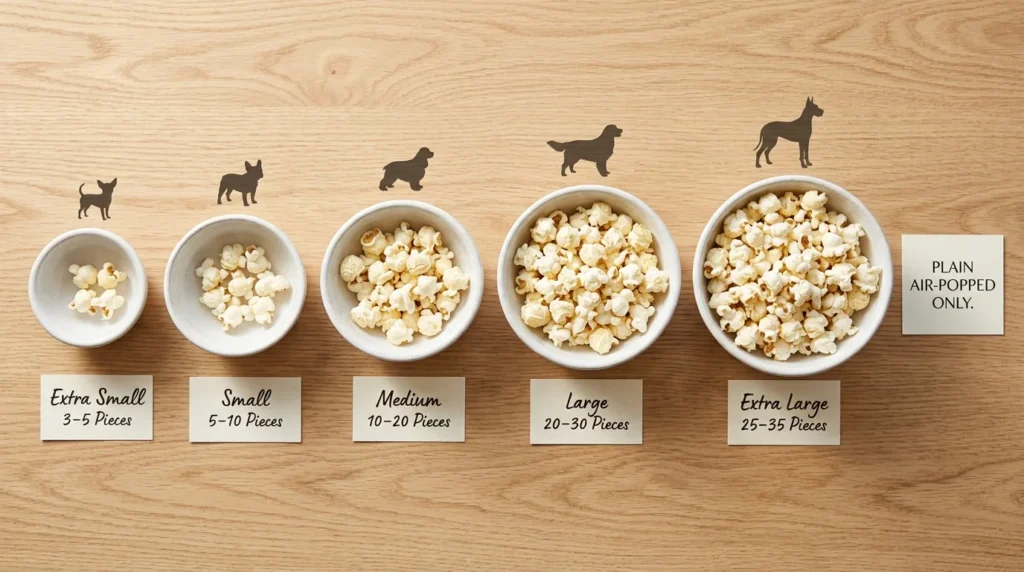
Even for the safe plain, air-popped variety, popcorn should be a very small occasional treat — not a significant food item. The portion guidelines below apply specifically and exclusively to plain, air-popped popcorn with all unpopped kernels removed and no added ingredients of any kind.
How Much Popcorn Can a Dog Eat? — Portion Guide by Dog Size
| Dog Size | Weight Range | Plain Air-Popped Popcorn (Max) | Frequency | Important Condition |
|---|---|---|---|---|
| Extra Small | Under 10 lbs | 3–5 fully popped pieces | Occasionally (not daily) | Remove all hulls if possible |
| Small | 10–20 lbs | 5–10 fully popped pieces | Occasionally (not daily) | Fully popped only, no kernels |
| Medium | 20–50 lbs | Small handful (10–20 pieces) | Occasionally (not daily) | Plain only, all kernels removed |
| Large | 50–90 lbs | Small to medium handful (20–30 pieces) | Occasionally (not daily) | Plain only, air-popped only |
| Extra Large | 90 lbs + | Medium handful (25–35 pieces) | Occasionally (not daily) | Plain air-popped only |
Critical notes on this table:
- This table applies ONLY to plain, air-popped popcorn with absolutely no butter, oil, salt, sugar, or flavoring.
- Any flavored, buttered, salted, or microwave popcorn: zero — none appropriate for any size dog.
- “Occasionally” means a few times per month at most — not daily, not weekly.
- Remove every single unpopped or partially popped kernel before serving.
- Dogs with pancreatitis, diabetes, obesity, heart disease, or kidney disease: no popcorn without explicit veterinary approval.
- These amounts are maximums — less is always fine.
- If your dog has never had popcorn before: start with just 2 to 3 pieces the first time.
Can Puppies Eat Popcorn?
Not recommended for puppies. Puppies have developing digestive systems and specific nutritional needs that are best met by complete puppy food. Adding popcorn — even plain popcorn — to a puppy’s diet provides minimal nutritional benefit while introducing potential risks.
The hull concern is particularly relevant for puppies. Popcorn hulls can get stuck in teeth and under the gumline, and puppies’ developing teeth and gums are more vulnerable to irritation and injury than adult dog teeth. The hard unpopped kernels are a significant choking hazard for puppies, whose impulse control around food is lower than adult dogs.
If you specifically want to share a tiny amount of plain air-popped popcorn with an older puppy (over 6 months), remove all kernels carefully, give just two or three fully popped pieces, and monitor closely. But there is no good nutritional reason to include popcorn in a puppy’s treat routine when better options are available.
See Also: Can Dogs Eat Corn? Cobs, Chips, Candy Corn & Every Form Covered
What to Do if Your Dog Eats Too Much Popcorn?
The response depends on what type of popcorn was eaten.
Plain air-popped popcorn in excess: Temporary digestive upset is the most likely outcome — gas, bloating, or loose stools from the fiber content and hull material. This is not a toxic emergency. Ensure fresh water access, reduce or skip the next meal, and monitor for 24 hours. Contact your vet if symptoms are severe or prolonged.
Buttered and salted popcorn in moderate amounts: Watch for signs of high-fat digestive upset (vomiting, diarrhea, abdominal pain) and excessive sodium intake (extreme thirst, lethargy). For moderate accidental amounts in a large healthy dog, monitoring is usually sufficient. For small dogs or large amounts consumed, contact your vet for guidance.
Caramel popcorn or very high-sugar varieties: Monitor for digestive upset from the sugar load. For diabetic dogs, high sugar intake requires prompt veterinary attention.
Any popcorn containing xylitol: This is an emergency. Contact your veterinarian or the ASPCA Animal Poison Control Center (888-426-4435) immediately. Do not wait for symptoms — xylitol toxicity acts rapidly and early treatment dramatically improves outcomes.
Any popcorn containing chocolate: Contact your vet immediately. The amount of chocolate consumed and the dog’s size will determine urgency, but chocolate toxicity in dogs requires prompt veterinary assessment.
Frequently Asked Questions
Can dogs eat popcorn?
Plain, air-popped popcorn with no butter, salt, sugar, or flavoring is safe for dogs in small amounts. Most commercial and household popcorn is not plain and contains ingredients not appropriate for dogs. Use an air popper and nothing else if you want to share safely.
Is popcorn safe for dogs?
Plain air-popped popcorn without any additives is safe for most healthy adult dogs in very small amounts. All flavored, buttered, salted, microwave, and kettle corn varieties are not safe due to added ingredients.
Is popcorn bad for dogs?
Plain popcorn in small amounts is not bad. Buttered, salted, flavored, or sugared popcorn is bad — it contains fat (pancreatitis risk), sodium (cardiovascular stress), sugar (blood sugar issues), and artificial additives. Any popcorn with xylitol is acutely dangerous.
Can dogs eat buttered popcorn?
No. Butter dramatically increases fat content — a pancreatitis trigger. Buttered popcorn is also always salted. Both butter and salt make this form inappropriate for dogs.
Can dogs eat kettle corn?
No. Kettle corn contains sugar and salt — refined sugar contributes to blood sugar spikes and dental decay; excess salt causes sodium-related health issues. Not appropriate for dogs.
Can dogs eat caramel popcorn?
No. Caramel popcorn is high in butter, refined sugar, and corn syrup. The hard caramel coating can damage teeth. Some versions contain chocolate — which is toxic to dogs.
Can dogs eat cheese popcorn?
No. Cheese-flavored popcorn contains artificial cheese flavoring, high sodium, artificial food coloring, and preservatives. The artificial flavoring is very different from real cheese and not appropriate for dogs.
Can dogs eat microwave popcorn?
No. Microwave popcorn bags contain butter flavoring, artificial flavoring compounds, salt, and preservatives — none of which are appropriate for dogs. Use an air popper for dog-safe popcorn.
Can dogs eat air-popped popcorn?
Yes — plain air-popped popcorn is the only type appropriate for dogs. No added butter, oil, salt, sugar, or flavoring. Remove all unpopped kernels before serving.
Can dogs eat popcorn with salt?
No. Salt adds excess sodium that is not appropriate for dogs. Even “lightly salted” popcorn contains more sodium than dogs should consume as a treat.
Can dogs eat flavored popcorn?
No. All flavored varieties — ranch, cheddar, jalapeño, sriracha, caramel, chocolate — contain additives that are unhealthy or toxic for dogs. Plain only.
Can dogs eat popcorn every day?
Not recommended. Even plain popcorn should be only an occasional treat. Daily feeding can contribute to dental issues from hulls getting stuck in teeth and gums.
Can dogs eat popcorn shrimp?
Popcorn shrimp is fried, breaded shrimp — not a combination of popcorn and shrimp. Fried, breaded, seasoned shrimp is not appropriate for dogs due to high fat, salt, and seasoning.
What happens if a dog eats too much popcorn?
Plain popcorn: digestive upset (gas, bloating, loose stools). Buttered/salted: digestive upset and sodium concern. Xylitol-containing: emergency — call vet immediately. Chocolate-containing: call vet immediately.
Can puppies eat popcorn?
Not recommended. Puppies’ developing digestive systems and teeth make popcorn a poor choice. Hard kernels are a choking hazard and hulls can damage developing gums. Choose age-appropriate treats instead.
How much popcorn can a dog eat?
See the portion table above. Small dogs: 3-10 fully popped plain pieces. Medium dogs: small handful of 10-20 pieces. Large dogs: 20-30 pieces. Plain air-popped only, occasionally — not daily.
What should I give my dog instead of popcorn?
Better alternatives include: plain air-popped popcorn (if you want something similar), carrot pieces, cucumber slices, blueberries, apple slices (no seeds), or small pieces of plain cooked chicken. All are more nutritious than popcorn.
Conclusion
Popcorn sits in a clear position in dog nutrition: the plain form is acceptable in small amounts, and virtually every other form is not. The simplicity of this rule is undermined by the fact that plain, air-popped popcorn with nothing added is a rare thing in most households — most popcorn that exists in people’s homes is microwave popcorn, movie theater popcorn, or flavored varieties, none of which meet the standard for dog safety.
The complete summary of everything you need to know:
Safe for dogs:
- Plain, air-popped popcorn only — made in an air popper with no oil, no butter, no salt, no sugar, no flavoring
- In very small amounts (see portion table)
- Only fully popped pieces — all kernels removed
- Occasionally, not daily
Never safe for dogs:
- Buttered popcorn — high fat, pancreatitis risk
- Salted popcorn — excess sodium
- Kettle corn — sugar and salt
- Caramel popcorn — very high sugar, butter, possible chocolate
- Cheese popcorn — artificial flavoring, high sodium
- Microwave popcorn — butter flavoring, artificial compounds, sodium
- Any flavored variety — artificial additives, seasoning, possible toxic ingredients
- Any popcorn containing xylitol — medical emergency
- Any popcorn containing chocolate — toxic, call vet immediately
- Unpopped kernels — choking hazard and dental damage risk
Also Read: Can Dogs Eat Cheese? The Complete Safe-Feeding Guide (2026)


