

Can Dogs Eat Oranges? Peel, Juice, Seeds & Every Form Covered
You are peeling an orange, that fresh citrus smell fills the room, and your dog wanders over — curious, hopeful, nose working overtime. You want to share, but citrus always feels like one of those uncertain categories. Can dogs eat oranges? Is the juice okay? What about the peel? The seeds? What if you only have mandarins or clementines?
These are exactly the right questions. Oranges are one of the more nuanced fruits when it comes to dogs — not a simple yes or no like blueberries or grapes, but a clear yes with important preparation rules. This complete, detailed guide covers every orange variety, every form, and every specific question dog owners ask about oranges and dogs.
Can Dogs Eat Oranges?
Yes — dogs can eat oranges, and the flesh is safe for most healthy dogs in moderate amounts. The American Kennel Club (AKC) confirms that oranges are non-toxic to dogs. Ripe orange flesh contains Vitamin C, Vitamin B6, thiamine, folate, potassium, and dietary fiber — all genuinely beneficial nutrients for dogs.
However, oranges come with more preparation rules than simpler fruits like blueberries or strawberries. The peel and pith must always be removed — they contain essential oils that can upset a dog’s digestive system. Seeds should also be removed. And because oranges are higher in natural sugar than many other dog-safe fruits, portion control is especially important.
For healthy dogs without diabetes or weight issues, one to two segments of peeled, seed-free orange is a perfectly safe and nutritious occasional treat.
Are Oranges Good for Dogs?
Yes — when prepared correctly, oranges offer real nutritional value for dogs. The flesh of an orange is packed with beneficial nutrients that support multiple aspects of canine health.
Oranges are among the richest common fruit sources of Vitamin C — one of the most important antioxidants in any diet. They also contain Vitamin B6 for brain and metabolic health, folate for cell growth and DNA synthesis, potassium for heart and muscle function, thiamine for energy metabolism, and dietary fiber for digestive health.
Beyond vitamins and minerals, the flavonoids in oranges — hesperidin and narirutin among others — have documented anti-inflammatory and cardiovascular protective effects. These plant compounds add real health value beyond the standard vitamin content.
For dogs that tolerate citrus well, a segment or two of ripe orange a few times per week is a genuinely healthy supplement to their regular diet. The key is always careful preparation and appropriate portion sizes.
Are Oranges Bad for Dogs?
Oranges are not bad for dogs when prepared and portioned correctly. However, they can become problematic in several specific situations that every dog owner needs to understand.
The peel and pith contain essential oils — including limonene, linalool, and d-limonene — that are irritating to the canine digestive system. These compounds can cause vomiting, diarrhea, and lethargy. The ASPCA specifically notes citrus oil extracts as toxic to dogs, making complete peel and pith removal non-negotiable.
Beyond the peel issue, oranges are higher in natural sugar than many other dog-safe fruits — a concern for diabetic dogs, overweight dogs, and those with insulin resistance. The moderate acidity can aggravate sensitive stomachs or existing gastrointestinal conditions.
Orange juice, orange candy, orange-flavored products, and commercial orange preparations all contain added ingredients that make them inappropriate for dogs. The fruit itself — properly prepared — is the only safe form.
The Potential Benefits of Oranges for Dogs
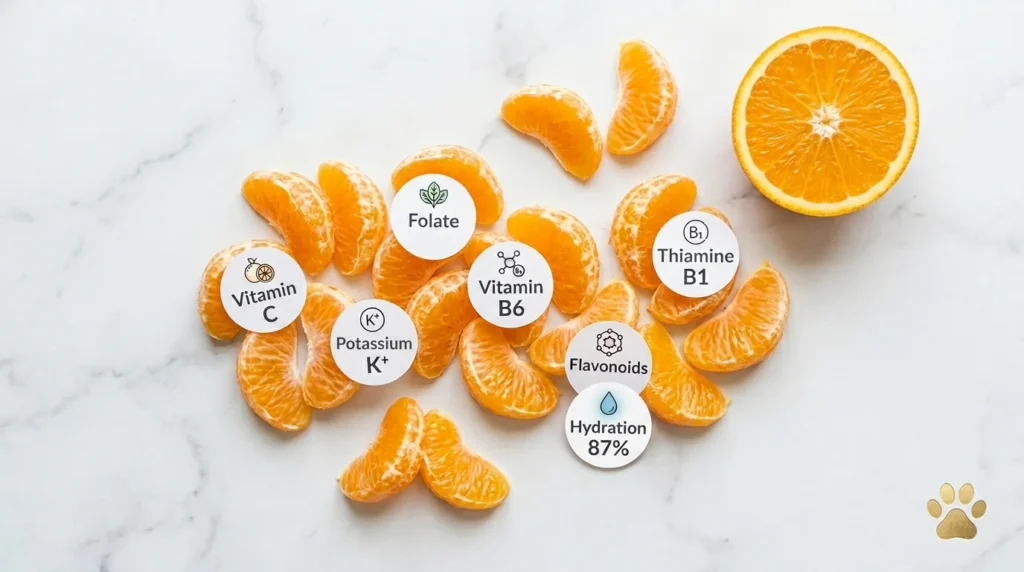
Let’s break down the specific health benefits oranges provide to dogs in meaningful detail.
Vitamin C — Immune System and Antioxidant Protection Oranges are famous for their Vitamin C content, and this reputation is well earned. Vitamin C is a powerful antioxidant that neutralizes free radicals — unstable molecules that damage cells and accelerate aging, inflammation, and disease. For dogs, extra dietary Vitamin C is particularly valuable during periods of stress, illness, exercise recovery, or in senior years when the body’s own antioxidant capacity decreases. A segment of orange provides a meaningful Vitamin C contribution in a naturally bioavailable form.
Vitamin B6 — Brain and Metabolic Health Vitamin B6 (pyridoxine) is essential for protein metabolism, nervous system function, red blood cell production, immune health, and the regulation of blood glucose levels. It plays a role in neurotransmitter synthesis — affecting mood, cognition, and behavioral stability. Oranges provide a meaningful amount of B6 in a natural, whole-food form that dogs can easily digest and absorb.
Folate — Cell Growth and DNA Health Folate (Vitamin B9) supports DNA synthesis, cell division, and red blood cell production. It is especially important for pregnant dogs and growing puppies, but plays an ongoing role in maintaining healthy cell function throughout every life stage. Regular inclusion of folate-rich foods like orange supports the body’s ongoing cellular renewal processes.
Potassium — Heart and Muscle Function Potassium is an essential electrolyte that regulates heart rhythm, supports proper muscle contraction, and maintains healthy fluid balance throughout the body. For active and working dogs whose muscles are regularly challenged, adequate potassium intake supports performance and recovery. Oranges contribute meaningfully to daily potassium intake in a palatable, natural form.
Thiamine — Energy Metabolism Thiamine (Vitamin B1) helps convert carbohydrates into usable energy and supports healthy nervous system function. It plays a foundational role in energy production at the cellular level. Oranges provide a small but real contribution of thiamine that supports your dog’s metabolic energy systems.
Flavonoids and Antioxidant Plant Compounds Oranges contain significant amounts of hesperidin, narirutin, naringenin, and other flavonoid compounds. These plant-based antioxidants have documented anti-inflammatory effects, cardiovascular protective properties, and potential anticancer activity. For dogs, these compounds add nutritional value beyond the standard vitamin profile — making oranges a genuinely functional food when included appropriately.
Hydration Support Oranges are approximately 87% water, making them a reasonably hydrating treat. On hot days or for dogs who do not drink enough water on their own, a segment of orange contributes to fluid intake alongside regular water. The natural sweetness of orange also makes it appealing enough to encourage eating, which supports hydration in less enthusiastic drinkers.
What Are the Risks of Giving a Dog Oranges?
Understanding specific risks allows you to feed oranges responsibly and avoid the situations that can turn a healthy treat into a problem.
Orange Peel and Essential Oils — The Primary Risk The outer peel and white pith of oranges contain concentrated essential oils — primarily limonene, linalool, and citral. These compounds are irritating to the canine digestive system and can cause vomiting, diarrhea, lethargy, and in larger amounts, potential neurological symptoms. The peel is also extremely tough and fibrous, presenting a real choking and gastrointestinal blockage risk. This risk applies to every orange variety — mandarin, clementine, navel, blood orange — all peels contain these oils and must always be removed completely.
High Natural Sugar — Concern for Specific Dogs A medium navel orange contains approximately 12 grams of natural sugar. While this is natural fructose rather than refined sugar, it still affects blood glucose levels and contributes to caloric intake. For dogs with diabetes, insulin resistance, or obesity, this sugar content can interfere with health management. These dogs should only eat orange with explicit veterinary approval.
Acidity — Digestive Sensitivity Oranges have a moderate pH between 3.5 and 4.5 — making them meaningfully acidic. This acidity can irritate the gastrointestinal tract of dogs with sensitive stomachs, existing digestive conditions, or acid reflux, leading to vomiting or diarrhea even when the peel is properly removed. Dogs with a history of digestive sensitivity may need to avoid oranges or try only the mildest, least acidic varieties.
Seeds — Indigestible and Choking Risk Orange seeds are hard and indigestible. While not as acutely toxic as apple seeds (which contain amygdalin), orange seeds should always be removed before serving. They can accumulate in the digestive tract and cause irritation or blockage in small dogs.
Excessive Amounts — Digestive Upset Too much orange at once overwhelms the digestive system with sugar, acid, and fiber, causing vomiting, diarrhea, bloating, and discomfort even in healthy dogs with no pre-existing conditions. Moderation is the most important practical rule with oranges.
Can Dogs Eat Orange Peels?
No — orange peels should never be given to dogs, and this is one of the firmest rules in this entire guide. The peel of any orange variety is problematic for multiple independent reasons, and none of them are minor.
The essential oils in orange peel — primarily limonene and linalool — are concentrated in the peel’s oil glands. These compounds are classified as toxic to dogs by the ASPCA when used as extracts or in concentrated form. Even the natural concentration in orange peel can cause vomiting, diarrhea, drooling, and lethargy in dogs. In larger amounts or with repeated exposure, more serious neurological symptoms are possible.
Beyond the chemical concern, orange peel is extremely tough, leathery, and completely indigestible. Swallowed pieces can cause gastrointestinal obstruction, particularly in small dogs. The outer surface of commercially grown orange peels also carries pesticide and fungicide residue from conventional farming.
When preparing orange for your dog, remove all peel generously — cutting away not just the outer colored layer but also the entire white pith underneath. Only the juice-filled segments should remain.
Can Dogs Eat Oranges Slices?
Yes — orange slices (properly prepared) are an ideal serving format for dogs. When we say “orange slices” in the context of dog feeding, we mean segments of peeled, seed-free orange flesh — not slices with the peel still attached as you might serve at a sports event.
Separate the orange into individual segments after peeling, remove any visible seeds, and give one to two segments as a treat for a medium-sized dog. For small dogs, cut segments into smaller pieces. For large dogs, two to three segments per serving is appropriate.
Pre-cut fresh orange slices sold in grocery store produce sections are fine if they contain only plain orange with no added sugar, citric acid spray, or preservatives. Always check the label on any packaged cut fruit before serving to your dog.
Can Dogs Eat Oranges Seeds?
No — orange seeds should always be removed before serving orange to your dog. Orange seeds are hard, indigestible, and can accumulate in the digestive tract causing irritation or blockage. While not as acutely toxic as apple seeds (which contain amygdalin that releases cyanide), they are still a physical hazard with no nutritional benefit.
For most orange varieties served to dogs, removing seeds is simple. Most commercial navel oranges, clementines, and mandarin varieties are seedless or nearly so. Varieties more likely to have seeds include some blood oranges, cara cara oranges, and traditional Valencia varieties — check each segment before serving.
When you separate an orange into segments for your dog, run your thumb along each segment to feel for seeds and remove any you find. This takes seconds and completely eliminates the seed-related risk.
Can Dogs Eat Oranges Skin?
The skin is the same as the peel — and as covered in the peel section, orange skin should never be given to dogs. The skin contains the essential oil glands, the tough indigestible outer layer, and the white pith — all of which need to be completely removed before serving.
When preparing orange for your dog, ensure you remove both the outer colored skin AND all the white pith beneath it. The pith, while less concentrated in essential oils than the outer skin, can still cause digestive irritation and offers no nutritional value.
Cut generously when removing the skin — if you are uncertain whether you have removed enough, remove more. Only the clearly translucent, juice-filled orange segment flesh is appropriate to serve.
See Also: Can Dogs Eat Blueberries? Benefits, Safety & Feeding Guide 2026
Can Dogs Eat Oranges Safely?
Yes — dogs can eat oranges safely when correct preparation steps are followed every single time without exception. The safety rules for oranges are more involved than for simpler fruits, but they are straightforward once you know them.
Complete safe-serving checklist for oranges:
- Peel completely — remove ALL outer skin and ALL white pith underneath
- Separate into individual segments
- Remove any seeds from each segment
- Cut segments into smaller pieces for small dogs
- Serve one to two segments maximum for a medium dog
- Serve plain — no salt, no sugar, no dipping sauce
- Introduce slowly the first time — just half a segment — and wait 24 hours
- Never give orange juice, orange candy, or orange-flavored products
- Avoid giving to dogs with diabetes, kidney disease, acid reflux, or sensitive stomachs without vet guidance
- All major orange varieties are safe when prepared this way
Can Dogs Eat Mandarin Oranges?
Yes — mandarin oranges are safe for dogs in small amounts. Mandarins are smaller, sweeter, and easier to peel than standard navel oranges. They are a popular variety for sharing with dogs specifically because their smaller size makes portion control intuitive and their easy-peel skin simplifies preparation.
The same preparation rules apply: remove all peel and pith completely, remove any seeds (though most mandarins are nearly seedless), and serve only the flesh in appropriate amounts. Mandarins tend to be sweeter than standard oranges, meaning slightly higher natural sugar per segment — keep portions a little more conservative for this reason, particularly for smaller dogs.
One or two small segments of mandarin flesh are an appropriate serving for most dogs. Their natural sweetness and soft texture make them appealing to dogs that enjoy citrus flavor.
Can Dogs Eat Clementine Oranges?
Yes — clementines are one of the most dog-friendly orange varieties. They are naturally seedless (or very nearly so), easy to peel, low in acidity compared to many other citrus varieties, and available in convenient small sizes that make portion control simple.
Clementines are a hybrid between a mandarin and a sweet orange, combining the easy preparation of mandarins with a pleasant, balanced flavor. Their thin, fragrant peel is the one thing to watch — it still contains essential oils and must be completely removed before serving.
A single clementine, properly peeled and segmented, provides an appropriate amount for a medium dog. For small dogs, two to three segments is sufficient. For large dogs, you can give the entire peeled and segmented clementine. The naturally small size of clementines makes them practical for dogs without wasting most of the fruit.
Can Dogs Eat Cutie Oranges?
Yes — Cuties are a brand name for small seedless clementine-type mandarins, and they are safe for dogs in small amounts. Their seedless nature is a practical advantage for preparation. Most Cuties contain very few or no seeds — but always check each segment for any remaining seeds before giving to your dog, as “seedless” varieties sometimes have occasional seeds.
Cuties are notably sweet, which means they are higher in natural sugar than more tart orange varieties. Keep portions conservative — one to two segments for most dogs — and avoid giving to dogs with diabetes or weight management concerns without veterinary guidance.
The easy-peel nature of Cuties makes preparation simple, but still remove all peel and pith thoroughly. Their compact size and sweet flavor make them popular as a dog treat, and many dogs enjoy them enthusiastically.
Can Dogs Eat Halo Oranges?
Yes — Halo oranges are another popular brand of clementine-type mandarin, very similar to Cuties, and they are safe for dogs with the same preparation guidelines. Halos are marketed as sweet, easy-peel, and virtually seedless — all qualities that make them practical for sharing with dogs.
The same guidance applies as for Cuties: remove all peel and pith, check for any remaining seeds even in “seedless” varieties, cut into appropriate-sized pieces for your dog’s size, and keep portions to one to two segments. Their sweet flavor and small size make them a convenient choice when you want to share a small amount of citrus with your dog.
For dogs with diabetes, obesity, or sensitive stomachs, even Halo oranges should be approached with veterinary guidance given their sweetness level.
Can Dogs Eat Navel Oranges?
Yes — navel oranges are one of the most common and accessible orange varieties and are completely safe for dogs when properly prepared. Named for the small “navel” formation at the blossom end, navel oranges are typically seedless or very nearly so, making preparation simpler than seed-heavy varieties.
Navel oranges have a balanced sweetness and moderate acidity — not as sweet as mandarins but not as tart as some blood orange varieties. This moderate profile makes them a middle-ground choice that most dogs tolerate well. Their larger size compared to clementines means you need to be more disciplined about limiting the segments given to your dog.
Prepare navel oranges by removing all outer peel and white pith completely, separating into segments, and checking for seeds. Give one to two segments for medium dogs, proportionally less for small dogs, and up to three segments for large dogs.
Can Dogs Eat Blood Oranges?
Yes — blood oranges are safe for dogs and actually offer an additional nutritional benefit compared to standard orange varieties. Blood oranges have deep red-purple flesh that comes from anthocyanin pigments — the same powerful antioxidant compounds found in blueberries, blackberries, and raspberries.
This means blood oranges provide the standard orange nutritional profile — Vitamin C, B6, folate, potassium — PLUS the anti-inflammatory and cellular protective benefits of anthocyanin antioxidants. From a nutritional standpoint, blood oranges may be the most beneficial orange variety for dogs.
Blood oranges tend to be more tart and complex in flavor than standard navel oranges. Some dogs find this flavor less appealing than sweeter varieties, but for dogs that enjoy it, blood oranges are an excellent choice. Prepare identically to any other orange variety — remove all peel and pith, remove seeds, serve only the flesh.
See Also: Can Dogs Eat Carrots? Benefits, Safety & Feeding Guide 2026
Can Dogs Eat Cara Cara Oranges?
Yes — Cara Cara oranges are safe for dogs. They are a type of navel orange with distinctive pinkish-red flesh, similar in appearance to pink grapefruit but with a notably sweeter, less acidic flavor. Their lower acidity compared to standard navel oranges actually makes them one of the gentler orange options for dogs with mild citrus sensitivity.
The pink color of Cara Cara flesh comes from lycopene — a carotenoid antioxidant also found in tomatoes and watermelon. This adds an extra nutritional benefit beyond standard Vitamin C content. Dogs that tolerate citrus but find standard oranges slightly too acidic may do better with Cara Cara oranges specifically.
Prepare Cara Caras identically to any other orange — remove all peel and pith completely, check for seeds, and serve only the flesh in appropriate segment amounts.
Can Dogs Eat Sumo Oranges?
Yes — Sumo oranges (also called Sumo Citrus or dekopon) are safe for dogs. They are a premium Japanese mandarin variety known for being exceptionally sweet, very large, easy to peel, and seedless. Their extraordinary sweetness means they are higher in natural sugar than most orange varieties — a reason to be especially conservative with portions.
One or two segments is the appropriate serving for most medium dogs. For small dogs, a single small segment is sufficient. For large dogs, three segments at most. The sweetness of Sumo oranges makes them particularly appealing to dogs, but that same sweetness means the sugar is more concentrated than in tart varieties.
For dogs with diabetes or obesity concerns, Sumo oranges are not the best citrus choice given their elevated sugar profile. For healthy adult dogs, they offer the same vitamins and nutritional benefits as other varieties in a convenient, seedless, easy-peel format.
Can Dogs Eat Satsuma Oranges?
Yes — satsumas are safe for dogs and are actually one of the better orange choices for canine consumption. Satsumas are a mandarin variety known for being easy to peel, virtually seedless, lower in acidity than many other orange types, and less sweet than Cuties or Halos — meaning slightly less natural sugar per segment.
The lower acidity of satsumas makes them particularly gentle on the stomach — a meaningful advantage for dogs that tolerate citrus but are sensitive to higher-acid varieties. Their natural seedlessness simplifies preparation, and the thin peel (while still needing complete removal) comes away easily.
One to three segments of satsuma is appropriate for most dogs depending on size. Satsumas are widely available in fall and winter months, making them a convenient seasonal option for sharing citrus with your dog.
Can Dogs Eat Sour Oranges?
Not recommended. Sour oranges (Citrus aurantium), also called bitter oranges, are a different and more concerning category than sweet orange varieties. While the fresh fruit itself is not acutely toxic, sour oranges and products derived from them — particularly bitter orange extract — contain synephrine and octopamine, stimulant compounds that can affect heart rate and blood pressure.
Fresh sour orange flesh in a small accidental amount is unlikely to cause serious harm, but sour oranges are significantly more acidic and more bitter than sweet varieties, and are likely to cause digestive upset in most dogs. The compounds found in sour orange peel are particularly concentrated.
With so many safe, pleasant sweet orange varieties available, there is no practical reason to give sour oranges to your dog. If your dog accidentally ate a small piece of sour orange flesh, a minimal accidental exposure is unlikely to cause an emergency — but sour oranges should never be an intentional treat choice.
Can Dogs Eat Orange Peels?
No — this is covered in detail in the earlier section, but the question is asked so frequently that it deserves a clear, direct standalone answer here. Never give orange peel to your dog. This applies to all varieties — navel, mandarin, blood orange, clementine, satsuma, Cara Cara, Sumo, Halo, Cutie, or any other type.
The essential oils in orange peel of every variety (limonene, linalool, d-limonene) are classified by the ASPCA as toxic to dogs. The peel is indigestible, a blockage risk, and carries pesticide residue on its outer surface.
Always peel completely, remove all white pith, and serve only the flesh. Orange peel goes in the trash, never in your dog’s bowl — regardless of the variety, regardless of how small the piece, regardless of how your dog reacts to wanting it.
Can Dogs Drink Orange Juice?
No — dogs should not drink orange juice. While fresh-squeezed orange juice from real oranges contains the same vitamins as the whole fruit, it is highly concentrated in natural sugar and completely lacks the fiber that slows sugar absorption in the whole fruit.
Drinking orange juice delivers the sugar from multiple oranges in a rapidly absorbed, high-glycemic form that causes a significant blood sugar spike — far more than eating a single orange segment would. This is particularly concerning for diabetic dogs but problematic for all dogs when consumed regularly.
Commercial orange juice is even more problematic — typically containing added sugar, preservatives, and sometimes artificial flavoring. Even “100% natural” commercial OJ is pasteurized in ways that degrade heat-sensitive vitamins while preserving the high sugar concentration.
The high acidity of orange juice can also irritate the stomach lining, throat, and dental enamel with repeated exposure. Give a segment of whole orange instead — all the nutrition, with the fiber that makes it safe.
Can Dogs Eat Oranges or Tangerines?
Yes — both oranges and tangerines are safe for dogs when properly prepared. Tangerines are a type of mandarin orange, typically smaller and sweeter than standard navel oranges with an easy-peel skin and a slightly different, less acidic flavor profile.
The same preparation rules apply to both: peel completely (remove all skin and white pith), remove any seeds, and serve only the flesh in appropriate amounts. Tangerines tend to be less acidic than standard oranges, which some dogs find easier on their stomachs.
From a nutritional standpoint, tangerines and oranges are very similar — both provide Vitamin C, fiber, potassium, and folate. The sweeter flavor of tangerines may make them more appealing to some dogs. Both are fine choices in moderation, prepared identically.
How Should I Introduce Oranges to My Dog?
Introducing any new food slowly is always the responsible approach, and oranges are no exception — particularly given their moderate acidity and higher sugar content compared to simpler fruits.
Step 1: Choose a fully ripe sweet orange variety — navel, mandarin, or clementine work well for introduction. Avoid very tart or acidic varieties for a first exposure.
Step 2: Prepare properly — peel completely, remove all pith, remove any seeds, and cut one segment into two or three small pieces.
Step 3: Offer just one or two very small pieces — a fraction of a full segment — as a first introduction. Let your dog sniff and choose whether to eat it. Some dogs love citrus immediately. Others are put off by the strong smell and may refuse. Both responses are completely normal.
Step 4: Wait 24 to 48 hours and observe your dog carefully for any signs of digestive upset (vomiting, diarrhea, gas, lethargy) or allergic reaction (itching, hives, swelling).
Step 5: If no reaction occurs, gradually increase to one full segment over the following week, then to a normal portion size. Continue monitoring for any cumulative digestive response.
Step 6: If your dog shows any digestive sensitivity, reduce the amount further or consider a less acidic variety.
How to Serve Oranges the Dog-Safe Way
Beyond basic safety preparation, here are the specific serving methods and ideas that work best for safely sharing oranges with dogs.
Fresh peeled segments: The simplest and safest approach. Peel completely, remove pith and seeds, break into segments, and serve. One to two segments for most dogs.
Small pieces for training treats: Cut segments into small bite-sized pieces. These work well as high-value training treats for dogs that enjoy citrus flavor — aromatic, flavorful, and low-calorie.
Chilled from the refrigerator: Cold orange segments are particularly refreshing on a warm day. Store prepared segments in an airtight container in the refrigerator for up to two days and serve chilled.
Frozen orange pieces: For a longer-lasting summer treat, freeze small pieces of peeled orange flesh on a tray and serve frozen. Allow to thaw slightly for small dogs or those with dental sensitivity.
Mixed with plain yogurt: A tablespoon of plain unsweetened yogurt with a few small orange pieces makes a probiotic and Vitamin C-rich combination treat. Use only plain yogurt — never flavored or sweetened.
What to never do: Never give orange peel, pith, or seeds. Never give orange juice. Never give commercial orange-flavored products, candy, juice drinks, or any processed orange product. Always serve only fresh plain flesh.
See Also: Can Dogs Eat Cucumbers? Benefits, Safety & Feeding Guide 2026
How Much of an Orange Can Dogs Eat?

Portion control is especially important with oranges because of their higher sugar content and moderate acidity compared to many other dog-safe fruits. Use the standard treat guideline — treats should not exceed 10% of daily caloric intake — but with oranges, staying toward the conservative end is wise.
How Much of an Orange Can Dogs Eat? — Portion Guide by Dog Size
| Dog Size | Weight Range | Orange Segments (Per Serving) | Serving Frequency | Best Variety |
|---|---|---|---|---|
| Extra Small | Under 10 lbs | ½ small segment | 2–3 times per week | Clementine or Satsuma |
| Small | 10–20 lbs | 1 small segment | 2–3 times per week | Mandarin or Clementine |
| Medium | 20–50 lbs | 1–2 segments | A few times per week | Navel or Mandarin |
| Large | 50–90 lbs | 2–3 segments | A few times per week | Navel, Blood, or Cara Cara |
| Extra Large | 90 lbs + | 3–4 segments | A few times per week | Any safe variety |
Important notes on this table:
- These are maximum amounts per serving — not daily targets. Less is always fine.
- These figures apply to properly prepared orange flesh only — all peel, pith, and seeds removed.
- If your dog has had other treats that day, reduce the orange amount to stay within the 10% daily treat guideline.
- Dogs with diabetes, obesity, kidney disease, or sensitive stomachs — consult your vet before giving any amount.
- For training treats, cut segments into smaller pieces rather than giving full segments at once.
- Less acidic varieties (Satsuma, Clementine, Cara Cara) are better choices for smaller dogs and first introductions.
Can Puppies Eat Oranges?
Yes — puppies can eat very small amounts of ripe orange flesh, but with extra caution compared to adult dogs. Puppies have more sensitive and still-developing digestive systems, and the acidity and higher sugar content of oranges require particular care with young dogs.
For puppies, use only the mildest, least acidic varieties — clementine or satsuma are best for first puppy introduction. Start with literally a quarter of one segment — just a tiny piece — and wait 48 hours before giving more. Watch carefully for any digestive upset or allergic reaction.
Never give orange peel, seeds, or pith to puppies — the risk is proportionally higher for younger, smaller, more sensitive dogs. And orange should never displace any portion of a puppy’s complete puppy food. Puppies have critical nutritional requirements for healthy growth that only a complete, age-appropriate puppy food can meet. Orange is supplemental only.
Frequently Asked Questions
Can dogs eat oranges safely?
Yes — the flesh of a properly prepared orange (all peel and pith removed, seeds removed) is safe for most healthy dogs in appropriate amounts. Introduce slowly the first time and keep portions conservative given the natural sugar content.
Can dogs eat orange peels?
No. Orange peel contains essential oils (limonene, linalool) that are irritating and potentially toxic to dogs. The ASPCA classifies citrus oil as toxic to dogs. Peel is also indigestible and a blockage risk. Always remove completely before serving.
Can dogs drink orange juice?
No. Orange juice is highly concentrated in sugar and lacks the fiber that makes whole orange safer. Commercial OJ contains added ingredients. The acidity can irritate the stomach and damage dental enamel. Give a segment of whole orange instead.
Can dogs eat mandarin oranges?
Yes. Mandarins are safe for dogs with the same preparation rules as any orange. Their smaller size makes portion control easy. Remove all peel and pith, check for seeds, serve only the flesh in one to two segment amounts.
Can dogs eat clementines?
Yes. Clementines are one of the most dog-friendly orange varieties — naturally low in seeds, easy to peel, moderate acidity, and convenient small size. Remove all peel and pith before serving.
Can dogs eat tangerines?
Yes. Tangerines are safe for dogs in small amounts. Prepare the same as any orange — peel completely, remove pith and seeds, serve only the flesh. Their sweeter, less acidic flavor suits some dogs better than standard oranges.
Can dogs eat Cuties or Halos?
Yes. Both are brand names for seedless clementine-type mandarins. Safe for dogs with all peel and pith removed. Their high sweetness means smaller portions are better — one to two segments maximum for most dogs.
Can dogs eat blood oranges?
Yes. Blood oranges are safe and contain additional anthocyanin antioxidants compared to standard varieties. Same preparation rules apply — remove all peel and pith, remove seeds, serve only the flesh.
Can dogs eat navel oranges?
Yes. Navel oranges are the most common variety and completely safe when properly prepared. Often nearly seedless, making preparation simpler. One to two segments for medium dogs.
Can dogs eat satsumas?
Yes. Satsumas are safe and an excellent choice — low acidity, naturally seedless, thin skin, and sweeter than some varieties. Their gentler acidity makes them particularly suitable for dogs with mild citrus sensitivity.
Can dogs eat Sumo oranges?
Yes. Sumo oranges are safe but notably sweeter and higher in sugar than most varieties — keep portions especially conservative. One to two segments for medium dogs maximum.
Can dogs eat Cara Cara oranges?
Yes. Cara Caras are safe and actually a good choice for dogs due to their lower acidity and lycopene content. Their mild, sweet flavor is well-tolerated by most dogs that enjoy citrus.
Can dogs eat sour oranges?
Not recommended. Sour oranges contain stimulant compounds (synephrine) and are significantly more acidic than sweet varieties, likely causing digestive upset. Stick to sweet eating orange varieties.
How much orange can a dog eat?
See the portion table above. In general: extra small dogs half a segment, small dogs one segment, medium dogs one to two segments, large dogs two to three segments, extra large dogs three to four segments — a few times per week. All must be peeled, pith-free, and seed-free.
Can puppies eat oranges?
Yes, in very small amounts with extra caution. Use mild varieties (clementine or satsuma), start with just a quarter segment, wait 48 hours. Peel and pith removal is especially critical for puppies.
What happens if a dog eats orange peel?
Contact your veterinarian. Orange peel contains essential oils toxic to dogs. A small accidental amount may cause vomiting or diarrhea. A significant amount warrants prompt veterinary attention.
What happens if a dog eats too much orange?
Digestive upset — diarrhea, gas, vomiting — from the sugar, acidity, and fiber. Usually resolves in 24 hours. Ensure water access, reduce next meal. Contact vet if symptoms are severe or prolonged.
Are oranges safe for dogs with diabetes?
Not without veterinary approval. The natural sugar in oranges can affect blood glucose management. Always consult your vet before giving any fruit to a diabetic dog.
Conclusion
Oranges are a safe and genuinely nutritious treat for most healthy dogs — but they require more preparation care than simpler fruits like blueberries or strawberries. When done right, the soft inner flesh of a properly prepared orange delivers real nutritional value: Vitamin C, Vitamin B6, folate, potassium, thiamine, flavonoids, and hydration support — all in a naturally sweet, aromatic treat that many dogs enjoy.
Also Read: Can Dogs Eat Pineapple Core, Skin or Leaves? Full Safety Guide


