

Can Dogs Eat Raw Salmon? Risks & Safety Guide
Dogs should not eat raw salmon because uncooked salmon can carry parasites and harmful bacteria that may make dogs seriously ill. While salmon itself can be a nutritious source of protein and omega-3 fatty acids when properly prepared, feeding it raw creates risks that are not present when the fish is safely cooked.
Raw salmon can also cause a serious condition called salmon poisoning disease in dogs when the fish carries certain parasites infected with bacteria. This condition can become life-threatening without veterinary treatment. For that reason, cooked, plain, boneless salmon is a much safer option for dogs than raw salmon.
Is Raw Salmon Safe for Dogs?
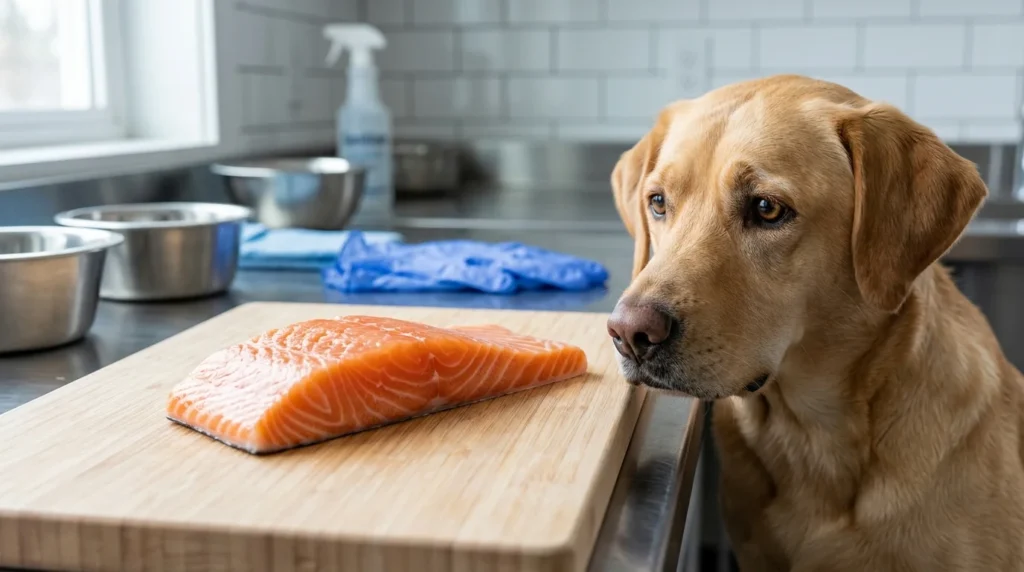
Raw salmon is not considered a safe choice for dogs. Fresh-looking salmon can still contain parasites or disease-causing bacteria that cannot be identified simply by looking at the fish. Dogs may become infected after eating raw or undercooked salmon that carries these organisms.
The risk is especially important with raw salmon from certain waterways where the parasites associated with salmon poisoning disease occur. Even if your dog has eaten raw fish before without becoming sick, that does not mean raw salmon is safe to feed intentionally.
Why Is Raw Salmon Dangerous for Dogs?
One of the main concerns is salmon poisoning disease. Despite its name, the condition is caused by an infection involving a parasite and a bacterium carried by the parasite. Dogs can become seriously ill after eating infected raw or undercooked salmon.
Raw salmon can also contain other parasites and bacteria. Depending on the fish and its source, these organisms may cause vomiting, diarrhea, loss of appetite, weakness, fever, dehydration, or other digestive and systemic problems.
Can Raw Salmon Cause Salmon Poisoning in Dogs?
Yes, infected raw or undercooked salmon can cause salmon poisoning disease in dogs. The condition is most strongly associated with salmonid fish from the Pacific Northwest of North America, including certain salmon, trout, and related fish.
Signs can develop after a dog eats infected fish and may include vomiting, diarrhea, fever, weakness, swollen lymph nodes, dehydration, and loss of appetite. Without prompt treatment, salmon poisoning disease can become fatal, so suspected exposure should be taken seriously.
Can Dogs Eat Raw Salmon Skin?
Raw salmon skin should not be given to dogs. The skin can carry the same parasites and bacteria found on or within raw fish, so removing the flesh from the skin does not necessarily eliminate the risks associated with feeding salmon raw.
If you want to give your dog salmon skin, it should be thoroughly cooked and served plain without seasonings, sauces, butter, garlic, onions, or excessive oil. Cooked skin can still be rich and fatty, so only a small amount should be offered.
Can Dogs Eat Raw Salmon Bones?
Raw salmon bones are not a safe treat for dogs. Fish bones can become lodged in the mouth or throat and may cause choking, injury, or digestive tract problems. Small bones can also be difficult to detect when mixed into pieces of fish.
Cooked fish bones are also dangerous because cooking can make them brittle and more likely to splinter. The safest approach is to remove all bones before giving salmon to your dog and check the meat carefully for any remaining pieces.
Can Dogs Eat Raw Salmon Sushi?
Dogs should not be given raw salmon used for sushi. Even salmon marketed for human raw consumption can carry parasites or bacteria, and preparing it as sushi does not automatically make it appropriate for dogs.
Sushi can create additional problems because it may contain soy sauce, spicy ingredients, sauces, seasonings, onions, garlic, or other foods that are unsuitable for dogs. Plain, thoroughly cooked salmon is a safer choice.
Can Dogs Eat Raw Salmon From the Grocery Store?
Grocery-store salmon should still be cooked before being given to a dog. Buying salmon from a reputable store does not guarantee that it is free from parasites or bacteria, and dogs can be vulnerable to infections from contaminated raw fish.
Do not assume that fresh, refrigerated, or high-quality salmon is safe simply because it looks clean. Proper cooking is a much more reliable way to reduce the risks associated with harmful organisms in salmon.
Can Dogs Eat Frozen Raw Salmon?
Freezing does not necessarily make raw salmon safe for dogs. Some freezing methods can reduce certain parasites, but household freezing conditions may not reliably eliminate all hazards, and freezing does not make raw fish free from every harmful bacterium.
For routine feeding, there is little reason to take the risk. Thoroughly cook salmon and remove the bones before serving it to your dog. This provides the nutritional benefits of salmon while reducing the risks associated with feeding it raw.
Can Puppies Eat Raw Salmon?
Puppies should not be given raw salmon. Young dogs need a complete and balanced diet for growth, and raw salmon can expose them to parasites and bacteria that may cause serious illness.
If you want to introduce salmon to a puppy, use plain, thoroughly cooked, boneless salmon in a small amount as an occasional treat. Introduce any new food gradually and stop feeding it if your puppy develops digestive problems or other unusual symptoms.
See Also: Can Dogs Eat Mayo? Safety, Risks & Feeding Guide
Can Dogs Eat Raw Salmon Every Day?
Raw salmon should not be part of a dog’s daily diet. Besides the infection risk, salmon can be relatively rich and fatty, and feeding too much fish can contribute to digestive upset or an unbalanced diet.
If salmon is used as a treat or food topper, it is better to serve it fully cooked, plain, and boneless. The amount should remain appropriate for your dog’s overall diet rather than replacing their nutritionally complete dog food.
What Happens If a Dog Eats Raw Salmon?
If your dog accidentally eats a small piece of raw salmon, do not automatically assume they will become sick. However, the risk depends on the fish’s source, how much was eaten, whether it contained bones, and whether it could carry parasites associated with salmon poisoning disease.
Monitor your dog closely for vomiting, diarrhea, fever, weakness, loss of appetite, swollen lymph nodes, dehydration, or unusual behavior. If the salmon came from an area where salmon poisoning disease occurs, or your dog develops concerning symptoms, contact a veterinarian promptly.
How Can Salmon Be Made Safer for Dogs?

The safest way to serve salmon to a dog is to cook it thoroughly and remove all bones before feeding. Keep the fish plain and avoid ingredients commonly added to human salmon dishes, such as garlic, onion, heavy sauces, excessive salt, butter, and spicy seasonings.
Allow the salmon to cool before giving it to your dog and offer an appropriate portion based on their size and overall diet. Cooked salmon can be an occasional treat, but it should not replace a complete and balanced dog food unless a veterinarian or qualified veterinary nutrition professional has formulated the diet.
How Much Cooked Salmon Can Dogs Eat?
If you decide to give your dog salmon, keep the portion small and treat it as an occasional addition to their regular diet. The right amount depends on your dog’s size, calorie needs, health, and overall diet. Salmon should always be thoroughly cooked, plain, and completely free of bones.
| Dog Size | General Treat Portion |
|---|---|
| Small dogs | 1–2 small pieces |
| Medium dogs | 2–4 small pieces |
| Large dogs | 4–6 small pieces |
| Extra-large dogs | A small serving, depending on their diet |
These are general serving suggestions rather than exact veterinary recommendations. If your dog has pancreatitis, obesity, allergies, digestive problems, or another condition requiring a controlled diet, ask your veterinarian before adding salmon regularly.
What Are the Symptoms of Salmon Poisoning in Dogs?
Salmon poisoning disease can cause symptoms such as vomiting, diarrhea, fever, weakness, loss of appetite, dehydration, and swollen lymph nodes. Dogs may initially seem mildly unwell before becoming increasingly sick.
Symptoms can vary depending on the infection and the individual dog. If a dog has eaten raw or undercooked salmon and later develops these signs, particularly after exposure in an area where salmon poisoning disease occurs, contact a veterinarian immediately.
How Long After Eating Raw Salmon Can a Dog Get Sick?
Signs of salmon poisoning disease do not necessarily appear immediately after a dog eats infected salmon. A dog can appear normal for a period before symptoms develop, which is why simply feeling fine immediately after eating raw fish does not completely rule out a problem.
If your dog has eaten raw salmon, tell your veterinarian when the fish was eaten, approximately how much was consumed, whether it was raw or undercooked, and where the salmon came from. This information can help the veterinarian assess the risk.
Can Dogs Eat Cooked Salmon?
Yes, properly cooked salmon can be a suitable occasional food for many dogs. Salmon provides high-quality protein and contains omega-3 fatty acids, which are nutrients commonly associated with a healthy diet.
The salmon should be thoroughly cooked and served plain. Remove all bones before feeding and avoid seasonings, sauces, garlic, onions, excessive salt, and large amounts of butter or oil.
Can Dogs Eat Smoked Salmon?
Smoked salmon is generally not a good choice for dogs. It often contains a high amount of sodium, and some smoked salmon products may include seasonings or other ingredients that dogs do not need.
A small accidental bite is unlikely to automatically cause a serious problem in an otherwise healthy dog, but smoked salmon should not be used as a regular treat. Plain cooked salmon is a much better option.
Can Dogs Eat Canned Salmon?
Some canned salmon can be suitable for dogs if it is plain, fully cooked, and free from harmful seasonings or excessive salt. Choose a product with simple ingredients and check carefully for added flavorings.
If the canned salmon contains a large amount of sodium, sauces, spices, or other unsuitable ingredients, it is better not to give it to your dog. If possible, choose plain salmon packed in water rather than heavily seasoned varieties.
Can Dogs Eat Salmon With Seasoning?
Dogs should not be given salmon heavily seasoned for human consumption. Garlic and onion are particularly important ingredients to avoid, while excessive salt, spicy seasonings, and rich sauces can also cause problems.
When preparing salmon for your dog, keep it simple. Cook the fish thoroughly without seasoning, allow it to cool, remove every bone, and serve a small amount alongside their normal food.
Can Dogs Eat Salmon With Butter or Oil?
It is better to avoid adding butter or large amounts of oil to salmon prepared for dogs. Rich and fatty foods can cause digestive upset and add unnecessary calories to a dog’s diet.
Plain cooked salmon already has its own flavor and does not need extra fat or sauce. If you want to share salmon with your dog, prepare their portion separately without the rich ingredients commonly used in human recipes.
See Also: Can Dogs Eat Noodles? Safety, Types, Risks & Feeding Tips
Can Raw Salmon Cause Worms in Dogs?
Raw salmon can expose dogs to parasites, including parasites involved in salmon poisoning disease. Other parasitic infections may also occur depending on the fish and its source.
This is one of the main reasons raw salmon is not recommended for dogs. Thorough cooking significantly reduces the risk from parasites and bacteria, making cooked salmon a safer alternative.
Can Raw Salmon Cause Bacterial Infection?
Yes, raw fish can carry harmful bacteria that may cause illness in dogs. The bacterial risk can vary depending on how the fish was handled, stored, and prepared.
Cooking salmon thoroughly is an important food-safety step. Keep raw fish away from your dog’s food and water bowls, wash your hands after handling raw fish, and clean preparation surfaces properly to reduce the risk of contamination.
What If My Dog Ate Raw Salmon?
If your dog has eaten raw salmon, note how much they consumed and whether the fish included bones. Do not deliberately make your dog vomit unless a veterinarian specifically instructs you to do so.
Contact your veterinarian if the salmon was potentially contaminated, came from an area associated with salmon poisoning disease, contained bones, or your dog develops vomiting, diarrhea, fever, weakness, loss of appetite, or other concerning symptoms. Early veterinary advice is especially important when salmon poisoning disease is possible.
Is Salmon Good for Dogs?
Cooked salmon can provide protein and omega-3 fatty acids, making it a nutritious occasional treat for many dogs. However, its benefits do not make raw salmon worth the additional parasite and bacterial risks.
The safest approach is to offer thoroughly cooked, plain, boneless salmon in moderation. Your dog’s main diet should still provide complete and balanced nutrition appropriate for their life stage and individual needs.
Frequently Asked Questions
Can dogs eat raw salmon?
No, raw salmon is not recommended for dogs because it can contain parasites and harmful bacteria. In some regions, infected raw salmon can cause salmon poisoning disease, which can become life-threatening without treatment.
Can dogs eat cooked salmon?
Yes, many dogs can eat plain, thoroughly cooked salmon in moderation. Remove all bones and avoid garlic, onion, excessive salt, butter, rich sauces, and other seasonings.
What happens if my dog eats raw salmon?
A dog may remain normal initially, but raw salmon can expose them to parasites and bacteria. Monitor closely and contact your veterinarian, especially if the fish came from an area where salmon poisoning disease occurs or if symptoms develop.
Can puppies eat salmon?
Puppies can generally have small amounts of plain, thoroughly cooked, boneless salmon as an occasional treat. Raw salmon should be avoided because puppies can also be exposed to parasites and bacteria.
Can dogs eat salmon skin?
Cooked salmon skin may be given in a small amount if it is plain and free from bones and seasonings. Raw salmon skin should not be fed because it can carry the same parasite and bacterial risks as raw salmon.
Conclusion
Dogs should not eat raw salmon because uncooked fish can carry parasites and harmful bacteria. One of the most serious concerns is salmon poisoning disease, which can cause severe illness and may be fatal without prompt veterinary treatment.
If you want to give your dog salmon, choose thoroughly cooked, plain, boneless fish and serve it in moderation. Avoid smoked or heavily seasoned salmon and keep human salmon dishes away from your dog’s bowl. If your dog eats raw salmon and later develops vomiting, diarrhea, fever, weakness, loss of appetite, or other unusual symptoms, contact your veterinarian promptly.
See Also: Can Dogs Eat Crackers? Safety, Types, Risks & Feeding Tips


