
Can Dogs Eat Ketchup? Safety & Risks
Dogs should generally not eat ketchup. A tiny amount of plain ketchup accidentally licked from a plate is unlikely to cause serious problems in most healthy dogs, but ketchup is not a healthy treat for them. It is usually high in sugar and salt and may contain seasonings that are unsuitable for dogs.
The biggest concern is the ingredients used in some ketchup products. Many varieties contain onion or garlic powder, which can be harmful to dogs in sufficient amounts. Ketchup may also contain added sugar, artificial sweeteners, spices, and preservatives. Because recipes vary between brands, it is important to check the ingredient label before giving any ketchup to your dog.
Is Ketchup Safe for Dogs?
Ketchup is not considered a recommended food for dogs. Plain tomato itself can be safe for dogs when it is ripe and given in appropriate amounts, but ketchup is a processed condiment with additional ingredients that dogs do not need.
If your dog accidentally eats a small lick of ketchup, there is usually no reason to panic. However, regularly adding ketchup to your dog’s meals can expose them to unnecessary salt, sugar, calories, and potentially harmful seasonings.
Why Is Ketchup Bad for Dogs?
Ketchup can be problematic because it is formulated for human taste rather than canine nutrition. Many commercial ketchups contain added sugar and a significant amount of sodium. Eating too much can contribute to stomach upset and excessive thirst, while frequent high-calorie treats are not appropriate for a balanced canine diet.
Another concern is the seasoning. Some ketchup products contain onion powder or garlic powder. These ingredients belong to the allium family and can be harmful to dogs, particularly when consumed in larger quantities. Always check the label rather than assuming every ketchup has the same ingredients.
Can Dogs Eat Tomato Ketchup?
Tomato ketchup should generally be avoided even though ripe tomatoes themselves can be suitable for dogs in moderation. The difference is that ketchup contains several ingredients besides tomatoes, including salt, sugar, vinegar, and various seasonings.
A small accidental taste of tomato ketchup is unlikely to cause a serious reaction in most healthy dogs. However, there is no nutritional reason to add ketchup to your dog’s food. Plain, ripe tomato given occasionally is a more appropriate option than processed ketchup, provided it is offered in a suitable amount.
Can Puppies Eat Ketchup?
Puppies should not be given ketchup. Young dogs need nutritionally balanced puppy food to support their growth and development, while ketchup mainly adds salt, sugar, and flavor without providing the nutrition they need.
If a puppy accidentally licks a small amount of ketchup, monitor them for digestive upset and check the product’s ingredients. If the ketchup contained onion or garlic and your puppy consumed a significant amount, contact a veterinarian for guidance.
See Also: What Foods Can Dogs Not Eat? Complete Safety Guide
Can Dogs Eat Ketchup Every Day?
No, dogs should not eat ketchup every day. Even ketchup without concerning ingredients is still a processed condiment that can add unnecessary sodium, sugar, and calories to your dog’s diet.
Daily treats should be made from foods that are appropriate for dogs and given in controlled portions. If your dog likes the taste of tomato, ask your veterinarian about suitable ways to include dog-safe foods rather than using ketchup as a topping.
Can Dogs Eat Ketchup With Onion or Garlic?
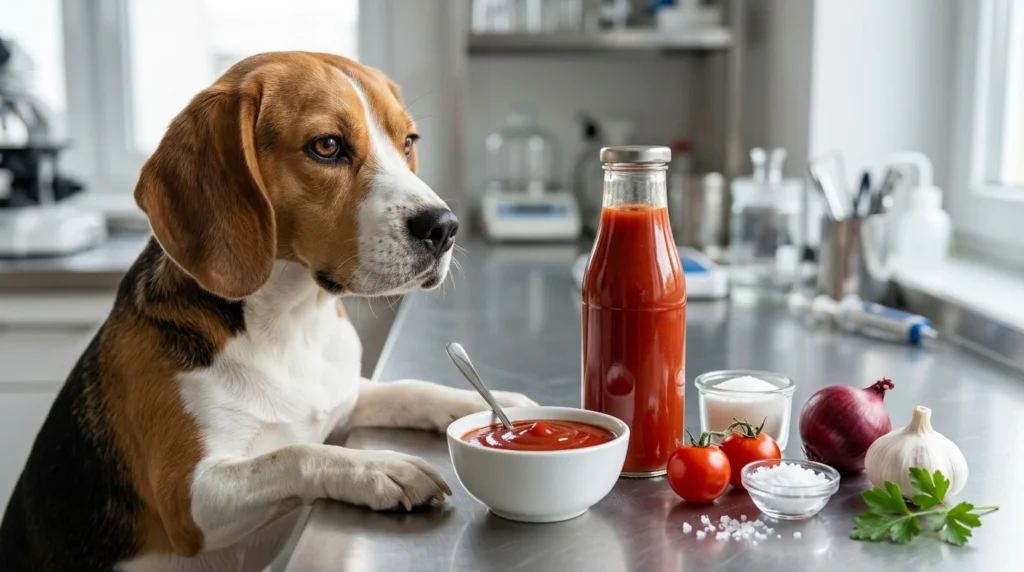
Dogs should not eat ketchup that contains onion or garlic. Onion and garlic can be harmful to dogs, and concentrated forms such as powders can be particularly important to notice on ingredient labels.
If your dog has eaten a large quantity of ketchup containing onion or garlic, do not assume that the small serving size of ketchup makes it harmless. Keep the packaging available so you can tell your veterinarian exactly what product and ingredients were consumed.
Can Dogs Eat Sugar-Free Ketchup?
Sugar-free ketchup is not automatically safe for dogs. Removing regular sugar does not remove the other ingredients that can make ketchup unsuitable, such as high sodium or onion and garlic seasoning.
You should also check the label for artificial sweeteners. Xylitol, in particular, is extremely dangerous to dogs and can cause a medical emergency. If a product contains xylitol and your dog has eaten it, contact a veterinarian or animal poison service immediately.
Can Dogs Eat Spicy Ketchup?
Spicy ketchup is not a good choice for dogs. Hot peppers and spicy seasonings can irritate a dog’s mouth and digestive system and may cause vomiting, diarrhea, stomach discomfort, or excessive thirst.
Spicy ketchup can also contain additional ingredients such as chili powder, pepper, onion, or garlic. If your dog accidentally tastes a small amount, monitor them closely, but avoid intentionally giving spicy ketchup as a treat or food topping.
Can Dogs Eat Ketchup on Fries?
Dogs should not be given fries covered in ketchup. The ketchup may contain excess salt, sugar, onion, or garlic, while fries are commonly high in fat and sodium. Together, they make an especially unsuitable human snack for dogs.
A small accidental bite is usually less concerning than eating a large serving. If your dog steals a few fries with ketchup, monitor them for vomiting, diarrhea, unusual thirst, or abdominal discomfort and avoid giving them additional salty or fatty foods.
How Much Ketchup Can a Dog Have?
There is no recommended serving of ketchup for dogs because it is not a necessary or healthy part of their diet. If a healthy dog accidentally gets a tiny lick of plain ketchup, it will usually not cause a serious problem. The amount becomes more concerning when a dog eats several spoonfuls or consumes a product containing onion, garlic, or xylitol.
| Dog Size | Accidental Small Amount |
|---|---|
| Small dogs | Monitor closely for digestive upset. |
| Medium dogs | A tiny amount is usually unlikely to cause serious problems. |
| Large dogs | A small accidental taste is generally less concerning. |
What Happens If a Dog Eats Ketchup?
If your dog eats a small amount of ordinary ketchup, they may have no symptoms at all. Some dogs can experience mild stomach upset because of the salt, sugar, vinegar, or seasonings. Possible signs include increased thirst, gas, loose stool, vomiting, or temporary abdominal discomfort.
The ingredients and quantity matter. Eating a large amount of ketchup can be more concerning, particularly if it contains onion or garlic powder. Products containing xylitol require immediate veterinary attention because xylitol is highly toxic to dogs.
See Also: Can Dogs Eat Mac and Cheese? Safety & Risks
Can Ketchup Cause Diarrhea in Dogs?
Yes, ketchup can cause diarrhea in some dogs. The combination of sugar, salt, vinegar, and seasonings may upset a dog’s digestive system, especially when they eat more than a small amount.
If your dog develops mild diarrhea after accidentally eating ketchup, provide fresh water and avoid giving additional human snacks. If diarrhea is severe, persistent, bloody, or accompanied by repeated vomiting, weakness, or significant discomfort, contact your veterinarian.
Can Ketchup Make Dogs Vomit?
Ketchup can cause vomiting when it irritates a dog’s stomach, particularly after a large serving. Spicy ketchup or ketchup containing several seasonings may be more likely to cause digestive discomfort.
If your dog vomits once after eating a small amount, monitor them and keep fresh water available. Repeated vomiting, weakness, severe abdominal pain, or difficulty keeping water down should be treated as a reason to seek veterinary advice.
Can Dogs Eat Ketchup With Mustard?
It is better not to give dogs ketchup mixed with mustard. Mustard can contain ingredients that irritate a dog’s digestive system, while ketchup may already contain excessive salt, sugar, and seasonings.
A small accidental taste of the mixture is unlikely to cause serious problems in most healthy dogs, but larger amounts can lead to stomach upset. Avoid using ketchup and mustard as toppings on your dog’s meals or treats.
Can Dogs Eat Homemade Ketchup?
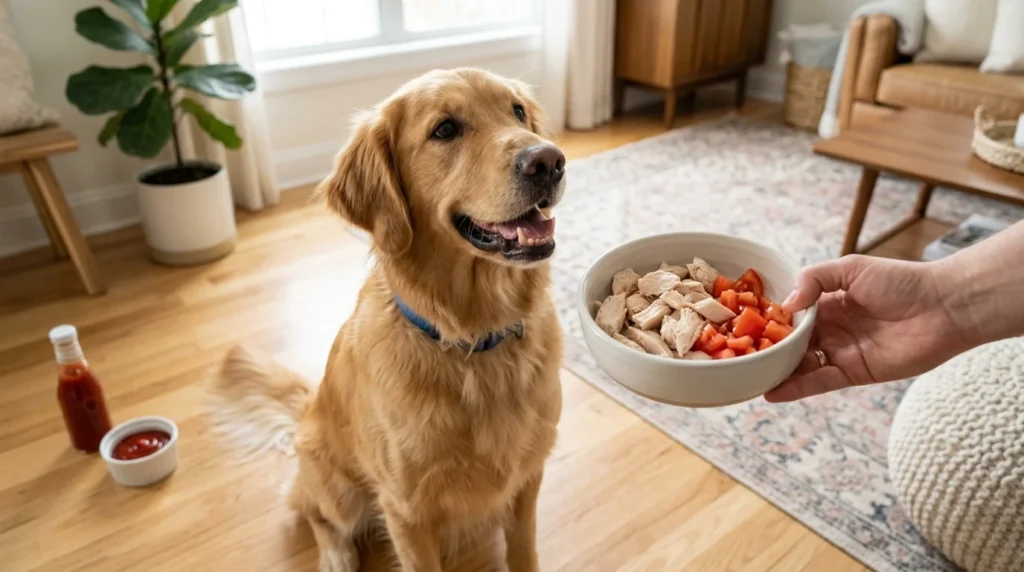
Homemade ketchup can be different from commercial ketchup because you control the ingredients. However, homemade ketchup is only potentially more suitable when it does not contain onion, garlic, excessive salt, spicy seasonings, or unsafe sweeteners.
Even homemade ketchup is unnecessary for dogs. If you want to share tomato with your dog, plain ripe tomato without harmful seasonings is a simpler option. Introduce any new food in a small amount and watch for digestive problems.
Can Dogs Eat Ketchup on Chicken?
Dogs should not regularly eat chicken covered in ketchup. Plain, fully cooked chicken can be a suitable occasional treat for many dogs, but adding ketchup introduces unnecessary sugar, salt, and seasonings.
This is especially important when the chicken is also fried, spicy, or heavily seasoned. A safer option is plain cooked chicken without sauces, onion, garlic, excessive salt, or spicy ingredients.
What Should I Do If My Dog Eats Ketchup?
First, determine how much ketchup your dog ate and check the ingredient label. If it was only a small lick of ordinary ketchup and your dog is acting normally, monitor them and provide access to fresh water.
If your dog ate a large quantity, the product contains onion, garlic, or xylitol, or your dog develops concerning symptoms, contact a veterinarian promptly. Keep the ketchup container or ingredient list available so the veterinarian can identify exactly what your dog consumed.
When Should You Call a Veterinarian?
Contact your veterinarian if your dog eats a large amount of ketchup or develops repeated vomiting, severe diarrhea, weakness, unusual behavior, significant abdominal discomfort, or other concerning symptoms. Extra caution is appropriate for puppies and smaller dogs because the same quantity represents more food relative to their body size.
If the ketchup contains xylitol, seek emergency veterinary help immediately rather than waiting for symptoms. Do not try to make your dog vomit unless a veterinarian specifically tells you to do so.
What Can Dogs Eat Instead of Ketchup?
Instead of ketchup, you can offer dog-safe foods such as small pieces of plain cooked chicken, carrots, cucumber, or green beans. Commercial dog treats formulated for your dog’s age and size are another simple option.
If you want to give your dog tomato, plain ripe tomato in a small amount is generally a better choice than seasoned ketchup. Remove the green parts and avoid giving large quantities. Your dog’s main diet should remain nutritionally complete and balanced.
Frequently Asked Questions
Can dogs eat a little ketchup?
A tiny amount of ordinary ketchup accidentally eaten by a healthy dog is usually unlikely to cause serious problems. However, ketchup is not a recommended regular treat because it can contain too much salt, sugar, and seasoning.
Is ketchup toxic to dogs?
Ketchup itself is not generally considered a specific toxin, but some products contain ingredients that can be dangerous to dogs. Onion, garlic, and especially xylitol are important ingredients to check for on the label.
What happens if my dog eats ketchup?
A small amount may cause no reaction, while larger amounts can cause vomiting, diarrhea, excessive thirst, gas, or stomach discomfort. The ingredients and quantity eaten determine the level of concern.
Can dogs eat ketchup with onion powder?
Dogs should not be given ketchup containing onion powder. Onion can be harmful to dogs, and concentrated forms such as powder should be taken seriously, especially when a dog consumes a larger amount.
Can dogs eat sugar-free ketchup?
Sugar-free ketchup is not automatically safe for dogs. Check the ingredients carefully for xylitol and other sweeteners or seasonings. If xylitol is present and your dog has eaten the product, contact a veterinarian immediately.
Conclusion
Dogs should generally avoid ketchup. A tiny accidental lick of ordinary ketchup is usually not a major concern for a healthy dog, but ketchup can contain excessive salt, sugar, and seasonings. Some varieties may also contain onion, garlic, or xylitol, making them more dangerous.
For regular treats, choose simple dog-safe foods or treats made specifically for dogs. If your dog eats a large amount of ketchup or develops vomiting, severe diarrhea, weakness, or other concerning symptoms, contact your veterinarian for appropriate advice.
See Also: Can Dogs Eat Cheetos? Safety & Risks


