

Can Dogs Eat Watermelon Rind? Risks, Safety & Feeding Guide
Watermelon is a refreshing summer fruit that many dogs enjoy because of its sweet taste and high water content. While the juicy red flesh is generally considered a safe treat for dogs, many pet owners wonder about the tougher green outer layer — the watermelon rind.
The answer is different from the fruit itself. Dogs should not eat large amounts of watermelon rind because it is tough, difficult to digest, and may cause digestive problems. Understanding the risks and proper preparation can help you safely share watermelon with your dog.
Can Dogs Eat Watermelon Rind?
No, dogs should not eat watermelon rind. Although watermelon rind is not considered poisonous, it is very tough and contains a lot of fiber that can be difficult for dogs to break down.
Eating watermelon rind may lead to stomach discomfort, vomiting, diarrhea, or digestive blockages, especially in small dogs or dogs that swallow large pieces without chewing.
Why Is Watermelon Rind Bad for Dogs?
Watermelon rind is harder and more fibrous than the soft inner fruit. Dogs have difficulty digesting this thick outer layer, which can put extra stress on their digestive system.
Large pieces of rind can also become a choking hazard or create an intestinal blockage if they get stuck while moving through the digestive tract.
Can Dogs Eat Small Pieces of Watermelon Rind?
A tiny accidental piece of watermelon rind is unlikely to cause serious harm in most healthy dogs. However, intentionally feeding watermelon rind is not recommended.
If your dog eats a small amount, monitor them for signs of discomfort such as vomiting, diarrhea, loss of appetite, or unusual behavior.
Can Dogs Eat Watermelon Rind Skin?
No, dogs should avoid eating watermelon skin. The green outer layer is even tougher than the lighter inner rind and provides little nutritional value for dogs.
Always remove the entire rind and only offer the soft red watermelon flesh as an occasional treat.
Can Puppies Eat Watermelon Rind?
No, puppies should not eat watermelon rind. Young dogs have sensitive digestive systems, and tough foods can increase the risk of choking or stomach problems.
If you want to give watermelon to a puppy, remove the rind and seeds, then provide only small pieces of the soft fruit.
What Happens If a Dog Eats Watermelon Rind?
If a dog eats watermelon rind, the reaction depends on the amount consumed and the dog’s size. Some dogs may experience no issues, while others may develop digestive problems.
Common signs to watch for include vomiting, diarrhea, abdominal discomfort, constipation, difficulty passing stool, or reduced appetite.
How Much Watermelon Rind Can Dogs Eat?
The safest amount of watermelon rind for dogs is zero. Since the rind offers no major health benefits and carries potential risks, it is better to remove it completely before serving watermelon.
| Dog Size | Watermelon Rind Recommendation |
|---|---|
| Small Dogs | Avoid completely |
| Medium Dogs | Avoid completely |
| Large Dogs | Avoid completely |
| Puppies | Do not feed |
Can Dogs Eat Watermelon Without the Rind?
Yes, dogs can eat watermelon flesh after removing the rind and seeds. The red inner part is hydrating, low in calories, and contains vitamins A, B6, and C.
Serve watermelon in small bite-sized pieces and avoid adding sugar, salt, or other toppings.
See Also: Can Dogs Eat Butternut Squash? Benefits, Risks & Safe Feeding Guide
How to Safely Share Watermelon With Your Dog

The safest way to share watermelon with your dog is to remove the rind and seeds completely before serving. Only offer the soft red flesh in small, bite-sized pieces that are easy for your dog to chew.
You can serve fresh watermelon cubes, frozen watermelon treats, or small pieces mixed with your dog’s regular food. Avoid watermelon products that contain added sugar, artificial sweeteners, or flavorings.
Can Dogs Eat Watermelon Seeds?
No, dogs should not eat watermelon seeds. While a few accidentally swallowed seeds may not cause serious problems, large amounts can create digestive issues or possible intestinal blockages.
Seedless watermelon is a safer option, but it is still important to check and remove any remaining seeds before feeding it to your dog.
Is Watermelon Good for Dogs to Eat?
Yes, watermelon can be a healthy occasional treat for dogs when served correctly. It contains a high amount of water, making it a refreshing snack that may help support hydration.
Watermelon also provides vitamins A, B6, and C, along with antioxidants that support normal immune function and overall health.
How to Prepare Watermelon for Dogs
Start by washing the watermelon, cutting away the hard green rind, and removing all seeds. Cut the red flesh into small pieces based on your dog’s size.
For a cooling summer treat, you can freeze small watermelon cubes. Always introduce new foods slowly to make sure your dog tolerates them well.
Does Watermelon Have Benefits For Dogs?
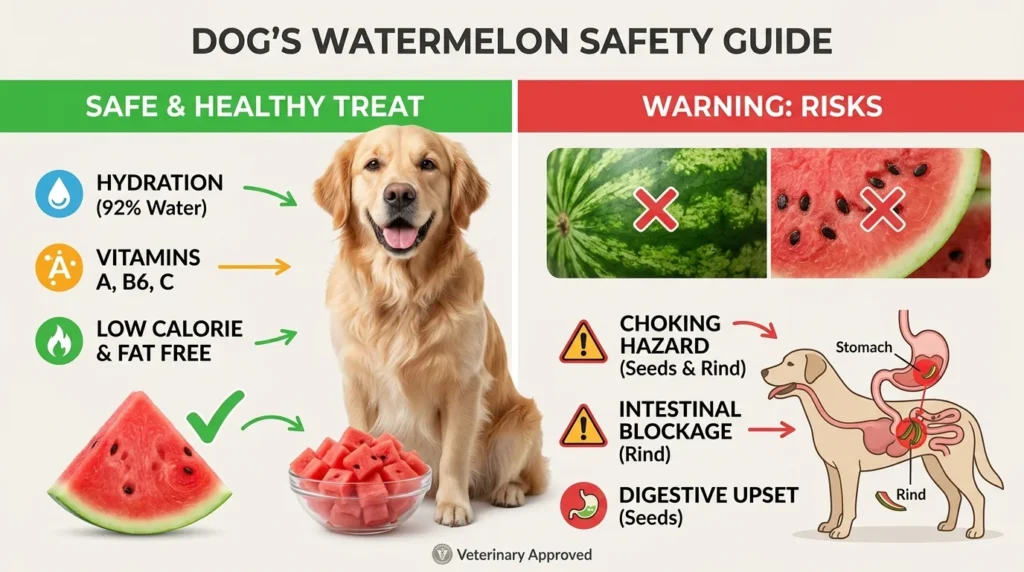
Yes, watermelon provides several benefits when offered in moderation. Its high water content can help with hydration, while fiber may support healthy digestion.
The antioxidants and vitamins found in watermelon may contribute to healthy skin, a shiny coat, and normal body functions.
Does Watermelon Have Any Risks For Dogs?
Yes, watermelon can have risks if fed incorrectly. The rind may cause choking or digestive blockages, while seeds may create intestinal problems if consumed in large amounts.
Eating too much watermelon may also cause diarrhea or stomach upset because of its natural sugar and fiber content.
See Also: Can Dogs Eat Black Olives? Benefits, Risks & Safe Feeding Guide
Frequently Asked Questions
Can dogs eat watermelon rind?
No. Watermelon rind is tough to digest and may cause choking, stomach problems, or intestinal blockages.
What should I do if my dog eats watermelon rind?
Monitor your dog for symptoms like vomiting, diarrhea, constipation, or loss of appetite. Contact your veterinarian if symptoms appear or if your dog ate a large amount.
Can dogs eat watermelon without the rind?
Yes. The red flesh of watermelon is safe for most dogs when served without rind and seeds.
Can puppies eat watermelon?
Yes. Puppies can eat small amounts of seedless, rind-free watermelon as an occasional treat.
How often can dogs eat watermelon?
Most healthy dogs can enjoy small amounts of watermelon occasionally, but it should not replace their regular balanced diet.
Conclusion
Dogs should not eat watermelon rind because it is tough, difficult to digest, and may create choking or blockage risks. While a tiny accidental piece may not always cause harm, intentionally feeding rind is not recommended.
The safest choice is to remove the rind and seeds completely and offer only small pieces of fresh watermelon flesh. When prepared properly and given in moderation, watermelon can be a refreshing and healthy treat for your dog.
See Also: Can Dogs Eat Honeydew? Benefits, Risks & Safe Feeding Guide


