

Can Dogs Eat Cottage Cheese? Benefits, Risks & Safe Feeding Guide
Cottage cheese is a soft dairy product that is high in protein and calcium, making it a popular food for people looking for a healthy snack. Many dog owners wonder whether cottage cheese is also safe to share with their pets. The answer is yes, but only in moderation and only for dogs that can tolerate dairy products.
While cottage cheese can provide beneficial nutrients, some dogs are lactose intolerant and may develop digestive upset after eating dairy. Choosing plain, low-fat cottage cheese and serving small portions is the safest approach.
Can Dogs Eat Cottage Cheese?
Yes, dogs can eat plain cottage cheese in moderation. Cottage cheese is a good source of protein, calcium, vitamin B12, phosphorus, and other nutrients that support muscle health and strong bones.
However, not every dog digests dairy well. Dogs with lactose intolerance may experience diarrhea, gas, bloating, or stomach discomfort after eating cottage cheese.
How Much Cottage Cheese Can Dogs Eat? Can Your Dog Eat?
The amount of cottage cheese your dog can safely eat depends on their size, age, activity level, and ability to digest dairy. Cottage cheese should be treated as an occasional snack rather than a regular meal.
Introduce it slowly by offering a small amount at first. Monitor your dog for digestive problems before increasing the serving size.
| Dog Size | Recommended Amount | Frequency |
|---|---|---|
| Small Dogs | 1–2 teaspoons | Occasionally |
| Medium Dogs | 1–2 tablespoons | Occasionally |
| Large Dogs | 2–4 tablespoons | Occasionally |
| Puppies | Very small amount | Introduce slowly |
Can Dogs Eat Low-Fat Cottage Cheese?
Yes, low-fat cottage cheese is generally the best option for dogs. It provides protein and calcium while containing less fat than regular cottage cheese, making it easier on your dog’s digestive system.
Choose plain low-fat varieties without added herbs, garlic, onions, chives, or flavorings that could be harmful.
Can Dogs Eat Full-Fat Cottage Cheese?
Dogs can eat small amounts of full-fat cottage cheese, but it is not the healthiest choice. Higher fat content may contribute to stomach upset, weight gain, or increase the risk of pancreatitis in sensitive dogs.
Low-fat or reduced-fat cottage cheese is usually the safer option for regular occasional treats.
Can Dogs Eat Cottage Cheese Every Day?
No, dogs should not eat cottage cheese every day. While it contains beneficial nutrients, daily feeding may provide too much dairy, fat, sodium, or calories depending on the product.
Offering cottage cheese only occasionally helps reduce the risk of digestive problems while allowing your dog to enjoy its nutritional benefits.
Can Puppies Eat Cottage Cheese?
Yes, puppies can eat very small amounts of plain cottage cheese if they tolerate dairy well. It provides protein and calcium that support growth, but it should never replace complete puppy food.
Introduce cottage cheese slowly and monitor for diarrhea or stomach upset, as young puppies may be more sensitive to lactose.
See Also: Can Dogs Eat Bananas? Everything You Need to Know Before Feeding
Can Dogs Eat Cottage Cheese With Fruit?
No, cottage cheese mixed with fruit is not always safe. Some fruit combinations may include grapes, raisins, artificial sweeteners, or added sugar that can be harmful to dogs.
If you want to combine cottage cheese with fruit, choose safe fruits such as blueberries or small pieces of banana and avoid products with added ingredients.
Can Dogs Eat Flavored Cottage Cheese?
No, flavored cottage cheese should be avoided. Many flavored varieties contain herbs, onions, garlic, chives, sugar, or artificial flavorings that are not suitable for dogs.
Always choose plain cottage cheese with the fewest possible ingredients for the safest feeding experience.
Can Dogs Eat Cottage Cheese and Rice?
Yes, dogs can eat plain cottage cheese mixed with plain cooked rice in small amounts if they tolerate dairy well. This combination is sometimes used as a bland meal for dogs recovering from mild digestive upset, but it should only be fed under your veterinarian’s guidance if your dog is ill.
Use plain white rice and plain low-fat cottage cheese without salt, herbs, or seasonings. This mixture should never replace a balanced long-term diet.
Can Dogs Eat Cottage Cheese With Their Food?
Yes, a small spoonful of plain cottage cheese can occasionally be mixed into your dog’s regular food to add variety and extra protein. Most dogs enjoy the creamy texture and mild flavor.
Keep the amount small to avoid adding too many calories or causing digestive upset, especially if your dog is sensitive to dairy products.
Can Dogs Eat Lactose-Free Cottage Cheese?
Yes, lactose-free cottage cheese is often a better option for dogs that have mild lactose intolerance. It provides similar nutrients while reducing the chance of digestive discomfort.
Even lactose-free products should be served in moderation because they still contain calories and fat.
Is Cottage Cheese Good for Dogs to Eat?
Yes, plain low-fat cottage cheese can be a healthy occasional treat for many dogs. It provides high-quality protein, calcium, phosphorus, vitamin B12, and other nutrients that support muscles, bones, and overall health.
However, cottage cheese is not necessary for a dog’s diet. A complete and balanced dog food already provides the nutrients most dogs need every day.
See Also: Can Dogs Eat Watermelon Rind or Seeds? Full Safety Guide
How to Safely Share Cottage Cheese With Your Dog

Choose plain, low-fat cottage cheese with no added herbs, onions, garlic, chives, sugar, or artificial sweeteners. Serve small portions based on your dog’s size and introduce it gradually.
Watch your dog for signs of lactose intolerance such as diarrhea, gas, bloating, or vomiting. If these symptoms occur, stop feeding dairy products and consult your veterinarian.
Does Cottage Cheese Have Benefits For Dogs?
Yes, cottage cheese contains high-quality protein that supports muscle maintenance and tissue repair. It also provides calcium and phosphorus that help maintain healthy bones and teeth.
Its B vitamins contribute to normal energy metabolism, making cottage cheese a nutritious occasional snack for dogs that tolerate dairy well.
Does Cottage Cheese Have Any Risks For Dogs?
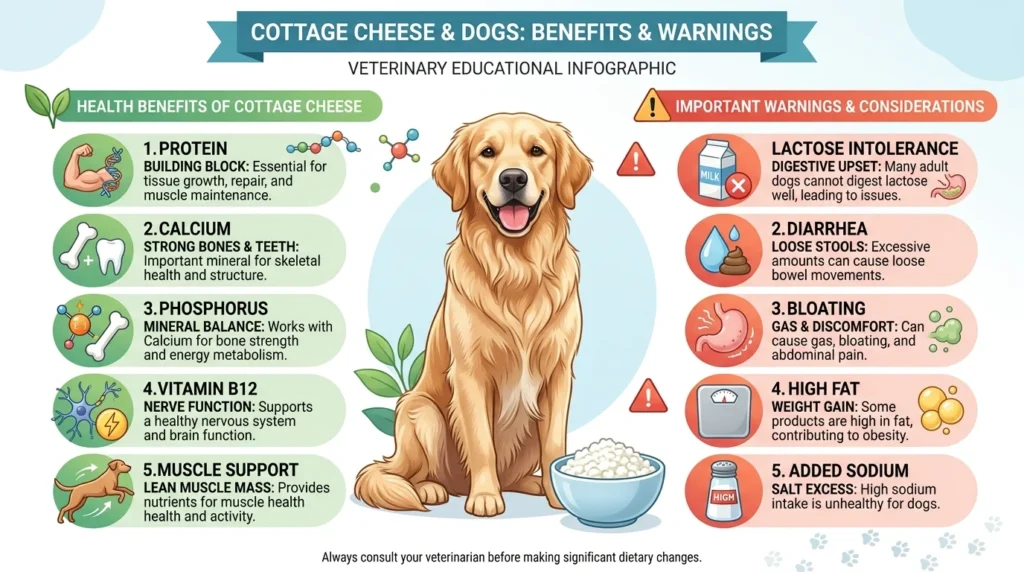
Yes, cottage cheese can cause digestive problems in dogs that are lactose intolerant. Symptoms may include diarrhea, gas, bloating, or stomach discomfort after eating dairy.
Some cottage cheese products are also high in sodium or fat, which may not be suitable for dogs with certain health conditions. Choosing low-fat, low-sodium varieties reduces these risks.
Frequently Asked Questions
Can dogs eat cottage cheese every day?
No. Cottage cheese should only be an occasional treat rather than a daily food.
Is low-fat cottage cheese better for dogs?
Yes. Low-fat cottage cheese is generally easier to digest and contains less fat than regular cottage cheese.
Can puppies eat cottage cheese?
Yes. Puppies can eat very small amounts if they tolerate dairy, but complete puppy food should remain their primary diet.
Can lactose-intolerant dogs eat cottage cheese?
Some may tolerate lactose-free cottage cheese better, but many dogs with lactose intolerance should avoid dairy altogether.
Can cottage cheese upset a dog’s stomach?
Yes. Dogs that cannot digest lactose may develop diarrhea, gas, bloating, or vomiting after eating cottage cheese.
Conclusion
Dogs can safely eat plain low-fat cottage cheese in moderation if they tolerate dairy products. It provides protein, calcium, phosphorus, and other nutrients that support overall health when served as an occasional treat.
Choose plain, low-fat, and low-sodium varieties without added flavorings, and always introduce cottage cheese gradually. When fed responsibly alongside a balanced diet, cottage cheese can be a nutritious snack for many healthy dogs.
See Also: Can Dogs Eat Rice Every Day? Complete Guide to Rice for Dogs


