

Can Dogs Eat Squash? Benefits, Risks & Safe Feeding Guide
Squash is a nutritious vegetable that comes in many varieties, including butternut squash, acorn squash, spaghetti squash, and yellow squash. It is packed with vitamins, minerals, fiber, and antioxidants that support overall health. Many dog owners wonder whether squash is a safe vegetable to share with their pets.
The good news is that most plain, cooked squash varieties are safe for dogs when served in moderation. However, some parts of the squash, such as the skin and seeds, may be difficult to digest, and squash prepared with butter, salt, or spices should be avoided. Understanding how to prepare squash correctly helps your dog enjoy its nutritional benefits safely.
Can Dogs Eat Squash?
Yes, dogs can eat squash when it is cooked and served plain. Squash is low in calories and contains vitamins A, C, E, potassium, and fiber that may support healthy digestion, immune function, and eye health.
Squash should only be offered as an occasional treat or meal topper. It should not replace your dog’s complete and balanced diet, which provides all the nutrients they need.
How Much Squash Can Dogs Eat? Can Your Dog Eat?
The amount of squash your dog can eat depends on their size, age, and overall health. While squash is nutritious, too much fiber may lead to digestive upset, including gas or diarrhea.
Introduce squash gradually by offering a small amount at first. Observe your dog for any signs of stomach discomfort before making it a regular occasional treat.
| Dog Size | Recommended Squash Amount | Frequency |
|---|---|---|
| Small Dogs | 1–2 teaspoons | Occasionally |
| Medium Dogs | 1–2 tablespoons | Occasionally |
| Large Dogs | 2–4 tablespoons | Occasionally |
| Puppies | Small amount | Introduce slowly |
Can Dogs Eat Butternut Squash?
Yes, butternut squash is one of the best squash varieties for dogs. It contains fiber, beta-carotene, vitamin A, vitamin C, and antioxidants that may support immune health and healthy vision.
Serve butternut squash cooked, plain, and without seasoning. Remove the skin and seeds before feeding because they can be difficult for dogs to digest.
Can Dogs Eat Yellow Squash?
Yes, yellow squash is safe for dogs when cooked or served raw in small amounts. It is low in calories and contains vitamins and minerals that contribute to overall health.
Cut yellow squash into bite-sized pieces before serving. Avoid butter, salt, garlic, onions, or spices that are commonly added during cooking.
Can Dogs Eat Zucchini Squash?
Yes, zucchini is a safe and healthy squash for dogs. It is rich in fiber, vitamin C, potassium, and antioxidants while remaining low in calories.
Dogs can eat zucchini either raw or cooked, provided it is plain and cut into manageable pieces. It makes an excellent healthy snack for many dogs.
Can Dogs Eat Acorn Squash?
Yes, dogs can eat cooked acorn squash after the skin and seeds have been removed. Acorn squash provides fiber, vitamins, and antioxidants that may support digestion and overall health.
Cook the squash thoroughly until it becomes soft and easy to chew. Avoid seasoning or adding sugar, butter, or sauces.
Can Dogs Eat Squash Skin?
Dogs should generally avoid eating large amounts of squash skin. While small pieces may not be harmful, the skin can be tough and difficult to digest, especially in larger squash varieties.
Removing the skin before serving makes squash easier for dogs to chew and digest while reducing the chance of digestive discomfort.
Can Puppies Eat Squash?
Yes, puppies can eat small amounts of cooked squash. Squash provides vitamins and fiber that may support healthy growth, but puppies should receive most of their nutrition from complete puppy food.
Introduce squash slowly and monitor your puppy for digestive changes. Always serve it plain without any seasonings or added ingredients.
Can Dogs Eat Squash Seeds?
Dogs should not regularly eat squash seeds. Although they are not considered highly toxic, the seeds can be difficult to digest and may present a choking hazard, especially for small dogs.
Removing the seeds before serving squash is the safest option. Plain squash flesh is much easier for dogs to digest and provides the nutritional benefits without the added risks.
Can Dogs Eat Raw Squash?
Dogs can eat small amounts of raw squash, particularly softer varieties like zucchini or yellow squash. However, raw squash can be harder to chew and digest than cooked squash.
Cooked squash is generally the better choice because it becomes softer and is easier on your dog’s digestive system. Always cut raw squash into small bite-sized pieces.
Can Dogs Eat Cooked Squash?
Yes, cooked squash is the safest way to serve this vegetable to dogs. Cooking softens the flesh, making it easier to chew and digest while preserving many of its nutrients.
Serve cooked squash plain without butter, salt, garlic, onions, oils, or spices. Steamed, baked, or boiled squash is usually the healthiest preparation.
Can Dogs Eat Squash Every Day?
Dogs should not eat squash every day unless your veterinarian recommends it. Although squash is nutritious, too much fiber may cause digestive issues such as gas or loose stools.
Offering squash as an occasional treat or meal topper is a healthier approach. Variety helps ensure your dog receives balanced nutrition.
Is Squash Good for Dogs to Eat?
Yes, squash is a healthy vegetable for most dogs. It contains vitamins A, C, and E, antioxidants, potassium, and fiber that support immune health, digestion, and healthy eyesight.
Because squash is naturally low in calories, it also makes a good treat for dogs that need to maintain a healthy weight.
How to Safely Share Squash With Your Dog

Wash the squash thoroughly, remove the skin and seeds, and cook it until soft before serving. Cut the cooked squash into small pieces appropriate for your dog’s size.
See Also: Can Dogs Eat Tomatoes? What’s Safe and What’s Toxic Explained
Never add butter, salt, sugar, garlic, onions, or seasonings. Introduce squash gradually and monitor your dog for any digestive discomfort after eating it.
Does Squash Have Benefits For Dogs?
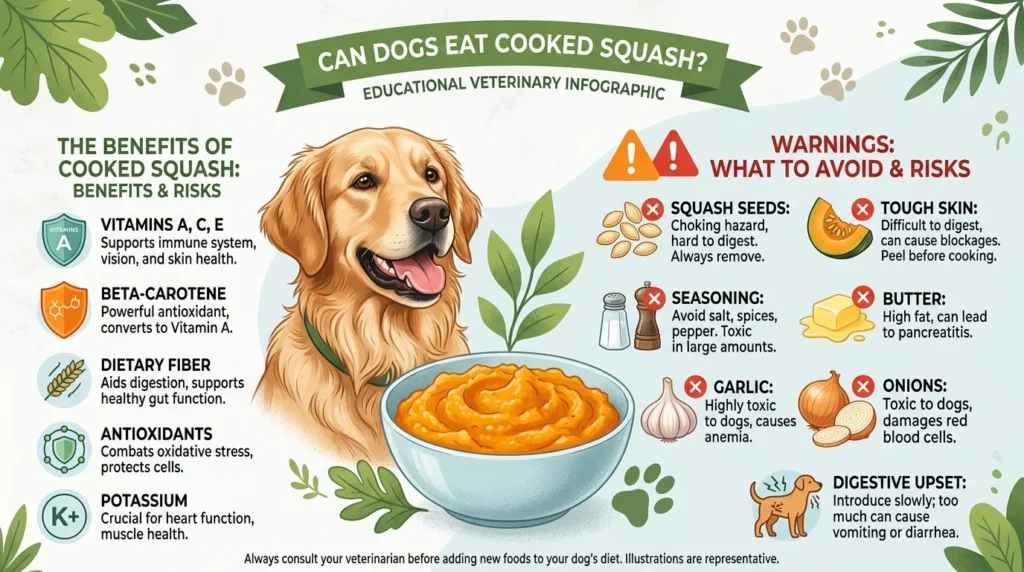
Squash provides valuable nutrients that support your dog’s overall health. It contains fiber that helps maintain healthy digestion, beta-carotene that supports eye health, and antioxidants that help protect cells from damage.
See Also: Can Dogs Eat Pineapple Core, Skin or Leaves? Full Safety Guide
Its vitamins and minerals may also support the immune system, healthy skin, and normal body functions while remaining naturally low in fat and calories.
Does Squash Have Any Risks For Dogs?
Yes, squash can present a few risks if it is not prepared correctly. Large amounts of fiber may cause gas, bloating, or diarrhea, while the skin and seeds can be difficult to digest.
Seasoned squash dishes prepared for people often contain butter, garlic, onions, salt, or spices that should never be fed to dogs.
Frequently Asked Questions
Can dogs eat cooked squash?
Yes, plain cooked squash is the safest and healthiest way to serve squash to dogs.
Can dogs eat raw squash?
Yes, dogs can eat small amounts of raw squash, but cooked squash is generally easier to digest.
Can dogs eat butternut squash?
Yes, cooked butternut squash without the skin, seeds, or seasonings is safe and nutritious for dogs.
Can dogs eat squash seeds?
No, squash seeds should be removed because they can be difficult to digest and may create a choking risk.
How often can dogs eat squash?
Squash is best offered occasionally as a healthy treat or meal topper rather than as a daily food.
Conclusion
Dogs can safely eat most varieties of plain cooked squash, including butternut squash, zucchini, yellow squash, and acorn squash. This nutritious vegetable provides vitamins, antioxidants, and fiber that support overall health when fed in moderation.
For the safest feeding experience, always remove the skin and seeds, cook the squash without seasoning, and serve small portions. When prepared properly, squash can be a healthy and enjoyable addition to your dog’s diet.
See Also: Can Dogs Eat Apples? Benefits, Risks & Safe Serving Guide 2026


