

Can Dogs Eat Raw Eggs? Benefits, Risks & Safety Guide
Many dog owners wonder whether raw eggs are a healthy addition to their pet’s diet. Since eggs are packed with protein, vitamins, and healthy fats, they are often considered a nutritious food for dogs. However, feeding raw eggs is more controversial than feeding cooked eggs because raw eggs may carry bacteria and other potential health risks.
While some people include raw eggs in homemade or raw feeding diets, veterinarians often recommend caution. Understanding the benefits, possible risks, and safe feeding practices will help you decide whether raw eggs are the right choice for your dog.
Can Dogs Eat Raw Eggs?
Yes, dogs can eat raw eggs, but they are not considered the safest option. Raw eggs contain high-quality protein, healthy fats, vitamins, and minerals that can support your dog’s overall health. However, they may also contain harmful bacteria such as Salmonella, which can affect both dogs and humans.
Because of the potential risk of bacterial contamination, many veterinarians recommend feeding fully cooked eggs instead of raw ones. If you choose to feed raw eggs, they should come from a trusted source and be handled with proper food safety practices to reduce the risk of illness.
How Many Raw Eggs Can Dogs Eat? Can Your Dog Eat?
The amount of raw egg a dog can eat depends on their size, weight, age, activity level, and overall health. Eggs should be treated as an occasional supplement rather than a replacement for a complete and balanced diet. Feeding too many eggs may add unnecessary calories and fat.
When introducing raw eggs, start with a small amount and monitor your dog for digestive issues or allergic reactions. Dogs with weakened immune systems, elderly dogs, or puppies may be at greater risk from bacteria found in raw eggs.
| Dog Size | Recommended Amount | Frequency |
|---|---|---|
| Small Dogs | ½ raw egg | Occasionally |
| Medium Dogs | 1 raw egg | Occasionally |
| Large Dogs | 1–2 raw eggs | Occasionally |
| Puppies | Not generally recommended | Consult a veterinarian |
Can Dogs Eat Raw Egg Whites?
Dogs can eat raw egg whites, but they are not the best choice because raw egg whites contain a protein called avidin. Avidin can interfere with the absorption of biotin, an important B vitamin that supports healthy skin, coat, and metabolism. While occasional feeding is unlikely to cause problems, regular consumption may contribute to nutritional deficiencies.
Cooking egg whites destroys avidin and significantly reduces this concern. If you want your dog to enjoy the nutritional benefits of eggs without the potential risks, cooked egg whites are generally considered a safer option than raw egg whites.
Also Read: Can Dogs Eat Onions? Toxicity, Symptoms & Safety Guide 2026
Can Dogs Eat Raw Egg Yolks?
Yes, dogs can eat raw egg yolks, which contain healthy fats, vitamins A, D, E, and B12, along with important minerals such as selenium and iron. These nutrients support healthy skin, brain function, vision, and the immune system when included as part of a balanced diet.
However, raw egg yolks still carry the same bacterial risks as the rest of the egg. They are also relatively high in fat and calories, so feeding large amounts regularly may contribute to weight gain or digestive issues in some dogs.
Can Dogs Eat Raw Eggs With Shell?
Some dog owners feed eggs with the shell because eggshells contain calcium and other minerals that may support strong bones and teeth. However, whole eggshells can be difficult for some dogs to chew properly and may create a choking hazard, particularly for smaller breeds.
If eggshells are included in your dog’s diet, they should be cleaned thoroughly and crushed into a fine powder before serving. This makes them easier to digest while reducing the risk of choking or digestive discomfort.
Can Dogs Eat Raw Eggs Everyday?
Dogs should not eat raw eggs every day unless the diet has been carefully balanced with guidance from a veterinarian or veterinary nutritionist. Although eggs provide valuable nutrients, feeding raw eggs daily may increase the risk of bacterial exposure and nutritional imbalances over time.
A balanced commercial dog food already provides the nutrients your dog needs. Raw eggs should only be used as an occasional supplement rather than becoming a daily part of your dog’s meals.
Also Read: Can Dogs Eat Asparagus? Safe Serving, Benefits & Risks 2026
Can Puppies Eat Raw Eggs?
Puppies should generally avoid raw eggs because their immune systems are still developing, making them more vulnerable to harmful bacteria such as Salmonella. Young puppies also require a carefully balanced diet that supports healthy growth and development.
If you want to include eggs in your puppy’s diet, cooked eggs are usually the safer option. Always introduce new foods gradually and consult your veterinarian before adding raw animal products to a puppy’s meals.
Can Dogs Eat Raw Eggs and Raw Meat Together?
Some owners who follow a raw feeding diet serve raw eggs alongside raw meat. While this approach is popular in some feeding plans, it also increases the risk of bacterial contamination because both foods may carry harmful bacteria such as Salmonella or E. coli. These bacteria can affect dogs and may also spread to people through contaminated bowls, surfaces, or pet saliva.
If you choose a raw diet, every ingredient should come from a trusted source and be handled using strict food safety practices. A balanced raw diet should also be formulated with the guidance of a veterinarian or veterinary nutritionist to ensure your dog receives complete nutrition.
Can Dogs Eat Frozen Raw Eggs?
Dogs should not be given frozen raw eggs directly because their hard texture may create a choking risk, especially for small dogs. Frozen eggs should always be thawed safely in the refrigerator before they are used.
Even after thawing, the same bacterial risks remain because freezing does not eliminate harmful bacteria. Proper storage, careful handling, and good kitchen hygiene are important whenever raw eggs are included in a dog’s diet.
Also Read: Can Dogs Eat Eggs? Full Safety Guide 2026
What Happens If a Dog Eats a Raw Egg?
If a healthy dog eats one raw egg accidentally, they may not experience any serious problems. Some dogs digest raw eggs without noticeable side effects, while others may develop mild digestive issues such as vomiting, diarrhea, or stomach discomfort.
In rare cases, bacterial contamination can lead to more serious illness. If your dog develops persistent vomiting, diarrhea, fever, loss of appetite, weakness, or unusual behavior after eating a raw egg, contact your veterinarian as soon as possible.
Is Raw Eggs Good for Dogs to Eat?
Raw eggs contain high-quality protein, healthy fats, amino acids, vitamins, and minerals that can benefit dogs. These nutrients help support muscle maintenance, healthy skin, a shiny coat, and overall body function. For this reason, some owners choose to include eggs in homemade diets.
However, the possible nutritional benefits should always be balanced against the risks of bacterial contamination and biotin interference from raw egg whites. For many dogs, cooked eggs provide nearly the same nutritional value while reducing these concerns.
How to Safely Share Raw Eggs With Your Dog

If you decide to feed raw eggs, purchase fresh eggs from a reliable source and keep them refrigerated until use. Wash your hands, bowls, and kitchen surfaces thoroughly after handling raw eggs to reduce the risk of spreading bacteria around your home.
See Also: Can Dogs Eat Zucchini? Safe Feeding Guide for Dog Owners
Introduce raw eggs gradually and offer only small portions. Monitor your dog for signs of digestive upset or allergic reactions after feeding. If your dog has a weakened immune system, is elderly, or has existing medical conditions, consult your veterinarian before feeding raw eggs.
Does Raw Eggs Have Benefits For Dogs?
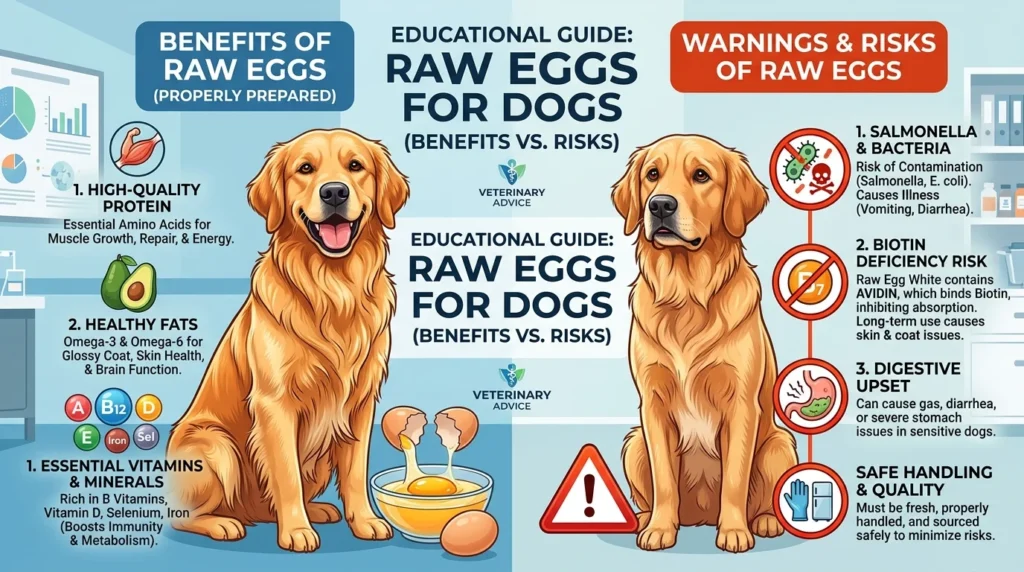
Raw eggs provide several important nutrients, including complete protein, healthy fats, vitamin A, vitamin D, vitamin B12, riboflavin, selenium, and iron. These nutrients support healthy muscles, skin, coat quality, brain function, and immune health when included in a balanced diet.
See Also: Can Dogs Eat Garlic? Vet Safety Guide For Owners Should Know
Egg yolks also contain essential fatty acids that help maintain healthy skin and a shiny coat. Although these nutrients are valuable, dogs can receive similar nutritional benefits from properly cooked eggs with fewer food safety concerns.
Does Raw Eggs Have Any Risks For Dogs?
Yes, raw eggs have several potential risks for dogs. The most common concern is bacterial contamination from Salmonella or other harmful bacteria that may cause digestive illness. Raw egg whites also contain avidin, which may reduce biotin absorption if fed regularly in large amounts.
In addition, excessive egg consumption may contribute to weight gain because eggs contain calories and fat. Dogs with weakened immune systems, puppies, and senior dogs may face greater risks from raw eggs than healthy adult dogs.
Frequently Asked Questions
Can dogs eat raw eggs safely?
Yes, some healthy dogs can eat raw eggs, but they carry a risk of bacterial contamination. Many veterinarians recommend cooked eggs as the safer choice.
Can dogs get Salmonella from raw eggs?
Yes. Raw eggs may contain Salmonella, which can make dogs sick and may also spread to humans through contaminated surfaces or pet contact.
Are raw eggs better than cooked eggs for dogs?
No. Cooked eggs provide nearly the same nutritional benefits while greatly reducing the risk of harmful bacteria and avidin-related concerns.
Can puppies eat raw eggs?
No. Puppies should generally avoid raw eggs because their immune systems are still developing and they are more vulnerable to bacterial infections.
How often can dogs eat raw eggs?
Raw eggs should only be offered occasionally unless a veterinarian has approved them as part of a carefully balanced raw feeding plan.
Conclusion
Dogs can eat raw eggs, but they are not the safest choice because of the risk of bacterial contamination and other potential health concerns. Although raw eggs provide high-quality protein, healthy fats, and essential vitamins, these nutritional benefits can also be obtained from cooked eggs with much lower risk.
If you decide to include raw eggs in your dog’s diet, use fresh eggs from a trusted source, follow proper food safety practices, and serve them only in moderation. When in doubt, cooked eggs remain the safer and veterinarian-recommended option for most dogs.
See Also: Can Dogs Eat Cauliflower? Benefits, Risks, and Feeding Tips


