

Can Dogs Eat Ham? Benefits, Risks & Safe Feeding Guide
Many dog owners wonder whether ham is a safe treat to share with their pets. Since dogs enjoy the smell and taste of meat, ham may seem like a harmless snack. However, ham is different from plain cooked chicken or turkey because it is usually processed and contains high amounts of salt, fat, and preservatives that may not be suitable for dogs.
While a tiny piece of plain ham may not always cause immediate harm to a healthy dog, regular feeding is generally not recommended. Understanding the nutritional value, possible health risks, and safe serving practices can help you decide whether ham should be part of your dog’s diet.
Can Dogs Eat Ham?
Dogs can eat a small amount of plain cooked ham occasionally, but it is not considered a healthy food choice. Ham contains protein that dogs need, but it is also high in sodium and fat. Most commercially prepared ham products include preservatives and seasonings that can be harmful when consumed regularly.
Because of its high salt content, ham should only be an occasional treat and never replace a balanced dog diet. Dogs with obesity, heart disease, kidney disease, or pancreatitis should generally avoid ham completely unless a veterinarian recommends otherwise.
How Much Ham Can Dogs Eat? Can Your Dog Eat?
The amount of ham a dog can safely eat depends on their size, age, weight, and overall health. Even healthy dogs should only receive very small portions because ham is calorie-dense and contains more fat and sodium than lean meats. Too much ham may lead to digestive problems or unnecessary weight gain.
If you decide to give your dog ham, remove any seasoning and serve only a small piece occasionally. Fresh water should always be available because salty foods can increase thirst. Dogs with medical conditions should avoid ham unless approved by a veterinarian.
| Dog Size | Recommended Ham Amount | Frequency |
|---|---|---|
| Small Dogs | 1 small bite | Rarely |
| Medium Dogs | 2–3 small bites | Occasionally |
| Large Dogs | A few small pieces | Occasionally |
| Puppies | Not recommended | Avoid if possible |
Can Dogs Eat Cooked Ham?
Yes, dogs can eat plain cooked ham in very small amounts, but it should not become a regular part of their diet. Cooking removes bacteria that may be present in raw meat, making cooked ham safer than raw ham. However, cooking does not reduce the high sodium or fat content found in most ham products.
Choose plain cooked ham without sauces, glazes, spices, or seasonings. Honey-glazed ham, smoked ham, or heavily seasoned ham should be avoided because they often contain ingredients that are not suitable for dogs.
Can Dogs Eat Ham Bones?
No, dogs should not eat ham bones, especially cooked ham bones. Cooked bones become brittle and can splinter into sharp pieces that may injure a dog’s mouth, throat, stomach, or intestines. They can also create choking hazards and digestive blockages.
Even large ham bones can break unexpectedly while a dog is chewing them. If you want your dog to enjoy chewing, choose veterinarian-approved chew toys or specially designed dog chews instead of giving leftover ham bones.
Can Dogs Eat Smoked Ham?
Dogs should avoid smoked ham because it usually contains high levels of sodium, preservatives, and flavoring ingredients. Smoking adds extra processing but does not make ham healthier for dogs. The additional salt alone makes smoked ham a poor choice for pets.
Some smoked ham products may also contain garlic, onion powder, or seasoning blends that can be harmful to dogs. Plain lean meats such as cooked chicken or turkey are much healthier alternatives when offering meat treats.
Can Dogs Eat Honey Ham?
Dogs should not regularly eat honey ham because it contains extra sugar in addition to the naturally high fat and sodium content of ham. Excess sugar can contribute to weight gain and other health concerns, especially when combined with fatty processed meat.
Many honey ham products also include spices, preservatives, and flavor enhancers. These ingredients provide no nutritional benefit for dogs and may upset their digestive system. Plain, unseasoned meats are a much safer option.
Can Dogs Eat Ham Fat?
No, dogs should avoid eating ham fat because it contains a large amount of saturated fat that may upset their digestive system. Eating fatty foods can trigger vomiting, diarrhea, stomach pain, or more serious conditions such as pancreatitis in some dogs.
Before giving your dog any ham, trim away as much visible fat as possible. Lean meat is always a better option than fatty cuts. Dogs with previous digestive problems or pancreatitis should not be given fatty foods at all.
Also Read: Can Dogs Eat Apricots? Benefits, Risks & Safe Serving Tips
Can Puppies Eat Ham?
Puppies should generally not eat ham because their digestive systems are still developing and they require a carefully balanced diet for healthy growth. Ham is high in sodium and fat, which can upset a puppy’s stomach and provide unnecessary calories without offering the balanced nutrition they need.
If your puppy accidentally eats a tiny piece of plain cooked ham, it is unlikely to cause serious harm in most cases. However, avoid making ham a regular treat. Instead, choose puppy-friendly treats or lean cooked meats recommended by your veterinarian.
Can Dogs Eat Ham Every Day?
No, dogs should not eat ham every day. Although ham contains protein, it is also rich in fat, sodium, and preservatives that can negatively affect your dog’s health when consumed regularly. Daily feeding may contribute to obesity, high blood pressure, and digestive problems.
A balanced dog food already provides the nutrients your pet needs without the extra salt and fat found in processed meats. If you want to reward your dog with meat, plain cooked chicken, turkey, or lean beef are healthier alternatives than ham.
Can Dogs Eat Ham Sandwich Meat?
Dogs should avoid ham sandwich meat because it is highly processed and often contains preservatives, added sodium, flavorings, and other ingredients that are not suitable for dogs. Deli meats are designed for human consumption and are not considered healthy treats for pets.
Some sandwich meats also contain garlic powder, onion powder, or excessive spices that may be harmful to dogs. If your dog enjoys meat treats, freshly cooked lean meat without seasoning is a much safer option than processed deli ham.
Can Dogs Eat Christmas Ham?
Dogs should not eat Christmas ham because it is usually prepared with glazes, spices, sugar, honey, or seasonings that can upset a dog’s digestive system. Holiday meals often contain ingredients that are unsafe for pets, making Christmas ham a poor choice.
Even if your dog begs during holiday meals, avoid sharing leftovers from the dinner table. Instead, prepare a small portion of plain cooked meat without seasoning if you want your dog to enjoy a special holiday treat.
Also Read: Can Dogs Eat Tilapia? Benefits, Risks & Safe Portions
What Happens If a Dog Eats Ham?
If a dog eats a small amount of plain cooked ham, they may not experience any serious problems. However, some dogs may develop mild digestive issues such as vomiting, diarrhea, stomach discomfort, or increased thirst because of the high salt content.
Eating large amounts of ham or fatty ham products may increase the risk of pancreatitis, especially in dogs that are overweight or have a history of digestive disease. If your dog shows persistent vomiting, severe diarrhea, weakness, or unusual behavior after eating ham, contact your veterinarian promptly.
Is Ham Good for Dogs to Eat?
Ham is not considered one of the healthiest meat choices for dogs. While it provides protein, the high levels of sodium, fat, and preservatives reduce its overall nutritional value for pets. Dogs can obtain better-quality protein from lean meats that contain fewer unhealthy additives.
Choosing healthier protein sources can help support your dog’s long-term health while reducing unnecessary calories and salt intake. Ham is best viewed as an occasional treat rather than a regular food.
How to Safely Share Ham With Your Dog

If you decide to give your dog ham, choose plain cooked ham without glazes, spices, sauces, or seasonings. Remove all visible fat and never offer cooked ham bones because they can splinter and cause serious injuries. Only serve a very small portion as an occasional treat.
See Also: Can Dogs Eat Salmon? A Safe Feeding Guide for Dog Owners
Always introduce new foods gradually and monitor your dog for signs of digestive upset. Fresh water should be available after eating ham because salty foods may increase thirst. If your dog has existing health conditions, consult your veterinarian before offering processed meats.
Does Ham Have Benefits For Dogs?
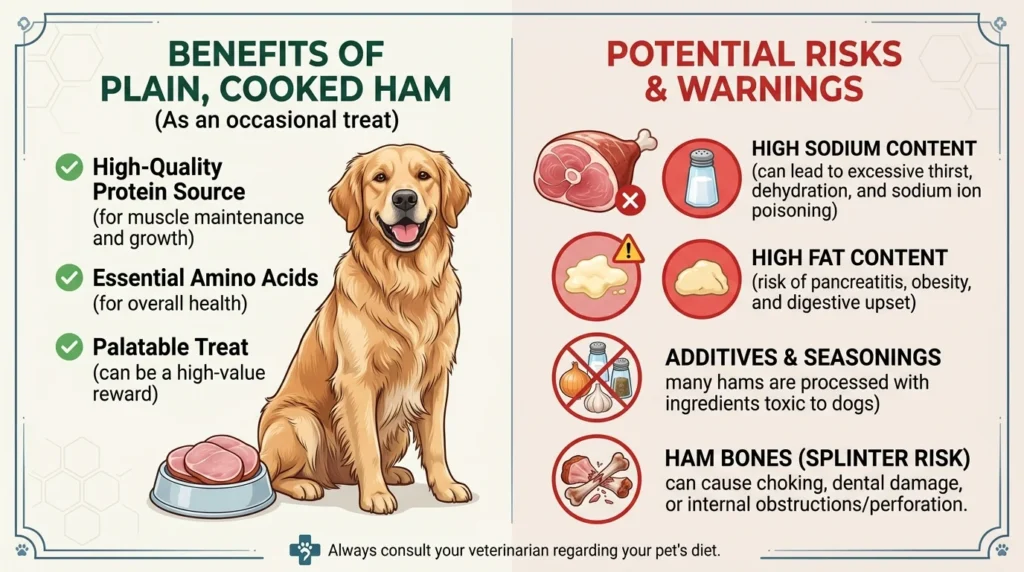
Ham contains protein, iron, zinc, and several B vitamins that are beneficial nutrients for dogs. Protein supports muscle maintenance, while vitamins and minerals contribute to normal body functions. However, these nutrients can also be found in healthier meat options.
See Also: Can Dogs Eat Bell Peppers? Safe Feeding Guide for Dog Owners
Because ham contains high levels of sodium and fat, its nutritional benefits are outweighed by its potential health risks. Lean cooked meats provide similar nutritional value without exposing dogs to excessive salt and unhealthy fat.
Does Ham Have Any Risks For Dogs?
Yes, ham carries several risks for dogs. The high sodium content may contribute to dehydration and excessive thirst, while the high fat content can lead to digestive upset or pancreatitis. Processed ham products may also contain preservatives and seasonings that are unsuitable for pets.
Cooked ham bones present an additional danger because they can splinter and damage the digestive tract. Feeding ham frequently may also contribute to obesity and other long-term health issues. For these reasons, ham should only be given rarely and in very small amounts.
Frequently Asked Questions
Can dogs eat ham safely?
Dogs can eat a small amount of plain cooked ham occasionally, but it is not recommended as a regular treat because it is high in sodium and fat.
Can dogs eat ham bones?
No. Cooked ham bones can splinter easily and may cause choking, internal injuries, or intestinal blockages.
Is smoked ham safe for dogs?
No. Smoked ham usually contains extra salt, preservatives, and seasonings that make it an unhealthy choice for dogs.
Can puppies eat ham?
Puppies should generally avoid ham because their digestive systems are sensitive and they require a balanced diet designed for growth.
What meat is healthier than ham for dogs?
Plain cooked chicken, turkey, and lean beef are healthier protein choices because they contain less sodium and fat than processed ham.
Conclusion
Dogs can eat a very small amount of plain cooked ham, but it is not an ideal food for regular feeding. The high levels of sodium, fat, and preservatives make ham much less healthy than lean, unprocessed meats. Cooked ham bones, smoked ham, and heavily seasoned ham should always be avoided because they pose additional health risks.
If you want to treat your dog with meat, choose plain cooked chicken, turkey, or other lean protein sources instead. A balanced diet combined with healthy treats is the best way to support your dog’s long-term health and well-being.
See Also: Can Dogs Eat Apples? Benefits, Risks & Safe Serving Guide 2026


