

Can Dogs Eat Coffee? No, and Here’s What to Do If Yours Did
Last updated: 14 October 2026
No. Dogs must not have coffee in any form. There is no safe amount. A lick or two of brewed coffee is unlikely to poison a medium or large dog, but coffee grounds, beans, espresso pods, and concentrated products are far more dangerous and need an immediate vet or Pet Poison Helpline call. Do not wait for symptoms.
If your dog just ate coffee: act in the next 60 seconds
1. Stay calm. Take the coffee away so your dog cannot eat more. 2. Note what it was (brewed coffee, grounds, beans, pod, flavoured drink), how much, and when. 3. Weigh your dog, or get a rough weight. 4. Call your vet or Pet Poison Helpline at (855) 764-7661. The ASPCA Animal Poison Control Center is (888) 426-4435. 5. Follow their instructions. Do not try to make your dog vomit unless your vet tells you to. 6. Watch for symptoms and note the time each one starts.
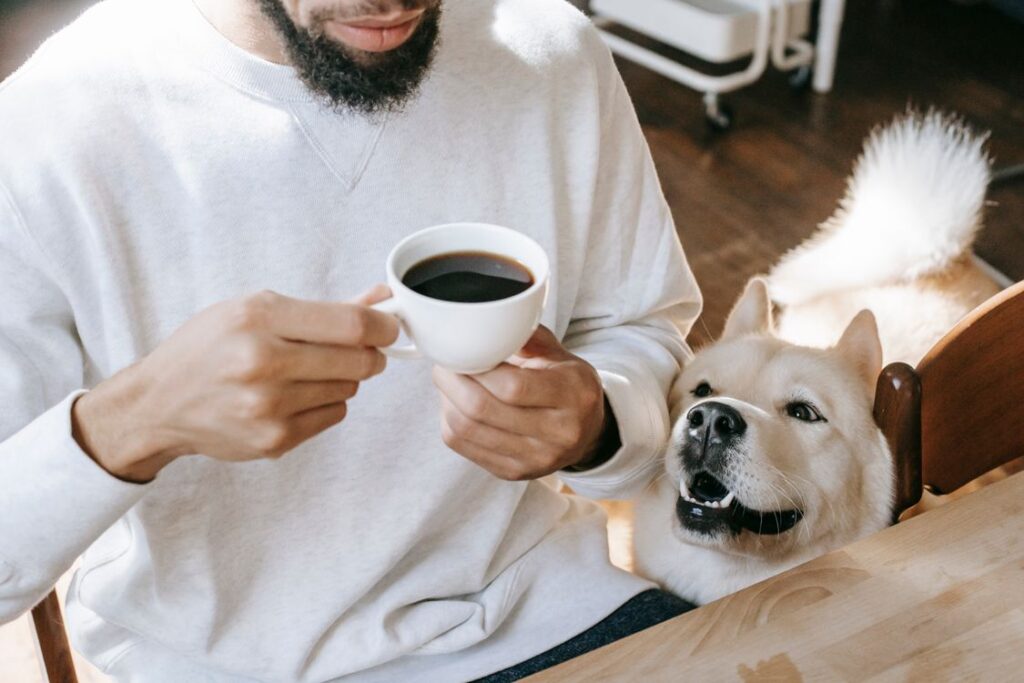
My Dog Drank Coffee: What to Do Right Now
Call your vet or Pet Poison Helpline at (855) 764-7661 right away, even if your dog seems fine. Tell them your dog’s weight, what kind of coffee it was, and how much. Do not wait for symptoms, and never try to make your dog vomit unless your vet tells you to.
Speed matters because a vet can only remove caffeine from the stomach in the first hours. The AKC advises that if your dog drank coffee or ate grounds or beans, you should call your vet or the Pet Poison Helpline at once, and have an estimate of your dog’s weight and the amount consumed ready. That weight-and-amount detail is what lets the vet judge the risk.
Tell your vet these four facts:
- Your dog’s weight. A 5 kg dog and a 25 kg dog face very different risks from the same cup.
- What it was. Brewed coffee, espresso, grounds, beans, a pod, or a flavoured drink all carry different caffeine loads.
- How much. A lick, half a cup, a full mug, a tablespoon of grounds, a handful of beans.
- When it happened. The clock decides whether the vet can still induce vomiting.
If your vet is not available, call poison control instead. PetMD notes that most dogs survive caffeine poisoning if they get veterinary help immediately, so a fast call is the single most useful thing you can do.
How Much Coffee Is Dangerous for Dogs?
There is no safe amount of coffee for dogs, but the risk rises with the dose and falls with the dog’s size. A lick of brewed coffee rarely harms a medium or large dog, while a small dog that drinks a full cup or eats grounds or beans can be in real danger. The tables below turn that into numbers.
How much caffeine is in coffee?
Caffeine content varies by brand, roast, and brew method, so treat every figure below as an approximate average. Mayo Clinic notes that up to 400 mg of caffeine a day is considered safe for most adults, about the amount in four cups of brewed coffee, which puts a standard cup near 95 mg.
| Drink or item | Serving | Estimated caffeine |
|---|---|---|
| Brewed drip coffee | 8 oz / 240 ml | ~95 mg |
| Espresso | 1 oz shot | ~60 mg |
| Instant coffee | 8 oz / 240 ml | ~60 mg |
| Cold brew | 16 oz / 475 ml | ~200 mg (varies widely) |
| Decaf brewed coffee | 8 oz / 240 ml | ~2-7 mg |
| Black tea | 8 oz / 240 ml | ~50 mg |
| Cola | 12 oz / 355 ml | ~35 mg |
| Energy drink | 8 oz / 240 ml | ~80 mg (some reach 200 mg) |
| One coffee bean | 1 bean | ~6 mg |
| Chocolate-covered espresso bean | 1 bean | ~10-12 mg |
| Tablespoon of unused coffee grounds | 1 tbsp | ~60-100 mg |
What that means for your dog
Divide the caffeine by your dog’s weight in kilograms to get mg per kg. The table below does that math for common scenarios. It is an urgency guide, not a home safety calculation, because published toxic thresholds disagree: some veterinary references put a lethal dose near 150 mg/kg, others cite a toxic range around 140 mg/kg with a lethal range of 110-200 mg/kg, and mild signs have been reported from around 20 mg/kg. No single number settles it, which is why any suspected ingestion of grounds, beans, or concentrated products deserves a vet call whatever the math says.
| What the dog got | Estimated caffeine | 5 kg dog (mg/kg) | 10 kg dog (mg/kg) | 25 kg dog (mg/kg) | What to do |
|---|---|---|---|---|---|
| A lick or two of brewed coffee | ~2-5 mg | ~0.4-1 | ~0.2-0.5 | ~0.1-0.2 | Watch for symptoms; call your vet if any appear |
| Half a cup of brewed coffee | ~50 mg | ~10 | ~5 | ~2 | Call your vet and watch closely |
| Full cup of brewed coffee | ~95 mg | ~19 | ~9.5 | ~3.8 | Call your vet now, especially for a small dog |
| One espresso shot | ~60 mg | ~12.6 | ~6.3 | ~2.5 | Call your vet |
| Tablespoon of unused grounds | ~60-100 mg | ~12-20 | ~6-10 | ~2.4-4 | Call your vet now |
| 10 chocolate-covered espresso beans | ~120 mg | ~24 | ~12 | ~4.8 | Call your vet now; chocolate adds theobromine |
| One energy drink | ~150 mg | ~30 | ~15 | ~6 | Call your vet now |
A small dog crosses into risky territory far sooner than a big one. A 5 kg dog that drinks a full cup of brewed coffee takes in roughly 19 mg/kg, around the level where mild signs are reported. The same cup gives a 25 kg dog under 4 mg/kg. Size is the whole story, which is why your vet always asks for weight first.
Why Coffee Hurts Dogs
Coffee hurts dogs because of caffeine, a methylxanthine stimulant. Dogs clear caffeine far more slowly than people do, so it keeps stimulating the heart and nervous system for hours. The ASPCA groups coffee with chocolate and caffeine for this reason, since all three carry methylxanthines.
Dogs are much more sensitive to caffeine than humans are. In people, caffeine gives a lift and wears off. In dogs, the same dose overstimulates the nervous system, the heart, and the gut, and the body takes far longer to clear it. That is why a drink you barely notice can make a small dog seriously ill.
The ASPCA explains that chocolate, coffee, and caffeine share the same toxicity problem: their methylxanthine concentrations. Methylxanthines block the calming signals in a dog’s cells and push the heart and nervous system into overdrive. The higher the caffeine content, the greater the risk.
Coffee also carries theobromine, caffeine’s chemical cousin and the same compound that makes chocolate dangerous for dogs. Brewed coffee holds far less theobromine than chocolate, so caffeine does most of the damage in a coffee incident, but chocolate-covered espresso beans deliver both at once.
Signs of Caffeine Poisoning in Dogs
Signs usually start 30 to 60 minutes after your dog drinks coffee or eats grounds, and they can last 12 hours to several days. Early signs look like overexcitement: restlessness, panting, vomiting, and a racing heart. Severe poisoning brings tremors, collapse, or seizures, and needs emergency care at once.
| Timing | What to expect |
|---|---|
| 30-60 minutes | First signs usually appear |
| 1-2 hours | Signs usually fully show |
| 12 hours to several days | Symptoms can last |
| Mild cases | Often hospitalised for the day |
| Severe cases | Often hospitalised for a few days |
The AKC lists these symptoms of caffeine toxicity: agitation, restlessness, vomiting, panting, elevated heart rate, elevated blood pressure, abnormal heart rhythms, and hyperthermia (dangerously high body temperature). In severe cases, collapse, tremors, and seizures are possible.
PetMD adds hyperactivity, diarrhoea, and seizures to the list, and notes that caffeine toxicity can also affect a dog’s kidney, liver, and lungs. The Pet Poison Helpline warns that depending on the amount ingested, dogs can show hyperactivity, stomach upset, changes in heart rate, rhythm and blood pressure, and neurologic signs including tremors and seizures.
Watch for two groups of signs:
Early signs (call your vet now): restlessness, hyperactivity, agitation, panting, vomiting, diarrhoea, excessive thirst and urination, fast heartbeat.
Severe signs (emergency, go now): tremors, abnormal heart rhythm, very high body temperature, collapse, seizures.
Too much caffeine can kill a dog, but most dogs survive when they get veterinary help quickly. Do not judge by how your dog looks in the first minutes: signs often take half an hour to show, and by then the caffeine is already in the bloodstream.
What NOT to Do If Your Dog Drank Coffee
Do not try to make your dog vomit at home, and do not wait to see if symptoms appear. Do not give milk, water, or food as a home fix, and do not search for home remedies. The safest move is always a fast call to your vet or poison control.
- Do not induce vomiting yourself. PetMD is clear: never try inducing vomiting on your own without your veterinarian’s instruction, as it can cause more complications. The AKC gives the same warning. Vomiting helps only within a window, only when the vet judges it safe, and only with the right method. Wrongly induced vomiting can send liquid into the lungs.
- Do not wait and see. Signs take 30 to 60 minutes to appear, and the window for removing caffeine from the stomach closes while you wait. A dog that looks fine at 10 minutes can be in trouble at 45.
- Do not give milk, water, or food as a fix. None of these neutralise caffeine. Milk can add stomach upset, since many dogs handle dairy poorly, and the ASPCA notes that pets lack enough lactase to digest milk properly.
- Do not use hydrogen peroxide, salt, or internet home remedies. These can burn the throat, cause salt poisoning, or make vomiting violent and uncontrolled. Leave decontamination to the vet.
- Do not assume a small amount is automatically fine for a small dog. A lick is one thing. A cup, a handful of beans, or a mouthful of grounds is another, and the difference is weight.
How Vets Treat Caffeine Poisoning
Vets treat caffeine poisoning by stopping more caffeine from entering the bloodstream, then supporting the heart and nervous system while the body clears it. That can mean induced vomiting, activated charcoal, IV fluids, and medicines for heart rhythm, tremors, or seizures. Mild cases may go home the same day.
What happens at the clinic depends on timing, amount, and symptoms:
- Assessment. The vet uses your four facts (weight, what, how much, when) to judge the dose, then checks heart rate, blood pressure, temperature, and breathing.
- Decontamination. If ingestion was recent and your dog has no symptoms, the vet may induce vomiting to get the coffee back out before more is absorbed. Activated charcoal is often given to bind caffeine left in the gut so less of it reaches the bloodstream. The AKC notes that a vet may induce vomiting if it is within a few hours of ingestion, and may give activated charcoal, fluids, or medicines to control heart rate, tremors, and seizures.
- Supportive care. PetMD explains that vets typically use IV fluids to keep the dog hydrated, especially after vomiting and diarrhoea, and that fluids may flush out some caffeine and support kidney function. Medicines can control seizures, tremors, low blood pressure, and irregular heartbeat.
- Monitoring. Heart rhythm, temperature, and blood pressure are watched until the caffeine clears. For mild cases, expect hospitalisation for the day. Severe cases may need a few days.
There is no direct antidote for caffeine. Treatment is about buying the body time to clear it while keeping the heart and brain safe. That is why early arrival matters so much.
Coffee With Milk, Cream, Sugar, Chocolate, or Xylitol
A flavoured coffee can be worse than plain coffee, because the add-ins bring their own dangers. Chocolate adds theobromine, xylitol-sweetened creamers can crash blood sugar and damage the liver, and macadamia milk is toxic on its own. Tell your vet about every ingredient, not just the coffee.
PetMD warns that added ingredients can be bad for dogs in their own right:
- Sugar. Unhealthy for dogs and can upset the stomach.
- Milk. Some dogs tolerate a little, but many are lactose-intolerant and get diarrhoea.
- Macadamia nut milk. Toxic to dogs because macadamia nuts are toxic. The ASPCA says macadamia nuts can cause weakness, incoordination, depression, vomiting, tremors, and hyperthermia in dogs.
- Xylitol. Toxic to dogs, and often used as a sweetener in coffee creamers. Xylitol can cause a sudden blood-sugar crash and liver damage. The ASPCA warns that early signs include vomiting, lethargy, and loss of coordination, which can progress to seizures, with liver damage possible within 12 to 24 hours.
- Chocolate and nutmeg. Both are toxic to dogs. A mocha or a spiced latte adds theobromine or myristicin on top of the caffeine.
A puppuccino, the whipped-cream cup some coffee shops hand out, is not coffee, so it has no caffeine. It is still dairy and fat, so keep it tiny or skip it. The safe default is simple: if it came from a coffee shop and is not plain water, it is not for your dog.
Can Dogs Have Decaf Coffee?
No. Decaf is safer than regular coffee, but it is not safe. Decaf still holds a few milligrams of caffeine per cup, which can matter for a tiny dog or a dog that drinks a lot. Do not offer decaf as a treat, and treat a decaf spill the same way as regular coffee.
PetMD points out that decaf is not 100 percent decaffeinated. Trace caffeine remains, and it can still harm a dog, especially a small one or a puppy. Decaf also does nothing about the add-ins: a decaf latte with xylitol creamer or macadamia milk is still dangerous. If your dog drank decaf, follow the same steps as for regular coffee: note the amount, call your vet, and watch for symptoms.
What About Coffee Beans, Grounds, Pods, and Other Caffeine?
Beans, grounds, and pods are more dangerous than a cup of brewed coffee, because the caffeine is concentrated and the dog gets it all at once. A small dog can be badly poisoned by a mouthful of grounds or a few beans. Keep every form of coffee, plus tea bags and energy drinks, out of reach.
Coffee beans
Whole beans are a double problem: concentrated caffeine plus a choking and blockage risk. The Pet Poison Helpline says ingestion of unused coffee grounds or beans could cause serious toxicity. PetMD adds that even a small amount of coffee beans or grounds can be very hazardous no matter the size of your dog. Chocolate-covered espresso beans are worse still, since they add theobromine from the chocolate coating.
Coffee grounds
Grounds hold more caffeine than the brewed drink they make, and dogs that raid trash or compost can eat a large amount fast. Spent grounds from a filter still hold some caffeine, but unused grounds from a bag or a knocked-over grinder are the real danger. The AKC warns that if your dog eats coffee grounds, it could lead to serious poisoning because of the higher caffeine concentration. Close the trash bag and keep the bin behind a closed door, because many dogs happily dig through bins.
Pods, capsules, and instant coffee
Single-serve pods, instant granules, and espresso capsules all pack a full drink’s caffeine into a small package a dog can chew open. Instant coffee is roughly as strong as brewed per serving, and a pod can hold more than a standard cup. Store them in sealed containers in closed cupboards, never in an open bowl on the counter.
Other caffeine sources
Coffee is not the only caffeine risk in a house. The Pet Poison Helpline lists tea, soda, energy drinks, some supplements (pre-workout and weight-loss products), energy pouches, shots, and tablets. Tea bags are a common one: a dog that chews a tea bag gets a concentrated dose. Energy drinks add sugar, stimulants, and sometimes xylitol. Caffeine tablets and powders are the most dangerous of all: Mayo Clinic notes that just one teaspoon of powdered caffeine equals about 28 cups of coffee, a level that can be fatal. If your dog eats any caffeine product, treat it exactly like a coffee emergency.
Why Dogs Go After Coffee
Most dogs chase coffee out of curiosity, not taste. The warm smell, the sweet milk or flavouring, and a cup left at nose height are enough to tempt a dog. Puppies and food-driven breeds are the worst offenders, so never leave a mug where a dog can reach it.
The AKC explains that dogs are naturally curious and taste whatever they can reach, and a cup of coffee smells interesting enough to investigate. Dogs that counter-surf, raid bins, or steal food off tables are the likeliest coffee thieves. Labradors and other food-driven breeds are famous for it. Puppies explore with their mouths, so they are at risk too.
Sweetened, milky drinks are the most tempting. A plain black coffee smells bitter and is less attractive, but a latte with milk and syrup smells like a treat. That is also the drink most likely to contain xylitol or macadamia milk, so the tempting ones are the dangerous ones twice over.
How to Keep Coffee Away From Your Dog
Prevention is a habit, not a single fix. The AKC recommends keeping all caffeinated products, including grounds, beans, chocolate-covered espresso beans, and tea bags, off the ground and out of reach, and putting the pot and cup away when you are done brewing.
- Mugs go up high. Never leave a cup on a low table, a bed, the floor, or the edge of a counter where a tail or paw can knock it over.
- Lids on travel cups. A sealed lid slows a dog down. Never leave a cup in a car with a dog while you run inside.
- Sealed storage. Beans, grounds, pods, and instant coffee live in sealed containers inside closed cupboards, not in open bowls or bags on the counter.
- Trash with a lid. Coffee grounds go in a closed bag in a lidded bin behind a closed door. Dogs that dig through trash are a classic coffee-poisoning case.
- Mind the compost. Coffee grounds in a compost pile or garden bed attract scavenging dogs. Fence the pile or skip the grounds.
- Teach “leave it”. A solid leave-it command buys you the seconds you need when a cup tips over.
- Tell the household. Kids, guests, and roommates should know coffee is off limits for the dog. Coffee gifts, hampers, and advent calendars need a dog-proof spot too.
Safe Drinks and Treats Instead of Coffee
Dogs do not need anything but fresh water to drink, and water is what they prefer when it is clean and available. Keep the bowl full and change it daily.
If you want to share a moment with your dog while you drink your coffee, give a small plain treat instead: a few pieces of a dog-safe food from our what dogs can eat guide, a chew toy, or a short training session with their normal treats. Skip the puppuccino habit, and never offer tea, energy drinks, or soda as a “safe” swap. They all carry caffeine or sugar your dog does not need.
Frequently Asked Questions
Can my dog drink a little coffee?
No. A few laps from a cup are unlikely to poison a medium or large dog, but there is no safe amount, and a small dog can be affected by very little. Never offer coffee on purpose. If your dog stole some, note the amount and call your vet.
What if my dog licked a small amount of coffee?
A lick or two is unlikely to cause poisoning in most dogs, according to the AKC and the Pet Poison Helpline. Watch your dog for 2 hours for restlessness, panting, vomiting, or a racing heart. Call your vet at once if any symptom appears, or if your dog is small, a puppy, or has a heart condition.
Can dogs eat coffee beans?
No. Beans are more dangerous than brewed coffee because the caffeine is concentrated. Even a small amount can be very hazardous, and chocolate-covered beans add theobromine too. Contact your vet immediately if your dog ate beans.
Can dogs eat coffee grounds?
No. Grounds hold more caffeine than the drink they make, and a mouthful can seriously poison a dog, especially a small one. Call your vet or poison control right away if your dog ate grounds, used or unused.
How much coffee is toxic to dogs?
It depends on the dog’s weight, the type of coffee, and the amount. Published toxic and lethal thresholds disagree, with some references citing around 140 to 150 mg of caffeine per kg of body weight and others a range of 110 to 200 mg/kg, while mild signs can appear from around 20 mg/kg. Never use these numbers to decide at home. Call your vet with the weight and amount and let them judge.
Can dogs have decaf coffee?
No. Decaf still contains a few milligrams of caffeine per cup, which can matter for a tiny dog or a dog that drinks a lot. Treat a decaf spill the same way as regular coffee: note the amount, call your vet, and watch for symptoms.
My dog ate one coffee bean. What now?
One plain coffee bean holds roughly 6 mg of caffeine, which is unlikely to poison a medium or large dog. For a very small dog or a puppy, call your vet to be safe. Watch for restlessness, vomiting, or a racing heart for 2 hours, and call at once if any appear. If the bean was chocolate-covered, mention the chocolate to your vet too.
Sources
- AKC: Can Dogs Drink Coffee?
- PetMD: Can Dogs Drink Coffee?
- ASPCA: People Foods to Avoid Feeding Your Pets
- Pet Poison Helpline: Caffeine
- Mayo Clinic: Caffeine, How Much Is Too Much?
This guide is for information only and is not a substitute for veterinary advice. If your dog has eaten coffee, call your veterinarian or a poison helpline right away.


