

Can Dogs Eat Raw Steak? Safety, Risks & What to Do
Dogs can eat steak, but raw steak is not the safest choice for most dogs. Raw beef can contain harmful bacteria such as Salmonella, E. coli, and other pathogens that may cause illness in dogs and create a risk for people who handle the dog’s food, saliva, or stool. Cooking steak thoroughly is generally a safer way to offer beef.
A small amount of plain raw steak may not make every dog sick, but that does not mean it is risk-free. The potential problems depend on the quality and handling of the meat, the amount eaten, whether the steak contains seasoning or sauces, and your dog’s individual health. Puppies, older dogs, and dogs with weakened immune systems may be more vulnerable to foodborne infections.
Is Raw Steak Safe for Dogs?
Raw steak is not considered completely safe for dogs because uncooked beef can carry disease-causing bacteria. Even meat that looks fresh and smells normal can contain microorganisms that are impossible to detect by appearance alone. Freezing also does not reliably eliminate every type of harmful bacteria.
Dogs have digestive systems that can tolerate some bacteria better than humans, but they can still develop vomiting, diarrhea, abdominal discomfort, fever, or other signs of illness after eating contaminated raw meat. Some infected dogs may also shed bacteria in their feces or saliva without appearing seriously ill.
Can Dogs Eat Raw Beef Steak?
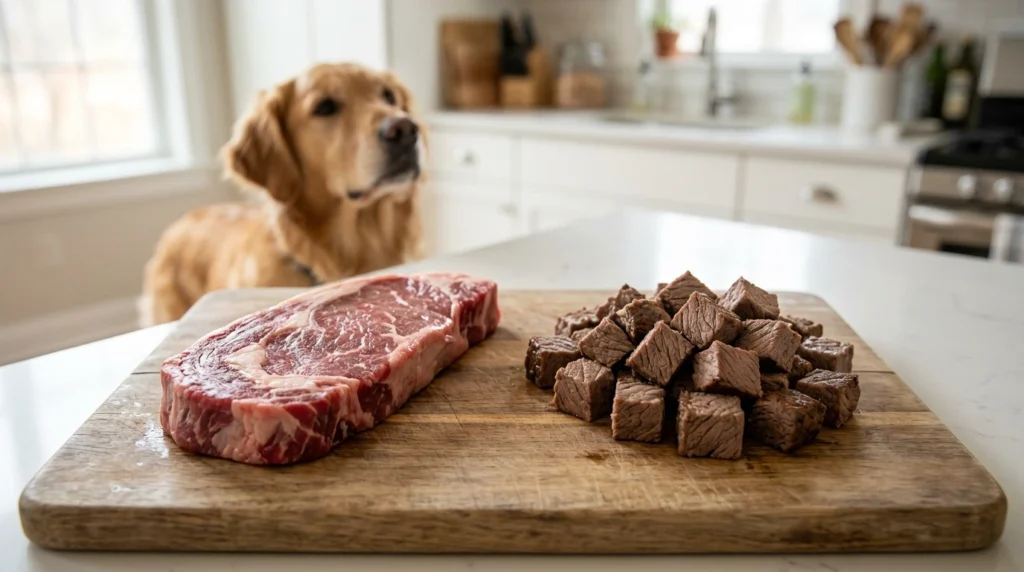
Raw beef steak is not toxic to dogs in the same way as certain poisonous foods, but it can still present food-safety risks. Plain beef itself can be a nutritious source of protein, iron, zinc, and other nutrients, but cooking it reduces the risk associated with harmful bacteria.
If you want to give your dog steak, plain cooked beef is generally a safer option. Remove seasonings, sauces, excessive fat, and bones, then serve an appropriate portion. Steak should be treated as an occasional addition to a balanced dog diet rather than a replacement for complete dog food.
Can Dogs Eat Rare Steak?
Rare steak is safer than completely raw meat in some respects because its surface has usually been exposed to high heat, but the center may still remain undercooked. For dogs, fully cooked plain steak is the more cautious choice, especially when food hygiene is a concern.
If a dog accidentally eats a small piece of rare steak, it does not automatically mean the dog will become sick. Monitor the dog for digestive symptoms and other unusual signs. However, intentionally feeding undercooked steak increases unnecessary exposure to foodborne pathogens.
Can Dogs Eat Raw Steak Fat?
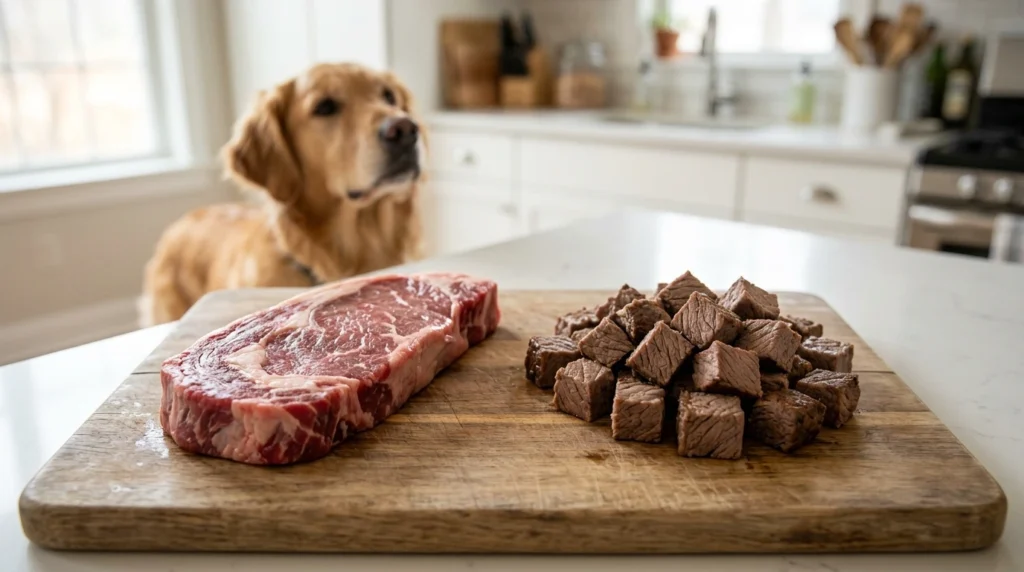
Dogs may be able to eat small amounts of beef fat, but large amounts of fatty steak are not a good choice. High-fat foods can cause digestive upset in some dogs and may contribute to more serious gastrointestinal problems in susceptible animals.
When preparing steak for your dog, trim away excessive visible fat. A leaner piece of plain cooked beef is generally a better treat than a heavily fatty steak. Dogs that have previously had problems after eating rich or fatty foods should be given extra caution.
Can Puppies Eat Raw Steak?
Puppies should not be given raw steak as a casual treat. Their developing bodies and immature immune systems can make foodborne infections more concerning, and puppies also have specific nutritional requirements that are best met with a complete puppy diet.
If you want to introduce beef to a puppy, plain, thoroughly cooked, boneless beef in a small amount is a safer option. Cut it into appropriately sized pieces and avoid salt, spices, sauces, garlic, onions, and other ingredients that may be harmful to dogs.
Can Small Dogs Eat Raw Steak?
Small dogs face the same bacterial risks from raw steak as larger dogs, but the size of the food can also create an additional choking concern. A large, chewy piece of steak may be difficult for a small dog to manage, particularly if the dog tends to swallow food quickly.
If you offer steak to a small dog, choose plain cooked beef and cut it into small, manageable pieces. Portion size should also be much smaller than what you might give a large dog because treats should make up only a limited part of the dog’s overall diet.
Can Large Dogs Eat Raw Steak?
Large dogs may be physically capable of chewing a larger piece of steak, but their size does not protect them from bacteria found in raw meat. A large dog can still experience vomiting, diarrhea, or other illness after eating contaminated beef.
For a safer treat, serve a small amount of plain cooked steak instead. Even for a large dog, steak should not replace a nutritionally complete meal. Too much rich meat can also contribute unnecessary calories and digestive problems.
Can Dogs Eat Raw Steak With Seasoning?
Raw steak with seasoning should be avoided. Human steak recipes often contain salt, garlic, onion powder, pepper, butter, marinades, sauces, or other ingredients that are unnecessary for dogs and may sometimes be harmful.
Garlic and onions are particularly important to avoid because members of the Allium family can damage red blood cells in dogs. Salt and rich sauces can also add unnecessary sodium and fat. If you want to share steak with your dog, set aside a plain portion before adding seasonings intended for people.
Can Dogs Eat Raw Steak With Marinade?
Dogs should not be given raw steak covered in human marinade. Marinades frequently contain ingredients such as onion, garlic, excess salt, sugar, spices, oil, or sauces. These ingredients can make an otherwise simple piece of beef unsuitable for dogs.
Instead, prepare a small piece of steak separately without marinade or seasoning. Cook it thoroughly, allow it to cool, remove excess fat, and cut it into small pieces before giving it as an occasional treat.
Can Dogs Eat Raw Steak Bones?
If the steak contains a bone, do not assume that the bone is safe simply because it came from beef. Bones can cause choking, broken teeth, mouth injuries, intestinal blockage, or digestive tract injuries. Cooked bones are particularly dangerous because they can become brittle and splinter.
It is generally safer to remove bones completely before giving steak to your dog. If your dog has swallowed a bone or a large piece of steak and begins choking, repeatedly vomiting, struggling to swallow, showing severe abdominal pain, or acting unusually distressed, seek veterinary care promptly.
See Also: Can Dogs Eat Baked Beans? Safety, Risks & Alternatives
How Much Steak Can Dogs Eat?
The appropriate amount of steak depends on your dog’s size, age, activity level, overall diet, and health. Steak should be treated as an occasional treat rather than a regular replacement for balanced dog food. Even plain cooked steak can be high in calories and fat when served in large portions.
| Dog Size | Approximate Treat Portion |
|---|---|
| Small dogs | 1–2 small pieces |
| Medium dogs | 2–4 small pieces |
| Large dogs | A few small pieces |
These are general treat-size examples rather than exact nutritional prescriptions. Cut the steak into small pieces and keep all treats, including human foods, within a reasonable portion of your dog’s daily calories.
What Happens If a Dog Eats Raw Steak?
If your dog eats a small amount of plain raw steak, it may experience no noticeable problems. However, raw beef can contain harmful bacteria, so digestive illness is possible. Watch your dog for vomiting, diarrhea, reduced appetite, abdominal discomfort, unusual tiredness, or other changes in behavior.
Symptoms may not always appear immediately. If your dog ate a large quantity, consumed spoiled or improperly stored meat, or develops severe or persistent symptoms, contact your veterinarian. Puppies, senior dogs, and dogs with underlying health problems deserve particular caution.
Can Raw Steak Cause Diarrhea in Dogs?
Yes, raw steak can contribute to diarrhea in dogs. A sudden change in diet, high-fat meat, or bacterial contamination can all upset the digestive system. Some dogs may develop loose stools after eating raw meat even when the meat itself was not contaminated.
If the diarrhea is mild and your dog otherwise seems normal, monitor closely and avoid giving more raw steak or other rich foods. Persistent diarrhea, bloody stool, repeated vomiting, weakness, dehydration, or significant abdominal pain requires veterinary attention.
Can Raw Steak Cause Salmonella in Dogs?
Raw meat can carry Salmonella and other harmful bacteria. Dogs may become infected after consuming contaminated meat, although the severity of illness can vary. Some dogs may show digestive symptoms while others may carry and shed bacteria without obvious signs of illness.
This is also a household hygiene concern. Bacteria from raw meat can spread through food bowls, kitchen surfaces, hands, saliva, or feces. Thoroughly washing hands and cleaning surfaces after handling raw meat can reduce the risk of spreading pathogens around the home.
Can Raw Steak Cause E. Coli in Dogs?
Raw beef can potentially carry strains of E. coli. While not every strain causes illness, contaminated food can create a foodborne infection risk for dogs and people. This is one reason cooked beef is generally a safer choice than raw beef.
If your dog has eaten raw steak, monitor for gastrointestinal symptoms and changes in energy or appetite. Seek veterinary advice if symptoms are severe, persistent, or accompanied by dehydration, blood in the stool, repeated vomiting, or significant weakness.
What Should You Do If Your Dog Eats Raw Steak?
If your dog accidentally eats a small amount of plain raw steak, do not panic. Remove any remaining meat and make sure your dog has access to fresh water. Monitor the dog closely for vomiting, diarrhea, loss of appetite, unusual tiredness, or other signs of illness.
Do not try to make your dog vomit unless a veterinarian specifically tells you to do so. If the steak contained garlic, onion, a large amount of seasoning, a marinade, bones, or spoiled meat, contact your veterinarian for specific advice. The same applies if your dog ate a large quantity or develops concerning symptoms.
See Also: Can Dogs Eat Dandelions? Safety, Benefits & Risks
Is Cooked Steak Better for Dogs Than Raw Steak?
Cooked steak is generally the safer choice for dogs because proper cooking reduces the risk of harmful bacteria. The steak should be plain, thoroughly cooked, boneless, and trimmed of excessive fat. Let it cool before cutting it into small pieces.
| Type of Steak | Suitable for Dogs? | Why? |
|---|---|---|
| Plain cooked steak | Yes, occasionally | Lower foodborne pathogen risk when properly cooked |
| Rare steak | Not ideal | Center may remain undercooked |
| Raw steak | Not recommended | Potential bacterial contamination |
| Seasoned steak | Avoid | May contain unsafe or excessive ingredients |
| Steak with bones | Avoid | Choking, dental, blockage, and injury risks |
How to Prepare Steak Safely for Dogs
Choose a fresh, lean cut of beef and prepare a small portion separately from the human meal. Cook the steak thoroughly without garlic, onion, salt, pepper, butter, sauces, or marinades. Once cooked, remove visible excess fat and every bone before serving.
Allow the steak to cool and cut it into small pieces appropriate for your dog’s size. Introduce it gradually if your dog has never eaten beef before. If the dog develops digestive problems after eating it, stop offering steak and monitor the symptoms.
When Should Dogs Avoid Steak?
Some dogs may need to avoid steak or other rich human foods because of individual dietary restrictions. Dogs with certain medical conditions, food sensitivities, previous digestive problems, or veterinarian-prescribed diets may not be good candidates for extra meat treats.
You should also avoid giving steak that is spoiled, heavily seasoned, extremely fatty, covered in sauce, or served with potentially harmful ingredients. When your dog’s diet is medically managed, ask your veterinarian before introducing steak or other human foods.
Frequently Asked Questions
Can dogs eat a little raw steak?
A small amount of raw steak may not make every dog sick, but raw beef carries a risk of harmful bacterial contamination. Plain, thoroughly cooked steak is a safer option.
Can dogs eat raw steak fat?
It is better to avoid giving dogs large amounts of steak fat. Fatty foods can cause digestive upset and may be particularly unsuitable for dogs that do not tolerate rich foods well.
Can dogs eat raw steak every day?
Raw steak should not be a daily treat. If you want to give your dog beef, plain cooked steak in a small amount is a safer occasional treat alongside a complete and balanced diet.
What should I do if my dog ate raw steak?
Remove any remaining meat and monitor your dog for vomiting, diarrhea, appetite changes, weakness, or abdominal discomfort. Contact a veterinarian if your dog ate a large amount, the meat contained unsafe seasonings or bones, or concerning symptoms develop.
Is cooked steak safe for dogs?
Plain, thoroughly cooked, boneless steak can be a safe occasional treat for many dogs. Keep the portion small, trim excess fat, and avoid garlic, onions, heavy seasoning, sauces, and marinades.
Conclusion
Dogs can eat beef, but raw steak is not the safest way to offer it. Uncooked steak can carry harmful bacteria, and seasoned or fatty steak can create additional risks. Puppies, senior dogs, and dogs with health conditions may require extra caution when exposed to raw meat.
If you want to share steak with your dog, choose a small portion of plain, thoroughly cooked, boneless beef. Remove excessive fat and avoid seasonings, sauces, garlic, onions, and marinades. Prepared this way and given occasionally, steak can be a tasty treat without the unnecessary risks associated with raw meat.


