

Can Dogs Eat Acorns? Risks, Symptoms & What to Do
No, dogs should not eat acorns. Acorns are not considered a safe food for dogs because they contain tannins and can create additional problems if swallowed. Eating an occasional acorn may not always result in serious illness, but larger amounts can cause digestive upset, and whole acorns can create choking or intestinal blockage risks.
The risk also depends on the size of your dog and how many acorns were consumed. Acorns that are cracked, moldy, or swallowed in large quantities may present additional concerns. If your dog regularly picks up acorns during walks or in the yard, preventing access is the safest approach.
Can Dogs Eat Acorns?
Dogs should not intentionally eat acorns. Acorns contain tannins, naturally occurring plant compounds that can irritate the digestive system and may cause illness when enough is consumed. The hard shape of an acorn also creates a physical risk that is separate from its chemical composition.
A dog that eats one small acorn may remain completely normal, but you should not assume that every dog will react the same way. Dogs that eat multiple acorns, chew them into pieces, or swallow whole acorns can face greater risks. Keep acorns away from dogs whenever possible.
Are Acorns Poisonous to Dogs?
Acorns can be harmful to dogs because they contain tannins. The concentration of tannins can vary depending on the type and maturity of the acorn. Consuming enough tannins may cause gastrointestinal irritation and other signs of illness.
Acorns should therefore not be treated as a harmless natural snack. If your dog eats several acorns or develops symptoms after eating one, contact your veterinarian and explain how many may have been consumed.
Why Are Acorns Bad for Dogs?
There are two main concerns when dogs eat acorns: their chemical content and their physical structure. Tannins can irritate the gastrointestinal tract, while the hard, rounded shape of whole acorns can make them difficult to safely chew or digest.
Whole acorns may also become lodged in the digestive tract, particularly in smaller dogs. Dogs that chew and swallow objects quickly can be at greater risk of choking or obstruction. Preventing your dog from eating acorns is safer than relying on them to pass naturally.
What Happens If a Dog Eats an Acorn?
If a dog eats a single acorn, nothing noticeable may happen, particularly if the dog is large and the acorn passes normally. However, some dogs may develop stomach irritation, vomiting, diarrhea, reduced appetite, or abdominal discomfort.
Problems become more concerning when a dog eats several acorns or swallows them whole. A blockage can cause more serious symptoms and may require veterinary treatment. Monitor your dog closely and contact your veterinarian if you are concerned about the amount consumed.
Also Read: Can Dogs Eat Papaya? Benefits, Risks & Safe Feeding Guide
Can Dogs Eat Raw Acorns?
No. Raw acorns should not be offered to dogs. Raw acorns contain tannins and can be hard enough to create choking or digestive obstruction concerns. Their natural appearance does not make them a safe dog treat.
If your dog finds raw acorns outside, prevent them from chewing or swallowing them. When walking in areas with oak trees, keep your dog supervised and consider using a leash in places where acorns are scattered heavily.
Can Dogs Eat Cooked Acorns?
Dogs should not be given cooked acorns either. Cooking does not turn acorns into an appropriate canine treat, and the preparation process may not reliably eliminate all potential risks. Acorns can still create choking or obstruction hazards after cooking.
There is also no nutritional reason to include acorns in a dog’s diet. If you want to provide a plant-based treat, choose a food known to be safe for dogs and prepare it without harmful seasonings or ingredients.
Can Dogs Eat Acorn Shells?
Acorn shells should not be eaten by dogs. The shell is hard and difficult to digest and can contribute to choking or gastrointestinal obstruction if swallowed. Sharp or broken pieces may also irritate or injure the digestive tract.
If your dog chews an acorn and you notice shell fragments missing, keep a close eye on them and contact your veterinarian for advice. Do not assume that swallowed pieces will always pass without complications.
Can Dogs Eat Acorn Caps?
Acorn caps are not appropriate treats for dogs. They are hard plant material and can become a choking hazard or contribute to digestive obstruction if swallowed. There is also no nutritional benefit that makes them worth offering.
Dogs often pick up small objects during outdoor activities, so supervision is important in areas containing oak trees. Remove acorn caps from your dog’s reach whenever practical.
Can Dogs Eat Acorns From Oak Trees?
No. Acorns from oak trees should not be fed to dogs. Oaks produce acorns naturally, but being a common outdoor food for wildlife does not mean they are safe for domestic pets.
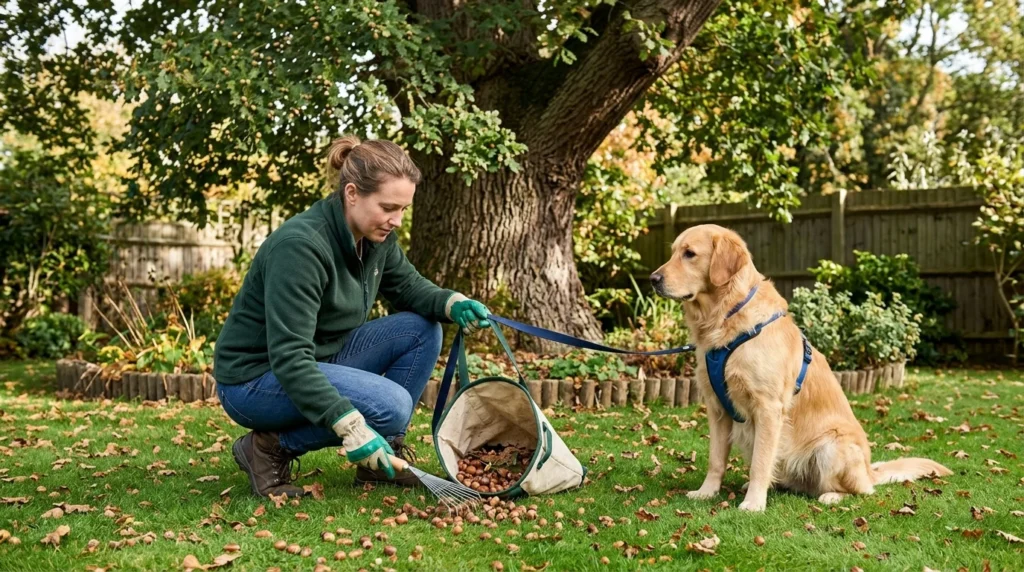
If your yard contains oak trees, regularly remove fallen acorns where possible. During autumn, when large numbers of acorns may fall, pay particular attention to outdoor areas where your dog spends time.
Can Puppies Eat Acorns?
Puppies should not eat acorns. Their smaller size increases the potential impact of consuming the same amount as a larger dog, and puppies often investigate objects by chewing and swallowing them.
Acorns can pose both tannin-related digestive concerns and physical choking or obstruction risks. Keep outdoor areas clear of acorns and supervise puppies closely during walks and playtime.
Also Read: Can Dogs Eat Butternut Squash? Benefits, Risks & Safe Feeding Guide
Can Small Dogs Eat Acorns?
Small dogs can face a greater physical risk from swallowing an acorn because the object may be relatively large compared with their digestive tract. Whole acorns can potentially become lodged and cause an obstruction.
If a small dog has swallowed an acorn, contact your veterinarian for advice rather than assuming it will pass normally. Prompt guidance is particularly important if more than one acorn was consumed.
Can Large Dogs Eat Acorns?
Large dogs may be less likely than small dogs to experience a blockage from a single small acorn, but they should still not be encouraged to eat them. Acorns contain tannins and can still cause digestive problems.
Large dogs can also swallow acorns quickly without adequately chewing them. If your dog eats several acorns, monitor closely and contact your veterinarian for guidance about the quantity consumed.
Can Dogs Eat Acorns Every Day?
No. Acorns should never become a regular part of a dog’s diet. They do not provide a necessary nutritional benefit and can expose dogs to avoidable risks.
If your dog repeatedly eats acorns during outdoor activities, focus on preventing access. Training a reliable “leave it” command and removing fallen acorns from the yard can help reduce repeated ingestion.
Can Dogs Eat Acorns From the Ground?
Dogs should not eat acorns they find on the ground. Fallen acorns can be dirty, damaged, moldy, or mixed with other substances. They can also be swallowed whole while a dog is exploring outdoors.
Oak-covered areas may contain large numbers of fallen acorns, making accidental ingestion easier. Keep your dog supervised and remove acorns from frequently used outdoor areas when practical.
Are Green Acorns Safe for Dogs?
Green or immature acorns should not be considered safe for dogs. Their color does not remove the concerns associated with acorns, including tannins and the physical risk of swallowing hard pieces.
Do not allow your dog to collect or chew green acorns during walks. If your dog has eaten several immature acorns, contact a veterinarian and provide information about the amount and timing.
Also Read: Can Dogs Eat Beets? Benefits, Risks & Safe Feeding Guide
Are Ripe Acorns Safe for Dogs?
Ripe brown acorns are also not safe treats for dogs. Although maturity can change the composition of plant compounds, ripe acorns still contain tannins and remain a potential choking or obstruction hazard.
Dogs may be especially interested in fallen ripe acorns because they are easy to find outdoors. Keep them out of reach rather than allowing your dog to eat them as a natural snack.
Can Moldy Acorns Make Dogs Sick?
Moldy acorns can be more concerning than clean, intact acorns. Mold can produce substances that may cause illness, and it is impossible to know from appearance alone whether a moldy acorn contains harmful toxins.
If your dog consumes visibly moldy acorns and develops vomiting, diarrhea, tremors, weakness, unusual behavior, or other concerning symptoms, seek veterinary advice promptly. Keep your dog away from areas where moldy plant material has accumulated.
Can Dogs Eat Acorns in the Yard?
Dogs should not be allowed to eat acorns from the yard. Fallen acorns can accumulate quickly under oak trees, especially during autumn, creating repeated opportunities for dogs to pick them up.
Regularly inspect areas where your dog plays and remove fallen acorns when practical. Supervision is particularly important for dogs that naturally chew sticks, nuts, stones, or other objects found outdoors.
How Many Acorns Are Dangerous for Dogs?
There is no single number of acorns that can be considered dangerous for every dog. Risk depends on the dog’s size, the type and condition of the acorns, how many were eaten, and whether they were chewed or swallowed whole.
A single acorn may cause no symptoms in one dog but could create a physical obstruction risk in another. If your dog eats multiple acorns or you are unsure how many were consumed, contact your veterinarian for individualized advice.
See Also: Can Dogs Eat Broccoli? Raw, Cooked, Stems & Every Form Covered
What Are the Signs of Acorn Poisoning in Dogs?
Possible signs after significant acorn ingestion include vomiting, diarrhea, reduced appetite, abdominal discomfort, lethargy, and excessive thirst. Symptoms can vary depending on the amount consumed and the individual dog.
More serious symptoms may indicate a complication such as an obstruction or another problem requiring veterinary attention. If your dog appears severely unwell, has repeated vomiting, significant abdominal pain, weakness, or difficulty breathing, seek urgent veterinary care.
Can Acorns Cause a Stomach Blockage in Dogs?
Yes, swallowed acorns can potentially cause an intestinal blockage, especially when a dog eats whole acorns or several of them. Their hard, rounded shape means they may not break down easily enough before moving through the digestive tract. Small dogs and dogs that gulp objects without chewing may have a higher physical risk.
A blockage can become serious if food and fluids cannot move normally through the intestine. Watch for repeated vomiting, loss of appetite, abdominal pain, lethargy, difficulty passing stool, or unusual behavior. If these signs appear after acorn ingestion, contact a veterinarian promptly.
Also Read: Can Dogs Eat Pepperoni? Risks, Side Effects & Safe Guide
Can Acorns Cause Choking in Dogs?
Whole acorns can present a choking hazard because of their size and shape. A dog that quickly swallows an acorn rather than chewing it may have difficulty moving it through the throat safely. This concern is particularly important for puppies and small dogs.
If your dog is coughing, gagging, struggling to breathe, pawing at the mouth, or showing signs of choking, seek emergency veterinary help immediately. Do not put your fingers into a dog’s throat if you cannot clearly see and safely remove an object.
Can Acorns Cause Diarrhea in Dogs?
Eating acorns can cause digestive upset, including diarrhea. Tannins and the indigestible nature of the acorn can irritate the gastrointestinal system, particularly when a dog consumes several acorns. Dogs that are not accustomed to eating plant material may also be more sensitive.
Mild diarrhea may resolve after the source of irritation is removed, but persistent or severe diarrhea should not be ignored. Contact your veterinarian if diarrhea continues, contains blood, occurs with repeated vomiting, or your dog becomes weak or unusually quiet.
Can Acorns Cause Vomiting in Dogs?
Yes, vomiting can occur after a dog eats acorns. Digestive irritation from tannins or the presence of a hard object in the stomach can trigger vomiting. The likelihood of problems generally increases when a dog eats several acorns or swallows them whole.
Do not give your dog additional food or home remedies without veterinary guidance if vomiting continues. Repeated vomiting, inability to keep water down, abdominal pain, weakness, or a swollen abdomen can indicate a more serious problem and requires prompt veterinary attention.
Can Acorns Cause Kidney Problems in Dogs?
Significant acorn consumption has been associated with concerns involving the digestive system and, in severe cases, other organs. The tannins in acorns can be harmful when consumed in sufficient quantities, and severe poisoning may place additional stress on the body.
Because the amount required to cause serious illness varies between dogs, do not try to determine a safe quantity at home. If your dog has eaten multiple acorns, particularly if symptoms are present, contact your veterinarian and provide details about the amount and timing.
Can Acorns Cause Liver Problems in Dogs?
Large amounts of acorns can potentially cause serious illness, and severe cases may involve organ complications. Tannins and other compounds found in acorns can contribute to toxicity when consumed in significant quantities.
If your dog has eaten many acorns, veterinary evaluation is the safest choice even if they initially appear normal. Early professional advice can help determine whether monitoring at home is appropriate or whether further examination is needed.
Can Dogs Eat Acorn Flour?
Acorn flour is not an appropriate food to give dogs intentionally. Although processing can alter the concentration of tannins, homemade or improperly processed acorn flour may still contain significant amounts of these compounds. The nutritional benefits do not justify using it as a dog treat.
Commercial foods made specifically for dogs are formulated to provide appropriate nutrition and are a safer choice. Do not experiment with homemade acorn-based foods for your pet without veterinary guidance.
See Also: What Nuts Can Dogs Eat? Full Safety Guide 2026
Can Dogs Eat Acorn Bread?
Acorn bread should not be offered to dogs. Besides the potential concerns associated with acorn ingredients, bread recipes may contain salt, sugar, butter, spices, raisins, or other ingredients that are unsuitable for dogs.
If your dog accidentally eats a small piece, check the ingredient list and monitor them. If the bread contains raisins, xylitol, chocolate, onion, garlic, or another known harmful ingredient, contact your veterinarian immediately for guidance.
Can Dogs Eat Acorn Squash?
Acorn squash is completely different from an oak acorn. Plain, fully cooked acorn squash can generally be suitable for dogs in small portions. The flesh should be served without salt, butter, garlic, onion, spices, or other potentially harmful ingredients.
Remove the seeds, stem, and tough outer parts before serving. Start with a small amount to see how your dog responds. Acorn squash should be treated as an occasional addition rather than a replacement for balanced dog food.
Acorns vs. Acorn Squash: Are They the Same?
No. Oak acorns are the nuts produced by oak trees and should not be intentionally fed to dogs because of tannins and choking or obstruction risks. Acorn squash is a type of winter squash and is unrelated to oak acorns despite having a similar name.
Plain cooked acorn squash can generally be offered to dogs in moderation, while oak acorns should be kept away from them. Always identify the food correctly before giving an unfamiliar plant or fruit to your pet.
Can Dogs Eat Acorns From Every Oak Tree?

It is safest to keep dogs away from acorns regardless of which oak tree they come from. Different oak species can vary in tannin concentration, and you generally cannot determine the exact level simply by looking at an acorn.
Since there is no nutritional need for dogs to eat acorns, there is little reason to take the risk. If oak trees are present around your home or walking route, supervise your dog and remove fallen acorns when possible.
What Should You Do If Your Dog Eats One Acorn?
If your dog eats one acorn, stay calm and remove any remaining acorns from their reach. Note approximately when the acorn was eaten and whether it was whole, cracked, moldy, or partially chewed. A healthy dog may show no symptoms after a single small acorn.
Monitor your dog for vomiting, diarrhea, appetite changes, abdominal discomfort, lethargy, or difficulty passing stool. If your dog is very small, has existing health concerns, swallowed a large acorn, or develops symptoms, contact your veterinarian for advice.
What Should You Do If Your Dog Eats Many Acorns?
Eating multiple acorns is more concerning because the dog may receive a larger amount of tannins and may also have swallowed several hard objects. Do not wait for serious symptoms before seeking professional advice.
Contact your veterinarian as soon as possible and tell them your dog’s approximate weight, how many acorns may have been eaten, when the ingestion occurred, and whether the acorns were whole or chewed. Do not induce vomiting unless a veterinary professional specifically tells you to do so.
Should You Make Your Dog Vomit After Eating Acorns?
You should not induce vomiting at home unless a veterinarian specifically instructs you to do so. Trying to make a dog vomit without professional guidance can cause additional complications, especially if the swallowed material is large or difficult to pass safely.
Instead, contact your veterinarian and explain what happened. They can determine whether vomiting is appropriate based on the amount consumed, the dog’s size, the timing, and the dog’s current condition.
How Long After Eating Acorns Can Symptoms Appear?
Digestive symptoms can develop after acorn ingestion, but the timing can vary depending on how much was consumed and whether the acorns were swallowed or chewed. Some dogs may show no noticeable symptoms after a small accidental ingestion, while others can become unwell after consuming larger amounts.
Continue observing your dog after the incident rather than assuming they are safe simply because they look normal immediately afterward. If symptoms develop or worsen, contact your veterinarian promptly.
How to Stop Your Dog From Eating Acorns
Prevention is the safest strategy. If oak trees are present in your yard, regularly collect fallen acorns and keep your dog away from areas where they accumulate. During seasons when acorns are falling heavily, increase supervision during outdoor time.
Teaching a reliable “leave it” command can also help prevent your dog from picking up acorns during walks. Keep your dog on a leash in areas with heavy acorn coverage and reward them for ignoring objects on the ground.
Are Acorns Safe as Dog Treats?
No. Acorns should not be used as dog treats. They provide no essential nutritional benefit that dogs need, while introducing potential tannin exposure, choking concerns, digestive irritation, and intestinal blockage risks.
There are many safer treat options specifically formulated for dogs. If you prefer natural treats, ask your veterinarian which fruits or vegetables are appropriate for your dog’s individual diet and health needs.
Frequently Asked Questions
Can dogs eat acorns?
No. Dogs should not intentionally eat acorns because they contain tannins and can also create choking, digestive, and intestinal blockage risks.
What happens if my dog eats one acorn?
A healthy dog may have no symptoms after eating one small acorn, but monitoring is still important. Contact your veterinarian if symptoms develop or if your dog is very small or swallowed a large acorn.
Are acorns poisonous to dogs?
Acorns can be harmful because they contain tannins. Larger quantities can cause more significant illness, while whole acorns can create physical obstruction risks.
Can puppies eat acorns?
No. Puppies should not eat acorns. Their smaller size and tendency to chew or swallow objects can increase the risks associated with acorns.
What should I do if my dog eats many acorns?
Contact your veterinarian promptly and provide information about your dog’s size, the approximate number of acorns eaten, and when the ingestion occurred. Do not induce vomiting unless instructed by a veterinary professional.
Conclusion
So, can dogs eat acorns? No, acorns are not a safe or appropriate food for dogs. They contain tannins that can cause digestive problems when consumed in significant amounts, and whole acorns can also present choking and intestinal blockage risks.
A single small acorn may not cause noticeable problems in every dog, but that does not make acorns a safe treat. The risk can be greater when a dog eats multiple acorns, swallows them whole, or consumes moldy acorns.
If your dog eats an acorn, remove access to any remaining acorns and monitor them closely. For multiple acorns, a large acorn, a small dog or puppy, or any concerning symptoms such as repeated vomiting, abdominal pain, weakness, or difficulty passing stool, contact your veterinarian promptly.


