
Can Dogs Eat Onion? Toxicity, Symptoms & What to Do
Onions are a common ingredient in many foods, including soups, sauces, gravies, rice dishes, and cooked meals. While onions are a healthy vegetable for people, they are not safe for dogs. Eating onions can damage a dog’s red blood cells and may lead to a serious condition called hemolytic anemia.
Dogs should not eat onions in any form, including raw, cooked, dried, powdered, or processed onions. The risk depends on the amount consumed and the dog’s size, but even foods containing onion powder can be dangerous because the ingredient is concentrated.
Can Dogs Eat Onion?
No, dogs should not eat onions. Onions contain compounds that can damage red blood cells in dogs, potentially causing anemia. This applies to onions whether they are raw, cooked, fried, or included as an ingredient in another food.
Some dogs may not show symptoms immediately after eating onion. Signs can develop over the following days, so an apparently normal dog should still be monitored after a known onion exposure.
See Also: Can Dogs Eat Cucumbers? Benefits, Safety & Feeding Guide 2026
How Much Onion Can Dogs Eat?
There is no recommended serving of onion for dogs. Because sensitivity can vary and onion can be toxic, it is safest to prevent dogs from eating it altogether.
The potential danger depends on factors such as the dog’s size, the amount eaten, and whether the onion was fresh or concentrated. Onion powder and dried onion can be particularly concerning because they are concentrated forms.
| Dog Size | Recommended Onion Amount | Safer Alternative |
|---|---|---|
| Small Dogs | None | Plain cooked carrots |
| Medium Dogs | None | Plain green beans |
| Large Dogs | None | Plain cooked pumpkin |
| Puppies | None | Veterinarian-approved puppy treats |
Can Dogs Eat Raw Onion?
No. Raw onion is unsafe for dogs and should never be intentionally fed to them. Fresh onion contains compounds that can damage a dog’s red blood cells after sufficient exposure.
Keep raw onion pieces, scraps, and vegetable trimmings away from dogs. A dog that steals onion from a kitchen counter or plate may consume more than expected before the owner notices.
Can Dogs Eat Cooked Onion?
No. Cooking does not make onion safe for dogs. Cooked onions can still contain compounds capable of damaging red blood cells.
This means dogs should not be given foods such as cooked onions, onion-containing sauces, soups, stews, or gravies. Always check ingredients before sharing prepared human food with your dog.
Can Dogs Eat Onion Powder?
No. Onion powder can be particularly concerning because it is a concentrated form of onion. It is commonly found in seasoning mixes, sauces, snacks, processed meats, and packaged foods.
Even when you cannot see pieces of onion in a food, onion powder may still be present. Check ingredient labels carefully before giving processed human foods to your dog.
Can Dogs Eat Dried Onion?
No. Dried onion should also be avoided. Removing water from onion concentrates its ingredients, meaning a relatively small amount of dried onion may represent more onion material than it appears.
Do not give dogs dried onion flakes, seasoning blends containing dried onion, or snacks that use dried onion as a flavoring.
Can Dogs Eat Green Onions?
No. Green onions, also known as scallions, belong to the same general plant group as other onions and should not be given to dogs.
Dogs should avoid all parts and forms of onion-family plants that may contain the harmful compounds, rather than relying on a particular variety being safer.
Can Puppies Eat Onion?
No, puppies should never be intentionally fed onion. Because puppies are small and still developing, accidental exposure should be taken seriously.
If a puppy eats onion or food containing onion, contact a veterinarian promptly for advice. Do not wait for symptoms to appear before seeking guidance after a known significant exposure.
Can Dogs Eat Onion Every Day?
No. Dogs should never be given onion as a daily food or occasional treat. Regular exposure can increase the risk of red blood cell damage and anemia.
Instead, choose dog-safe vegetables such as plain carrots, green beans, cucumber, or appropriately prepared pumpkin when you want to add variety to your dog’s treats.
What Happens If a Dog Eats Onion?
Eating onion can initially cause digestive symptoms such as vomiting, diarrhea, reduced appetite, drooling, or abdominal discomfort. More serious effects can develop when onion compounds damage red blood cells.
Signs of anemia may include weakness, lethargy, pale gums, rapid breathing, increased heart rate, or dark or reddish urine. Symptoms may take time to appear, so any significant onion exposure should be discussed with a veterinarian promptly.
Is Onion Good for Dogs to Eat?
No, onion is not good for dogs. Unlike humans, dogs can be seriously harmed by compounds found in onions. These compounds can damage red blood cells and may lead to hemolytic anemia.
Onions provide no essential nutritional benefit that dogs cannot obtain from safer foods. Because the potential risks outweigh any nutritional value, onion should never be intentionally included in a dog’s diet.
How to Safely Share Vegetables With Your Dog
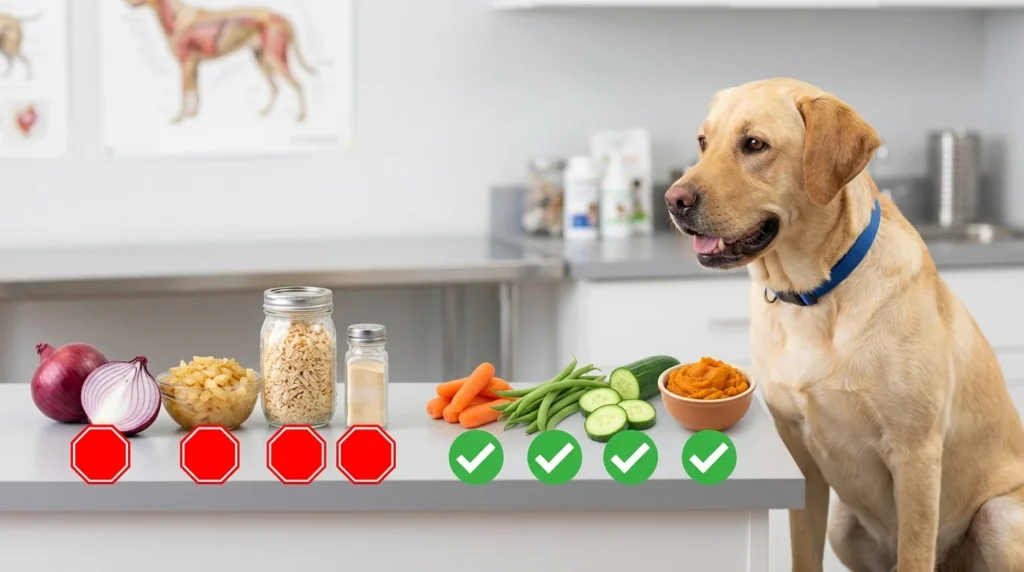
Choose vegetables that are known to be dog-safe and serve them plain. Carrots, green beans, cucumber, and plain cooked pumpkin can be suitable options for many dogs when offered in appropriate portions.
Wash vegetables thoroughly, remove potentially unsafe parts, and cut them into small pieces. Avoid adding onion, garlic, excessive salt, butter, spicy seasonings, or sauces to vegetables intended for your dog.
See Also: Can Dogs Eat Banana Peels? Risks, Symptoms & Safe Tips
Does Onion Have Benefits For Dogs?
Onions contain nutrients and antioxidants that can be beneficial to humans, but that does not make them suitable for dogs. The compounds responsible for onion’s potential health effects can damage canine red blood cells.
Dogs can obtain essential vitamins, minerals, and other nutrients from complete and balanced dog food and safer vegetables. There is therefore no reason to use onion as a nutritional supplement or treat.
Does Onion Have Any Risks For Dogs?
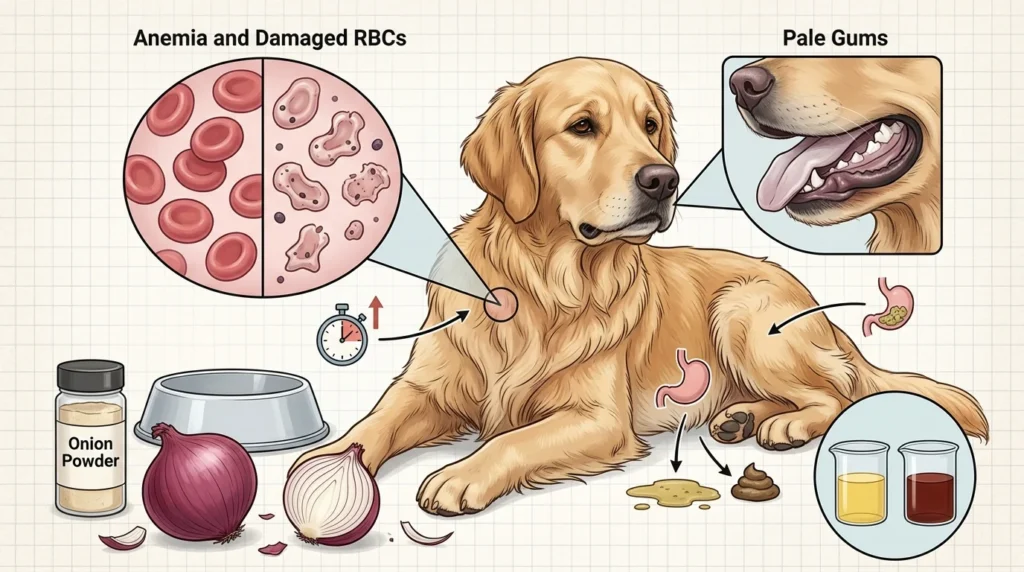
Yes. Onion is toxic to dogs and can damage red blood cells, potentially causing hemolytic anemia. The risk applies to raw, cooked, dried, and powdered forms.
Concentrated products such as onion powder can be especially concerning because they may contain a large amount of onion material in a small quantity. Symptoms can also be delayed, so dogs should be monitored after a known exposure.
What Should You Do If Your Dog Eats Onion?
If your dog eats onion or food containing a significant amount of onion, contact your veterinarian promptly. The appropriate response depends on your dog’s size, the amount consumed, and the form of onion involved.
Do not wait for symptoms to appear after a potentially significant exposure. If your dog develops weakness, pale gums, rapid breathing, dark urine, repeated vomiting, or severe lethargy, seek urgent veterinary care.
Frequently Asked Questions
Can dogs eat onions?
No. Onions are toxic to dogs and can damage red blood cells, potentially causing anemia.
Can dogs eat cooked onions?
No. Cooking does not make onions safe for dogs. Cooked onions can still contain compounds that damage canine red blood cells.
Can dogs eat onion powder?
No. Onion powder should be avoided because it is concentrated and can be present in seasonings, sauces, snacks, and processed foods.
Can puppies eat onions?
No. Puppies should never be given onions. If a puppy accidentally consumes onion, contact a veterinarian promptly for guidance.
What are the signs of onion poisoning in dogs?
Possible signs include vomiting, diarrhea, weakness, lethargy, pale gums, rapid breathing, reduced appetite, and dark or reddish urine. Symptoms may be delayed after ingestion.
Conclusion
Dogs should never eat onions. Raw, cooked, dried, powdered, and other forms can contain compounds that damage red blood cells and may cause potentially serious anemia.
If your dog accidentally eats onion, especially a large amount or concentrated onion powder, contact your veterinarian promptly. Keep onion-containing foods out of your dog’s reach and choose safer vegetables instead.
See Also: Can Dogs Eat Almond Butter? Benefits, Risks & Safe Guide


