

Can Dogs Eat Persimmons? Benefits, Risks & Safe Feeding Guide
Persimmons are sweet, colorful fruits that are enjoyed by people around the world. They contain fiber, vitamins, and antioxidants, which may make them seem like a healthy snack to share with your dog. However, persimmons require a little more care than some other dog-friendly fruits because their seeds and tough parts can create problems.
Dogs can eat small amounts of ripe persimmon flesh when it is properly prepared. The seeds, pit-like parts, leaves, and stem should be removed before serving. Persimmon should also be given in moderation because eating too much fruit may cause digestive upset.
Can Dogs Eat Persimmons?
Yes, dogs can eat small amounts of ripe persimmon flesh. Persimmons are not considered toxic to dogs, but they should be prepared carefully before being offered as a treat.
Remove all seeds, the stem, and leaves, and cut the soft fruit into small pieces. Like other fruits, persimmon should remain an occasional treat rather than a major part of your dog’s diet.
How Much Persimmon Can Dogs Eat?
The appropriate amount depends on your dog’s size, weight, health, and tolerance to fruit. Start with a small piece if your dog has never eaten persimmon before.
Too much persimmon can provide excessive sugar and fiber and may result in gas, loose stool, or stomach discomfort.
| Dog Size | Suggested Amount | Frequency |
|---|---|---|
| Small Dogs | 1–2 small pieces | Occasionally |
| Medium Dogs | 2–4 small pieces | Occasionally |
| Large Dogs | A few bite-sized pieces | Occasionally |
| Puppies | A tiny piece | Occasionally |
Can Dogs Eat Ripe Persimmons?
Yes, ripe persimmon flesh can be given to dogs in small amounts. Ripe fruit is softer and easier to chew than an unripe persimmon.
Wash the fruit thoroughly, remove the stem and seeds, and cut the flesh into appropriately sized pieces before serving.
Can Dogs Eat Persimmon Seeds?
No, dogs should not intentionally eat persimmon seeds. The seeds are hard and can create a choking hazard or potentially contribute to an intestinal blockage if swallowed.
Always remove the seeds before giving persimmon to your dog. If your dog swallows a seed, monitor them closely and contact your veterinarian if they develop vomiting, abdominal pain, loss of appetite, or difficulty passing stool.
Can Dogs Eat Persimmon Skin?
Persimmon skin is not considered toxic to dogs, but it may be tough and difficult for some dogs to digest. Removing the skin can make the fruit easier to eat, particularly for small dogs or dogs with sensitive stomachs.
If you leave the skin on, wash the fruit thoroughly and make sure the persimmon is ripe before offering a small amount.
Can Dogs Eat Unripe Persimmons?
It is better to avoid giving dogs unripe persimmons. Unripe fruit can be firm and contain higher levels of tannins, which may make it less pleasant to eat and potentially more irritating to the digestive system.
Choose a soft, ripe persimmon instead and serve only the prepared flesh.
Can Puppies Eat Persimmons?
Puppies can potentially eat a tiny amount of ripe, seedless persimmon, but fruit is not necessary for their growth. Their primary nutrition should come from a complete and balanced puppy diet.
If you introduce persimmon to a puppy, start with a very small amount and monitor for diarrhea, vomiting, gas, or other signs of digestive upset.
Can Dogs Eat Persimmons Every Day?
No, persimmons should not be given to dogs every day. The fruit contains natural sugars and fiber, and excessive amounts can contribute to digestive problems and unnecessary calorie intake.
A few small pieces occasionally are a more appropriate way to offer persimmon as a treat.
See Also: Can Dogs Eat Avocado? The Truth Every Dog Owner Must Know
Can Dogs Eat Dried Persimmons?
Dried persimmons are not the best choice for dogs because the drying process concentrates the fruit’s natural sugars and calories. Some commercial dried persimmons may also contain added sugar or preservatives.
Fresh, ripe, seedless persimmon is a better option when you want to share this fruit with your dog.
Is Persimmon Good for Dogs to Eat?
Ripe persimmon flesh can be a nutritious occasional treat for dogs. It provides fiber along with nutrients such as vitamin A, vitamin C, and antioxidants that support normal body functions and overall health.
However, persimmons are naturally sweet, so portions should remain small. Dogs do not need persimmons to meet their nutritional requirements, and their main diet should continue to provide complete and balanced nutrition.
How to Safely Share Persimmons With Your Dog
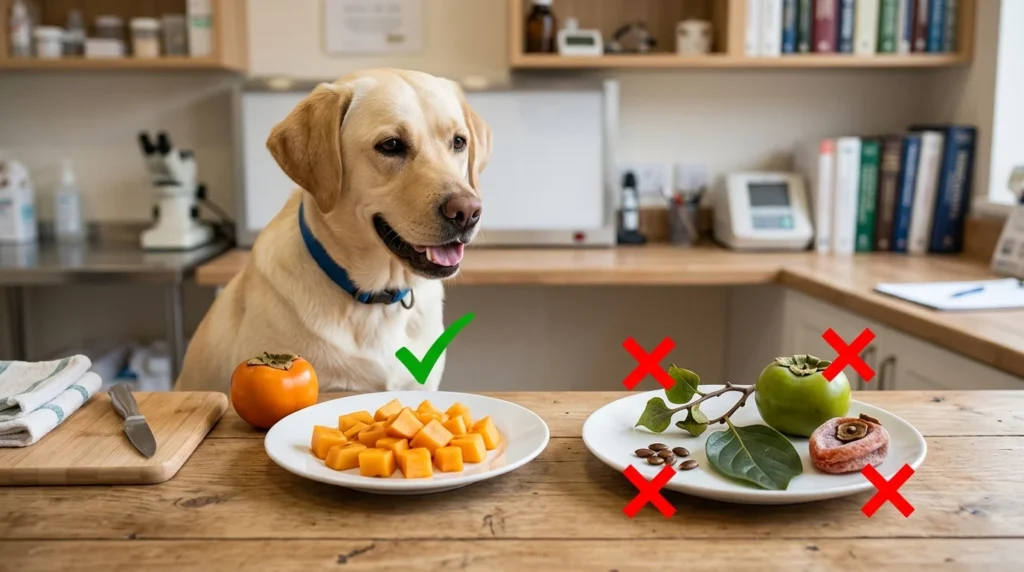
Choose a ripe persimmon, wash it thoroughly, and remove the stem, leaves, and all seeds. Cut the soft fruit into small, bite-sized pieces appropriate for your dog’s size.
Start with a small portion and monitor your dog for digestive upset. Avoid giving dogs dried persimmons with added sugar and never intentionally feed them persimmon seeds.
Does Persimmon Have Benefits For Dogs?
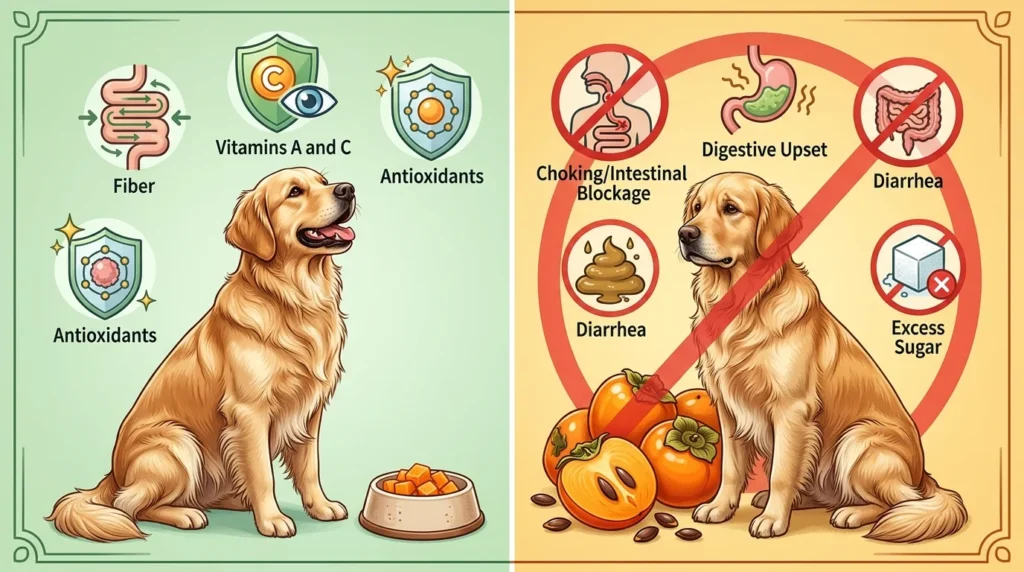
Persimmons contain dietary fiber that can support normal digestion. They also provide vitamin C, vitamin A, antioxidants, and other plant compounds that can contribute to overall nutritional variety.
These benefits are best enjoyed in small portions. A complete and balanced dog food should remain the primary source of your dog’s essential nutrients.
See Also: Can Dogs Eat Mango? Benefits, Risks & Safe Serving Guide 2026
Does Persimmon Have Any Risks For Dogs?
Yes. The biggest concern is the seeds, which are hard and can create a choking hazard or potentially contribute to an intestinal blockage if swallowed. Eating too much persimmon can also cause diarrhea, gas, or stomach discomfort.
Unripe persimmons may be harder to digest, while dried or sweetened persimmons contain more concentrated sugar. Dogs with sensitive stomachs or certain health conditions may need to avoid fruit unless their veterinarian recommends it.
What Should You Do If Your Dog Eats Persimmon Seeds?
If your dog accidentally swallows a small persimmon seed, do not panic, but monitor them closely. Watch for vomiting, abdominal discomfort, reduced appetite, lethargy, difficulty passing stool, or other unusual symptoms.
If your dog swallowed multiple seeds, a large amount of fruit, or develops concerning symptoms, contact your veterinarian promptly for guidance.
Frequently Asked Questions
Can dogs eat persimmons?
Yes. Dogs can eat small amounts of ripe, seedless persimmon flesh as an occasional treat.
Can dogs eat persimmon seeds?
No. Persimmon seeds should be removed because they can present choking and intestinal blockage risks.
Can dogs eat persimmon skin?
Yes, the skin is not considered toxic, but removing it can make the fruit easier to chew and digest.
Can puppies eat persimmons?
Puppies can have a tiny amount of ripe, seedless persimmon occasionally, but their main diet should be complete and balanced puppy food.
Can dogs eat dried persimmons?
It is better to avoid dried persimmons because they are concentrated in natural sugar and may contain added sugar or preservatives.
Conclusion
Dogs can eat small amounts of ripe persimmon flesh when the fruit is prepared correctly. Always remove the seeds, stem, and leaves, and serve only a few small pieces at a time.
Fresh, ripe, seedless persimmon is the safest option. Keep portions moderate and avoid dried or sweetened versions. If your dog accidentally eats seeds or develops digestive symptoms, contact your veterinarian for appropriate advice.
See Also: Can Dogs Eat Cucumbers? Benefits, Safety & Feeding Guide 2026


