

Can Dogs Eat Sausage? Risks, Safer Alternatives & Guide
Sausage is a popular food made from meat, fat, salt, spices, and various seasonings. While dogs naturally enjoy the smell and taste of meat, many pet owners wonder whether it is safe to share a piece of sausage with their furry friend.
The short answer is that dogs should not eat sausage regularly. Although plain cooked meat itself is safe for dogs, most sausages contain high amounts of salt, fat, garlic, onion, and other seasonings that can be harmful. An occasional tiny bite may not cause serious problems for a healthy dog, but sausage is not a healthy treat.
Can Dogs Eat Sausage?
No, sausage is not recommended for dogs. Most commercial sausages are heavily processed and contain ingredients that are unhealthy or even toxic to dogs.
Even if a sausage does not contain toxic ingredients, its high fat and sodium content can contribute to obesity, digestive upset, and other health problems.
See Also: Can Dogs Eat Fruit? Safe Fruits, Benefits & Risks Guide
How Much Sausage Can Dogs Eat?
Ideally, dogs should not eat sausage. If your dog accidentally eats a very small piece of plain cooked sausage, it is unlikely to cause serious harm, but it should never become a regular treat.
If your dog eats a large amount of sausage or shows signs of illness, contact your veterinarian.
| Dog Size | Recommended Amount | Frequency |
|---|---|---|
| Small Dogs | A tiny bite only | Rarely |
| Medium Dogs | One small bite | Rarely |
| Large Dogs | One or two small bites | Rarely |
| Puppies | Not recommended | Never intentionally |
Can Dogs Eat Cooked Sausage?
Cooked sausage is safer than raw sausage because cooking reduces the risk of harmful bacteria. However, it is still not considered a healthy choice because it remains high in salt, fat, and seasonings.
If your dog accidentally eats a small piece of plain cooked sausage, monitor them for digestive upset.
Can Dogs Eat Raw Sausage?
No, dogs should never eat raw sausage. Raw meat may contain harmful bacteria such as Salmonella or E. coli, which can make both dogs and humans sick.
Raw sausage may also contain seasonings and preservatives that are unsafe for dogs.
Can Dogs Eat Pork Sausage?
No, pork sausage is not recommended. It is typically high in fat and sodium and often contains garlic, onion powder, pepper, or other seasonings that can be harmful.
Choose plain cooked lean pork instead if you want to offer pork as an occasional treat.
Can Puppies Eat Sausage?
No, puppies should not eat sausage. Their digestive systems are more sensitive, making them more likely to experience vomiting or diarrhea after eating fatty or heavily seasoned foods.
Puppies should receive all of their nutrition from complete and balanced puppy food.
Can Dogs Eat Sausage Every Day?
No, dogs should never eat sausage every day. Regular consumption may increase the risk of obesity, pancreatitis, heart disease, and high sodium intake.
Healthier protein sources are much better choices for daily feeding.
Is Sausage Good for Dogs to Eat?
No, sausage is not considered a healthy food for dogs. While it contains protein, it is usually loaded with saturated fat, sodium, preservatives, and seasonings that provide more risks than benefits.
Dogs receive all the protein they need from complete and balanced dog food or plain cooked lean meats without added ingredients.
What Should You Do If Your Dog Eats Sausage?
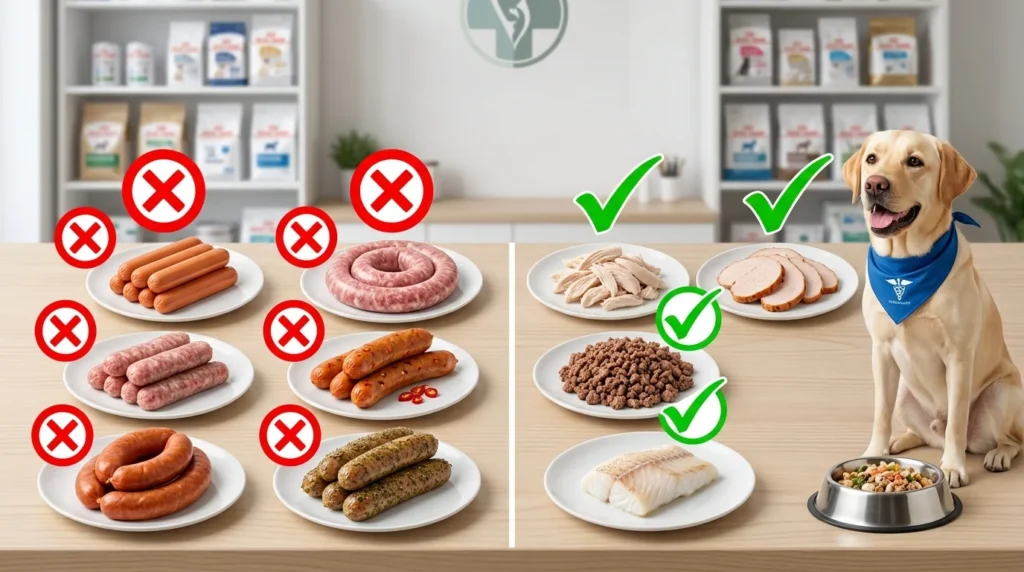
If your dog eats a very small amount of plain cooked sausage, monitor them for vomiting, diarrhea, excessive thirst, stomach pain, or unusual behavior. Most healthy dogs recover without serious problems after eating a tiny piece.
If the sausage contained garlic, onions, spicy seasonings, or your dog consumed a large amount, contact your veterinarian immediately for advice.
Does Sausage Have Any Benefits For Dogs?
Sausage contains animal protein, but its nutritional value is outweighed by the high levels of fat, sodium, preservatives, and seasonings found in most commercial products.
If you want to provide healthy protein, choose plain cooked chicken, turkey, lean beef, or fish instead of processed sausage.
See Also: Can Dogs Eat Avocados? Benefits, Risks & Safe Feeding Guide
Does Sausage Have Any Risks For Dogs?
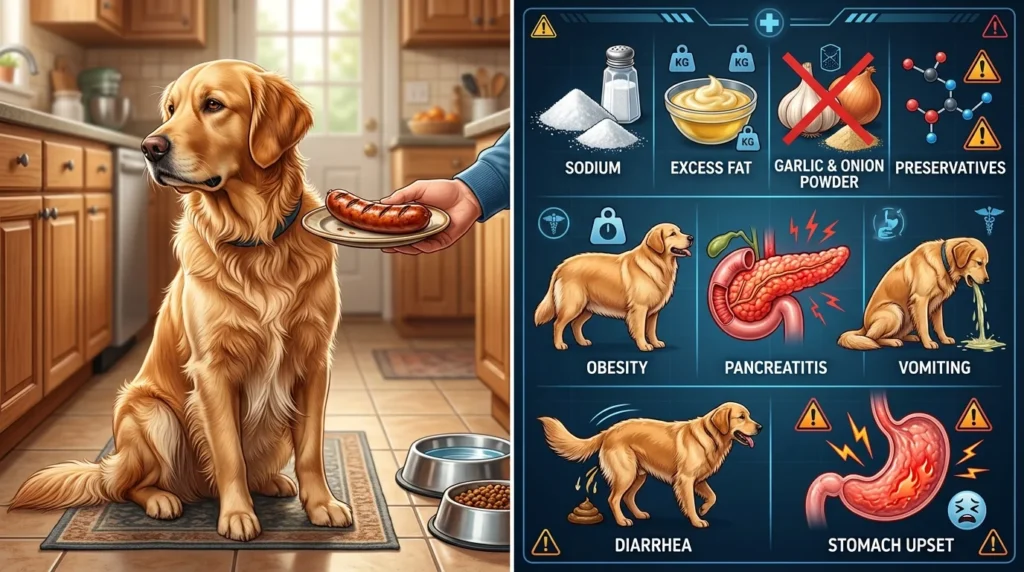
Yes, sausage can cause several health problems for dogs. Excess fat may trigger pancreatitis, while too much sodium can lead to dehydration and place extra strain on the heart and kidneys.
Many sausages also contain garlic, onion powder, pepper, or spices that can be toxic or irritating to dogs.
Healthier Alternatives to Sausage
Instead of sausage, offer dog-friendly proteins such as plain boiled chicken, cooked turkey, lean beef, salmon, or scrambled eggs without seasoning.
These options provide high-quality protein without the excessive fat, salt, and preservatives found in
processed meats.
Hot dogs share the same fat-and-salt problems as sausage, with one frank able to exceed a dog’s whole daily sodium limit; see our hot dogs for dogs guide for the full breakdown.
Frequently Asked Questions
Can dogs eat sausage?
No. Sausage is not recommended because it is high in fat, sodium, and unhealthy seasonings.
Can dogs eat cooked sausage?
A tiny piece of plain cooked sausage is unlikely to harm a healthy dog, but it should only be an accidental treat and not part of their regular diet.
Can dogs eat raw sausage?
No. Raw sausage may contain harmful bacteria and unsafe ingredients that can make dogs sick.
Can puppies eat sausage?
No. Puppies have sensitive digestive systems and should not eat processed meats like sausage.
What meat is safer than sausage for dogs?
Plain cooked chicken, turkey, lean beef, and fish are much healthier protein choices for dogs.
Conclusion
Dogs should avoid eating sausage because it is high in fat, sodium, preservatives, and seasonings that may cause digestive upset and long-term health problems.
If you want to reward your dog with meat, choose plain cooked lean protein instead. Healthy alternatives provide the nutrition your dog needs without the unnecessary risks associated with processed sausage.
See Also: Can Dogs Eat Coconut Oil? Benefits, Risks & Safe Guide


