

Can Dogs Eat Pistachios? Safety, Risks & Feeding Guide 2026
Have you ever dropped a pistachio on the floor and watched your dog rush toward it before you could stop them? Many dog owners ask the same question: can dogs eat pistachios, or are these small green nuts risky for pets?
The simple answer is that pistachios are not recommended as a regular dog treat. They are not usually listed as highly toxic like macadamia nuts, but they can still cause problems. Pistachios are high in fat, may upset the stomach, and the shells can become choking hazards. AKC also warns that large amounts can create health risks such as digestive upset and pancreatitis.
Can Dogs Eat Pistachios Nuts?
Dogs should not eat pistachio nuts as a regular snack. A plain pistachio kernel may not poison most dogs, but that does not mean it is a good treat. Pistachios are rich, fatty, and hard for some dogs to digest. Too many can lead to vomiting, diarrhea, loss of appetite, or stomach pain.
Another issue is that pistachios are often eaten from salted or flavored snack packs. Those versions are even worse for dogs. If your dog steals one plain pistachio nut, monitor them closely. If they eat a handful, shells, salted pistachios, or flavored pistachios, it is better to contact your veterinarian for advice.
Can Dogs Eat Pistachios Without the Shell?
Dogs should only ever be near pistachios without the shell, but even shelled pistachios are not ideal. The shell is the most dangerous part because it is hard, sharp, and difficult to digest. It can get stuck in the throat or digestive tract, especially in small dogs or dogs that gulp food.
If a dog eats a pistachio without the shell, the risk is lower, but it is not zero. The kernel is still high in fat and can upset the stomach. So, while shell-free pistachios are safer than pistachios with shells, they should still not be used as a regular reward.
Can Dogs Eat Shelled Pistachios?
Yes, dogs may be able to eat a tiny amount of plain shelled pistachio, but it is still not recommended. “Shelled” means the hard outer shell has been removed, which lowers choking and blockage risk. However, the nut itself can still cause digestive trouble if your dog eats too much.
Shelled pistachios must be plain, unsalted, unseasoned, and fresh. Avoid any pistachios with garlic, onion, chili, smoke flavor, sugar, or salt. Even then, safer treats exist. Carrot sticks, apple slices without seeds, green beans, or plain cooked chicken are better options for most dogs.
Can Dogs Eat Pistachios Safely?
Dogs cannot eat pistachios safely as an everyday or planned treat. A single plain pistachio may not cause serious harm, but pistachios carry enough risk that they are not worth feeding intentionally. The biggest concerns are choking, stomach upset, high fat, salt, shells, and possible mold contamination.
Safe feeding also depends on the dog. A large healthy dog may tolerate one plain pistachio better than a small puppy, senior dog, overweight dog, or dog with pancreatitis history. Because nuts are fatty foods, ASPCA notes that nuts can cause vomiting, diarrhea, and potentially pancreatitis in some pets.
Can Dogs Eat Salted Pistachios?
No, dogs should not eat salted pistachios. Salted pistachios contain too much sodium for dogs, especially when eaten in more than a tiny amount. Too much salt may cause increased thirst, vomiting, diarrhea, and other serious symptoms depending on the amount eaten.
Salted pistachios are also usually eaten in handfuls, which increases the fat load. That can make stomach upset more likely. Dogs with kidney, heart, blood pressure, or pancreatitis problems should avoid salty and fatty snacks completely. If your dog eats many salted pistachios, call your vet and tell them the amount and your dog’s weight.
Can Small Dogs Eat Pistachios?
Small dogs should avoid pistachios completely. Their bodies are smaller, so even a few pistachios can be too much fat, salt, or calories. They are also more likely to choke on pistachios or shells because their throats and digestive tracts are smaller.
For a small dog, one pistachio may not always cause harm, but it can still trigger vomiting, diarrhea, or discomfort. If a small dog eats pistachio shells, multiple pistachios, salted pistachios, or flavored pistachios, you should contact a vet quickly. Small dogs are more vulnerable to blockage and digestive upset.
See Also: Can Dogs Eat Almonds? Complete Safety Guide for Dog Owners
Can Dogs Eat Pistachios Ice Cream?
Dogs should not eat pistachio ice cream. It contains dairy, sugar, fat, and sometimes artificial flavors or other ingredients that are not suitable for dogs. Many dogs do not digest dairy well, and milk-based products can cause gas, loose stool, vomiting, or diarrhea.
Another concern is that some ice creams may include chocolate pieces, artificial sweeteners, or high-fat ingredients. Xylitol, also called birch sugar, is especially dangerous for dogs. Even if the pistachio ice cream does not contain toxic ingredients, it is still not a healthy dog treat. Choose dog-safe frozen treats instead.
Can Dogs Eat Pistachios Salted?
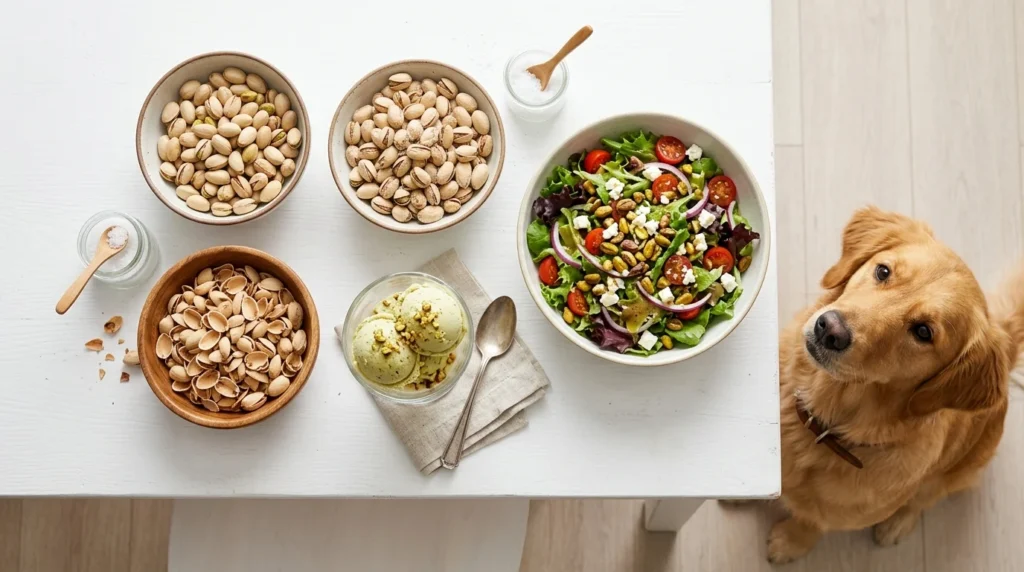
Dogs should not eat pistachios salted because salt makes an already risky snack worse. Plain pistachios are high in fat, and salted pistachios add sodium on top of that. This can irritate the stomach and may be dangerous if your dog eats a large amount.
If your dog ate one salted pistachio, offer water and monitor them. Watch for vomiting, diarrhea, restlessness, weakness, shaking, or unusual thirst. If your dog ate many salted pistachios, call your vet. ASPCA warns that excessively salty foods can cause vomiting, diarrhea, depression, tremors, seizures, and even death in severe cases.
Can Dogs Eat Pistachios Seeds?
Pistachios are often called nuts, but botanically they are seeds. For dog safety, the answer remains the same: pistachio seeds are not a good treat for dogs. They are fatty, calorie-dense, and may be difficult for dogs to digest.
Dogs do not need pistachio seeds for nutrition. A balanced dog food already gives them the protein, vitamins, minerals, and fats they need in safer amounts. If you want to give your dog something crunchy, use dog-safe vegetables like carrot slices or green beans. These are lower in fat and easier to control.
Can Dogs Eat Pistachio Sauce?
Dogs should not eat pistachio sauce. Pistachio sauces often contain cream, milk, butter, oil, sugar, salt, garlic, onion, spices, or other flavorings. Many of these ingredients can upset your dog’s stomach, and some can be unsafe.
Sweet pistachio sauces may also appear in desserts, cakes, pastries, or drinks. These foods are usually too rich for dogs and may contain chocolate or artificial sweeteners. If your dog licks a tiny amount of plain pistachio sauce, monitor them. If the sauce contains garlic, onion, chocolate, xylitol, or heavy seasoning, call your vet.
Can Dogs Eat Pistachio Salad?
Dogs should not eat pistachio salad. Many pistachio salad recipes contain whipped topping, marshmallows, pudding mix, canned fruit, sugar, dairy, and sometimes nuts. This makes it too sweet, too fatty, and too processed for dogs.
Some versions may also include grapes, raisins, or other ingredients that are dangerous to dogs. Even if the salad looks harmless, it is not designed for a dog’s digestive system. If your dog eats pistachio salad, check the ingredients first. Contact your vet immediately if it includes grapes, raisins, xylitol, chocolate, or a large amount of dairy.
Can Dogs Eat Pistachios Every Day?
No, dogs should not eat pistachios every day. Daily pistachios can add too much fat and too many calories to your dog’s diet. Over time, that may contribute to weight gain, digestive upset, or more serious fat-related health issues.
Treats should only make up a small part of your dog’s diet, and pistachios are not the best treat choice. If you want a daily reward, choose something safer and lower in fat. Small pieces of carrot, cucumber, green beans, or vet-approved training treats are better for routine use.
See Also: Can Dogs Eat Blackberries? Top Antioxidant Berry — Full Guide 2026
Are Pistachios Bad for Dogs?
Yes, pistachios can be bad for dogs, especially when eaten in large amounts or with shells, salt, or flavorings. The nut itself is fatty, and the shell can become a choking or blockage risk. Moldy pistachios are also a concern because certain molds can produce aflatoxins.
Aflatoxins can be dangerous to pets and may cause liver damage or serious illness. FDA notes that aflatoxin poisoning can happen when pets eat contaminated foods, including moldy peanuts, grains, or other contaminated foods. Signs may include sluggishness, vomiting, loss of appetite, jaundice, bruising, bleeding, or diarrhea.
How Many Pistachios Can Your Dog Eat?
The safest answer is zero pistachios as a regular treat. If your dog accidentally eats one plain, shell-free pistachio, they may be fine, but you should still monitor them for stomach upset.
Use this table as a simple guide:
| Dog Size / Situation | Pistachio Amount | Recommended Action |
|---|---|---|
| Small dog | 1 plain shelled pistachio | Monitor closely |
| Small dog | 2+ pistachios | Call your vet for advice |
| Medium dog | 1–2 plain shelled pistachios | Monitor for vomiting or diarrhea |
| Large dog | 1–3 plain shelled pistachios | Usually monitor, but do not feed more |
| Any dog | Pistachios with shells | Call vet due to choking/blockage risk |
| Any dog | Salted, flavored, spicy, or sweet pistachios | Call vet if more than a tiny amount |
| Any dog | Vomiting, choking, bloating, weakness, pain, or lethargy | Seek urgent veterinary help |
How to Safely Feed Your Dog Pistachios
If you still choose to give pistachios, keep it extremely limited. Only offer a tiny piece of a fresh, plain, unsalted, unseasoned, shell-free pistachio. Never give shells. Never give salted, smoked, spicy, sweet, chocolate-coated, or flavored pistachios.
Still, the better choice is to avoid pistachios and use safer treats. If your dog has pancreatitis, obesity, diabetes, kidney disease, heart disease, or a sensitive stomach, do not feed pistachios at all. Also introduce any new food slowly and stop immediately if your dog shows vomiting, diarrhea, itching, coughing, or discomfort.
Benefits to Giving Pistachios as Treats to Your Dog
Pistachios contain protein, fiber, healthy fats, vitamins, and minerals, so people often think they may be beneficial for dogs. In theory, those nutrients sound useful, but dogs already get balanced nutrition from complete dog food.
The problem is that the risks usually outweigh the benefits. A dog would need only a tiny amount, and that tiny amount does not offer meaningful nutrition. Meanwhile, the fat, salt, choking risk, and mold risk remain concerns. If you want nutritious treats, safer options include carrots, blueberries, cucumber, pumpkin, or dog-formulated treats.
Are Pistachios Good for Dogs?
Pistachios are not a good treat for dogs. They may contain some nutrients, but they are too fatty and risky to be considered a healthy dog snack. A food can have nutrients and still be a poor choice for pets.
For dogs, “good” means safe, digestible, appropriate, and easy to portion. Pistachios do not meet that standard well. They can cause stomach upset, and shells may cause choking. Moldy nuts may also expose pets to aflatoxins, which Merck Veterinary Manual describes as toxins produced by molds that can affect dogs and target the liver.
See Also: Can Dogs Eat Cantaloupe? Rind, Seeds & Safe Serving Guide 2026
My Dog Ate Too Many Pistachios—What Do I Do?
First, remove the pistachios and shells so your dog cannot eat more. Check the package for salt, garlic, onion, chili, chocolate, xylitol, or other flavorings. Count how many pistachios may be missing and note whether your dog ate shells.
Then call your veterinarian, especially if your dog is small, ate shells, ate many pistachios, or shows symptoms. Watch for vomiting, diarrhea, loss of appetite, choking, coughing, bloating, weakness, lethargy, tremors, or abdominal pain. Do not induce vomiting unless a veterinarian tells you to do so.
Frequently Asked Questions
Can dogs eat pistachios safely?
Dogs should not eat pistachios as a regular treat. A plain shelled pistachio may not poison most dogs, but pistachios are high in fat and may cause stomach upset. Shells can also become choking or blockage risks. It is safer to choose dog-friendly treats instead.
Are pistachios toxic to dogs?
Pistachios are not usually considered highly toxic like macadamia nuts, but they are still risky. The main dangers are fat, salt, shells, flavorings, and mold contamination. Moldy nuts may contain aflatoxins, which can be dangerous for pets and may harm the liver.
Can puppies eat pistachios?
Puppies should not eat pistachios. Their stomachs are more sensitive, and their small size makes choking or digestive upset more concerning. Puppies need balanced puppy food, not fatty human snacks. If a puppy eats pistachios or shells, call your vet for guidance.
Can dogs eat pistachio shells?
No, dogs should not eat pistachio shells. Shells are hard, sharp, and difficult to digest. They may cause choking, throat irritation, stomach upset, or intestinal blockage. If your dog eats pistachio shells, contact your veterinarian, especially if symptoms appear.
What are safer treats than pistachios?
Safer treats include carrot sticks, apple slices without seeds, green beans, cucumber, blueberries, plain pumpkin, or small pieces of plain cooked chicken. These options are usually lower in fat and easier for dogs to digest than pistachios.
Conclusion
So, can dogs eat pistachios? The safest answer is no, they should not be fed as a regular treat. A small plain shelled pistachio may not harm every dog, but pistachios are fatty, calorie-dense, and risky when salted, flavored, moldy, or eaten with shells.
Also Read: Can Dogs Eat Popcorn? Buttered, Kettle Corn & Every Type Covered


