

Can Dogs Eat Tomatoes? Safety, Benefits & Risks
Yes, dogs can eat ripe, red tomatoes in small amounts, provided they are fresh, washed, and served plain. Ripe tomatoes are generally considered safe for most healthy dogs and contain nutrients such as vitamin C, potassium, and fiber. However, tomatoes are not necessary for a dog’s diet, and they should only be offered as an occasional treat rather than a replacement for balanced dog food.
Not every part of the tomato plant is safe for dogs. Green, unripe tomatoes, tomato leaves, and stems contain higher levels of compounds called tomatine and solanine, which can be harmful if eaten in sufficient quantities. The safest approach is to offer a small piece of ripe tomato, remove the green parts, and avoid tomato products containing ingredients such as garlic, onion, excessive salt, or spices.
Are Tomatoes Safe for Dogs?
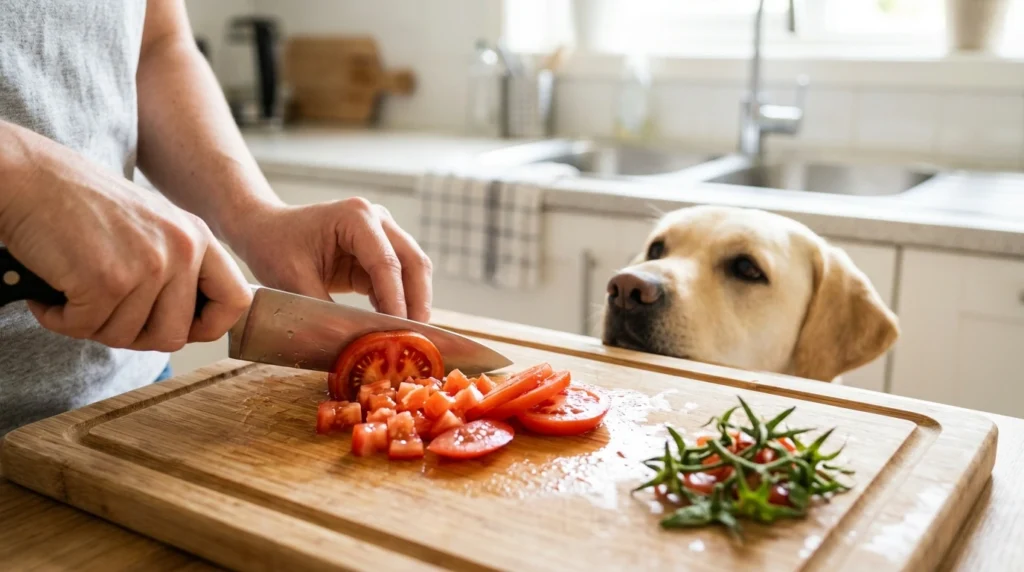
Ripe tomatoes are generally safe for dogs when served in moderation. They contain water, fiber, vitamins, and antioxidants, including lycopene, which gives ripe tomatoes their red color. A small piece of fresh tomato can provide variety without adding many calories to your dog’s daily intake.
However, tomatoes can cause digestive upset in some dogs, especially when they eat too much or try them for the first time. The acidity may not agree with every dog’s stomach. Wash tomatoes thoroughly, remove the stem and leaves, and start with a small piece to see how your dog responds.
Can Dogs Eat Ripe Red Tomatoes?
Yes, ripe red tomatoes are the safest tomato option for dogs. As tomatoes ripen, the levels of tomatine generally decrease in the fruit, making ripe tomatoes much less concerning than green, unripe tomatoes or other parts of the plant. You can offer a small piece of ripe tomato as an occasional snack.
Choose tomatoes that are fresh and free from mold or spoilage. Wash them under running water and remove the stem before serving. Cut the tomato into small, manageable pieces to reduce choking concerns, particularly for small dogs that tend to swallow food quickly.
Can Dogs Eat Green Tomatoes?
Green tomatoes require more caution because they may be unripe. Unripe tomatoes can contain higher levels of tomatine, a naturally occurring glycoalkaloid found in tomato plants. Eating enough of these compounds can cause illness, so it is best not to deliberately feed green, unripe tomatoes to your dog.
If your dog accidentally eats a small piece of a green tomato, it does not automatically mean poisoning will occur. The risk depends on the amount eaten, the dog’s size, and other factors. Remove any remaining fruit and contact your veterinarian if your dog eats a substantial amount or develops vomiting, diarrhea, weakness, or other unusual symptoms.
Can Dogs Eat Cherry Tomatoes?
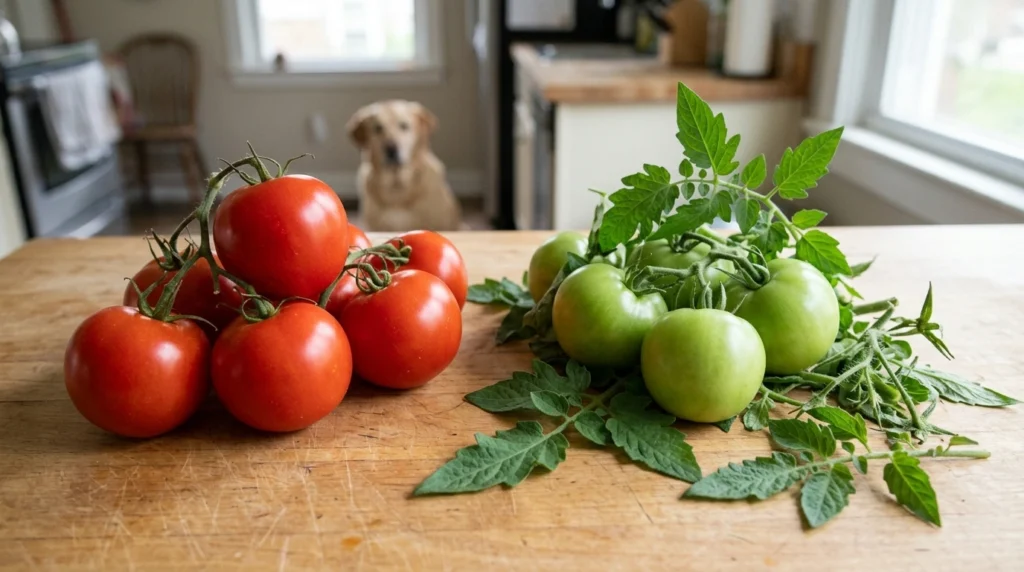
Dogs can generally eat ripe cherry tomatoes in small amounts. Like other ripe red tomatoes, they can be offered as an occasional treat after being washed thoroughly. Their small size makes them convenient to prepare, but a whole cherry tomato can still be a choking hazard, particularly for small dogs.
Cut cherry tomatoes into smaller pieces before serving them. Make sure they are fully ripe and remove any green stems or attached plant material. Avoid cherry tomatoes that have been pickled, seasoned, or prepared with sauces containing ingredients that may be unsafe for dogs.
Can Dogs Eat Grape Tomatoes?
Ripe grape tomatoes are generally safe for dogs in moderation. They provide moisture and small amounts of nutrients, but they do not offer anything a dog cannot obtain from a complete and balanced diet. A few appropriately sized pieces may be suitable as an occasional snack for a healthy dog.
Wash grape tomatoes and cut them lengthwise or into smaller pieces before feeding them to your dog. Do not offer unripe green grape tomatoes or tomatoes with stems and leaves attached. If your dog has a sensitive stomach, begin with a very small portion and monitor for digestive discomfort.
Can Dogs Eat Tomato Skin?
Yes, dogs can generally eat the skin of a ripe tomato. The skin contains fiber and plant compounds, and there is usually no need to peel a ripe tomato before offering it to a healthy dog. Washing the tomato thoroughly is important because the skin may carry dirt, residue, or microorganisms from handling and storage.
Some dogs may find tomato skin difficult to chew, particularly if the pieces are large or the dog has dental problems. For these dogs, remove the skin if necessary and cut the tomato flesh into small pieces. Always remove the stem and leaves, which are not suitable additions to your dog’s snack.
Can Dogs Eat Tomato Seeds?
The small seeds inside a ripe tomato are generally not considered toxic to dogs. Most healthy dogs can eat the seeds along with a small amount of ripe tomato flesh. There is usually no need to remove every seed before serving a fresh, ripe tomato.
However, the seeds do not provide a special nutritional benefit that dogs need. If your dog has a sensitive digestive system or your veterinarian has recommended a specific diet, follow that guidance. Focus on serving a small amount of fresh, ripe tomato rather than allowing your dog to eat large quantities.
Can Dogs Eat Cooked Tomatoes?
Plain cooked tomatoes can be suitable for dogs when they are made from ripe tomatoes and served without unsafe seasonings. Cooking tomatoes does not automatically make a product dangerous, but the other ingredients in the recipe matter. Plain, cooked tomato flesh is different from a seasoned tomato sauce or a prepared dish.
Do not give your dog cooked tomatoes containing garlic, onions, excessive salt, chili, rich sauces, or other potentially harmful ingredients. Cooking also should not be relied on to make green tomato plant material safe. If you want to share cooked tomato, set aside a small plain portion before adding seasonings for people.
Can Dogs Eat Raw Tomatoes?
Dogs can generally eat small amounts of raw, ripe red tomatoes. Fresh tomatoes contain water and can offer a crunchy, juicy treat when cut into manageable pieces. Before serving, wash the tomato and remove its stem, leaves, and any other green plant material.
Raw tomatoes should be introduced gradually, particularly if your dog has never eaten them before. Too much tomato may cause loose stools, vomiting, or stomach discomfort in some dogs. Choose ripe red fruit rather than green tomatoes, and do not let your dog chew on tomato plants growing in a garden.
Can Puppies Eat Tomatoes?
Puppies can generally try a tiny piece of ripe red tomato once they are eating solid food, but tomatoes are not a necessary part of puppy nutrition. Growing puppies need a complete and balanced diet formulated for their stage of development. Treats should not displace the food that supplies their essential nutrients.
If you decide to offer tomato, wash it, remove all stems and leaves, and cut it into a very small, manageable piece. Introduce only one new food at a time so you can identify the cause if digestive symptoms develop. Avoid green tomatoes and all parts of the tomato plant, and consult your veterinarian if your puppy has a health condition or develops concerning symptoms.
How Many Tomatoes Can Dogs Eat?
The amount of tomato a dog can safely enjoy depends on its size, health, and tolerance for new foods. Start with a small piece of ripe red tomato and observe your dog before offering more. Tomatoes should remain an occasional treat rather than a regular meal component, even when your dog enjoys their taste.
| Dog Size | Example Starting Portion |
|---|---|
| Small dogs | One small piece |
| Medium dogs | Two or three small pieces |
| Large dogs | A few small pieces |
These are conservative starting examples, not exact nutritional limits for every dog. Cut tomatoes into manageable pieces and consider your dog’s overall diet, medical needs, and daily treat intake. If your dog has a sensitive stomach or a veterinarian-prescribed diet, ask your veterinarian before introducing tomatoes.
See Also: Can Dogs Eat Limes? Safety, Risks & What to Do
Can Dogs Eat Tomatoes Every Day?
A healthy dog may tolerate a small amount of ripe tomato, but there is no nutritional need to feed tomatoes every day. A complete and balanced dog food already provides the nutrients your dog needs. Adding tomato regularly can also introduce unnecessary variety into the diet, particularly for dogs that experience digestive problems with new foods.
If you want to share tomatoes occasionally, keep the serving small and plain. Remember that all treats combined should generally account for no more than about 10% of a dog’s daily calories, with most nutrition coming from its regular balanced food. Dogs with health conditions may need stricter dietary limits.
Can Tomatoes Cause Diarrhea in Dogs?
Yes, eating too much tomato may cause diarrhea or other digestive problems in some dogs. The fruit contains fiber and natural acids, and a sudden change in diet can upset a dog’s stomach. Some dogs may tolerate tomatoes without any problems, while others may develop loose stools after eating only a small amount.
If your dog develops mild digestive upset after eating tomato, stop offering it and monitor your pet closely. Contact your veterinarian if diarrhea persists, becomes severe, contains blood, or occurs alongside repeated vomiting, weakness, or signs of dehydration. Puppies and dogs with existing health problems may need prompt veterinary advice.
Can Tomatoes Cause Vomiting in Dogs?
Tomatoes can contribute to vomiting if a dog eats too much or does not tolerate the fruit well. Vomiting may also indicate that a dog has eaten unripe tomatoes, green plant material, or another ingredient mixed into a tomato-based dish. The cause cannot always be determined from the symptom alone.
Remove access to the food and contact a veterinarian if vomiting is repeated, severe, or accompanied by unusual tiredness, abdominal discomfort, diarrhea, or other concerning signs. If your dog has eaten tomato leaves, stems, or a large quantity of green tomatoes, seek veterinary advice rather than waiting for symptoms to appear.
Are Tomato Plants Toxic to Dogs?
Tomato plants contain naturally occurring compounds, including tomatine and solanine. The green parts of the plant, such as leaves and stems, generally contain higher concentrations than ripe tomato fruit. Eating these parts can cause illness, particularly if a dog consumes a substantial amount.
Keep your dog away from tomato plants in vegetable gardens, pots, and outdoor growing areas. Secure garden beds if your dog likes to chew plants, and pick up fallen green tomatoes. If you suspect your dog has eaten tomato leaves, stems, or a significant amount of unripe fruit, contact your veterinarian for guidance.
Symptoms of Tomato Poisoning in Dogs
Eating a substantial amount of green tomato plant material or unripe tomatoes may cause signs of toxicity. Possible symptoms include vomiting, diarrhea, drooling, loss of appetite, weakness, unusual tiredness, and abdominal discomfort. More serious signs can include tremors, confusion, or changes in coordination.
The risk depends on how much your dog ate, which part of the plant was consumed, and your dog’s size and health. Do not assume that a dog is safe simply because symptoms have not appeared immediately. Contact a veterinarian promptly if your dog has eaten a potentially significant amount of green plant material or shows any concerning symptoms.
What Should You Do If Your Dog Eats Green Tomatoes?
If your dog eats a green tomato, remove any remaining fruit and check whether leaves or stems may also have been eaten. Try to estimate the amount consumed and note when it happened. Contact your veterinarian for advice, especially if your dog ate several green tomatoes, chewed the plant, or is small or medically vulnerable.
Do not induce vomiting or give home remedies unless a veterinarian specifically instructs you to do so. Watch for vomiting, diarrhea, weakness, unusual behavior, or other symptoms. If your dog develops severe signs, seek urgent veterinary care.
Can Dogs Eat Tomato Sauce?
Plain tomato sauce made from ripe tomatoes may be acceptable in a small amount, but many commercial sauces contain ingredients that are unsuitable for dogs. Garlic, onion, added salt, spices, sugar, and rich oils may make a sauce a poor choice. Some sauces also contain concentrated ingredients that make portion control more difficult.
Check the ingredient list carefully before sharing any tomato-based product. Avoid sauces containing garlic or onion because these ingredients can damage a dog’s red blood cells. The simplest option is to offer a small piece of fresh, ripe tomato instead of seasoned sauce.
Can Dogs Eat Tomato Soup?
Tomato soup is usually not the best option for dogs because prepared soups often contain salt, onion, garlic, cream, butter, or seasonings. These ingredients can cause digestive upset, and some, including onion and garlic, are toxic to dogs. Creamy soups may also contain more fat than your dog needs.
If you want to offer tomato, choose a small amount of plain, ripe tomato rather than a prepared soup. Do not give soup containing ingredients you cannot identify. If your dog accidentally drinks soup containing onion or garlic, contact your veterinarian and provide the ingredient list and estimated amount consumed.
Can Dogs Eat Canned Tomatoes?
Plain canned tomatoes may contain ripe tomato flesh, but the product must be checked carefully. Some canned tomatoes contain added salt, seasonings, onion, garlic, or sauces that are unsuitable for dogs. Products made with green tomatoes are also not a good choice.
Fresh, ripe tomatoes are generally easier to assess because you can see exactly what you are serving. If you choose canned tomatoes, use only a plain product without added ingredients that may be harmful, and offer a very small amount. Avoid heavily salted, seasoned, or flavored varieties.
Can Dogs Eat Tomatoes With Salt or Spices?
It is best to avoid giving dogs tomatoes sprinkled with salt or spices. Dogs have different nutritional requirements from people, and added salt is unnecessary in a treat. Spicy ingredients may also irritate the digestive system and cause discomfort.
Garlic and onion powders are especially important to avoid because they can be toxic to dogs. Instead, serve ripe tomato plain, washed, and cut into small pieces. If you are preparing a meal for yourself, set aside a small dog-safe portion before adding salt, spices, sauces, or other seasonings.
Can Dogs Eat Tomatoes With Cheese?
A small piece of ripe tomato with a tiny amount of plain cheese may not cause problems for many healthy dogs, but the combination is not necessary. Some dogs have difficulty digesting dairy products, and cheese can add considerable fat and calories to a snack.
Avoid tomato dishes topped with heavily salted cheese, spicy cheese sauces, garlic, or onion. If your dog is sensitive to dairy or has dietary restrictions, offer plain ripe tomato instead—or skip the treat if your veterinarian recommends avoiding it.
See Also: Can Dogs Eat Crab Meat? Safety, Benefits & Risks
Can Dogs Eat Tomato-Based Pasta?
Tomato-based pasta dishes are often unsuitable for dogs because the sauce may contain garlic, onions, salt, spices, cheese, and oil. These additions can turn an otherwise dog-safe ingredient into a meal that may cause digestive upset or expose your dog to toxic ingredients.
If your dog wants a taste of your dinner, avoid sharing seasoned pasta sauce. A small amount of plain cooked pasta may be tolerated by many dogs, but it is not nutritionally necessary. Plain ripe tomato or a dog-safe treat is a better option than a heavily seasoned pasta dish.
How to Prepare Tomatoes Safely for Dogs
Choose a fresh, ripe red tomato and wash it thoroughly under running water. Remove the stem, leaves, and any green plant material. Cut the tomato into small pieces appropriate for your dog’s size, and discard any spoiled or moldy portions.
Serve the tomato plain without salt, sauces, spices, garlic, or onion. Begin with a small piece, particularly if your dog has never eaten tomato before. Refrigerate any leftover cut tomato promptly, and keep your dog away from tomato plants and unripe fruit while gardening.
When Should Dogs Avoid Tomatoes?
Dogs should avoid green, unripe tomatoes and the leaves and stems of tomato plants because these parts contain higher levels of compounds that can be harmful. You should also avoid tomato products containing garlic, onion, excessive salt, or other unsafe ingredients.
Consider avoiding tomatoes altogether if your dog has repeatedly developed digestive upset after eating them or if your veterinarian recommends a restricted diet. If your dog has eaten a substantial amount of plant material or develops symptoms such as repeated vomiting, weakness, tremors, or poor coordination, seek veterinary care promptly.
Frequently Asked Questions
Can dogs eat tomatoes with the skin on?
Yes, most healthy dogs can eat the skin of a ripe tomato. Wash the tomato thoroughly and cut it into small pieces before serving. Remove the stem and all leaves.
Can dogs eat tomato seeds?
The seeds inside a ripe tomato are generally not considered toxic to dogs. Most dogs can eat them with a small portion of ripe tomato flesh.
Can dogs eat yellow tomatoes?
Ripe yellow tomatoes are generally suitable for dogs in small amounts, provided they are fresh, washed, and served plain. Avoid green, unripe fruit and all parts of the tomato plant.
Can dogs eat tomatoes from the garden?
Dogs can generally eat a small amount of ripe red garden tomato after it has been washed. Keep them away from the plant’s leaves, stems, and green tomatoes, which may contain higher levels of potentially harmful compounds.
What should I do if my dog eats tomato leaves?
Remove access to the plant and contact your veterinarian for advice. Tell the veterinarian how much may have been eaten and when. Seek urgent care if your dog develops vomiting, weakness, tremors, or other concerning symptoms.
Conclusion
Dogs can generally eat ripe, red tomatoes in small amounts as an occasional treat. The fruit provides moisture, fiber, and some nutrients, but it should not replace a complete and balanced dog diet. Wash tomatoes thoroughly, remove the stems and leaves, and cut the fruit into manageable pieces before serving.
The most important safety rule is to avoid green, unripe tomatoes and tomato plant leaves and stems. Be cautious with tomato sauces, soups, pasta dishes, and other prepared products because they may contain garlic, onion, excessive salt, or seasonings that are unsuitable for dogs. When in doubt, offer a small piece of plain, ripe tomato and contact your veterinarian if your dog eats potentially toxic plant material or develops concerning symptoms.


