

Can Dogs Eat Oysters? Safety, Risks & Feeding Tips
Dogs can eat oysters in some circumstances, but they should only be offered when they are thoroughly cooked, plain, and properly prepared. Raw oysters are not a safe choice for dogs because raw shellfish can carry harmful bacteria, parasites, or other contaminants. Oysters prepared for people may also contain butter, salt, garlic, onion, sauces, or spices that are not suitable for dogs.
If you want to give your dog oysters, the safest approach is to use a small amount of fully cooked oyster meat without seasoning or sauces. Oysters should be treated as an occasional food rather than a regular part of your dog’s diet. Always remove the shell completely because shell fragments can cause choking, mouth injuries, or digestive problems.
Are Oysters Safe for Dogs?
Plain, fully cooked oyster meat can be suitable for some dogs when given in a small amount. Oysters contain protein and several nutrients, making them more nutritionally useful than many processed human snacks. However, the way oysters are prepared makes a major difference to their safety.
Raw oysters, fried oysters, heavily seasoned oysters, and oysters served with rich sauces are not good choices for dogs. Dogs also have different dietary needs from humans, so even a dog-safe food should be offered in moderation. When giving oysters for the first time, start with a small amount and watch for any digestive reaction.
Can Dogs Eat Raw Oysters?
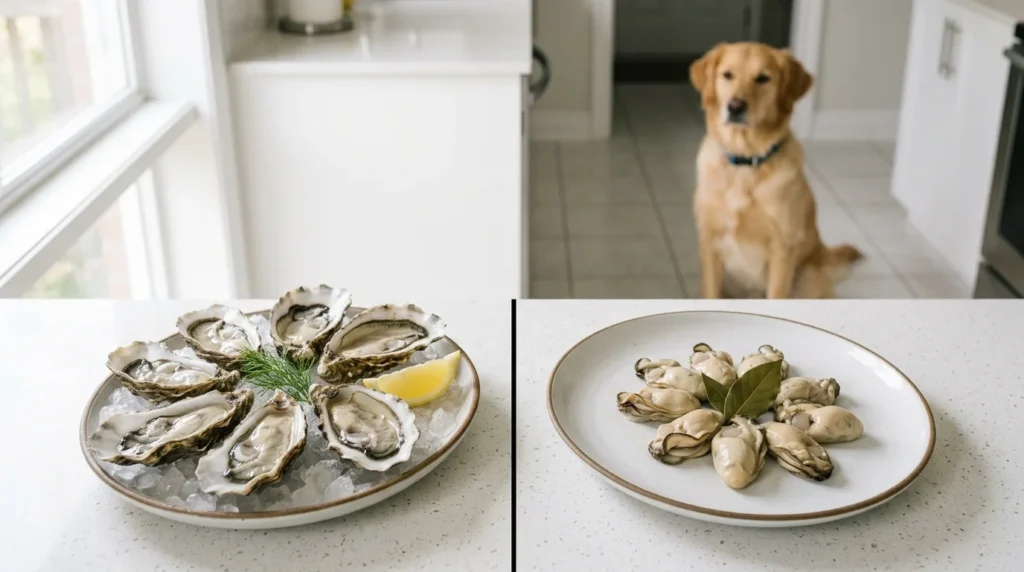
Dogs should not eat raw oysters. Raw shellfish can contain bacteria, parasites, and other microorganisms that may cause foodborne illness. Cooking oysters thoroughly reduces these risks and makes the food safer for both dogs and people.
Raw oysters may also come from waters affected by environmental contaminants. Because you cannot reliably determine whether a raw oyster contains harmful microorganisms simply by looking at it, cooked oysters are a much safer option. If your dog accidentally eats a raw oyster, monitor them closely and contact your veterinarian if the dog ate a significant amount or develops concerning symptoms.
Can Dogs Eat Cooked Oysters?
Plain cooked oysters can generally be offered to dogs in a small amount. The oysters should be thoroughly cooked and served without butter, salt, garlic, onion, chili, sauces, or other seasonings. Simple preparation makes it easier to avoid ingredients that may be harmful or unnecessarily rich for dogs.
Allow cooked oysters to cool before serving and check carefully for shell pieces. Cut large pieces into smaller portions if necessary, particularly for small dogs. If your dog has never eaten shellfish before, introduce only a small amount and observe for signs of digestive upset or an allergic reaction.
Can Puppies Eat Oysters?
Puppies should not be given raw oysters, and cooked oysters should only be considered in very small amounts if your veterinarian agrees they are appropriate. Puppies have specific nutritional requirements because they are growing rapidly, and their main food should be a complete and balanced puppy diet.
If a puppy is given cooked oyster meat, it should be completely plain and free from shell fragments. Start with a tiny amount rather than a full serving. If the puppy develops vomiting, diarrhea, swelling, breathing difficulty, or another unusual reaction, contact a veterinarian promptly.
Can Small Dogs Eat Oysters?
Small dogs can potentially eat a small amount of plain cooked oyster meat, but portion size is particularly important. A serving that looks small to a person can be relatively large for a small dog. Large chunks can also be difficult to chew or swallow.
Remove the shell completely and cut the cooked oyster into small, manageable pieces. Avoid fried, breaded, seasoned, or sauced oysters. If your small dog has never eaten shellfish before, offering a tiny amount first is a safer way to see whether they tolerate it.
Can Large Dogs Eat Oysters?
Large dogs may be able to eat a slightly larger portion of plain cooked oyster meat, but oysters should still be an occasional treat rather than a regular meal. A larger body size does not make raw oysters, oyster shells, or heavily seasoned oyster dishes safe.
Prepare the oyster simply and make sure every piece of shell has been removed. Dogs that eat quickly may benefit from smaller pieces even when they are large breeds. Always consider the dog’s overall diet when adding human foods or treats.
Can Dogs Eat Oyster Shells?
Dogs should not eat oyster shells. Oyster shells are hard, sharp, and difficult to digest. Broken shell pieces can injure the mouth or throat, cause choking, or potentially damage the digestive tract.
Never give a dog a whole oyster in its shell as a chew or treat. Remove the oyster meat completely and inspect it for shell fragments before serving. If your dog has swallowed a large piece of oyster shell, contact your veterinarian for advice rather than assuming it will pass safely.
Can Dogs Eat Canned Oysters?
Canned oysters are not necessarily toxic to dogs, but they are often less suitable than plain freshly cooked oysters. Canned products may contain added salt, oil, sauces, preservatives, or seasonings. Some are packed in flavored oils or other ingredients that dogs do not need.
If you are considering giving canned oysters, read the ingredient label carefully. A plain product with minimal ingredients is preferable, but it should still be given only in a small amount. Avoid canned oysters containing onion, garlic, spicy sauces, or excessive sodium.
Can Dogs Eat Smoked Oysters?
Smoked oysters are generally not recommended for dogs. Smoking and preservation processes can result in products containing significant amounts of salt, oil, or other ingredients. Some smoked oyster products are also flavored or seasoned for human consumption.
Plain thoroughly cooked oysters are a better option if you want to share oyster meat with your dog. If your dog accidentally eats a small piece of smoked oyster, check the ingredients and monitor for digestive upset or excessive thirst.
Can Dogs Eat Fried Oysters?
Fried oysters are not a good choice for dogs. The breading and frying process can add substantial amounts of fat, salt, and calories. Fried foods may cause stomach upset in dogs and are not necessary as part of a healthy canine diet.
Fried oyster dishes may also contain seasonings, sauces, garlic, onion, or other ingredients that create additional concerns. If you want to give your dog oyster meat, plain thoroughly cooked oysters are a much simpler alternative.
Can Dogs Eat Oysters With Butter?
It is better not to give dogs oysters prepared with butter. Butter adds extra fat and calories and may cause digestive upset in some dogs, particularly when consumed in larger amounts. Restaurant oyster dishes can contain even more butter than expected.
Serve oysters plain instead. If your dog accidentally eats a small amount of oyster cooked with butter, monitor them for vomiting, diarrhea, gas, or other digestive changes. Avoid giving additional rich foods until you know how your dog responds.
Can Dogs Eat Oysters With Garlic?
Dogs should not be given oysters prepared with garlic. Garlic can be found in oyster sauces, marinades, garlic butter, seasoning blends, and restaurant recipes. Because garlic can be harmful to dogs, it is better to keep oyster meat completely plain.
If your dog accidentally eats an oyster dish containing garlic, check the recipe or ingredient list and estimate how much was consumed. For a large ingestion or significant amount of garlic, contact your veterinarian for guidance. Do not assume that a seasoned oyster dish is safe simply because the oyster itself is cooked.
Can Dogs Eat Oysters With Lemon?
A small amount of plain cooked oyster meat is preferable to oyster dishes covered in sauces or toppings. Lemon itself is not a necessary addition to a dog’s oyster treat, and the acidity may cause stomach irritation in some dogs.
If your dog accidentally licks a small amount of lemon juice from an oyster, it is usually more important to consider the other ingredients in the dish. Avoid intentionally serving oysters with lemon, sauces, salt, or other human toppings when offering them to your dog.
How Many Oysters Can Dogs Eat?
There is no need to give dogs a large serving of oysters. If your dog tolerates shellfish, a small amount of thoroughly cooked, plain oyster meat is enough as an occasional treat. The appropriate amount depends on your dog’s size, overall diet, and individual tolerance.
For a dog trying oysters for the first time, start with a very small piece and monitor them before offering more on another occasion. Treats and human foods should remain a limited part of a dog’s daily calorie intake. Dogs with allergies, sensitive stomachs, or special diets may need to avoid oysters altogether.
Can Oysters Cause Diarrhea in Dogs?
Yes, oysters can cause diarrhea in some dogs, particularly if they eat too much or are not accustomed to shellfish. Rich preparations containing butter, oil, sauces, or seasoning can make digestive upset more likely.
Raw oysters create additional concerns because of potential bacteria and other contaminants. If your dog develops persistent diarrhea, repeated vomiting, weakness, blood in the stool, or other concerning symptoms after eating oysters, contact a veterinarian.
See ALso: Can Dogs Eat Refried Beans? Safety & Risks
Can Oysters Cause Vomiting in Dogs?
Oysters may cause vomiting if a dog eats too much, consumes a rich preparation, or reacts poorly to shellfish. Raw or contaminated oysters can present a greater food-safety concern than thoroughly cooked oysters.
If your dog vomits once after eating a small amount, monitor them and prevent access to additional oysters or rich foods. Repeated vomiting, severe lethargy, abdominal pain, difficulty breathing, or other serious symptoms require prompt veterinary attention.
Can Dogs Be Allergic to Oysters?
Yes, dogs can have an adverse reaction or allergy to foods they have not eaten before, including shellfish. A food reaction may cause digestive symptoms such as vomiting or diarrhea, while an allergic reaction can potentially cause itching, facial swelling, hives, or breathing problems.
If your dog develops facial swelling, difficulty breathing, collapse, or another severe reaction after eating oysters, seek emergency veterinary care immediately. Do not offer more oysters to see whether the reaction happens again.
Can Dogs Eat Oysters Every Day?
Oysters should not be a daily food for dogs. Even plain cooked oysters are a human food that should be treated as an occasional addition rather than a replacement for a complete and balanced canine diet.
Frequent feeding can also make it harder to control the amount of calories and nutrients your dog receives from treats. If you want to offer seafood regularly, discuss suitable portions and options with your veterinarian, especially if your dog has an existing health condition.
Can Dogs Eat Oysters in Oyster Sauce?
It is best not to give dogs oysters prepared in oyster sauce. Oyster sauce can contain significant amounts of sodium and may also include sugar, soy sauce, garlic, onion, or other seasonings. These ingredients are unnecessary for dogs and may cause problems depending on the amount consumed.
Plain cooked oyster meat is a much simpler option. If your dog accidentally eats food containing oyster sauce, check the ingredients and estimate the amount consumed. Contact your veterinarian if the dog ate a substantial amount or the dish contained potentially harmful ingredients.
Can Dogs Eat Oysters With Soy Sauce?
Dogs should not be given oysters covered in soy sauce. Soy sauce is typically very high in sodium, and dogs do not need this additional salt on their treats. Restaurant oyster dishes may also combine soy sauce with garlic, chili, or other seasonings.
If your dog eats a small piece of oyster that has been exposed to soy sauce, provide access to fresh water and monitor them. For a large amount of salty food or concerning symptoms, contact a veterinarian for advice.
Can Dogs Eat Raw Oysters From the Beach?
No. Dogs should not be allowed to eat raw oysters found on a beach or collected from the shore. Wild shellfish may carry bacteria, parasites, toxins, or environmental contaminants that cannot be identified simply by looking at the oyster.
Beach areas can also contain broken shells and other sharp objects that may injure a dog’s mouth or digestive tract. Keep dogs away from discarded shellfish and contact a veterinarian if your dog eats an unknown shellfish or large amount of raw oyster meat.
Can Dogs Eat Oysters From a Restaurant?
Restaurant oysters are not automatically safe for dogs. Even when the oyster itself is cooked, restaurant preparations may contain butter, salt, garlic, onion, chili, sauces, or other ingredients. Fried or breaded oysters are also much higher in fat than plain cooked oyster meat.
If you want to share restaurant seafood with your dog, ask whether a completely plain, thoroughly cooked piece can be provided without seasoning or sauce. Even then, offer only a small amount and remove all shell fragments.
See Also: Can Dogs Eat Carrots Raw? Safety & Benefits
What Happens If a Dog Eats a Raw Oyster?
If a dog eats a raw oyster, the outcome can vary depending on the oyster’s source, the amount consumed, and the dog’s health. Some dogs may show no immediate symptoms, while others can develop vomiting, diarrhea, stomach discomfort, or other signs of illness.
Do not intentionally feed raw oysters to your dog. If a significant amount was eaten, the oyster came from an unknown source, or your dog develops symptoms, contact your veterinarian. Keep track of when the oyster was eaten and approximately how much was consumed.
What Should You Do If Your Dog Eats an Oyster Shell?
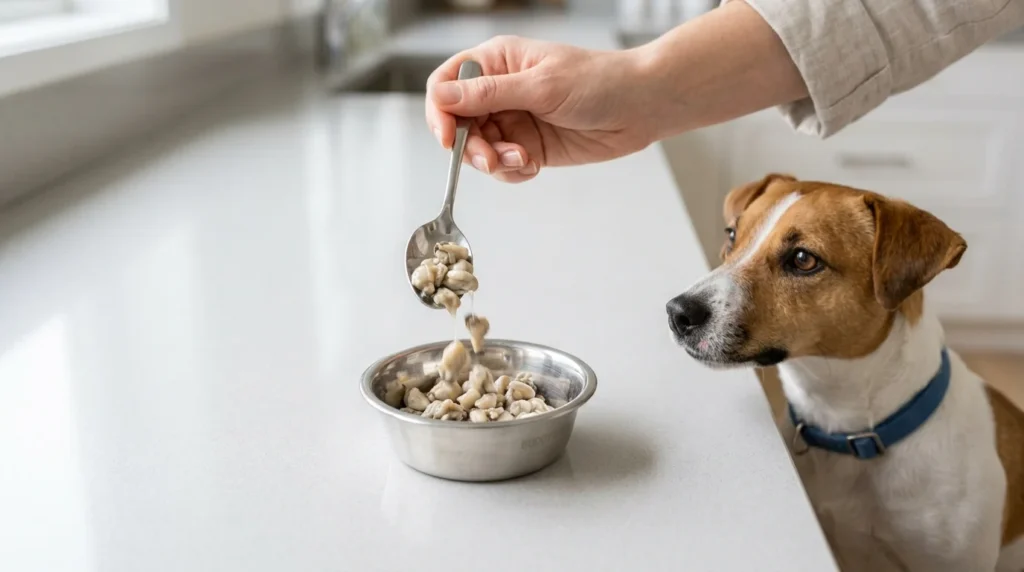
If your dog swallows an oyster shell or a sharp shell fragment, do not assume that it will pass without a problem. Shell pieces can cause choking or potentially injure the mouth, throat, stomach, or intestines.
Contact your veterinarian for advice, especially if a large or sharp piece was swallowed. Do not attempt to make your dog vomit unless a veterinarian specifically instructs you to do so. Seek urgent veterinary care if your dog has choking, difficulty swallowing, repeated vomiting, severe pain, weakness, or breathing problems.
How Should You Prepare Oysters for Dogs?
If your veterinarian has no concerns about your dog eating oysters, prepare them as simply as possible. Cook the oyster thoroughly and do not add salt, butter, garlic, onion, chili, sauces, or other seasonings. Allow the oyster to cool before offering it.
Remove the shell completely and inspect the meat carefully for tiny shell fragments. Cut the oyster into a small piece appropriate for your dog’s size. Start with a small amount, particularly if your dog has never eaten shellfish before.
Cooked Oysters vs. Raw Oysters for Dogs
| Oyster Type | Suitable for Dogs? | Main Concern |
|---|---|---|
| Plain cooked oysters | Potentially, in moderation | Must be thoroughly cooked and shell-free |
| Raw oysters | Avoid | Bacteria, parasites, and contamination risks |
| Oyster shells | No | Choking and sharp-fragment risks |
| Canned oysters | Use caution | May contain salt, oil, or seasonings |
| Smoked oysters | Not recommended | Often high in salt and may contain added ingredients |
| Fried oysters | Not recommended | High in fat, calories, and breading |
When Should Dogs Avoid Oysters?
Dogs should avoid oysters if they have previously shown a reaction to shellfish or if the oysters are raw, heavily seasoned, fried, smoked, or served with potentially harmful ingredients. Dogs with certain health conditions or prescribed diets may also need to avoid rich human foods.
When in doubt, plain cooked foods are generally easier to evaluate than restaurant dishes containing multiple ingredients. If your dog has a known food allergy, digestive condition, or other dietary restriction, ask your veterinarian before introducing oysters.
Frequently Asked Questions
Can dogs eat cooked oysters?
Yes, some dogs can eat a small amount of thoroughly cooked, plain oyster meat. It should be free from shells, salt, butter, garlic, onion, sauces, and other seasonings.
Can dogs eat raw oysters?
No. Raw oysters are not recommended for dogs because raw shellfish can contain harmful bacteria, parasites, or contaminants.
Can dogs eat oyster shells?
No. Oyster shells can be sharp and may cause choking, mouth injuries, or digestive tract problems. Only properly cooked oyster meat should be considered.
Can puppies eat oysters?
Puppies should not eat raw oysters. Plain cooked oyster meat should only be considered in a very small amount and preferably after discussing new foods with your veterinarian.
What should I do if my dog eats a raw oyster?
Monitor your dog and keep track of the amount and source of the oyster. If a large amount was eaten, the source was unknown, or symptoms such as vomiting, diarrhea, weakness, or unusual behavior develop, contact your veterinarian.
Conclusion
So, can dogs eat oysters? Dogs may be able to eat small amounts of thoroughly cooked, plain oyster meat, but raw oysters and oyster shells should be avoided. The safest preparation is simple: cook the oyster thoroughly, remove every piece of shell, and do not add salt, butter, garlic, onion, sauces, or spicy seasonings.
Oysters should remain an occasional treat rather than a regular part of your dog’s diet. Introduce any new seafood gradually and watch for digestive or allergic reactions. If your dog eats raw oysters, oyster shells, or a heavily seasoned oyster dish, contact your veterinarian when the amount or ingredients create a concern.


