

Can Dogs Eat Snap Peas? Safety, Benefits & Risks
Yes, dogs can eat snap peas in moderation. Snap peas, also called sugar snap peas, are generally considered a dog-friendly vegetable when they are fresh, plain, and properly prepared. They provide fiber, vitamins, and a crunchy texture that many dogs enjoy as an occasional treat.
However, snap peas should not replace your dog’s regular complete and balanced food. Large pieces or whole pods can also be difficult for some dogs to chew, especially small dogs and puppies. Washing the peas and cutting them into manageable pieces can make them easier and safer to eat.
Are Snap Peas Safe for Dogs?
Plain snap peas are generally safe for dogs when given in reasonable amounts. Unlike many processed human snacks, fresh snap peas do not naturally contain added salt, sugar, sauces, or spices. They can therefore be a simple vegetable treat for many healthy dogs.
Still, dogs can react differently to new foods. Eating too many snap peas at once may cause gas, loose stool, or other digestive discomfort because of their fiber content. Start with a small amount when introducing snap peas and watch how your dog responds.
Can Dogs Eat Raw Snap Peas?
Yes, dogs can generally eat raw snap peas. Raw snap peas are crunchy and can be served as an occasional snack after being washed thoroughly. Their edible pods and peas make them different from some other vegetables that require parts to be removed before feeding.
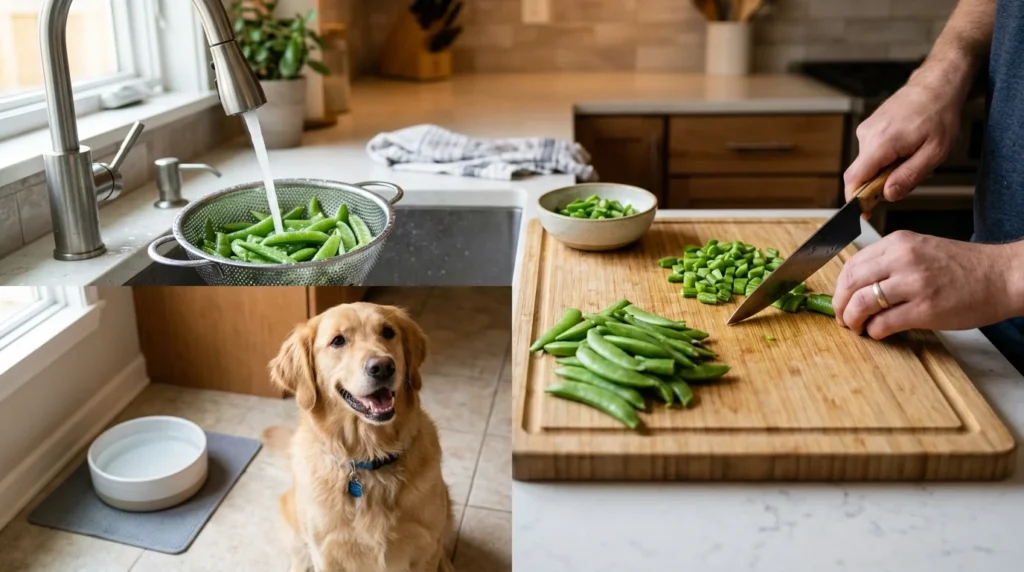
Preparation is important. Rinse the snap peas under clean running water and remove any damaged or spoiled pieces. If your dog tends to swallow food quickly, cut the pods into smaller pieces rather than giving them whole.
Can Dogs Eat Cooked Snap Peas?
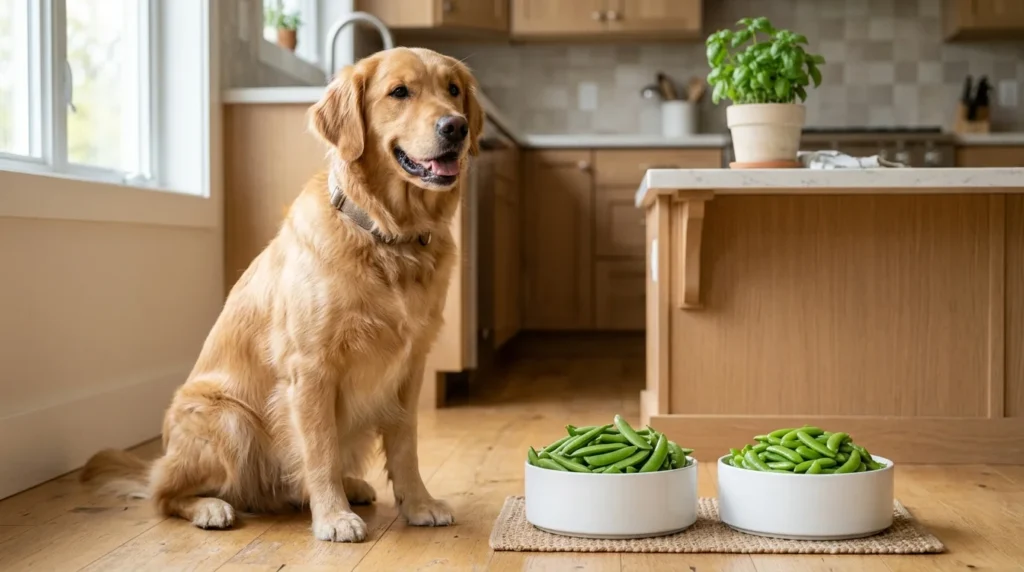
Dogs can eat plain cooked snap peas as long as they are prepared without ingredients that are unsafe or unhealthy for dogs. Steaming or lightly cooking snap peas can make them softer and easier for some dogs to chew.
Avoid cooking snap peas with butter, heavy sauces, excessive salt, onion, garlic, chili, or other strong seasonings. Plain cooked snap peas are much easier to incorporate into a dog’s diet than seasoned vegetables prepared for people.
Can Puppies Eat Snap Peas?
Puppies can generally eat small amounts of plain snap peas, but they need more careful preparation than many adult dogs. Young puppies may have smaller mouths and may not chew firm vegetables effectively, so whole pods can be difficult for them to manage.
Cut snap peas into small, manageable pieces or lightly cook them to soften the texture. Introduce only a small amount at first and continue feeding a complete puppy diet as the main source of nutrition. Treats and vegetables should remain a small part of a puppy’s overall food intake.
Can Small Dogs Eat Snap Peas?
Small dogs can eat snap peas, but the size and shape of the pod should be considered before serving. A whole snap pea may be too large for some small dogs or may be swallowed quickly without enough chewing.
For smaller breeds, slicing the snap pea into shorter pieces can make it easier to manage. Always supervise your dog when introducing a new crunchy food. If your dog is a fast eater, smaller pieces are generally more practical than whole pods.
Can Large Dogs Eat Snap Peas?
Large dogs can usually enjoy plain snap peas as an occasional vegetable treat. Their larger mouths may make chewing whole snap peas easier, but individual eating habits still matter. Some large dogs gulp food instead of chewing it properly.
If your dog eats quickly, cut the snap peas into smaller pieces even if your dog is large. A larger dog can also experience gas or digestive upset if it eats a large quantity of peas at once, so moderation remains important.
Can Dogs Eat Snap Pea Pods?
Yes, snap pea pods are edible and can generally be eaten by dogs when they are fresh and properly prepared. The pod is one of the features that makes sugar snap peas convenient as a snack because both the peas and pod can be consumed.
Wash the pods thoroughly before serving and remove any tough stems or damaged sections. If a pod seems unusually tough or fibrous, cutting it into smaller pieces or lightly cooking it may make it easier for your dog to eat.
Can Dogs Eat Snap Peas Every Day?
Healthy dogs may be able to eat small amounts of snap peas regularly, but there is no need to make them a major daily food. Dogs need a nutritionally balanced diet, and vegetables should generally be treated as occasional additions rather than a replacement for their normal food.
If you offer snap peas frequently, keep the portions small and consider all the other treats your dog receives. Too many vegetables can add excess fiber and may cause digestive problems. Dogs with specific dietary requirements should have treats selected according to their individual needs.
Are Snap Peas Good for Dogs?
Snap peas can be a nutritious addition to a dog’s treat rotation. They contain fiber and several vitamins and minerals while providing a crunchy texture. They are also relatively light compared with many fatty or highly processed human snacks.
That does not mean dogs need snap peas to stay healthy. A complete and balanced dog food should provide the nutrients your dog needs. Snap peas are best viewed as an optional treat or small food topper rather than an essential part of canine nutrition.
Can Dogs Eat Frozen Snap Peas?
Plain frozen snap peas may be suitable for some dogs, but their hardness can make them difficult to chew. This is especially important for puppies, small dogs, senior dogs, and dogs with dental problems. A hard frozen pod may also be swallowed quickly by dogs that do not chew their food well.
If you want to give frozen snap peas, allow them to soften somewhat before serving or lightly cook them first. Never use frozen snap peas that contain added sauces, salt, or seasoning. Plain vegetables are the safest choice.
Can Dogs Eat Canned Snap Peas?
Canned snap peas are less ideal than fresh or plain frozen snap peas because canned vegetables may contain added sodium or other ingredients. Excess salt is unnecessary for dogs and can make a human vegetable product less suitable as a pet treat.
If canned snap peas are the only option available, check the ingredient label carefully. A plain, low-sodium product without seasonings is preferable, but fresh snap peas are generally easier to prepare without unwanted additives.
Can Dogs Eat Snap Peas With Salt?
It is better to serve snap peas without added salt. Dogs require sodium in appropriate amounts as part of a balanced diet, but adding salty seasoning to vegetables provides no benefit and can increase their overall sodium intake.
Instead, wash and serve fresh snap peas plain. Avoid seasoned vegetable mixes because salt is not always the only concern; seasoning blends can also contain onion, garlic, or other ingredients that are inappropriate for dogs.
How Many Snap Peas Can Dogs Eat?
The amount of snap peas a dog can eat depends on its size, diet, activity level, and individual tolerance. For a new food, start with just a small piece or a few small pieces. If your dog tolerates them without digestive problems, snap peas can remain an occasional treat.
Small dogs generally need smaller portions than large dogs, while puppies should receive only tiny amounts. Remember that treats and extra foods should make up only a limited portion of your dog’s daily calories. If your dog has a medical condition or follows a special diet, ask your veterinarian about an appropriate portion.
Can Snap Peas Cause Gas in Dogs?
Yes, snap peas can cause gas in some dogs, especially when they eat a large amount. Peas contain fiber and carbohydrates that can be fermented during digestion, which may lead to increased gas or mild abdominal discomfort in sensitive dogs.
Introducing snap peas gradually can reduce the chance of digestive upset. If your dog consistently develops significant gas after eating them, stop offering the peas and consider discussing the reaction with your veterinarian.
Can Snap Peas Cause Diarrhea in Dogs?
Eating too many snap peas can cause loose stool or diarrhea in some dogs. A sudden increase in fiber or simply eating more vegetables than the digestive system is accustomed to can upset the stomach.
If your dog has mild diarrhea after eating snap peas, stop giving additional treats and monitor them while making sure fresh water is available. Persistent diarrhea, repeated vomiting, weakness, blood in the stool, or other concerning symptoms should be evaluated by a veterinarian.
Can Dogs Eat Snap Peas With Butter?
It is better to give dogs plain snap peas rather than snap peas cooked with butter. Butter adds unnecessary fat and calories and may contribute to digestive upset when eaten in larger amounts.
If your dog accidentally eats a small amount of snap peas prepared with butter, monitor for stomach upset. For regular treats, skip the butter and serve the peas fresh or lightly cooked without added fat.
Can Dogs Eat Snap Peas With Garlic?
Dogs should not be given snap peas prepared with garlic. Garlic can be present as fresh cloves, garlic powder, or part of a seasoning blend. It is an unnecessary ingredient in a dog’s treat and can be harmful to dogs.
If your dog accidentally eats a small amount of garlic-seasoned snap peas, check the ingredients and consider how much was consumed. If a substantial amount was eaten or you are concerned about the amount of garlic, contact your veterinarian for guidance.
Can Dogs Eat Snap Peas With Onion?
Snap peas themselves are generally dog-friendly, but onion should not be added to them. Onion can appear in fresh vegetable dishes, sauces, seasoning mixes, or powdered form, so check prepared foods carefully before sharing them with your dog.
If your dog eats snap peas cooked with onion, keep the recipe or ingredient label available and monitor your dog. For a significant ingestion, especially if the amount of onion is unknown, contact your veterinarian rather than assuming the food is safe.
See Also: What Foods Can Dogs Not Eat? Complete Safety Guide
Can Dogs Eat Snap Peas in Soup?
Dogs should not be given ordinary human soup simply because it contains snap peas. Soups often contain salt, onion, garlic, spices, butter, cream, or other ingredients that may not be suitable for dogs.
If you want to give your dog snap peas from a homemade meal, set aside a portion before adding seasonings and sauces. Plain cooked snap peas can be mixed with your dog’s normal food in a small amount.
Can Dogs Eat Snap Peas With Chicken?
Plain cooked chicken and plain snap peas can be combined as an occasional dog-friendly meal topper. The chicken should be fully cooked and free from bones, onion, garlic, heavy seasoning, sauces, and excessive fat.
Keep the portion modest and make sure your dog’s regular complete and balanced food remains the primary diet. A simple combination of plain chicken and snap peas is very different from a seasoned human dish containing chicken, vegetables, sauce, and salt.
Can Dogs Eat Snap Peas With Rice?
Plain cooked rice can be combined with plain snap peas for an occasional food addition. Both foods should be prepared without salt, onion, garlic, spicy sauces, or other seasonings. This keeps the ingredients simple and makes it easier to identify any food that causes digestive problems.
Rice and snap peas should not routinely replace your dog’s complete and balanced food. If your dog is being fed a special diet, ask your veterinarian before adding homemade combinations regularly.
Can Dogs Eat Sugar Snap Peas?
Yes. Sugar snap peas are another name commonly used for snap peas, and plain sugar snap peas can generally be given to dogs in moderation. Both the peas and edible pod can be consumed when properly washed and prepared.
As with regular snap peas, avoid versions covered in salt, butter, garlic, onion, spicy seasoning, or sauces. Fresh, plain sugar snap peas are the simplest choice for an occasional treat.
Can Dogs Eat Snap Peas Raw Every Day?
Some healthy dogs can tolerate small amounts of raw snap peas regularly, but feeding them every day is not necessary. Dogs need a complete and balanced diet, and vegetables should generally remain a small part of their overall food intake.
If snap peas are offered frequently, keep the portions modest and watch for gas, loose stool, or other digestive changes. Rotating different appropriate treats can also prevent your dog from receiving excessive amounts of one particular food.
What Happens If a Dog Eats Too Many Snap Peas?
A dog that eats a large quantity of snap peas may develop gas, diarrhea, vomiting, or abdominal discomfort. The risk of digestive upset is higher when a dog suddenly consumes a large amount after rarely eating vegetables.
Remove access to the remaining peas and provide fresh water. Monitor your dog and avoid adding more rich treats. If vomiting or diarrhea is severe or persistent, your dog appears painful or unusually weak, or you have another reason to be concerned, contact a veterinarian.
See Also: Can Dogs Eat Mac and Cheese? Safety & Risks
How Should You Prepare Snap Peas for Dogs?
Wash fresh snap peas thoroughly under clean running water and remove any damaged or spoiled pieces. Tough stems or strings can also be removed if present. For dogs that have difficulty chewing, lightly steaming the peas can make them softer.
Cut the pods into appropriately sized pieces if your dog tends to gulp food. Serve them plain without salt, onion, garlic, butter, spicy seasoning, or sauces. Supervise your dog when introducing snap peas, especially if they are a puppy or fast eater.
Raw Snap Peas vs Cooked Snap Peas for Dogs
| Type | Generally Suitable? | Important Consideration |
|---|---|---|
| Fresh raw snap peas | Yes, in moderation | Wash thoroughly and use appropriate pieces |
| Plain cooked snap peas | Yes | Cook without salt, onion, garlic, or sauces |
| Frozen snap peas | Use caution | Allow hard pieces to soften if needed |
| Canned snap peas | Less ideal | Check for added sodium and seasonings |
| Snap peas with garlic | Avoid | Garlic can be harmful to dogs |
| Snap peas with onion | Avoid | Onion can be harmful to dogs |
When Should Dogs Avoid Snap Peas?
Not every dog needs to avoid snap peas, but some dogs may do better without them. If your dog has repeatedly developed digestive problems after eating peas, stop offering them. Dogs with chewing or swallowing difficulties may also need vegetables prepared more softly and in smaller pieces.
Dogs with special dietary requirements may need treats that fit their specific nutritional plan. If your dog has a medical condition, food allergy, or veterinarian-prescribed diet, ask your veterinarian before adding snap peas regularly.
Frequently Asked Questions
Can dogs eat snap peas raw?
Yes, plain raw snap peas can generally be given to dogs in moderation. Wash them thoroughly and cut them into suitable pieces if your dog tends to gulp food.
Can dogs eat snap pea pods?
Yes. The edible pod is one of the parts dogs can generally eat. Remove tough or damaged sections and serve an appropriate amount.
Are sugar snap peas safe for dogs?
Yes, plain sugar snap peas are generally safe for dogs in moderation. Avoid versions prepared with salt, onion, garlic, butter, spicy seasoning, or sauces.
Can puppies eat snap peas?
Puppies can usually have a small amount of plain snap peas, but the pods should be cut into manageable pieces or lightly cooked to make them easier to chew.
Can snap peas make dogs sick?
Too many snap peas can cause gas, diarrhea, vomiting, or stomach discomfort. Seasoned snap peas containing onion or garlic are more concerning and should be avoided.
Conclusion
Yes, dogs can eat snap peas when they are plain, properly washed, and given in moderation. Fresh raw snap peas and plain cooked snap peas can be occasional treats for many healthy dogs. The edible pod can also be eaten, but preparation should be adjusted according to your dog’s size and eating habits.
Avoid snap peas prepared with onion, garlic, excessive salt, butter, spicy seasonings, or sauces. Too many peas may cause gas or digestive upset, so start with a small amount. Keep snap peas as an addition to a complete and balanced diet rather than using them as a replacement for your dog’s regular food.
See Also: Can Dogs Eat Cheetos? Safety & Risks


