
Can Dogs Eat Collard Greens? Safety & Feeding Guide
Yes, dogs can generally eat collard greens when they are properly prepared and served in moderation. Collard greens are leafy vegetables that provide fiber and several nutrients, but they should not replace your dog’s complete and balanced food. The safest way to share them is to cook the leaves plainly and serve a small amount without salt, butter, garlic, onion, spicy seasonings, or heavy sauces.
Raw collard greens can be harder for some dogs to digest, especially when given in large pieces. Cooking them until they are soft can make them easier to chew and digest. As with any new food, introduce a small amount first and watch for gas, loose stool, vomiting, or other signs of digestive discomfort.
Are Collard Greens Safe for Dogs?
Collard greens are generally safe for healthy dogs when they are plain, properly washed, and given in reasonable portions. The leaves contain fiber and nutrients that can complement an otherwise balanced diet. However, dogs do not need large quantities of leafy vegetables to stay healthy.
The way collard greens are prepared matters just as much as the vegetable itself. Human recipes often include salt, butter, bacon, ham, onion, garlic, or rich seasonings. These additions can make collard greens unsuitable for dogs even though plain collard greens can be appropriate as an occasional treat.
Can Dogs Eat Raw Collard Greens?
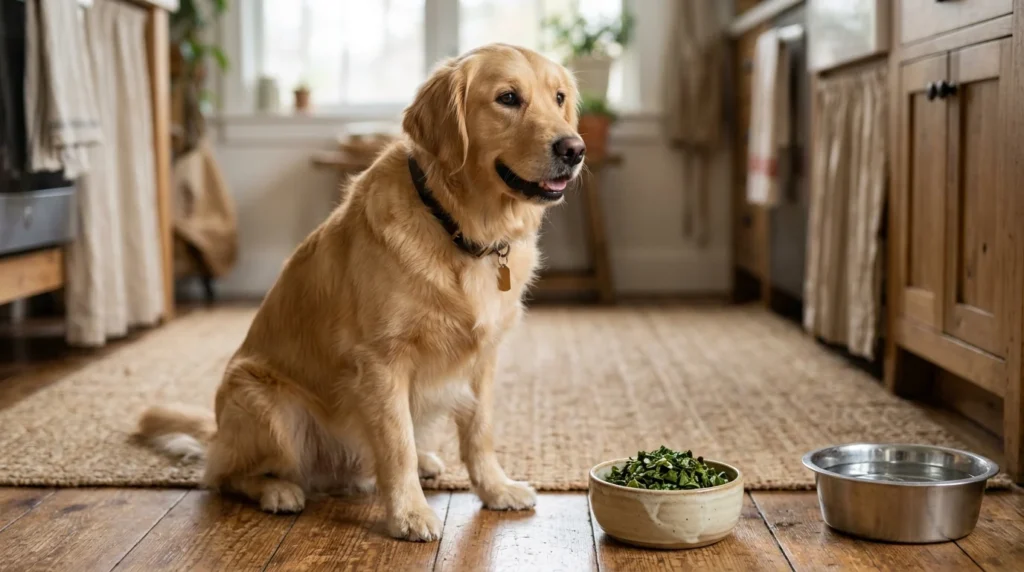
Dogs can technically eat small amounts of raw collard greens, but raw leaves can be tough and difficult for some dogs to chew and digest. Large pieces may also be harder to swallow safely. For this reason, cooked collard greens are usually a more practical option.
If you want to offer raw collard greens, wash the leaves thoroughly and cut them into very small pieces. Start with only a tiny amount to see how your dog responds. Dogs with sensitive stomachs may do better with soft, cooked vegetables rather than raw leafy greens.
Can Dogs Eat Cooked Collard Greens?
Plain cooked collard greens are generally a better choice than raw leaves for dogs. Cooking softens the vegetable and can make it easier to chew. Steam or lightly cook the leaves without adding salt, butter, oil, onion, garlic, or other seasonings.
Allow the cooked greens to cool before giving them to your dog. Chop them into small pieces and mix a modest amount with regular dog food if desired. Avoid recipes made for people because traditional collard greens may contain fatty meats, salty broth, and seasonings that dogs should not consume regularly.
Can Puppies Eat Collard Greens?
Puppies that are already eating solid food can usually have a very small amount of plain, properly cooked collard greens. However, puppies have smaller digestive systems and specific nutritional requirements, so vegetables should remain a minor part of their diet.
Introduce only a tiny portion the first time and observe your puppy afterward. If you notice diarrhea, vomiting, excessive gas, or other unusual symptoms, stop offering the greens. A puppy’s primary nutrition should come from a complete and balanced food formulated for its growth stage.
Can Dogs Eat Collard Greens Every Day?
There is generally no need to feed collard greens every day. Even nutritious vegetables should be treated as additions to a dog’s diet rather than replacements for complete dog food. Large amounts of leafy greens can also provide more fiber than some dogs tolerate comfortably.
If your dog enjoys collard greens and tolerates them well, small portions can occasionally be included as a treat or food topper. Rotating vegetables can also provide variety without relying heavily on one particular food.
Can Small Dogs Eat Collard Greens?
Small dogs can eat collard greens when the leaves are prepared plainly and cut into appropriately sized pieces. Because small dogs have smaller stomachs, even a modest amount of vegetables can represent a relatively large portion of their meal.
Start with one or two small pieces of cooked collard greens rather than a large serving. Watch your dog for digestive changes before offering more on another occasion. Avoid large tough pieces that may be difficult for a small dog to chew.
Can Large Dogs Eat Collard Greens?
Large dogs can generally enjoy a somewhat larger portion of plain collard greens than small dogs, but moderation is still important. A large dog does not need a whole bowl of leafy vegetables simply because it has a larger appetite.
Cook the leaves until they are soft, remove tough stems when appropriate, and chop them into manageable pieces. Keep the portion small compared with the dog’s normal balanced meal and avoid adding salty or fatty ingredients.
Can Dogs Eat Collard Green Stems?
Collard green stems are tougher and more fibrous than the leaves. While a small amount of tender stem may not be harmful, thick, tough stems can be difficult for dogs to chew and digest. Removing the tougher portions before serving is a simple way to make the vegetable easier to eat.
For dogs with sensitive digestion or smaller mouths, focus on the softer leaf portions. Cook the greens thoroughly and chop them into small pieces rather than giving long, tough stems that could be swallowed whole.
Can Dogs Eat Collard Green Leaves?
Yes, the leaves are the main part of the collard green that can be offered to dogs. Properly washed and cooked leaves can be soft, easy to chop, and suitable as an occasional vegetable treat for many healthy dogs.
Keep the leaves plain and avoid preparing them with ingredients commonly used in human collard green recipes. Plain leaves are much easier to control for sodium, fat, and potentially unsafe seasonings.
Are Collard Greens Good for Dogs?
Collard greens can provide fiber and several nutrients, making them a reasonable vegetable option for some dogs. Fiber can support normal digestion, while vegetables can add variety to an otherwise balanced diet. However, these benefits do not mean dogs should eat large amounts.
The overall quality of your dog’s diet matters much more than any single vegetable. Collard greens should be considered an optional treat or topper rather than a necessary nutritional supplement. If your dog already eats a complete and balanced diet, only a small amount is needed.
Can Dogs Eat Collard Greens With Garlic?
No. Collard greens should not be prepared with garlic for dogs. Garlic belongs to the Allium family and can be harmful to dogs. It may be included in cooked vegetable recipes, seasoning blends, sauces, or broths without being obvious from the appearance of the food.
If you are preparing collard greens specifically for your dog, leave garlic out completely. Plain cooked greens are a much safer option. If your dog accidentally eats collard greens containing garlic, the potential risk depends on the amount and the dog’s size, so contact your veterinarian if a significant quantity was consumed.
Can Dogs Eat Collard Greens With Onion?
Dogs should not be given collard greens cooked with onion. Onion can be harmful to dogs, and it may appear in homemade or restaurant-style collard green recipes. Onion powder and dried onion can also be concentrated sources of the same ingredient.
For a dog-safe preparation, cook the collard greens without onion, garlic, seasoning mixes, or salty broth. If your dog accidentally consumes a substantial amount of onion-containing food, speak with a veterinarian promptly for guidance.
See Also: Can Dogs Eat Pineapple? Safety, Benefits & Risks
Can Dogs Eat Collard Greens With Bacon?
Collard greens cooked with bacon are not a good choice for dogs. Bacon is high in fat and sodium, and the cooking liquid may contain additional salt and seasonings. While a small accidental bite may not cause a serious problem in every dog, bacon-seasoned greens should not be intentionally fed as a regular treat.
If you want to share collard greens, prepare a separate plain portion for your dog before adding bacon or other human ingredients. This allows you to offer the vegetable without unnecessary fat and sodium.
Can Dogs Eat Collard Greens With Ham?
Collard greens prepared with ham are also best kept away from dogs. Ham can be high in sodium and fat, and the broth used to cook the greens may contain additional salt or seasonings. These ingredients can make an otherwise suitable vegetable much less appropriate for dogs.
Choose plain steamed or boiled collard greens instead. Once cooled, chop the soft leaves into small pieces and offer a modest amount alongside your dog’s normal food.
How Much Collard Greens Can Dogs Eat?
The appropriate amount of collard greens depends on your dog’s size, diet, and individual tolerance. Since collard greens are high in fiber, a large serving can cause gas or loose stool. Start with a very small amount and increase only if your dog handles it comfortably.
| Dog Size | Starting Portion |
|---|---|
| Small dogs | 1–2 teaspoons of finely chopped cooked greens |
| Medium dogs | 1–2 tablespoons of cooked greens |
| Large dogs | 2–4 tablespoons of cooked greens |
These are general treat portions rather than strict medical limits. Keep vegetables as a small part of the overall diet, and reduce the amount if your dog develops digestive discomfort. Dogs with special dietary needs may require different portions.
Can Collard Greens Cause Gas in Dogs?
Yes, collard greens can cause gas in some dogs, especially when they eat a large amount or are not accustomed to high-fiber vegetables. The digestive system may need time to adjust to the additional fiber.
Cooking the greens until soft and serving a small portion can make them easier for many dogs to tolerate. If your dog repeatedly develops excessive gas after eating collard greens, it may be better to choose another vegetable.
Can Collard Greens Cause Diarrhea in Dogs?
Too many collard greens can cause loose stool or diarrhea in some dogs. A sudden increase in fiber may upset the digestive system, particularly in dogs with sensitive stomachs. Rich recipes containing bacon, ham, butter, or salty broth can also contribute to digestive problems.
If your dog develops mild diarrhea after eating collard greens, stop offering the vegetable and monitor them. Provide normal access to fresh water. Persistent or severe diarrhea, blood in the stool, repeated vomiting, weakness, or other concerning symptoms should be discussed with a veterinarian.
Can Dogs Eat Collard Greens Cooked in Broth?
It depends on the broth. Many commercial and homemade broths contain high amounts of sodium and may include onion, garlic, or seasoning blends. These ingredients can make broth-cooked collard greens unsuitable for dogs.
If you want softer greens for your dog, plain water is a safer cooking option. You can also use a veterinarian-approved, dog-safe broth only if you have checked the ingredients carefully and confirmed that it contains no onion, garlic, excessive sodium, or other unsuitable additives.
Can Dogs Eat Frozen Collard Greens?
Frozen collard greens can be suitable for dogs if they are plain and prepared without unsafe seasonings. Check the package carefully because some frozen vegetable products contain added salt, sauces, butter, or seasoning.
Cook plain frozen collard greens until soft, allow them to cool, and chop them into small pieces before serving. Avoid frozen prepared meals or seasoned vegetable mixes made for humans because they may contain ingredients that are not appropriate for dogs.
See Also: Can Dogs Eat Turmeric? Safety, Benefits & Risks
Can Dogs Eat Canned Collard Greens?
Canned collard greens are usually not the best choice for dogs because canned vegetables can contain significant amounts of sodium. Some products may also contain bacon, ham, onion, garlic, or other seasonings.
If canned collard greens are the only option, check the ingredient and nutrition labels carefully and avoid products containing onion, garlic, or heavy seasoning. Plain fresh or frozen collard greens prepared at home are generally easier to control.
Can Dogs Eat Collard Greens With Butter?
Plain butter is not toxic to dogs in tiny amounts, but it is high in fat and calories. Collard greens prepared with a generous amount of butter are therefore not a good regular treat. High-fat foods can cause digestive upset and may be particularly problematic for dogs that are sensitive to fatty foods.
For a dog-safe serving, skip the butter completely. Steam or boil the collard greens in plain water and serve a small amount once they have cooled.
Can Dogs Eat Collard Greens With Salt?
Dogs do need sodium as part of a balanced diet, but they do not need added table salt on their vegetables. Human-style collard greens can contain much more sodium than a dog needs from an occasional treat.
It is best to prepare collard greens without added salt. Avoid salty seasoning blends and heavily salted cooking liquids as well. Plain vegetables allow you to keep the treat simple and reduce unnecessary sodium intake.
Can Dogs Eat Collard Greens With Pepper?
There is no nutritional reason to add black pepper or other spicy seasonings to your dog’s collard greens. A small amount of plain black pepper is not generally considered highly toxic, but large amounts can irritate the mouth and digestive system.
For the safest preparation, leave pepper and other spices out. Dogs can enjoy the natural flavor of properly cooked vegetables without human-style seasoning.
Can Dogs Eat Collard Greens in Soup?
Collard greens in soup are safe only if the entire soup is made with dog-appropriate ingredients. Many soups contain onion, garlic, high-sodium broth, heavy seasoning, fatty meat, or other ingredients that are unsuitable for dogs.
If you want to give your dog some collard greens from a homemade soup, it is better to set aside a plain portion before adding seasonings and other human ingredients. Never assume that a vegetable is safe simply because it is part of a soup.
Can Dogs Eat Collard Greens With Eggs?
Plain cooked eggs can be suitable for many dogs, and they can be combined with plain cooked collard greens in a small amount. However, the egg should be cooked without salt, butter, onion, garlic, or spicy seasonings.
If you want to make a simple homemade treat, a small amount of plain cooked egg mixed with finely chopped cooked collard greens can work for some dogs. Keep the serving modest and remember that the combination should not replace a complete and balanced meal.
See Also: Can Dogs Eat Apple Skin? Safety & Feeding Guide
Can Dogs Eat Collard Greens With Chicken?
Plain cooked chicken can generally be combined with a small amount of plain collard greens. This can be a simple food combination when both ingredients are cooked thoroughly and served without salt, onion, garlic, sauces, or heavy seasoning.
Use boneless chicken and remove the skin or excess fat if appropriate. Chop both the chicken and greens into manageable pieces. This should still be treated as an occasional addition rather than a replacement for nutritionally complete dog food.
What Should You Do If Your Dog Eats Seasoned Collard Greens?
First, determine what ingredients were used to prepare the collard greens. Check whether the food contained onion, garlic, bacon, ham, a large amount of salt, spicy seasonings, or other ingredients that may be harmful to dogs.
If your dog ate only a small amount and the ingredients were generally harmless, monitor them for digestive upset. If the food contained onion or garlic, a large amount of salt, or another potentially dangerous ingredient, contact your veterinarian for advice. Do not induce vomiting unless a veterinary professional specifically instructs you to do so.
How Should You Prepare Collard Greens for Dogs?
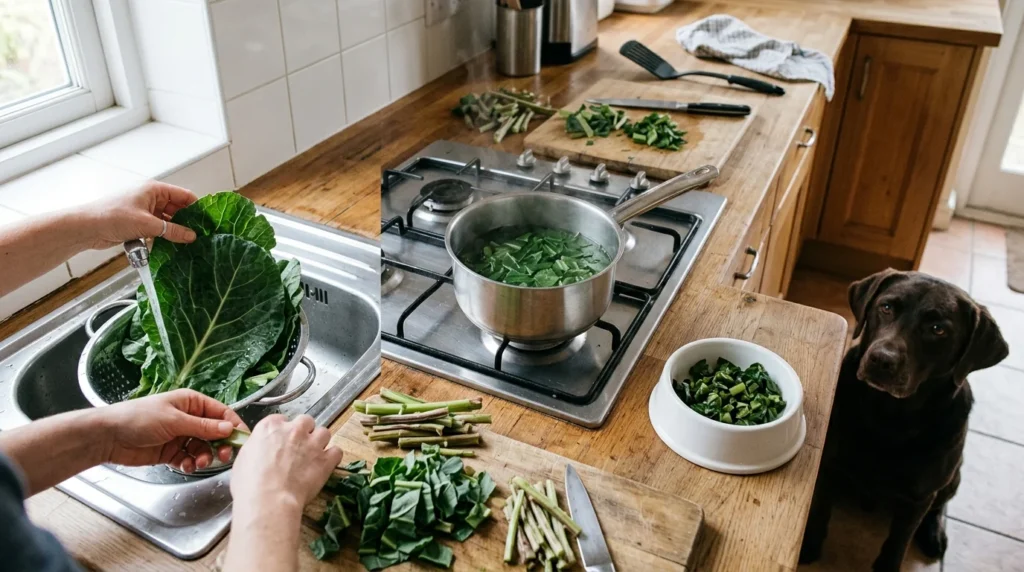
Start by washing the collard green leaves thoroughly. Remove any damaged portions and separate thick, tough stems if necessary. Cook the leaves in plain water until they become soft, then allow them to cool completely.
Chop the cooked greens into small pieces before serving. Do not add salt, butter, bacon, ham, onion, garlic, spicy sauces, or seasoning mixes. A plain preparation gives you the most control over what your dog is eating.
Raw vs. Cooked Collard Greens for Dogs
| Type | Can Dogs Eat It? | Important Consideration |
|---|---|---|
| Raw collard greens | Small amounts may be tolerated | Can be tough and harder to digest |
| Plain cooked collard greens | Generally suitable in moderation | Soft and easier to chew |
| Seasoned collard greens | Best avoided | May contain salt, onion, garlic, or spices |
| Bacon or ham collard greens | Best avoided | High fat and sodium |
| Canned collard greens | Use caution | May contain excessive sodium and seasonings |
Frequently Asked Questions
Can dogs eat collard greens safely?
Yes, most healthy dogs can eat small amounts of plain collard greens. Cook them until soft and avoid salt, onion, garlic, bacon, ham, butter, and heavy seasonings.
Are raw collard greens safe for dogs?
Small amounts of raw collard greens may be tolerated, but the leaves can be tough and harder to digest. Plain cooked collard greens are generally easier for dogs to chew and handle.
Can puppies eat collard greens?
Puppies that are already eating solid food can usually have a very small amount of plain cooked collard greens. Their main diet should remain a complete and balanced puppy food.
Can dogs eat collard greens cooked with bacon?
It is best to avoid giving dogs collard greens cooked with bacon. Bacon is high in fat and sodium, and the recipe may also contain other seasonings that are unsuitable for dogs.
How should I prepare collard greens for my dog?
Wash the leaves, remove tough stems if necessary, cook them in plain water until soft, let them cool, and chop them into small pieces. Do not add salt, onion, garlic, butter, bacon, ham, or spicy seasonings.
Conclusion
Dogs can generally eat collard greens in moderation when the vegetable is plain and properly prepared. Cooked collard greens are often easier to chew and digest than raw leaves, making them a practical occasional treat or food topper. The serving should remain small because too much fiber can cause gas, loose stool, or other digestive discomfort.
The biggest issue is usually not the collard green itself but what is added to it. Avoid recipes containing onion, garlic, bacon, ham, excessive salt, butter, spicy seasonings, or rich sauces. For a simple dog-safe option, wash the leaves, cook them until soft in plain water, chop them into small pieces, and offer a modest portion alongside your dog’s normal balanced diet.
See Also: Can Dogs Eat Sushi? Safety, Risks & Safe Alternatives