

Can Dogs Eat Spam? Safety, Risks & What to Know
Dogs should not regularly eat Spam. A tiny accidental bite of plain Spam is unlikely to cause a serious problem in an otherwise healthy dog, but Spam is not a healthy or appropriate regular treat. It is a highly processed meat that is typically high in sodium and fat, and it can contain seasonings and preservatives that dogs do not need.
The main concern is how much Spam your dog eats. A small taste may cause no noticeable reaction, while a larger amount can lead to excessive thirst, stomach upset, vomiting, diarrhea, or other problems. Because Spam is designed as human food rather than balanced dog food, it is better to choose a simple dog-safe treat instead.
Is Spam Safe for Dogs?
Spam is not considered a toxic food in the same way as certain foods such as chocolate, grapes, or onions. However, that does not mean it is a suitable food for dogs. Its high salt and fat content makes it a poor choice, particularly when offered frequently or in large portions.
If your dog accidentally eats a small piece, you can usually monitor them for signs of digestive upset. Keep fresh water available and avoid giving more salty or fatty foods. If your dog consumes a large quantity or develops concerning symptoms, contact your veterinarian.
Can Dogs Eat Canned Spam?
Canned Spam should generally be avoided as a dog treat. The canned meat is processed and usually contains substantial amounts of sodium and fat. Dogs can get the nutrients they need from properly formulated dog food without needing processed luncheon meat.
If your dog has eaten some canned Spam accidentally, the amount matters. A tiny piece is very different from eating a large portion or an entire can. Monitor your dog and contact a veterinarian if the amount was substantial or if symptoms develop.
Can Dogs Eat Cooked Spam?
Cooking Spam does not make it an ideal food for dogs. Spam is already processed and cooked during manufacturing, so heating it again does not remove its high sodium or fat content.
If you warm Spam in a pan with oil, butter, spices, or sauce, you may add even more unnecessary ingredients. If you want to give your dog meat as a treat, plain cooked chicken, turkey, or another appropriate lean meat is generally a simpler option.
Can Puppies Eat Spam?
Puppies should not be given Spam as a regular food or treat. Growing puppies need carefully balanced nutrition to support normal development, and highly processed salty foods can displace more nutritious foods from their diet.
A tiny accidental bite is not necessarily an emergency, but you should avoid intentionally feeding Spam to a puppy. If a puppy eats a large amount, especially for its small body size, contact your veterinarian for personalized advice.
Can Dogs Eat Spam Every Day?
No, Spam should not be part of a dog’s daily diet. Regularly feeding processed meat can add excessive sodium, fat, and calories while providing no nutritional advantage over a complete and balanced dog food or healthier treats.
Even if your dog enjoys the taste, frequent feeding can make it easier for treats and table foods to become a significant part of the diet. Keep human foods limited and choose dog-appropriate treats for regular rewards.
Can Dogs Eat Spam with Rice?
Adding Spam to rice does not make the meal healthier for a dog. Plain cooked rice can be suitable for many dogs in appropriate amounts, but Spam still contributes its high sodium and fat content.
If you want to prepare a simple rice-based meal for your dog, use plain cooked rice with an appropriate plain protein and dog-safe ingredients rather than seasoned processed meat. A homemade diet intended for regular feeding should be properly balanced rather than relying on rice and meat alone.
Can Dogs Eat Spam and Eggs?
Plain fully cooked eggs can be suitable for many dogs when offered in moderation, but adding Spam makes the combination less appropriate. Spam adds significant salt and fat to what could otherwise be a simple protein-rich treat.
If you want to give your dog egg, serve it plain and fully cooked without salt, butter, onion, garlic, or heavy seasoning. There is no nutritional need to add Spam.
Can Dogs Eat Spam with Cheese?
Spam and cheese together are not a good combination for dogs. Both foods can contribute extra fat and sodium, and some dogs may also have digestive problems after eating dairy products.
A small accidental bite is usually less concerning than a large serving, but intentionally feeding this combination is best avoided. If your dog needs a tasty reward, choose a small dog treat or a tiny portion of plain cooked lean meat instead.
Can Dogs Eat Spam Musubi?
Spam musubi is not a suitable regular food for dogs. In addition to Spam, it commonly contains rice, seaweed, and sometimes sauces or other ingredients. The Spam itself is the primary concern because of its salt and fat content, while added sauces can introduce even more sodium or seasonings.
A dog that steals a small bite may simply need monitoring, but a large amount should be taken more seriously. Check the ingredients if the musubi contains sauces or seasonings, and contact your veterinarian if your dog consumed a substantial quantity.
Can Dogs Eat Spam Lite?
Spam Lite may have differences in its nutritional composition compared with regular Spam, but it is still a processed luncheon meat and should not become a routine dog treat. Reduced amounts of one nutrient do not automatically make a processed meat appropriate for regular feeding.
If your dog accidentally eats a small amount, monitor them as you would after eating other processed human foods. For regular treats, plain lean meats or commercially prepared dog treats are better suited to a dog’s nutritional needs.
Can Dogs Eat Spam Flavored with Garlic or Onion?
Dogs should not be given Spam or other processed meat products containing onion or garlic. Onion and garlic can be harmful to dogs, including when they are cooked or present in concentrated forms such as powders.
Always check the ingredient list of flavored processed meats before considering sharing them with a dog. Plain Spam is already an unsuitable regular treat because of its salt and fat content, and products containing potentially harmful seasonings should be avoided altogether.
See Also: Can Dogs Eat Kidney Beans? Safety & Feeding Guide
How Much Spam Can Dogs Eat?
There is no recommended regular serving of Spam for dogs because it is a highly processed, salty, fatty human food rather than a dog treat. If your dog accidentally gets a small bite of plain Spam, the amount is generally much less concerning than eating a large portion.
The risk increases with the quantity consumed and the dog’s size. A small dog that eats a large amount of Spam may receive a much higher dose of sodium and fat relative to its body weight. Avoid giving additional salty foods afterward and make sure fresh drinking water is available.
Can Spam Cause Salt Poisoning in Dogs?
Eating excessive amounts of very salty food can cause sodium-related illness in dogs. Possible signs can include excessive thirst, increased urination, vomiting, diarrhea, weakness, tremors, or abnormal behavior. The risk depends on the amount eaten and the dog’s size and health.
If your dog has eaten a large amount of Spam or another very salty food, contact your veterinarian promptly for advice. Do not attempt to treat suspected salt poisoning at home without professional guidance.
Can Spam Cause Pancreatitis in Dogs?
Spam is relatively high in fat, and eating a large amount of fatty food can contribute to digestive problems and may increase the risk of pancreatitis in susceptible dogs. Pancreatitis is a painful inflammation of the pancreas that requires veterinary care.
Watch for repeated vomiting, significant abdominal discomfort, loss of appetite, weakness, diarrhea, or unusual behavior after a large fatty meal. If these symptoms occur, contact a veterinarian rather than giving your dog more human food.
Can Dogs Eat Spam Grease or Drippings?
Dogs should not be given grease or drippings left over from cooking Spam. These concentrated fats provide unnecessary calories and can upset a dog’s digestive system.
Avoid pouring Spam grease over your dog’s regular food. If you are cooking Spam for people, keep the grease and other leftovers away from your dog’s bowl and dispose of them safely.
Can Dogs Eat Spam Juice?
The liquid found in or around canned Spam should not be intentionally given to dogs. It can contain sodium and other ingredients from the processed meat. There is no nutritional benefit to adding this liquid to your dog’s food.
If your dog licks a small amount accidentally, monitor them and provide access to fresh water. Avoid offering additional salty foods for the rest of the day.
What Happens If a Dog Eats Too Much Spam?
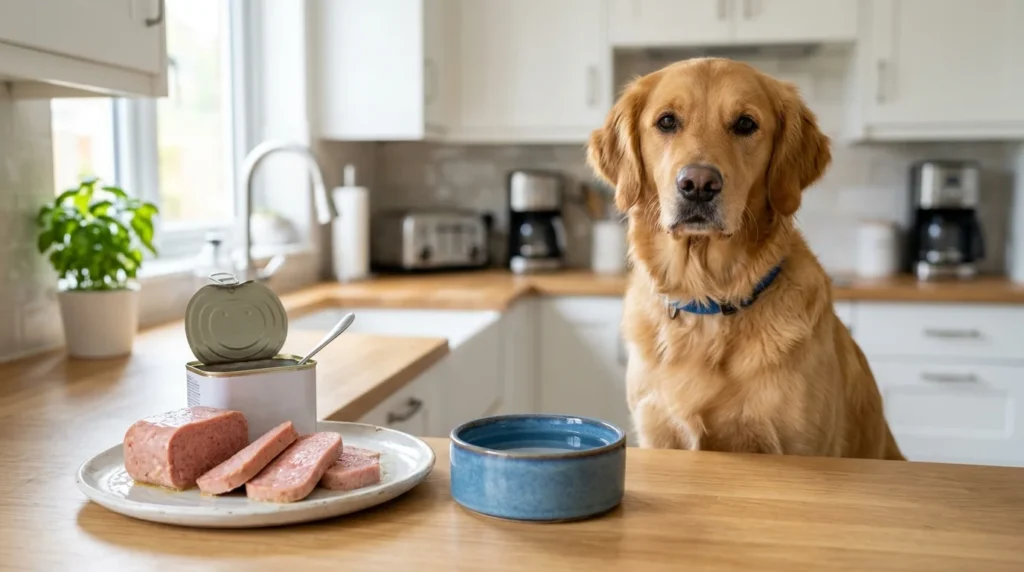
Eating too much Spam may cause digestive upset because of its high fat and sodium content. A dog may develop increased thirst, vomiting, diarrhea, gas, stomach discomfort, or reduced appetite. Larger amounts can present more serious concerns.
Remove any remaining Spam and make sure your dog has access to fresh water. Do not induce vomiting unless a veterinarian specifically instructs you to do so. If your dog ate a large amount, is very small, or develops significant symptoms, contact your veterinarian promptly.
What Should You Do If Your Dog Eats Spam?
First, determine approximately how much Spam your dog ate and check the product’s ingredient list if possible. A small bite of plain Spam is different from consuming several slices, an entire can, or Spam containing additional seasonings.
Monitor your dog for vomiting, diarrhea, excessive thirst, weakness, unusual behavior, or other concerning symptoms. If a large quantity was consumed or symptoms are severe or persistent, contact your veterinarian and provide information about your dog’s size, the product, and the approximate amount eaten.
Can Dogs Eat Spam Sandwiches?
Spam sandwiches are not recommended for dogs. Besides the processed meat, sandwiches may contain bread, mayonnaise, cheese, sauces, butter, salt, onion, garlic, or other ingredients that add unnecessary calories and potential risks.
If your dog steals a small bite, check what was included in the sandwich and monitor them. Do not intentionally share a whole sandwich with your dog, especially when it contains onion, garlic, heavily salted ingredients, or rich sauces.
See Also: Can Dogs Eat Raw Broccoli? Safety & Feeding Guide
Can Dogs Eat Spam with Mayonnaise?
Dogs should not be given Spam mixed with mayonnaise as a regular treat. Spam already contains considerable sodium and fat, while mayonnaise adds additional fat and calories.
A tiny accidental taste is unlikely to be equivalent to eating a large serving, but there is no nutritional reason to give dogs this combination. Plain cooked lean meat is a more appropriate human-food treat when offered in moderation.
Can Dogs Eat Spam and Potatoes?
Plain cooked potatoes can be suitable for dogs in appropriate amounts when prepared without harmful ingredients. However, adding Spam makes the meal much less suitable because of the processed meat’s salt and fat content.
Avoid serving potatoes with Spam gravy, seasoning, butter, onion, or garlic. If you want to give your dog potato as an occasional treat, serve it fully cooked and plain.
Healthier Alternatives to Spam for Dogs
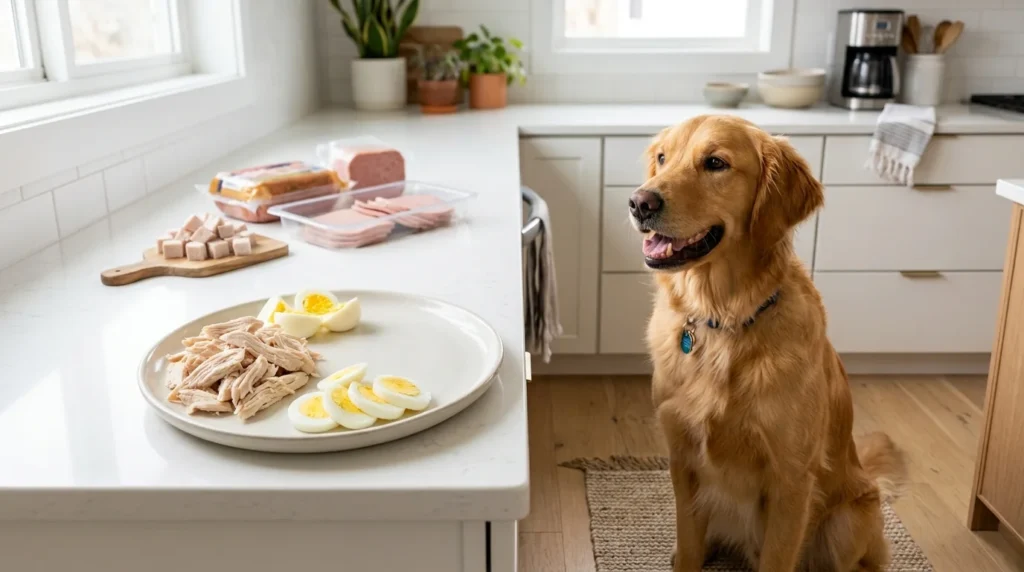
If your dog enjoys meat, there are simpler options that can be offered in small amounts. Plain cooked chicken, turkey, lean beef, or fully cooked egg can be appropriate treats for many dogs when prepared without excessive salt, seasoning, onion, garlic, butter, or sauces.
Commercial dog treats are another convenient option because they are specifically made for dogs. Whatever treat you choose, keep portions appropriate and make sure your dog’s main diet remains complete and balanced.
Frequently Asked Questions
Can dogs eat Spam?
Dogs should not regularly eat Spam. A tiny accidental bite of plain Spam is unlikely to cause a serious problem in many healthy dogs, but its high sodium and fat content makes it unsuitable as a routine treat.
Can puppies eat Spam?
Puppies should not be intentionally fed Spam. Their growing bodies need balanced puppy nutrition, while Spam provides unnecessary sodium, fat, and calories. If a puppy eats a large amount, contact a veterinarian for advice.
What happens if my dog eats a whole can of Spam?
Eating a whole can can expose a dog to a substantial amount of sodium and fat. Contact your veterinarian for guidance, particularly if your dog is small or develops vomiting, diarrhea, excessive thirst, weakness, tremors, or unusual behavior.
Can dogs eat Spam Lite?
Spam Lite is still a processed luncheon meat and is not recommended as a regular dog treat. Always check the product’s ingredients and avoid products containing onion, garlic, or other potentially harmful seasonings.
What should I do if my dog accidentally eats Spam?
Determine approximately how much was eaten, check the ingredients, provide access to fresh water, and monitor your dog. If a large amount was consumed or your dog develops concerning symptoms, contact your veterinarian promptly.
Conclusion
Dogs should not eat Spam as a regular part of their diet. A small accidental bite of plain Spam may not cause a serious problem in an otherwise healthy dog, but Spam is high in sodium and fat and offers little reason to choose it over healthier dog treats or plain cooked lean meat.
Raw or seasoned versions, Spam sandwiches, and dishes containing onion, garlic, salty sauces, or large amounts of fat are particularly poor choices. If your dog eats a large quantity of Spam, monitor closely and contact your veterinarian, especially if vomiting, diarrhea, excessive thirst, weakness, tremors, or unusual behavior develops.


