

Can Dogs Eat Pumpkin Pie? Safety & Risks
Dogs should not be given pumpkin pie as a regular treat. While plain pumpkin can be a safe food for many dogs, pumpkin pie is a human dessert that usually contains added sugar, butter, milk or cream, spices, and a rich pastry crust. These extra ingredients can make pumpkin pie much less suitable for dogs than plain cooked pumpkin.
A small accidental bite of pumpkin pie may not cause a serious problem in an otherwise healthy dog, depending on the ingredients and amount eaten. However, larger portions can lead to stomach upset, diarrhea, vomiting, or other problems. The ingredients matter because some pumpkin pie recipes may contain substances that are particularly unsafe for dogs.
Is Pumpkin Pie Safe for Dogs?
Pumpkin pie is generally not considered a good food for dogs. The pumpkin itself is not usually the main concern. Plain, cooked pumpkin can be offered to dogs in moderation, but pumpkin pie combines pumpkin with several ingredients that dogs do not need.
Commercial and homemade pumpkin pies can have very different recipes. Some contain high amounts of sugar and fat, while others may contain artificial sweeteners or spices. Before deciding what to do after your dog eats pumpkin pie, check the ingredients and consider how much your dog consumed.
Can Dogs Eat Plain Pumpkin?
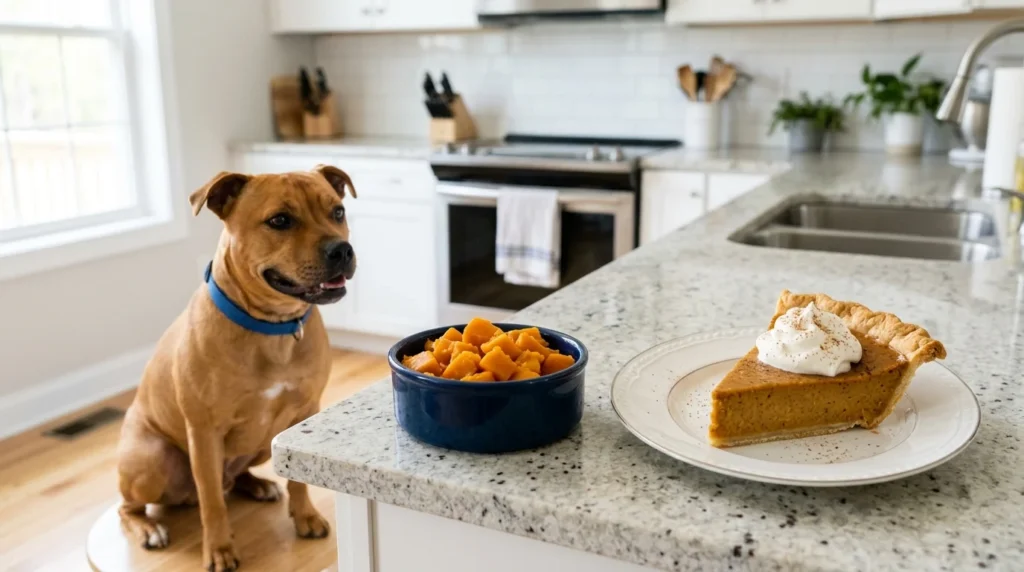
Yes, plain cooked pumpkin can generally be given to dogs in moderation. Pumpkin provides fiber and can be used as an occasional addition to a dog’s regular food. It is very different from pumpkin pie because it does not normally contain the sugar, butter, cream, crust, and other dessert ingredients found in pie.
If you want to give your dog pumpkin, choose plain cooked pumpkin or plain canned pumpkin with no added sugar or spices. Avoid pumpkin pie filling because it is designed for human desserts and may contain several additional ingredients.
Can Dogs Eat Pumpkin Pie Filling?
Pumpkin pie filling is not the same as plain pumpkin. Pie filling may contain sugar, spices, dairy ingredients, and other additions intended to create a sweet dessert. Because recipes vary, the ingredient label should be checked before giving any to a dog.
Even when pumpkin pie filling does not contain a highly dangerous ingredient, it is still usually too rich and sugary to make a suitable dog treat. Plain pumpkin is a simpler option if you want to add pumpkin to your dog’s diet.
Can Dogs Eat Pumpkin Pie Crust?
Pumpkin pie crust is not a healthy choice for dogs. Most pie crusts contain flour, butter or shortening, and sometimes sugar or other rich ingredients. The high fat content can cause digestive upset in some dogs, especially when a large amount is eaten.
The crust can also add unnecessary calories to your dog’s diet. If your dog steals a small piece of crust, monitor them for digestive problems. A large amount of rich, fatty crust warrants closer attention and may justify contacting your veterinarian.
Can Dogs Eat Pumpkin Pie With Sugar?
Dogs do not need added sugar, and pumpkin pie can contain a substantial amount of it. A small amount of sugar is not generally considered a direct poison for dogs, but eating sugary desserts can contribute to stomach upset and unnecessary calorie intake.
Repeatedly feeding sugary foods can also make it harder to maintain a healthy diet and body weight. For dogs, plain pumpkin provides the potential benefits of pumpkin without the added sugar found in traditional pie.
Can Dogs Eat Pumpkin Pie With Cinnamon?
Cinnamon is commonly used in pumpkin pie, and a small amount of ordinary cinnamon in a baked food is generally not the main concern for most dogs. However, that does not make pumpkin pie a suitable treat because the dessert contains other ingredients that may cause problems.
Large amounts of cinnamon powder can irritate a dog’s mouth and digestive system, while inhaling powdered cinnamon can also cause irritation. Avoid intentionally feeding dogs foods heavily coated with cinnamon or other concentrated spices.
Can Dogs Eat Pumpkin Pie With Nutmeg?
Nutmeg deserves extra attention because it is commonly used in pumpkin pie spice blends. Nutmeg contains a compound called myristicin, and consuming larger amounts can cause toxic effects in dogs. The amount present in a normal slice of pie varies by recipe, so the risk depends on how much was eaten and the specific ingredients.
Do not intentionally give pumpkin pie containing nutmeg to your dog. If your dog has eaten a large quantity of pumpkin pie or consumed a concentrated amount of nutmeg, contact a veterinarian promptly for advice.
Can Dogs Eat Pumpkin Pie With Whipped Cream?
Whipped cream is another reason pumpkin pie is not a good dog treat. It can contain dairy, sugar, and fat, and some dogs do not tolerate dairy products well. Eating too much may result in gas, loose stool, vomiting, or other digestive discomfort.
Some whipped toppings and dessert products may also contain artificial sweeteners or other added ingredients. Always check the product ingredients if your dog has eaten a pumpkin dessert with whipped topping.
Can Puppies Eat Pumpkin Pie?
Puppies should not be given pumpkin pie. Their nutritional needs are different from adult dogs, and sugary, fatty desserts do not provide the balanced nutrition needed for healthy growth. A small accidental taste is usually less concerning than deliberately feeding a puppy a whole serving.
If a puppy eats pumpkin pie, check the ingredients and monitor for vomiting, diarrhea, unusual behavior, or other changes. If the pie contains a potentially dangerous ingredient or your puppy ate a substantial amount, contact your veterinarian rather than waiting for symptoms.
Can Small Dogs Eat Pumpkin Pie?
Small dogs can be more affected by a given amount of food because the same bite represents a larger portion of their body size. Pumpkin pie is therefore not an appropriate treat for small dogs, particularly when it contains a rich crust, lots of sugar, dairy, or concentrated spices.
If a small dog eats a tiny piece accidentally, monitor them and avoid giving additional rich treats. If they eat several slices, a large piece, or pie containing an unsafe ingredient, contact your veterinarian for individualized guidance.
See Also: Dogs Can Eat Vegetables: Safe and Healthy Choices
Can Dogs Eat Pumpkin Pie Every Day?
No, pumpkin pie should not be part of a dog’s daily diet. It is a human dessert rather than a nutritionally balanced food for dogs. Regularly feeding pumpkin pie can add unnecessary sugar, fat, and calories to your dog’s diet.
If you want to offer pumpkin regularly, use a small amount of plain pumpkin instead. Mix it with your dog’s regular complete and balanced food rather than replacing the main meal with pumpkin.
Can Dogs Eat Homemade Pumpkin Pie?
Homemade pumpkin pie is not automatically safer for dogs. A homemade recipe may still contain sugar, butter, cream, eggs, spices, and a high-fat crust. Some recipes may also use sugar substitutes or other ingredients that can be dangerous to dogs.
The advantage of homemade food is that you can identify the ingredients, but pumpkin pie should still remain off the regular dog treat list. If you want to prepare a pumpkin-based treat for your dog, a plain pumpkin recipe without unsafe additions is a better approach.
Can Dogs Eat Store-Bought Pumpkin Pie?
Store-bought pumpkin pie should also be avoided as a deliberate dog treat. Commercial pies can contain multiple ingredients, and the exact recipe differs between products. Some may contain sweeteners, dairy, high levels of fat, or concentrated spice blends.
If your dog accidentally eats store-bought pumpkin pie, check the packaging for the ingredient list. Pay particular attention to artificial sweeteners and spice ingredients, and consider the amount consumed when deciding whether veterinary advice is needed.
What About Pumpkin Pie Spice?
Pumpkin pie spice is usually a mixture of spices such as cinnamon, ginger, nutmeg, and sometimes cloves or allspice. These ingredients are concentrated compared with the small amount of seasoning that might be spread throughout a baked pie.
Dogs should not be given pumpkin pie spice directly or in large quantities. If your dog consumes a concentrated spice mixture, especially one containing nutmeg, contact your veterinarian for advice based on the amount consumed.
Can Dogs Eat Pumpkin Pie Without Sugar?
A sugar-free pumpkin pie is not necessarily safe for dogs. Removing sugar does not automatically remove the other ingredients that make pumpkin pie unsuitable. More importantly, some sugar-free products use artificial sweeteners that can be dangerous for dogs.
Xylitol is one artificial sweetener that is particularly dangerous to dogs. It can appear in some sugar-free foods and products. If a pumpkin dessert contains xylitol, do not wait for symptoms after ingestion; contact a veterinarian or animal poison service immediately.
What Happens If a Dog Eats Pumpkin Pie?
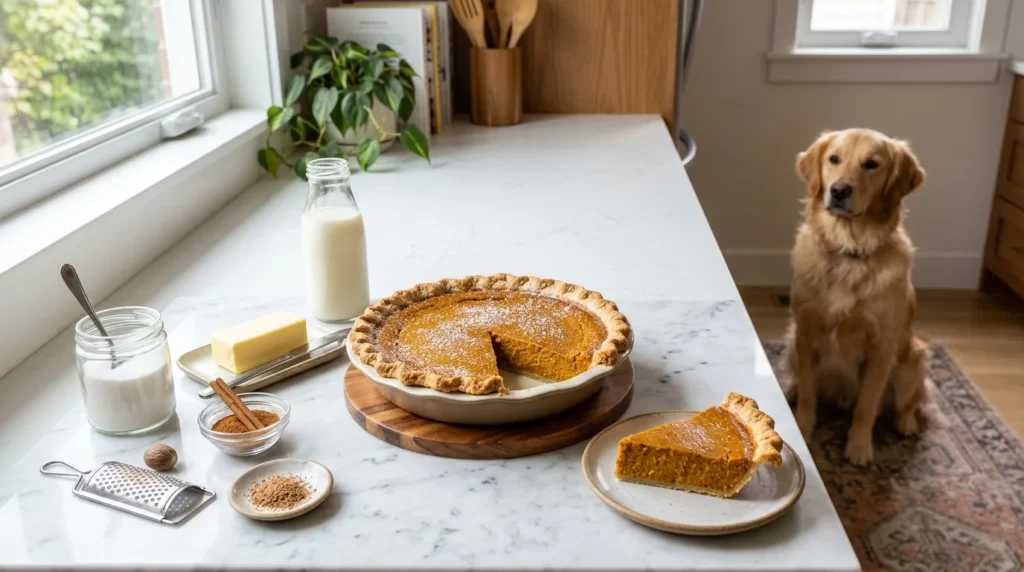
If a dog eats a small piece of pumpkin pie, they may have no noticeable reaction, especially if the pie does not contain any dangerous ingredients. However, the sugar, fat, dairy, and pastry can cause digestive upset in some dogs. Possible signs include gas, loose stool, diarrhea, vomiting, or stomach discomfort.
The risk can be greater when a dog eats a large portion or an entire pie. The ingredients also matter. Pumpkin pie containing nutmeg, xylitol, or other potentially harmful ingredients should be treated more seriously. Check the recipe or package ingredients and contact your veterinarian if you are unsure about the amount or ingredients eaten.
Can Pumpkin Pie Cause Diarrhea in Dogs?
Yes, pumpkin pie can cause diarrhea in dogs. The combination of sugar, fat, dairy, and pastry may be difficult for some dogs to tolerate, particularly if they are not accustomed to rich human foods. Eating a large amount can increase the chance of digestive upset.
If your dog develops mild diarrhea after eating a small amount of pumpkin pie, provide access to fresh water and avoid giving additional rich treats. Persistent or severe diarrhea, repeated vomiting, weakness, or other concerning signs should be discussed with a veterinarian.
Can Pumpkin Pie Make Dogs Vomit?
Eating pumpkin pie can cause vomiting in some dogs, particularly after consuming a large amount of rich or unfamiliar food. The crust and high-fat ingredients may be especially difficult for some dogs to tolerate.
If your dog vomits once and otherwise seems comfortable, monitor them closely and keep fresh water available. Repeated vomiting, inability to keep water down, severe abdominal discomfort, unusual weakness, or other concerning symptoms require veterinary attention.
Can Pumpkin Pie Cause Pancreatitis in Dogs?
Rich, high-fat foods can contribute to pancreatitis in dogs, and pumpkin pie may contain butter, shortening, cream, or other fatty ingredients. The risk depends on the individual dog, the recipe, and the amount consumed.
A dog that eats a large amount of a fatty dessert should be monitored carefully. Signs such as repeated vomiting, significant abdominal pain, weakness, loss of appetite, or marked lethargy warrant prompt veterinary attention.
Can Dogs Eat Pumpkin Pie With Eggs?
Eggs are commonly used in pumpkin pie recipes, and fully cooked eggs themselves can generally be eaten by dogs in moderation. However, the presence of eggs does not make pumpkin pie a suitable dog treat because the finished dessert also contains other ingredients.
The sugar, fat, crust, dairy, and spices are more important considerations when evaluating the pie. If you want to give your dog egg, plain fully cooked egg without salt, butter, seasoning, or other additions is a simpler option.
See Also: Can Dogs Eat Mandarin Oranges? Safety & Feeding Guide
Can Dogs Eat Pumpkin Pie With Milk?
Many pumpkin pies contain milk, evaporated milk, condensed milk, or cream. Some dogs tolerate small amounts of dairy, while others may develop gas, loose stool, or diarrhea after consuming it.
Sweetened condensed milk is particularly unsuitable because it contains a large amount of sugar. Pumpkin pie made with dairy should therefore not be intentionally fed to dogs. Plain pumpkin is a much simpler choice.
Can Dogs Eat Pumpkin Pie Ice Cream?
Pumpkin pie ice cream is not a good food for dogs. It can contain high amounts of sugar and fat as well as dairy ingredients. Some specialty or sugar-free products may also contain artificial sweeteners that can be dangerous to dogs.
If your dog accidentally licks a small amount of ordinary pumpkin ice cream, monitor them for digestive upset. If the product contains xylitol or another potentially toxic ingredient, contact a veterinarian or animal poison service immediately.
Can Dogs Eat Pumpkin Pie Cookies?
Pumpkin pie cookies and similar seasonal desserts should generally be kept away from dogs. They may contain sugar, butter, shortening, spices, chocolate, raisins, or artificial sweeteners depending on the recipe.
A plain dog-safe treat is a better option than sharing human cookies. Always check the ingredients if your dog accidentally eats a cookie, especially when the product contains chocolate, raisins, xylitol, or other ingredients that can be harmful to dogs.
Can Dogs Eat Pumpkin Pie Cake?
Pumpkin pie cake and pumpkin-flavored cakes are human desserts rather than appropriate dog foods. They can contain significant amounts of sugar and fat, along with frosting, dairy, spices, chocolate, or other ingredients that dogs should avoid.
A small accidental bite of a simple pumpkin cake may only result in mild stomach upset, but the exact risk depends on the ingredients. Large amounts or cakes containing toxic ingredients require prompt veterinary advice.
Can Dogs Eat Canned Pumpkin Instead of Pumpkin Pie?
Plain canned pumpkin can be a suitable alternative to pumpkin pie for many dogs. Choose a product made from pumpkin without added sugar, spices, sweeteners, or pie-filling ingredients. A small amount can be mixed with your dog’s normal food.
Read the label carefully because canned pumpkin and canned pumpkin pie filling are different products. Pie filling is formulated for desserts and may contain sugar and spices, while plain pumpkin provides a much simpler ingredient option.
How Much Pumpkin Can Dogs Eat?
The appropriate amount of plain pumpkin depends on your dog’s size, diet, and individual needs. It is best to start with a small amount rather than suddenly adding a large serving. Pumpkin should complement a complete and balanced diet rather than replace it.
| Dog Size | Small Starting Amount |
|---|---|
| Small dogs | 1–2 teaspoons |
| Medium dogs | 1–2 tablespoons |
| Large dogs | 2–4 tablespoons |
These are general starting amounts, not a prescription for every dog. If your dog has a medical condition or follows a special diet, ask your veterinarian about an appropriate amount before regularly adding pumpkin.
What Should You Do If Your Dog Eats Pumpkin Pie?
First, determine how much pumpkin pie your dog ate and check the ingredient list if possible. A tiny bite of ordinary pie is usually a different situation from eating half a pie or consuming a dessert containing xylitol or a large amount of nutmeg.
Do not induce vomiting unless a veterinarian or qualified animal poison professional specifically tells you to do so. Keep the packaging or recipe available so you can provide accurate information. If the pie contains a potentially toxic ingredient, your dog ate a large amount, or symptoms develop, contact your veterinarian promptly.
When Should You Call a Veterinarian?
Contact your veterinarian if your dog has eaten a large amount of pumpkin pie, especially if the pie contains xylitol, substantial amounts of nutmeg, chocolate, raisins, or another potentially harmful ingredient. Your veterinarian can assess the situation based on your dog’s size, health, the ingredients, and the amount eaten.
Seek prompt veterinary help if your dog develops repeated vomiting, severe diarrhea, significant abdominal pain, weakness, collapse, unusual behavior, difficulty breathing, or other serious symptoms. Do not wait for symptoms when you know your dog has consumed a potentially toxic ingredient.
Safer Pumpkin Treats for Dogs
If your dog enjoys pumpkin, there are simpler ways to include it in their diet. Plain cooked pumpkin or plain canned pumpkin without added sugar and spices can be offered in a small amount. You can mix it with regular dog food or use it as an occasional ingredient in a dog-safe homemade treat.
Other simple options include plain cooked sweet potato or small amounts of dog-safe vegetables. Keep these foods unseasoned and avoid butter, sugar, sauces, onion, garlic, and concentrated spice blends.
Frequently Asked Questions
Can dogs eat a small piece of pumpkin pie?
A small accidental piece of ordinary pumpkin pie may not cause a serious problem in a healthy dog, but pumpkin pie is not recommended as a regular treat. Check the ingredients and monitor your dog for digestive upset.
Is pumpkin pie filling safe for dogs?
Pumpkin pie filling is not an ideal food for dogs because it may contain sugar, spices, dairy, and other ingredients. Plain pumpkin without added ingredients is a better option.
Can dogs eat pumpkin pie spice?
Dogs should not be given pumpkin pie spice directly. Spice blends can contain ingredients such as nutmeg, and concentrated amounts may be harmful. Keep spice mixtures away from dogs.
What should I do if my dog eats a whole pumpkin pie?
Check the ingredients and contact your veterinarian for advice. A whole pie can contain a large amount of fat and sugar, while some recipes may contain potentially dangerous ingredients. Do not induce vomiting unless specifically instructed by a veterinary professional.
Is plain pumpkin better for dogs than pumpkin pie?
Yes. Plain pumpkin without added sugar, spices, or other dessert ingredients is a much simpler option for dogs than pumpkin pie. It should still be given in moderation as part of an otherwise balanced diet.
Conclusion
Dogs should not be intentionally fed pumpkin pie. Although plain pumpkin can be a suitable occasional food for many dogs, pumpkin pie usually contains added sugar, fat, dairy, pastry, and spices that provide little benefit for dogs and may cause digestive problems.
If your dog accidentally eats a small piece of ordinary pumpkin pie, monitor them and check the ingredients. Larger amounts or pies containing xylitol, substantial nutmeg, chocolate, raisins, or other potentially harmful ingredients require prompt veterinary guidance. For a safer pumpkin option, choose plain cooked or plain canned pumpkin without added ingredients.


