
Can Dogs Eat Mac and Cheese? Safety & Risks
Dogs can eat a very small amount of plain mac and cheese occasionally, but it is not a healthy regular food for them. Traditional mac and cheese is usually high in fat, calories, and sodium, and the cheese and milk can cause digestive problems in dogs that do not tolerate dairy well. The pasta itself is not usually the main concern; it is the rich sauce and other ingredients that make this dish less suitable for dogs.
A small accidental bite is unlikely to cause serious problems in most healthy dogs, but larger portions can lead to vomiting, diarrhea, gas, stomach discomfort, or excessive thirst. Some recipes may also contain ingredients such as onion, garlic, spicy seasonings, or other foods that are unsafe for dogs. For that reason, plain dog-safe foods are a much better choice.
Is Mac and Cheese Safe for Dogs?
Mac and cheese is generally not recommended as a regular treat for dogs. A small amount of plain, fully cooked pasta with a little cheese may be tolerated by some dogs, but the complete dish can contain much more fat and salt than a dog needs. Dogs also have different levels of tolerance for dairy products.
If your dog accidentally eats a small portion, monitor them for signs of digestive upset. If the meal contained potentially harmful ingredients, was extremely rich, or your dog ate a large amount, contact your veterinarian for advice. Puppies, senior dogs, and dogs with dietary sensitivities may need extra care.
Can Dogs Eat Cheese in Mac and Cheese?
Many dogs can tolerate small amounts of certain cheeses, but cheese is not suitable for every dog. Dairy products can contain lactose, and some dogs have difficulty digesting it. Eating too much cheese may cause gas, loose stools, vomiting, or abdominal discomfort.
Cheese is also relatively calorie-dense and can contain considerable amounts of fat and sodium. When cheese is combined with butter, milk, and other ingredients in mac and cheese, the overall meal becomes much richer. If you give your dog cheese, keep the amount small and choose a simple variety without harmful seasonings or additives.
Can Dogs Eat Macaroni Pasta?
Plain, fully cooked macaroni pasta is generally safe for most dogs when given in a small amount. Cooked pasta does not provide the same balanced nutrition as complete dog food, but an occasional small portion is unlikely to be a problem for a healthy dog.
Plain macaroni is a very different food from a bowl of prepared mac and cheese. Once butter, cheese, milk, salt, sauces, and seasonings are added, the nutritional profile changes considerably. If you want to share a little pasta, plain cooked macaroni without seasoning is the simpler option.
Can Dogs Eat Kraft Mac and Cheese?
Dogs should not be regularly fed packaged mac and cheese such as Kraft Mac & Cheese. These products are formulated for human consumption and can contain substantial amounts of sodium, fat, dairy ingredients, and processed seasonings. They do not provide the complete nutrition dogs need from their main diet.
If your dog steals a small bite from your prepared mac and cheese, do not panic. Monitor them and check the ingredient list, especially if the product contains ingredients such as onion or garlic. A large amount or noticeable symptoms should be discussed with a veterinarian.
Can Puppies Eat Mac and Cheese?
Puppies should generally avoid mac and cheese. Their growing bodies need carefully balanced nutrition, and rich human foods can provide unnecessary calories while displacing the nutrients they get from appropriate puppy food. Dairy-heavy meals may also upset a puppy’s developing digestive system.
If a puppy accidentally eats a small amount, watch for vomiting, diarrhea, gas, or changes in behavior. Avoid giving more mac and cheese and continue with their normal diet unless a veterinarian advises otherwise. If the puppy ate a large amount or the dish contained an unsafe ingredient, contact a veterinarian promptly.
Can Dogs Eat Mac and Cheese With Milk?
Milk is a common ingredient in mac and cheese, but many dogs do not digest lactose efficiently. A small amount may be tolerated by some dogs, while others can develop gas, diarrhea, bloating, or stomach discomfort after consuming dairy.
The milk is also combined with cheese and butter in many recipes, making mac and cheese much richer than plain milk. If your dog is known to have trouble with dairy, it is best to avoid giving them mac and cheese altogether and choose a simpler dog-safe treat.
Can Dogs Eat Mac and Cheese With Butter?
Butter is not a toxic food for dogs in tiny amounts, but it is high in fat and does not provide much nutritional value for them. Large amounts of butter can contribute to stomach upset and may be particularly unsuitable for dogs that are sensitive to fatty foods.
Because mac and cheese can already contain cheese and milk, adding butter makes the dish even richer. Avoid giving your dog a serving of buttery mac and cheese. If they accidentally consume some, monitor them for digestive problems and contact your veterinarian if they become noticeably ill.
Can Dogs Eat Mac and Cheese With Garlic or Onion?
Mac and cheese containing garlic or onion should be kept away from dogs. Both belong to the Allium family and can damage red blood cells when dogs consume sufficient amounts. Garlic and onion can appear in fresh, cooked, dried, or powdered forms.
This is why checking the ingredients matters when a dog gets into prepared human food. If your dog eats mac and cheese containing onion or garlic, especially a large quantity, contact your veterinarian and provide the product label or recipe if possible.
Can Dogs Eat Spicy Mac and Cheese?
Spicy mac and cheese is not a good choice for dogs. Chili peppers, hot sauce, pepper, and other spicy ingredients can irritate a dog’s mouth and digestive system. Spicy recipes may also contain high amounts of salt, butter, or other rich ingredients.
Dogs do not need spicy foods for flavor or nutrition. If you want to offer a little macaroni, keep it plain and fully cooked rather than sharing a spicy human recipe. Watch your dog closely if they accidentally eat a spicy portion.
Can Dogs Eat Homemade Mac and Cheese?
Homemade mac and cheese can be easier to evaluate because you know exactly what ingredients were used, but that does not automatically make it healthy for dogs. Recipes containing large amounts of cheese, butter, cream, milk, or salt can still be too rich for a dog.
If your dog gets a small accidental taste of a simple homemade recipe, they may be completely fine. However, avoid recipes containing onion, garlic, spicy seasonings, or other ingredients that are unsafe for dogs. Plain cooked foods prepared specifically for your dog are generally a better alternative.
Can Dogs Eat Mac and Cheese Every Day?
No, dogs should not eat mac and cheese every day. Regular consumption can add excessive calories, fat, and sodium to their diet without providing the balanced nutrition they need. Frequent treats can also contribute to unhealthy weight gain over time.
Your dog’s everyday meals should come primarily from a complete and balanced diet appropriate for their life stage. Human foods such as mac and cheese should not replace their normal food. If you choose to share a small taste occasionally, keep the portion very limited.
See Also: Can Dogs Eat Sweet Potato? Safety, Benefits & Serving Guide
What Happens If a Dog Eats Mac and Cheese?
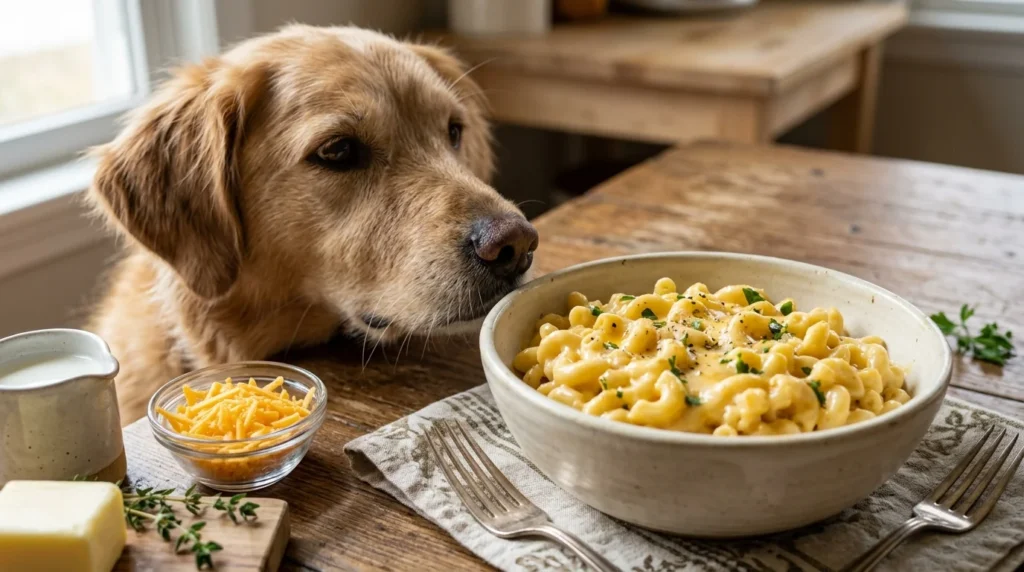
A dog that eats mac and cheese may experience no noticeable reaction after a small amount, but some dogs can develop digestive upset. Possible signs include gas, diarrhea, vomiting, bloating, stomach discomfort, increased thirst, or reduced appetite.
The amount eaten and the recipe’s ingredients are important. A large serving of rich mac and cheese may create more concern than a tiny bite, while a recipe containing onion, garlic, or another unsafe ingredient requires additional attention. Monitor your dog and seek veterinary advice when necessary.
How Much Mac and Cheese Can Dogs Eat?
There is no recommended serving of mac and cheese that dogs need. If a healthy dog accidentally eats a small amount of plain mac and cheese, it may not cause a serious problem, but the portion should remain very small because the dish can be rich in fat, dairy, and sodium.
| Dog Size | Occasional Amount |
|---|---|
| Small dogs | A bite or two |
| Medium dogs | A few small bites |
| Large dogs | A small serving, occasionally |
| Extra-large dogs | A small portion, depending on their diet |
These are general treat guidelines rather than veterinary serving recommendations. Dogs with sensitive stomachs, obesity, pancreatitis, dairy intolerance, or other health conditions may need to avoid mac and cheese completely.
Can Dogs Eat Mac and Cheese With Ham?
Mac and cheese with ham is not a good regular food for dogs. Ham can be high in sodium and fat, while the macaroni and cheese already make the dish rich. Together, these ingredients can increase the chance of digestive upset.
Processed ham can also contain seasonings, preservatives, or other ingredients that dogs do not need. If you want to give your dog meat, plain, properly cooked lean meat without heavy seasoning is a better choice.
Can Dogs Eat Mac and Cheese With Bacon?
Mac and cheese with bacon should not be given to dogs intentionally. Bacon is high in fat and sodium, and combining it with a rich cheese sauce can make the meal particularly heavy for a dog’s digestive system.
A large amount of fatty food can cause vomiting, diarrhea, or abdominal discomfort and may contribute to more serious digestive problems in susceptible dogs. Keep bacon-heavy human meals away from your dog.
Can Dogs Eat Mac and Cheese With Broccoli?
Plain cooked broccoli can be suitable for many dogs in moderation, but adding it to rich mac and cheese does not make the complete dish a healthy dog food. Cheese sauce, butter, milk, and seasonings can still make the meal too rich.
If you want to give your dog broccoli, serve a small amount of plain, properly cooked broccoli separately. Avoid broccoli dishes prepared with onion, garlic, excessive salt, butter, or heavy cheese sauces.
Can Dogs Eat Mac and Cheese With Chicken?
Chicken itself can be a suitable food for many dogs when it is thoroughly cooked, plain, and free from bones and harmful seasonings. However, chicken mixed into rich mac and cheese is still not an ideal dog meal.
If you want to share chicken with your dog, set aside a plain portion before adding cheese sauce, salt, spices, onion, garlic, or other human-food ingredients. This provides a simpler and more appropriate treat.
Can Dogs Eat Kraft Mac and Cheese Powder?
Dogs should not be given mac and cheese powder directly. Cheese-flavored powder is a processed seasoning designed for human food and can contain concentrated salt, dairy ingredients, flavorings, and other additives.
If your dog accidentally licks a small amount, monitor them and check the ingredient label. A large ingestion or a product containing an unsafe ingredient should be discussed with your veterinarian.
Can Dogs Eat Mac and Cheese From a Restaurant?
Restaurant mac and cheese is generally not a good choice for dogs because you may not know the exact ingredients or quantities used. Restaurant recipes can contain large amounts of butter, cream, cheese, salt, seasoning, and other rich ingredients.
Some recipes may also contain garlic, onion, spicy ingredients, or other seasonings. If your dog accidentally eats a small bite, monitor them, but contact a veterinarian if they consumed a large amount or develop concerning symptoms.
Can Dogs Eat Baked Mac and Cheese?
Baked mac and cheese is not recommended for dogs as a regular food. Baking does not remove the concerns associated with cheese, butter, milk, salt, and other rich ingredients used in the recipe.
A baked version may also contain breadcrumbs, extra cheese, cream, or seasonings. If your dog eats a small accidental portion, watch for digestive upset and avoid giving them more rich human food.
See Also: Can Dogs Eat Caramel? Safety Risks & What to Know
Can Mac and Cheese Cause Diarrhea in Dogs?
Yes, mac and cheese can cause diarrhea in some dogs. Dairy, high fat, rich sauces, and sudden dietary changes can all upset the digestive system, particularly in dogs that are sensitive to dairy or fatty foods.
If your dog develops mild diarrhea after eating a small amount, provide access to fresh water and monitor them. Persistent, severe, or bloody diarrhea, especially when combined with vomiting, weakness, or abdominal pain, requires veterinary attention.
Can Mac and Cheese Cause Vomiting in Dogs?
Mac and cheese can cause vomiting if a dog eats too much or is sensitive to the rich ingredients. Cheese, milk, butter, and other high-fat ingredients can be difficult for some dogs to tolerate.
One isolated episode may not necessarily indicate a serious problem, but repeated vomiting is more concerning. Contact your veterinarian if your dog cannot keep water down, becomes weak, appears painful, or continues vomiting.
Can Mac and Cheese Cause Pancreatitis in Dogs?
Mac and cheese can be high in fat, particularly recipes made with large amounts of cheese, butter, cream, or full-fat dairy. High-fat foods can be a concern for dogs prone to pancreatitis and may contribute to digestive problems.
Signs of pancreatitis can include vomiting, abdominal pain, loss of appetite, lethargy, and diarrhea. If your dog eats a large amount of rich mac and cheese and develops significant symptoms, contact a veterinarian promptly.
What Should I Do If My Dog Eats Mac and Cheese?
If your dog eats a small amount of plain mac and cheese, monitor them for vomiting, diarrhea, gas, abdominal discomfort, or unusual thirst. Make sure fresh water is available and avoid giving additional rich or seasoned foods.
If your dog ate a large portion, has a medical condition affected by high-fat foods, or the recipe contained onion, garlic, or another potentially harmful ingredient, contact your veterinarian. Keep the package, ingredient list, or recipe available if possible.
What Can Dogs Eat Instead of Mac and Cheese?
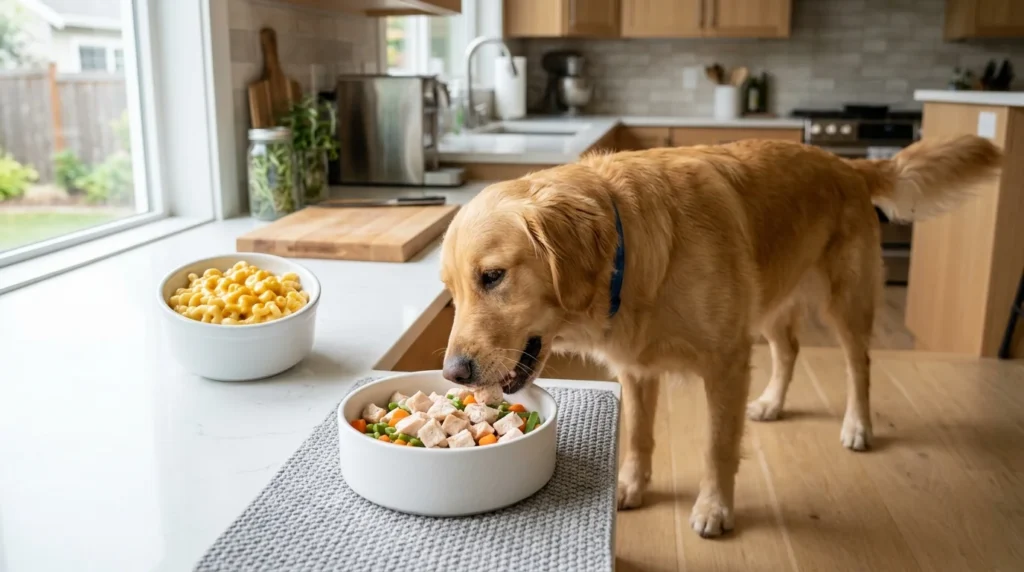
If you want to give your dog an occasional treat, there are simpler options than mac and cheese. Plain cooked chicken, turkey, lean beef, carrots, green beans, pumpkin, or small portions of appropriate dog-safe fruits can be better choices when prepared correctly.
For everyday meals, use a complete and balanced dog food appropriate for your dog’s age and nutritional needs. Treats and human foods should remain a small part of the overall diet rather than replacing regular dog food.
When Should You Contact a Veterinarian?
Contact your veterinarian if your dog eats a large quantity of mac and cheese, particularly if the recipe contains onion, garlic, excessive fat, or another potentially harmful ingredient. Dogs with a history of pancreatitis or significant dietary restrictions may also need professional advice after eating rich food.
Seek prompt veterinary care if your dog develops repeated vomiting, severe diarrhea, significant abdominal pain, weakness, collapse, difficulty breathing, or other unusual symptoms. Do not give medications or attempt to induce vomiting unless a veterinarian tells you to do so.
Frequently Asked Questions
Can dogs eat mac and cheese?
Dogs can tolerate a small amount of plain mac and cheese in some cases, but it is not a healthy regular food. The high fat, dairy, sodium, and calorie content can cause digestive problems.
Can puppies eat mac and cheese?
It is best to avoid giving puppies mac and cheese. Puppies need complete and balanced nutrition for growth, while rich dairy-based human foods can cause digestive upset and provide unnecessary calories.
Can dogs eat Kraft Mac and Cheese?
Kraft Mac & Cheese should not be a regular dog treat. A small accidental bite may not cause a serious problem in a healthy dog, but the processed cheese sauce can be high in sodium, fat, and dairy ingredients.
Can dogs eat macaroni pasta?
Plain, fully cooked macaroni can generally be eaten in a small amount by many dogs. Avoid adding cheese sauce, butter, salt, garlic, onion, or spicy seasonings.
What should I do if my dog eats a lot of mac and cheese?
Monitor your dog and check the ingredients of the food consumed. Contact your veterinarian if a large amount was eaten, the recipe contained potentially harmful ingredients, or your dog develops vomiting, diarrhea, abdominal pain, weakness, or other concerning symptoms.
Conclusion
Mac and cheese is not a suitable regular food for dogs. Although a small accidental bite of plain mac and cheese may not cause serious problems in a healthy dog, the dish can be high in fat, dairy, sodium, and calories. Larger portions can cause digestive upset and may be more concerning for dogs with certain health conditions.
If you want to share food with your dog, choose plain, appropriately cooked ingredients without heavy cheese sauces, butter, salt, onion, garlic, or spicy seasonings. Keep mac and cheese as a human food and make a complete and balanced dog diet the foundation of your pet’s nutrition.
See Also: Can Dogs Eat Apples? Safety, Benefits & Feeding Guide


