

Can Dogs Eat Mint? Safety, Benefits & Risks
Dogs can eat some types of mint in small amounts, but not every plant called mint is safe for dogs. Common culinary mint, such as peppermint and spearmint, is generally considered safe when offered occasionally and in small quantities. However, large amounts of mint can cause digestive upset, and some mint-like plants can be toxic to dogs.
It is also important to distinguish fresh mint leaves from concentrated mint products. Mint essential oil, mint extracts, candies, gums, toothpaste, and other strongly concentrated products can contain ingredients that are unsafe for dogs. If you want to give your dog mint, plain fresh mint leaves are a much safer choice than concentrated or processed products.
Is Mint Safe for Dogs?

Small amounts of common culinary mint can generally be safe for many dogs. Fresh peppermint and spearmint leaves are sometimes used in dog treats and foods, but mint should still be considered an occasional ingredient rather than something a dog needs as part of their daily diet.
The type of mint matters. Before giving your dog mint from your garden, yard, or a plant pot, make sure you know exactly which plant it is. Some plants have “mint” in their common name but are not the same as ordinary culinary mint and may have different safety considerations.
Can Dogs Eat Fresh Mint Leaves?
Yes, dogs can generally eat a small amount of fresh peppermint or spearmint leaves. Fresh mint contains plant compounds and can provide a little fiber, but the quantity a dog eats should remain small.
Wash fresh mint thoroughly before offering it and remove any dirt, pesticides, or other contaminants. Give only a few leaves at first and watch your dog for signs of stomach upset, especially if they have never eaten mint before.
Can Dogs Eat Peppermint?
Plain peppermint leaves can generally be given to dogs in small amounts. Peppermint is one of the common culinary mints and is used in some dog-friendly recipes and treats.
However, peppermint-flavored products are a different matter. Peppermint candy, gum, oils, and extracts can contain concentrated ingredients or artificial sweeteners that are not appropriate for dogs. Plain peppermint leaves are the simpler option if you want to share a little mint.
Can Dogs Eat Spearmint?
Spearmint leaves can generally be safe for dogs when given in small quantities. Like peppermint, spearmint is a culinary herb that can be used occasionally rather than as a major part of a dog’s diet.
Wash the leaves and serve them plain without sauces, seasonings, sugar, or other additives. If your dog develops vomiting, diarrhea, excessive drooling, or other unusual symptoms after eating mint, stop offering it and contact your veterinarian if the symptoms are significant or persistent.
Can Dogs Eat Mint Stems?
Small, tender mint stems are not usually a major concern when a dog accidentally consumes them along with a few leaves. However, there is no particular reason to intentionally feed large amounts of stems.
For a treat, it is better to use a few washed mint leaves and remove thick or tough stems. Smaller dogs may also have more difficulty chewing fibrous plant material, so chopping the leaves into tiny pieces can make them easier to eat.
Can Dogs Eat Mint Plants From the Garden?
You should identify a garden plant before allowing your dog to eat it. Ordinary peppermint and spearmint are different from some ornamental or wild plants that may have similar scents or names.
Garden mint can also be exposed to pesticides, fertilizers, weed killers, or other chemicals. Even a plant that is normally safe can become dangerous if it has been treated with a product that is not suitable around pets. Keep treated plants away from your dog.
Can Dogs Eat Wild Mint?
It is best not to let your dog eat an unidentified wild plant simply because it looks or smells like mint. Several plants can resemble culinary herbs, and accurate identification is important before deciding whether a plant is safe.
If your dog has eaten an unknown plant, take a photo or keep a sample of the plant if it can be collected safely. This information can help a veterinarian identify what your dog consumed and determine whether further action is needed.
Can Puppies Eat Mint?
Puppies can generally have a tiny amount of plain culinary mint, but there is little reason to make mint a regular part of their diet. Puppies have developing digestive systems and should receive most of their nutrition from a complete and balanced puppy food.
If you introduce mint, start with a very small amount of washed peppermint or spearmint and monitor your puppy afterward. Avoid mint candies, gum, essential oils, extracts, and other concentrated products completely.
See Also: Can Dogs Eat Pork Bones? Risks, Safety & What to Do
Can Small Dogs Eat Mint?
Small dogs can generally eat a tiny amount of common culinary mint, but portion size matters. A quantity that seems small to a person can be relatively large for a small dog.
Start with one or two small pieces of washed mint leaf rather than giving a handful. If your dog has a sensitive stomach or reacts badly to new foods, avoid introducing mint without discussing it with your veterinarian.
Can Large Dogs Eat Mint?
Large dogs can generally tolerate a small amount of common culinary mint, but being larger does not mean they should eat unlimited quantities. Mint is still an optional treat rather than a necessary food.
A few fresh leaves mixed into food or offered as an occasional treat are generally more appropriate than allowing a dog to consume an entire mint plant. Large quantities of herbs and plant material can cause digestive discomfort.
Can Dogs Eat Mint Every Day?
There is generally no need to give dogs mint every day. A healthy dog can get all the nutrients they need from a properly formulated complete and balanced diet, so mint should not be used as a dietary requirement.
If your dog enjoys a small amount of fresh mint and handles it well, occasional use is a better approach. Rotating different dog-safe treats can also help prevent your dog from consuming excessive amounts of any single food.
Can Dogs Eat Mint for Bad Breath?
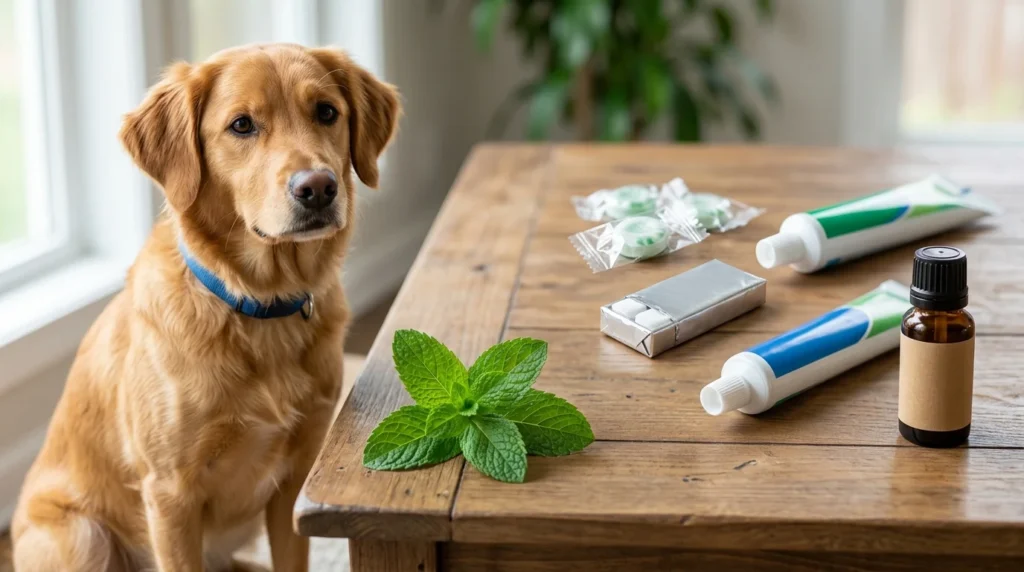
Mint may make a dog’s breath smell fresher temporarily, but it does not treat the underlying cause of persistent bad breath. Strong or ongoing mouth odor can be associated with dental disease, plaque, gum problems, or other health issues.
Do not rely on mint leaves, mint candy, or human breath products to manage your dog’s dental health. Regular veterinary dental care and an appropriate home dental routine are more useful for maintaining healthy teeth and gums.
How Should You Prepare Mint for Dogs?
If you choose to give your dog mint, use plain fresh peppermint or spearmint that has been washed thoroughly. Remove dirt and any damaged portions, then offer only a small amount. You can chop the leaves and mix them with your dog’s normal food or give them as an occasional treat.
Avoid adding sugar, salt, sauces, sweeteners, essential oils, or other concentrated ingredients. Fresh culinary mint is very different from products that contain concentrated mint extracts or oils, so always consider the complete ingredient list before sharing a mint-flavored product with your dog.
How Much Mint Can Dogs Eat?
Dogs only need a small amount of mint. Because herbs are concentrated in flavor and large quantities of plant material can upset the stomach, start with just a few fresh leaves. The appropriate amount also depends on your dog’s size and tolerance for new foods.
| Dog Size | General Starting Amount |
|---|---|
| Small dogs | 1–2 small mint leaves |
| Medium dogs | 2–4 small leaves |
| Large dogs | 3–6 small leaves |
| Extra-large dogs | A small amount of fresh leaves |
These are general treat portions rather than strict veterinary serving limits. Mint should remain an occasional addition to a dog’s normal diet rather than replacing nutritious dog food.
Can Dogs Eat Mint Oil?
Mint essential oil should not be given to dogs to eat. Essential oils are highly concentrated compared with fresh mint leaves, and ingesting concentrated oils can cause adverse effects. Dogs can also be exposed to oils through products designed for humans.
Never add peppermint oil or spearmint oil to your dog’s food or water unless specifically directed by a veterinarian. If your dog accidentally swallows a concentrated mint oil product, contact your veterinarian or an appropriate animal poison service for advice.
Can Dogs Eat Peppermint Candy?
Peppermint candy is not a suitable treat for dogs. Candy usually contains large amounts of sugar and may contain other ingredients that are inappropriate for pets. Hard candy can also create a choking concern.
The biggest concern is the ingredient list. Some sugar-free candies can contain xylitol, an artificial sweetener that is highly dangerous to dogs. Keep sugar-free candy and other human sweets safely out of your dog’s reach.
Can Dogs Eat Mint Gum?
Dogs should never be intentionally given mint gum. Many sugar-free gums contain xylitol, which can cause a dangerous drop in blood sugar and potentially serious illness in dogs.
If your dog has swallowed gum, check the package ingredients immediately and contact a veterinarian or animal poison service if xylitol is present or the ingredients are unknown. Do not wait for symptoms before seeking advice when xylitol exposure is possible.
Can Dogs Eat Mint-Flavored Toothpaste?
Human toothpaste should not be given to dogs. Mint flavor itself is not the main concern; toothpaste can contain ingredients that are unsuitable or dangerous for pets, including certain artificial sweeteners.
Use toothpaste specifically formulated for dogs if you brush your dog’s teeth. Never use human toothpaste as a substitute for a pet dental product, particularly if your dog is likely to swallow it.
Can Dogs Eat Mint Leaves With Yogurt?
A small amount of plain mint mixed with plain, unsweetened yogurt may be tolerated by some dogs. However, the yogurt should not contain xylitol, artificial sweeteners, chocolate, excessive sugar, or other unsafe ingredients.
Dogs that are sensitive to dairy may develop gas, diarrhea, or stomach discomfort after eating yogurt. If your dog has never had yogurt before, introduce it separately in a very small amount rather than adding several new ingredients at once.
Can Dogs Eat Mint With Peanut Butter?
Plain mint can be combined with a small amount of dog-safe peanut butter, but check the peanut butter label carefully. Some peanut butter products contain xylitol or other ingredients that are unsafe for dogs.
If you use peanut butter, choose a simple product without xylitol, chocolate, excessive salt, or added sweeteners. Keep the serving small because peanut butter is calorie-dense and should be treated as an occasional food.
See Also: Can Dogs Eat Mayo? Safety, Risks & Feeding Guide
Can Dogs Eat Mint Tea?
Plain mint tea made from dog-safe culinary mint may not be toxic in a small amount, but it is generally unnecessary for dogs. Tea products can contain additional herbs, caffeine, sweeteners, or other ingredients that may not be suitable for pets.
If your dog accidentally drinks a small amount of plain, caffeine-free mint tea, monitor them for unusual symptoms. Do not give concentrated herbal preparations or human tea blends without first checking the ingredients and discussing them with your veterinarian.
Can Dogs Eat Mint Sauce?
Commercial mint sauce is not the same as fresh mint leaves and is generally not a good choice for dogs. It may contain vinegar, sugar, salt, preservatives, or other ingredients that can cause digestive upset or provide unnecessary calories.
Some sauces can also contain onion or garlic, which are unsafe for dogs. If you want to add a little mint to your dog’s food, plain washed mint leaves are a much simpler option.
What Happens If a Dog Eats Too Much Mint?
Eating a large amount of mint may cause digestive upset. A dog that consumes too much plant material can develop vomiting, diarrhea, gas, abdominal discomfort, or a temporary change in appetite.
If your dog has eaten a large quantity of mint, monitor them closely and make sure fresh water is available. Contact your veterinarian if symptoms are severe, persistent, or accompanied by weakness, repeated vomiting, difficulty breathing, tremors, or other unusual signs.
What If My Dog Eats a Mint-Like Plant?
Do not assume an unidentified plant is safe simply because it smells like mint. Several plants can have similar scents or common names, while their safety for dogs can be very different.
If your dog eats an unknown plant, try to identify it using a clear photograph or the plant’s packaging or label. If the plant may be toxic or your dog develops symptoms, contact a veterinarian or animal poison service promptly.
Is Mint Good for Dogs?
Small amounts of fresh culinary mint can be a harmless occasional addition to the diet of many healthy dogs. However, mint is not an essential nutrient and should not be viewed as a treatment for bad breath, digestive problems, or other health conditions.
The safest approach is to use a small amount of properly washed peppermint or spearmint and avoid concentrated oils and processed mint products. A complete and balanced dog food should remain the foundation of your dog’s diet.
When Should You Contact a Veterinarian?
Contact a veterinarian if your dog eats a large amount of mint, consumes an unidentified plant, or swallows a mint product containing a potentially dangerous ingredient. This is especially important if the product contains xylitol or concentrated essential oils.
Seek prompt veterinary help if your dog develops repeated vomiting, severe diarrhea, weakness, tremors, difficulty breathing, collapse, unusual behavior, or other serious symptoms. When the ingredient or amount consumed is uncertain, professional advice is the safest option.
Frequently Asked Questions
Can dogs eat mint leaves?
Yes, most healthy dogs can generally eat a small amount of plain peppermint or spearmint leaves. Wash the leaves first and offer only a few at a time.
Can dogs eat peppermint?
Plain peppermint leaves can generally be given in small amounts. Peppermint candy, gum, essential oil, and concentrated extracts are different and should not be given to dogs.
Can dogs eat spearmint?
Yes, small amounts of fresh spearmint leaves are generally suitable for many dogs. Serve them plain and washed, and avoid giving large quantities.
Can dogs eat mint essential oil?
No, mint essential oil should not be given to dogs to eat. Essential oils are highly concentrated and can be harmful when swallowed. Contact a veterinarian if your dog accidentally ingests one.
Can dogs eat mint gum?
No. Mint gum can contain xylitol, which is highly dangerous to dogs. If your dog eats gum, check the ingredients immediately and contact a veterinarian if xylitol is present or the ingredients are unknown.
Conclusion
Dogs can generally eat small amounts of fresh peppermint or spearmint leaves, making plain culinary mint an occasional treat for many healthy dogs. Always wash the leaves and avoid giving large quantities, particularly to small dogs or dogs with sensitive stomachs.
The bigger concern is processed and concentrated mint products. Essential oils, mint gum, sugar-free candy, human toothpaste, and flavored products can contain ingredients that are unsafe for dogs. When offering mint, keep it simple and plain, and contact your veterinarian if your dog consumes a potentially harmful mint product or develops concerning symptoms.
See Also: Can Dogs Eat Noodles? Safety, Types, Risks & Feeding Tips


